

From Korhogo Cloth to Digital Print: Alia Baré and the Language of Senufo Textiles
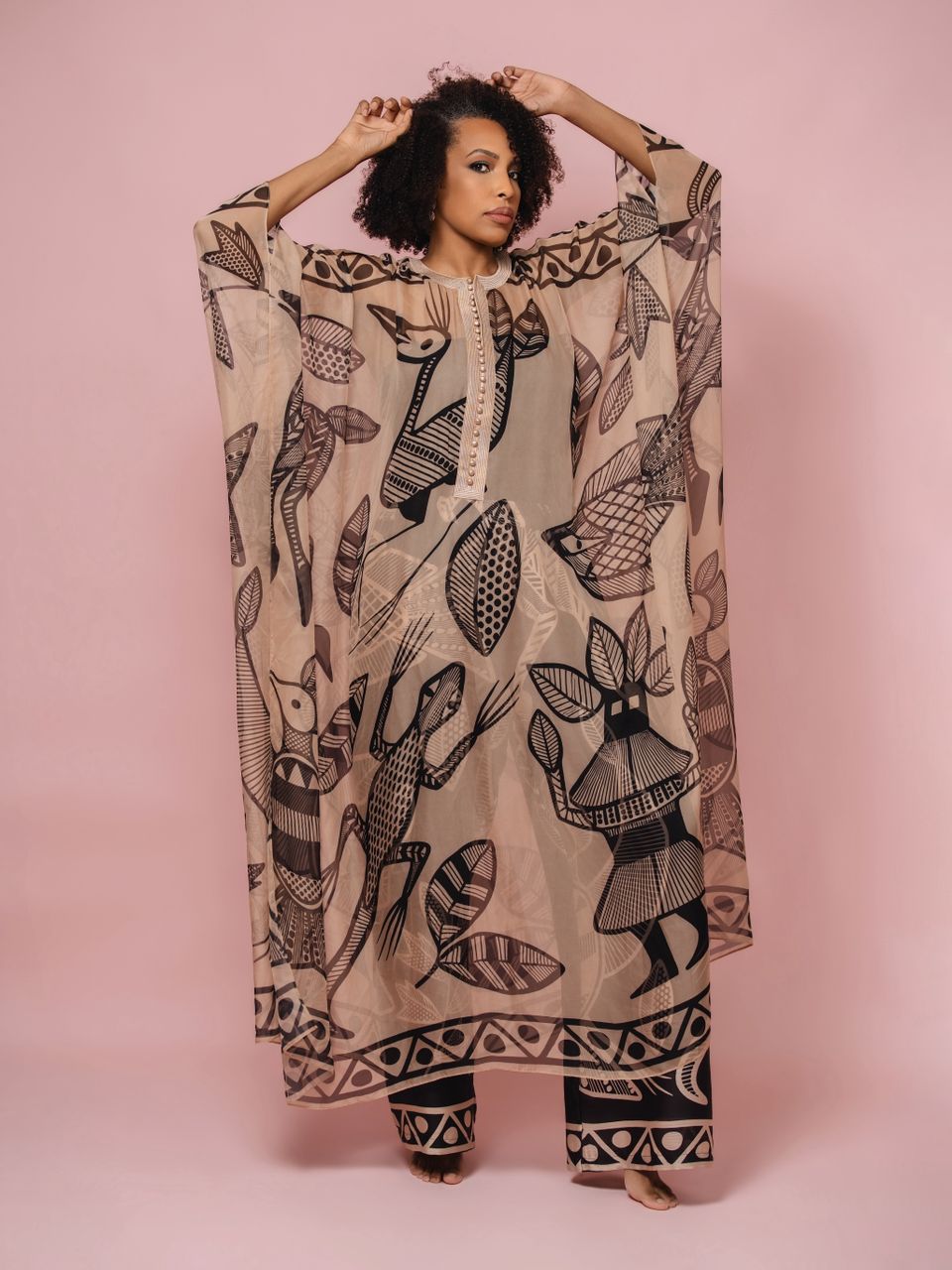
The garments in Alia Baré’s SS26 collection move the way the cloth that inspired them never could. Stylised birds, animals, human figures and hatched borders travel across dresses cut long and light, in a fabric made to drape and follow the body. The imagery is Senufo. The fabric carrying it is not. The Korhogo cloth Baré references is dense, hand-woven and traditionally painted with natural dyes, closer to a coat or a wall hanging than to anything that could fall this softly. Between the two sits a decision that is the real subject of the collection, and of this series. Baré did not reproduce the cloth. She lifted its visual language from one material system and printed it onto another.
To understand what that means, you have to know what the cloth is, and how recently it became the thing she was looking at.
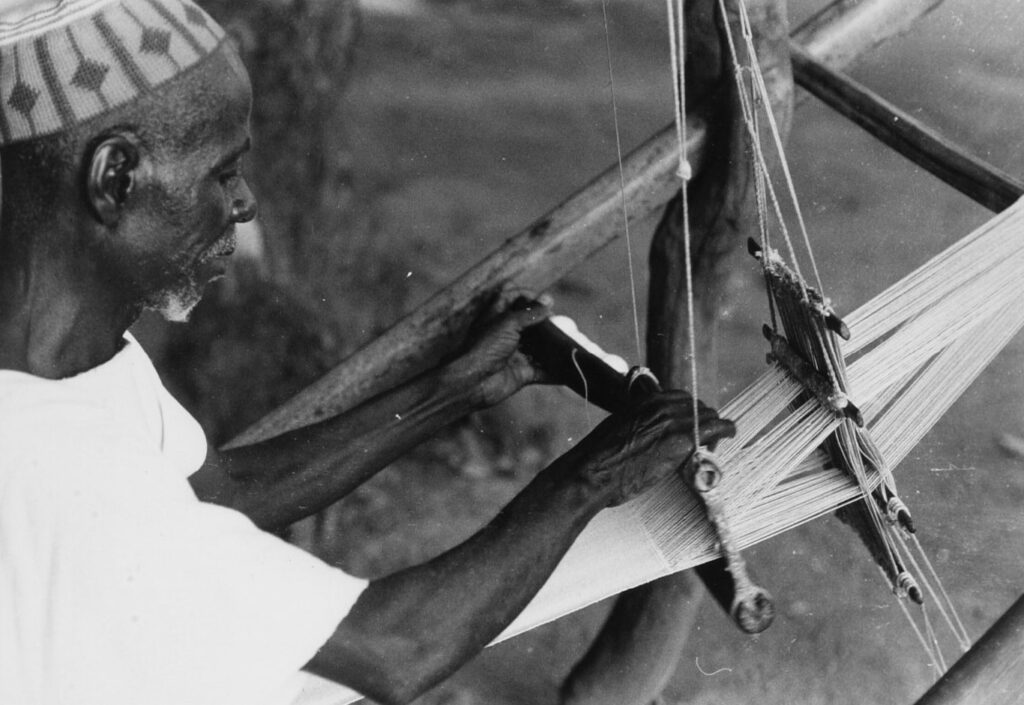
Korhogo cloth begins with cotton and labour. The cotton is grown, spun and woven in narrow strips on a handloom, then sewn edge to edge into a larger cloth. Accounts of who does what differ. UNESCO, which inscribed Côte d’Ivoire’s loincloth-weaving traditions in 2023, records Senufo women weaving the unbleached cotton while men decorate it with wooden spatulas and natural paints; other accounts describe women spinning and preparing the dye while men work the looms, a discrepancy that says more about the differences between communities and periods than about any single, fixed way of doing things. What the sources agree on is the decoration. Figures and patterns are painted onto the cloth using natural dyes, traditionally including plant and mud-based preparations that deepen, with repeated treatment, into the browns and blacks we recognise as Senufo.
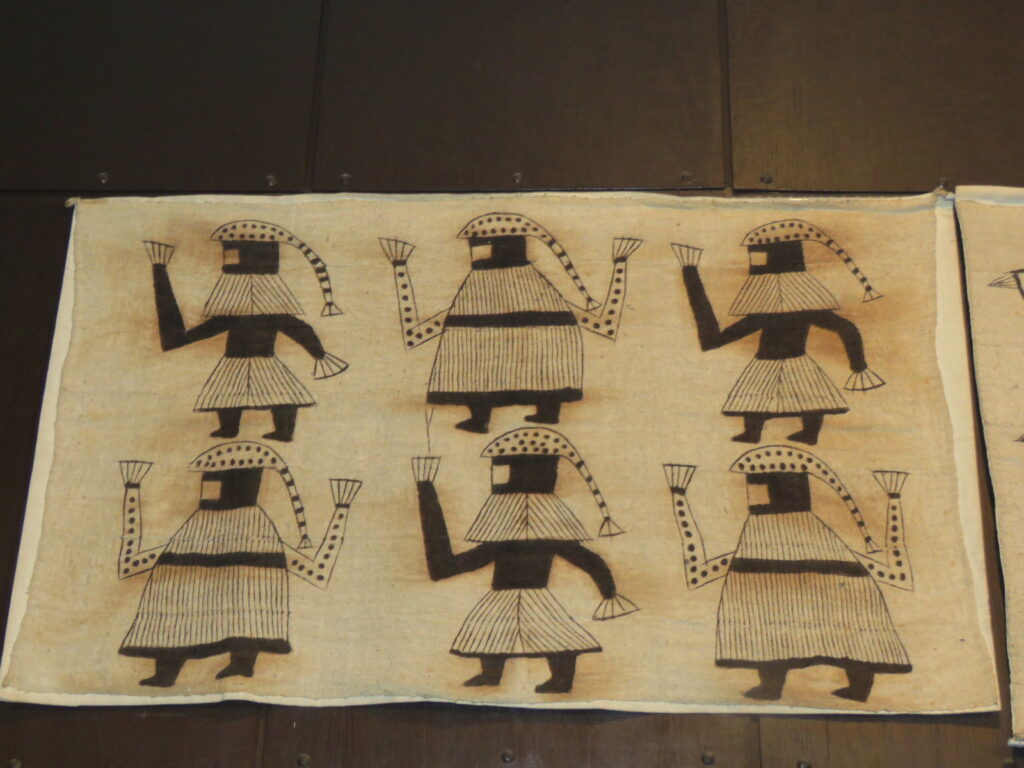
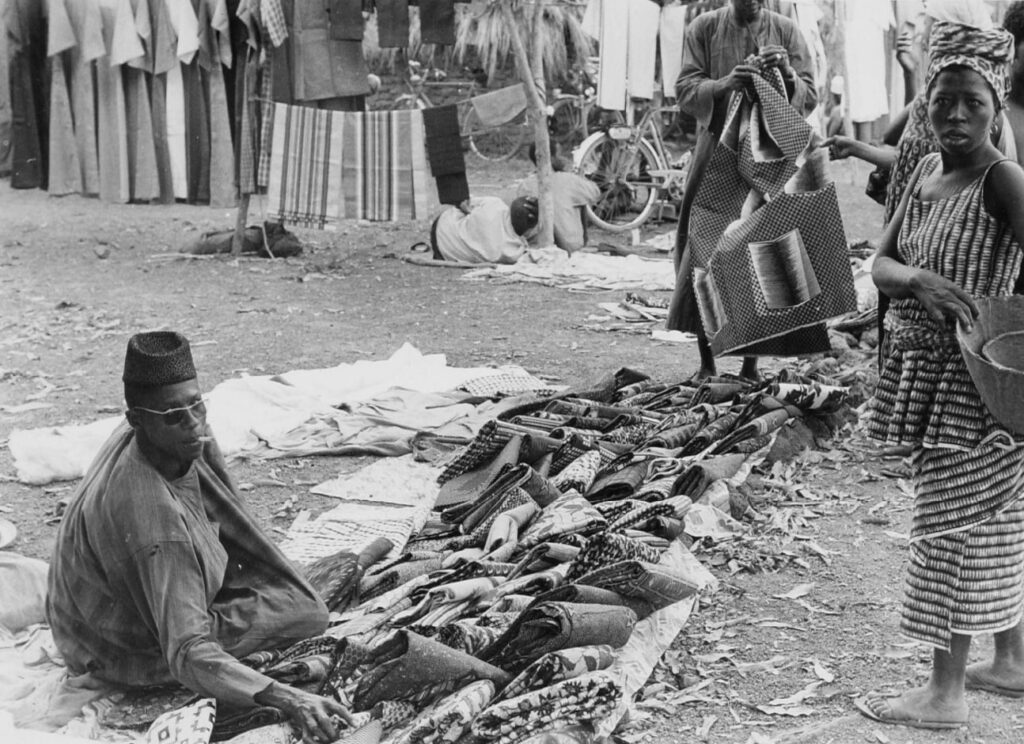
One important precursor to the Korhogo cloth we know today is fila, a painted cloth commissioned through a diviner and worn by hunters, or hung in the home, as protection against vengeful spirits. Its imagery is a language rather than an ornament: masked and human figures, the sun, moon and stars, and the animals UNESCO lists among the symbolic repertoire, the hornbill, the panther, the turtle, all of them drawn from Senufo cosmology. Read together rather than one at a time, they behave more like a script than a pattern. But the large, densely pictorial cloth most people now picture when they hear “Korhogo cloth”, the kind whose figures Alia worked from, is not centuries old. It took its familiar form in the late 1960s and 1970s, when imagery associated with fila, Poro and other ceremonial contexts was adapted onto larger wall hangings for the tourist and export trade. Accounts differ on who set that in motion, a European dealer and American Peace Corps volunteers are both credited, but the cloth grew, its figures grew with it, and producers began buying hand-woven strips from their Dyula neighbours. The Senufo are a Gur-speaking people spread across northern Côte d’Ivoire, southeastern Mali and southwestern Burkina Faso. The cloth that came to represent them abroad was already being reshaped for an outside market sixty years ago.
That last fact changes how we should read what Baré is doing.
It was the weight that first sent her to the printer. Traditional Senufo cloth is heavy and stiff, at home in jackets, coats and interiors, and unwilling to become the fluid, lightweight garments Alia had in mind. Digital printing was her way around the problem: keep the language, change the body it lives on. She frames the decision not as a rejection of tradition but as a way of loosening its boundaries.
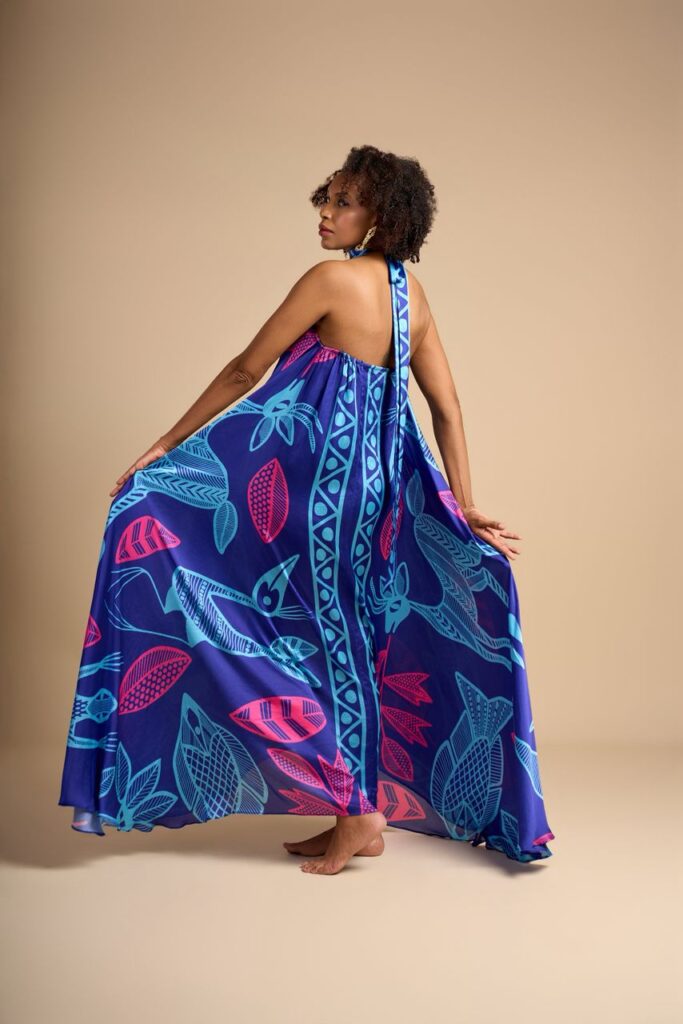
That is one way to describe it. Another is that the print keeps the image and leaves behind the cotton, the loom, the mud and the labour that made it. Baré is Nigerien, with Hausa roots, and she comes to the Senufo tradition from outside it. But Korhogo’s own history makes any tidy line between an original and its adaptation difficult to hold, because the pictorial cloth was itself shaped by outside demand. Her digital print steps into a story of translation already long under way rather than beginning one. Before the collection, she looked closely at the work of the Ivorian designer Zak Koné, whose label Pelebe draws on traditional dress codes and takes its name, inherited from his grandfather, from his native Senoufo language. The questions that remain are the ones this series keeps returning to: what did she work from, who made it, how were the motifs carried across, and where does credit rest when the image moves again?
In truth, Alia has been moving between visual languages for most of her working life, and Senufo is only the most recent. She came to fashion late, and sideways. The daughter of a diplomat, she grew up between Niger, France and Algeria, studied business, and spent her twenties in finance before leaving it behind. Marriage took her to India, where she trained in jewellery, and then to Singapore, where the turn to fashion happened almost by accident. “I decided to go back to school and study fashion design, after spending time playing around with my home sewing machine that completely got me addicted to sewing,” she recalls. “That’s how I ended up going to fashion school full-time for three years and graduating from Raffles Institute of Singapore.”
She moved to Dakar in 2015, after a divorce, and launched her own label. Her first collections carried the imprint of Asia: modern, fitted silhouettes and wax prints reworked through what she describes as an Asian sensibility. She wanted to prove that a garment could carry a European or Asian design language and still be made in Africa. The customers who understood the clothes were often younger than she was, and what looked convincing on paper did not always translate into a viable business. She learned that an intricate garment could consume so much labour there was little left at the end of the equation, and that she had often been more interested in accomplishing something than in whether it would sell. Asia into wax print, Senufo cloth into digital print, Hausa wall into textile: the instinct to carry one visual system into another was there long before Korhogo.
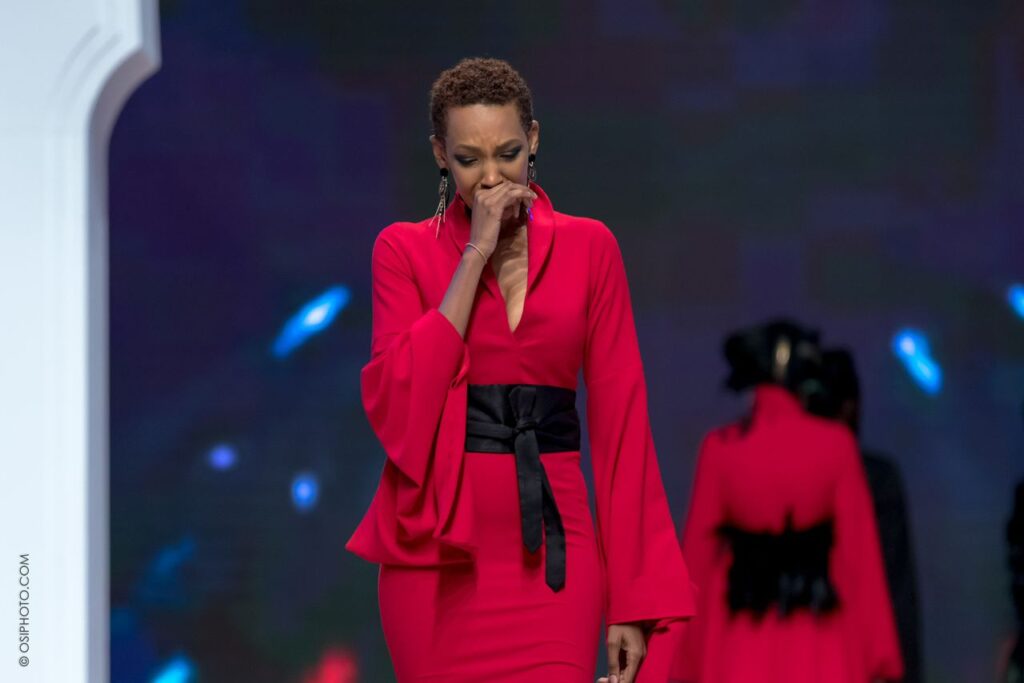
Baré’s return to West African material is bound up with a much more personal return to Niger. When she was 17, months before she finished school, her father, Ibrahim Baré Maïnassara, who had seized power in Niger in a January 1996 military coup and ruled for three years, was assassinated by members of his own presidential guard. For a long time afterwards she wanted nothing to do with the country. “I think it was my only way of coping and surviving, because the pain was too strong,” she recalls. The work that reckoned with him most directly is a collection she calls Fallen Angel, and describes as her most personal. She showed it in 2018 at FIMA’s anniversary edition, in the Moroccan desert at Dakhla. FIMA, the festival founded by the designer Alphadi and first staged in the Tiguidit desert near Agadez in 1998, had been backed by her father’s government, and the last trip Alia took with him, a few months before he died, was to that first desert edition. “The last trip I took with my father was to see that fashion show in the desert,” she says. “So for me, it was like I could feel my father’s spirit there.” She cried through the presentation, and so did the room. “People remember me as the crying designer,” she says, describing the show as “a moment suspended in time.”
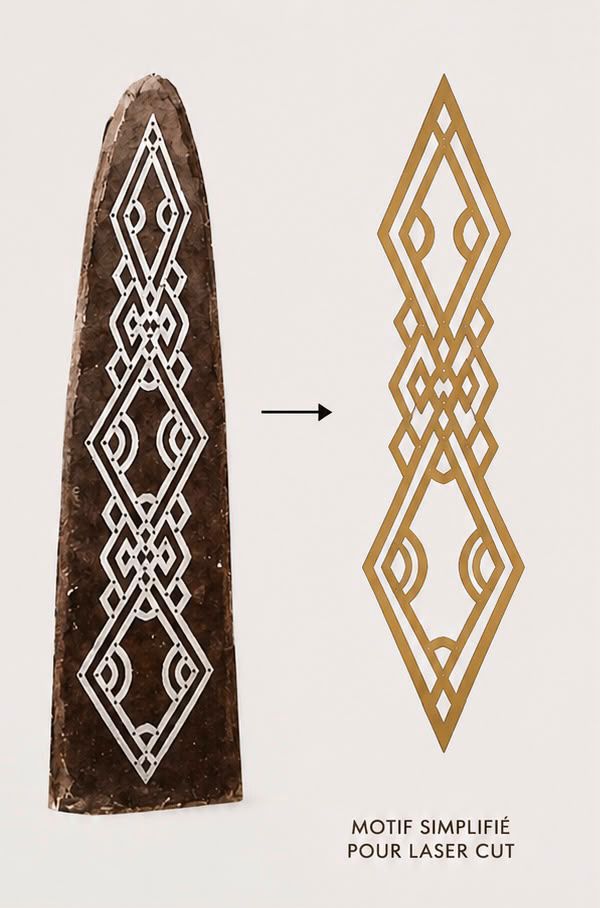
If Senufo is someone else’s visual language, her most recent work reaches inside her own. She calls it Touche, after the Hausa word tushe, meaning root or origin, and it grew out of the geometric patterns painted onto the walls of traditional Hausa houses, which she enlarges, recolours and rescales until a single motif reads as something new. It began, she says, as a search. “I never knew my grandfather, so that’s also part of why I started searching,” she explains. “I wanted to understand and find motifs that were connected to our culture. The more I researched, the more I found certain ones that really resonated with me. There is one in particular that I became obsessed with.” It is the same act of translation she performs with Senufo cloth, but her relationship to the source is different: here she is not a visitor to another people’s tradition, but a granddaughter finding her way back into her own.
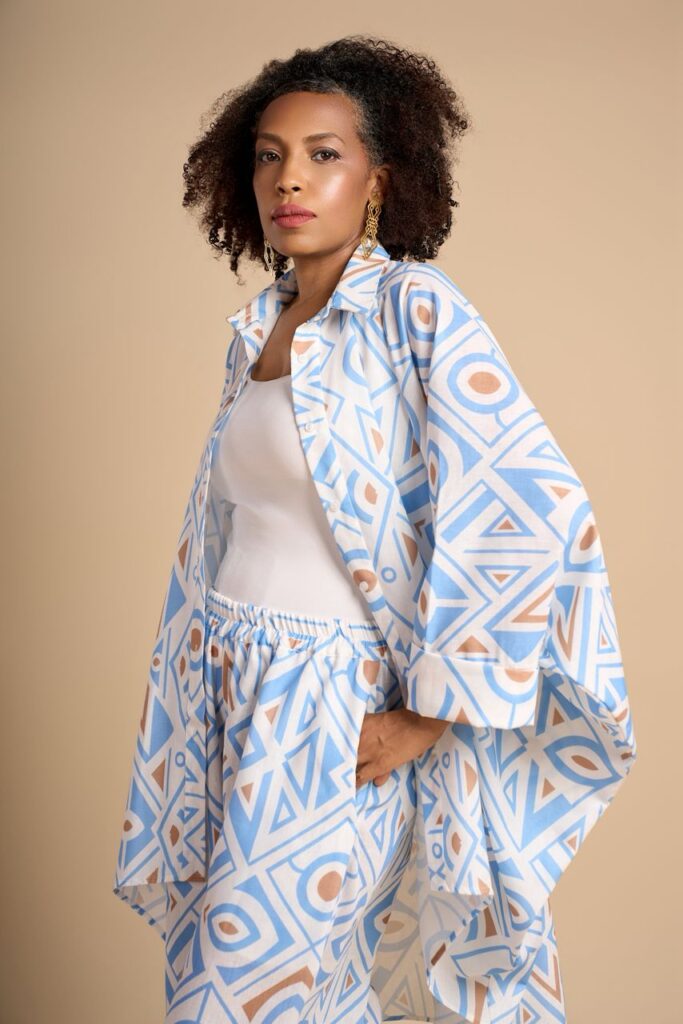
That instinct for translation is what makes Alia worth watching, and what this series is really trying to trace. A motif is never a fixed thing. It is made by a material and a pair of hands, and it means what it means because of them. Move it, off the loom and onto a printer, off a wall and onto a dress, and some of the knowledge travels while some of it stays behind. The Senufo cloth has survived that kind of move before; Baré is betting it can survive another, and that the image carries enough of the tradition forward to be worth it. Her own ambition is smaller than the industry’s usual measures. “I want to have this kind of house of culture,” she says, “where you create, where you’re connected to your customers and where the work has meaning.” Whether the image is enough, and who gets to decide, is the question her cloth leaves in the room.
In this series
Material Literacy: The Knowledge in Cloth. Mariama Camara on authorship, ownership, and the distance between admiration and accountability. The series launch.
Guinea: A Textile Civilization in Four Systems. The four ecological zones of Guinea, and the textile systems each one produced.
Understanding Bògòlanfini: The Malian Textile Written in Mud and Cotton. Iron-rich mud, boiled leaves, and a written language fixed onto handwoven cotton.
Kente and the Politics of Being Read. From royal courts and politics in Ghana to its significance at the United States Capitol and graduation stages.
Aṣọ-Òkè: The Cloth We Inherit. How a centuries-old Yoruba textile became an heirloom of memory and identity.
Adirẹ and the Wrapper-Wearers. How an artist transforms adirẹ ẹlẹ́kọ into a photographic process that traces the legacy of the 1947 Abeokuta Women’s Revolt.
From Korhogo Cloth to Digital Print: Alia Baré and the Language of Senufo Textiles. You are here.