


The Textiles That Found Home on the Swahili Coast
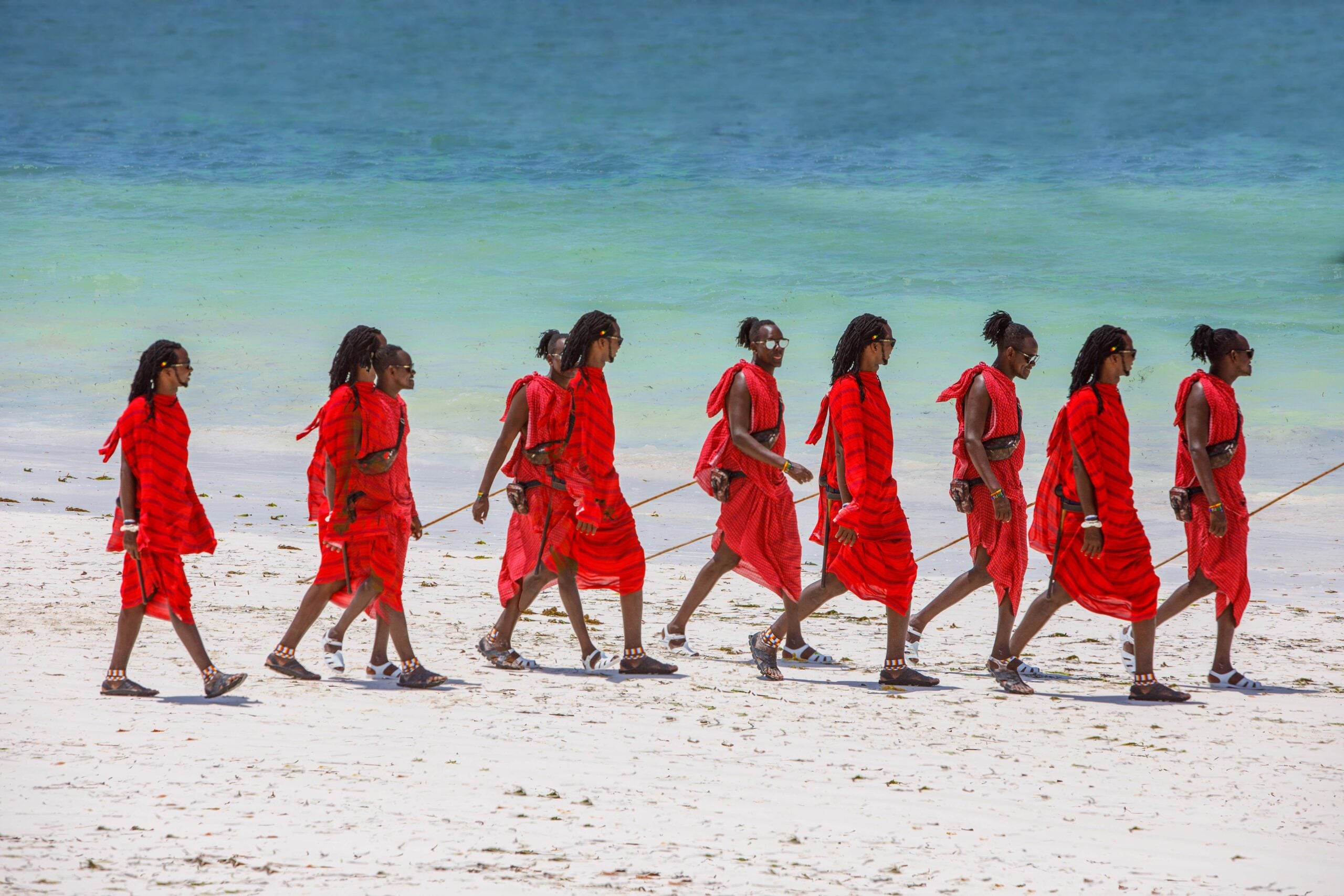
The waves along the Swahili Coast are furious, stretching in endless bodies of bright turquoise and deep azure as the Indian Ocean runs from southern Somalia through the far north of Mozambique and across the islands of Zanzibar. In the nineteenth century, these coastlines were alive with movement, crowded with merchants from Arabia, India and China who arrived by sea carrying thousands of textiles, exchanging them for gold, iron and other goods. Today, the traffic looks different. Large ships still pass through these waters, carrying manufactured goods and technological products from Asia, but the intimate exchanges that once took place along these shores are harder to see.
The Swahili Coast is perhaps one of the most underrecognised cultural forces in the history of the Indian Ocean. Even the Library of Congress acknowledges that East African communities were initially overlooked in scholarship on the Indian Ocean world, while many external observers historically marginalised the agency and contributions of East Africans to the region. However, its recent research guide, Africa in the Indian Ocean World, published in 2025, points to newer archaeological, linguistic and historical scholarship that places East African agency back at the centre of the story.
And yet, I find myself thinking about those transactions, the handshakes that sealed them and the thousands of textiles that changed hands. Many of those fabrics did more than travel. They were adapted and transformed, eventually becoming part of the cultural identity of East African communities. Over generations, these exchanges helped build a textile and fashion ecosystem that continues to shape the region.

Despite the distance in time, this history reveals something fundamental about the textiles that arrived on the shores of the Swahili Coast. Their meanings changed when they arrived. Fabrics, techniques and motifs that may have originated in Asia or travelled through foreign trading networks were absorbed into East African life, adapted to local tastes and uses, and eventually transformed into markers of cultural identity for millions of people across the continent.
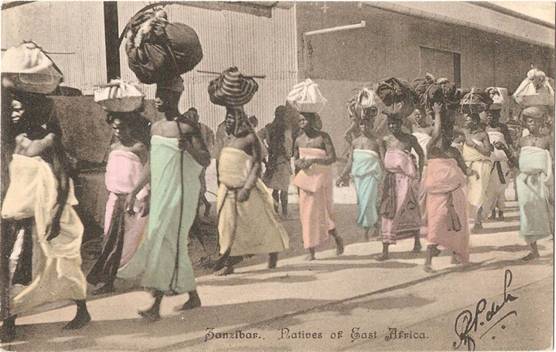
It brings my thoughts to what the historian Laura Fair documents in her research, “Dressing Up: Clothing, Class and Gender in Post-Abolition Zanzibar.” Writing about Zanzibar in the late nineteenth and early twentieth centuries, Fair shows how formerly enslaved people increasingly adopted new forms of dress as they negotiated their changing social identities. Among these was the kanga, a brightly coloured printed cotton cloth that was itself part of a wider international textile trade and became a way for formerly enslaved communities to negotiate class, status and belonging as they redefined themselves within post-abolition Zanzibari society.
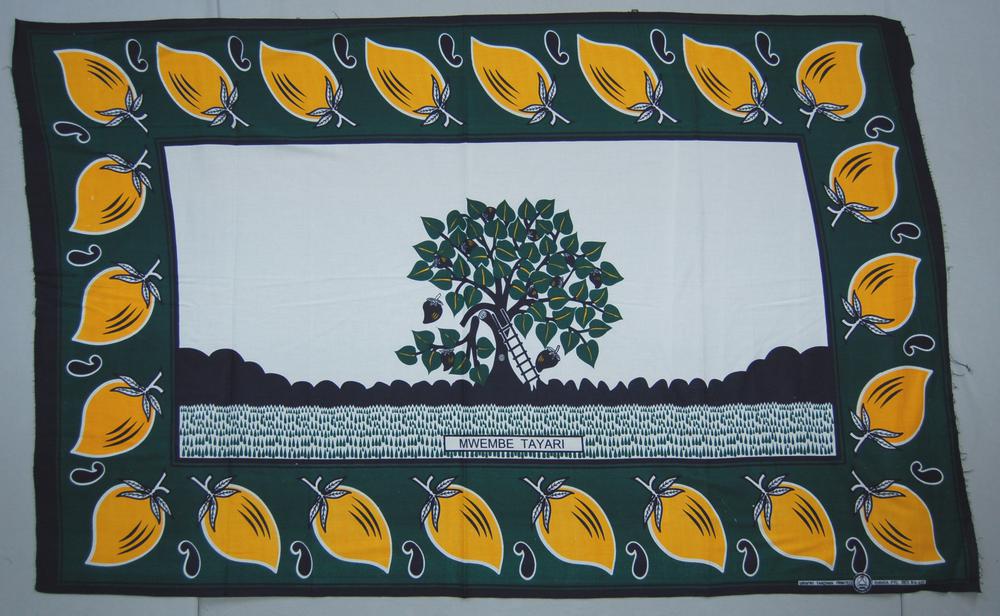
The kanga was one of the textiles traded on the Swahili Coast, but its story is not one of a foreign cloth arriving on African shores, but of East African women and artisans turning materials and techniques from elsewhere into something distinctly their own. The surface carried Swahili proverbs, aphorisms, jokes, warnings, declarations and, later, political messages. A woman could wrap herself in one phrase while addressing another person entirely. By the twentieth century, it had become deeply woven into the rhythms of Swahili women’s lives and remains one of the defining forms of dress along the East African coast.
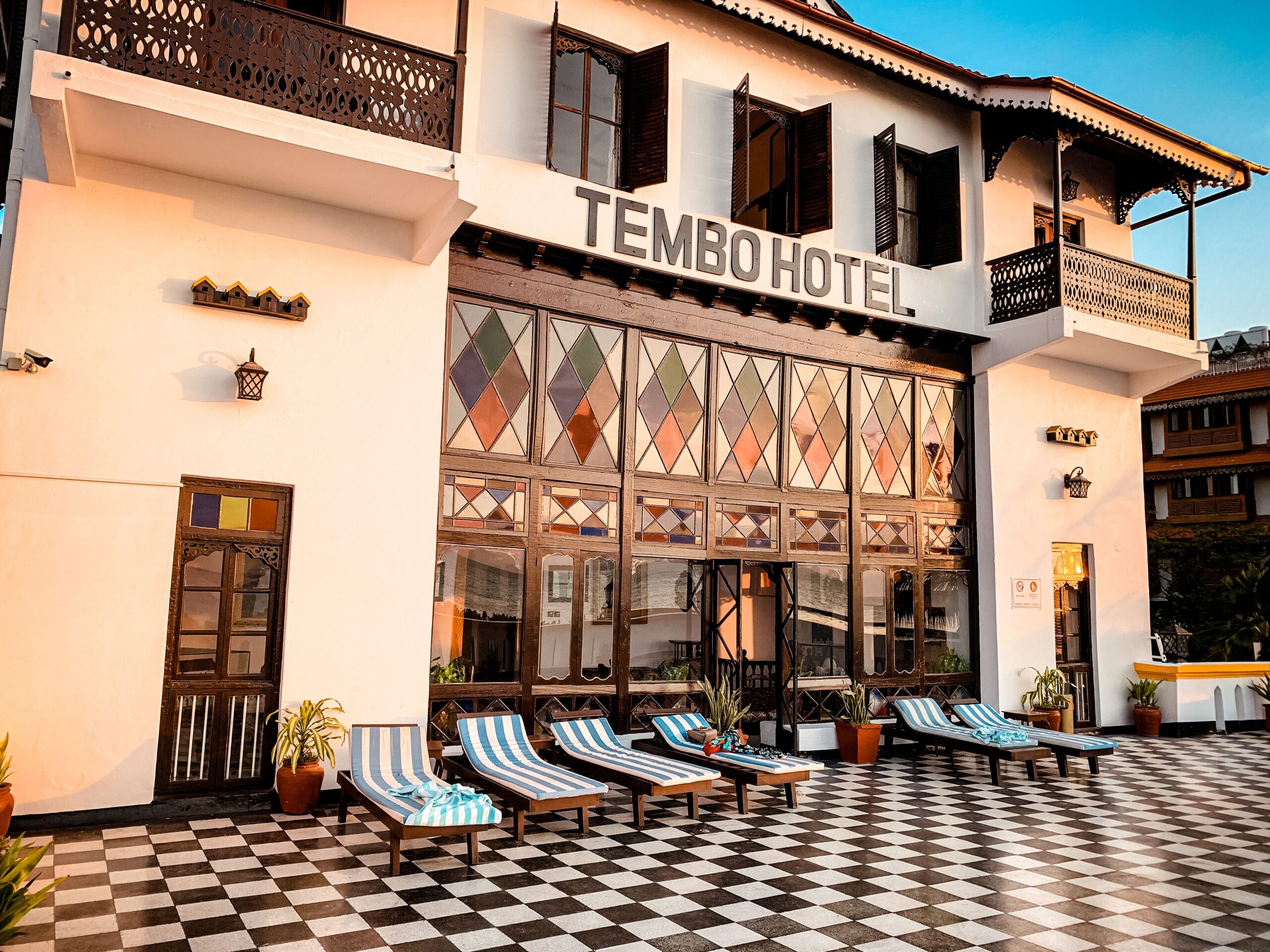
The same principle extended beyond the body and into the home. Swahili interiors developed through what art historian Prita Meier describes as a cosmopolitan culture of collecting and displaying objects from across the Indian Ocean. Imported ceramics, textiles, carpets, woven mats, furniture and decorative objects were brought into coastal homes and placed alongside locally made objects. The resulting interiors were neither wholly foreign nor wholly indigenous: they were carefully assembled expressions of coastal identity and worldly sophistication.
There is the Amerikani, also known as merikani. Manufactured in the United States, particularly around Salem, Massachusetts, the unbleached cotton cloth became one of the most sought-after imported textiles in nineteenth-century East Africa. Valued for its durability, Amerikani was used not only as clothing but also as a form of currency, exchanged for goods and services along the caravan routes that connected the coast to the interior.
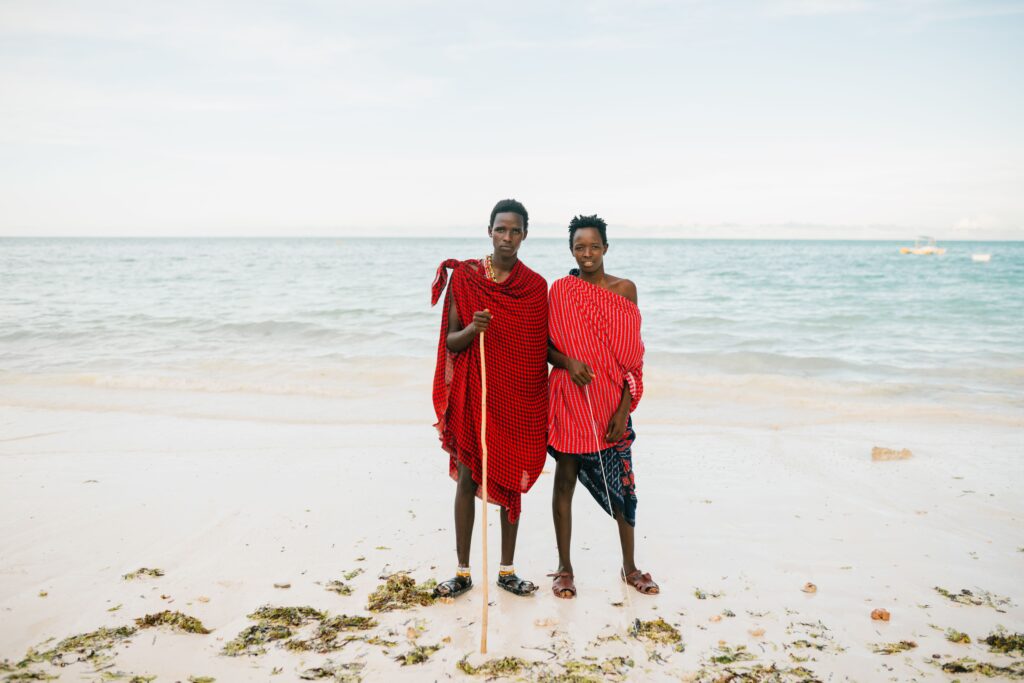
Among the communities that encountered this imported cloth were the Maasai. Research on the history of Maasai dress identifies Amerikani as a material used in Maasai clothing during the nineteenth and early twentieth centuries. The fabric initially arrived as an unpatterned cotton muslin, but Maasai communities adapted it to their own cultural practices. One account describes the cloth being rubbed with fat and ochre to give it a texture and appearance reminiscent of the animal skins traditionally used for Maasai clothing. The history of the Maasai shuka also begins, in part, with this process of transformation.
The kikoi is another familiar Swahili textile. Known as a loincloth, it is a rectangular cotton cloth traditionally worn as a wrap. It came from trade between East Africans and Arab merchants from Oman and Somalia and was historically associated with handloom weaving and dyeing. Due to its lightweight construction, it was used by coastal fishermen and traders as a wrap-around to stay cool in the hot, humid climate. Today, the kikoi is recognised far beyond the coast, but its history is tied to the Swahili communities who adopted and made it their own.
There is also the kitenge, which tells a related but somewhat different story. Unlike the kanga, whose particular format and Swahili inscriptions became closely associated with the East African coast, kitenge belongs to a much broader family of brightly printed cotton textiles circulating across Africa. In East Africa, particularly Tanzania, Kenya and Uganda, it has become one of the most recognisable fabrics in everyday and ceremonial dress.
Its history is deeply entangled with the history of wax-print textiles. The visual language of these fabrics ultimately has a complicated transcontinental genealogy, involving Indonesian batik, European industrial manufacturers and African consumers. Dutch manufacturers in the nineteenth century attempted to industrialise Indonesian batik for sale in the Dutch East Indies, present-day Indonesia, but when those efforts encountered limited success, printed wax cloth found a different market in West and Central Africa. From there, the textile became deeply embedded in African fashion cultures and eventually circulated across the continent. By the time printed fabrics were being sold as kitenge in East Africa, they were already part of this much larger history of global textile production. The fabric might have been manufactured outside Africa, but its cultural life was determined increasingly by African consumers.
Today, the history of the Swahili Coast is finding new relevance in a rapidly expanding creative economy. As East African hospitality grows, with boutique hotels, resorts and restaurants increasingly looking to create interiors that feel rooted in place, the visual language of the coast is becoming a valuable source of reference. Fashion, too, is returning to its textiles, woven forms and coastal silhouettes, while contemporary interior designers are drawing on the region’s carved wood, patterned cloth, natural materials and layered domestic spaces.
The demand for these textiles has also helped sustain and expand the region’s textile industry. Kanga, kitenge, kikoi and other locally made and locally adapted textiles continue to circulate through markets and fashion businesses, creating livelihoods for weavers, embroiderers, tailors, printers and traders.
However, there is a concern that those increasingly engaging with these materials may fail to understand their significance and meaning, becoming more interested in their visual and commercial value than in the histories and communities behind them. This is not to suggest that commercialisation is inherently negative. In fact, UNESCO recognises that commercial activities involving intangible cultural heritage can generate income, improve livelihoods and support the transmission of traditional knowledge and skills. But in its Ethical Principles for Safeguarding Intangible Cultural Heritage, UNESCO identifies “decontextualization, commodification and misrepresentation” as potential threats to intangible cultural heritage, emphasising the importance of involving the communities who create and sustain these traditions in decisions about how they are used.
For contemporary designers, knowing this history does not have to limit creativity. If anything, it offers a richer foundation from which to create. It makes space for collaboration with the artisans and designers who continue these traditions, and allows old techniques to be translated into new forms without stripping them of their histories.
The future of these textiles and design depends on understanding how they evolved in the first place: through movement and reinvention. To know where these textiles came from is not simply to look backwards. It is to give the designers shaping their future a deeper vocabulary with which to imagine what comes next.
In This Series
Material Literacy: The Knowledge in Cloth. Mariama Camara on authorship, ownership, and the distance between admiration and accountability. The series launch.
Guinea: A Textile Civilization in Four Systems. The four ecological zones of Guinea, and the textile systems each one produced.
Understanding Bògòlanfini: The Malian Textile Written in Mud and Cotton. Iron-rich mud, boiled leaves, and a written language fixed onto handwoven cotton.
Kente and the Politics of Being Read. From royal courts and politics in Ghana to its significance at the United States Capitol and graduation stages.
Aṣọ-Òkè: The Cloth We Inherit. How a centuries-old Yoruba textile became an heirloom of memory and identity.
Adirẹ and the Wrapper-Wearers. How an artist transforms adirẹ ẹlẹ́kọ into a photographic process, that traces the legacy of the 1947 Abeokuta Women’s Revolt.
Alia Baré and the Language of Senufo Textiles The Nigerien designer lifted the painted figures of Korhogo cloth off the loom and onto a digital print.
The Textiles That Found Home on the Swahili Coast. You Are Here.
Subscribe to read Material Literacy as we publish it.