


Aṣọ-Òkè: The Cloth We Inherit
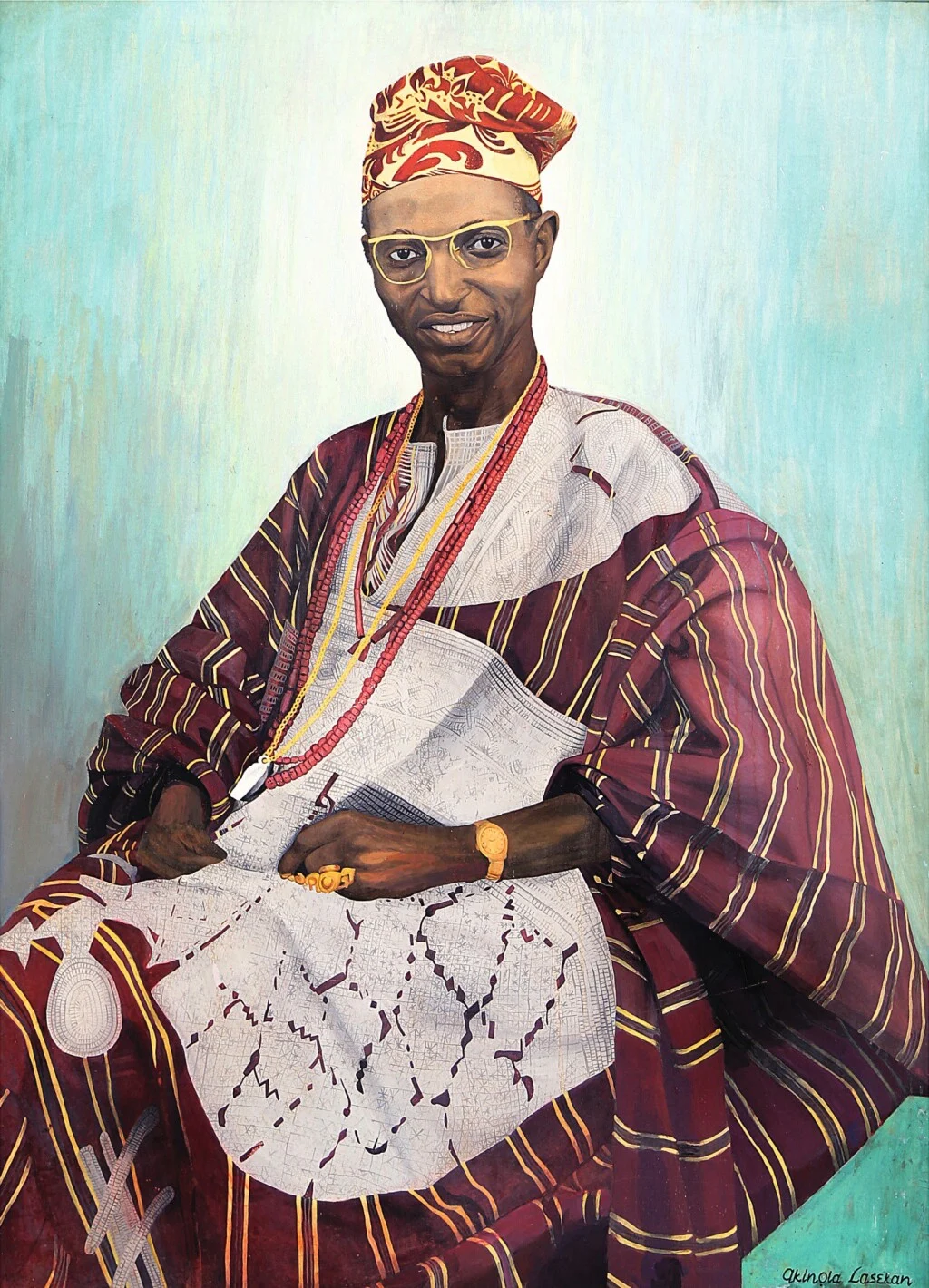
I am standing before a portrait in Nigerian Modernism, the survey at Tate Modern. It is Akinola Lasekan’s 1957 oil of Justus D. Akeredolu. Lasekan and Akeredolu were both first-generation Nigerian modernists who once shared a studio in Lagos, and Akeredolu is remembered as the pioneer of Yoruba thorn carving, so the painter here is portraying a fellow artist. In it, Akeredolu wears an agbada of aso-oke and is heavily accessorized: coral beads and bronze rings, a fila on his head, eyeglasses, a broad smile. This is not, finally, a story about the painting or about the man in it. But I keep thinking about that wardrobe of agbada cut from aso-oke, and what it meant to wear such cloth in the late 1950s, just years before Nigeria’s independence.
Aso-oke was once a luxury. Long before it became a fixture at weddings and celebrations across southwestern Nigeria, the handwoven cloth signaled prestige and was reserved for royalty, chiefs, wealthy merchants and the Yoruba elite. A single piece demanded enormous labor: spinning cotton and silk into thread, dyeing it, weaving it, and stitching the narrow strips together by hand. The time and skill made the cloth expensive and rare, beyond the reach of most. That value made it an heirloom. Families kept their finest pieces for generations and passed them down as objects of both monetary and sentimental worth.
Aṣọ-Oke and the Loom Behind Its Craft
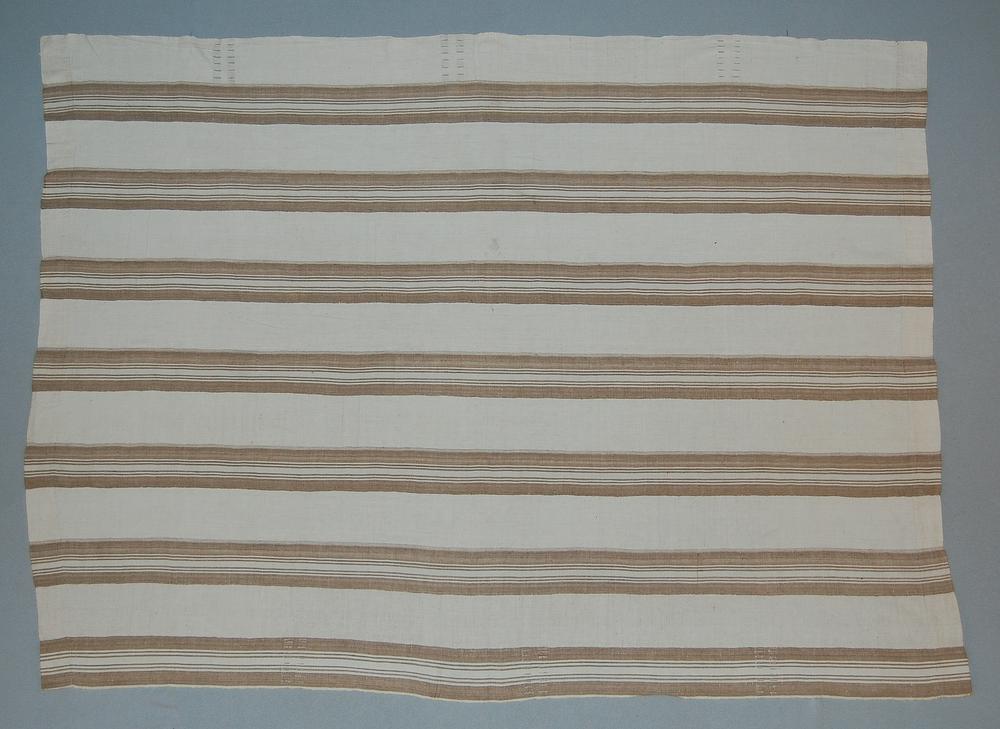
The name is a contraction of “Aso Ilu Oke,” meaning the cloth of the people from the up-country, and the textile is also called aso-ofi. Its origins are bound up in the wider history of trade, migration and craft across West Africa. The most widely cited account traces the introduction of cloth weaving to roughly the 15th century, when techniques moved south along trans-Saharan trade routes that linked West Africa to North Africa and the Islamic world. Some accounts, drawing on oral histories kept by weaving families in towns such as Iseyin and Ede, push the practice back as early as the 8th century.
At the center of that story is Iseyin, the Oyo State town widely regarded as the historical home of aso-oke. Generations of weavers there refined the craft, combining outside influences with local knowledge of cotton cultivation, dyeing and design. Together with Ede in Osun State, Iseyin became one of the earliest Yoruba centers of production, anchoring a network that spread across Yorubaland through trade and royal patronage. Nearby, the Ebira weavers of Okene, in present-day Kogi State, developed a related handwoven tradition of their own. As people moved and commercial routes widened, the textile reached Ilorin, Ibadan, Oyo and beyond, until it became a defining marker of Yoruba identity.
Early weavers relied entirely on local materials: cotton harvested and hand-spun into thread, silk drawn from the cocoons of Anaphe caterpillars, and dyes made from indigo, bark, plants and minerals. Before a loom was strung, the fibers often took days to prepare.
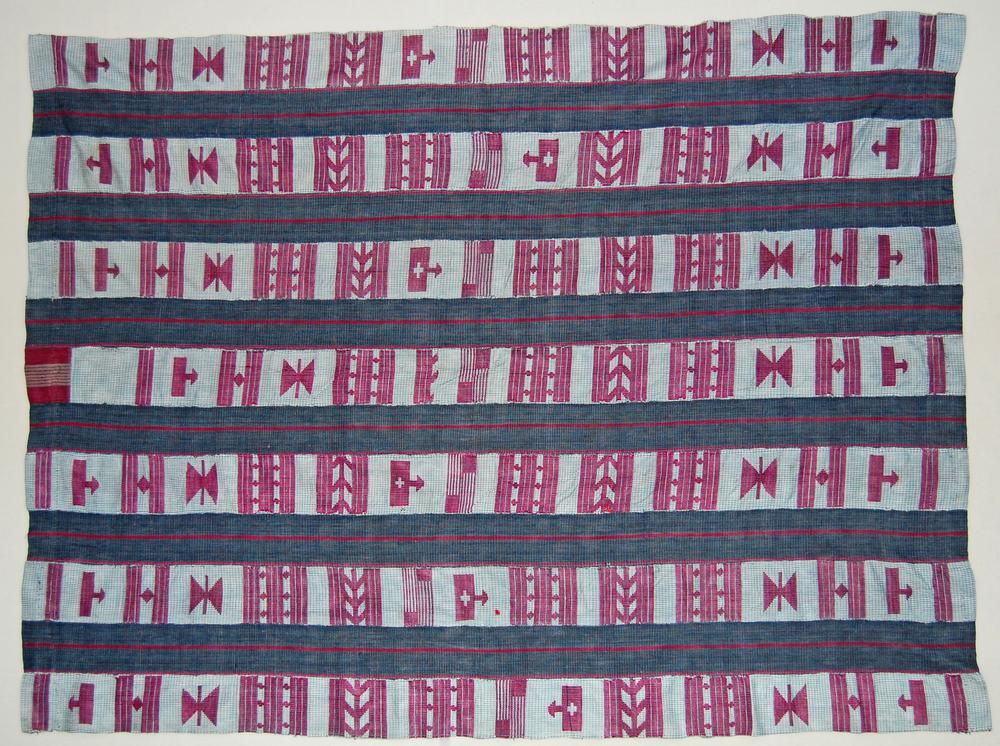
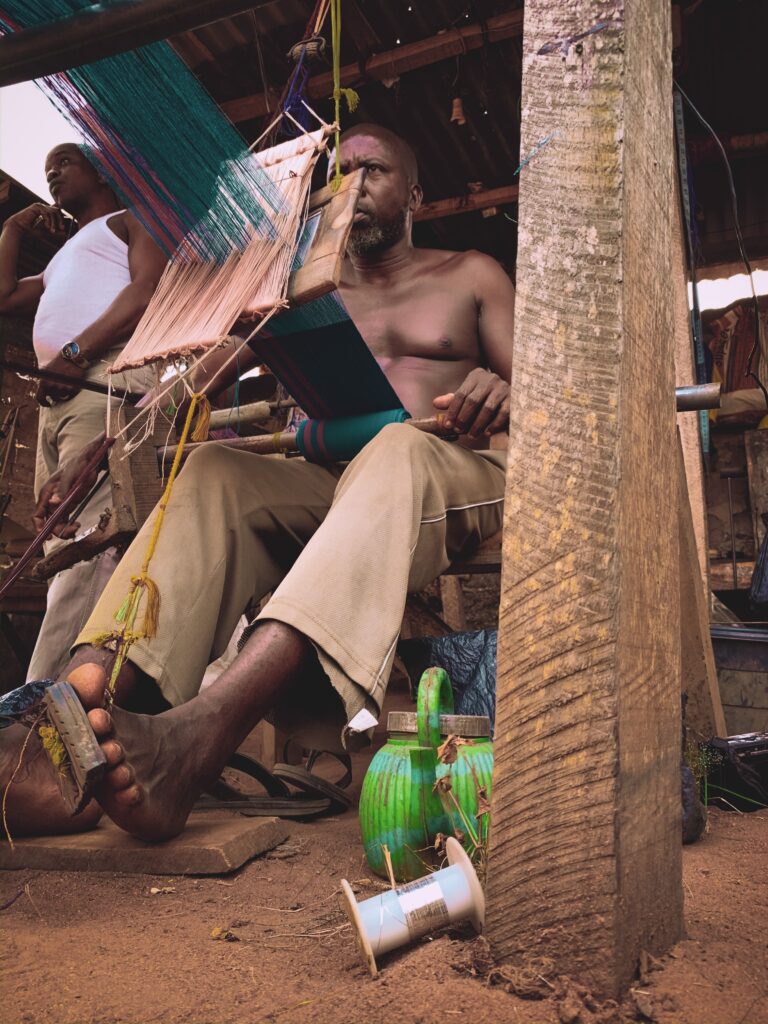
The craft can look simple at a glance, but it is exacting. Weaving is traditionally the domain of Yoruba men, who work a single-heddle narrow-strip loom built from wood and bamboo to produce long strips around four inches wide. Every color sequence, thread count and geometric motif is planned in advance. The loom does not produce a finished cloth but these narrow strips, which are then cut and stitched together into larger textiles. The process yields the classic varieties that still define aso-oke: the indigo-toned Etu, the silk-rich Sanyan and the deep-red Alaari. Together they represent not only distinct aesthetics but centuries of accumulated knowledge, turning thread into one of the most enduring symbols of Yoruba culture.
The Textile as Colonial Resistance
When British administration took hold across southwestern Nigeria in the late 19th and early 20th centuries, indigenous textile industries were among the casualties. The British Cotton Growing Association, founded in 1902 to reduce Lancashire’s dependence on American raw cotton by developing cotton growing across the empire, established buying and ginning stations across the region. It controlled the seed cotton that local weavers depended on and redirected raw material toward export rather than local production. Cheap imported cloth, which the colonial economy was built to sell, undercut the handwoven product. Aso-oke production declined.
The Yoruba educated elite recognized what was happening. As anti-colonial nationalism gathered force through the early decades of the 20th century, a deliberate sartorial politics emerged. Yoruba intellectuals, many from the returnee communities of formerly enslaved people who had come back to Nigeria from Brazil and Sierra Leone and were already acutely conscious of questions of identity and cultural preservation, set aside the formal wear of the colonial administration and returned to indigenous dress. To wear aso-oke became a political statement, not merely a cultural one. It was a visible refusal of assimilation.
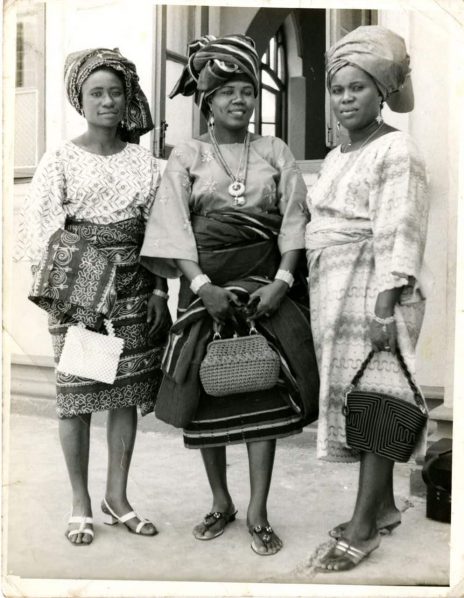
This shift has been documented by scholars. The historian Judith Byfield, in her study of dress and nationalist discourse in colonial Lagos, and Bukola Adeyemi Oyeniyi, in Dress and Identity in Yorubaland, 1880–1980, show how Yoruba intellectuals consciously elevated indigenous dress as a marker of ethnic and national identity during the independence struggle, understanding that cultural emblems mattered as much as political arguments in defining what a free Nigeria would look like.
When independence came on October 1, 1960, it was marked in cloth. People brought aso-oke out of storage, wore it to celebrations and dressed their children in it. The fabric that colonial policy had pushed to the margins returned to public life as a quiet kind of victory flag.
The Designer Who Gave Aṣọ-Oke a New Visual Language
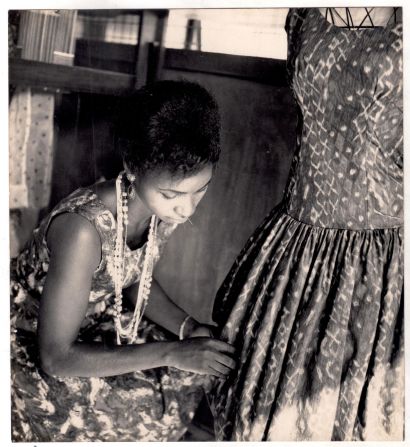
Shade Thomas-Fahm is regarded as one of Africa’s great designers, and not only because she was Nigeria’s first internationally recognized one. She changed how traditional textiles could be seen and worn. At a time when indigenous fabrics were tied almost entirely to customary dress, she introduced modern silhouettes and contemporary construction that gave cloth like aso-oke a new vocabulary. Her work argued that Nigerian fabrics could be elegant, sophisticated and at home in a fast-modernizing society.
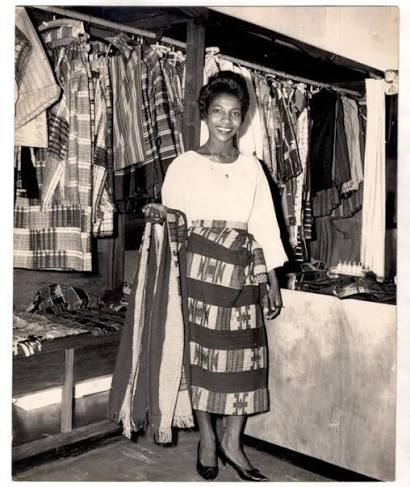
Trained at St Martin’s School of Art in London, she returned to Lagos in 1960 and opened Maison Shade, later Shade’s Boutique, in Yaba. She reworked aso-oke, adire, akwete and okene into modern silhouettes and reimagined the gele, the iro and the buba for a new kind of Nigerian woman. The case carried weight: at a time when many Nigerians still treated imported fabrics as the measure of sophistication, Thomas-Fahm argued for the beauty of Nigerian dress.
The Textile’s Reinvention in Modern Fashion
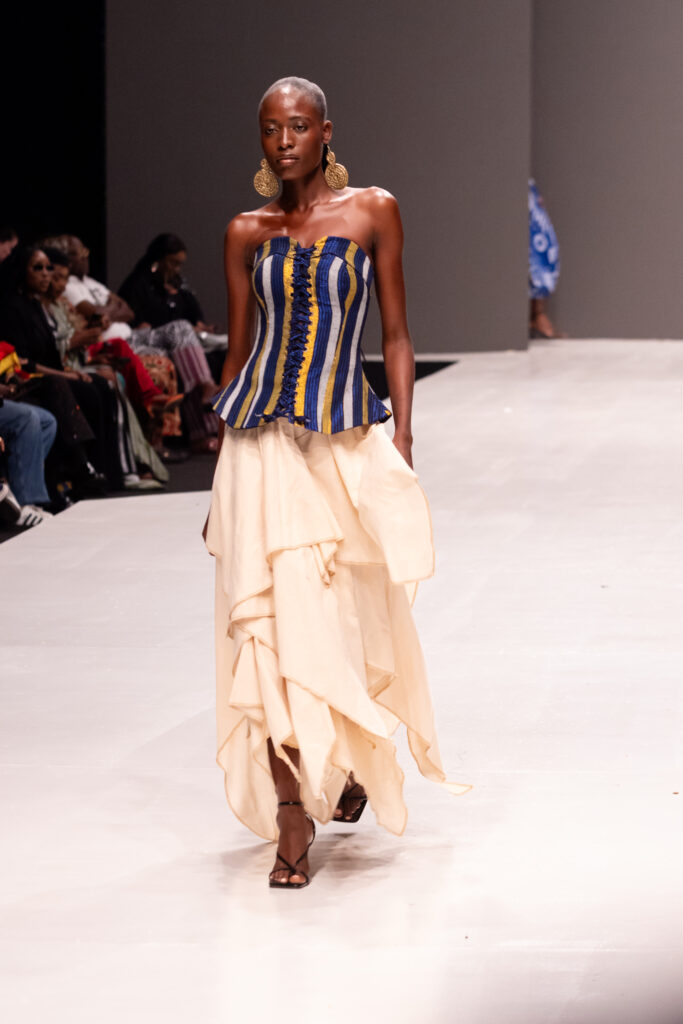
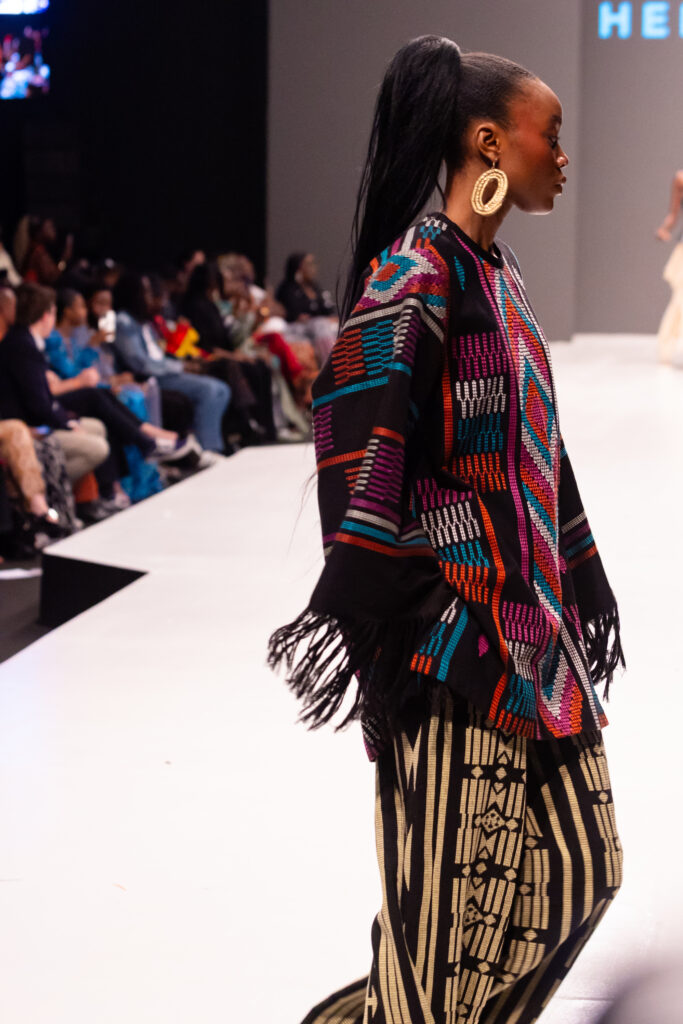
Hertunba, SS26 collection, 2025. Photo: Dan Torey.
In contemporary fashion, aso-oke has been remade for a new generation of African designers. A landmark moment came in February 2020, when Kenneth Ize presented his Fall/Winter collection in Paris and brought the handwoven textile to a global luxury audience, a feat amplified when Naomi Campbell closed the show in a fringed shirt dress deconstructed at its lapel. Ize had been a 2019 LVMH Prize finalist, losing to the South African designer Thebe Magugu; that same year Campbell first walked for him at Arise Fashion Week in Lagos.
But Ize is only the most recent chapter. Designers such as Deola Sagoe and Lisa Folawiyo built the contemporary wave of Nigerian fashion before him. Through the 1990s and 2000s, Sagoe reworked aso-oke into structured gowns, corseted silhouettes and couture that appeared on international runways and red carpets. Folawiyo came at the cloth from another angle, incorporating aso-oke into her embellished, Ankara-driven silhouettes.
More recently, designers including Kilentar, Orange Culture and Hertunba have continued to reinterpret aso-oke, turning what was ceremonial attire into jackets, corsets and eveningwear for a younger generation. Together they keep expanding what the textile can be.
In This Series
- Material Literacy: The Knowledge in Cloth — Mariama Camara on authorship, ownership, and the distance between admiration and accountability. The series launch.
- Guinea: A Textile Civilization in Four Systems — The four ecological zones of Guinea, and the textile systems each one produced.
- Understanding Bògòlanfini: The Malian Textile Written in Mud and Cotton — Iron-rich mud, boiled leaves, and a written language fixed onto handwoven cotton.
- Kente and the Politics of Being Read — From royal courts and politics in Ghana to its significance at the United States Capitol and graduation stages.
- Aṣọ-Òkè: The Cloth We Inherit — You are here.
- Next in the series: Akwete and the activism of the Aba Women’s Riot of 1929.
Read the cloth before you wear it. Subscribe to follow Material Literacy across the continent.