


Cut From the Same Cloth
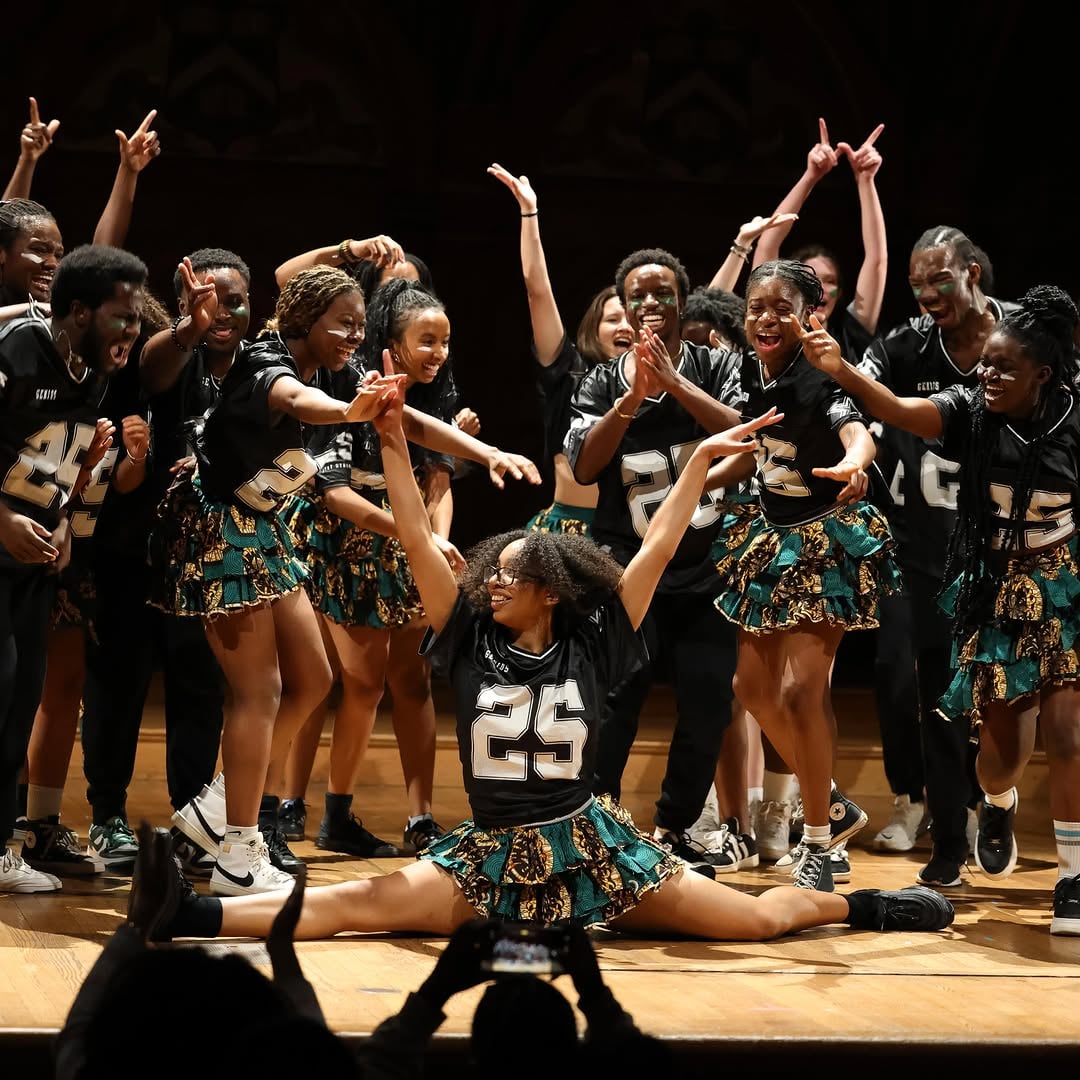
In 2015, a group of Harvard students came together to perform Nigerian dance. Mixing traditional and contemporary styles, they started Omo Naija. The group later joined with the Wahala Boys, forming a troupe that celebrates dance across the African diaspora.
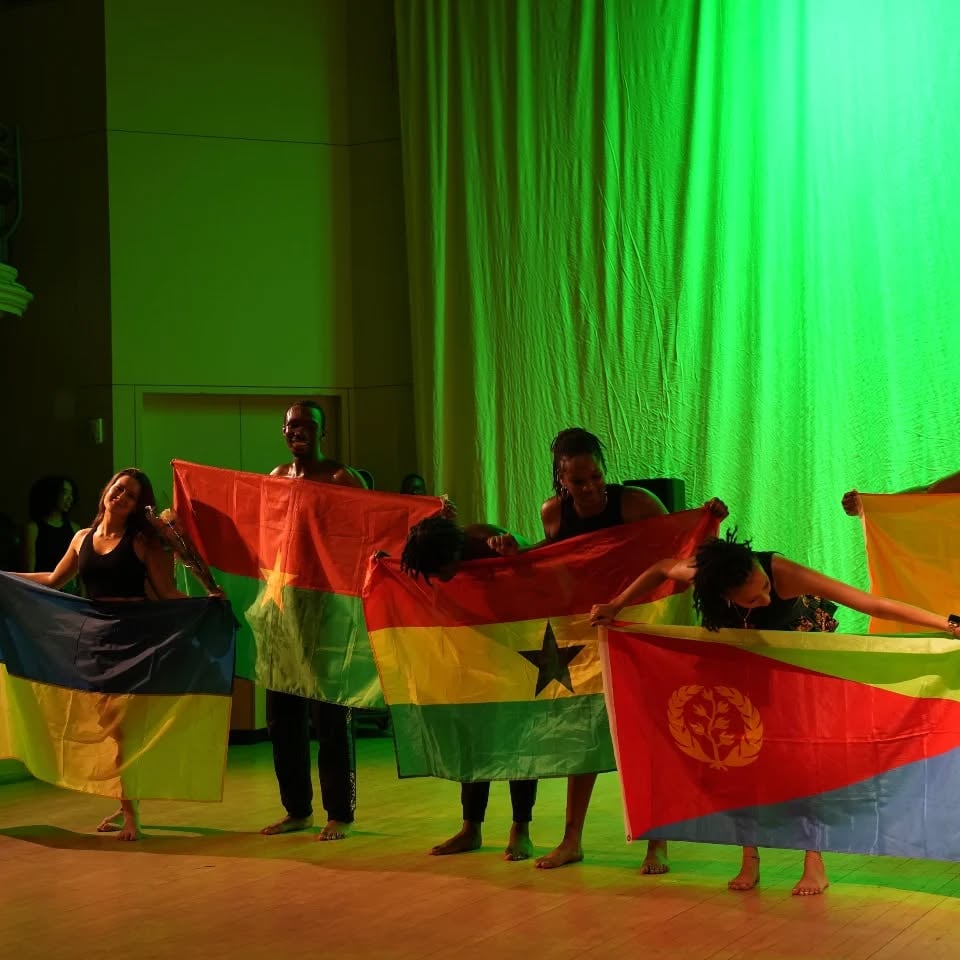
Co-founder Bola Hambolu ’19 recalled how six friends from different social circles came together to dance.
“Music, art, dance, is very central to our culture in Nigeria, and so it just felt like a natural thing to do,” Hambolu said of their decision to perform a Nigerian dance routine on campus. She would come home from track practice, get dinner and then rush to dance practice late at night.
“Looking back I have so many fond memories of all of us coming together, doing our little one-two step,” she said.
The group practised in a hot basement in one of Harvard’s first-year dorms. When it came time to choose a name, Hambolu drew on their Nigerian heritage, thinking of the dancers as children of Nigeria.
“Okay, Omo Naija is going to be the name,” she said.
After building their first routine, Hambolu and her friends performed at the annual Independence Day Gala hosted by Harvard’s Nigerian Student Association (NSA). Their uniform tradition began there.
“Because Gala had always been a thing, the board of NSA used to have Ankara print, like uniform print, to identify that they are the board members and they are responsible for putting on the event,” she said.
The NSA board’s matching outfits drew on Aso Ebi, a Nigerian practice in which relatives and friends wear coordinated fabric to signal their connection at a celebration. Inspired by the board’s outfits, Hambolu and her teammates commissioned custom uniforms from a Boston-based tailor. She wanted the dancers to match and to be recognisable by their skirts.
“We actually went to her shop. The fabric, the first year we chose red. Why did we choose red, I don’t know,” she laughed.
The dancers wanted something comfortable and stylish that worked with their routines. As new members joined, the team experimented with different styles of custom-tailored skirts. Some choices worked better than others.
“Maybe our sophomore year, we tried to switch things up and the fabric was not doing what it needed to do. We had to go back to our regular Ankara fabric. The texture worked for our moves and gave us the flexibility we needed,” Hambolu recalled.
Red, purple, gold and green featured in the team’s uniforms before it settled on the green and yellow print worn by Omo Naija x Wahala Boys today. Hambolu recalled the practical considerations behind those choices.
“It was a mix of comfort, efficiency, utility and aesthetics,” Hambolu said.
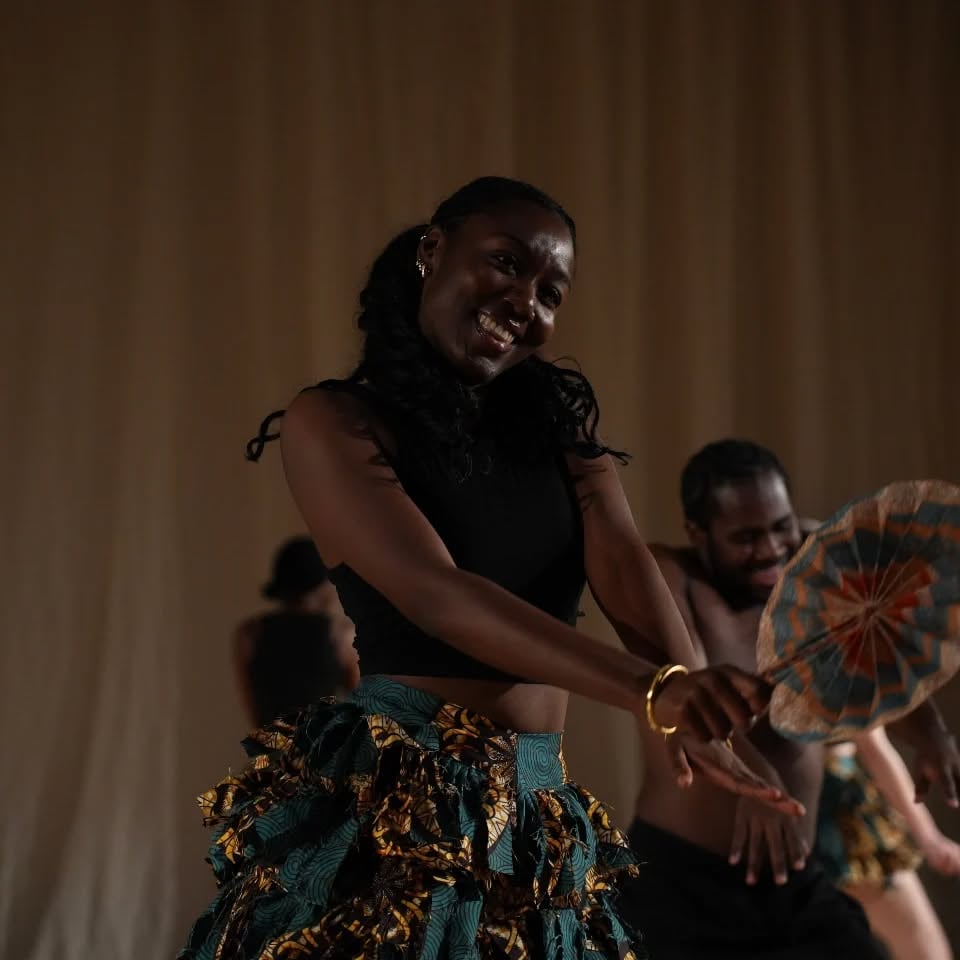
More than a decade after the troupe’s founding, the uniform remains part of its identity. The matching print gives successive cohorts of dancers a shared appearance.
“I don’t view our outfit as a costume per se,” said Omo Naija x Wahala Boys co-captain Morola Ajuwon ’29.
The team pairs short, tiered skirts in green and yellow print with black tops. The same print runs down the sides of the trousers.
“I think it’s so iconic. Even before coming into Harvard… I saw Omo and the black with the very vibrant green cut skirt, and the guys with the African print running down the side, and immediately I was like ‘Oh my God, eye-catching, hello!’, and I was like yes I want to join that team,” she said.
Omo Naija’s uniform reflects a larger fashion tradition across Africa’s diaspora: tailoring. Across the continent, tailors act as guardians of heritage, fusing ancient textile traditions with modern styles. Tailors are the unseen backbone of the African fashion economy, with customers cycling through their shops for everything from baby showers to funerals.
At its core, this traditional fashion practice not only distinguishes itself from global fast fashion, but it also instills the values of confidence and precision within African societies. For Omo Naija, their unique uniforms are made to emphasize the groups’ cultural inspirations and movements.
For Ajuwon, Omo Naija’s uniforms are as much a part of the choreography as the dancers’ footwork.
“When you watch the dances, it adds so much. Especially for the girls, the skirts, and the way it’s layered, it’s so nice to see the movements… For me, in African dancing there’s so much in your hips, your waist… and the skirts do a really good job of highlighting that,” said Ajuwon.
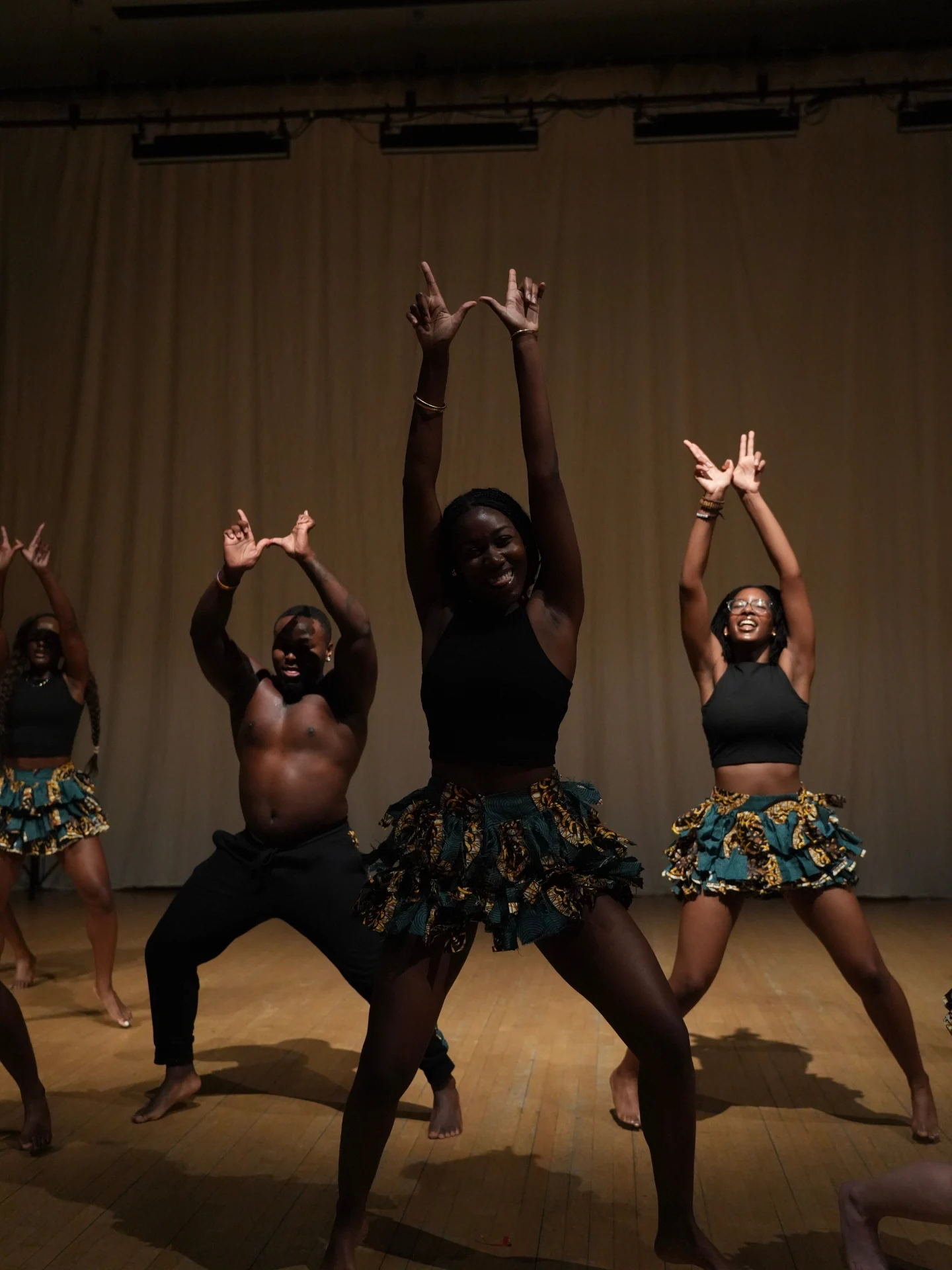
When Ajuwon first tried on her uniform, it did not fit properly.
“Any performer will know the importance of having something fit you really well for you to move comfortably,” Ajuwon noted.
After alterations, Ajuwon said the fit changed how she felt about performing.
“They tailored it for me, and when I put that on, it’s like immediately you get into performance mode. It transforms you into that,” she reminisced.