


Dede Arisekola Is Building a World of Her Own
Most designers at the start of their careers arrive with something to say. Dede Arisekola is charting a less familiar course, guided by a question: “What if the things we inherit were only the beginning of what we could become?”
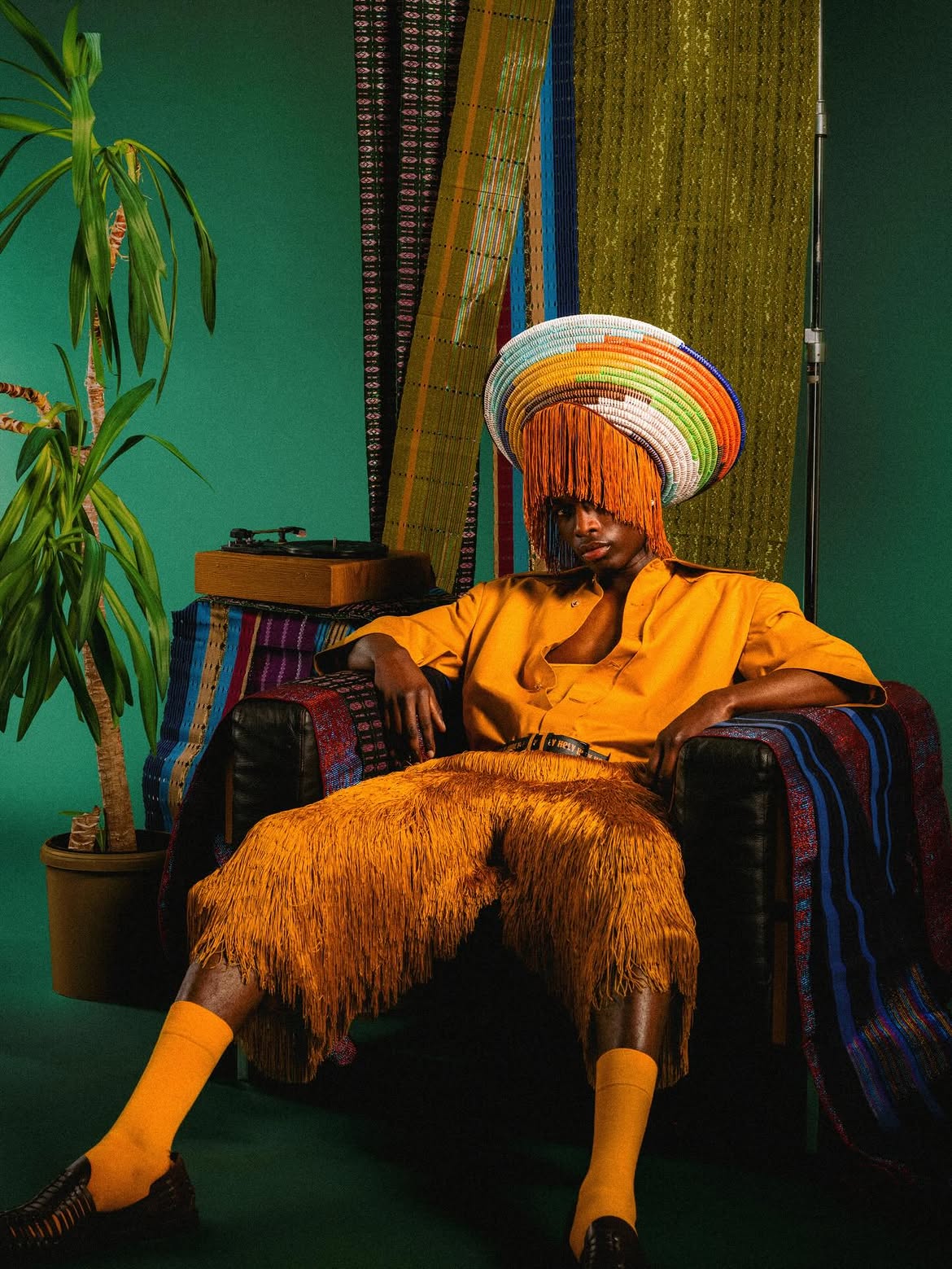
The Irish-born Nigerian designer is interested in the societal expectations woven into the clothes we wear, and she is adding her own touch: sculpted abs, exaggerated collars, dramatic headwear and oversized silhouettes. These are designs that question who gets to define masculinity, what makes a man respectable and why certain ways of dressing carry more authority than others. Her MA graduate collection at Central Saint Martins, presented at London Fashion Week in February 2026, brought these questions into focus. Since then, her practice has continued to evolve, exploring the possibilities of fashion beyond inherited conventions.
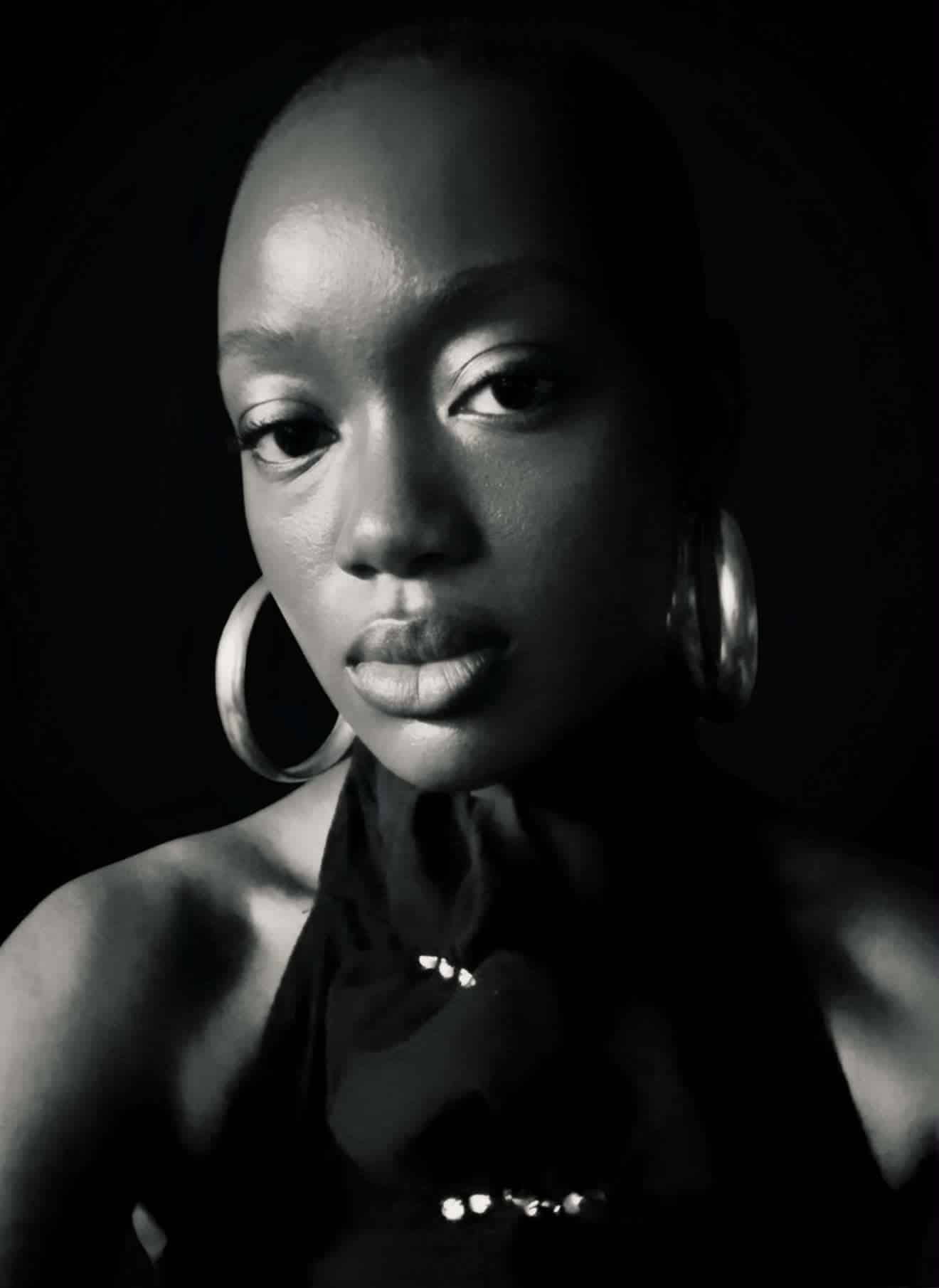
Arisekola gives shape to these ideas through Holy One, her own label, and Afrotopia, the wider creative universe she is building. “This is the universe in which I’m working,” she explains. “Afrotopia is my world. Each project exists in that universe and zooms in on a different dynamic.” For her, Afrofuturism is not about imagined worlds of spaceships and holograms but about the realities unfolding around us. She grounds it in the complexities of human relationships and social dynamics, because futurism seen through a Black and African perspective sits much closer to the world as it is.
Having travelled between Ireland and Nigeria throughout her life, Arisekola has often found herself negotiating an uneasy sense of belonging to Nigeria. Familiar yet at times foreign, the country has occupied a complicated place in her imagination. She is connected to it by heritage, but she has also had to learn to navigate it as a visitor, despite being expected to call it home. Perhaps that in-between experience has shaped her desire to explore her Nigerian heritage on her own terms. She looks beyond the fragments of history and identity handed down to her to develop a more personal understanding of the country and her place within it.
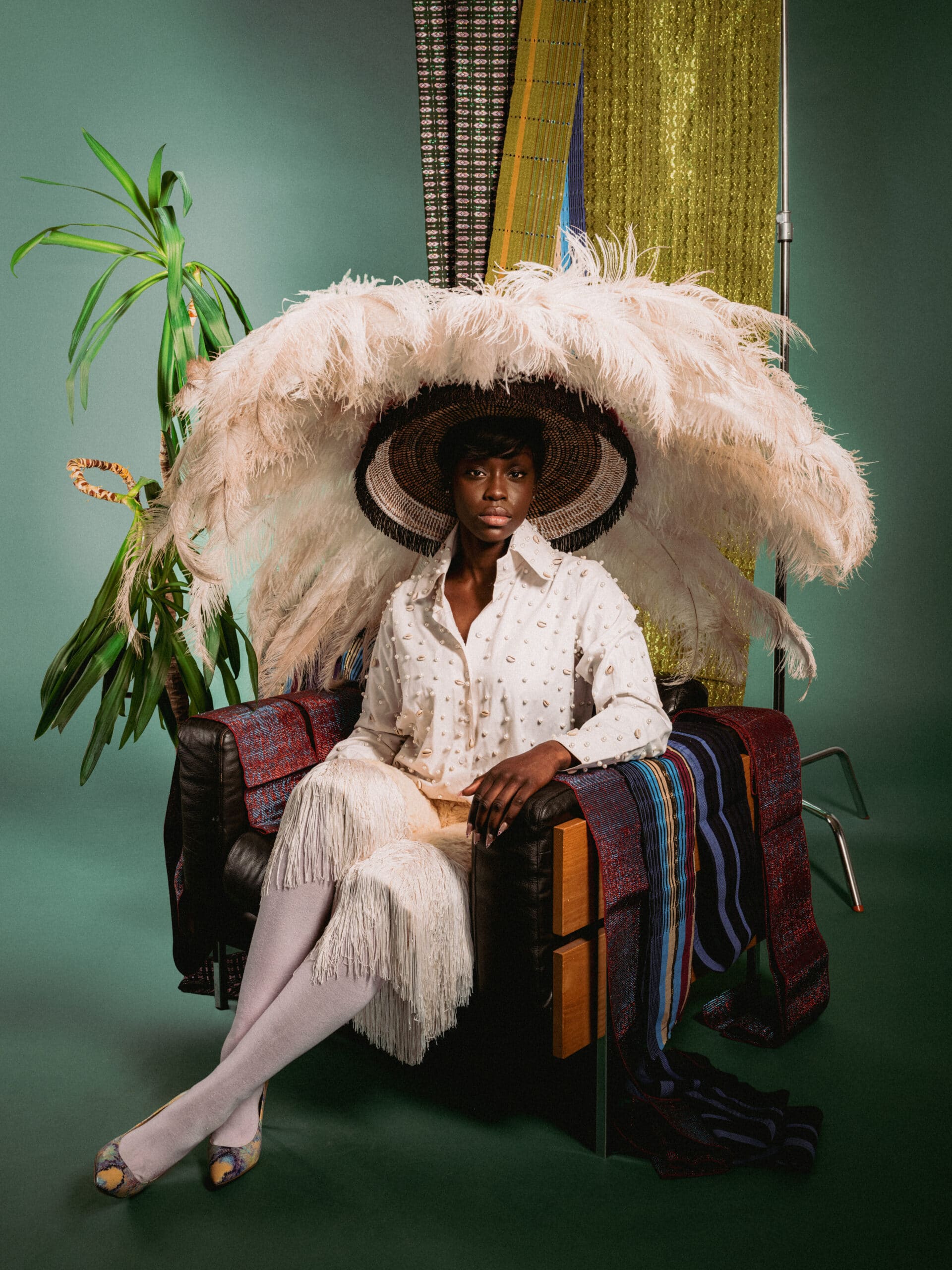
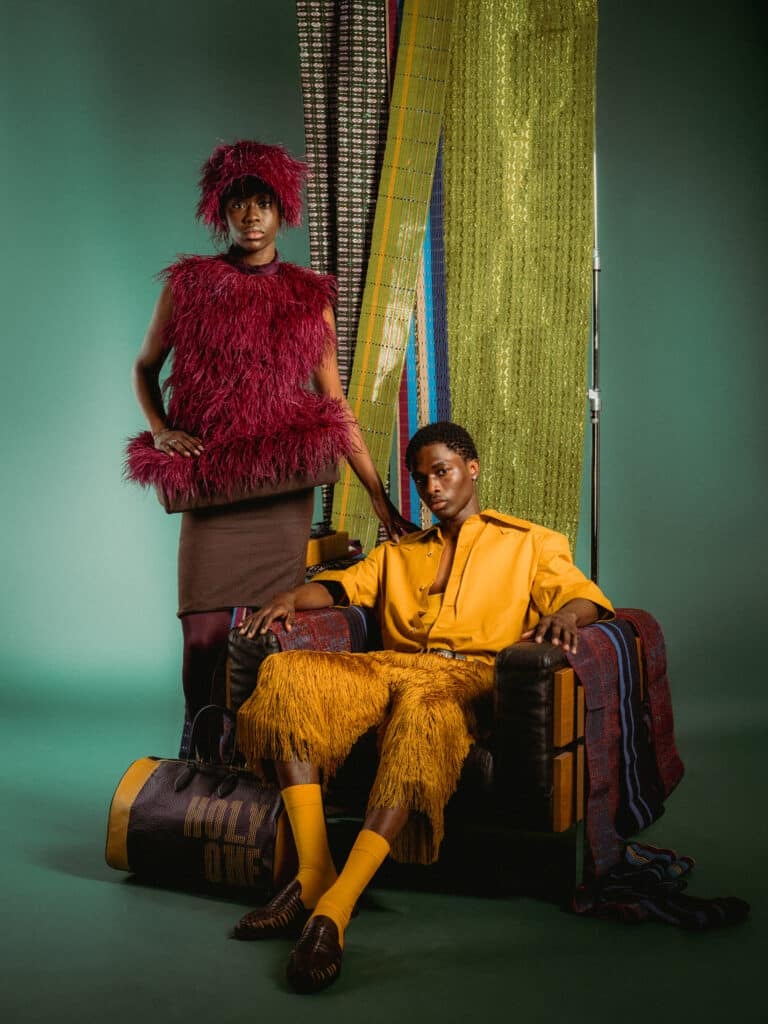
“Fantasy is often described as something made up, but every form of innovation was once fantasy,” Arisekola says. Clothing, in her view, holds a similar possibility: a way to enter and shape a world still taking form. She has resisted the temptation to confine Afrotopia to a single definition. Instead, she imagines it as something expansive, rooted in her identity but never limited by the labels through which that identity might be understood.
There is something peculiarly confessional about the way Arisekola approaches menswear. “I have always been fascinated by the men I never knew,” she says. “As a woman with three sisters, raised in a home without men and educated in all-girls schools for most of my life, masculinity was something I observed from the outside, a world of clichés, contradictions and imagined rules.”
In The Nigerian Gentleman, she blends that curiosity with the colonial history of dress. While researching the Ransome-Kuti family, she kept returning to Fela Kuti‘s music, particularly his song “Gentleman“, which challenges Nigerian men’s imitation of Western standards of respectability. It led her to question the three-piece suit itself. “Why should a Nigerian gentleman be defined by wearing a three-piece suit in a climate where it simply isn’t practical?” she asks.
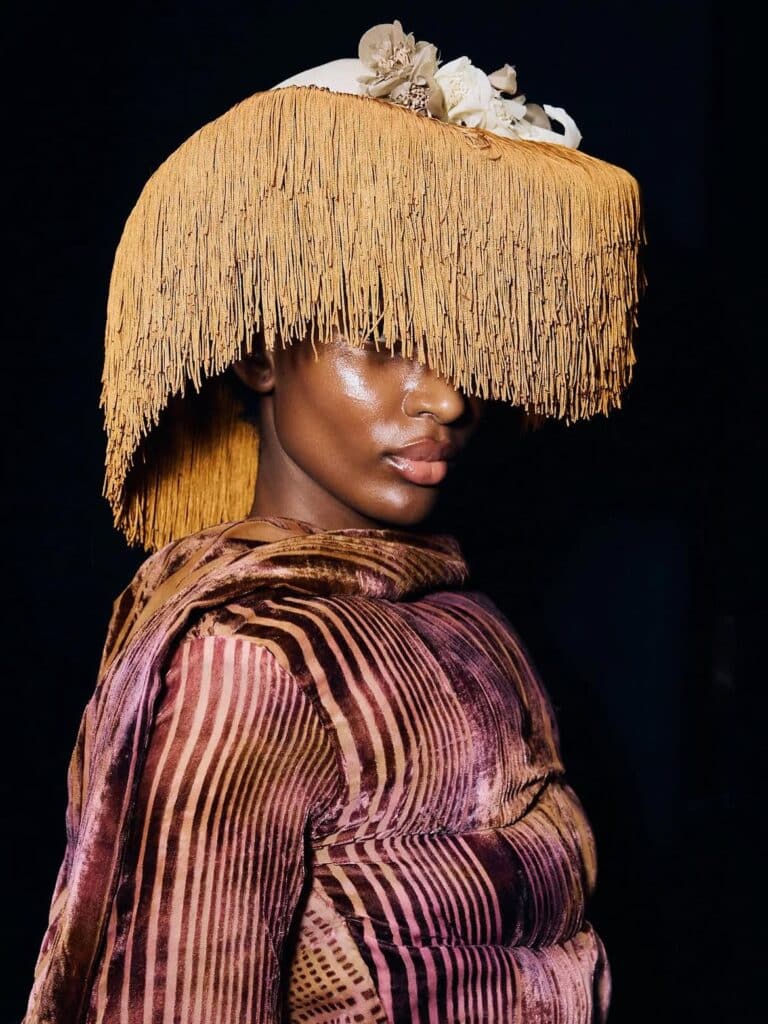
The same questions run through her MA graduate collection. A brown wool jacket with exaggerated shoulders and a broad silhouette is paired with oversized trousers that gather at the ankles. Beneath it, a soft pink cotton shirt is padded at the chest to imitate sculpted abs. Elsewhere, fuchsia feathers, dramatic headwear and contrasting colours challenge the restraint often associated with menswear.
The padded abs are perhaps a reinvention of masculine strength as something visibly constructed. “Masculinity carries such immense pressure to perform that, when you look closely at these expectations, you discover that it is all a form of fantasy, complete make-believe,” Arisekola explains. In her view, masculinity is not a fixed set of rules. “Women are told men are the head, but in practice, our mothers become both parents. The structure we obsess over is basically structure-less,” she says.
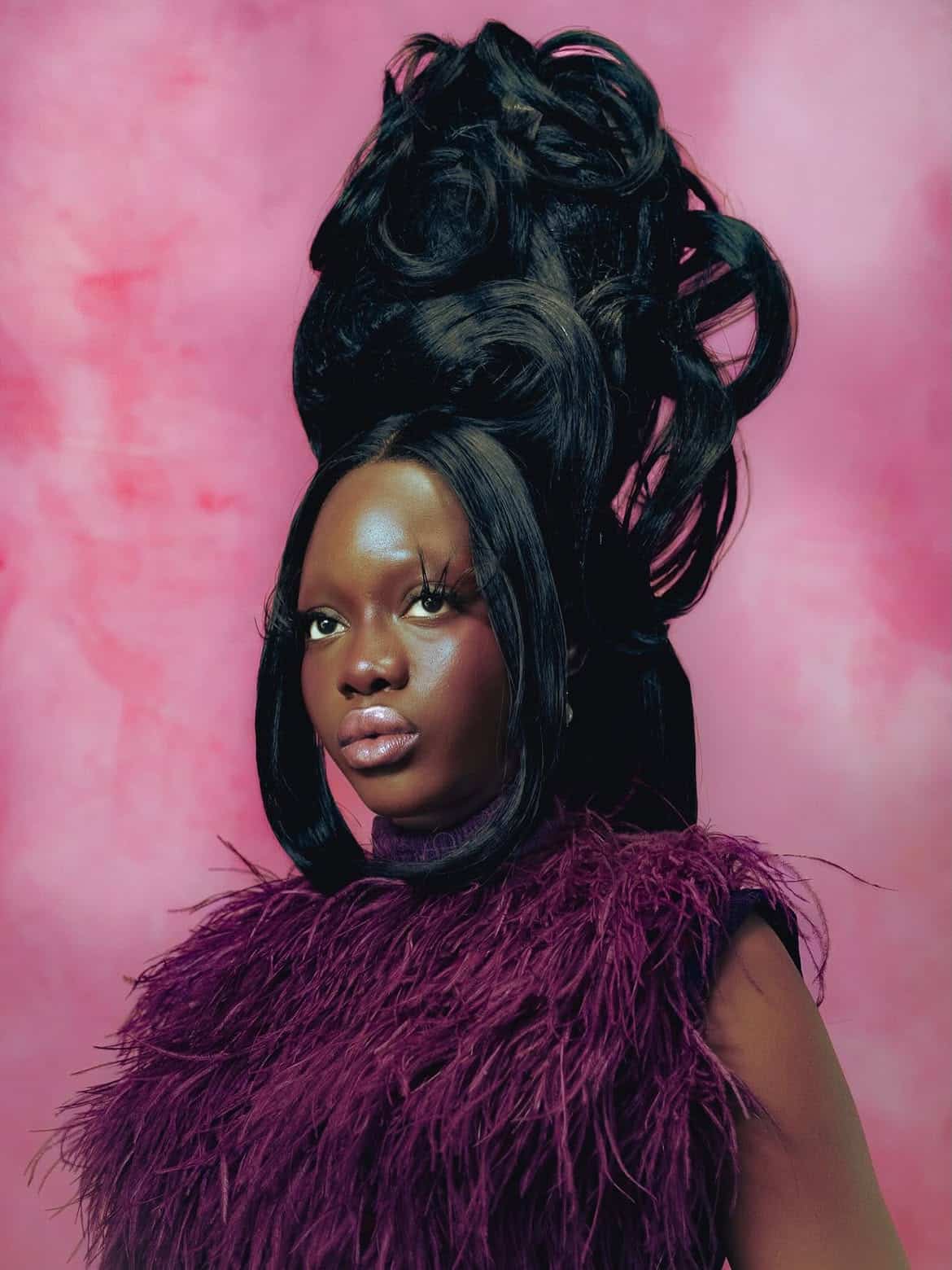
After her MA graduate collection, Arisekola began developing Holy One as her own label. Its next chapter arrived with Second Skin: A Family Portrait, a capsule collection created in collaboration with Jada Puliga. Puliga is the creative director and founder of Prophet, a creative agency and production company working between London and New York.
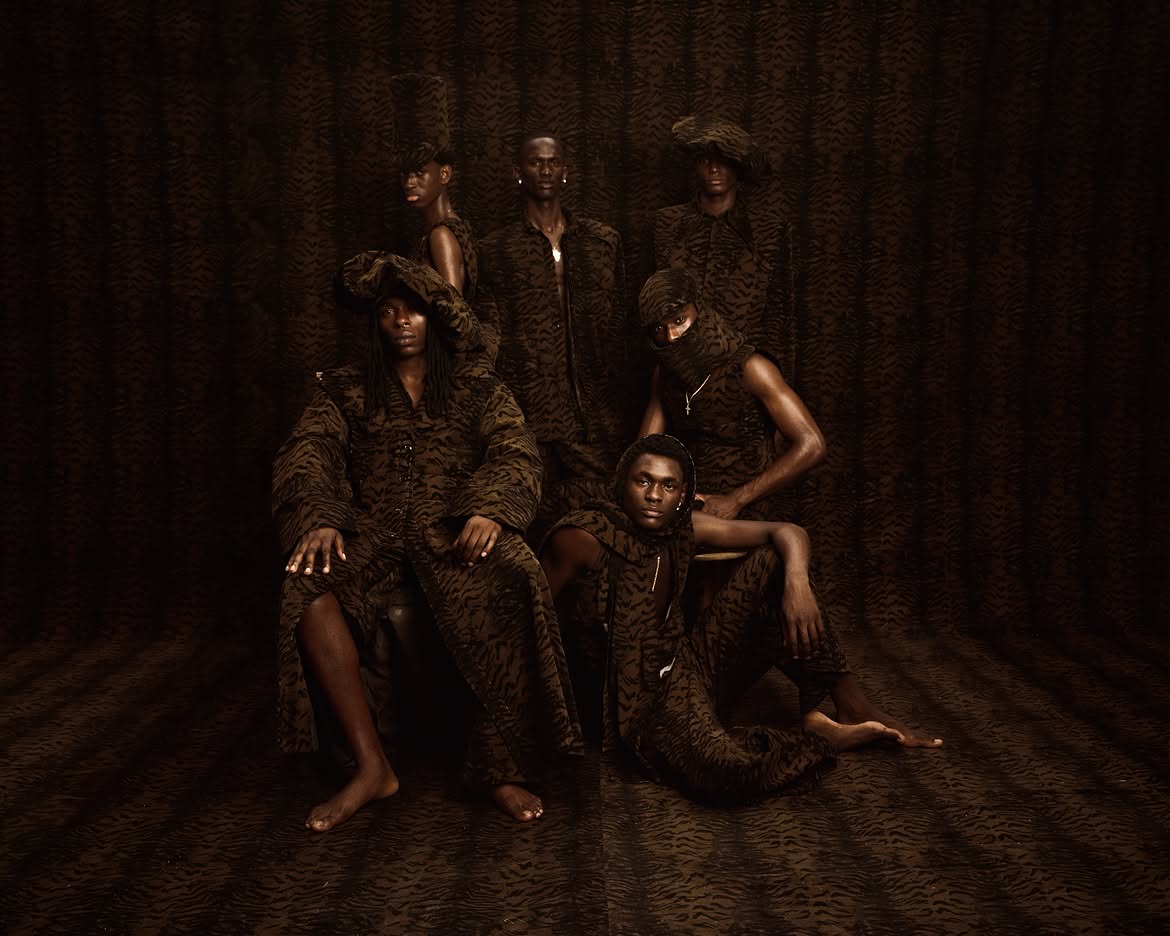
The collaboration brought fashion and film together around a single animal-print fabric. Arisekola wanted to source the print from Nigeria, where she has established relationships with fabric suppliers and found much of the visual language that informs her work. After considering several options, she settled on the print that had immediately caught her eye.
For the first time, she worked with one fabric across an entire collection. What might have felt restrictive gave her a clearer focus instead. Her aim was to create everyday pieces that remained bold, exaggerated and dramatic. The consistency of the fabric held the collection together, while the silhouettes allowed each garment to make its own statement.
The experience also marked a shift in how Arisekola approached her work after graduating. Without tutorials, grades or the pressure of securing a place in a graduate show, she had to learn to trust her own judgement. “Designing the Second Skin capsule felt like freedom, and the response to it felt like confirmation,” she says. “I’ve always had a voice, but I think I now have a much clearer understanding of who I’m speaking to.”
That confidence is increasingly visible in Holy One. Arisekola is drawn to exaggerated shapes, bold prints and styling that moves away from familiar codes of restraint. “I love the shapes and the exaggeration of the clothing, it’s all unapologetically Black. Jackets with nothing underneath, oversized bouncy hats, gaudy prints, it’s a lot, and I love it.”
She isn’t asking her clothes to fit an established idea of good taste. She is interested in what happens when they take up space on their own terms. Her approach is expressive, playful and unapologetic, embracing excess without feeling obliged to make itself more palatable. “I’m no longer waiting for a seat at the table. I’ve set up a picnic outside, and it’s so much more fun.”
Her next stop feels especially fitting: far from home, yet already home in its own way. In the months leading up to Lagos Fashion Week, Arisekola has found herself thinking more and more about the city and the audiences she hopes to reach there. Presenting her first full menswear collection at the event marks a delightful personal milestone, one she had once imagined arriving much later in her career. But the past year has expanded her sense of what is possible. “Lagos will be a celebration of that and an expression of the joy and light I have experienced this year,” she says.
Through Holy One, Arisekola is giving these possibilities a language and a form of their own. At Lagos Fashion Week, she will carry this evolving world, rooted in her identity, heritage and personal experience, into a new setting.