


The Ritual Of Attaya
GUZANGS ATLAS: DAKAR · EDITION ONE
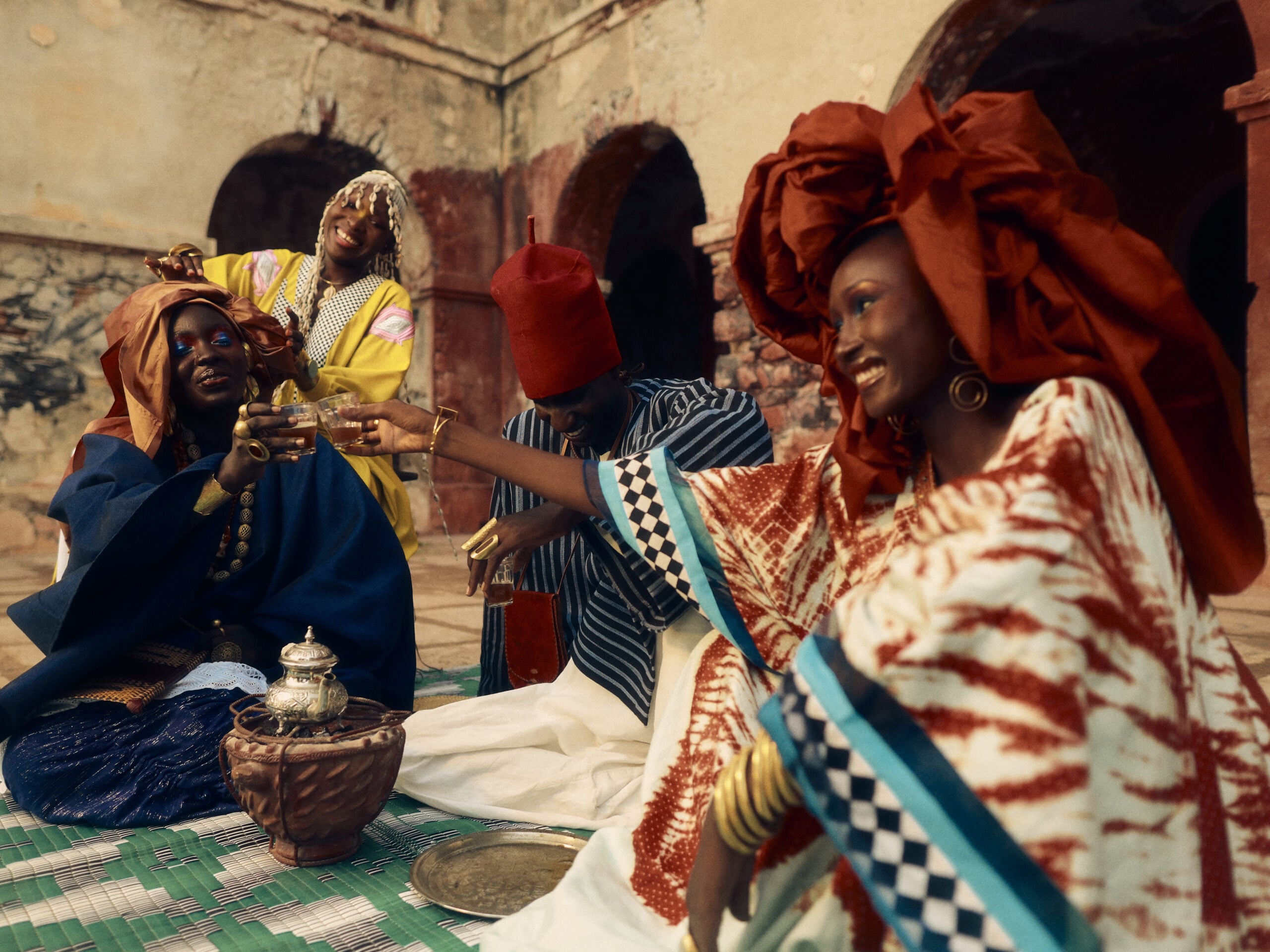
Edition One of the Guzangs Atlas opens on Gorée, in a courtyard, around a pot of attaya.
Attaya belongs to teranga, Senegal’s culture of hospitality. Around a glass of it the conversation slows down, and being offered one means being asked to sit and stay a while.
For the first edition of the Guzangs Atlas, Oury Sène set the ritual in the courtyard of the Palais du Gouverneur on Gorée, an island where history and everyday life sit side by side. The walls are weathered terracotta and the doorways are arched. The palette moves between indigo, solar yellow, light blue and terracotta, and the fans, the cloth and the walls all carry it.
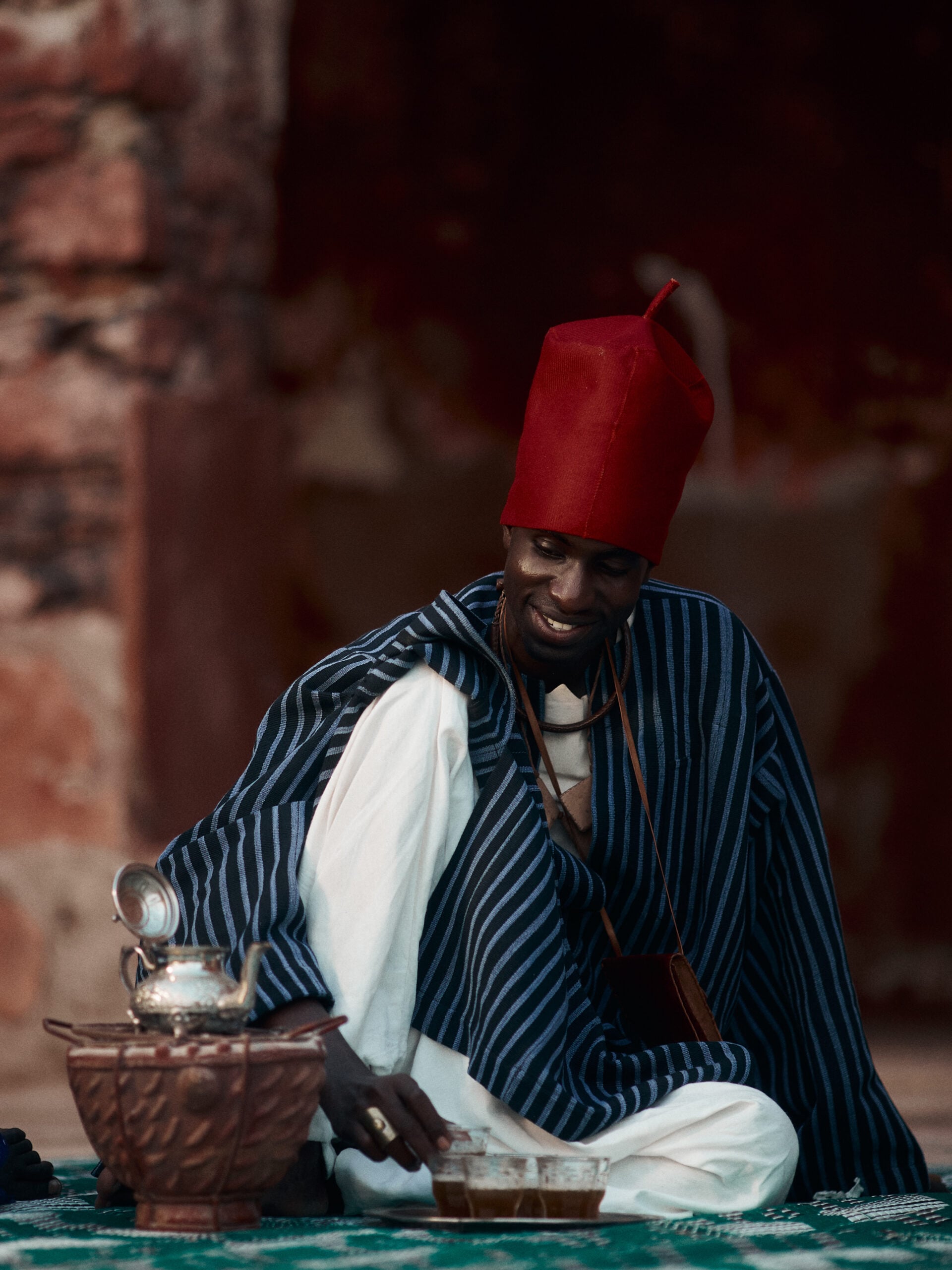
At the centre is a silver teapot over glowing charcoal in an earthenware brazier. The tea comes out amber and is poured into small glasses with a crown of foam. The tea host moves between fire, pot and glass with a practiced hand. Attaya is made and shared in rounds, which set the pace of the conversation, and the preparation counts for as much as the drinking.
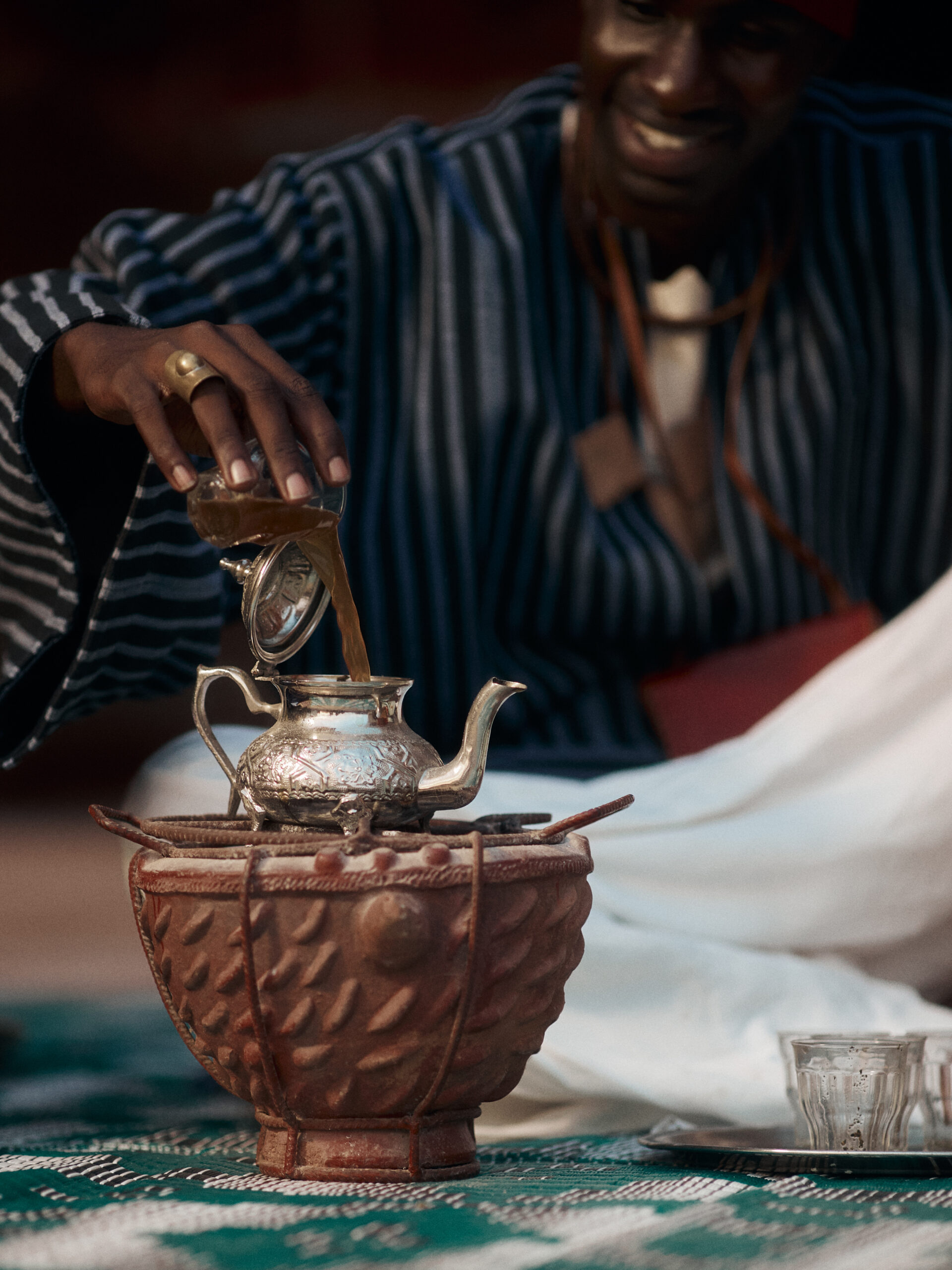
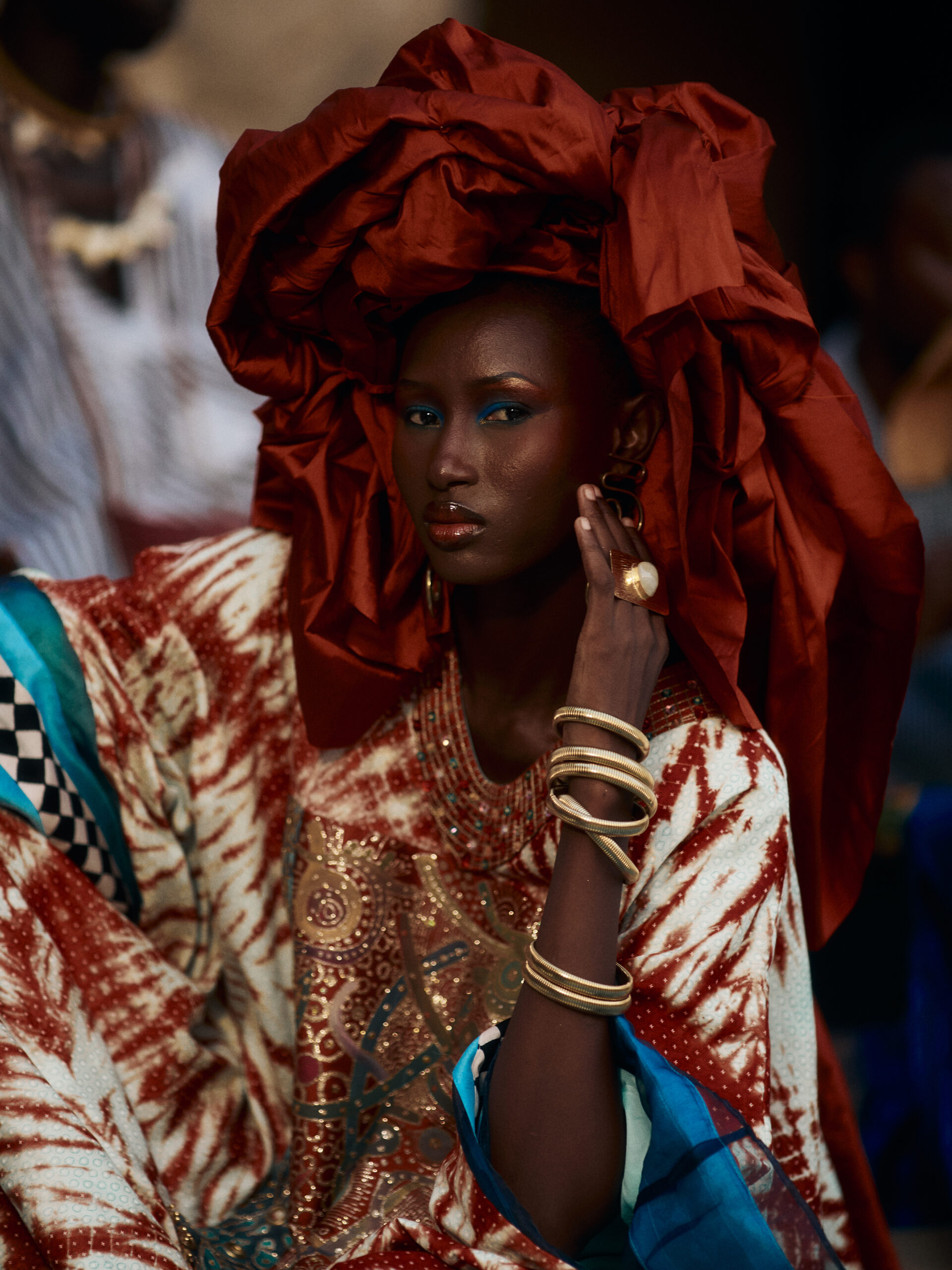
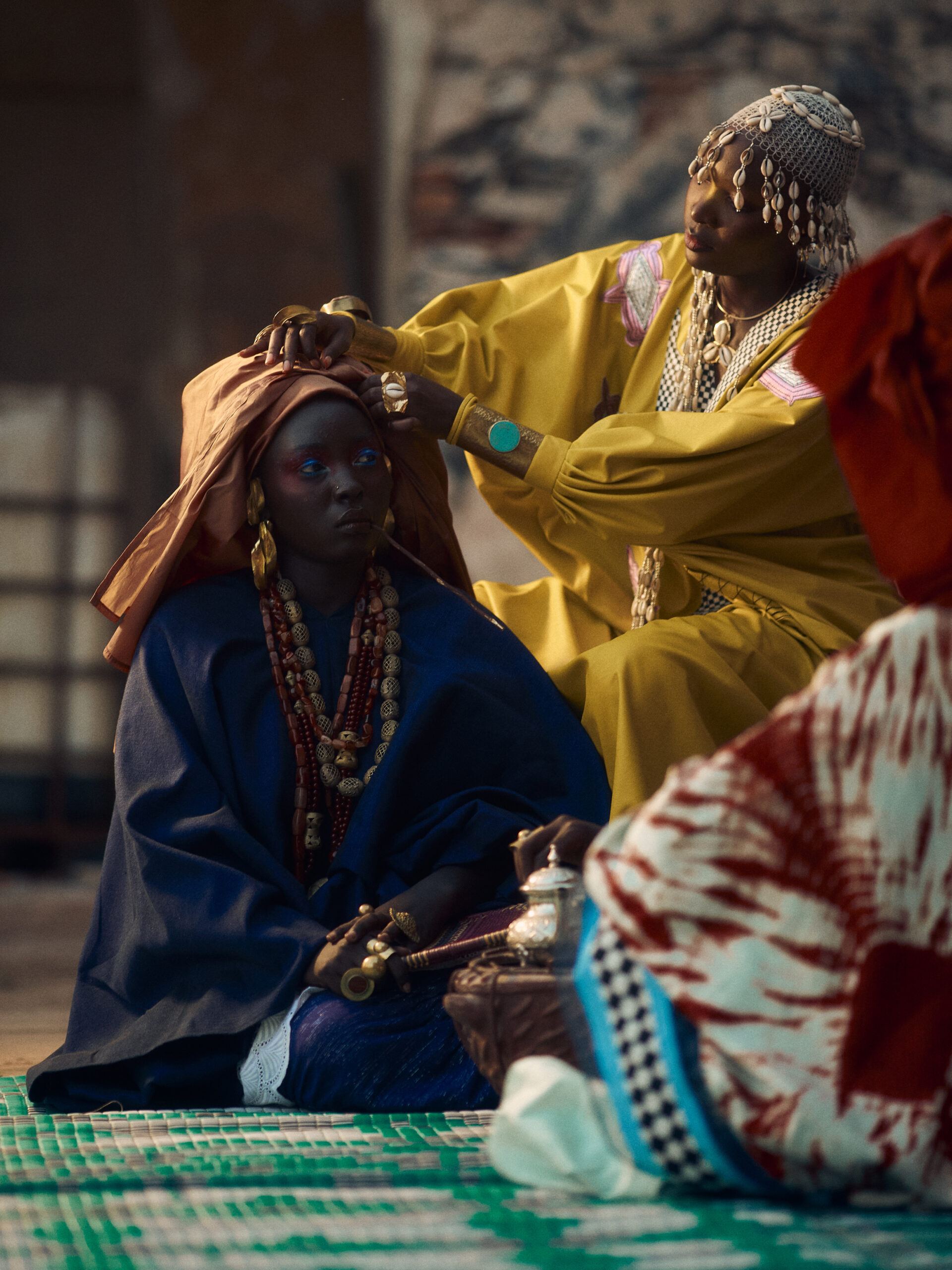
Around the tea, the afternoon carries on. A game of awalé is under way, and woven fans move through the group. The women wear moussors, the sculptural Senegalese headwrap, each one tied to suit the woman wearing it. The headpieces are by Khady Racine of La Dakaroise Stylée. Bronze jewellery from Baalo African Jewelry, Iftiin Studio and La Penderie de Maam sits warm against the patterned cloth.
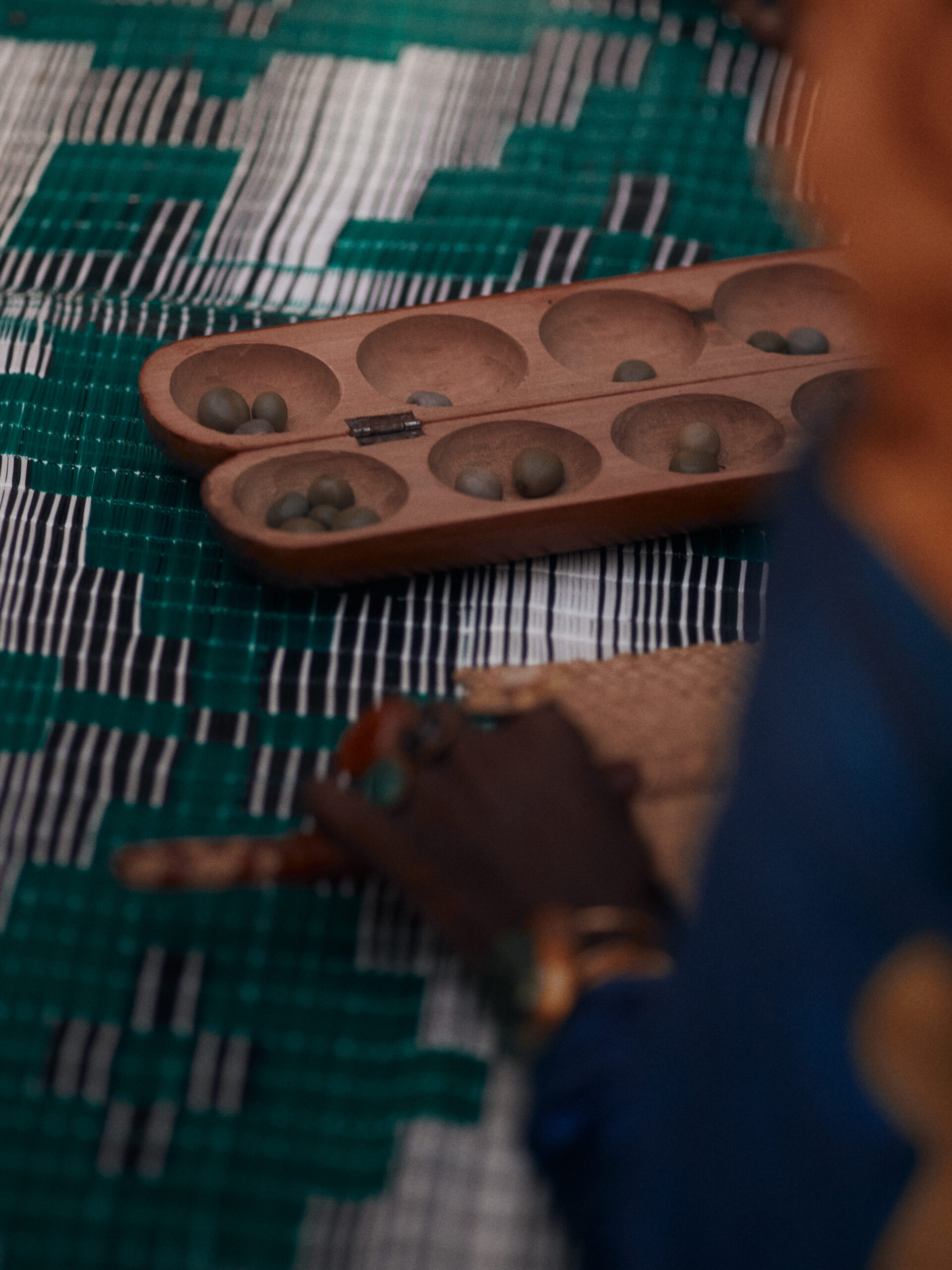
Among the men, the tea host wears a red leather pouch at his neck; his companion wears an amulet necklace and a separate leather pouch. Under everyone is the basang, the woven mat that grounds the scene in something familiar.
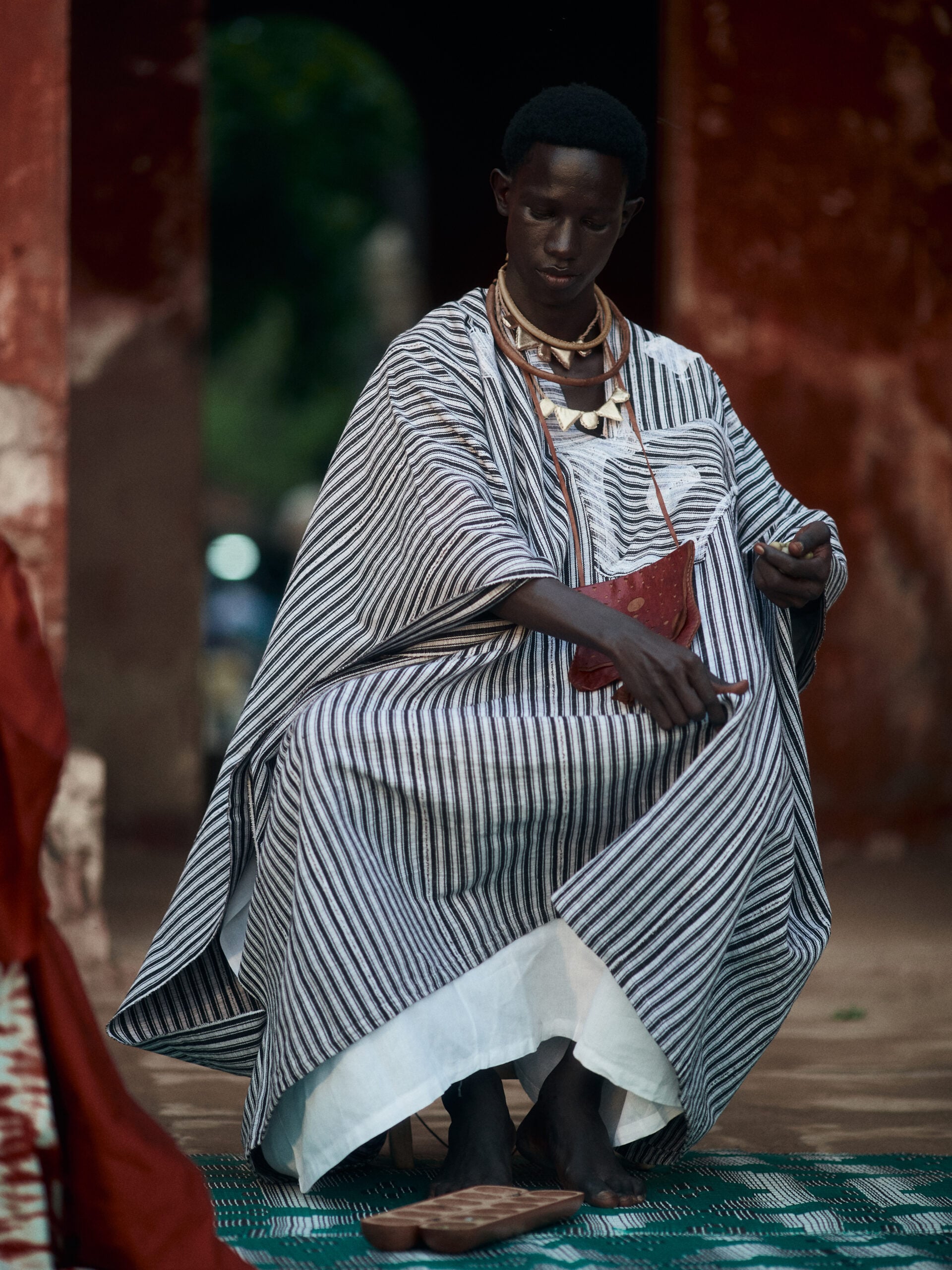
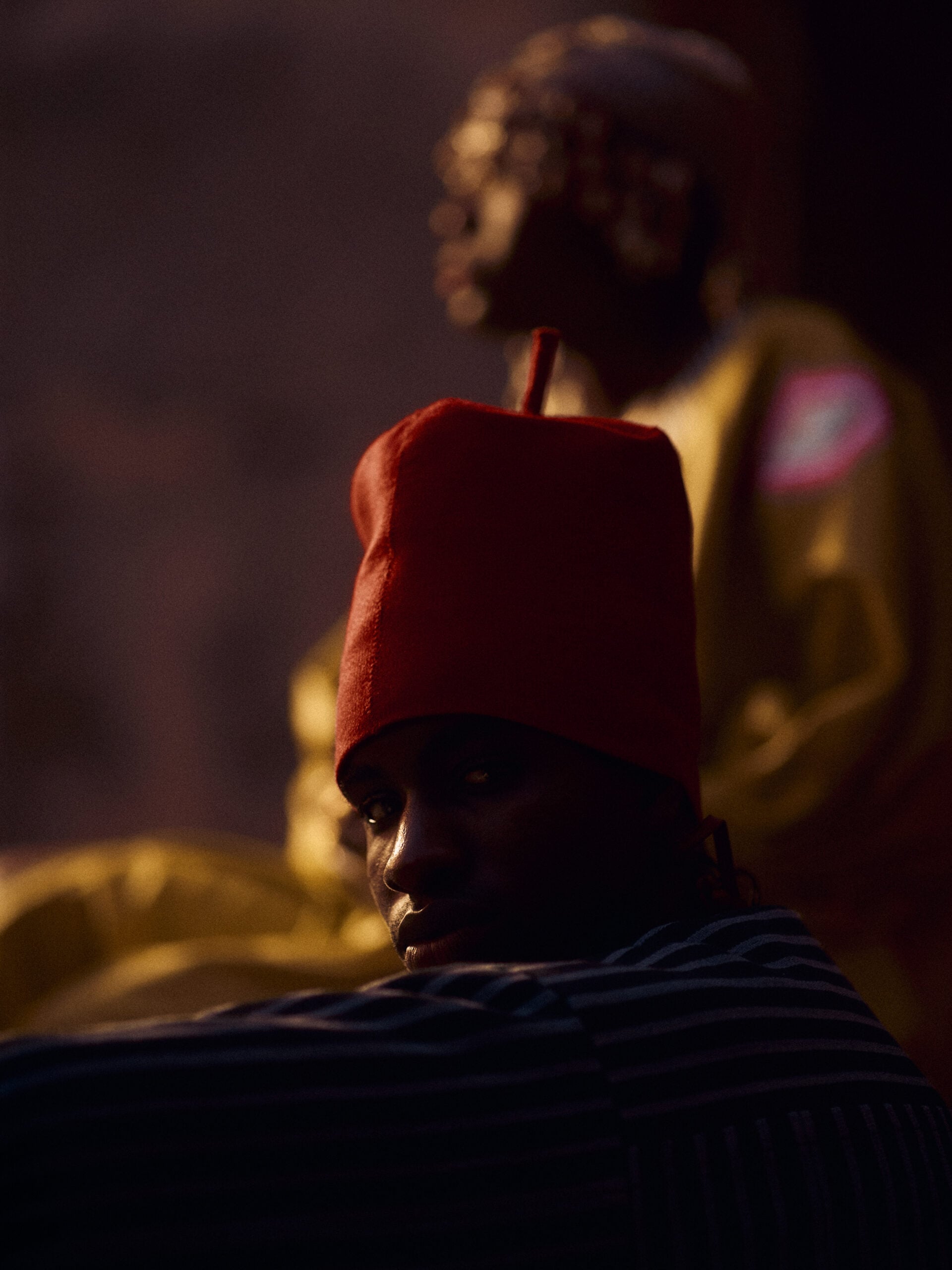
The clothes are by La Penderie de Maam, Selly Raby Kane and Signarame, with shoes and accessories by La Babouche, Maison Amaja and La Penderie de Maam. Oury styled the shoot, with La Dakaroise Stylée, La Penderie de Maam and Le Jardin Jollof as style advisers. Rafiath Radji did the make-up.
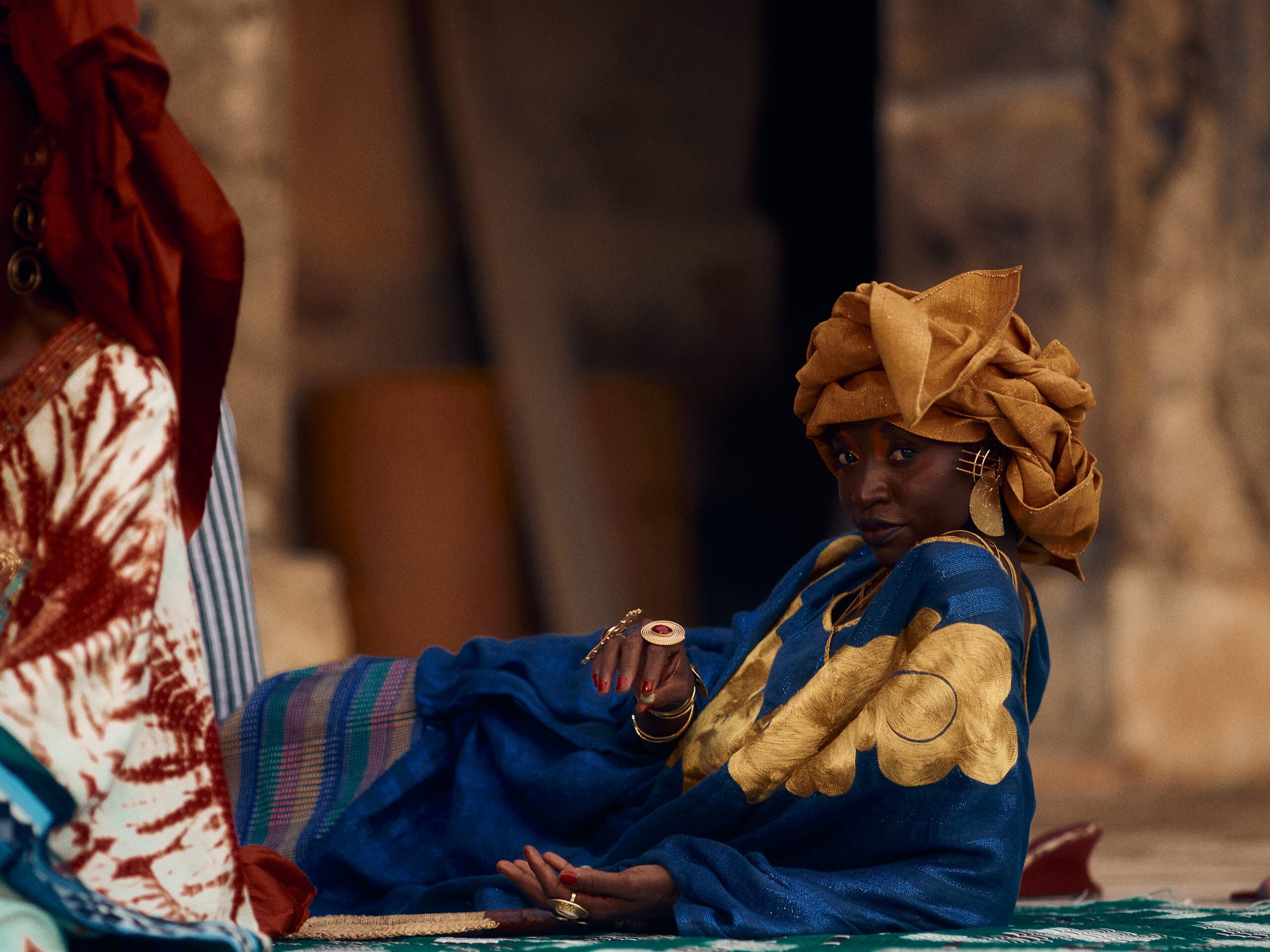
Dakar’s culture is found less in museums than in the things people make and use every day, and in the way they choose to gather.
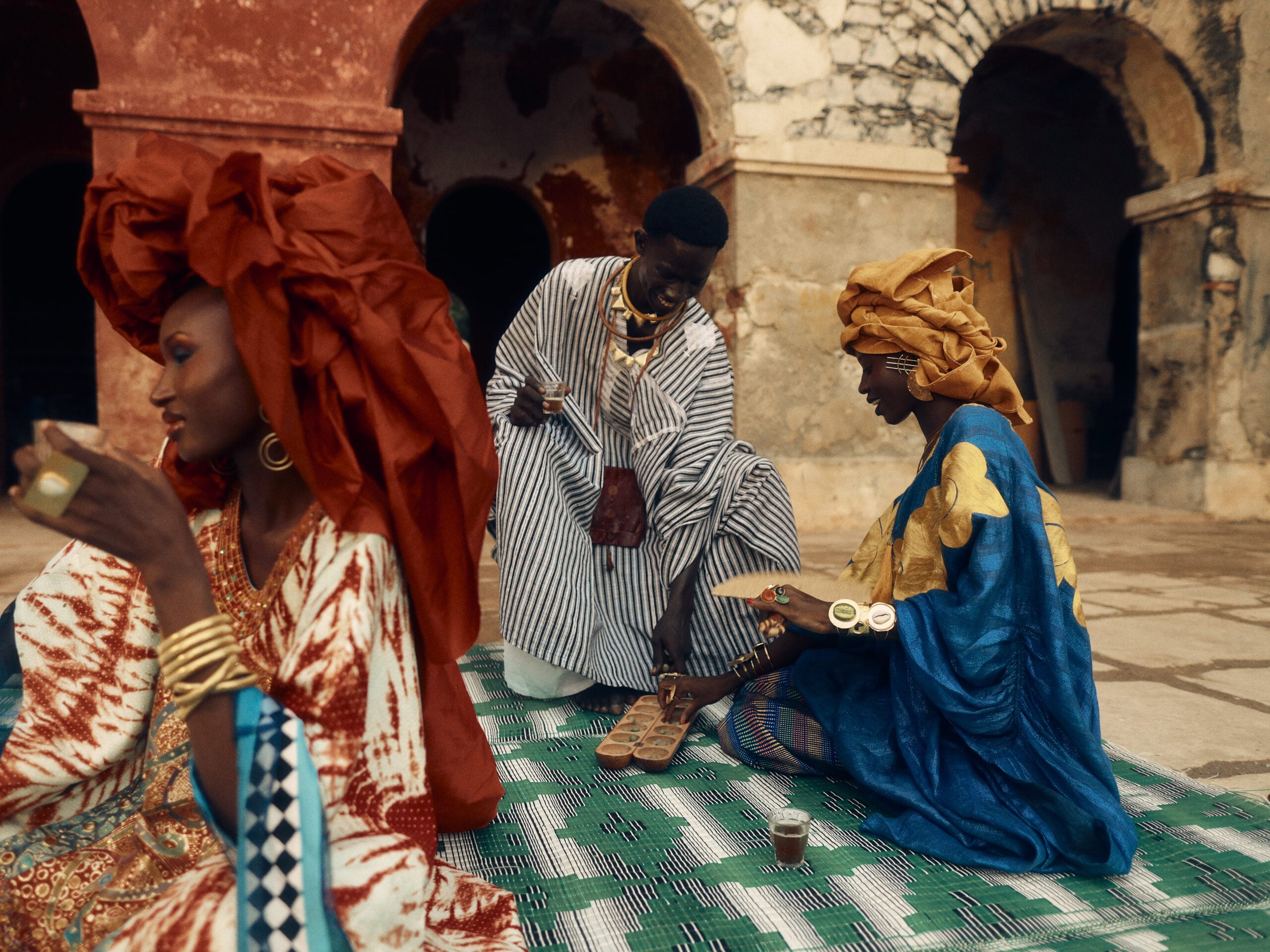
We call this the Architecture of Taste: taste built between people and the materials and customs around them, and changed by each generation that takes it on.
The photographs are by Alexandre Gandaho. The film was shot by Elwis Faton, with sound design and music by Chedrac Mayissa Sossou.
THE LOOKS
Marina Boucal in Signarame, wearing a light blue and rust bazin thioub mboubou, styled with a rust-toned silk head wrap and gold and bronze jewellery.
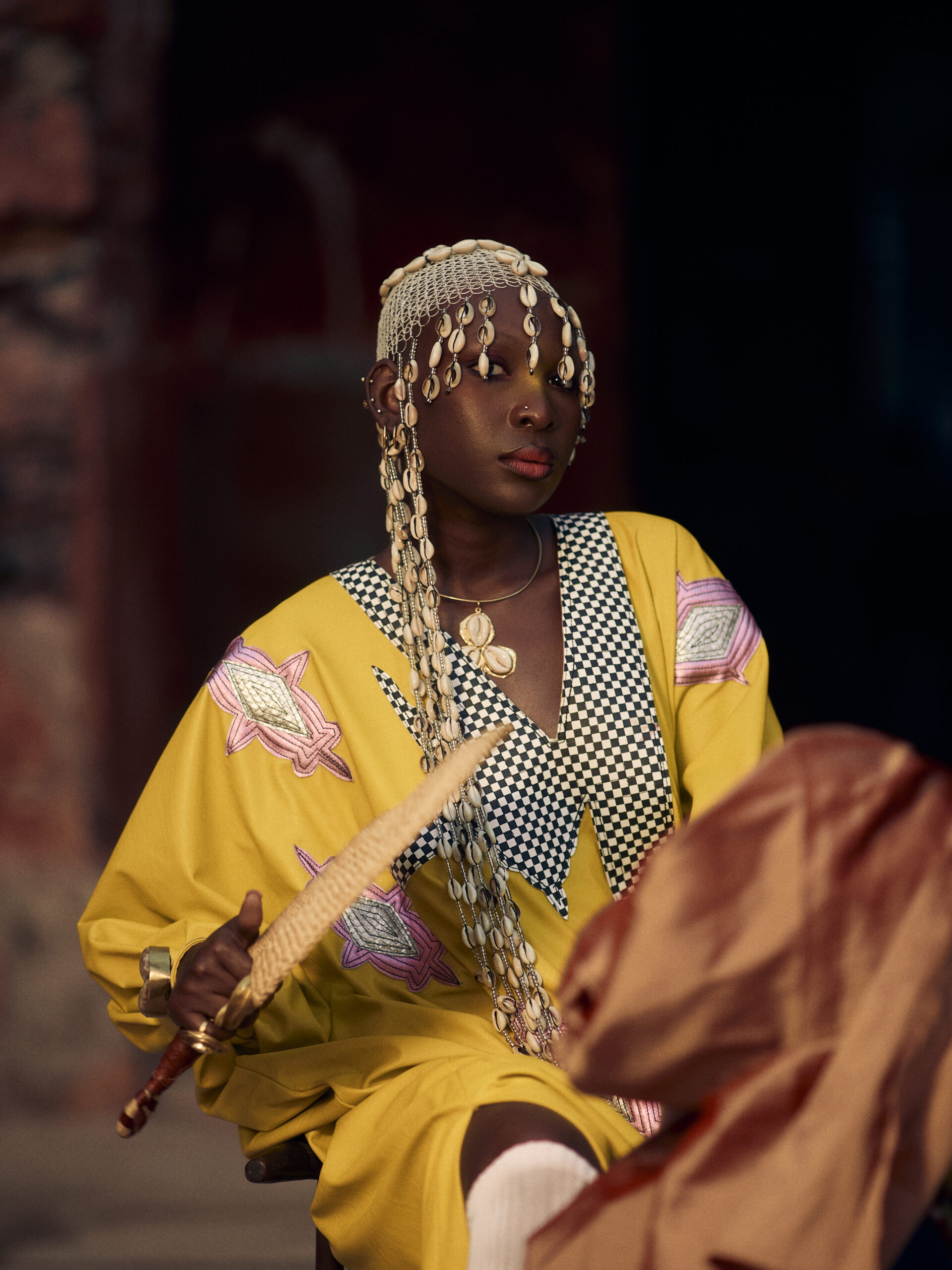
Hollie Freesia Batobanene in Selly Raby Kane, wearing a mustard-yellow vegan leather mboubou with black-and-white checkerboard details, oversized bronze cuffs, and an avant-garde vegan leather headpiece adorned with cowrie shells.
Khadim Dia in La Penderie de Maam, wearing a grey pinstripe mboubou in traditional Serer pagne tissé, accessorized with a leather satchel and talismans.
Doudou Makonen Diop in La Penderie de Maam, wearing an ensemble in contrasting shades of blue, layered with traditional woven pagne and finished with a leather satchel, talismans, and bold stacks of rings.
Ndiaye Fatma in La Penderie de Maam, wearing a short, sleeveless mboubou embroidered in gold, paired with a pagne-tissé wrap skirt and a matching golden woven head wrap. Sculptural cuffs in gold and bronze complete the look.
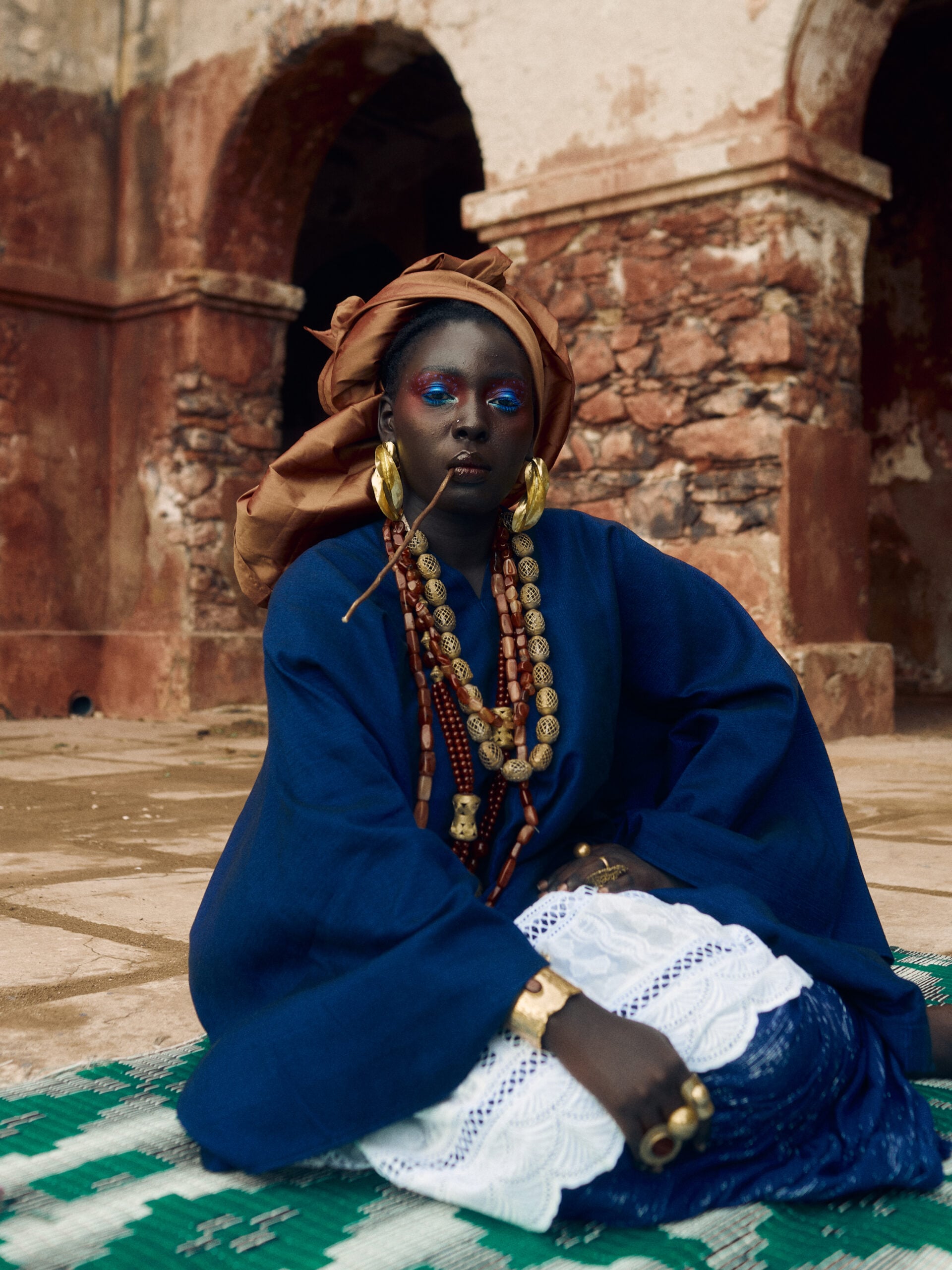
Gnagna Ngom in La Penderie de Maam, wearing an indigo layered ensemble with white broderie details, paired with a pagne-tissé wrap skirt and an orange-gold silk head wrap. Traditional peme necklace stacks and accents of gold and bronze bring depth to the ensemble.
CREDITS
Editorial, creative direction, production lead and styling: Oury Sène
Editorial assistant: Evguenia Sokhna Wade
Photography: Alexandre Gandaho
Cinematography: Elwis Faton
Assistant camera: Brent Olatounde
Sound design and music: Chedrac Mayissa Sossou
Style advisers: La Dakaroise Stylée, La Penderie de Maam, Le Jardin Jollof
Clothing: La Penderie de Maam, Selly Raby Kane, Signarame
Jewellery: Baalo African Jewelry, Iftiin Studio, La Penderie de Maam
Shoes and accessories: La Babouche, Maison Amaja, La Penderie de Maam
Headpieces: Khady Racine, La Dakaroise Stylée
Make-up: Rafiath Radji
Muses: Marina Boucal, Gnagna Ngom, Holly Freesia Batobanene, Khadim Dia, Doudou Makonen Diop, Ndiaye Fatma