

City Codes: Dakar Is Not a Trend
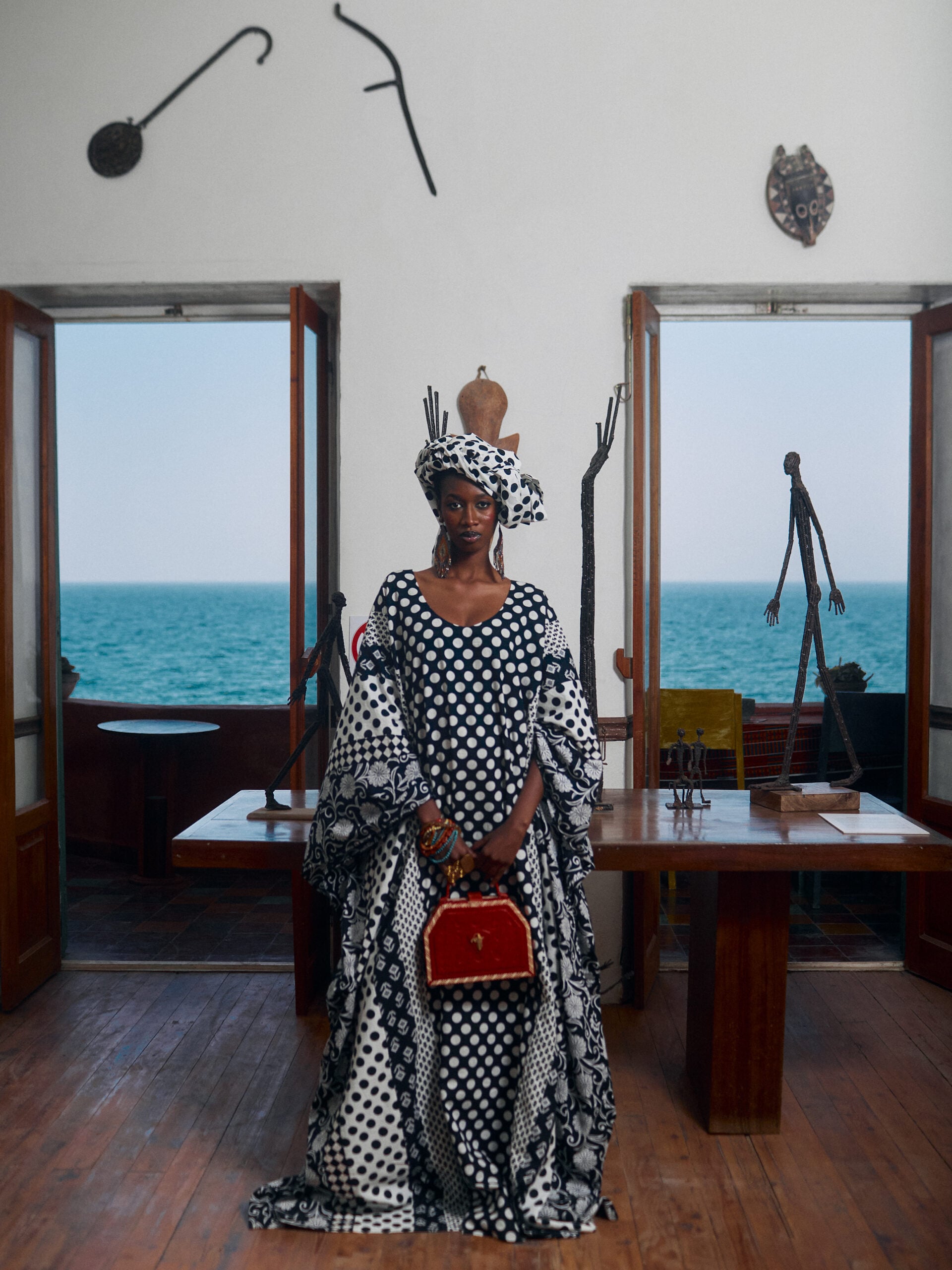
CODE 01: Continuity Over Novelty
Dakar has a way of making newcomers feel they have discovered something: a new creative capital, a rising fashion destination, a city to watch. Usually, they have simply arrived late.
To call a city “one to watch” says as much about the watcher as it does about the city. Lately, the notices have come often. Dakar appears in travel lists, fashion coverage and roundups of creative hubs, usually accompanied by Atlantic light, a car rapide, a sharply cut boubou or a designer described as part of a new wave. The coverage is admiring. It is also written as an arrival story.
The dates make that story difficult to sustain. Dakar Fashion Week has run since 2002, including years when international fashion showed little interest in African designers who had not first been endorsed abroad. Dak’Art was instituted by the Senegalese state in 1989. The 1990 edition was devoted to literature; visual art followed in 1992, and the biennale later focused on contemporary African art. In 1966, Dakar hosted the First World Festival of Negro Arts, drawing artists, writers, musicians and thinkers from Africa and the diaspora.
That festival did not make Dakar cultural any more than Fashion Week made the city stylish. Both gave a stage to habits, ambitions and arguments that already had lives elsewhere: in ateliers and classrooms, in portrait studios, museums, markets and publishing projects. The 1966 festival belonged to a larger debate about Négritude, decolonisation and Africa’s place in modern thought. Fashion Week depends on a culture of dress with its own suppliers, standards, customers and calendar. Dak’Art draws on artists and spaces that do not go dormant between editions.
None of this means attention is unwelcome. Being overlooked is not a form of purity. International interest can bring money, commissions, travel and useful exchange. The distortion begins when the arrival of an audience is confused with the beginning of the work. Decades get collapsed into a season. A city with its own rhythms is recast as newly available, ready to be entered quickly and understood later.
Dakar is not becoming central so much as it is being looked at again.
CODE 02: The System Under the Image
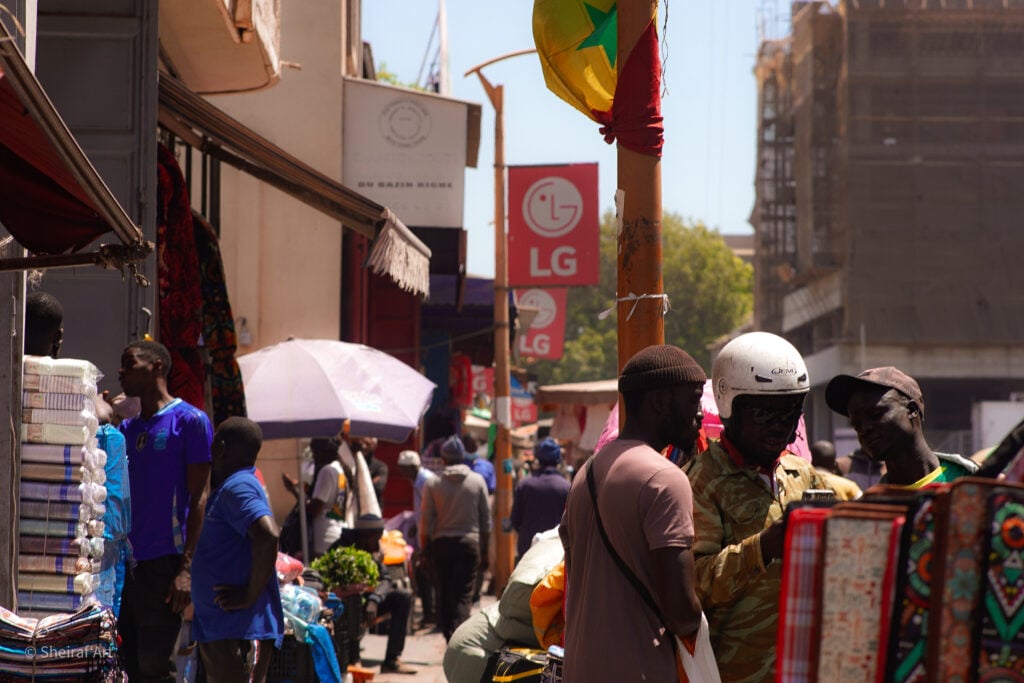
On a Tuesday afternoon in Ouakam, a tailor holds a sleeve up to the window light and shakes his head. The client, a woman collecting a boubou for her sister’s baptism on Saturday, has not complained. He unpicks it anyway. The bazin was bought two weeks earlier at Marché HLM, after twenty minutes of negotiation that had less to do with price than with which trader’s cloth would hold its sheen after the third wash. The woman knows this; her mother bought from the same family of traders. Nothing about the transaction will appear in a campaign, and none of it needs to. The garment already has an audience: a courtyard in Grand Dakar on Saturday, with everyone watching.
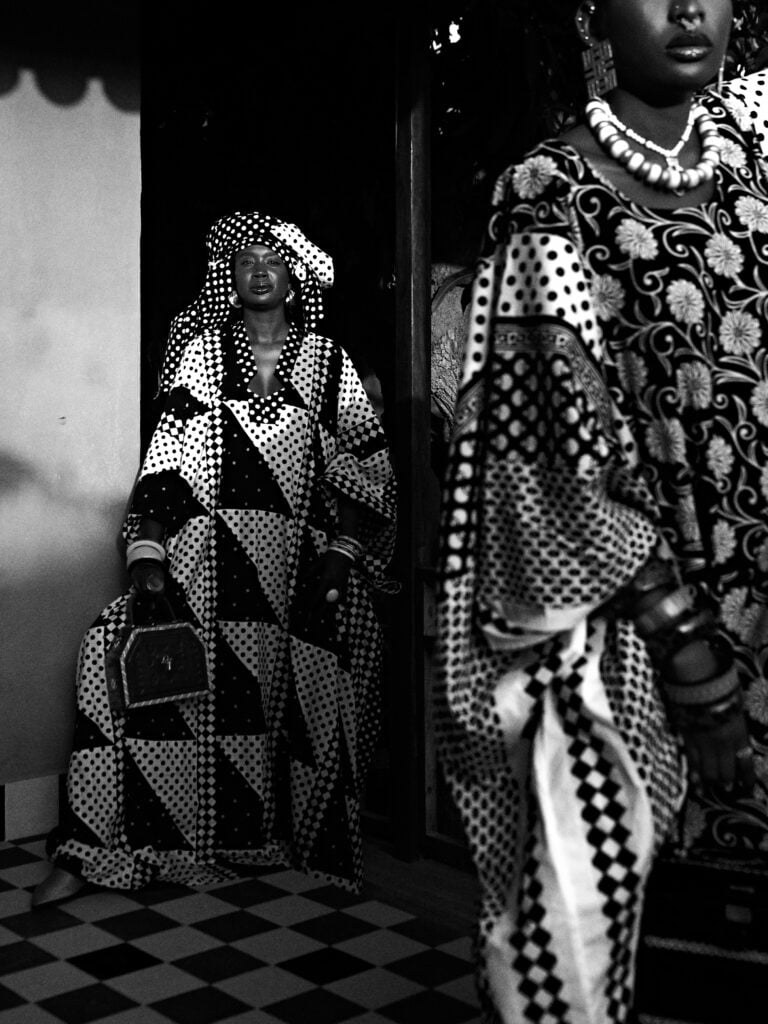
There is more fashion knowledge in that exchange than a runway photograph can show. The trader knows the cloth. The tailor knows that a sleeve can be technically finished and still wrong. The client knows the room the garment is about to enter. Each is working against a deadline set not by a show schedule but by family life.
This is how much of Dakar’s fashion economy operates. Its base is dispersed among fabric sellers, tailors, embroiderers, dyers, accessory makers and small ateliers. Skills move through apprenticeship and correction; reputations move through families and repeat customers. The customer is not a passive endpoint. She may arrive with firm ideas about weight, fall, colour and proportion, then reject a choice that would look perfectly acceptable to someone less familiar with the codes.
The boubou and the mossor keep changing inside this circuit. So does sagnsé, the Wolof idea of presenting oneself through dress. These are living practices, responsive to new fabrics and tastes without requiring a foreign market to make them contemporary. Senegalese dress is part of a West African language whose materials and references cross borders, but Dakar has a recognisable feeling for silhouette: volume held in check, ornament that does not overwhelm the line.
Art is often misread in the same way. A biennale has a clean opening date, which makes it tempting to treat everything around it as an effect of the event. Dakar’s art world is less orderly. The Musée Théodore Monod d’Art africain–IFAN holds historical collections and stages exhibitions. The Village des Arts provides working space. Raw Material Company has spent years on artistic practice, curatorial thought, education and research. When Dak’Art opens, galleries, studios, houses and temporary venues join the official programme. When it closes, many of them simply continue with their year.
The city had a sophisticated relationship with images long before the current appetite for Dakar editorials. Portrait studios were flourishing in Senegal by the middle of the twentieth century. Mama and Salla Casset photographed clients who used clothing, posture and setting to decide how they would meet the camera. Their sitters were participants in the image, not local colour arranged for somebody else’s account. The technology and audience have changed; the question underneath has not. Who makes the picture of Senegal, and who is it for?
Dakar’s classrooms are part of the story. The city became the capital of French West Africa in 1902, concentrating colonial administration and education there. That history was coercive, but the regional routes it produced did not vanish with independence. IFAN was established in 1936. The University of Dakar followed in 1957 and became Université Cheikh Anta Diop in 1987. For generations, students from Senegal and neighbouring countries have come to Dakar to study, organise, argue and begin professional lives.
Senghor, Cheikh Anta Diop and Ousmane Sembène are invoked so often that they can crowd out the culture they are meant to explain. Even so, each changed the terms of a field: Senghor by placing art within state philosophy, Diop by challenging inherited accounts of African history, Sembène by treating cinema as a public language. Around and after them, artists, filmmakers, historians, architects, writers and critics kept arguing over how Africa would see itself after empire.
Those arguments now move through classrooms, studios, screenings, books and the conversations that continue after an opening has emptied out. Dakar is linked to Abidjan, Paris and Brussels through education, migration, galleries and family ties. European institutions still affect access to money and mobility, but the traffic is not one-way and Europe is not the only destination.
Much of the economy underneath all this is small, personal and underfinanced. A business may have serious expertise, loyal customers and no reliable access to capital. An atelier may be capable of extraordinary work and unable to absorb a sudden large order. That tension is part of Dakar’s reality. So is the fact that the work is spread widely enough that no sponsor or festival can switch it on for a season. It was already happening on Tuesday afternoon in Ouakam.
CODE 03: The Cost of Misreading
The problem with trend language is not that it hurts a city’s feelings. It sets the wrong clock.
A certain kind of visit is built to last a week. A team arrives for a campaign, a pop-up, a launch or a run of meetings. It needs locations, introductions and a finished story, all on deadline. Local producers, photographers, designers and coordinators are asked to make the city legible at speed. The budget may be substantial. The relationship usually ends when the project does.
That arrangement favours whatever can be made visible by departure. A runway, a dinner and a collaboration announcement travel well. Production capacity, better equipment, workable payment terms and distribution do not. Yet those are the things that determine whether a designer can fill the orders generated by new attention without exhausting an atelier, or whether there will be an atelier left to call next season.
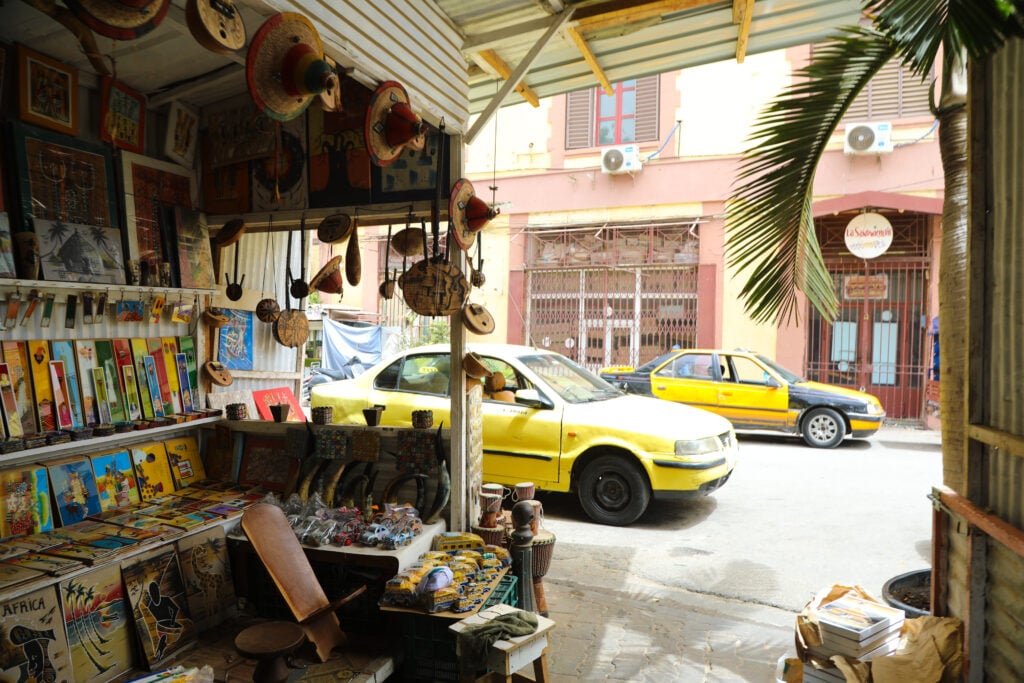
The pressure also reaches the work itself. A local operator learns quickly which version of Dakar an outside audience finds easiest to buy: colourful, handmade, coastal, “authentic.” Projects that fit the picture move faster than those that complicate it. Exchange has always shaped the city, and no culture survives by refusing influence. But exchange becomes something else when one side has to remain recognisable and available while the other can leave as soon as the look changes.
What people remember afterward is practical. Who answered. Who paid when promised. Who used a name in the credit and who quietly removed it. Which partnership existed beyond the announcement. The next company arrives inside that memory, whether it knows it or not. Local organisations become more cautious; brands wonder why access feels harder than it did in the pitch deck.
A company planning to return behaves differently from the start. It seeks local counsel before the concept has hardened, while that knowledge can still change the idea rather than merely execute it. It uses clear contracts and payment terms that do not force small partners to finance large clients. It comes back after the launch, commissions a second project and asks what remains useful once the visiting team has gone home.
These choices rarely appear in campaign coverage. They are also cheaper than repeatedly arriving as a stranger.
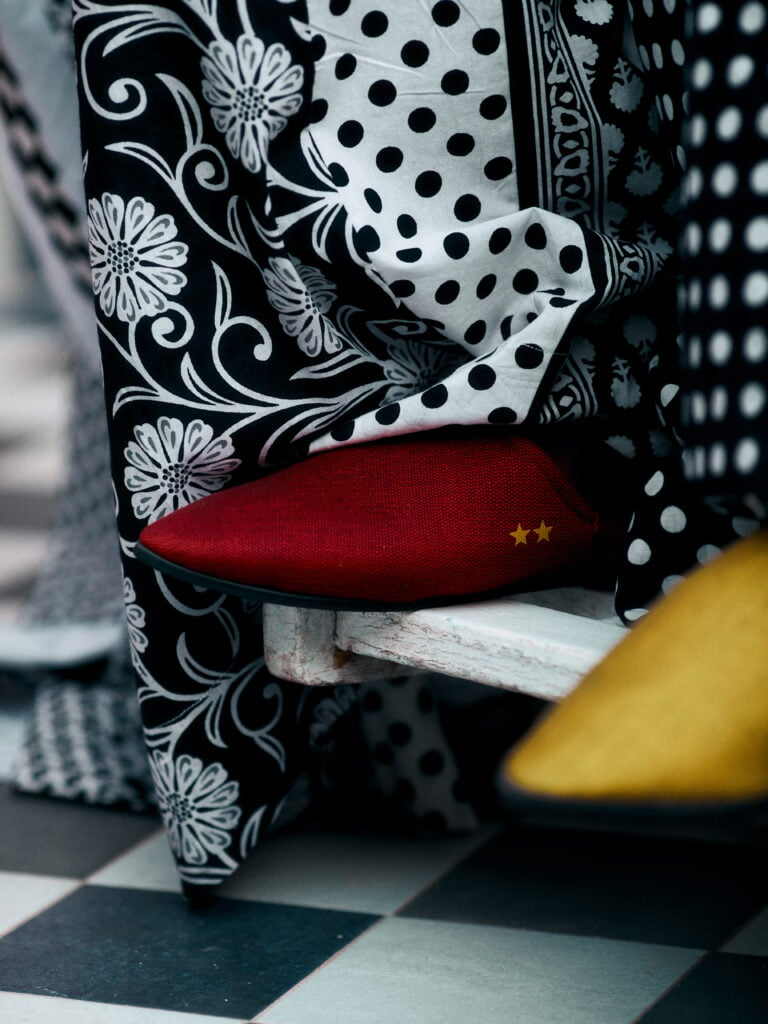
CODE 04: A Market to Learn
More attention will come. The question is what it learns while it is there and what, if anything, it leaves behind.
For a serious entrant, Dakar is a market to learn, shaped by local demand, public institutions, informal enterprise and movement across the region. That work begins with noticing who makes, supplies, teaches, introduces and remembers. A guest list is not a network, and a successful shoot is not yet a relationship.
International coverage will probably keep discovering Dakar. That is what international coverage does. The city will keep moving on its own calendar, carrying the 1966 festival, the university lecture hall, the portrait studio, the museum collection, the market stall and the neighbourhood atelier into the same present.
On Saturday, the boubou from Ouakam will enter a courtyard in Grand Dakar. The sleeve will fall correctly. Everyone who matters to the garment will already be watching.
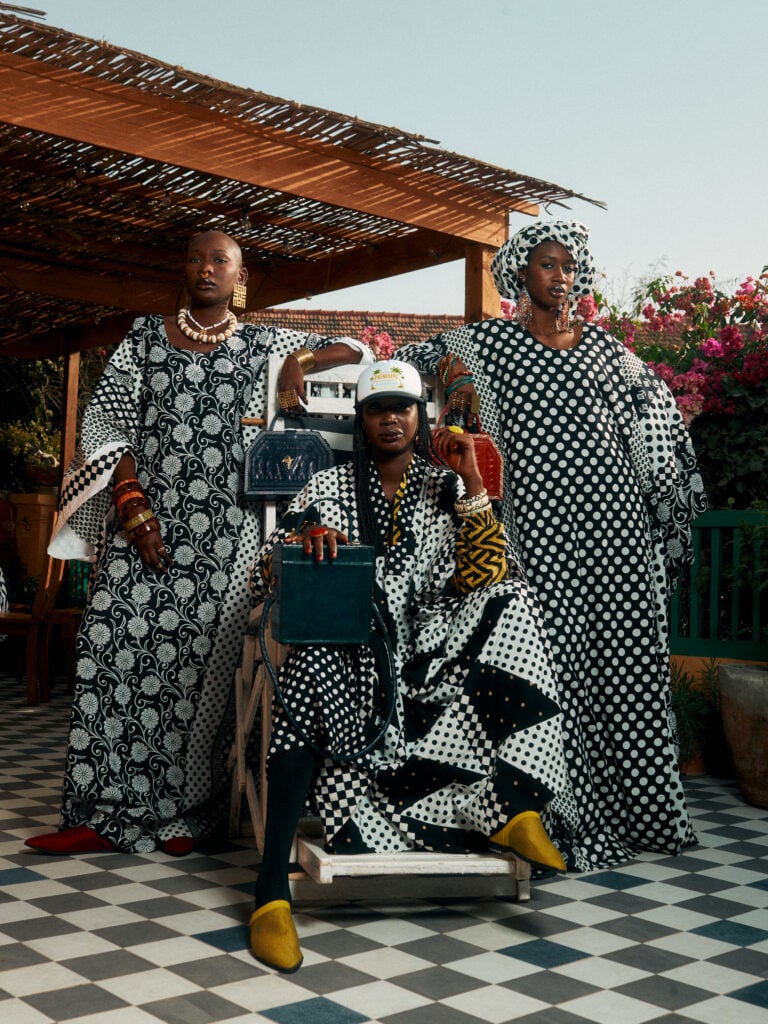
Photography: Alexandre Gandaho (@alex_photography2310)
Creative Direction: Khady Racine, Alexandre Gandaho (@alex_photography2310) & Oury Sene (@ceedalstudio)
Styling: Khady Racine & Oury Sene (@ceedalstudio)
Outfits: Signarame (@signarame)
Accessories: La Babouche (@lababouchetm) & Primaire Studio (@primaire_studio)
Muses: Fatou Wane (@tatouuu_w), Holly Freesia (@hollyfreesia) & Oury Sene (@ceedalstudio)
Location: Maison Crespin (@maison.crespin)