


When news circulated that Nigeria had quietly supplied leather to some of the world’s most prestigious fashion houses for decades, it caught many by surprise. For an industry that has long framed luxury as European by default, the idea that hides from Kano tanneries sat at the foundation of high-end handbags and shoes forced a reconsideration of where luxury materials truly come from.
Nigeria is not an exception. Across the African continent, artisans have long produced the leather, metals and craft techniques that feed global fashion’s supply chains. From hides tanned in Kano and Addis Ababa, to brass beads hand-cast in Accra and the metalwork traditions of Benin City, African makers supply the raw materials and finishes that shape luxury goods worldwide. These materials often leave the continent quietly, to be refined, assembled and branded elsewhere.
The result is a paradox: African artisans are central to the making of luxury, yet largely absent from its recognition and rewards. Their proximity to raw materials, inherited techniques and generational knowledge gives them an outsized influence on how luxury looks and feels, even as their labour is folded into global systems that rarely credit origin.
Nigeria exports approximately $600 million in leather annually, with nearly 90% leaving the country in semi-finished form. Kano’s tanneries process hides through most of production before they’re shipped to Europe, where final finishing work allows luxury houses to stamp products “Made in Italy” or “Made in France.” This arrangement effectively erases African contribution from the supply chain, even as the continent provides both raw material and skilled processing.
Modern tanneries in Nigeria often require payment in dollars or euros and maintain high minimum order quantities, effectively shutting out local designers who would pay in local currency. The infrastructure is geared toward export, not domestic development.
Who Are These Artisans & Brands
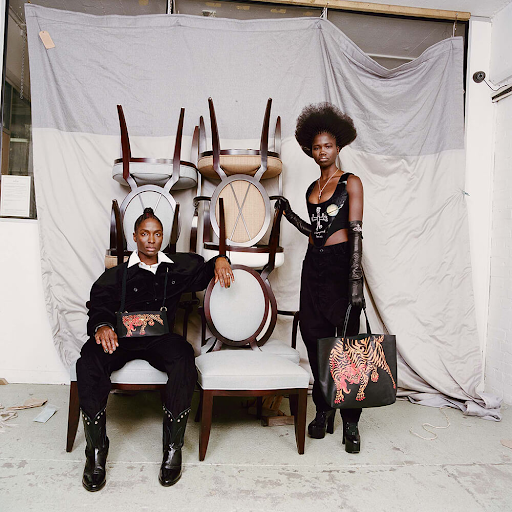
Winston Luxury Leather operates between Kano and Lagos, working with Nigeria’s long-established tanning and leather-finishing ecosystems. Founded in the late 2010s as part of a new wave of indigenous luxury manufacturers, the brand produces finished hides and leather goods that sit at the intersection of craft and export-ready production. Winston Luxury Leather has been referenced in fashion and business reporting around Nigerian leather feeding international fashion houses and contributing to the broader “Made in Africa” luxury conversation.
In Ethiopia, Tibeb Leather Works is a workshop-led enterprise founded in Addis Ababa to bridge traditional leather craft and contemporary industrial design. Tibeb produces export-grade leather accessories and finished pieces, supplying international retailers and design-led brands while often being cited as a model for small-scale African manufacturers entering global supply chains.
At the industrial end, Farida Tannery and Colba Tannery represents Ethiopia’s export-oriented leather sector. Founded in 2002, Colba exports to over 20 countries and maintains capacity to process 10,000 skins and 600 hides daily. Ethiopian sheep leather is prized globally for being light, thin, soft, yet strong and durable—qualities that make it sought after for high-end gloves, bags and garments.
Meanwhile, Ghanaian Krobo bead and brass makers continue to supply glass beads and brass components used by jewellery and accessories brands worldwide. Though often informal, these makers underpin contemporary African and diasporic design, quietly sustaining international production networks.
The Rise of Female-Led Artisanal Collectives Across Africa
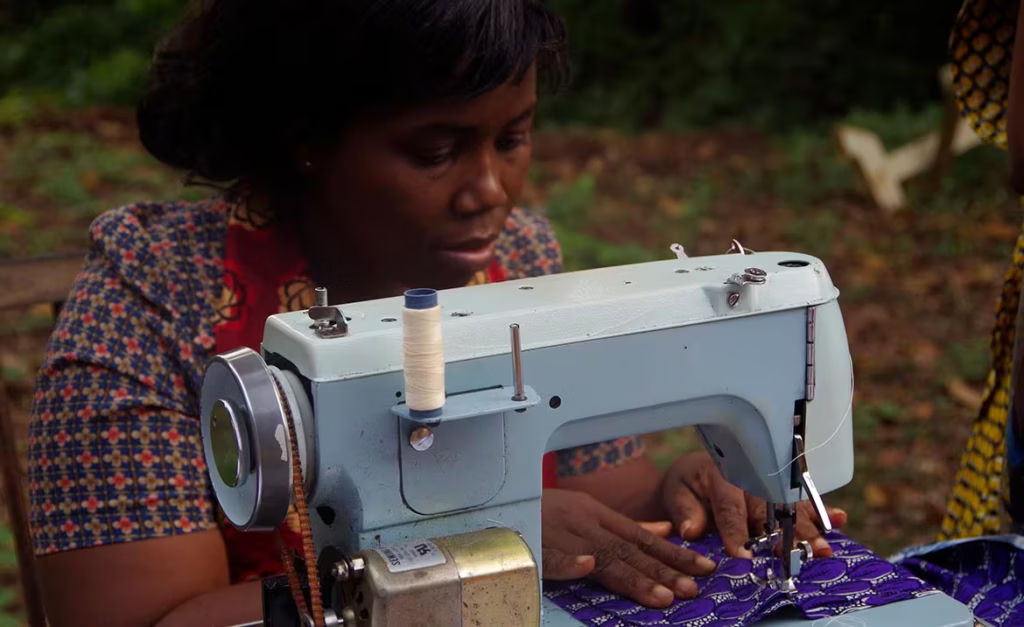
Women-led artisanal collectives are not just sustaining heritage crafts, but empowering local economies and shaping global fashion and design through skill, collaboration, and cultural continuity.
Indego Africa has for nearly two decades worked with women artisans in Rwanda and Ghana, partnering with global fashion and lifestyle brands to produce hand-woven baskets, jewelry, and textiles. They have partnered with major brands including Anthropologie, J.Crew, Nicole Miller, and the United Nations Refugee Agency (UNHCR) through their MADE51 initiative. The organization now works with over 180 Burundian and Congolese refugee women at Mahama and Kigeme refugee camps in Rwanda, providing what is currently the only livelihood program in the country where refugees earn income from the export market.
Studio One Eighty Nine, based in Accra and co-founded by Rosario Dawson and Abrima Erwiah, collaborates with local women artisans, tailors, and dyers to create ethically made fashion. The brand won the prestigious CFDA + Lexus Fashion Initiative Award for Sustainability in 2018 and is a CFDA/Vogue Fashion Fund Grant recipient. Working with artisanal communities specializing in natural plant-based indigo dyeing, hand-batik, and kente weaving, the brand operates a manufacturing facility in Accra while partnering with organizations including the United Nations ITC Ethical Fashion Initiative.
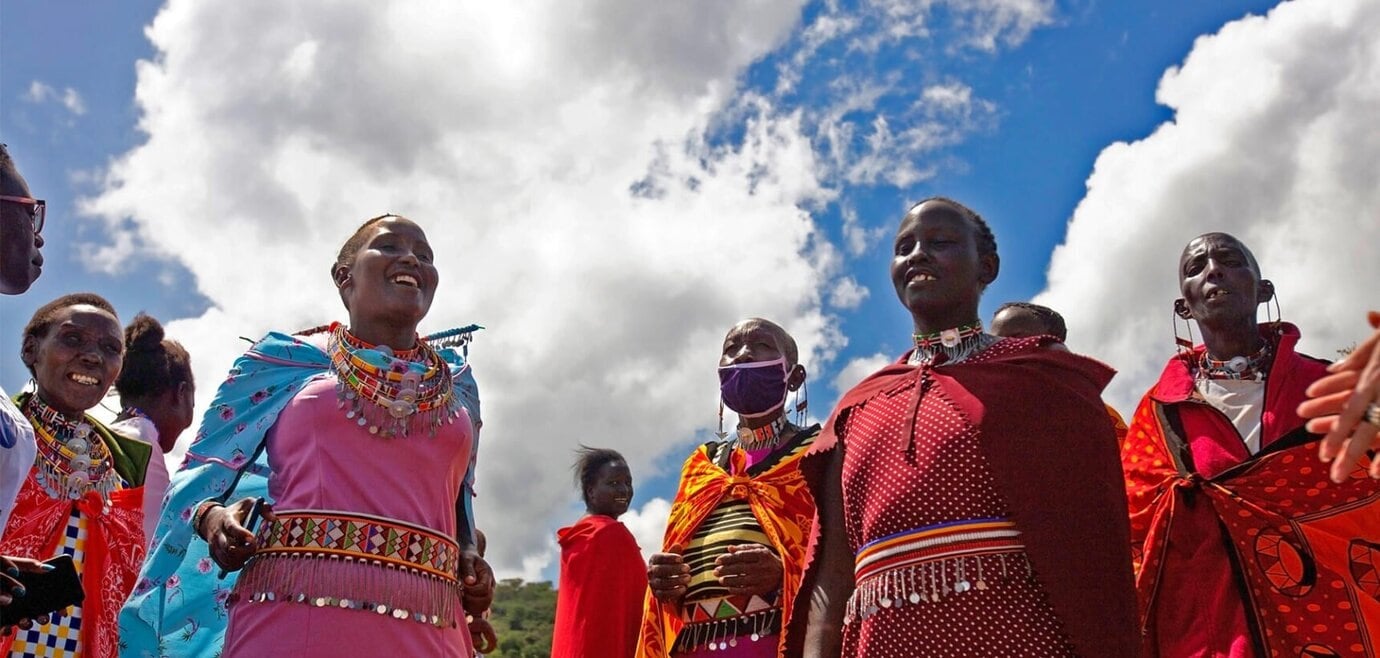
Others include the Queen Amina Embroidery Cooperative and the Maasai Women Artisans, groups that have existed for decades.
Do Artisans Benefit?
The short answer: sometimes, but not consistently.
When collaborations between luxury brands and African artisans are structured properly, the benefits can be substantial. The most immediate gain is stable income. Formal partnerships replace one-off commissions with repeat orders, allowing artisans to plan financially, invest in tools and sustain their workshops over time. Collaboration can also bring skills development. Working within luxury supply chains often involves training in quality control, finishing, packaging and production timelines. These skills make artisans more competitive and able to access new markets beyond a single brand relationship.
Collaborations That Actually Pay The Bills
Vivienne Westwood: the clearest case
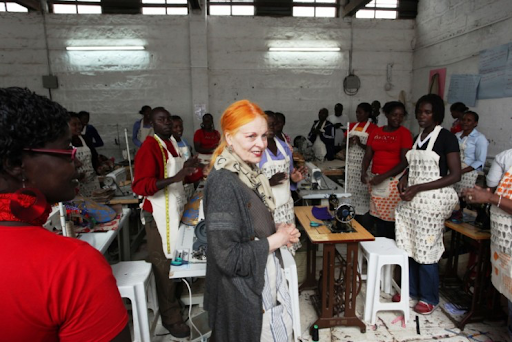
Among legacy fashion houses, Vivienne Westwood stands out for building a sustained relationship with African artisans rather than a seasonal gesture. Since 2010, Westwood has produced accessories and leather goods through Kenyan craft producers working with the Ethical Fashion Initiative (EFI). Sold globally under the Made in Kenya label, these bags and accessories are integrated into the brand’s core collections, not positioned as side projects or charity initiatives.
The collaboration now supports 2,600 artisans, 78% of whom are women. According to EFI impact reporting, participating artisans have seen substantial income increases, with many reporting gains of 150-200% during initial orders. Across multiple collections, the majority of artisans saved their earnings, with many using income to pay for school fees and other essential needs. What makes this model significant is consistency: repeat seasons, visible credit and products that sit comfortably within luxury retail environments.
Since 2015, production has been managed through Artisan Fashion, a local social enterprise that began as an EFI project and became fully independent due in part to continued workflow from Vivienne Westwood.
The Ethical Fashion Initiative: a bridge, not a brand
Beyond Westwood, EFI functions as a critical intermediary between African artisans and global fashion. Working across countries including Kenya, Burkina Faso and Ghana, the initiative helps translate artisanal production into formats luxury brands can work with, aligning craft with timelines, quality control and compliance standards.
Several designers and fashion projects have passed through this system, demonstrating that collaboration is possible when structure exists. However, many of these partnerships remain limited in scale or duration, revealing how dependent artisan participation is on institutional support.
Stella McCartney: sustainable materials, fair trade partnerships
Stella McCartney has built long-term partnerships with African artisans, particularly in Madagascar. The brand sources raffia from Art Land Madagascar, a company that has been designing and creating sustainable products for over 18 years. McCartney’s raffia bags are handwoven by skilled artisans using carefully hand-pruned raffia palm, with Art Land ensuring workers are fairly paid and child labor is not employed.
For Summer 2024, McCartney partnered with EFI to work with Shalom Pride, a community group of 50 female artisans from the Karnba Tribe in Kitui, Kenya. Using locally purchased banana fibers from small-scale farmers, the group handcrafts bags that support up to 250 beneficiaries across their community and families.
Where The System Fails Artisans
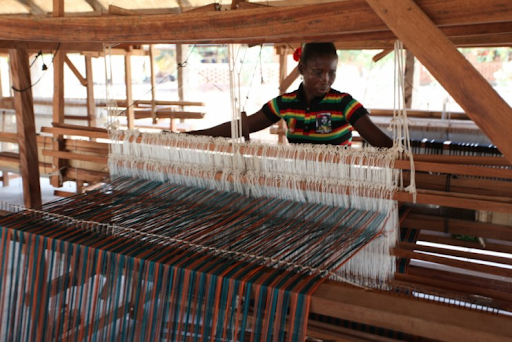
While their skills, materials and techniques are widely sought after, the conditions under which many artisans work reveal deep structural disadvantages that are difficult to overcome.
One of the most persistent challenges is limited bargaining power. Artisanal groups are often positioned at the lowest end of global supply chains, supplying raw or semi-processed materials rather than finished goods. This leaves pricing largely in the hands of buyers and intermediaries. Without leverage, artisans may accept low margins simply to secure work, with little ability to negotiate long-term contracts or fair compensation.
Scaling production presents another obstacle. Handmade processes are inherently time-intensive, yet luxury brands often demand volume, uniformity and strict delivery schedules. Without access to capital, machinery or cooperative infrastructure, many artisans struggle to meet these requirements without compromising quality or wellbeing.
Finally, artisans face a growing problem of inspiration without compensation. Their techniques and aesthetics are frequently referenced by designers without formal sourcing agreements, turning cultural knowledge into a free resource. Design appropriation has surfaced repeatedly in recent years, with major retailers copying traditional African textiles and artisanal techniques without crediting or compensating their originators. Combined with weak local value chains, where finishing and branding occur elsewhere, these challenges explain why African artisans shape global markets, yet rarely benefit from them proportionally.
The path forward requires more than goodwill. It demands structural changes: transparent sourcing, fair pricing, consistent orders, and recognition that positions African makers not as beneficiaries of charity, but as essential contributors to luxury’s foundation.