

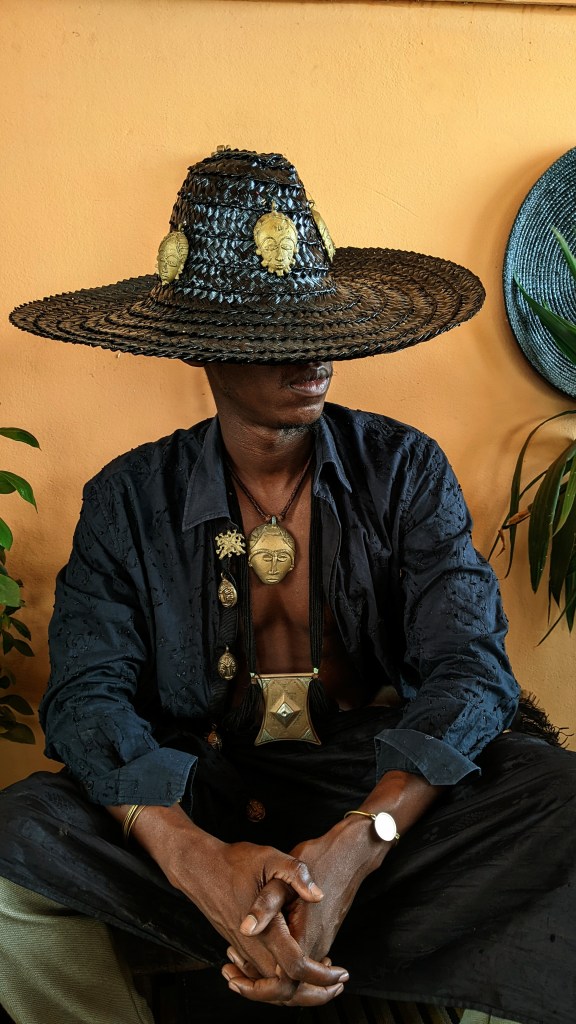
In Senegal, where the threads of West African culture intertwine, Sambacor Konaté tells a story in pictures rather than words. A visual artist, he weaves together the old and the new in what he calls “Jardin Jollof.” The work is a celebration of African heritage, embedded in every element, from the décor to the plants to the images themselves, which speak of identity, history, and the future yet to be written.

Konaté is also a man of many worlds, a UN international civil servant whose journeys across Africa have deepened his connection to the continent’s traditions. His art draws on those experiences, and on roots in Burkina Faso, Senegal, Mali, and Guinea-Conakry. “My heritage,” Sambacor muses, “is a mosaic of West African cultures, each piece making me who I am today.” It is from this wellspring of cultural wealth that his creativity flows.
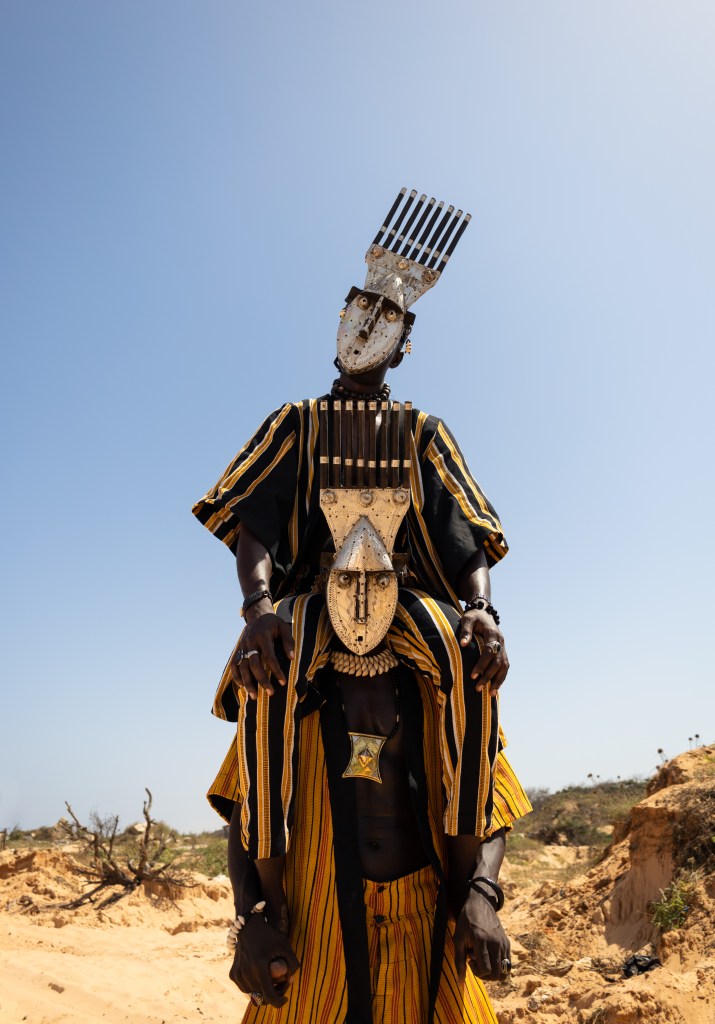
In his photos, Africa is a living place, vibrant with tradition and brimming with modernity. “I wanted to show Africa through its traditions and culture but from a modern perspective,” he explains. His work is a dance of opposites, where the old and the new find harmony in the same frame. Sambacor’s upbringing, steeped in the cultural expressions of his heritage, nurtured his natural eye for beauty and design. “Even as a child,” he recalls, “people sought my opinion on aesthetics, whether it was décor or style.” This instinct for visual storytelling has always been a part of him, guiding his journey as an artist.
The global lockdowns of COVID-19 became a turning point for Sambacor. Confined to his home, he found solace in creation. “COVID was a catalyst for my creative process,” he reflects, “and I believe many artists around the world would resonate with that.” It was during this time of introspection that “Jardin Jollof” came to life, a sanctuary that was both a refuge from the chaos outside and a digital gallery shared with the world through his Instagram page. “I wanted to create a cocoon, a space where I could feel safe amidst the uncertainty,” Sambacor reveals, laying bare the emotional core of his work.
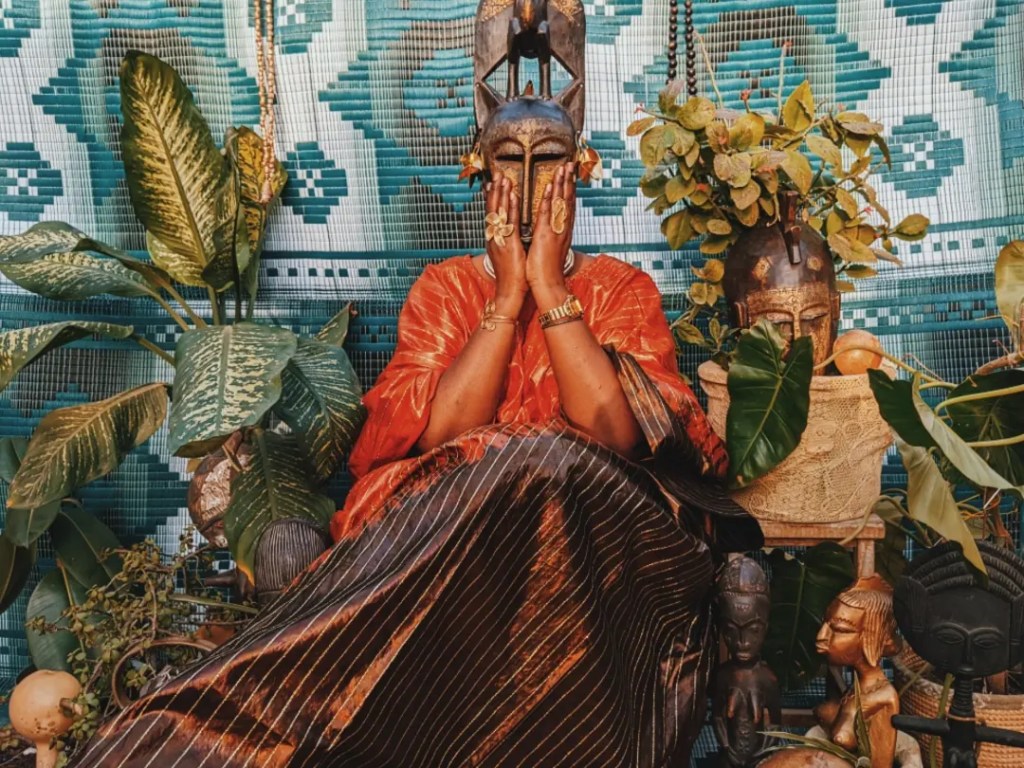
Instagram became an extension of his art, a space where Sambacor could merge his love for African interior design with his passion for photography. He began sharing images and insights, on how to care for indoor plants, and how to integrate African masks and artifacts into modern living spaces. “I started giving tips on choosing plants for our African homes and how to care for them,” he says, his voice tinged with the joy of sharing his knowledge. Soon, his content expanded to include interior decoration tips, showcasing his collection of masks and ancestral artifacts, each piece telling a story of its own.
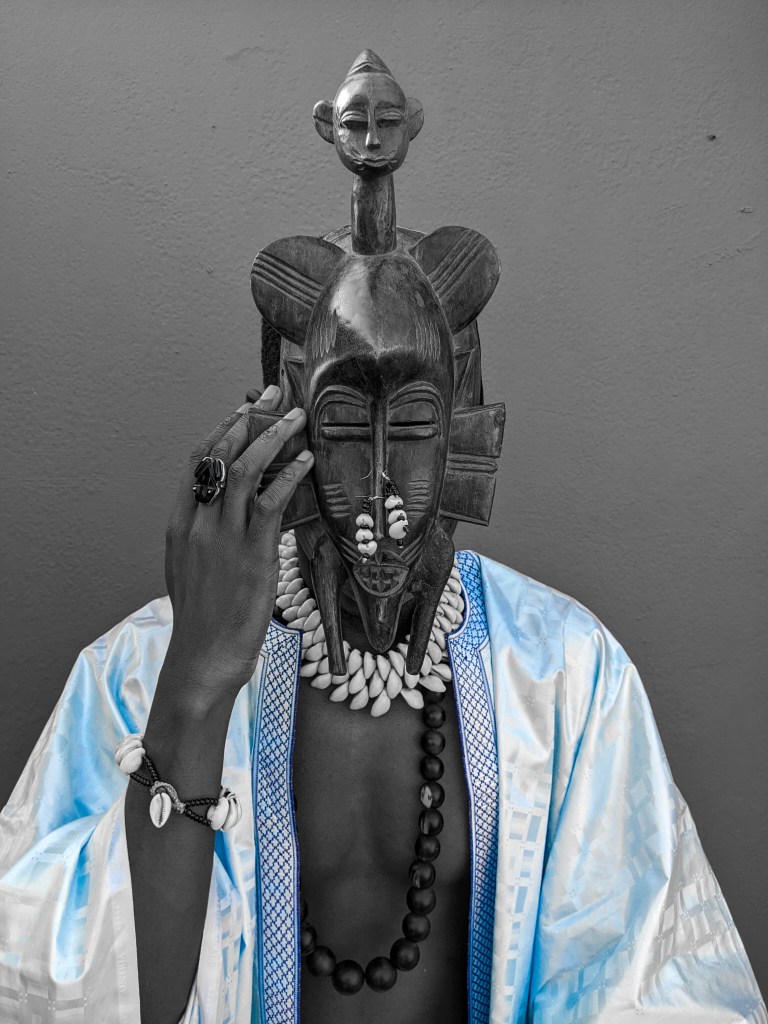
“Africa’s masks are more than just decorations; they are symbols of our stories, our beliefs, and our history,” Sambacor explains. Each mask in his collection is a portal to another time, another place, where traditions were born and nurtured. His visuals, often featuring these masks, are acts of preservation, of honoring the past while embracing the future. “Most of these masks are souvenirs from my travels across Africa,” he adds, each one carried home from the journeys that have shaped his artistic vision.
In his photographs, Sambacor often dons a mask himself, a choice that is both artistic and deeply personal. “I wear the mask as an expression of art but also because I wish to keep my identity private,” he shares. This choice shifts the focus from the artist to the art, allowing the work to speak for itself. The mask, recurring in his imagery, becomes a vessel for the spirit of African traditions in a modern context. “For me, it’s about storytelling,” he reflects, “being present in the art creates a connection, a shared emotion with the audience.”
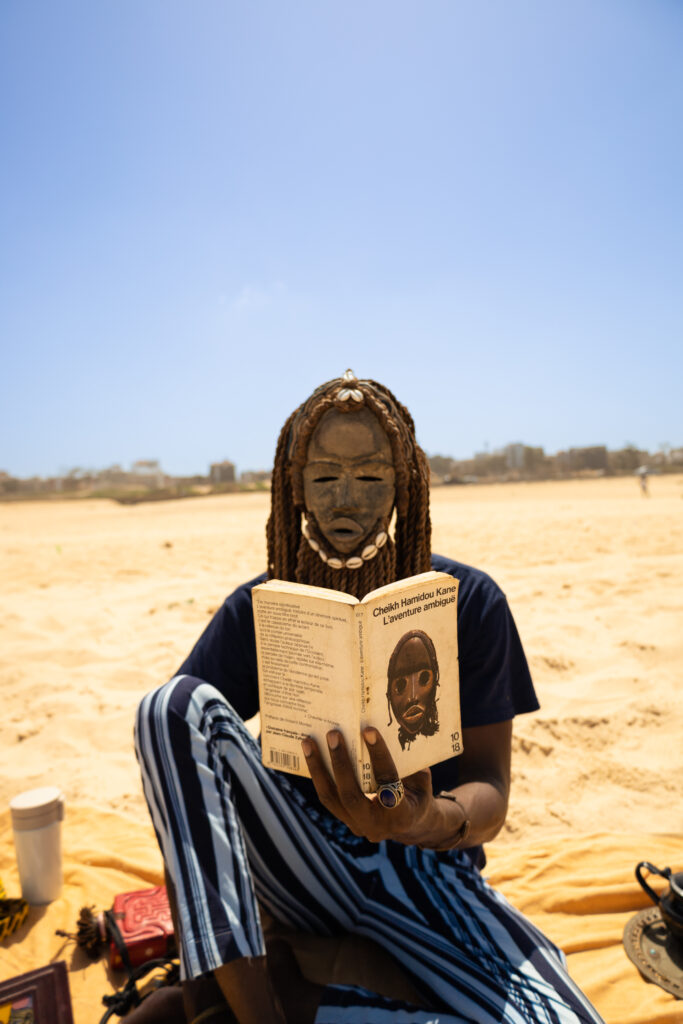
Sambacor’s journey as an artist is one marked by introspection and inspiration. His influences are varied, drawn from movies, architecture, and fashion, all woven into the fabric of his work. His father, an architect, played a pivotal role in shaping his appreciation for structure and design. “My dad’s work has always been a source of admiration for me,” Sambacor says, the influence evident in the meticulous way he constructs his images. Every detail, from the model’s attire to the placement of plants, is deliberate.
“My aim,” Sambacor says, “is to showcase the full spectrum of photography, where the model, the styling, the ambiance all come together to tell a story.” His work is a celebration of African culture, viewed through a modern lens but deeply rooted in tradition. “Each picture I create is built around a theme, carefully crafted to convey a message,” he adds. Nothing in the frame is accidental.
Among the many tributes in Sambacor Konaté’s work, one stands out, a homage to his grandmother. A woman of grace and wisdom, she instilled in him the values that continue to guide his life and art. The golden kettle, often seen in his visuals, belonged to her. “This kettle,” Sambacor says, “is more than just an object; it’s a link to my past, to the traditions that shaped me.” Through the kettle, Sambacor honors the memory of his grandmother and the legacy she left behind.
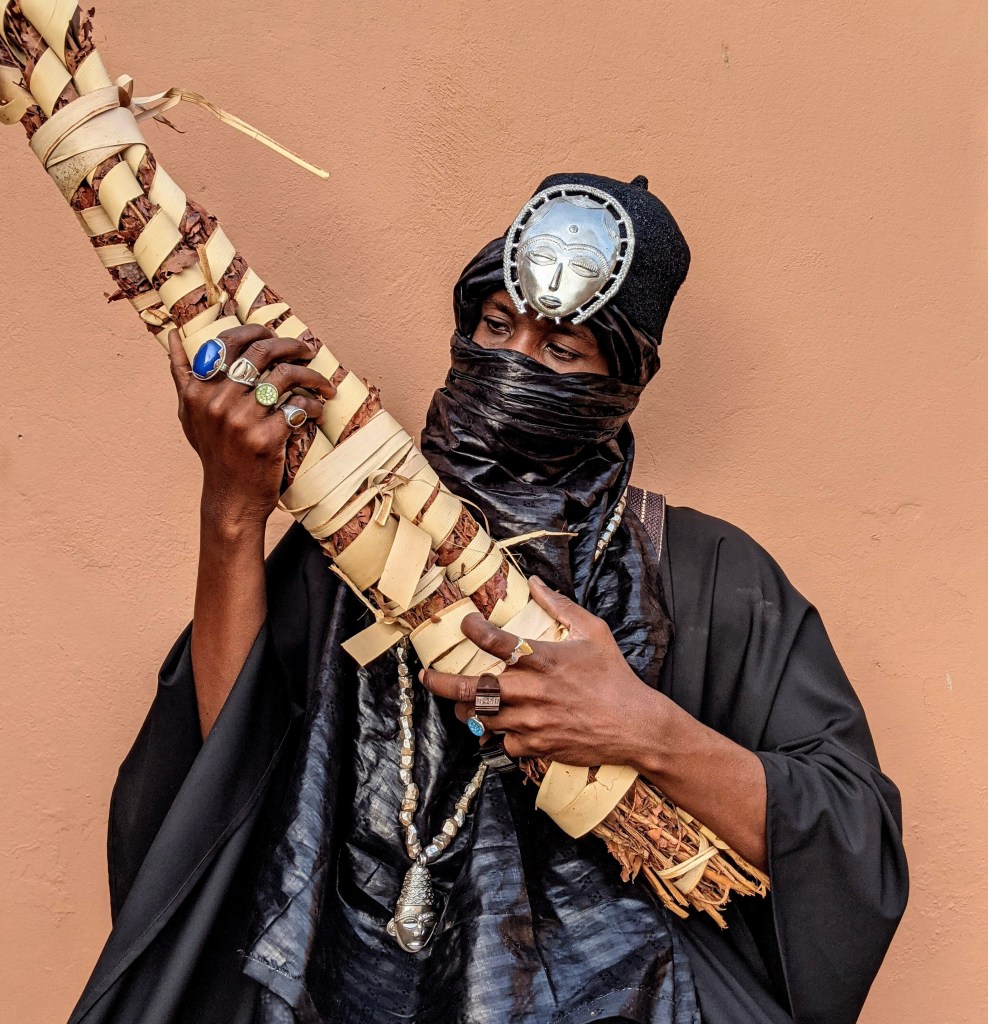
Today, Sambacor Konaté, known as Jardin Jollof, is a storyteller as much as a visual artist. His work, a blend of decoration, fashion, and nature, speaks of the beauty of African culture and of the challenges the continent faces today. Whether addressing environmental themes or exploring social justice, Sambacor uses his art to ignite conversations and inspire change. “I’m currently working on visuals about social justice, exploring themes like caste systems,” he reveals.
Sambacor remains true to his mission: to celebrate and preserve African heritage while expanding what it means to be an African artist in the modern world. Through Jardin Jollof, Konaté has created a space where past and present coexist, and where the story of Africa is told in a new light. “Jardin Jollof,” he concludes, “is not just a name, it is a place, a magical space that is an ode to African tradition, a celebration of my culture.”