


Ibrahim Mahama Brings Ghana’s Industrial Past to Paris
In 1966, a glass bottle factory opened in Aboso, in southwestern Ghana. It was one of the last large projects started under Kwame Nkrumah, the country’s first president, before he was overthrown in a military coup that same year. After decades of restructuring and privatisation, the factory was abandoned. According to the Fondation Cartier pour l’art contemporain, the Ghanaian artist Ibrahim Mahama bought the site in 2024, dismantled it and moved its metal frame, moulds, bottles and broken glass to Tamale, in the north of the country.
Things Fall Apart, an installation built from the factory’s original materials, is now on view in Paris. It is part of The Harvest Season, Mahama’s first major exhibition in the city, which opened on 22 October and fills the whole of the foundation’s new building on the Place du Palais-Royal, across from the Louvre.
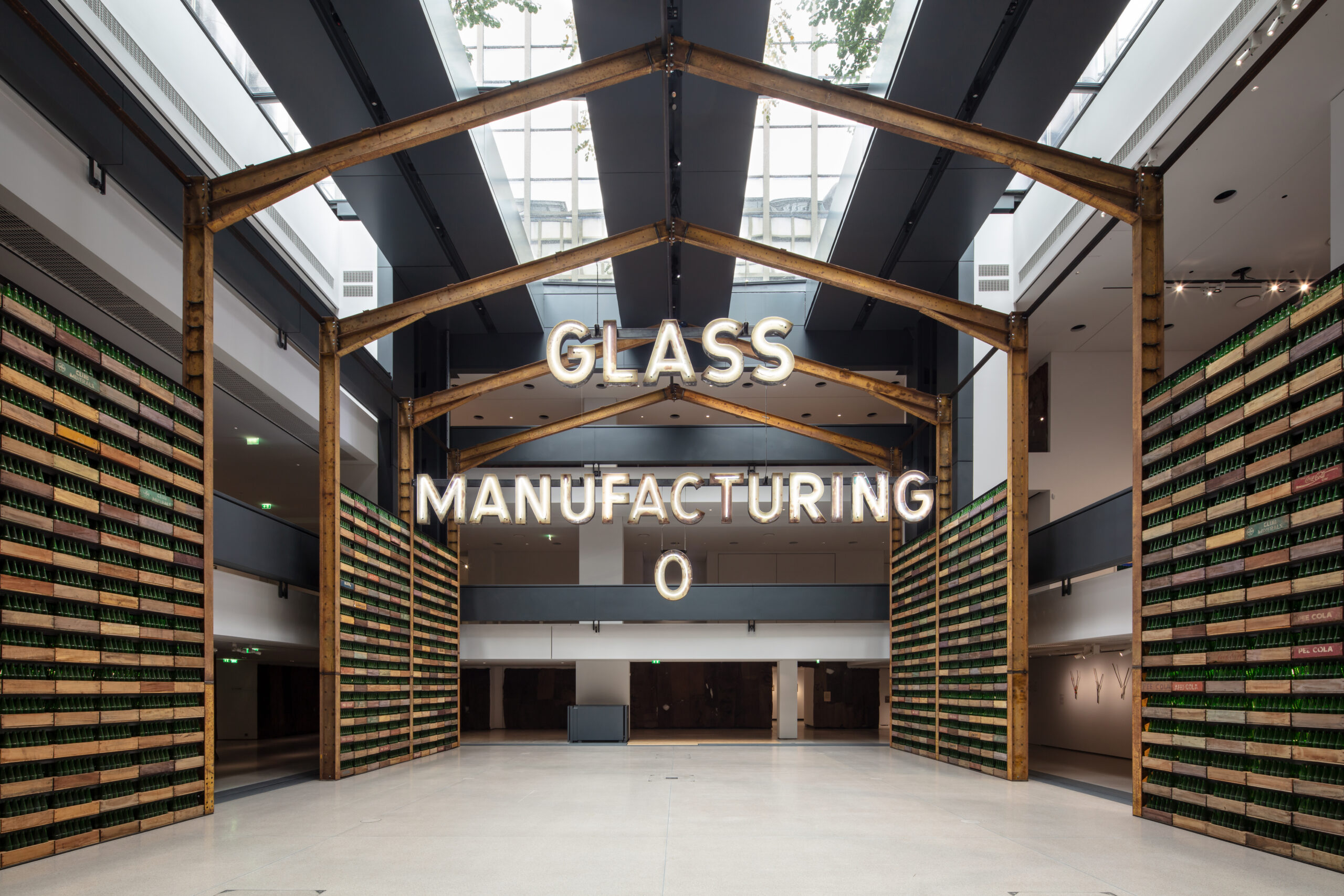
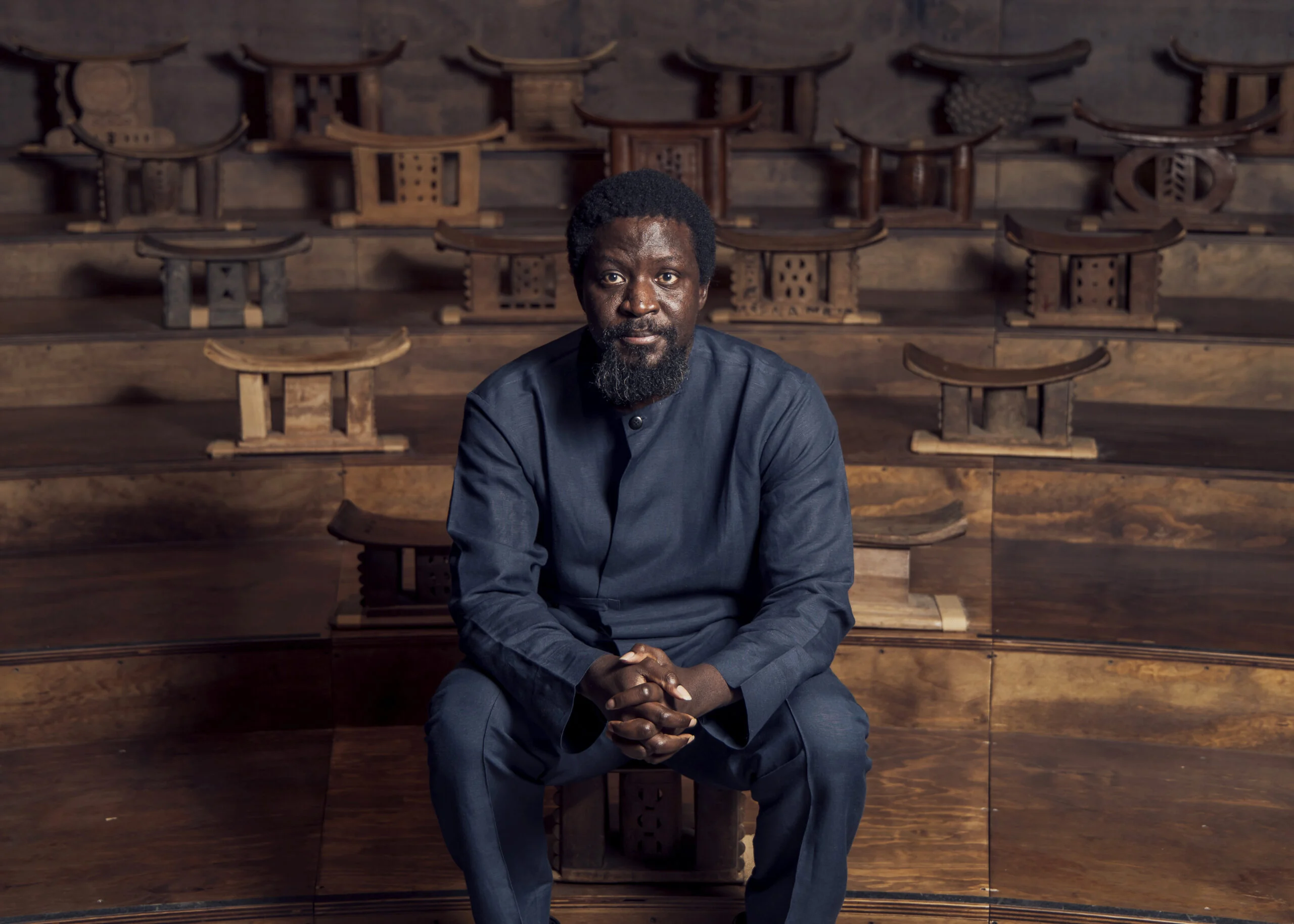
Mahama, born in Tamale in 1987, is known for large installations made from salvaged material, above all the jute sacks used to ship cocoa and charcoal, and for work that returns to Ghana’s colonial and post-independence history. Things Fall Apart takes its title from Chinua Achebe’s 1958 novel. The foundation describes the project as a reinvention rather than an exercise in nostalgia, turning the factory into an artwork and a place of learning.
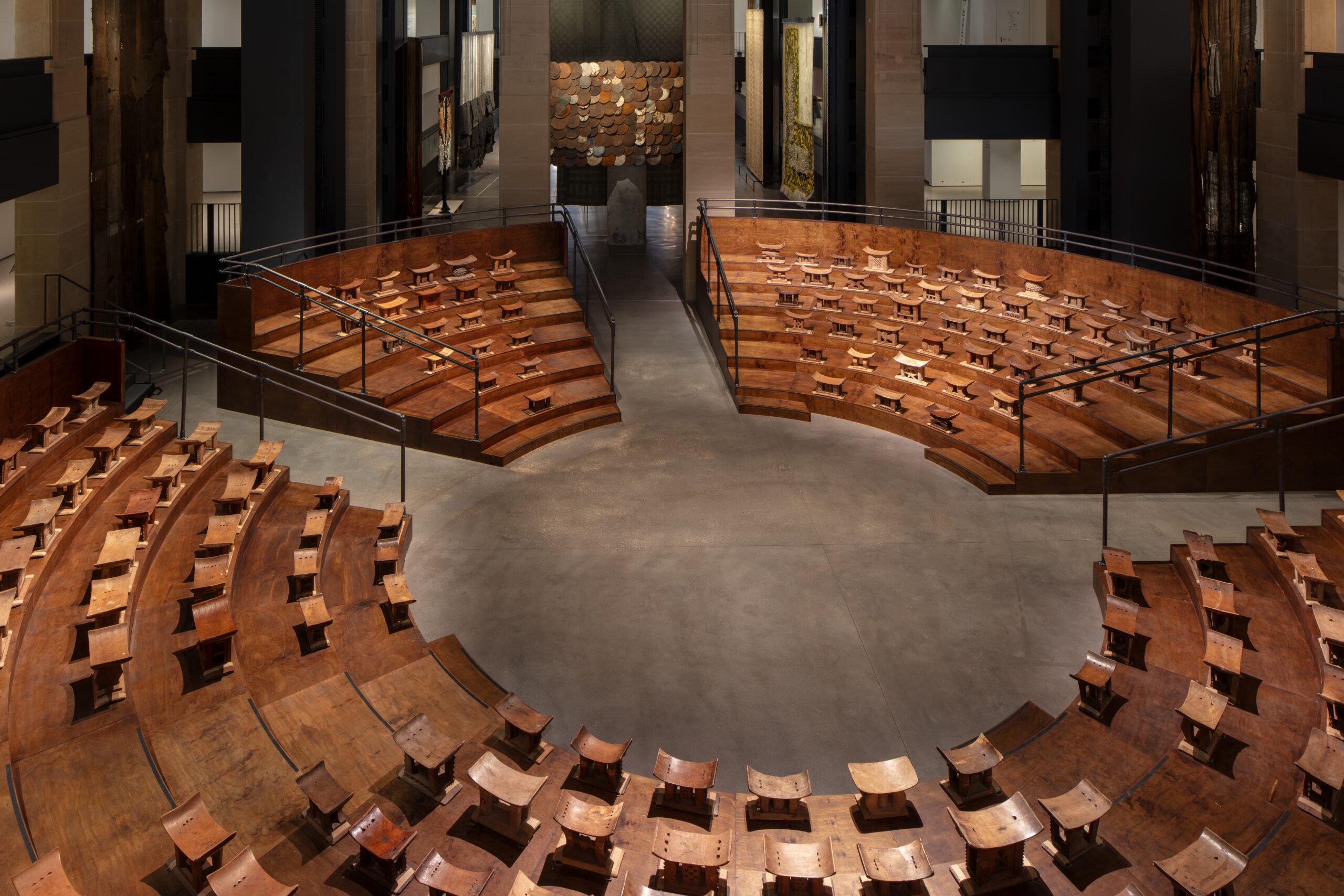
The second major work is Parliament of Ghosts, a parliamentary chamber assembled from Asante stools that Mahama bought or traded for in Ghana. Visitors are invited to sit. Emptied of its representatives, the chamber refers to the 1966 coup and the dissolution of Ghana’s government, while the stools recall the looting of the Asante kingdom during its wars with the British Empire, which ended in 1901. Mahama has shown the work in several forms since 2019, and a version is on permanent view at Red Clay, one of his art centres in Tamale. In Paris it also serves as a stage for concerts, talks and performances until the show closes. Outside, Mahama has made a textile installation for the arcades of the building’s facade, facing the square.
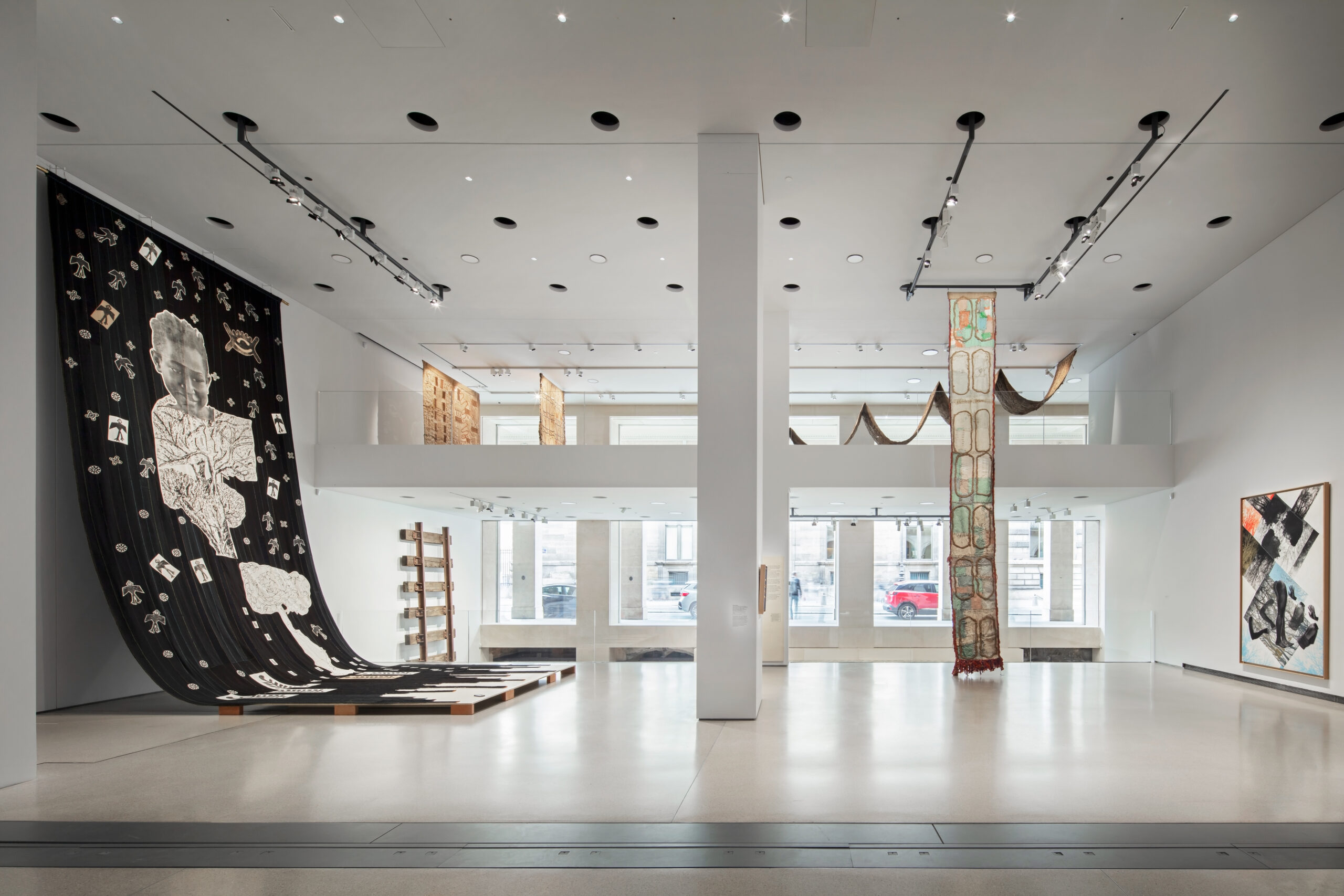
Mahama is showing alongside nine artists and collectives with long ties to his work. They include Dorothy Akpene Amenuke, who taught him at the Kwame Nkrumah University of Science and Technology in Kumasi, and the Cercle d’Art des Travailleurs de Plantation Congolaise, a cooperative of artists and plantation workers from the Democratic Republic of Congo. A separate display of James Barnor’s 1960s photographs for Drum magazine runs in the Galerie Valois, inside the Palais-Royal–Musée du Louvre métro station.
The exhibition was conceived in relation to the three art centres Mahama has opened in Tamale since 2019: the Savannah Centre for Contemporary Art, Red Clay and Nkrumah Voli-ni, a former grain silo. All three are devoted to making art, preserving heritage and teaching younger generations.
“It is in the past that we can excavate the potential of the future,” Mahama says in a statement included in the exhibition’s press materials.
The Harvest Season runs until 28 February 2027 at the Fondation Cartier pour l’art contemporain, 2 Place du Palais-Royal, Paris.