

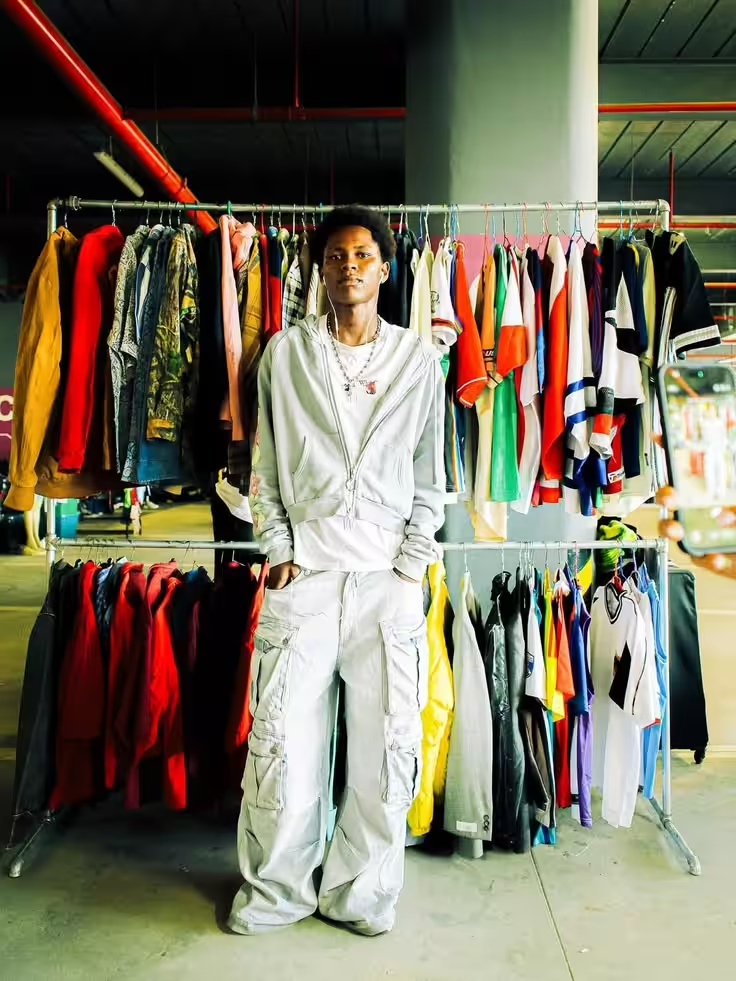
For years, Zambia’s capital city, Lusaka, has been described as a city of work with little room for leisure. It is a place where routine and restraint have often defined urban life, leaving limited space for cultural expression beyond the everyday. But that narrative is beginning to shift, as a new generation of creatives reimagines what Lusaka can be.
Young people are stepping into fashion, music, nightlife, and visual culture, building an ecosystem that is as much about community as it is about production. Pop-up events, independent fashion labels, underground parties, and music collectives are creating new spaces for expression and visibility. And these young changemakers are not only reshaping it, they are making it more inclusive, more social, and more reflective of their own realities.
CLUB BZR: A Creative Third Space
Before Baxter Mwamba built CLUB BZR, he was previously working as an independent artist, creating work of his own and showcasing it in smaller exhibitions. CLUB BZR came to him because he wanted to build a community that did not exist, a place where like-minded people could network, create, collaborate, and learn how to improve as artists.
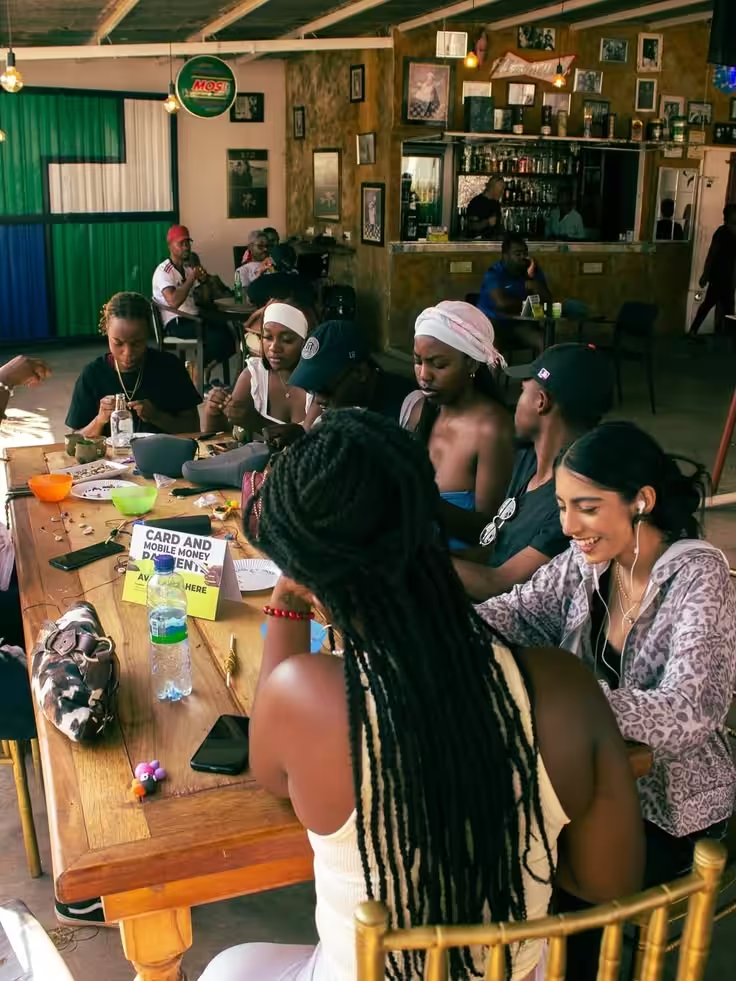
CLUB BZR functions as something Lusaka does not often sustain at scale, a third space, built deliberately for creative use. It is attended by 30 people on average at The Bee’s Knees in Roma, its current recurring location, and is hosted by various creatives. There is no strict entry requirement. People from different creative backgrounds come together, some experienced, others just trying something new. They sit around picnic tables and explore a different medium each month, from paint and clay to collage and photography. The focus is not on the final result but on the act of creating. What matters is the space, where people can learn, connect, and try out ideas without pressure.
Like many initiatives of this kind, it started informally, open, free, and loosely organized. But as things grew, new challenges came up like the cost of materials, transport, venues, and more. What began as accessible became increasingly difficult to maintain. Charging a fee therefore became necessary, yet not everyone understood it. Some people questioned the change, asking why something that started out free had to change at all. But expecting creative spaces to stay free often ignores the work it takes to keep them going. Time, planning, sourcing, and coordination all require effort and resources.
“What will it take for something like this to continue existing?” Mwamba asks curiously.
Charging brought a new kind of pressure. Each session now had to feel worth it, not by being bigger, but by offering a good experience. It needed to stay open for new people to join, while still being consistent enough for regulars to come back. The focus shifted from just access to keeping it going.
To date, CLUB BZR has broadened its offering, collaborating with Lusaka Contemporary Art Centre and EverydayLusaka to give its members access to gallery tours and conversations with resident artists and owners.
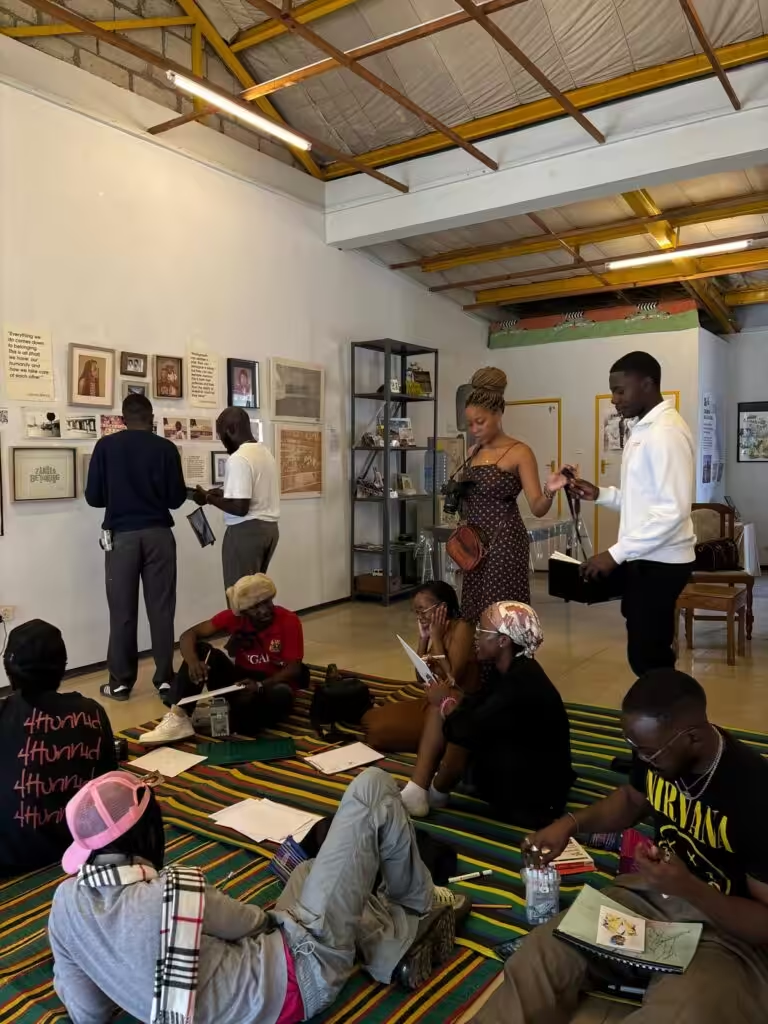
Its impact is quieter, and more personal, helping people discover new creative interests and giving them the confidence to explore them further. Looking ahead, Mwamba sees the club evolving into a platform that not only nurtures talent but contributes to Lusaka’s creative economy by turning casual participation into consistent creative output. The long-term vision extends towards a permanent, fully equipped studio and warehouse space where different disciplines can coexist, scale, and operate as part of a structured and sustainable creative ecosystem in the city.
Lusaka Thrift Market
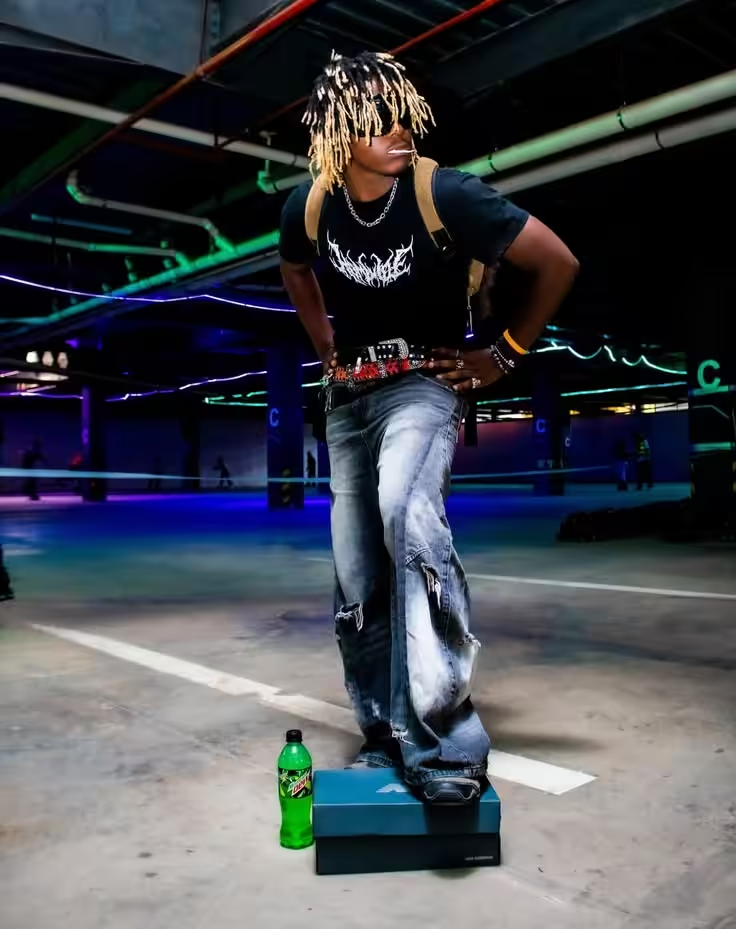
Marian Mukaka is also one of these changemakers playing a key role in shaping Lusaka’s youth creative capital through her love for fashion.
Like most brand origin stories, Mukaka’s started after the pandemic, sourcing secondhand clothes, building an online presence, and using styling to stand out from other sellers. At the time, physical markets were limited and mostly centered in the city’s central business district. The most visible one was at Foxdale Court, which was the largest thrift market but still attracted a relatively small crowd. When it ended, it left a gap. But the idea to start something new did not come right away. It developed over time. She started by reaching out to vendors, trying to bring together fashion, food, and music, and realizing that waiting for perfect conditions would only delay everything.
So she started Lusaka Thrift Market. The first pop-up happened in a parking lot at Zambezi Mall, with a gathering of creative vendors who sold food and drinks, a tattoo artist, and by sunset, night performances by Lusaka’s emerging stars BANDO, Retro, and Luke.
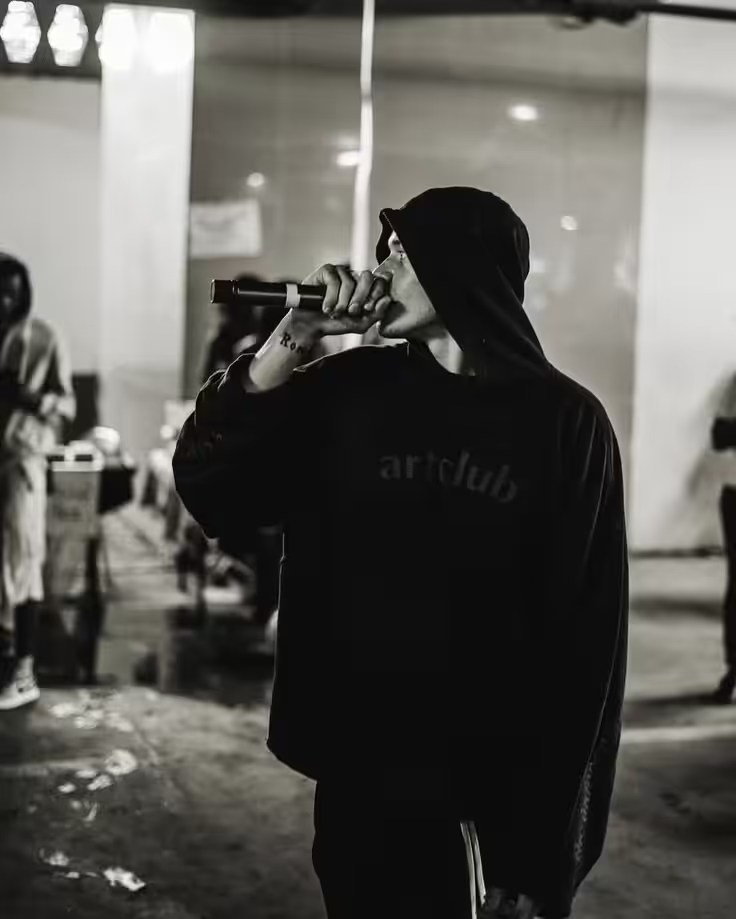
Two years later, Lusaka Thrift Market has been branded a success: different locations found, larger crowds, more vendors, and again, entry fees introduced. And still, people come. Students, recent graduates, young professionals, and individuals looking for their space to further their network. Some arrive to sell, others to buy, others stay for the entire duration, from the shopping to the after-party concert. Though the age range stretches, the intention overlaps, everyone participating in something that is locally built.
The themes change with each market, from Valentine’s Day, Zamrock, Denim, Rodeo, different decades. Music continues to remain central, with performances across the southern region, from Zambian-bred Sampa the Great, rising duo Jay Trigga & Stizyo, and Patrickxxlee, to South Africa’s own Kindlynxsh and Baby Diaz. But what draws in the audience is not who performs, but how creative minds blend together from a shared love and passion for their craft.
A Gen Z Lesson: When Systems Don’t Exist, You Build Them
Across both spaces, Gen Z can no longer question whether there is opportunity or not. It is more specific than that. What is being built here is a response to a lack of consistent spaces, accessible platforms, and systems that empower and sustain creative work long enough for it to grow. In response, these smaller systems emerge, functioning as alternatives, making something from nothing. They are self-funded, collectively maintained, and constantly adjusted in real time. Pricing shifts, formats evolve, locations change, and the need continues: space, visibility, community and continuity. For these founders, success does not look like leaving the country and making it in the diaspora; it will come from creating their story in the land of work and joy, for more generations to enjoy.
Keep up with what’s being built. Subscribe.
Kunda Nampasa is a creative professional with a degree in Fashion Merchandising and French from Marist University. With experience in fashion communications and textile design, Kunda specializes in product development and sustainable textile techniques.