


Making it in Lagos
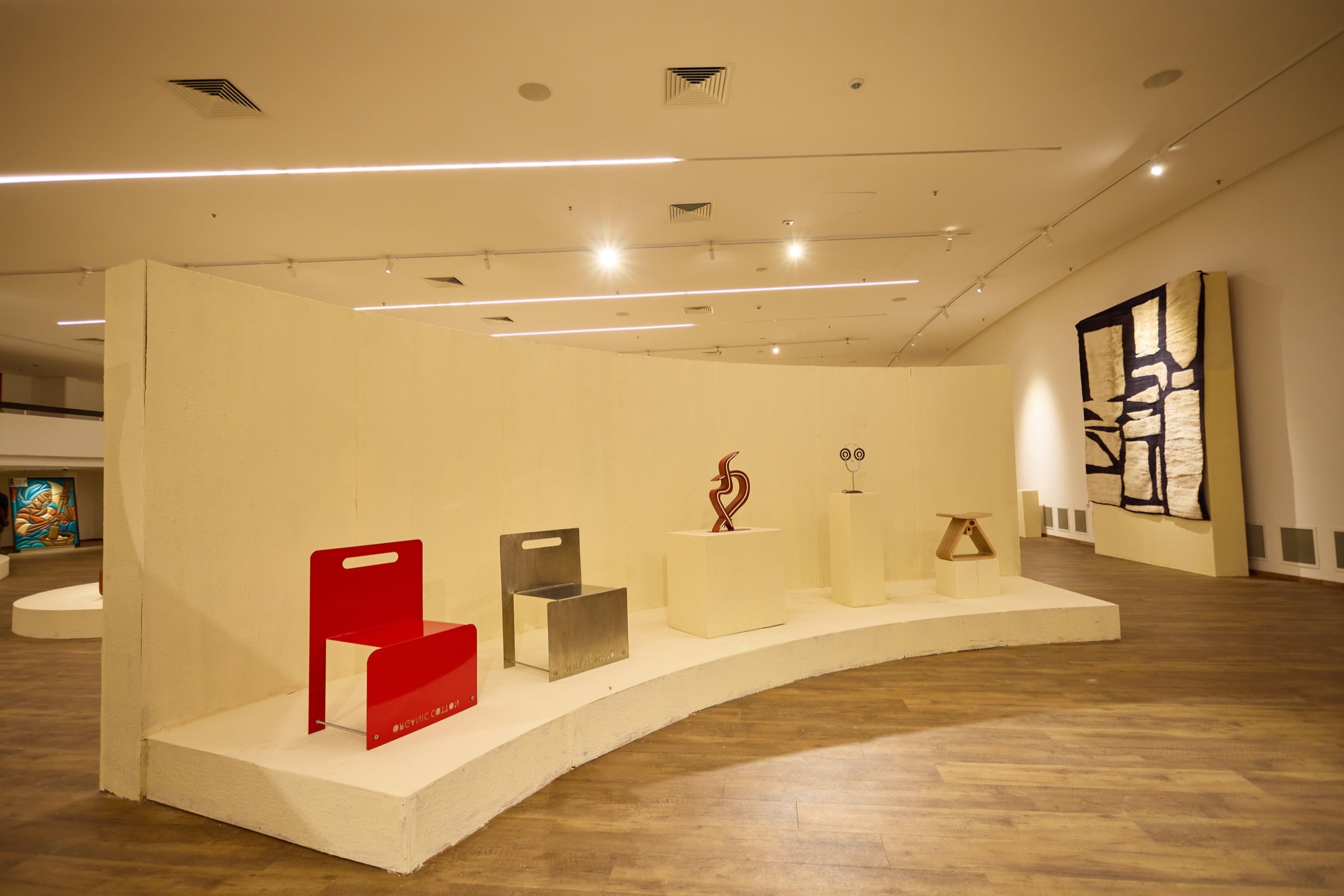
When Guzangs asked Adaora Enwonwu whether her lamp could stay handmade as production grew, she corrected the premise. “Ànyánwụ́ was always envisioned as a piece developed through contemporary manufacturing processes rather than traditional hand-forging.” Her intended design incorporates translucent materials and integrated LEDs, requiring moulding and precision manufacturing.
She conceived the lamp as a dancing woman. In its amber version, she wants the light to lend everyday life a little of the romance of looking through a “sunlit lens”. The movement of the figure suggests an escape from life’s complications, she says, and each colour is intended to change how a room feels.
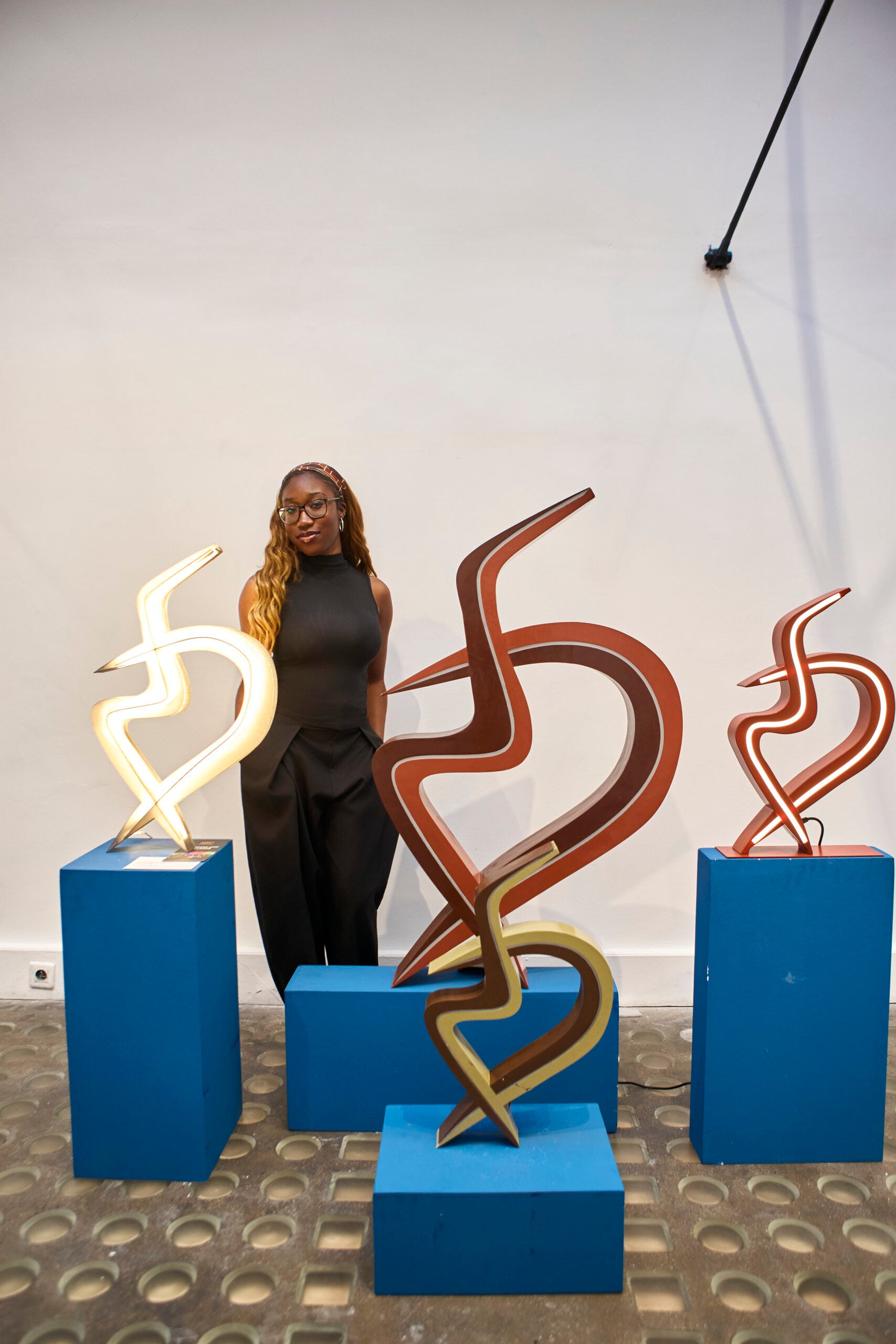
Design Week Lagos ran from 18 to 25 October 2026, with the National Theatre as its main venue and “Making a New Africa: From Material to Market” as its theme.
Founder Titi Ogufere wants the festival to help build the production capacity designers need once their work has found an audience. “I don’t just want the world to admire what we design,” she tells Guzangs in written answers. “I want the world to buy what we make.”
Enwonwu is considering limited editions in different colours. “Each colour would create a different atmosphere within a space, allowing the piece to take on its own identity,” she says.
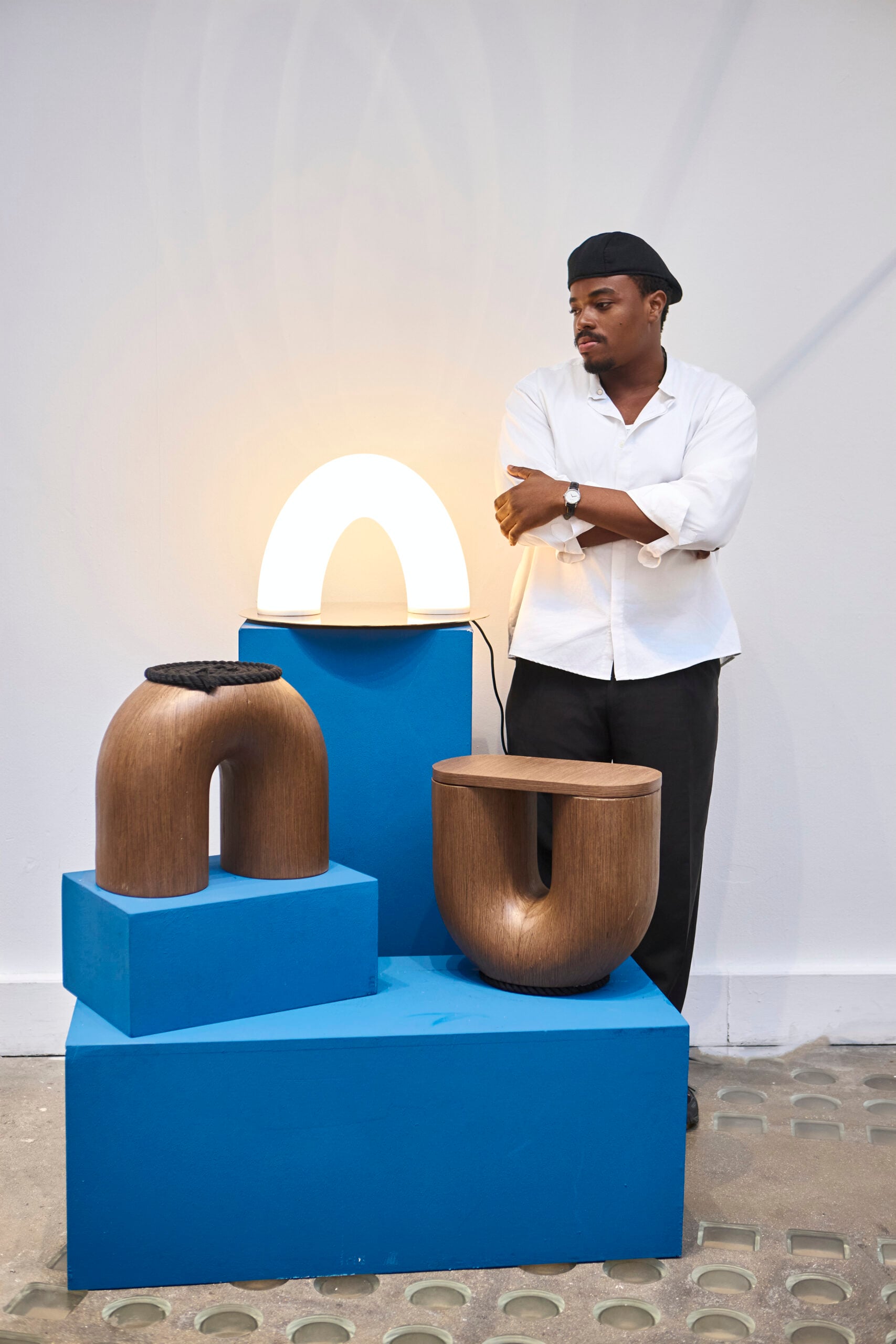
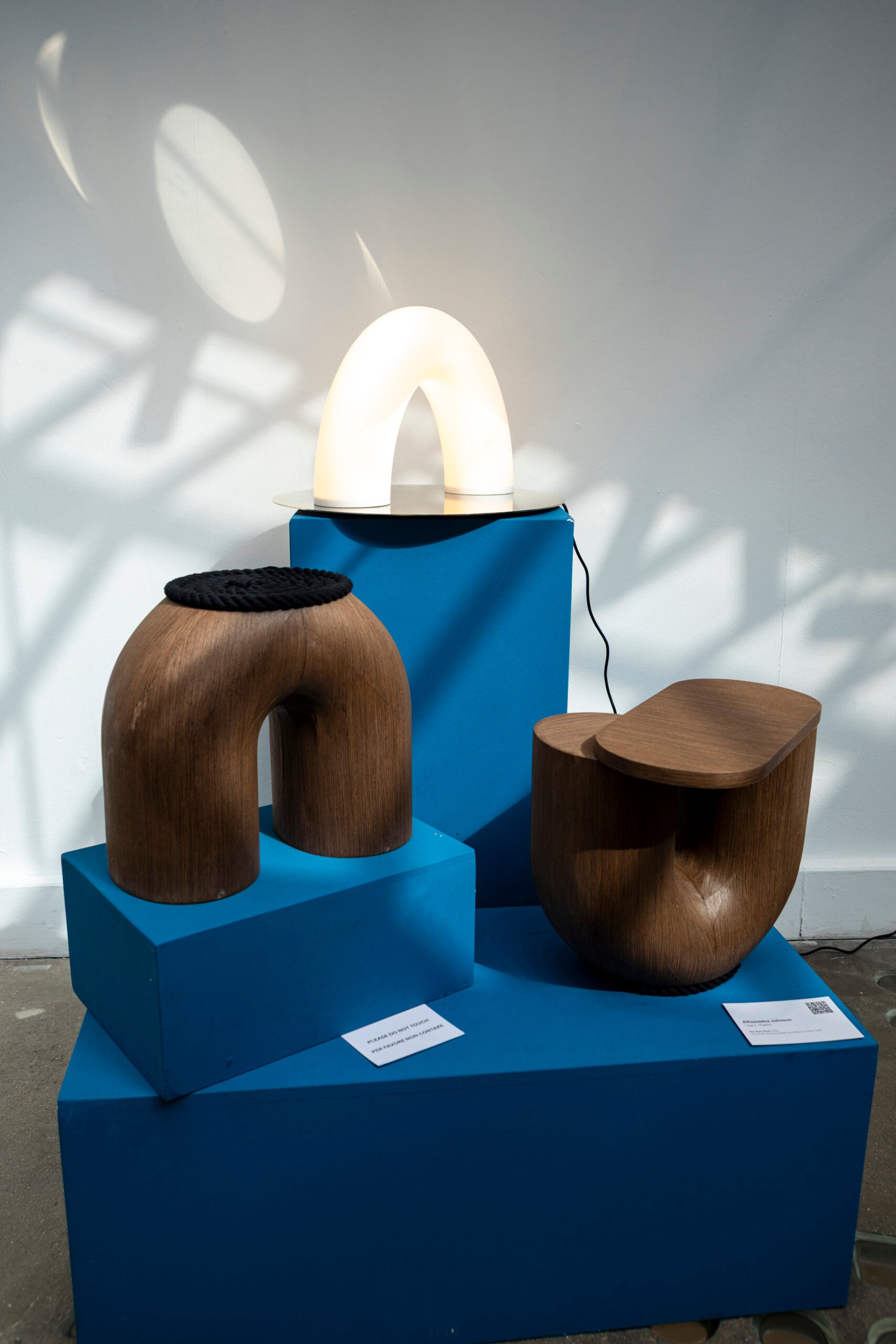
For Athanasius Johnson, the immediate difficulty was a surface. His Àpò Stool is a moulded form covered with wood veneer, a method that let him achieve the shape he wanted while retaining the character of wood. Getting the veneer to follow that shape neatly and consistently was the hardest part.
“It was important that the finished piece felt cohesive, with the material and form working together rather than competing for attention,” he says. The collection is about individual elements coming together to make something whole. He treats the method of construction as part of that idea.
Ogufere’s difficulty starts at a larger number. “I have met incredibly talented designers who create beautiful furniture and products, but when you ask them to produce 100 or 1,000 pieces, they simply don’t have the capacity,” she says. That is a different production goal from the limited colour editions Enwonwu has in mind.
The skills often exist, Ogufere says, but sit in different places, with manufacturers and artisans working apart from designers. Her Design and Innovation Hub is intended to bring production knowledge into design education, so that a designer understands how a piece will be engineered and what bringing it to market involves.
She wants manufacturers to involve designers throughout product development, from research to production and market positioning. Bringing someone in at the end to improve its appearance leaves little scope to reconsider how it is made. Ogufere acknowledges the industrial businesses already operating across Africa and wants them to invest in design research and work with younger designers.
She points to Nigeria’s timber and metals, as well as the skills of its makers, when she asks why so much furniture and lighting is imported. Her ambition is for a designer to develop a product in Nigeria and manufacture it there for customers abroad. She acknowledges that reducing imports will take time.
Norman Teague, the exhibition’s lead curator, found some of its most revealing material in the designers’ process videos. He recalls works that brought clay and basketry together, as well as woodwork by younger designers. A majority of the designers included video, he says, allowing visitors to see failures alongside successful results.

Working with Nana Biamah-Ofosu, Ousmane Mbaye and Júlio Rafael, Teague saw designers introduce technology where a piece required it, sometimes keeping a craft aesthetic at the forefront. The videos allowed visitors to see some of those decisions being worked out.
Before Lagos, Enwonwu had shown the lamp in Milan and Paris as part of All Roads Lead to Lagos. The pieces exhibited there were prototypes, she says. She found it encouraging to discuss the idea with people from different backgrounds while she was working through the difficulties of developing it.
In its September statement for the Paris presentation, Design Week Lagos announced a collaboration with Italian lighting manufacturer Ombré featuring Enwonwu’s Ànyánwụ́ and Johnson’s Àpò Lamp.
Ogufere wanted those trips to bring relationships and investment back to Lagos. “Why should a designer from Lagos have to exhibit in Milan before their work is valued in Nigeria?” she asks. She wants collectors and manufacturers to come to the city for the work they can find there.
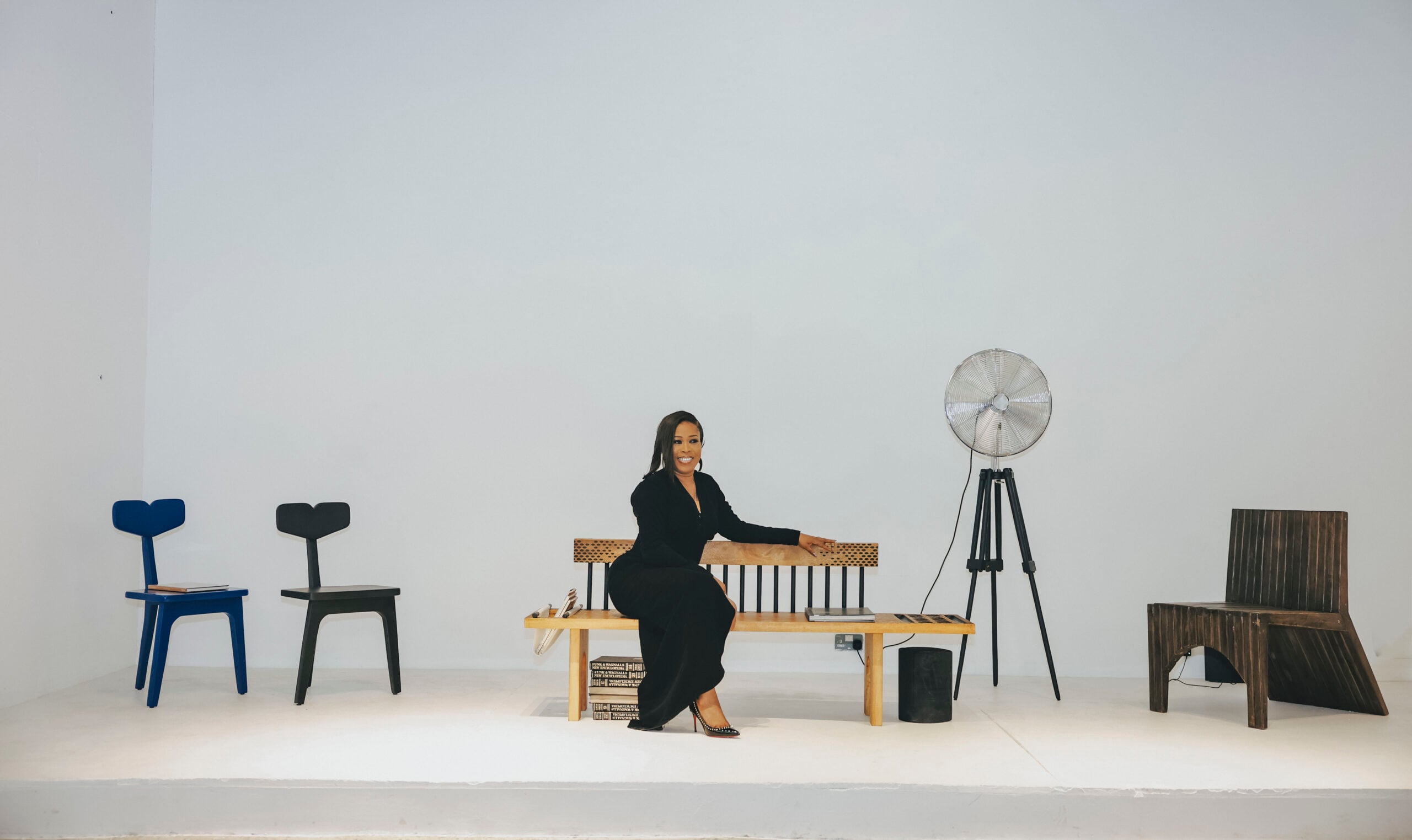
Ogufere also wants a permanent record of the work being made. That is the purpose of her proposed Design Museum Africa. She says a temporary home has been secured in Ikoyi and Studio Contra is working on the architectural vision. She describes a funding model still being developed and calls for independent oversight and professional museum leadership, so that the institution can outlast its founders.
When Lesley Lokko accepted the festival’s Architectural Leadership Honour, she spoke about what one generation can pass to the next. That included somewhere to work and a teacher with time to listen, as well as “the opportunity to try something before you know whether it will succeed”.
Ogufere’s concern is what happens to the people being trained now. She describes how much separates drawing a chair from producing it efficiently and consistently in thousands. “We cannot continue to educate young people for an industry that we haven’t properly built,” she says.