


The Trends That Defined Lagos Fashion Week SS27
Lagos Fashion Week returned for its 16th edition from 28 October to 1 November under the theme “Crafted”, continuing a conversation about heritage and innovation while exploring the knowledge, skill and creative ideas shaping African fashion. The five-day schedule was packed with more than 60 designers, but only a few met the threshold for innovation this season. Kíléntár revisited the plaid dresses and swimwear of earlier seasons, while Hertunba picked up the dropped waists and fringe of its previous collection, Akaoru. Here are the 10 trends that defined the season.
A touch of romance
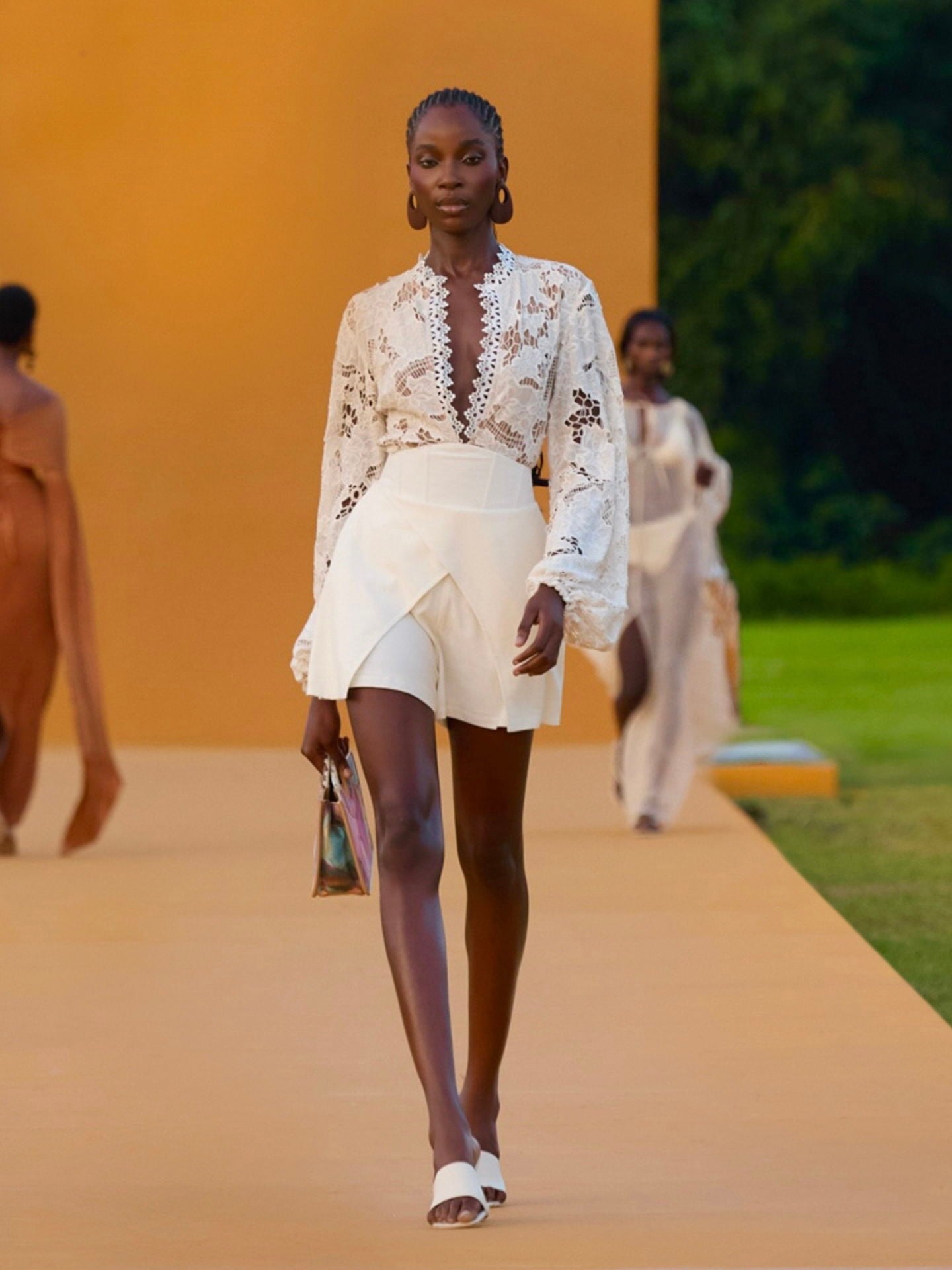
Designers this season were thinking about softness in the form of lace, and it showed across several collections. It began at Andrea Iyamah’s 15th-anniversary show at Isimi Lagos on 24 October, a few days before fashion week opened, with a white lace bodysuit cut with a plunging neckline. At Orange Culture, lace appeared in red, layered over a two-piece set, while Ibilola Ogundipe and Imad Eduso used it to evoke femininity in their collections.
Why it matters: African designers understand that luxury needs a touch of softness, and romance, seen through an African lens, is one of the best ways to communicate it.
Undone dressing is the new cool
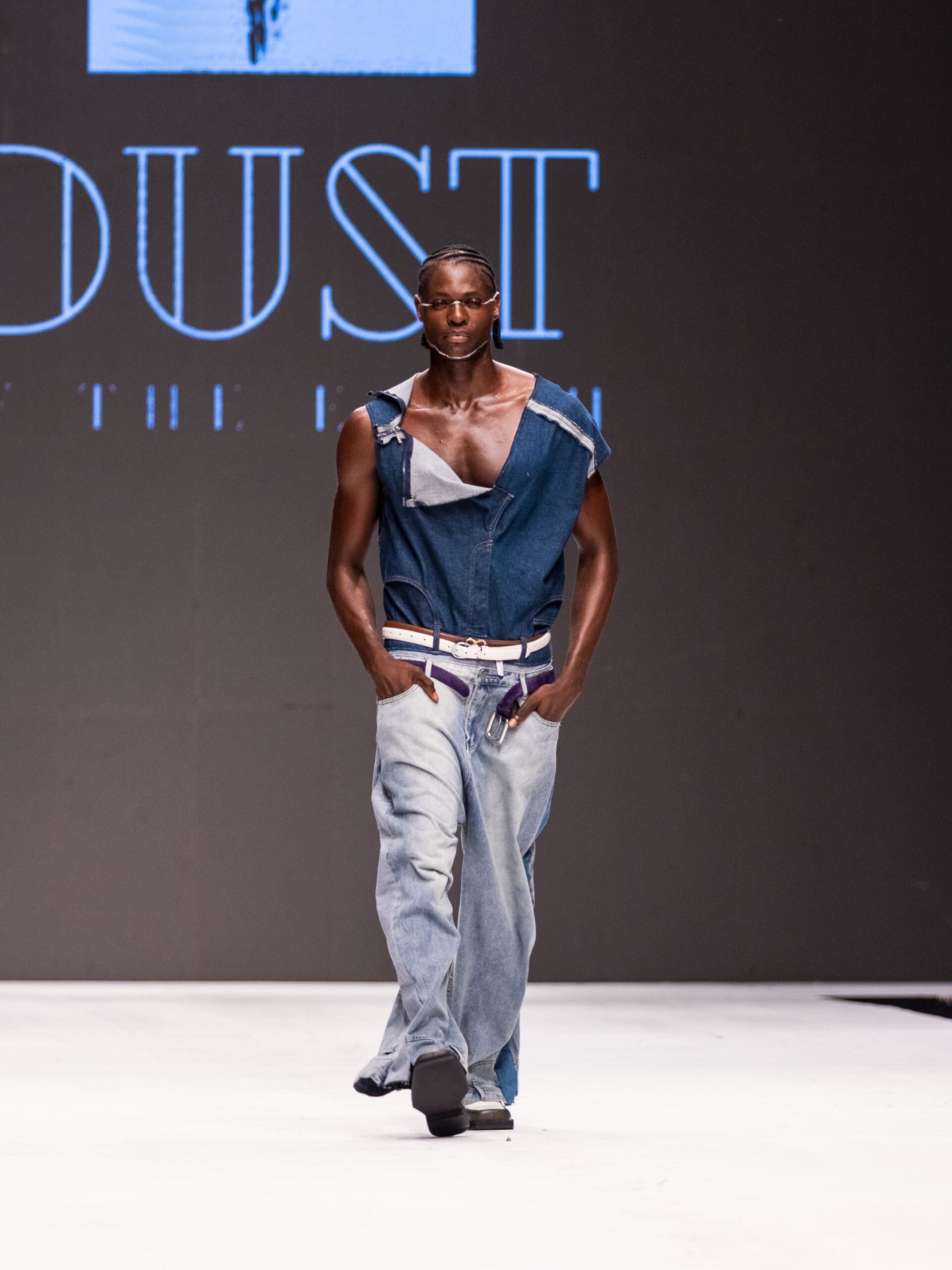
What do an open top, unzipped side pockets, an open-back dress, unbuckled belts and a shirt without buttons have in common? They were all spotted on the catwalk this season. At Dust of the Earth, a blue top dipped off one shoulder above a pair of faded jeans, and Orange Culture, Ajanéé and Emmy Kasbit also left things loose or unfastened. African designers are embracing undone dressing and communicating it through material, from denim and lightweight fabrics to akwete, the cloth handwoven in Akwete in Abia State.
Why it matters: The undone look this season hints at a need for individuality and the freedom that comes with it.
Luminous layering
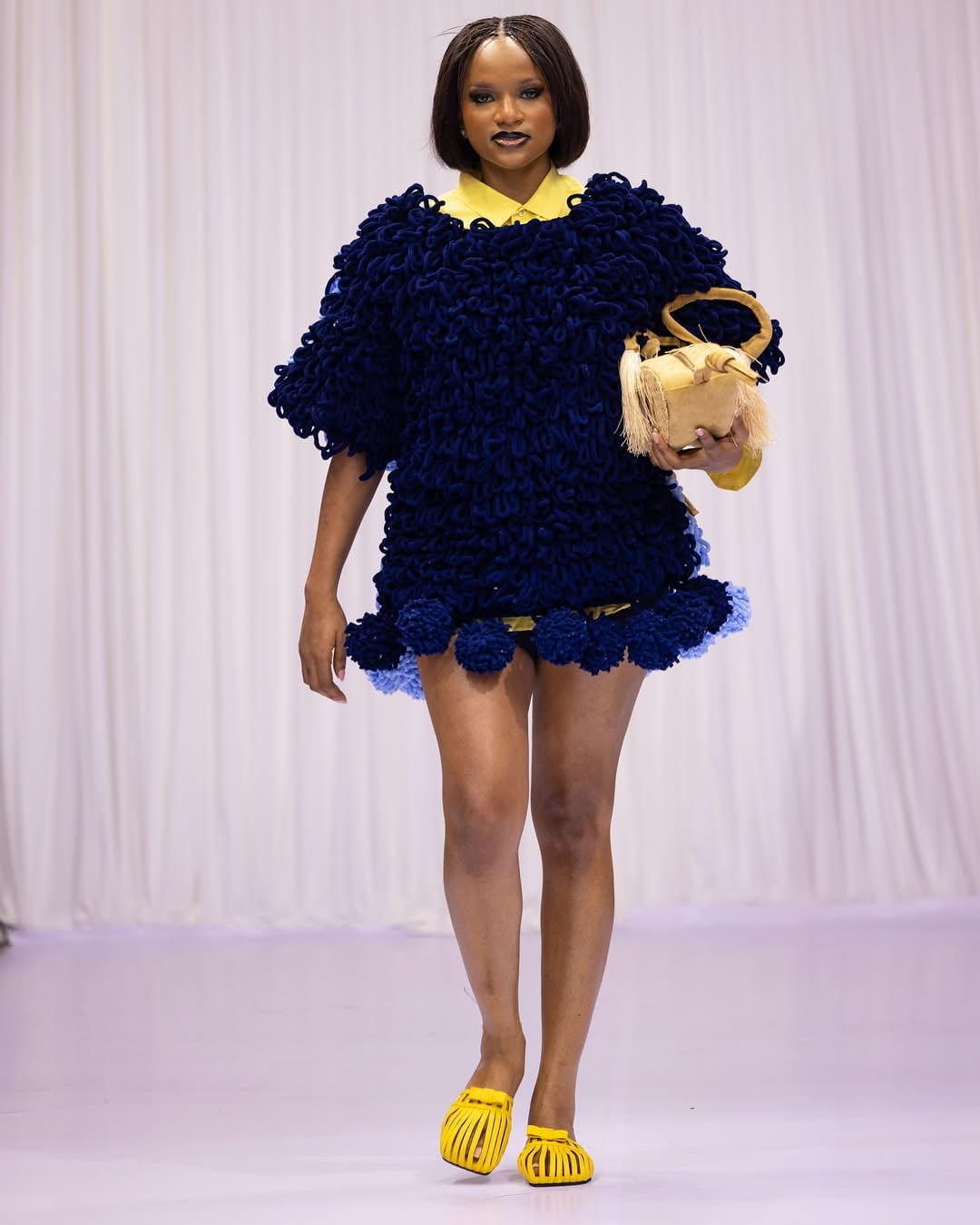
Layering got strategic this season, with designers such as Dukun, Elie Kuame and Orange Culture pushing the boundaries of what it means to place contrasting textures and colours against each other. Dukun layered cobalt blue against brown tones and burnt orange. Elie Kuame set a voluminous, fiery red jacket over a brown-toned dress and layered other looks in brighter tones. At Orange Culture, a yellow shirt collar showed above a dark, looped-yarn top, and the shoes picked up the yellow again.
Why it matters: Layering gives an outfit depth and helps balance visual complexity. It also allows Lagos designers, and African designers more broadly, to experiment and build distinctive house codes.
Sartorial bareness
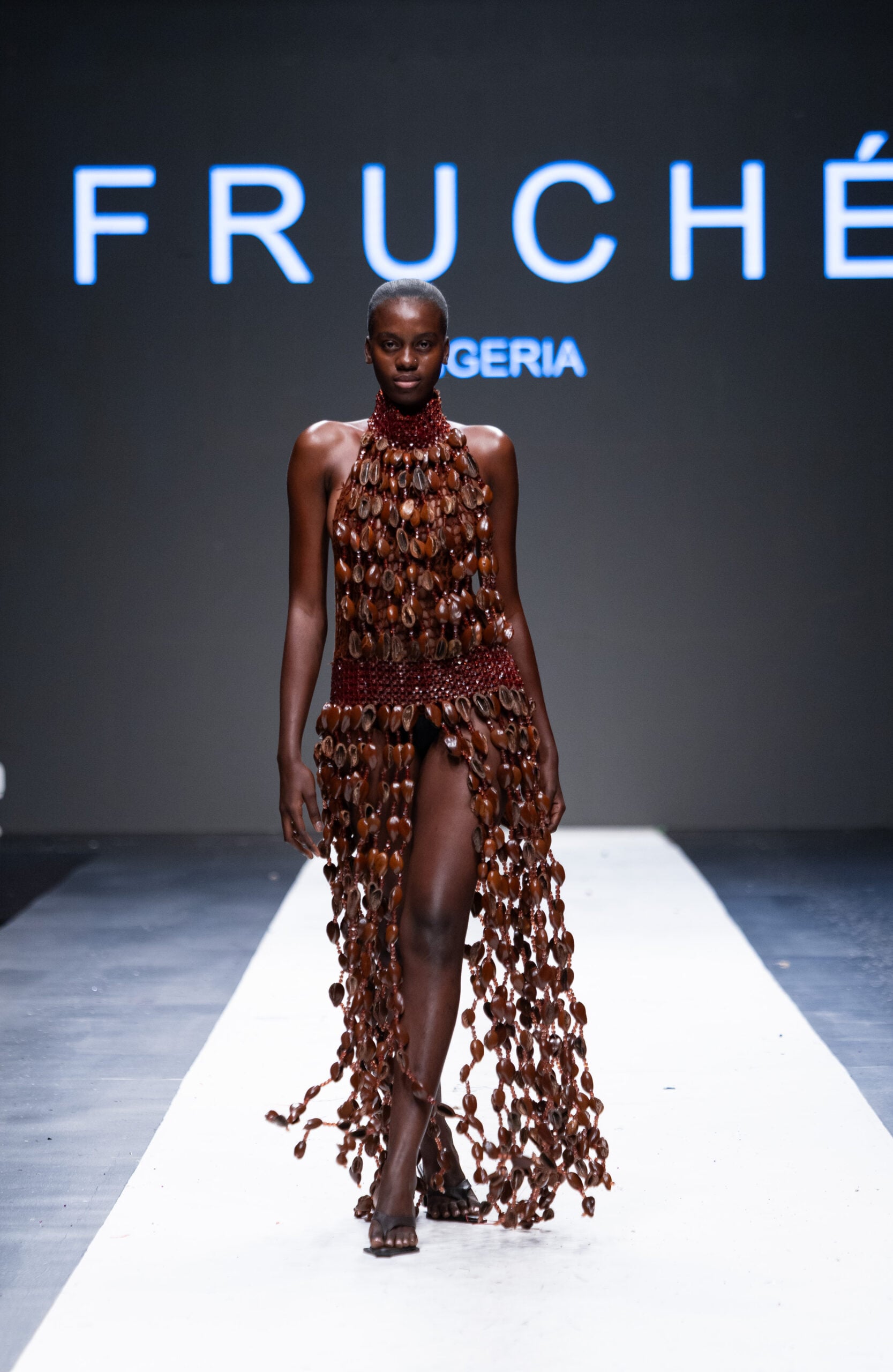
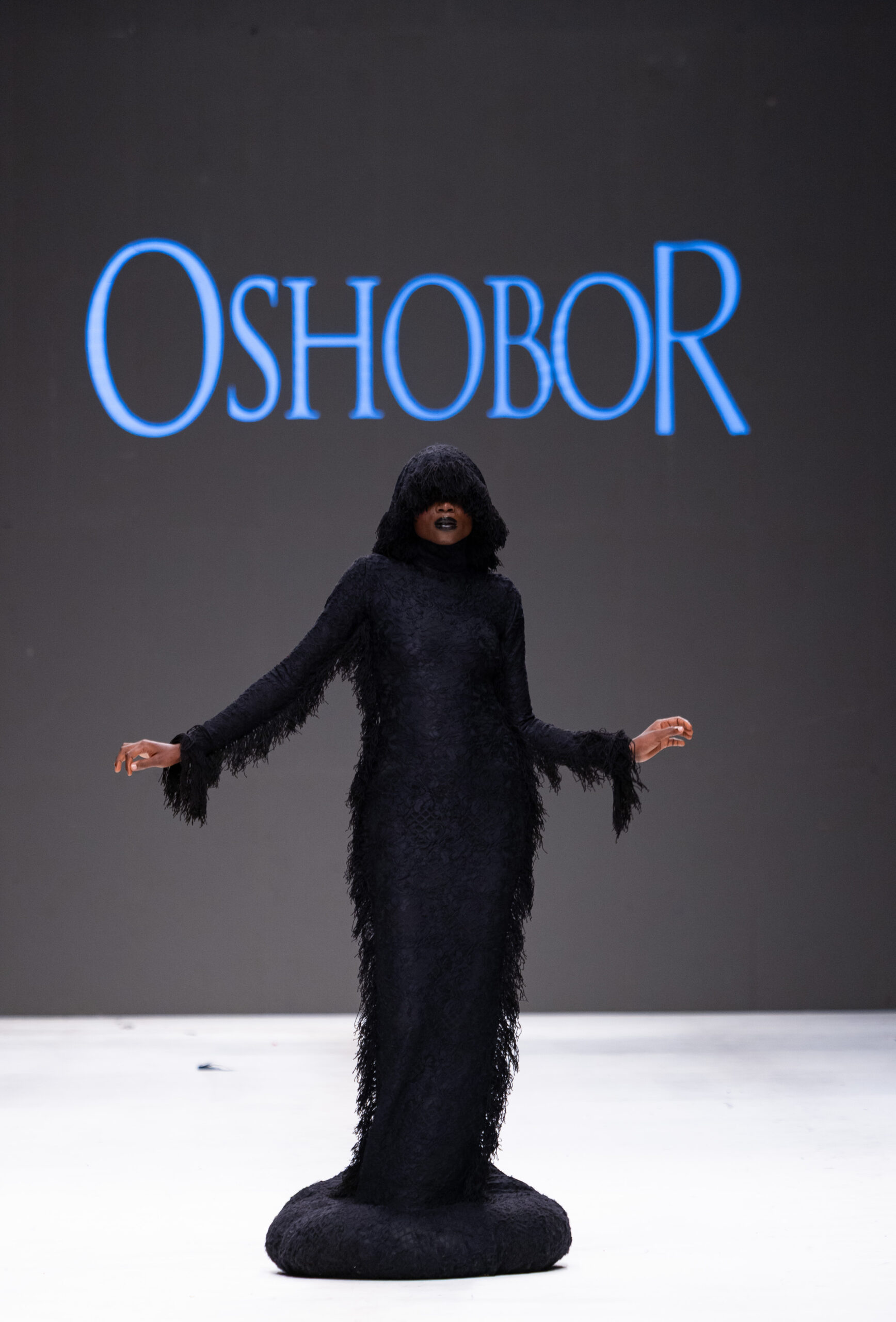
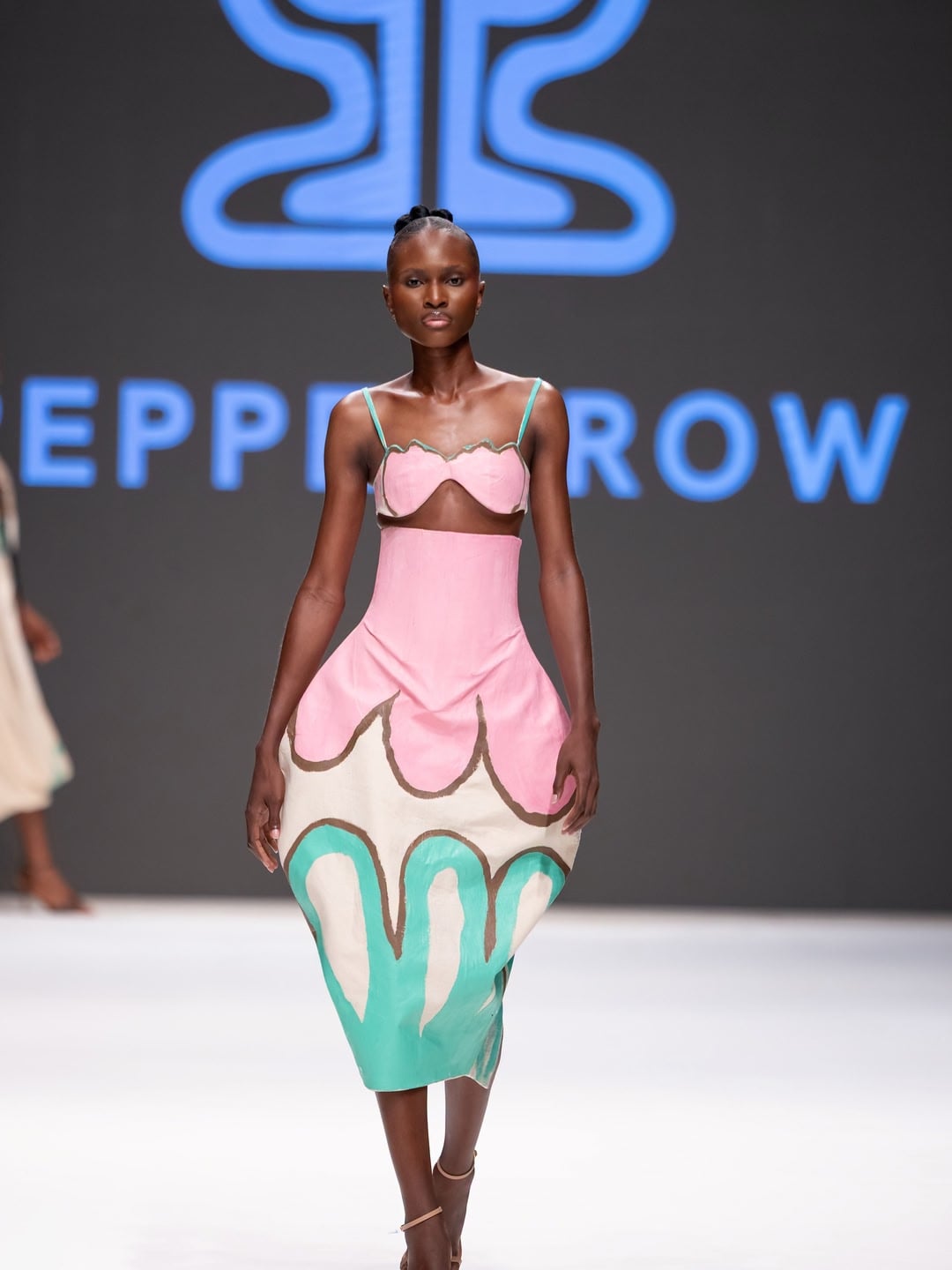
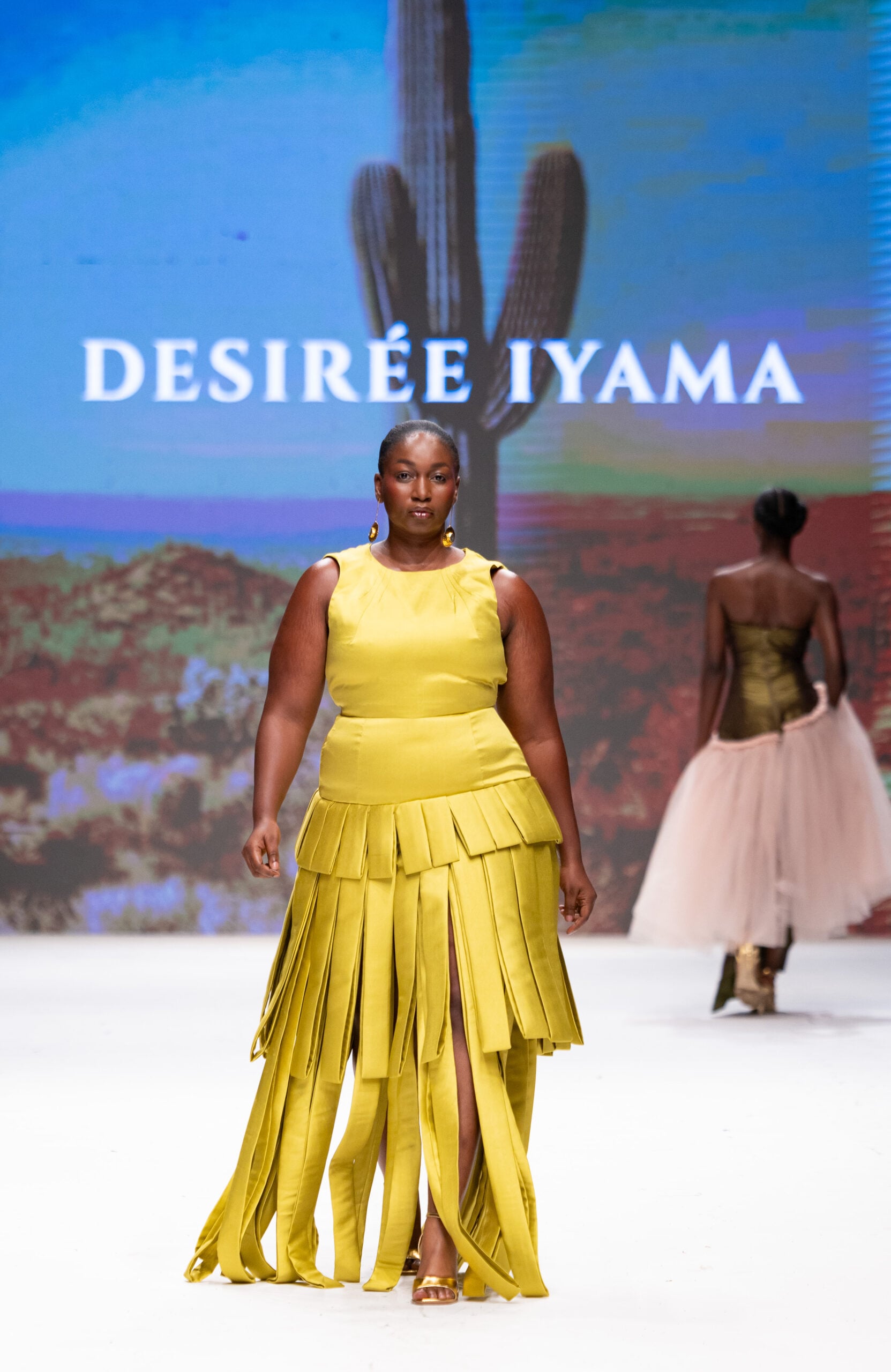
This season, designers reclaimed undergarments as powerful outerwear. Bandeaus, bras and off-shoulder crop tops were reimagined as statement pieces across collections from Pepper Row, Ajanéé, Sahrazad, Oshobor, Kíléntár, Orire, Desirée Iyama and Bridget Awosika. At Pepper Row and Ajanéé, the bra top was structural. Sahrazad, Oshobor, Bridget Awosika and Orire sent out bandeaus, and Kíléntár gave the bra top a crafted polish, embellishing it with beads and strings. Fruché took the idea of a breastplate into carved wood with a sculpted bustier, while Desirée Iyama put a twist on the off-shoulder, bandeau-style crop top, adding thick, ribbon-like fringe.
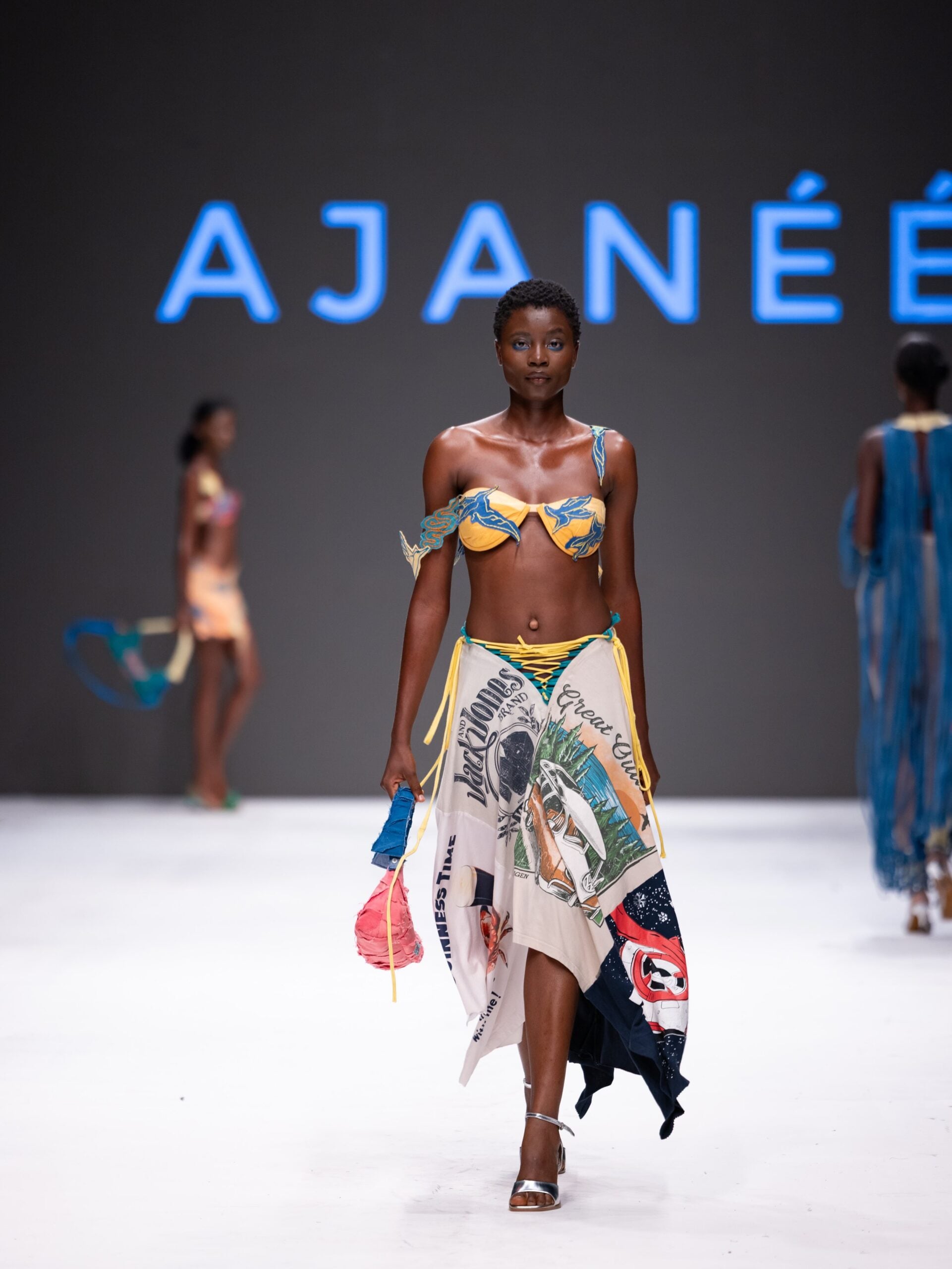
Why it matters: Pieces once worn underneath are being cut, embellished and carved as the main event, and designers are deciding how much of the body to show on their own terms.
Masquerading as an act of dressing
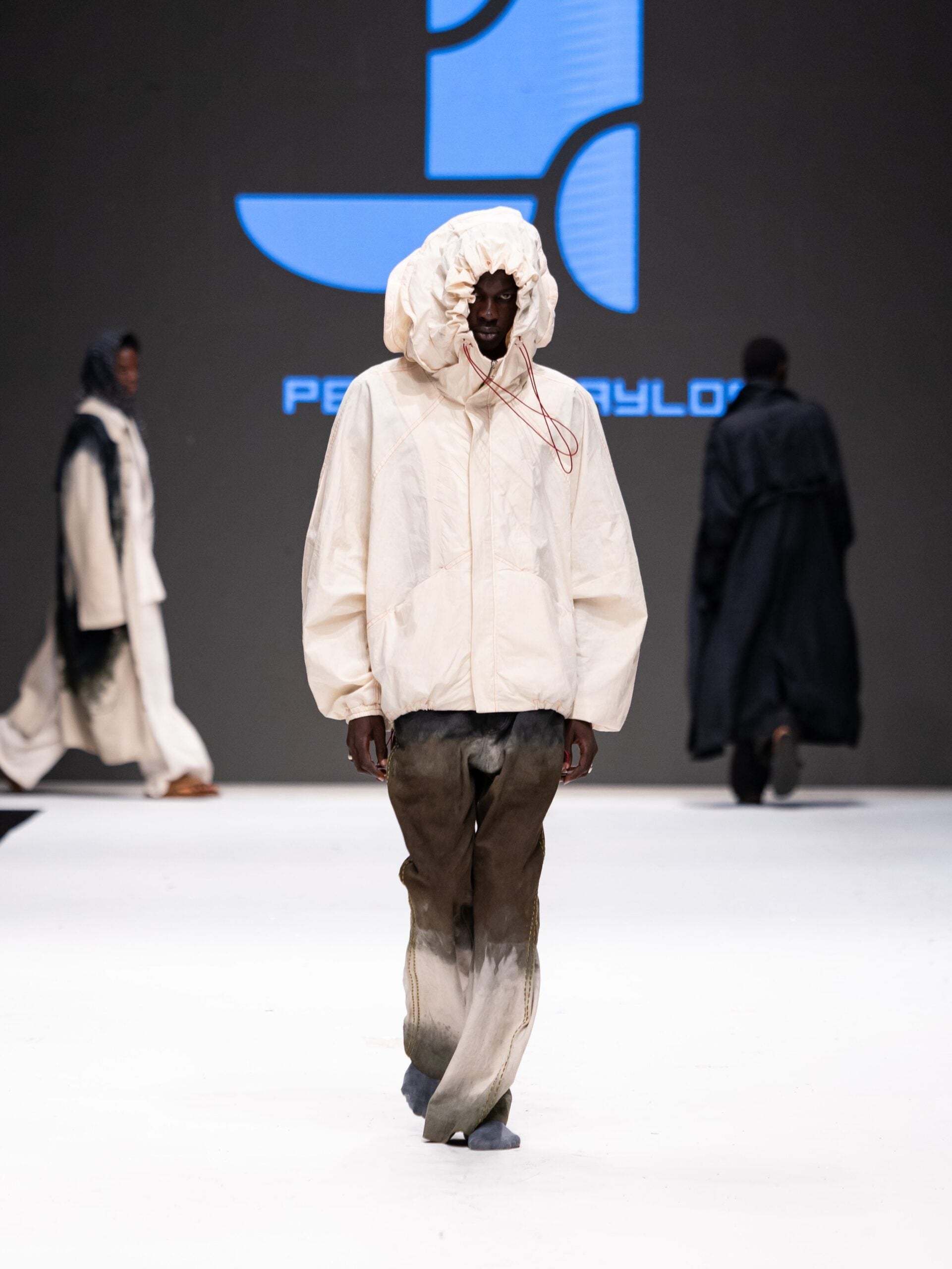
Ajanéé’s presentation opened with a model walking onto the catwalk with both hands covering her face. For the collection, Masquerading (Cloth as Spirit), old football jerseys were taken apart and given new life as dresses, paired with sheer fabrics. Other designers took an almost literal approach to concealment. Cute-Saint, which closed its show with a masquerade performance, and Oshobor showed pieces that concealed the face, with Oshobor pulling a black hood low over the eyes. So did Pettre Taylor, whose white hood was gathered so closely around the face that only a small opening remained, as well as Geometric Motion Design Lab, Ibilola Ogundipe and Imad Eduso.
Why it matters: Ajanéé and Cute-Saint made the reference explicit, and the masquerade, a site of ritual, identity and cultural heritage across much of West Africa, gave the concealed faces in those two shows a meaning beyond styling.
Textiles reimagined
From Bakus Oraya’s hand-printed cloth, cut into a brown double-breasted suit, to the barkcloth of IAMISIGO and Uganda’s IGC Fashion, Fruché’s gingham running through shirts and draped gowns, Emmy Kasbit’s akwete capsule with ALÁRA and Jermaine Bleu’s kente finished with shimmering tassels, designers this season continued to push the boundaries of textiles, proving that the possibilities for reworking African cloth are boundless.
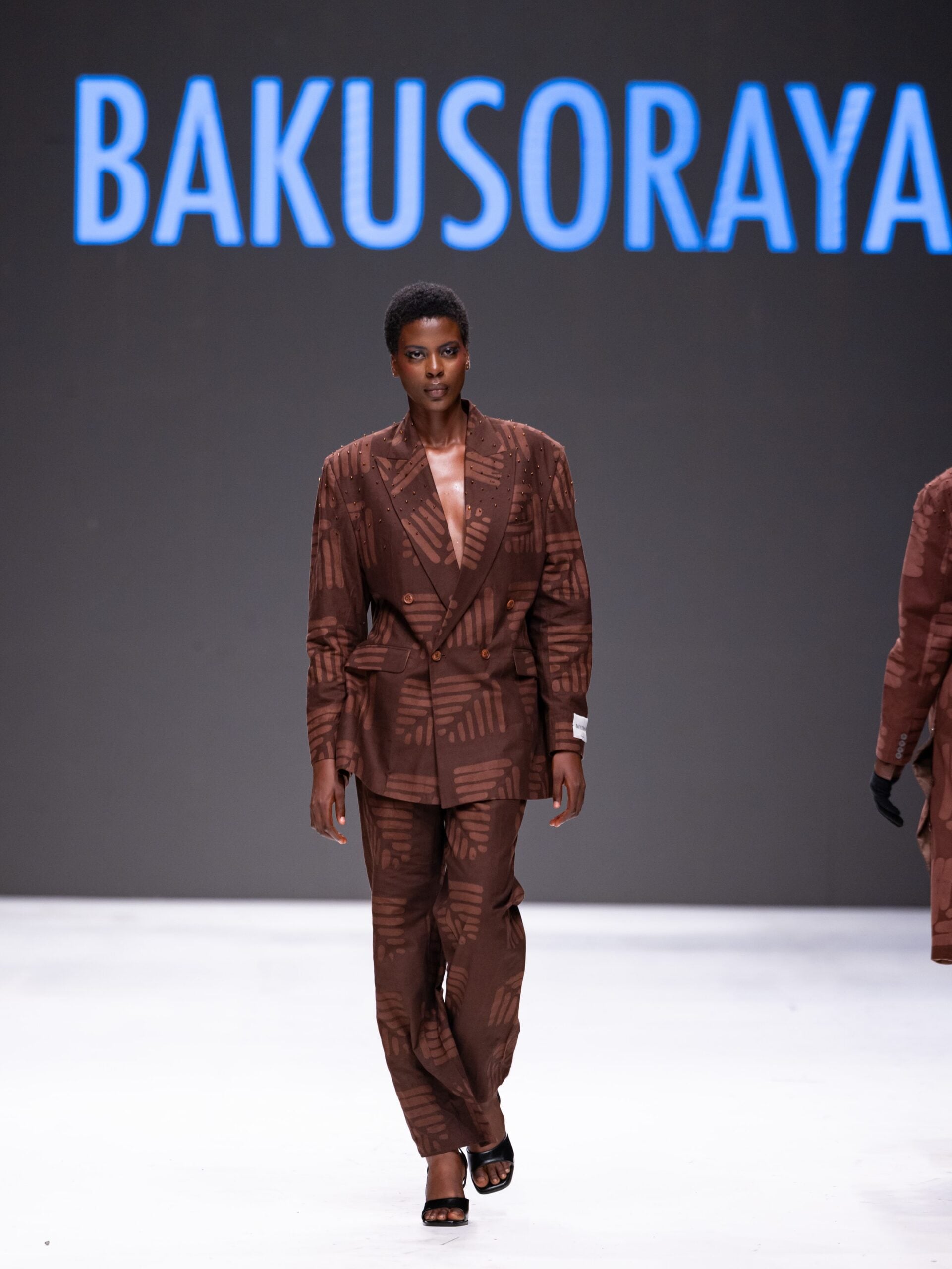
Why it matters: African textiles are not monolithic. They come in many textures and forms, and with the right innovation they can be reimagined into the global vernacular of high fashion.
Nostalgia and heritage collide
At Dust of the Earth, the designer brought nostalgia to the forefront with Nigerian pop-culture references. The cover of an Onward exercise book became the graphic on an orange T-shirt, an ayo game board was carried as an accessory, and iconic book covers were printed on bags. Other designers, such as Pettre Taylor and Jermaine Bleu, explored nostalgia through childhood memories, fusing the past with the present.
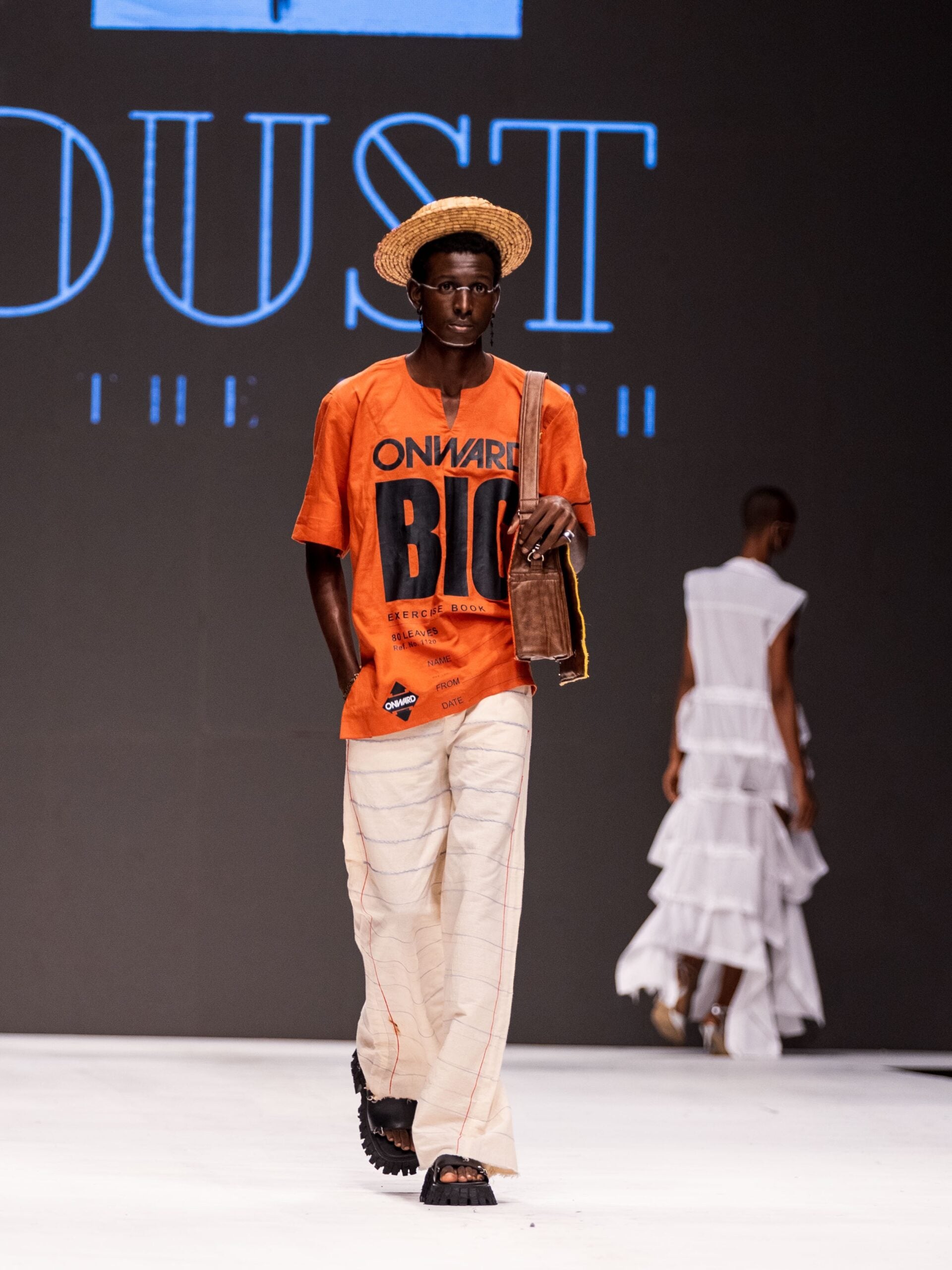
Why it matters: African designers constantly pull from the past to create new visual and design languages, as a way of preserving memory and heritage.
Waist and hemlines as focal points
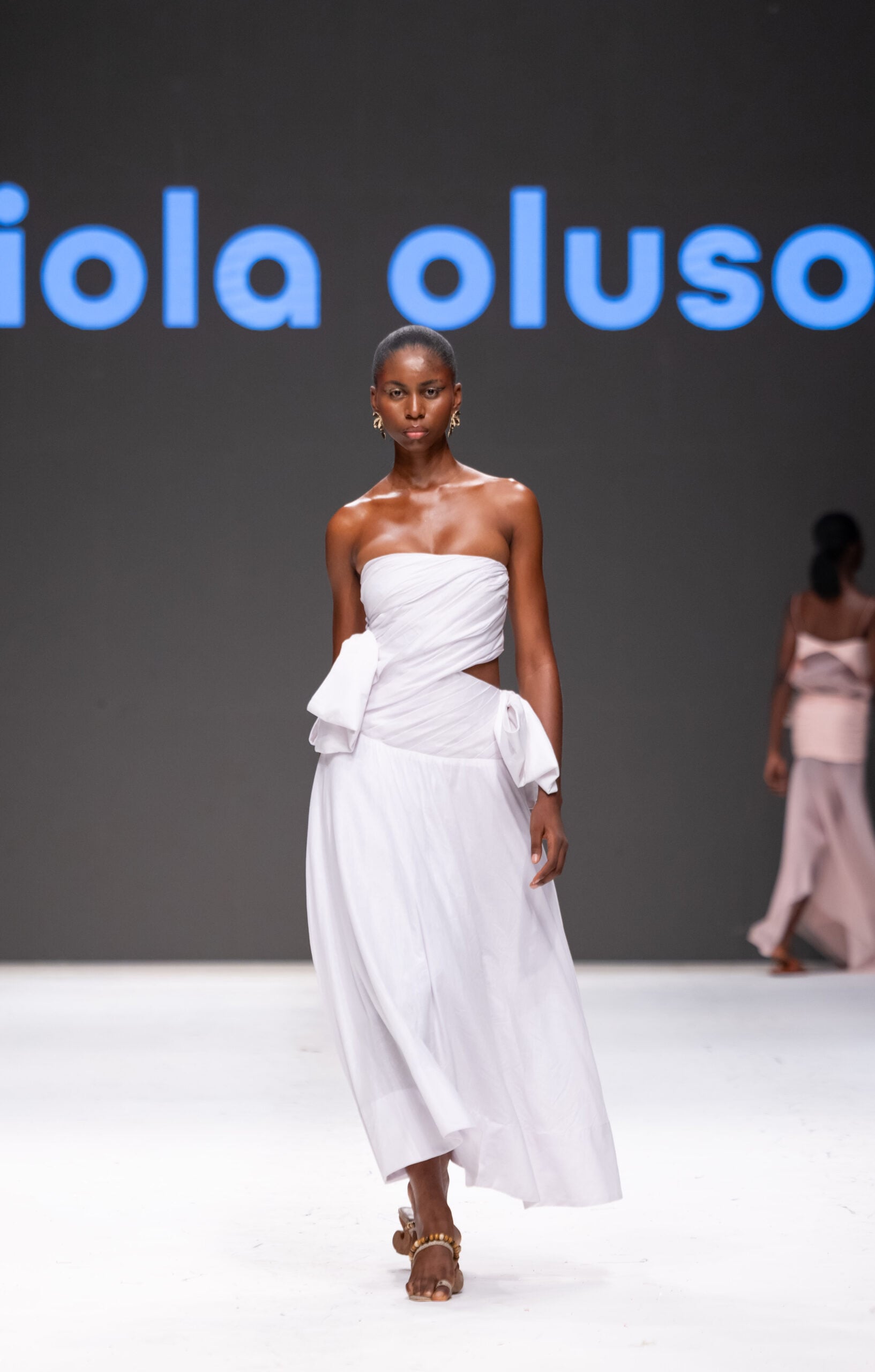
At Lagos Fashion Week this season, waists and hemlines were treated with precision. Hertunba added frills for movement, and Jermaine Bleu stacked the waist with a belt for structure. Desirée Iyama held the waist close to the body and let thick, ribbon-like strips of yellow fall almost to the floor. Abiola Olusola added a sculptural peplum to a white strapless dress, with folds of fabric standing out from either hip, while at Pepper Row and Sevon Dejana the waist was more structural than ever.
Why it matters: The waist is where the eye goes first, and designers understand the value of making it the centre of attention. It is both a strategic and an aesthetic anchor, the axis where proportion, form and sartorial narrative meet.
Royalty returns
There was something distinctly ceremonial about some of this season’s collections. Drawing on cultural institutions, traditional dress codes and ideas of royalty, designers explored clothing as a marker of status, identity and belonging. Ugo Monye approached this through the royal court system, using the collection to guide audiences through a hierarchy of traditional authority. Embroidered caps, shirts and the designer’s signature kimono-inspired pieces became part of this visual narrative. In one look, gold embroidery framed the neck of a burgundy top worn above a green-and-red checked wrap. Elie Kuame also explored royalty through a collection rooted in an Ivorian story, whose gold and bronze tones, elaborate headpieces and air of mystery gave the presentation a sense of occasion. Maximalism was central to these interpretations. Pleats, embellishment, layered details and commanding proportions all added to the collections’ visual richness.
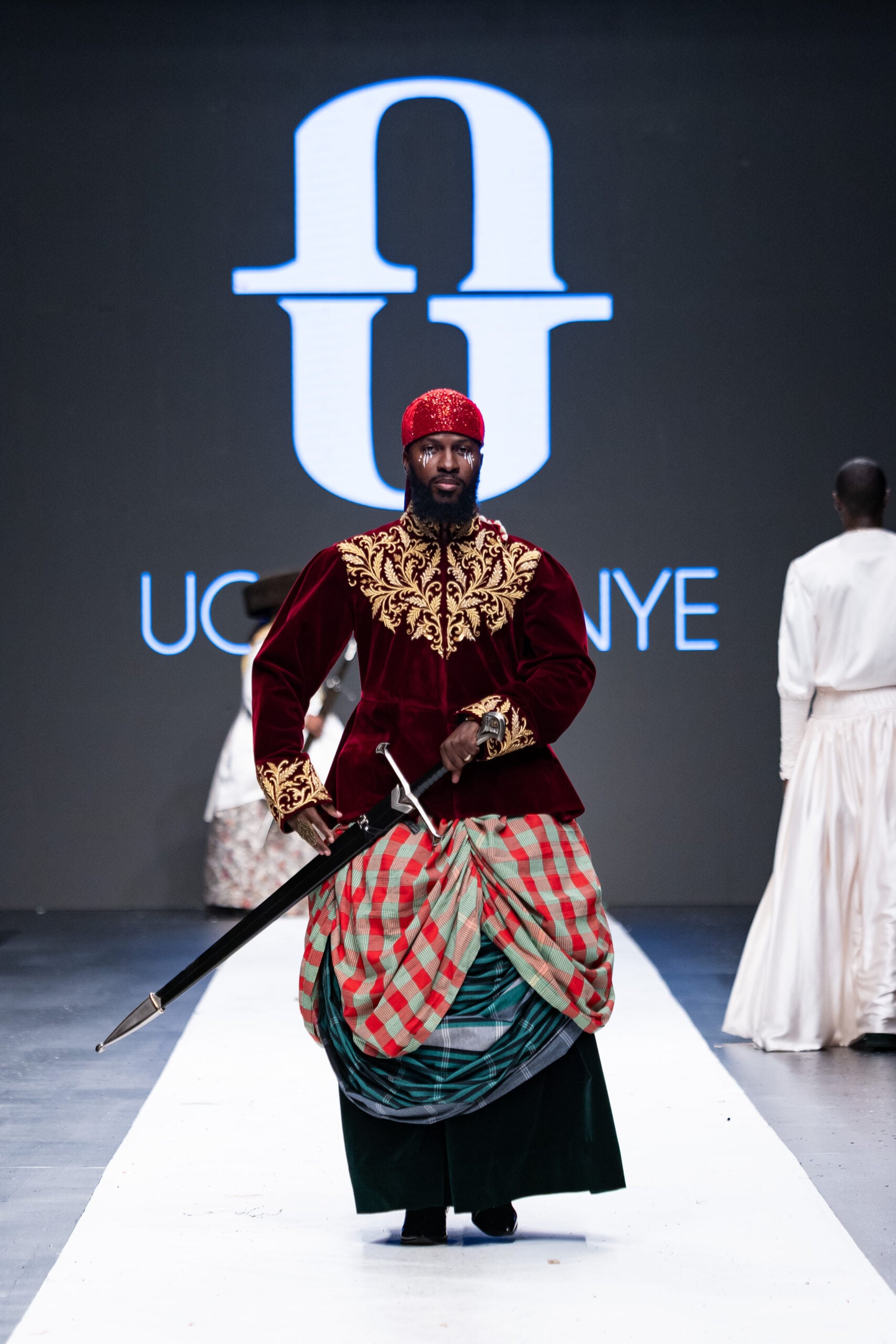
Why it matters: These collections show how fashion can reinterpret cultural heritage and traditional institutions through contemporary design.
Couture reimagined
African prints have long been used to communicate cultural identity, but their possibilities extend far beyond everyday dressing. This season, Imprint South Africa offered a reminder of their potential within a more elaborate, couture-oriented fashion language. The collection drew on South African prints, bringing their distinctive visual language into garments that put the emphasis on construction and presentation. In one look, a fitted white top and a wide white headpiece sat above a floor-length skirt, with blue fabric spreading out from the waist over a pink-and-blue print that stayed visible all the way to the hem. There is something particularly interesting about bringing culturally recognisable patterns into couture. It creates an opportunity to reconsider how familiar textiles can be transformed through volume, proportion, construction and finishing.
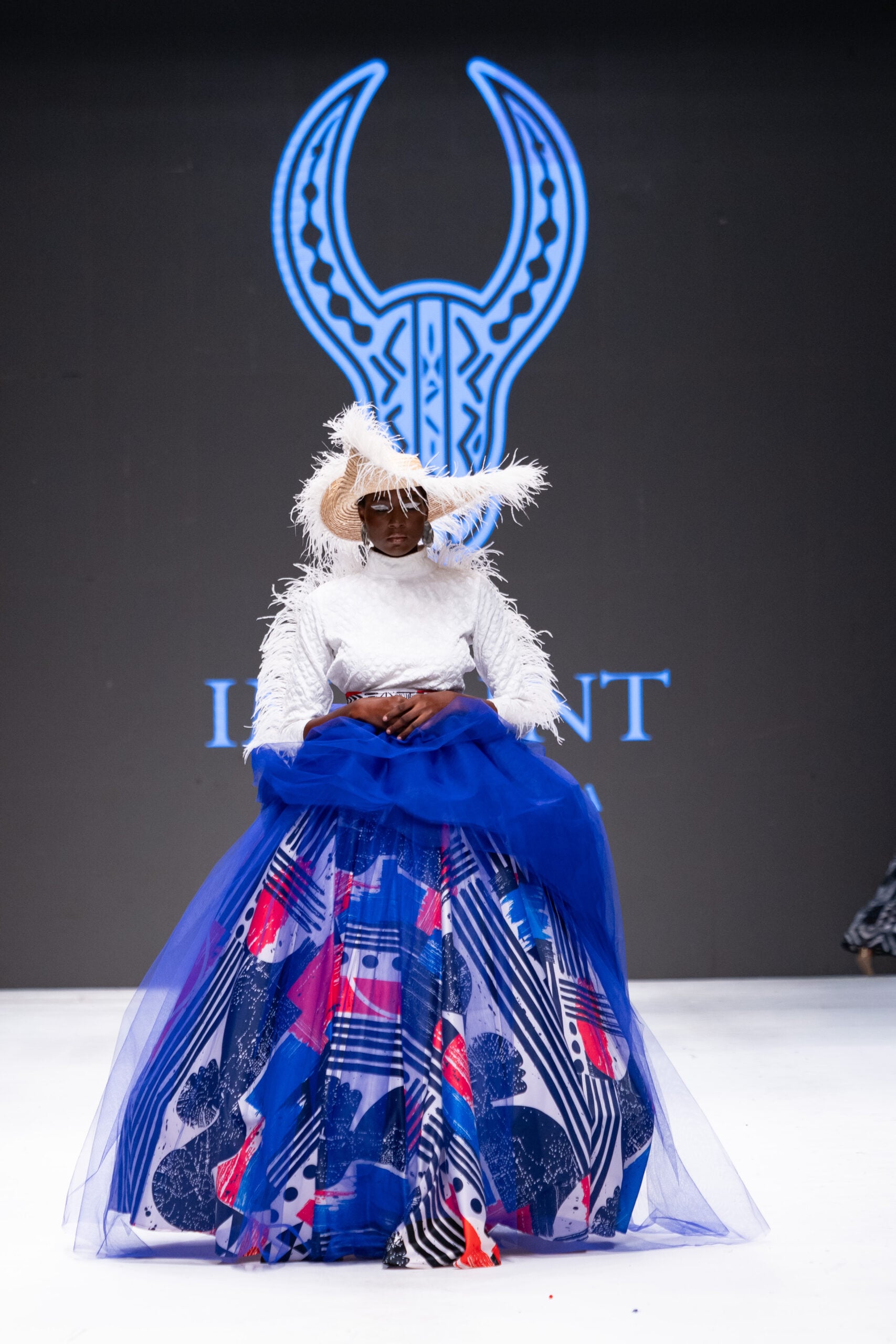
Why it matters: The collection challenges the idea that African prints belong only in everyday or traditional dressing.
What this means for the market
While trends reflect culture, they also speak to what the luxury market wants. Designers this season are getting stronger at reimagining textiles, and they are doing so in a growing market: Mordor Intelligence estimates that Africa’s textile market will grow from $39.21 billion in 2025 to $49.41 billion by 2030, a figure that covers everything from clothing to medical textiles. This season’s styling and silhouettes show a return to dressing freely and reclaiming body autonomy while holding on to nostalgia, and designers are balancing this while still catering to every demographic.
Designers are also prioritising more intimate showings, presentations and showrooms as a way of bringing the clothes closer to buyers and investors. At ALÁRA, buyers and press could see pieces by Orange Culture, Oshobor, Ajanéé and Maliko up close. Off the runway, the conversation around the business of fashion, scaling and the need for structure is getting stronger. Over four days, I attended the Fashion Business Series, where conversations around capital, commerce and financing brought together the networks and resources young fashion entrepreneurs need to scale their businesses. It was interesting to see these conversations move beyond the usual discussions about creativity and aesthetics to address the practical challenges of building a sustainable fashion business.
One of the most practical points, highlighted in the organisers’ Day 4 recap, came from Olamoniso Nduka, head of commercial at Polo Avenue: for a retailer to take on a label, the designer needs a line sheet a buyer can order from, clear wholesale margins and the capacity to deliver the clothes in the quantities ordered. From accessing funding and developing commercial networks to understanding the infrastructure required to grow, the sessions offered a glimpse of the business realities that underpin the industry. More importantly, they created a space where emerging designers and entrepreneurs could connect with the people and institutions that might help turn their creative ambitions into viable businesses.