

How Nigeria Was Everywhere and Nowhere at the World Cup
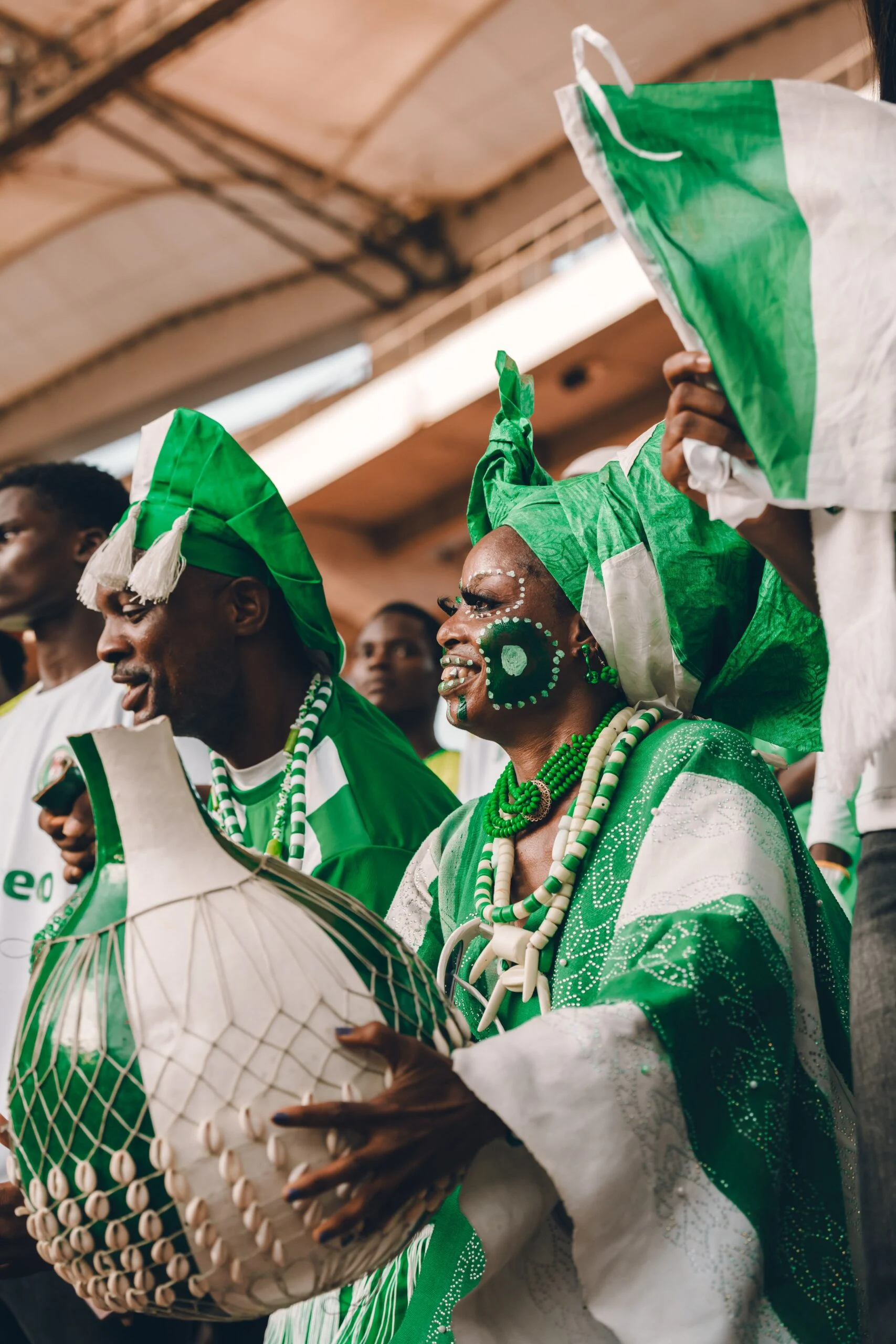
Where the 2026 World Cup rank in recent history is discourse for another time, there’s no doubt that it has uniquely taken its place as a cultural tentpole. A reason for this? The host nations, particularly the United States, which, months before the tournament kicked off, was speculatively doomed because of anti-immigration sentiments, ICE crackdowns, and mass shootings.
And yet, the World Cup throttled on without significant hiccups. African teams played their part, carrying the hopes of a continent on sport’s biggest stage. The heroics of Cape Verde’s goalkeeper Vozinha captivated the world, so was Morocco, the last African team standing until their elimination in the quarterfinals.
Missing from the continent’s delegation was Nigeria. It doesn’t take a genius to understand why they didn’t make an appearance: they simply failed to qualify for the tournament. While it remains a sporting disappointment by all accounts (previous participations, talent pool, etc), there’s an aspect that has gone under the radar: a missed opportunity to showcase Nigeria to the world as a cultural behemoth.
As Scottish fans drank Boston dry in their tartan kilts, stadiums in Texas cleaned up thanks to the Japanese, and Norwegians infecting the whole tournament with their Viking rowing chants, it announced the World Cup as a powerful cultural theater. But what does it mean when a nation as huge as Nigeria, bidding to reach the cultural stratosphere in global music, social media, fashion, and ascending influence, had no team anywhere near the pitch?
Maduka Okoye: A Viral Study
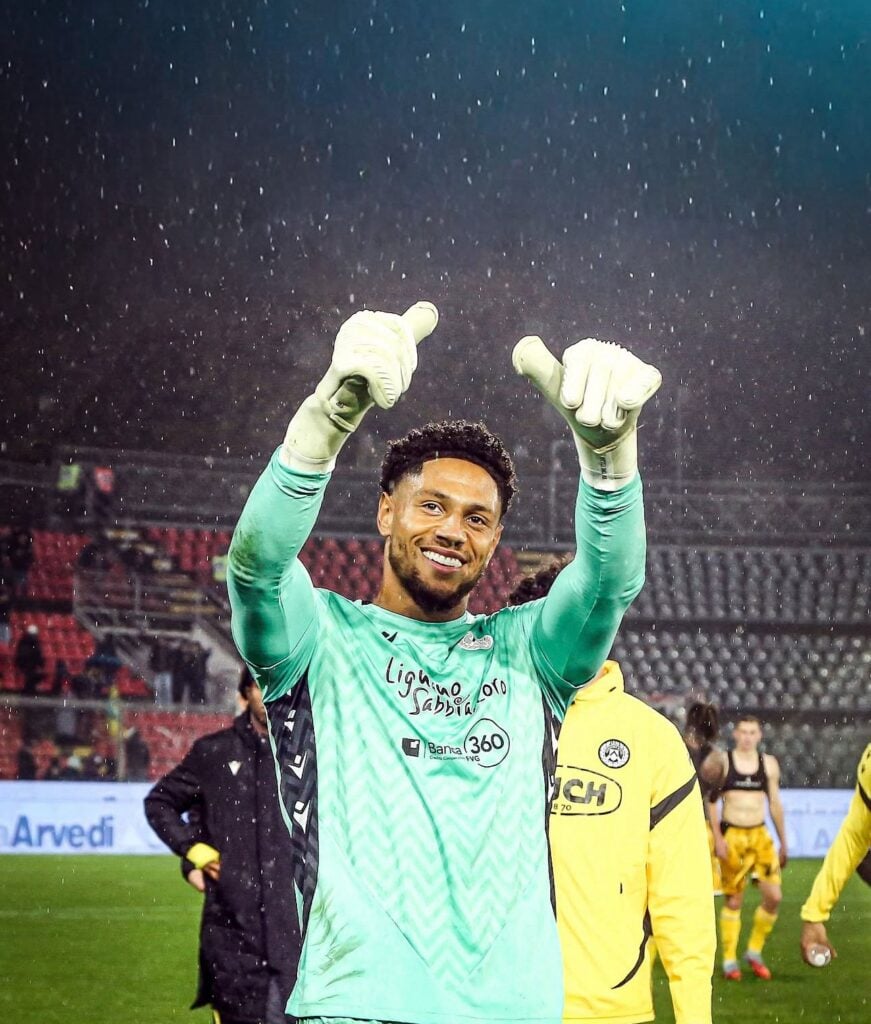
Of all the players mythologized into grass-stained sweethearts at the World Cup, Maduka Okoye became an instant viral specimen even without putting on any gloves. Maybe playing pre-World Cup friendlies in June had something to do with it, where the 26-year-old Nigerian goalkeeper attracted lots of eyeballs and saw a rise in his profile.
His off-pitch persona is just as potent, sending the internet into a frenzy. From shirtless pictures to attending Paris Fashion Week seated beside Cardi B (trigger warning: million-watt smile), the tattooed hunk is catching hearts and pulses as he would have on the pitch.
But that is as far as it went, only because Okoye’s virality felt like watching the end of a fireworks. Or leaving in the beginning before things get better. Other times, it felt like watching an alternate reality. There’s a vague sense of loss of not witnessing Okoye’s internet fame metabolize within the timeline of the World Cup.
Against the backdrop of Nigeria’s World Cup absence, the case of Okoye forces an introspection on other viral possibilities that could have happened.
The Diaspora Effect
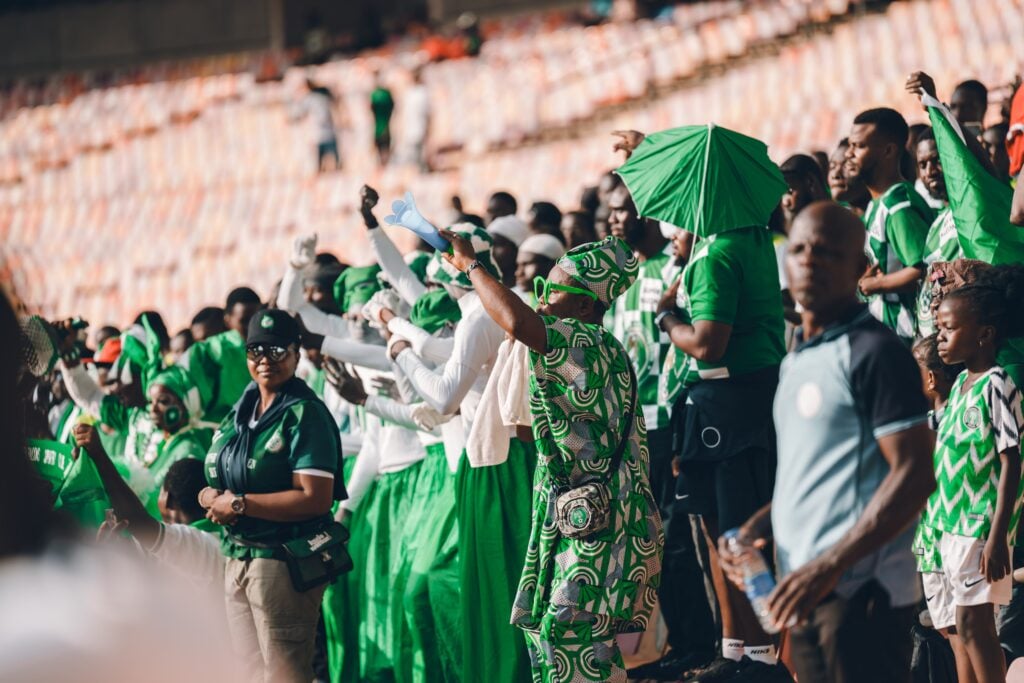
Nigeria has one of the largest and most influential diasporas in the world. Houston, Atlanta, Toronto, London, Johannesburg, and Dublin all house communities capable of turning any Nigerian fixture into a cultural festival.
The absence of the Super Eagles therefore meant more than missing ninety minutes of football. It meant no sea of green jerseys occupying city centers. No influx of Nigerian creators documenting fan culture across TikTok and Instagram. No spontaneous Afrobeats parties after dramatic victories. No restaurants suddenly become pilgrimage sites because thousands of traveling supporters need somewhere that tastes like home.
For the World Cup opener in Mexico, a host country, Nigerians in Mexico City went viral for supporting Mexico against South Africa. Donned in Mexican jerseys, sombreros, and other traditional regalia, the city also received traveling Nigerians from other parts of the world.
While the reason for Nigerians’ pro-Mexico support was politically charged, it strongly highlights the impact that the diaspora could have on a world event like the World Cup.
Fashion’s Biggest Runway Isn’t Fashion Week
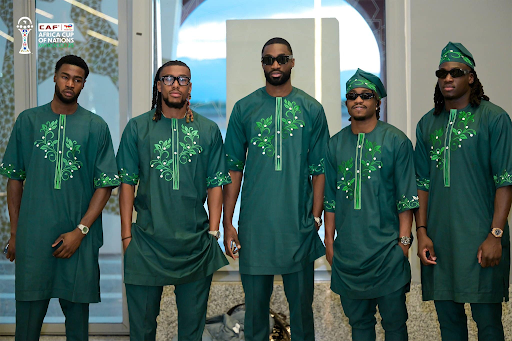
Beyond the activities on the pitch, every World Cup quietly doubles as one of the world’s largest fashion weeks. Supporters arrive wearing garments that showcase their culture and heritage. This year, there were American fans decked in cowboy hats and western boots, Moroccan jerseys paired with traditional djellabas, and Senegalese boubous seen in stadium concourses.
Nigeria has always understood football stylishly. From the unforgettable green-and-white zigzag jersey of 2018 to the country’s growing influence on global fashion, the Nigerian style rarely stays confined to clothing. It spills into hairstyles, streetwear, photography, and internet culture.
Imagine tens of thousands of supporters combining Aso Oke, Adire, Okpu Agu, contemporary designers and everyday streetwear across New York, Los Angeles and Dallas? The tournament would have become another global runway for Nigerian fashion, not because of a deliberate campaign, but because culture travels through people before institutions.
Nigerian Culture As Soft Power
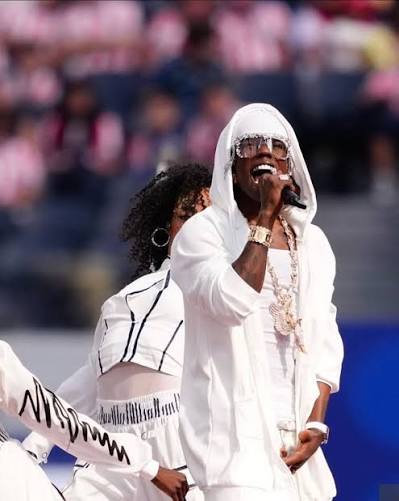 Nigerian Afrobeat star Rema performing at the FIFA World Cup 2026 opening ceremony
 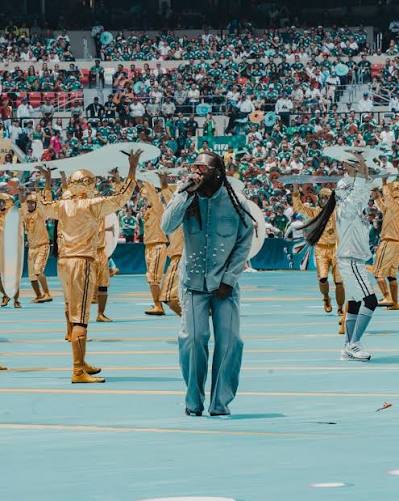 Nigerian Afrobeat star Burna Boy performing at the FIFA World Cup 2026 opening ceremony
 Gone are the days when to measure a country’s strength or power, its military is a critical aspect to consider. Countries have spent decades trying to build soft power by turning towards cultural and entertainment industries, investing in those spaces to shape how their image is perceived globally. The U.S. did it through Hollywood, Japan through anime and video games, South Korea through the K-Pop phenomenon, Europe through Eurovision Song Contest and the United Kingdom through the English Premier League.
Nigeria already possesses immense cultural capital (music, film, fashion, food, arts etc) amassed from barely any government support over the years. And some of it still turned up. Burna Boy performed the official anthem with Shakira at the opening in Mexico, Rema performed too, and at the final it is Burna Boy headlining the first halftime show a World Cup has ever put on. But the music arrived on its own steam, the way it tends to now, without the team and without the green army in the stands to carry it. What went dormant was never the culture. It was the chance to leverage all of it at once, the team, the travelling fans, the jerseys and the noise, for national branding on the biggest stage there is.
Nigeria’s absence exposed something larger than just a sporting failure: it revealed how much football is intertwined with culture itself. For a country increasingly positioning itself as one of Africa’s foremost cultural exporters, the absence carried an invisible cost.
And sometimes what a country loses isn’t just the chance to compete at the World Cup; It’s a chance to be seen.