


A Goalkeeper Went Viral. It Took a Congressman to Get His Mother to the Game
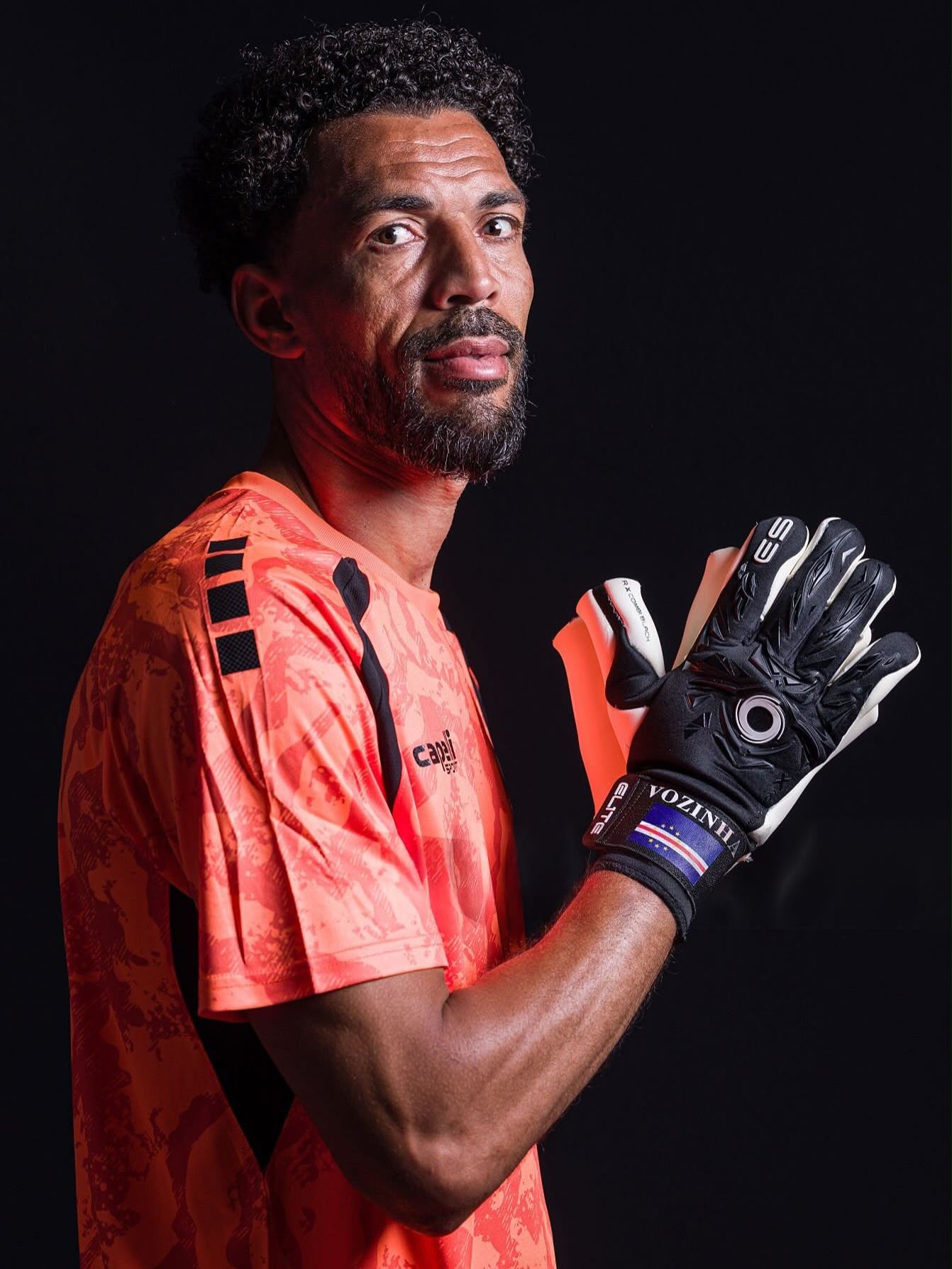
Last Monday, in the first World Cup match in Cape Verde’s history, a forty-year-old goalkeeper named Josimar Dias, known to everyone as Vozinha, faced a Spain side that produced twenty-seven attempts and still left Atlanta without a goal. Seven of those efforts forced saves, and the reigning European champions, widely expected to brush aside an archipelago of half a million people, walked off with nothing better than a goalless draw. Vozinha walked off as one of the faces of the tournament. He has spent most of two decades in professional football outside the game’s wealthiest circuits, most recently with GD Chaves in Liga Portugal 2, the second tier of Portuguese football. He began that day with about fifty thousand followers on Instagram. Within a week, after a tearful interview carried on Brazilian television, he had more than fourteen million.
Then came the detail that turned a sports story into something else. After the match, Vozinha said his mother had not been in the stadium, and explained why. Cape Verde is one of roughly fifty countries whose citizens were told this year that a United States visa could carry a bond of up to fifteen thousand dollars, part of a broader tightening aimed at nations with high rates of visa overstays. By the time of the match the administration had waived that requirement for World Cup ticket holders from Cape Verde and a handful of other competing nations, but for many families the relief arrived after the cost and the uncertainty had already done their work. His mother was not there. In the same week, her son became worth a great deal of money to anyone in the business of selling attention.
The story did not stay there, because the numbers did not let it. Within days the United States House minority leader, Hakeem Jeffries, said he had spoken to Secretary of State Marco Rubio and asked the department to do what it could. The visa was granted, travel was arranged, and Vozinha’s mother, Ana Candida Evora, arrived in Miami to watch Cape Verde’s second match, against Uruguay. It is a happy ending, and it is worth looking closely at how it arrived. It took the better part of fifteen million followers, a congressman, and the State Department to move one mother from Praia to one stadium in Miami. The value the moment generated was immense, and almost none of the machinery that finally converted a sliver of it back into something the family could hold belonged to the goalkeeper himself.
That gap, between the feeling a moment like this creates and the value its subject can hold on to, is the real story of this World Cup, and it is not new. To see the shape of it, go back sixteen years.
In 2010, South Africa opened the World Cup at home against Mexico, and Siphiwe Tshabalala hit a ball that still plays less like a goal than a rupture: left foot through it into the top corner, Soccer City coming apart, a country, and for a moment a continent, able to hear itself at full volume. That tournament was sold to the world as Africa’s arrival. The vuvuzela became a sound no one could ignore, and its look and feeling carried far past the final whistle. For once, a global event ran on African soil, and the world had to enter on its terms.
This month the World Cup opened again with the same fixture, South Africa against Mexico, this time at the Estadio Azteca in Mexico City. The tournament belongs to the United States, Mexico, and Canada, and South Africa came to it as a guest. In 2010 Africa was the host. In 2026 it is something harder to name and, in its way, more revealing: the atmosphere.
A record ten African teams are at this tournament, and the feeling around them is moving through the game well beyond the three host countries. It travels through diaspora bars in Houston and Toronto, through watch parties in Paris and Lisbon, through the group chats that make a match in Dallas feel like it is happening at the same instant in Abidjan and Kinshasa. For years that kind of influence was filed under soft power, which is often a polite way of saying a culture is useful before it is paid.
The football itself has worked this way for decades. By common industry estimates, Africans make up something like fifteen to twenty percent of the world’s professional footballers, the continent exports more than six thousand players a year, and several hundred of them play for clubs in Europe’s top five leagues alone. The talent is formed in Africa. The largest transfer fees, the broadcast deals, and the commercial value still accrue overwhelmingly to clubs, leagues, and rights holders abroad. Vozinha and his audience of millions are a single, vivid instance of a pattern the game has run on for a generation.
The same logic repeats above the player, at every level of the machine that turns African football into money. Closest to the individual are the platforms. Vozinha’s following did not simply appear; much of it was summoned by CazéTV, the Brazilian channel that holds rights to all one hundred and four matches, whose host noticed the goalkeeper’s small profile during the broadcast and asked viewers to follow him. The surge was real, and so were the audience data and the advertising sold against it, and all of that accrues to the platform whether or not a lasting deal ever reaches the man who caused it. Above the platforms sits the broadcast. Across much of the continent the World Cup reaches living rooms through SuperSport, now under the effective control of France’s Canal+, after its roughly three-billion-dollar takeover of the parent company, MultiChoice, became unconditional in September. The match may be watched in Lagos or Johannesburg, but the corporate architecture around that viewing now runs through a French media group.
Beside that sits the newest layer. Google has made Gemini a technology sponsor of Morocco’s national team, and many fans will spend the tournament generating cheering images and team anthems through its tools, the songs produced by a text-to-music model called Lyria. Presented as fan engagement, it is in substance African football emotion becoming raw material, and a live showcase for an American model that keeps what it learns from the making. The merchandise tells the same story. National-team jerseys are among the tournament’s most reliable sellers, and the designs have grown genuinely specific, rooted in the visual language of the countries wearing them rather than stamped onto a generic template. Yet the replica that sells in Lagos or London is manufactured and priced by global sportswear companies headquartered off the continent, which keep most of the margin on a shirt built from African identity. At each level the answer rarely changes: the talent and the culture are African, and the machinery that turns them into durable money is mostly owned somewhere else.
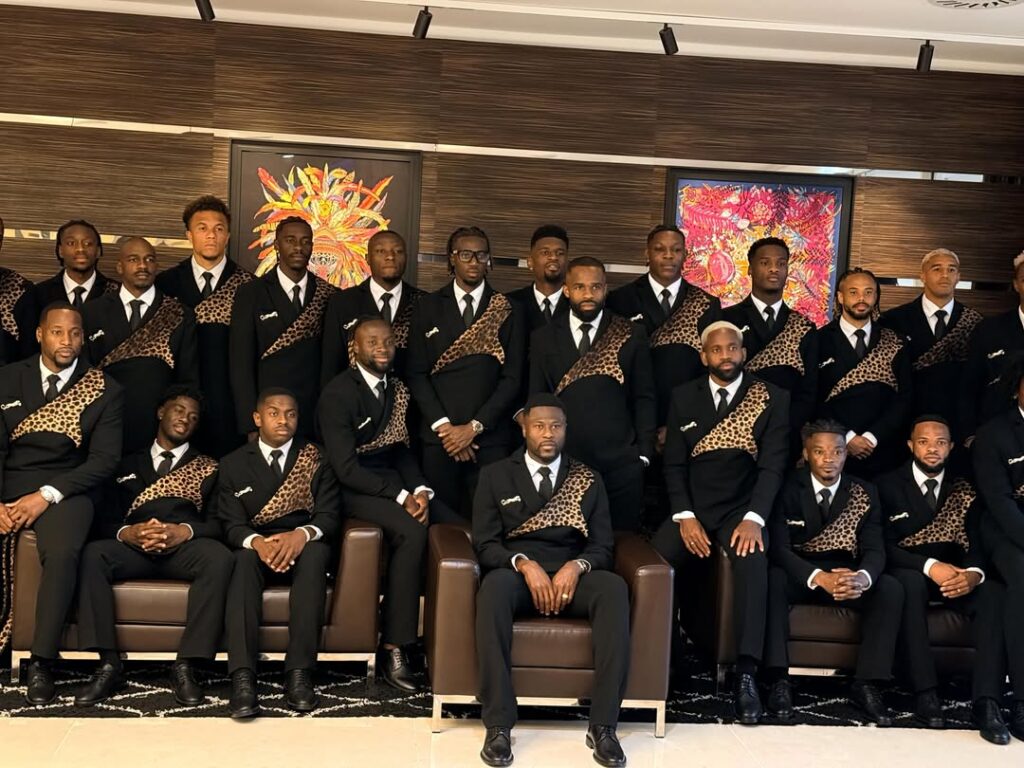
The most striking image of the tournament so far had nothing to do with the football, and it tells the same story from the other side. When the Democratic Republic of Congo arrived in Houston for its first World Cup in fifty-two years, it did not pass through the airport so much as command it. The players wore black silk-crepe suits with velvet leopard-print lapels and gold leaping-leopard pins, matching leopard-print bags in hand, a look built around the team’s Leopards nickname and around La Sape, the Congolese culture of dressing well as a form of dignity and self-authorship.
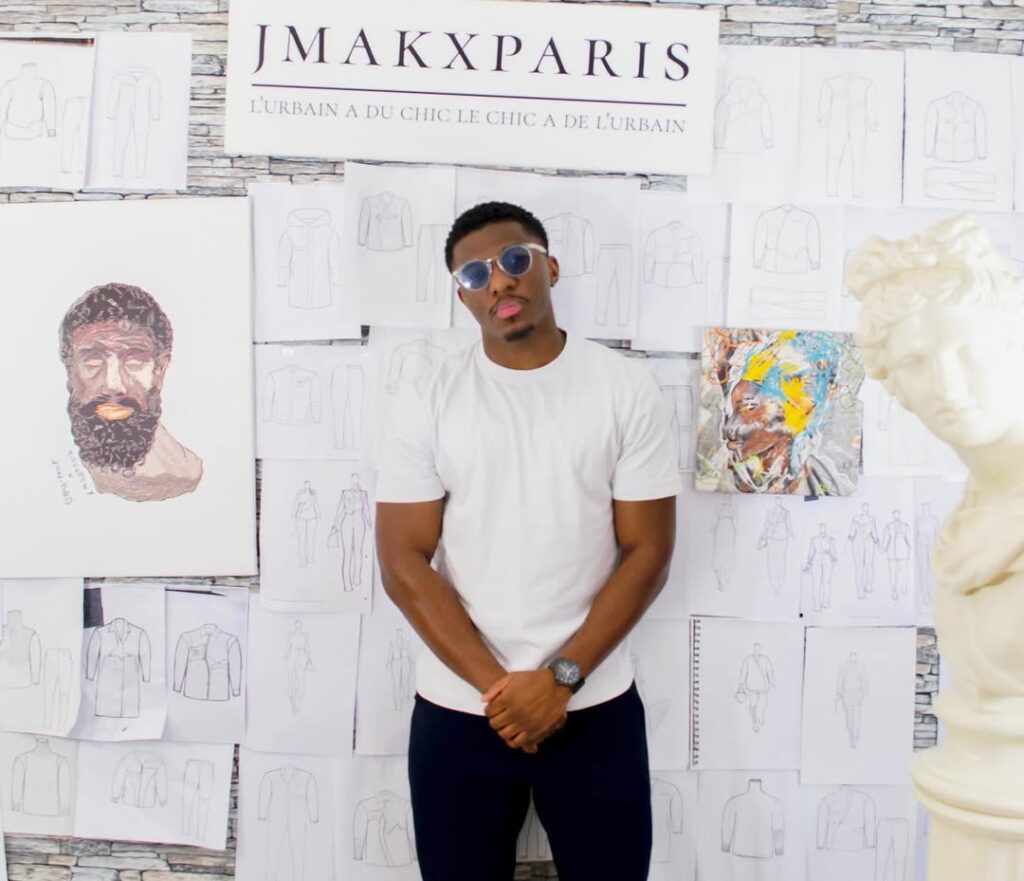
The designer was Alvin Junior Mak, founder of the Paris label JMAKxPARIS, who was born in Congo, raised in Paris, and spent four years working the floor at H&M and Zara before teaching himself to design from documentaries and what he could observe. The images crossed the world within hours. Before a ball was kicked, Congo had produced one of the defining pictures of the tournament and announced its return not only as a football nation but as a visual culture.
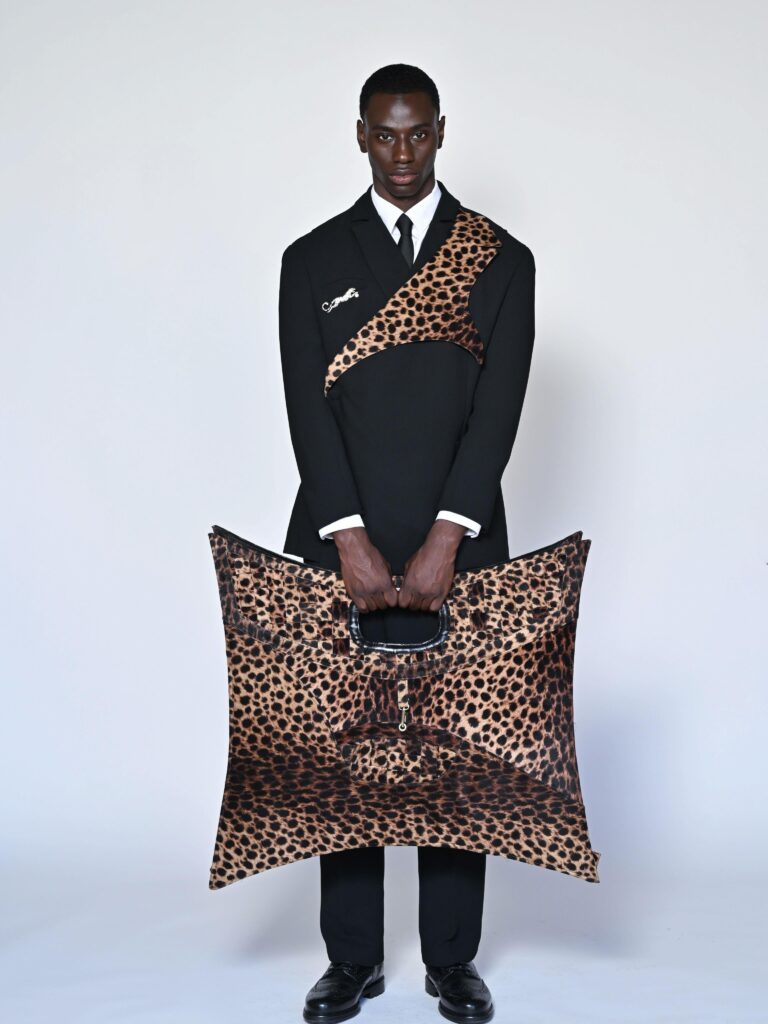
Mak moved quickly. The suit and its matching leopard bag went up for preorder through his own house within days, turning a viral morning into a commercial window without waiting for anyone else to translate the moment for him. He had also made a quieter choice that matters more to the argument than the preorder does: the garments were produced in the Democratic Republic of Congo, with local artisans, and he has spoken about wanting the attention to pull manufacturing investment toward the country rather than away from it. That is value capture attempted in real time, the hopeful version of the story, and it is fragile in a way Mak understands better than most. A leopard-print suit is among the easiest things in the world to copy once the image travels, and the fast-fashion machine he learned the trade inside can put a cheaper version on a global storefront before he has financed his next production run. Whether he keeps what he made, or watches it become raw material for someone else’s margin, will be settled by the unglamorous systems around the image: manufacturing capacity, financing, and some defence of the design. The same object can become a trend or an asset, and the difference between the two is ownership.
None of this makes the moment less remarkable. Cape Verde has a point against Spain, a national hero, and a mother in Miami. Congo returned to the World Cup dressed like a nation that had thought hard about how it wanted to be seen. The joy is real, and it belongs to the people feeling it. But joy does not settle the value chain.
That is why 2010 and 2026 frame the problem so cleanly. Sixteen years ago Africa hosted the World Cup and the world entered through an African room. This year Africa is inside a tournament staged elsewhere, supplying a great deal of the atmosphere that makes the global spectacle feel alive while owning very little of the structure that prices it.
None of that is an argument against the world’s money, which African football has always used and will keep using. It is an argument about what stays behind when the money leaves. Whether Vozinha turns those millions of followers into a career or a fortnight will be settled by people and structures the cheering cannot supply, the same way Mak will keep his leopard pattern or lose it to a copy, a question decided by a factory and a lawyer rather than the size of the crowd that loved it. Set those two against a continent’s worth of talent and you have the real contest of this World Cup, the one that will not be decided on the nineteenth of July.
The influence was never in doubt. The world learned long ago how to borrow African feeling. The work now, in the years between this World Cup and the next, is making sure Africa can bank it.
Subscribe. We follow African culture past the moment it goes viral, to the question of who keeps it.