


In TELLUS, Dickson Mbi Turns to the Mami Wata to Confront Climate Change
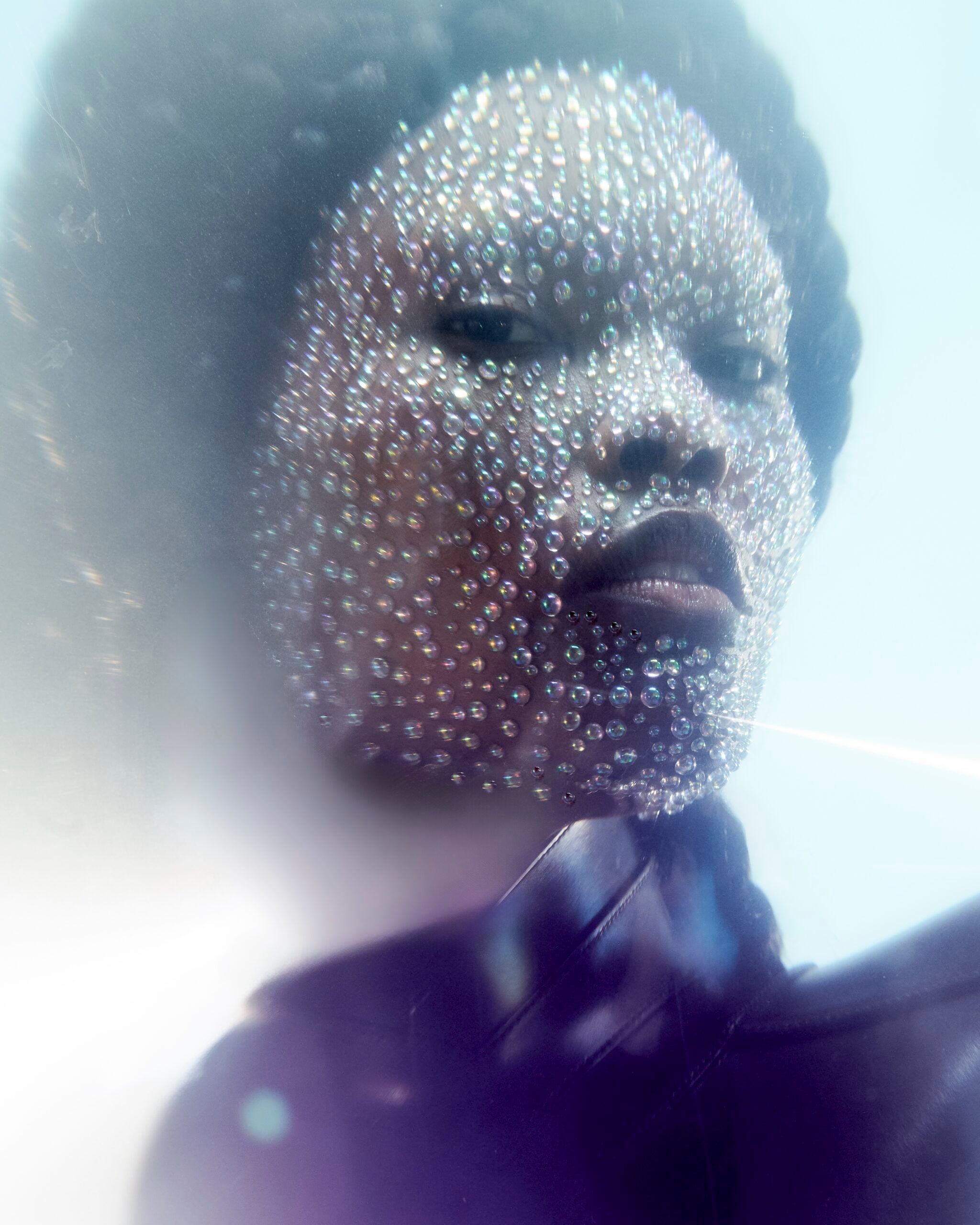
When Dickson Mbi found himself fazed by the numerous climate crises gripping the globe in real time, he wondered how he would explain the state of the world to his son. The Olivier-winning choreographer and composer was certain he had to return to the stories from his Cameroonian parents that comforted him growing up in East London. They were folkloric stories about how we should be as humans, and he wanted to pass them on to his son. His work was the only way he knew how to respond. Building a story that reflected both the urgency of Mother Nature and the folklore he was raised on, he started with a simple question. “What gets rid of fire?” he asks. “Water. So I’m thinking, okay, we’ve got fire here. What is missing? Water. Who do we go to ask? The person we’re all scared of.”
In Cameroonian folklore, that person is Mami Wata, the water spirit associated with healing, good fortune and the relationship between human beings and the natural world. Among Cameroon’s Sawa peoples, related traditions centre on the jengu, plural miengu, water spirits believed to bring healing and good fortune. Across the African continent and its diaspora, water divinities appear in different traditions: Mami Wata in West and Central Africa, Yemọja among the Yoruba, Yemanjá in Brazil, La Sirène in Haiti. They are present everywhere, and they are feared. What if the figure we have been taught to fear is the one we should have been approaching all along, as the custodian of water? In his latest body of work, TELLUS, Dickson explores climate change, modern disconnection from nature and the loss of traditional wisdom. Drawing on Cameroonian folklore, the piece features Mami Wata, a water goddess, as a call to reconnect with the Earth and ancient custodianship. Dickson blends dance, music and storytelling to spark reflection rather than preach, hoping to inspire audiences to rebuild their relationship with the world around them.
Like many children of African immigrants, he found that his parents’ expectations pointed in a different direction, so he trained as an IT technician. Then, at 18, he followed a girl to a dance class at Stratford Circus, where a group of men were doing something he had never seen in person: body isolations, waves, control and popping. “I stopped thinking about the girl and just started thinking about this thing,” he recalls. Every Saturday after that, he travelled into London with a boom box to practise.

Three years in, a dance teacher encouraged him to pursue formal training. Lewisham College gave him a place, where he learned the foundations of dance and composition. He went on to dance for several companies, eventually joining Russell Maliphant’s company in 2011. Sadler’s Wells began supporting his work in 2012. When he left Maliphant in 2015 to do a master’s in choreography, he saw his career to that point as being “more a muse for other people.”
The following year, he returned to his family village and witnessed the folklore come to life: his cousins tracking gorillas through half-eaten banana trees, uncles keeping hyenas as pets and more that he wasn’t ready to share. On an unpaved road, he recalls his cousin stepping out of a car at a crossroads to pick up a two-headed snake and feeding it roasted plantain with palm oil, telling him: “This means good luck, Dickson.” He recalls the Indigenous communities near his family’s village that his mother had always told him stories about. “If anyone is really, really sick, like seriously sick, we always take them to the Pygmies because they know so much about the world, and the plants, and nature that it could always heal someone.” What his parents had given him as a story, he now understood as sacred, real knowledge. “You think you know yourself until you go back. Then you really understand who you are,” he adds.
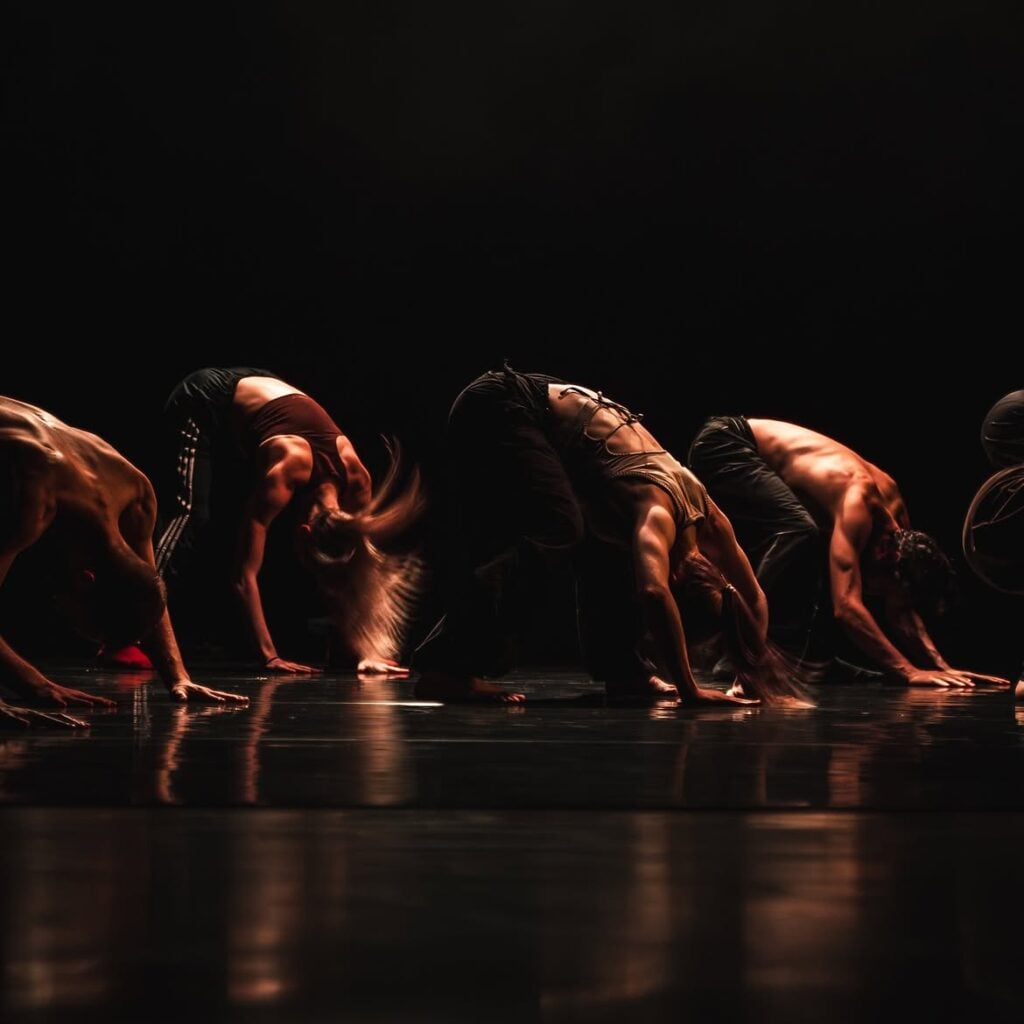
His journey home transformed him as a human and an artist, deepening his understanding of himself and the world around him. Now he comes home to Sadler’s Wells East with his first major work with his own ensemble. “Through the story of the Mami Wata, I offer an opportunity for reconnection to Earth. It is my offering.” Dickson draws on folkloric storytelling while creating contemporary work for a London audience, translating traditional ideas about nature, spirituality and community through his discipline of dance, music and theatre.
African folklore spans more than 3,000 distinct ethnic groups across 54 countries, each with its own cosmology, mythological figures and symbolic systems. Yet Mami Wata appears consistently across languages, tribes and ethnic groups as the mediator between worlds, between the visible and the invisible, negotiating outcomes for human beings with greater forces and serving as guardian of the natural world. Among Cameroon’s Sawa peoples, the miengu water spirits were traditionally appeased for the end of the rainy season and for protection from epidemics. They continue to be appeased and revered by communities who have long sought their favour and feared their consequences.
At the Ngondo festival in Douala, first held in 1949, a diver descends into the Wouri River to present an offering to the miengu and returns with a message about the coming year. The Ijaw people of the Niger Delta perform Ekine masquerades to honour and communicate with water spirits. In Central Africa, Mamba Muntu is a closely related water-spirit figure.
But can the Mami Wata save the world from itself? In 2024 alone, fire-driven forest loss reached a record high, the global average sea surface temperature hit a then-record 21.09°C, and floods in Sudan, Nigeria, Niger, Chad and Cameroon killed more than 2,000 people. The scale of it has left much of the world feeling helpless, searching for something beyond politics, beyond regulation and beyond what science alone can restore.
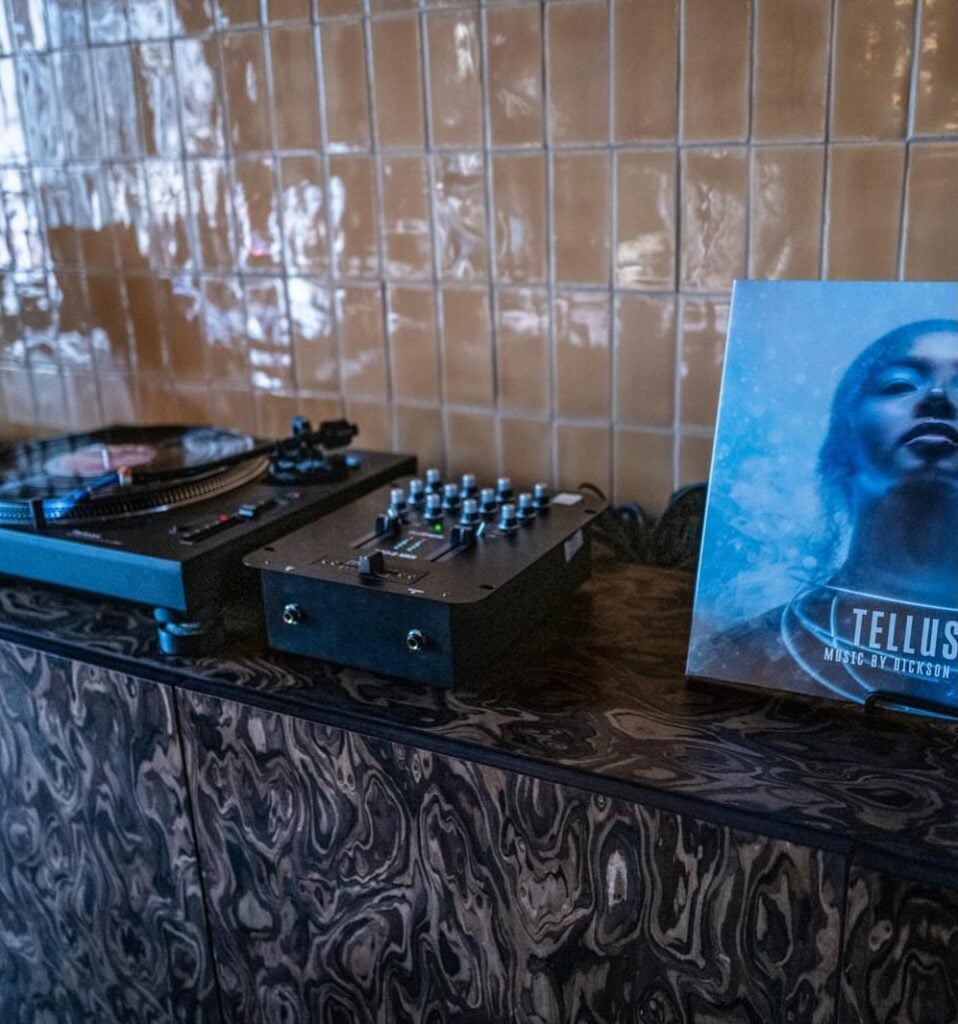
For Dickson, the logic is direct. Observing the drought, disaster and climate crisis happening globally with little to no respite, he believes the fractured relationship between humanity and the natural world has reached a point where the world needs to attune to something more sacred. Perhaps the severed relationship between the visible and the invisible, and its intermediaries, is the cause of the increase in disaster. Maybe the solution lies on the other side of fear.
In choreographing TELLUS, Dickson has worked with eight dancers from different parts of the world to tell a story rooted in Cameroonian cosmology. To his surprise, Mami Wata is not confined to African folklore. “I didn’t know there was a Mami Wata everywhere,” he says, pointing to China, Haiti and South America. “That taught me so much about how connected we are as a race, as the human race.” While he brings ancestral storytelling to a global audience at Sadler’s Wells East, Dickson also believes he is offering reconnection beyond his immediate scope, with the hope and understanding that the story of Mami Wata, through TELLUS, is water for the drought we are all experiencing on some level.
TELLUS runs at Sadler’s Wells East, London, from 21 to 24 October 2026.