


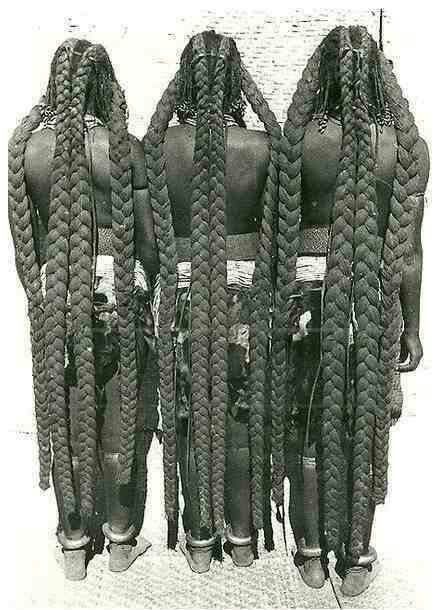
Editor’s Note: This feature is part of Guzangs’ ongoing exploration of African hair traditions, tracing their evolution from spiritual practice to global artistry. This installment focuses on East and Southern Africa, following Parts I and II, which explored North and West African hair traditions.
In East and Southern Africa, hair has long been more than style—it’s a living archive of culture. Through intricate braids, sacred clays, and courageous afros, hair has carried identities, borne the weight of oppression, and signaled rebirth. Each strand tells a story of ritual, resistance, and renaissance.
Ethiopia & Eritrea: Cornrows of the Horn
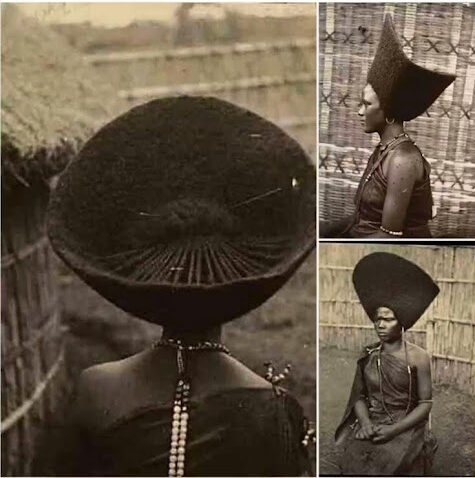
In the Horn of Africa, braids can be read like lines of a poem. Shuruba—tight cornrow braids popular among Ethiopian and Eritrean communities—is an ancient style laden with meaning. Historically worn by both women and men, these cornrows signified ethnicity, social status, and even patriotism. Ethiopian emperors like Yohannes IV were depicted with shuruba braids, while dozens of ethnic groups developed unique patterns (from albaso to gilbich) that served as visual markers of religion, marital status, and community. In Eritrea, some men grew their hair into a fluffy halo with long side ringlets known as tiffa—a style so old that similar images appear in ancient Egyptian tomb paintings.
By the late 20th century, urbanization pushed many of these traditions to the margins. Yet today, revival is underway. In Addis Ababa, braided looks once seen mainly in rural villages are fashionable again among youth. Salons report growing demand for intricate cornrows and historical styles as a new generation reclaims the elegance of shuruba. The braids of the Horn are being rewoven into everyday fashion—a vibrant thread connecting modern identities with age-old heritage.
Rwanda: Amasunzu — Crescent Crowns of Pride
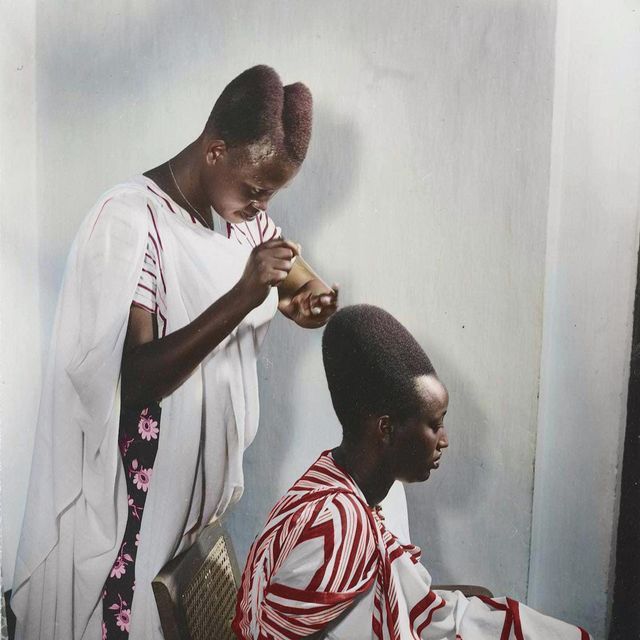
In Rwanda’s hills a century ago, you could tell much about a person by their hair. The amasunzu was an elaborate hairstyle sculpted into crescent-shaped crests, traditionally worn by Rwandan men and unmarried women of marriageable age. These striking “crescent crowns” indicated social standing and adulthood. For men in pre-colonial Rwanda, not wearing amasunzu could arouse suspicion. For young women (typically ages 18-20), the style signaled readiness to wed. Each curve conveyed information: clan, wealth, or status—turning heads into heraldry.
The mid-20th century saw the amasunzu nearly vanish under colonial influence and modern hairstyles. By the 1970s, only a few older individuals in remote areas still wore the traditional crescents. Today, Rwanda is experiencing a subtle revival. Young artists and cultural leaders have reintroduced it as a symbol of national pride. Amasunzu-inspired looks now appear on fashion runways, in photoshoots, and at festivals. In Kigali, stylists like Minani Saleh specialize in resurrecting these dramatic shapes for a new generation. What was nearly forgotten is again a source of inspiration—a celebration of Rwanda’s ability to honor its past while shaping its future.
Namibia: The Red Crown of the Himba
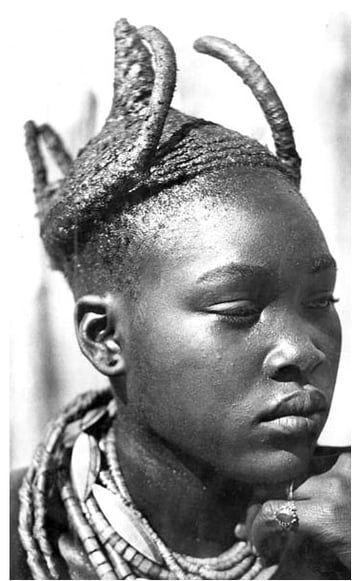
In Namibia’s arid northwest, Himba women walk beneath the desert sun wearing halos of red earth. Their hair, coated with clay and braided into ornate shapes, is both crown and cultural canvas. Each morning, Himba women mix otjize—a blend of butterfat and iron-rich ochre—and massage it into their hair and skin. The paste protects from harsh climate and insect bites while serving as cosmetic and spiritual cloak. The red color symbolizes earth’s richness, life’s blood, and sunset’s glow—aligning the wearer with ancestral spirits and land.
Hair tells a Himba woman’s life story. Young girls wear two simple plaits (ozondato) over their forehead. As they approach puberty, more braids are added and otjize application begins. Married women wear numerous long, ochre-coated braids. Mothers add erembe—a leather headdress—atop their hair, symbolizing fertility. Even in old age, hairstyles evolve, marking life’s transitions.
Today, Himba appearance has drawn international attention and tourism. Travelers flock to remote settlements around Opuwo, and many Himba communities now find themselves performing culture for visitors. Reports describe villagers receiving token payments—sometimes as little as N$2 per tourist—to pose for photographs. Community leaders express concern that outsiders treat their way of life as cheap attraction. Despite these tensions, the Himba remain resilient, continuing to walk proudly in red earth—symbols of cultural continuity in a rapidly modernizing world.
South Africa: Strands of Struggle and Liberation
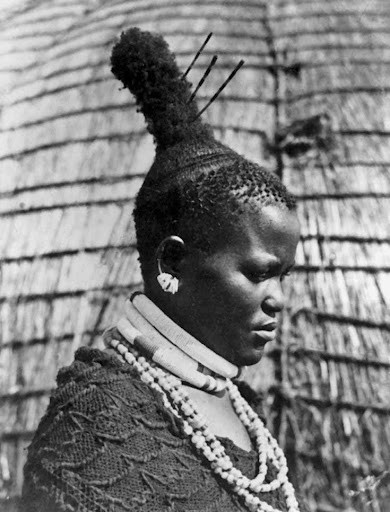
In South Africa, hair has been a battleground where colonial ideologies and Black identity clashed. During apartheid, officials employed the “pencil test” for racial classification: a pencil slid into hair determined one’s race under law. If it slipped out easily, the person could be deemed “white” or “coloured”; if stuck in coiled hair, they were classified as Black and subjected to oppressive restrictions. Schools and workplaces favored straightened hair, regarding natural afros and locs as “unkempt” or subversive.
Resistance was woven into those very coils. In the 1950s, Kenyan Mau Mau fighters grew dreadlocks as sacred symbols of defiance against British colonizers. That spirit crossed borders to South Africa, where activists embraced natural hairstyles as assertions of Black pride. The afro became a political emblem—a visual proclamation of “Black is Beautiful.” In 2016, Pretoria Girls High School students protested against codes labeling their afro hair as undisciplined, forcing schools to re-examine biased policies.
Today, a triumphant rebirth is underway. The natural hair movement celebrates afros, braids, bantu knots, and dreadlocks. Johannesburg-based hair artist Nikiwe Dlova has gained international attention for extravagant hair sculptures that turn heads into galleries, reshaping perceptions of African hair. What was once scorned is now celebrated—a testament to resilience and self-love.
From the ritual patterns of shuruba braids to the defiant twists of dreadlocks, hair across East and Southern Africa has carried history’s weight. Colonizers once tried to dictate self-expression down to the roots, but those efforts failed. Today, creativity is flourishing. In classrooms and boardrooms, on runways and in remote villages, people are reclaiming their hair narratives. Each style is a statement: a braided memorial to ancestors, a twist of resistance, or a free-flowing testament to pride. Through ritual, resistance, and rebirth, these hair stories live on—written boldly, strand by strand.
Woven Histories: Hair in North Africa
Hair Culture in West Africa: A Historical and Modern Perspective
Sources & References
- Ethiopian Herald. “The Cultural Significance of Shuruba Braids.” 2019.
- Rwanda Cultural Heritage Academy. “Amasunzu: Rwanda’s Historic Hairstyle.” 2022.
- Guardian Life. “Otjize: The Red Beauty Miracle of the Himba People.” 2022.
- Al Jazeera. “A Legacy: Reviving Rwanda’s Dramatic Hairstyle.” 2022.
- BBC Africa. “The Pencil Test: Hair and Apartheid.” 2018.
- FairPlanet. “Black Hair – Bridging a Code of Conduct.” 2016.
- Own Ur Crown (Nikiwe Dlova). “Reshaping African Hair Perceptions.” 2023.