

The Game Is Already There
This conversation was recorded in mid-June, as the group stage of the World Cup was opening.
Anita Asante remembers the game before it became a career. She was eleven or twelve, back in Ghana on a family visit, playing barefoot with her cousins on whatever ground was nearest, a patch of grass, a stretch of street, a ball or something close to one. Nobody tried to stop her. She was a girl playing football in the nineties, which was not yet an ordinary thing to be in England or in Ghana, and the people around her let her get on with it.
“For me, I always just loved it,” she tells Guzangs. “I felt so free.”
African women’s football is usually described by what it lacks: money, leagues, medical care, professional contracts. None of that was what Asante found as a girl in Ghana. The game was everywhere, in the streets and the family compounds, in the children who gathered around a ball without being asked, years before anyone built a way to carry a girl who could play into a career.
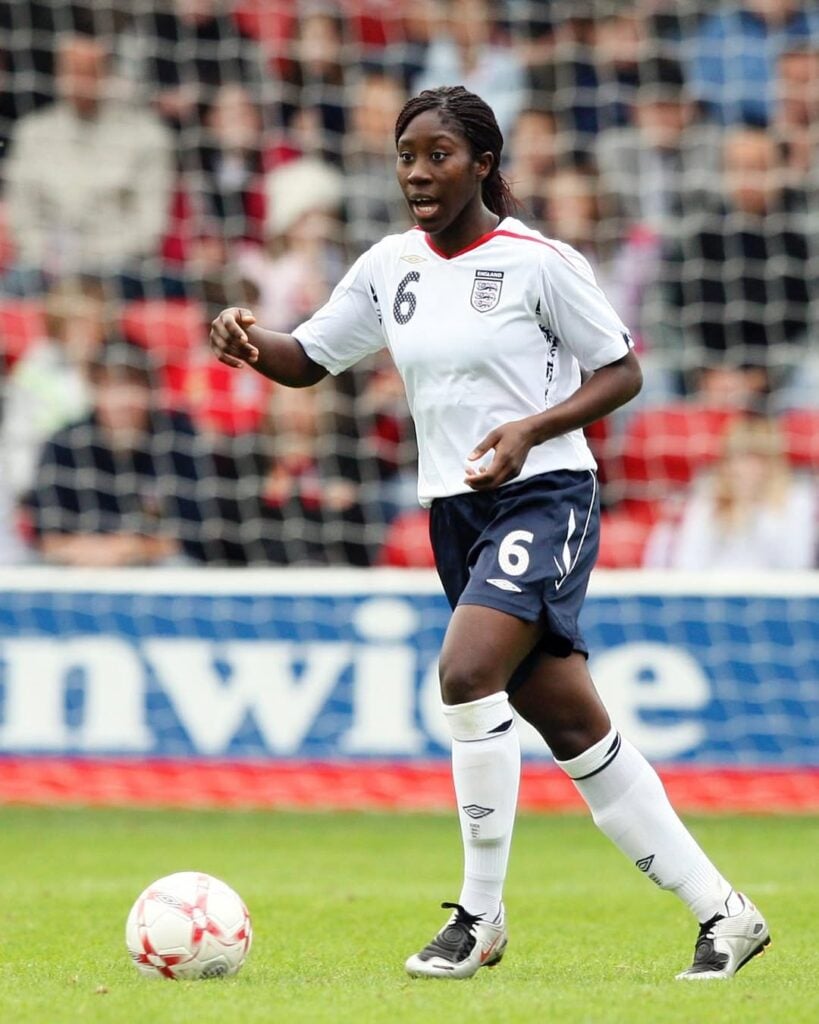
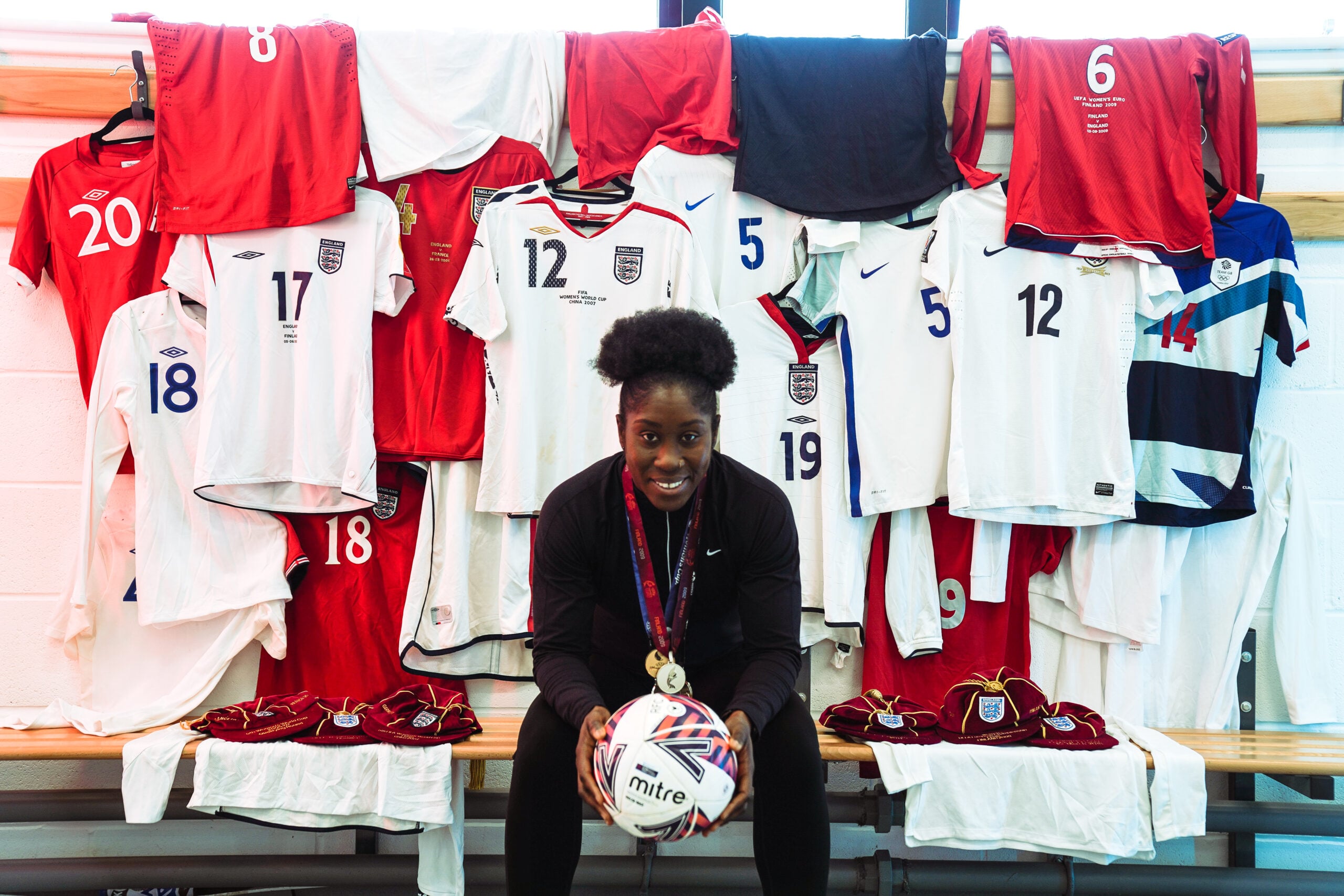
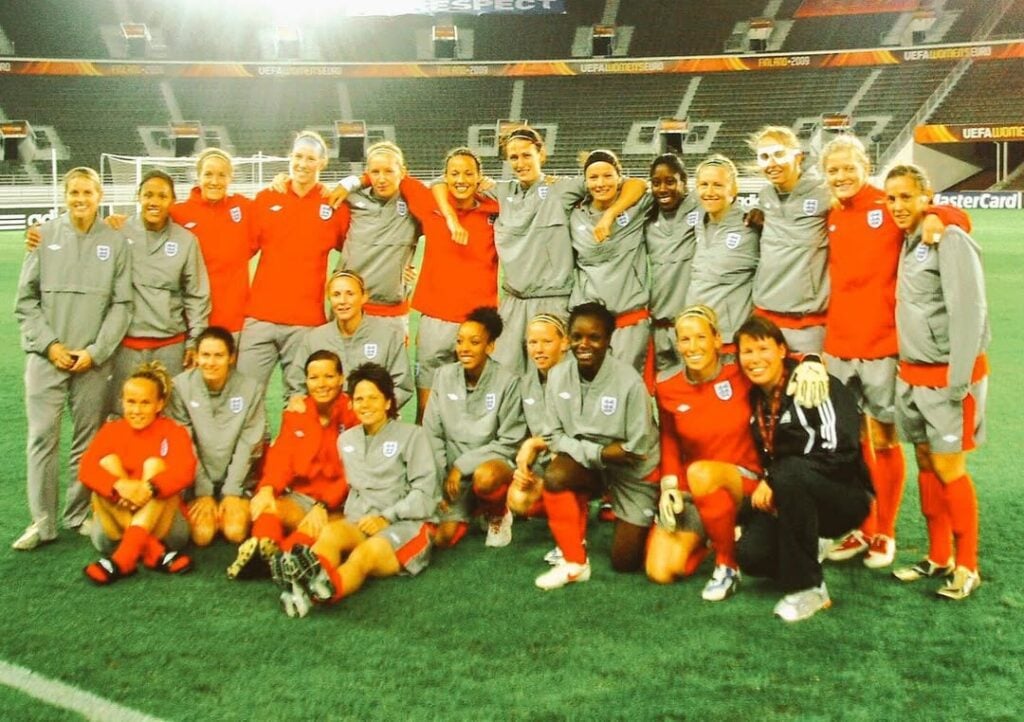
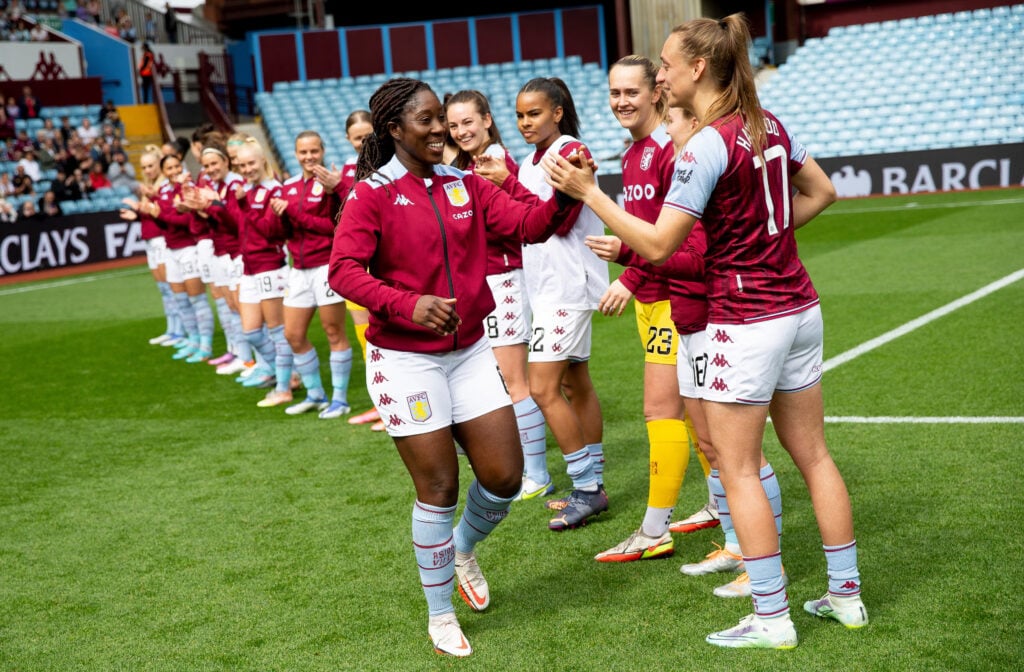
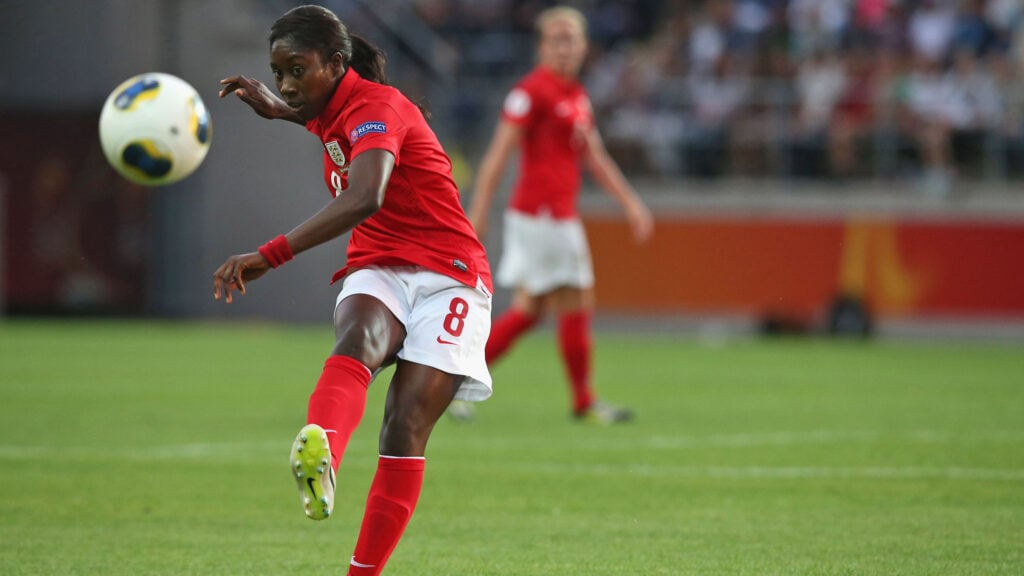
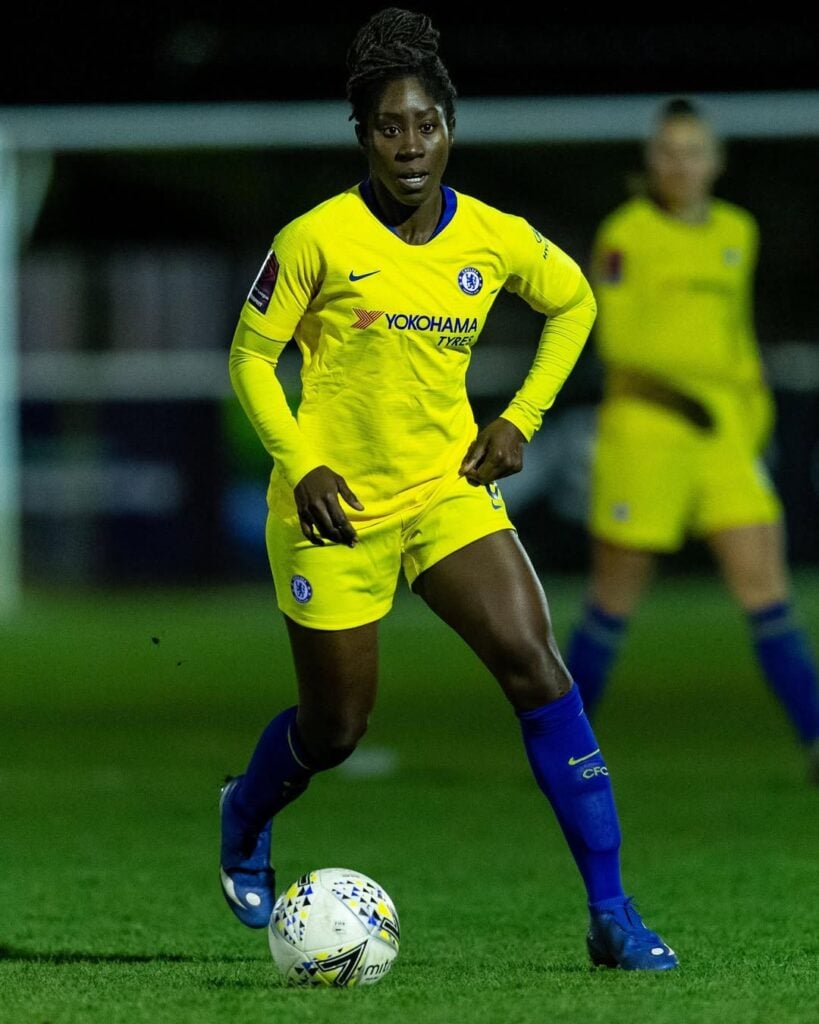
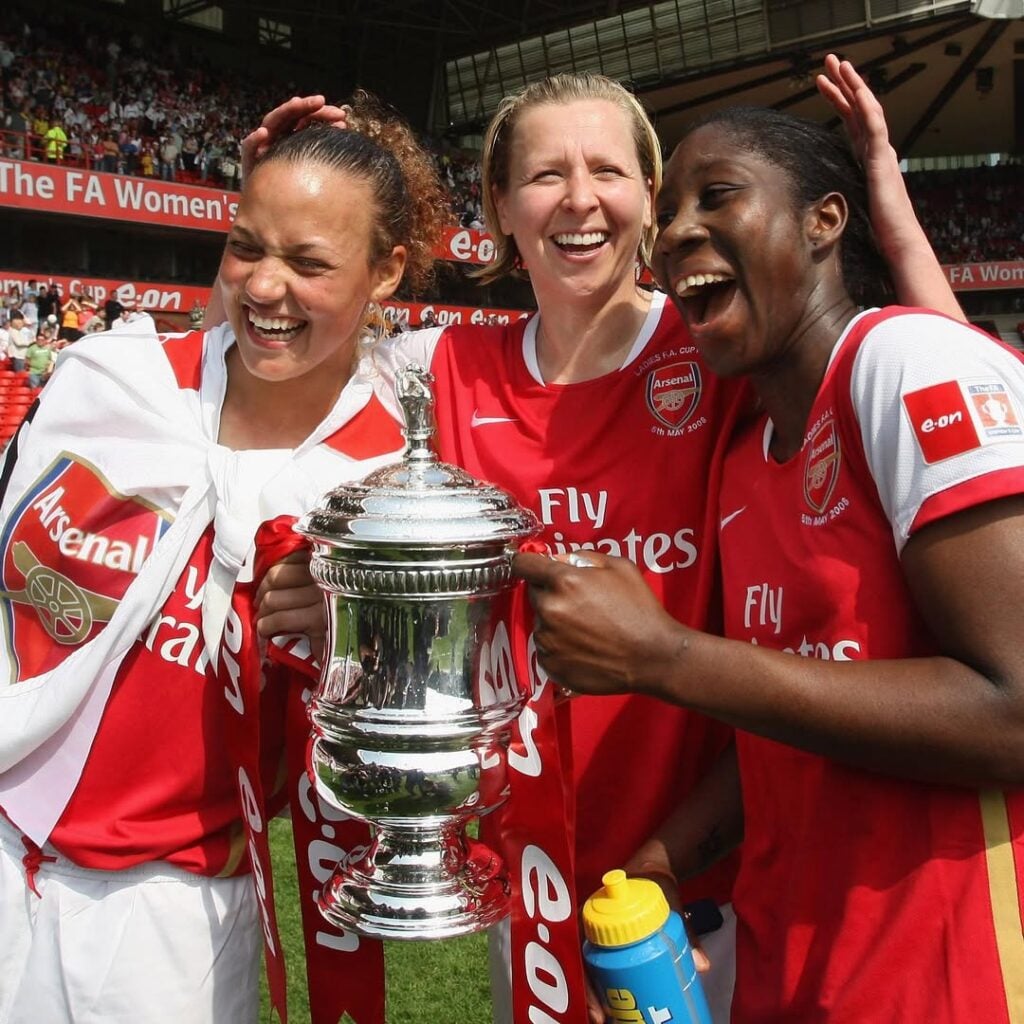
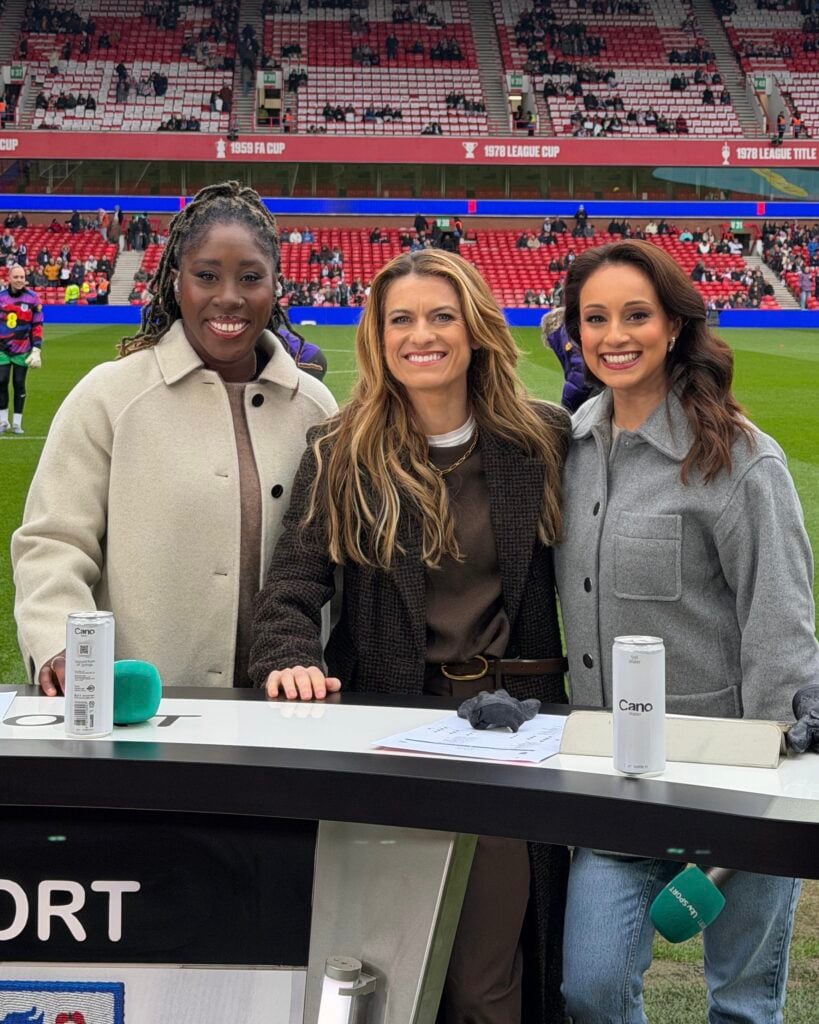
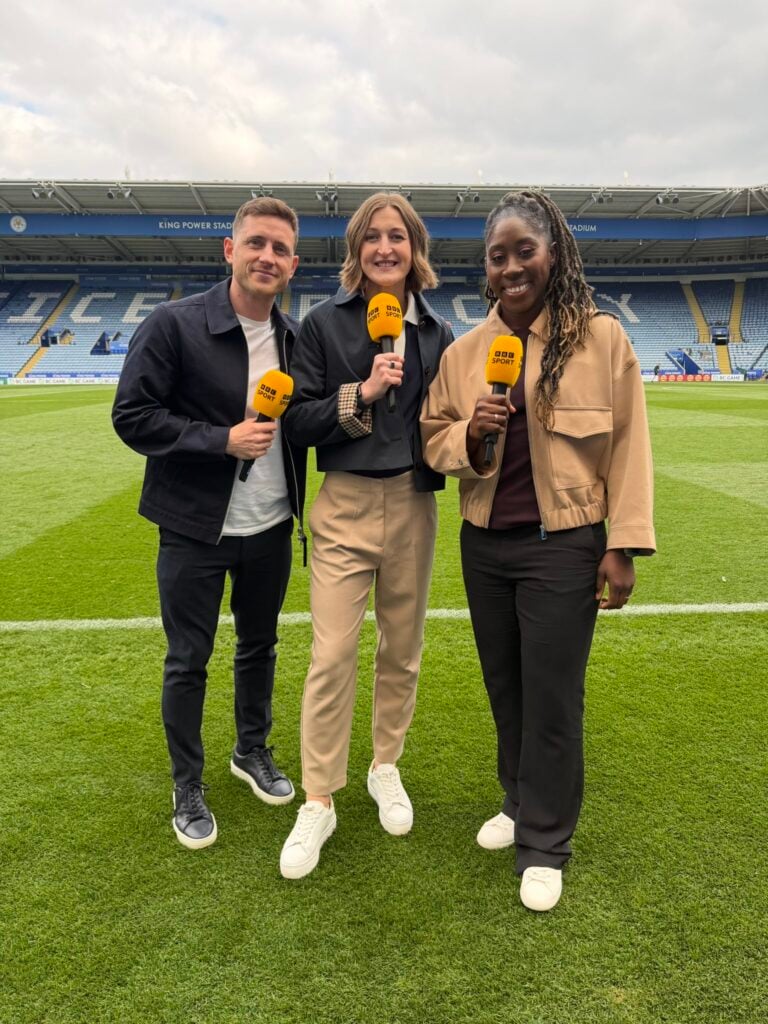
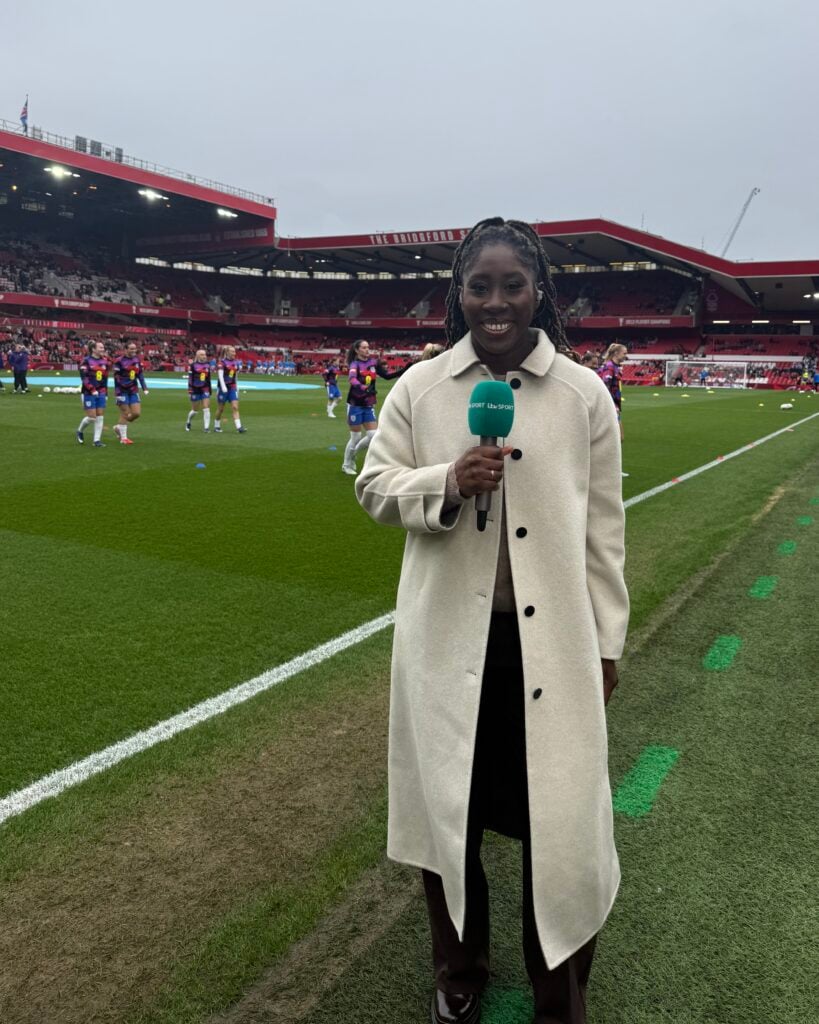
Asante came through Arsenal’s academy from the age of thirteen, won 71 caps for England, played in England, the United States and Sweden, represented Great Britain at the London Olympics, and moved afterward into coaching, broadcasting and a newspaper column. She was born and raised in London, of Ghanaian heritage. On paper her career belongs to England, though she has never treated the Ghanaian half of it as incidental.
“I’ve always carried the badge of being a proud Ghanaian the whole way through that journey,” she says. “The minute anyone hears Asante, they instantly know I’m Ghanaian.”
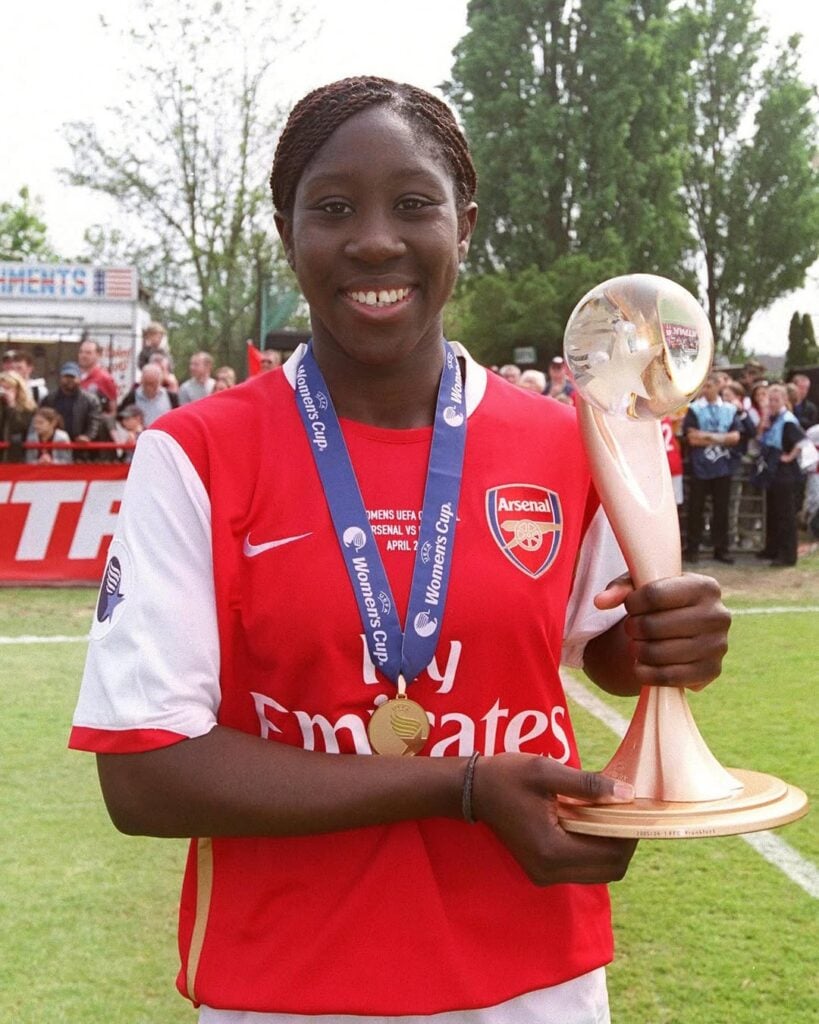
Asante did not so much choose England over Ghana as follow the only structure that reached her. When she was coming through, even England did not have a professional women’s game, and football began as a hobby that Arsenal, and then England, turned into a living.
“I wasn’t really aware of what was going on in Ghana in terms of women’s football and the national team,” she says. “I never had that point of contact.”
These choices get narrated as questions of loyalty, when access explains them better, down to who reaches out and who in a federation office thinks to note that a girl with a Ghanaian name in a London league might one day be worth calling for Ghana. She calls her path into England’s system a natural one, and it looked natural because the parts were already there: a club, a coach, a scout, a call-up, each in place because someone had built it. England had that machinery. Nothing equivalent in Ghana reached her while it still mattered.
The same question runs through the international game now. Players born in Europe and North America increasingly choose the countries of their parents and grandparents, and from outside the choice gets read as suspicion, either a genuine return or a flag of convenience. Asante has no patience for the binary.
“I don’t think it’s a black-and-white answer,” she says.
An athlete’s career is short, and a World Cup comes once every four years. A player who has trained her whole life for that stage cannot wait for an institution to reach her at the correct moral speed. The choice turns on more ordinary things: the timing of an offer, the cost of the trips home, a language a player may not speak, the call from a federation that never comes.
“I don’t think all national teams in the past were necessarily looking at those players of dual heritage and going after them, calling them up,” she says. “Pick up the phone. I’ve seen your name, Asante, have you thought about playing for Ghana?”
The call has to do real work. A player raised in London or Toronto can feel her heritage strongly and still need to be invited into a football culture she did not grow up in, and the obstacles are often material, down to whether her family could ever afford to go back. The connection is real all the same. Asante is more interested in what those players bring when they arrive: the habits of clubs that demand more, and a level of expectation that pulls the players around them up. She can name them from her own career. Her former Aston Villa teammate Chantelle Boye-Hlorkah played for England at youth level, then chose Ghana as a senior last year and now turns out for the Black Queens, a version of the choice Asante was never in a position to make.

Morocco, and what the spectacle is worth
The subject is unavoidable this summer. The men’s World Cup has once again turned African football into global theater, and this is the tournament with the largest African presence the competition has held: ten nations in the group stage, nine into the knockout rounds, and for a stretch more than a quarter of the teams still standing coming from the continent. Ghana’s Black Stars, whom Asante spoke about with real anticipation when we met, went out to Colombia in the round of 32. Morocco beat Canada to reach the quarter-finals, four years after becoming the first African nation to reach a World Cup semi-final.
Morocco is also the country Asante points to when she talks about what money can do for the women’s game. It has hosted WAFCON again and again and put real backing behind its women’s side, and its men reached the last eight of the tournament. She would not draw a straight line from the one to the other, though they sit close enough to notice.
Ghana’s exit takes her back to the World Cup memory she reaches for first, the 2010 quarter-final against Uruguay, Luis Suárez’s handball on the line, Asamoah Gyan’s missed penalty after it. “That lives with every single Ghanaian I know,” she says. For her the tournament was always as much spectacle as sport, Ghana’s red, gold and green coming into the stadium with the drums, a country turning up to be seen.
The question Guzangs keeps coming back to is who captures the value once the spectacle has moved on. Asante’s answer is concrete. If federations want a World Cup to help the women’s game, they have to ring-fence part of the money the men’s game pulls in.
“If that’s how we want to develop the sport further, that would be the best way to go about it,” she says. “Ring-fence money from the competition, from the visibility, the commercial and brand sponsors and everything else that might be flowing into that financial pot, a portion of it towards the women and girls’ game.”
She frames it as infrastructure, and she has no illusion that the men’s game will stop taking the lion’s share. She wants the women’s side to stop being funded from whatever is left.
She rejects the framing that Morocco’s spending either lifts the continent or splits it. “Morocco is independently investing in their women’s game. That’s a great thing for women and girls in Morocco,” she says. “What that should do is inspire other nations to take a leaf out of what Morocco is doing.” Hosting, as she describes it, brings in tourism, television and commercial rights, and shifts how the women’s game is seen at home. Her frustration is with the federations that have not built anything to follow Morocco with.
The gap Asante keeps returning to is not on the pitch. Pressed on where it hurts most, across pay, leagues, medical care, federations, she goes underneath all of them.
“Governance impacts everything else,” she says.
Governance sounds like the dull answer. It is the one everything else runs on: whether a coach gets trained, whether a talented girl far from the capital is ever found, whether a league can pay well enough to keep its players. Get that wrong and nothing above it holds. Nigeria is her clearest case, a side that has long dominated African women’s football and took England to penalties at the 2023 World Cup, where the argument has never really been about talent.
“It’s not a question of the quality,” she says. “It’s a question of the structure around the side and the pathway.”
Handed an African federation’s women’s program, she would start with a map: where the talent already is, and which girls live too far from any of it to be found. Regional hubs would come next, north and south and east and west, somewhere a parent knows to send a child, each feeding a national center. After them, youth sides from under-17 to under-21 playing real fixtures against other African teams. Coaches are where she lingers, since there is little point in finding players a country has no one to train. A professional league comes last, with its own identity and, in time, its own broadcast money.
“You’ve got to build on the talent first,” she says.
She resists any suggestion that Europe has arrived. “We’re all still learning as this game grows. It’s not that everyone else is so far behind. We’re at different points in the same journey.” She played while holding down work, the way players in Ghana and Nigeria still do, and sees their stage as one England moved through not long before.
Asante has never held sport apart from culture. She talks about football and music as versions of the same motion. “Sport is an art. Football for me is an art anyway,” she says. “Music is an art, and football is about movement as well, and music is about movement and dance.”
The clearest place she sees it is the changing room, where culture moves without anyone deciding it should. A player hears a song, learns the steps, asks a teammate where it comes from. Someone teaches the room Azonto. Afrobeats, she says, has become part of the environment for players of every background, not only the ones who brought it. “It’s permeating changing rooms across our leagues domestically,” she says, and the same rhythm that is a route back to heritage in an English dressing room turns into a shared language in a stadium full of African supporters. It is part of why the game sells, and part of the danger too, since football has often learned to sell the culture well before it has learned to pay for the women who carry it.
Some of that visibility is personal rather than cultural. Asante has been open about her wife and daughter and about using her platform for LGBTQ inclusion, and she talks about it carefully, refusing to cast Africa as the one place where being yourself is hard. “I didn’t grow up in Ghana, I didn’t grow up in Africa, I grew up here, but I still had similar challenges,” she says. “It’s not just specific to Africa. It’s everywhere in the world, being free to express yourself, feeling comfortable or safe enough to do that.” Sport gave her somewhere safe to stand, once she had the family and the confidence to use it, and she carries the openness that followed as a responsibility. “The cost of it is really nothing compared to what some people live through,” she says. “I’m very lucky to have the privilege of having the career I’ve had, having the support I’ve had, being able to live freely in the way that I feel that I can, knowing that other people can’t. So I don’t take that lightly.”
All the structure she describes, the hubs and the leagues and the protected money, is aimed at more than a stronger national team. It is aimed at the kind of life a girl can build inside the game, so that staying in it, and being fully herself inside it, stop coming down to luck.
She carries the same view into her own trade. As a pundit and columnist inside a mostly European media world, she knows how narrow the coverage of African football can be, quick to find disorder and physicality in it and slow to credit its intelligence or its culture. “It’s almost a duty of care to others and to people from different cultures and backgrounds to always provide reasonable and rational context,” she says, “not to see it through one lens, but to see it from multiple perspectives.” She is not asking anyone to go soft. Governance failures should be named and bad structures called out. She wants coverage that reaches past the dysfunction to everything else in the frame.
The girl in Accra
Asked where she wants the game in ten years, Asante answers with a single image: a girl in Ghana, in Accra or Tema or Kumasi or the Volta Region, looking at the game and seeing more than a way out of somewhere. In her telling, that girl can picture a professional career at home before she has to picture leaving for one, and can see African women on a Ballon d’Or shortlist without it sounding far-fetched.
“I want players to have the biggest imagination possible,” she says, “because many players like myself in the past never pictured being professional in the first place. Never imagined playing at World Cups or European competitions or being up for a Ballon d’Or. I want those African players in ten years to know that it’s all possible.”
None of this is about discovering talent, or about making a virtue of how hard the road has been. The talent has been there the whole time, carried by girls like the one Asante was in Ghana, and this summer has shown again how much the world will pay to watch what it becomes. The game is already there. What is missing is the structure around it, and the will, among the people who profit when it is watched, to build it.
Subscribe to Guzangs, and follow what gets built next.