

Kit design, at its best, is an act of translation: taking the weight of a nation’s visual history and fitting it to a body in motion. At a time when that translation has become as much a cultural conversation as a performance one, PUMA is making a calculated push to lead it.
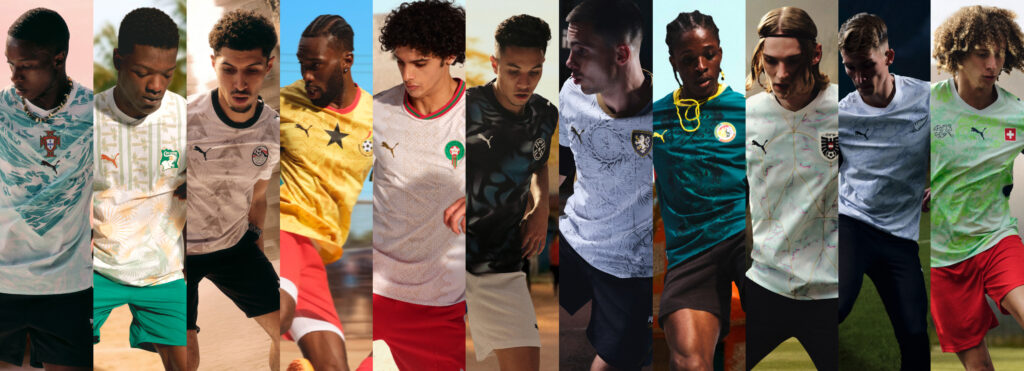
Last week, the German sportswear brand hosted press and industry at Domino Park in Brooklyn for the first look at its 2026 FIFA World Cup kit collection. Eleven national teams. Four continents. One clear ambition: to ground every design in the specific cultural identity of the nation it represents.
The collection, which goes on global sale today, March 24th, covers Portugal, Morocco, Ghana, Paraguay, Senegal, Côte d’Ivoire, Czech Republic, Switzerland, New Zealand, Austria, and Egypt. It positions PUMA as one of the most prominent kit suppliers at this summer’s tournament, and the brand with the largest African portfolio of any kit manufacturer in the competition.
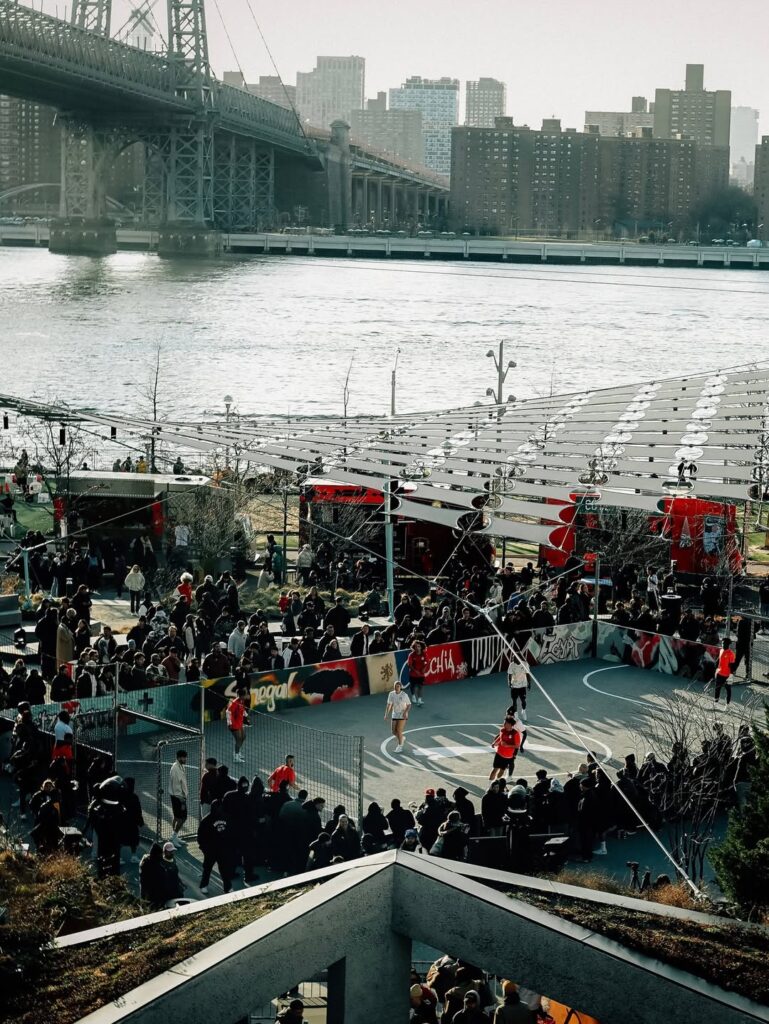
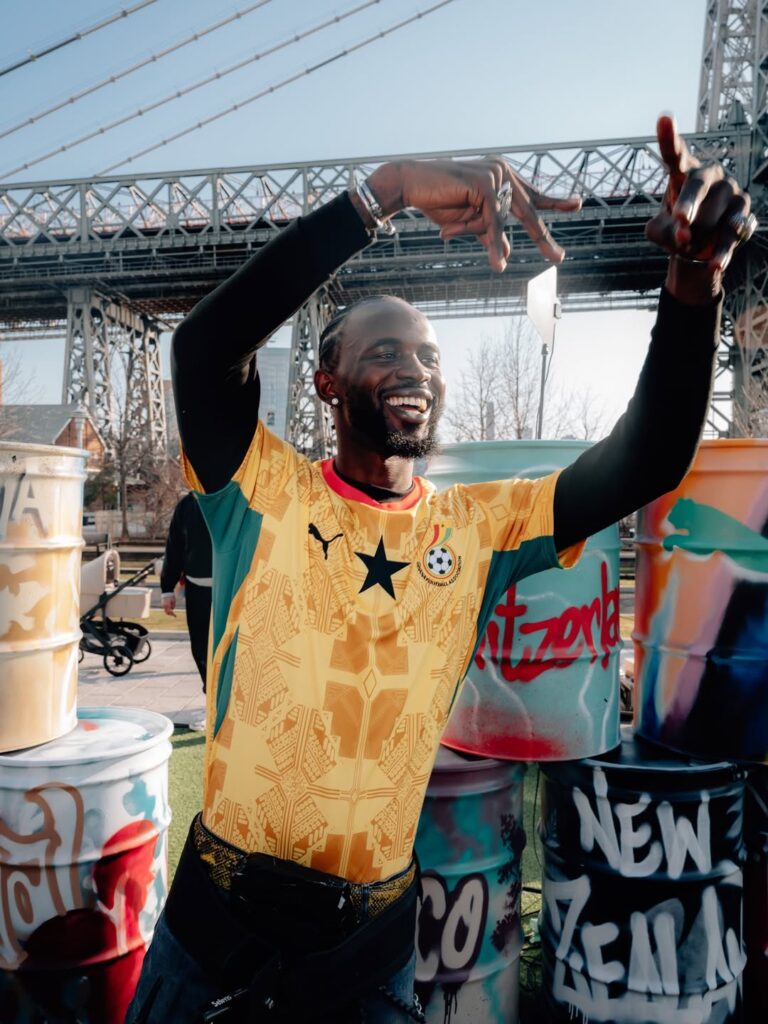
The evening itself signalled that PUMA understood what it was staging. The night before, Ghanaian global star Black Sherif, dressed in PUMA, had already set the reveal in motion, unveiling one of Ghana’s away kits on his Instagram before anyone had officially seen it. It was a detail that said more about how product launches work now than any press schedule could: the artist became the distribution channel. By the time he took the stage in Brooklyn, anticipation in the room had already been building for hours. The performance delivered. Electric, culturally grounded, and a reminder that when the right artist meets the right context, the product becomes almost secondary.
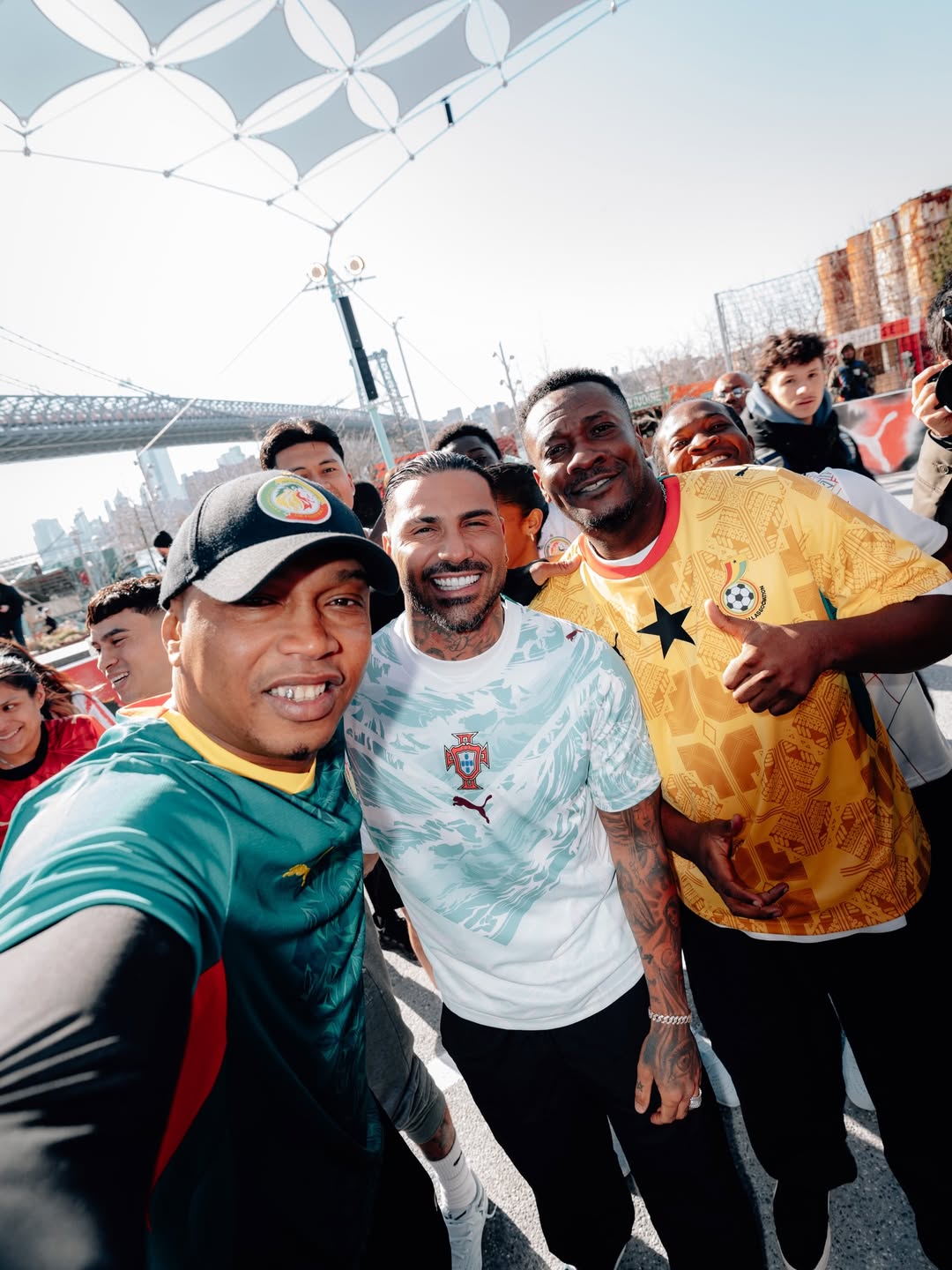
Among those present was Asamoah Gyan, the top African goalscorer in the history of the World Cup, representing Ghana. His presence carried a weight that extended well beyond the commercial: a living reminder of what these shirts have meant on the world’s biggest stage. Also in attendance was Senegalese football legend El Hadji Diouf, who spoke to Guzangs on the night. “My long-standing relationship with PUMA, their work supporting African teams and communities, and the desire to bring together African and European communities around players and emerging talent — that is what motivated this activation,” he said. It was a framing that recast the evening from product launch to something with longer, more deliberate roots.
The ambition behind the collection is best articulated by Maria Kiebacher, PUMA’s Director of Product Line Management for Teamsport Apparel: “Every kit in this collection is designed to carry the spirit of a nation: the colours, the symbols, the stories. We’ve pushed our performance innovation further than ever before, but the soul of each design comes from the people who wear it.”
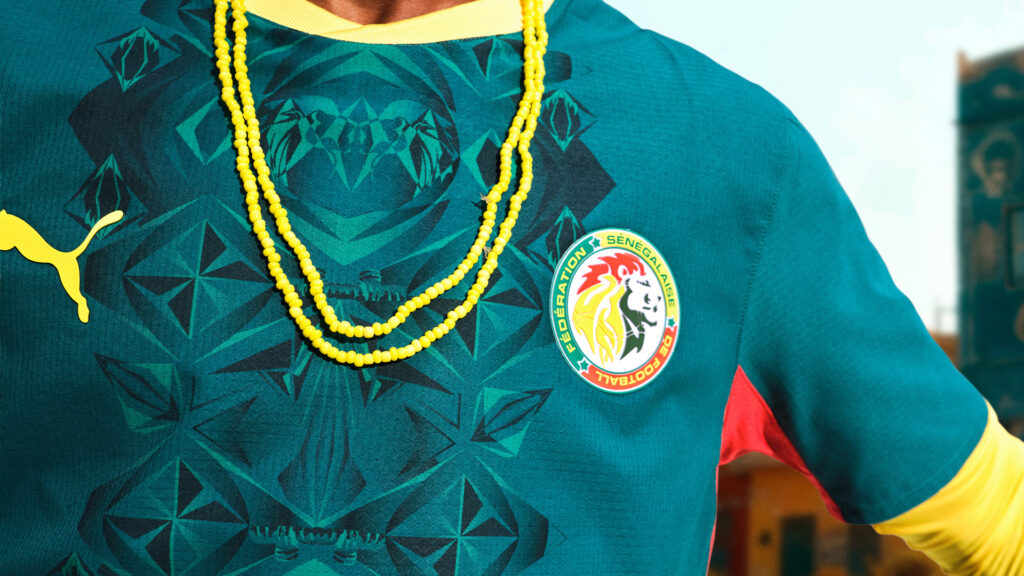
Where that ambition lands most convincingly is in the African kits, where the design decisions feel specific rather than decorative.
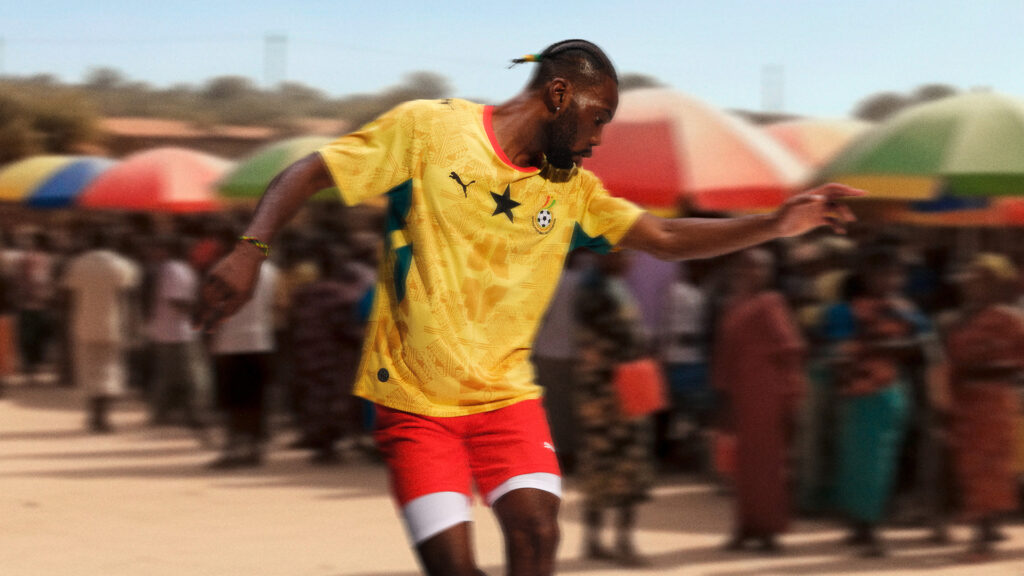
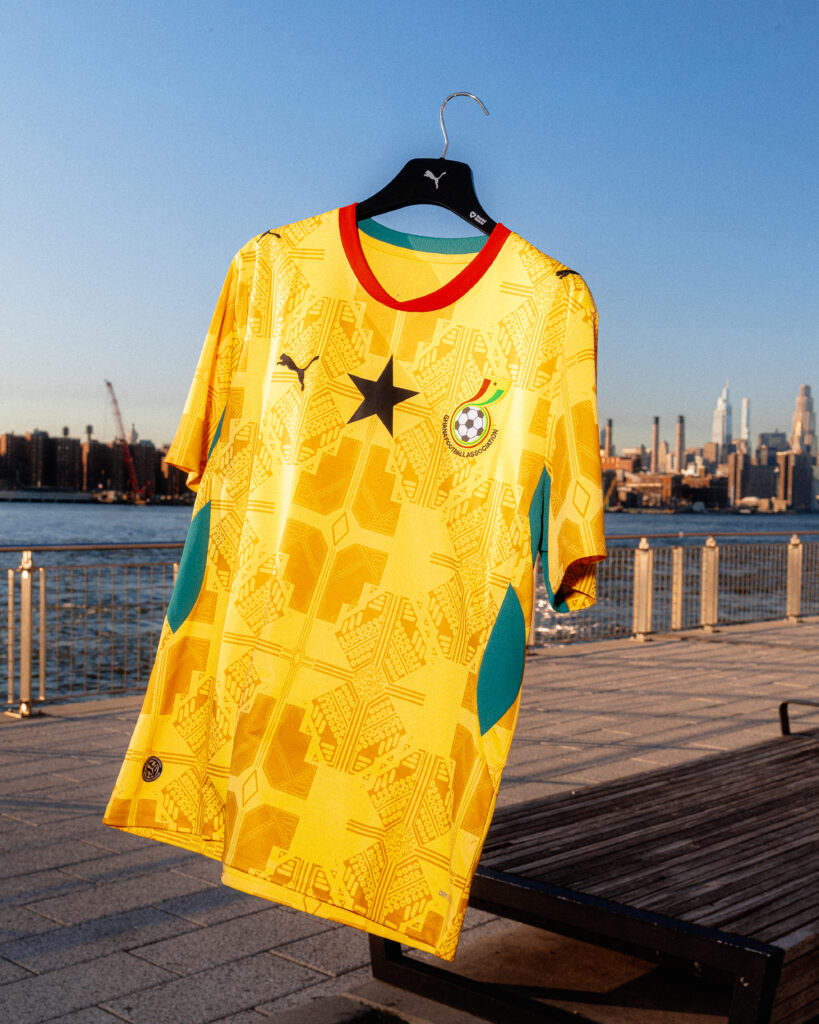
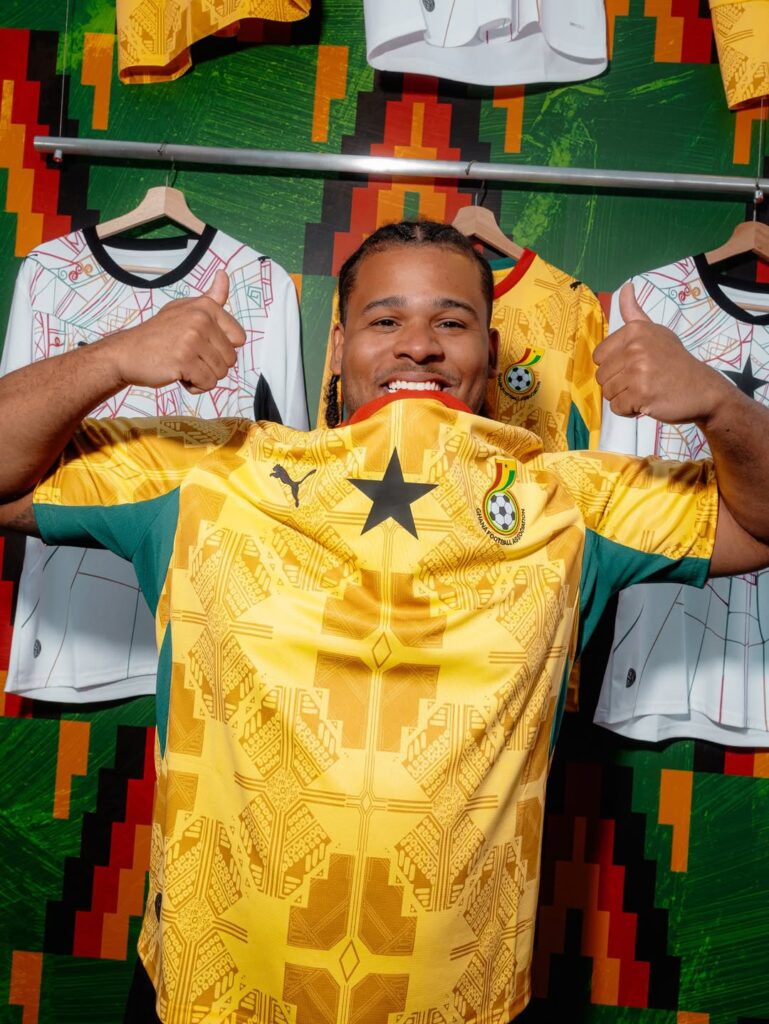
Ghana’s home kit, white with bold geometric patterning in red, yellow, and green, places the Black Star at the centre of the chest with a confidence that reads as celebratory without overstatement. The away is the more considered of the two: an all-gold base overlaid with a pattern drawn directly from the Kente weaving tradition, one of West Africa’s most codified textile languages. This is the kind of reference that either resonates or collapses into pastiche depending on the precision of the execution. Here, it resonates.
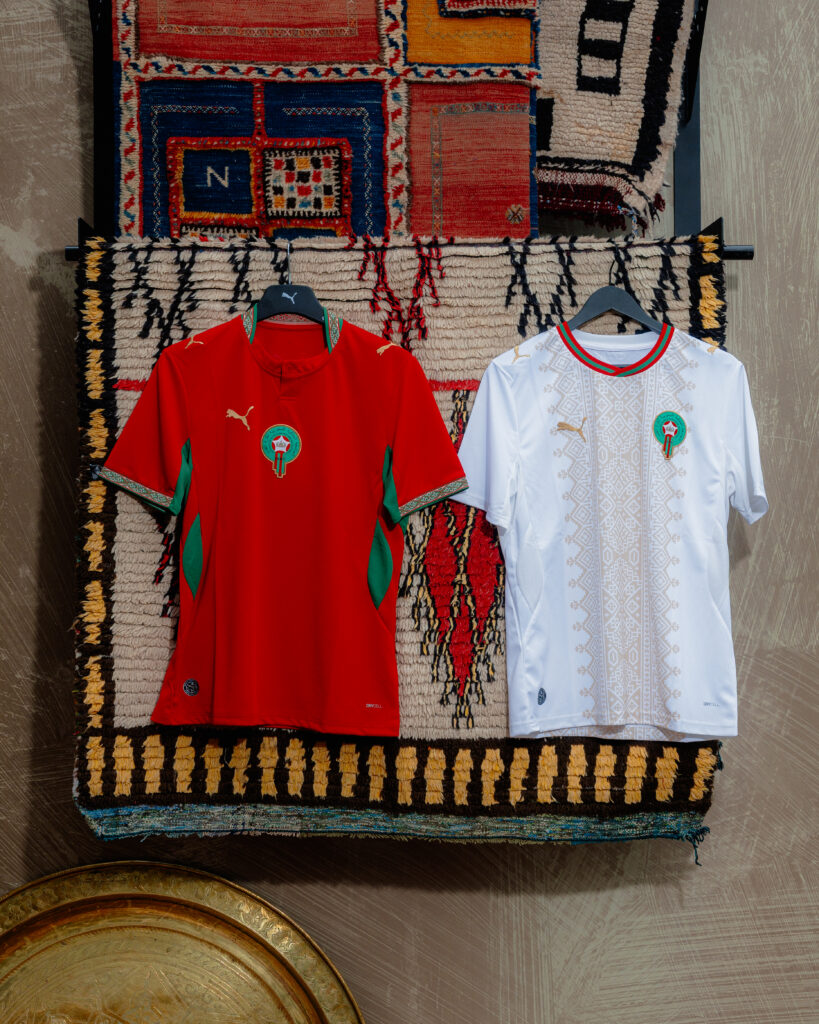
Morocco’s away kit rewards close attention. Intricate geometric patterning on a white base, drawn from traditional tilework and architectural ornamentation, is balanced by red and green accents that reference the national flag without relying on it.
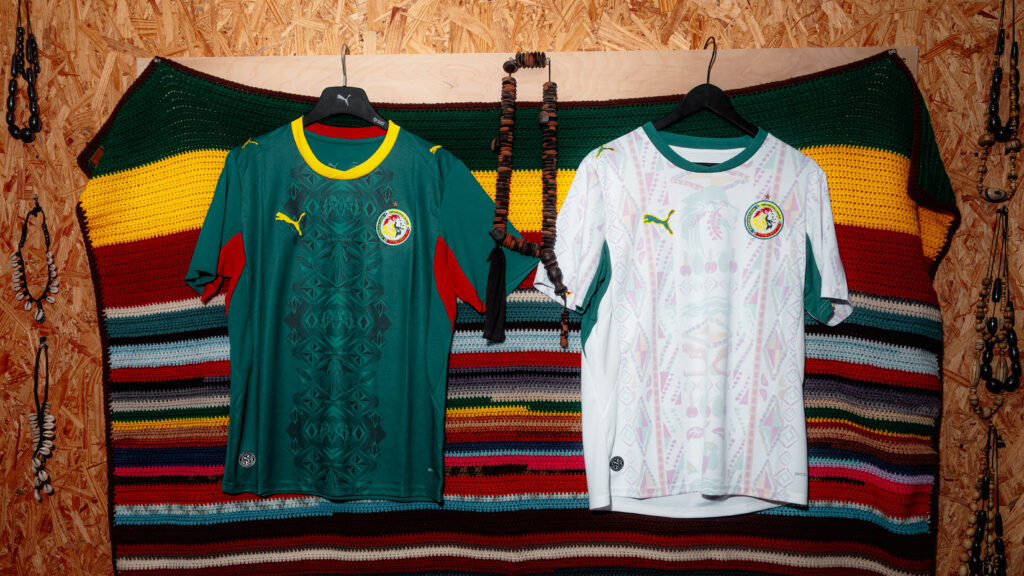
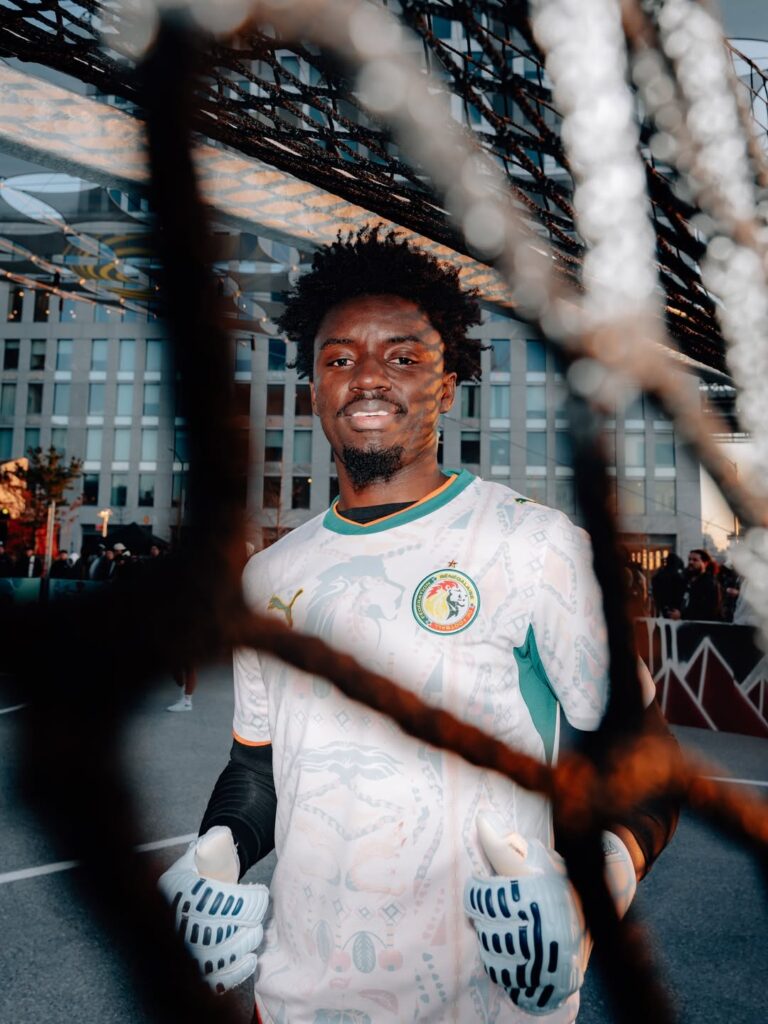
Senegal’s home and away kits carry a quiet confidence: the deep green home jersey layered with tonal patterning, the white away marked with delicate motifs that feel considered rather than imposed.
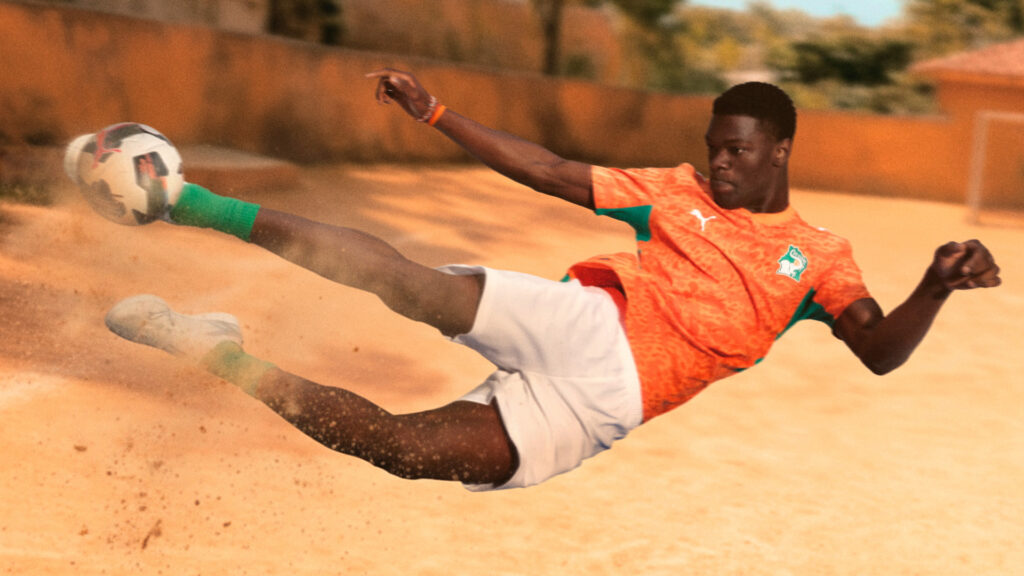
Côte d’Ivoire’s away takes a different approach entirely, layering illustrations of national flora across a white base in faint green and orange. Where the other African kits draw on geometric and textile traditions, this one draws on the natural landscape, a gentler vocabulary that still reads as unmistakably Ivorian.
Egypt references ancient geometric forms on a rich red home kit finished with black and gold detailing, a palette that carries its own historical weight without needing explanation.
That consistency extends to the production. The collection is available in Authentic and Replica versions. The Authentic jersey is built on PUMA’s ULTRAWEAVE fabric, engineered for unrestricted movement at elite level, while both versions incorporate dryCELL moisture-wicking technology. But the more significant detail sits on the production side. All Replica jerseys are produced through PUMA’s RE:FIBRE initiative, which uses recycled textile waste as its primary material source. It is worth pausing on what that means at this scale: millions of jerseys, across eleven nations, manufactured through a circular model that treats post-consumer waste as a raw input rather than an externality. For a World Cup collection, that is not a footnote. It is a structural commitment, and one that positions PUMA’s sustainability programme as integral to the product rather than adjacent to it.
Five African nations in a single collection that has, by design, treated cultural authenticity as a primary creative brief. That is not incidental. It reflects a wider shift in how global sportswear brands are approaching African markets and African identity: not as a supplement to the main programme, but as central to it.
Diouf’s presence, and the specificity of his words, underscored that point. This was not a brand borrowing cultural equity for a campaign cycle. It was, at least in its articulation, something with more sustained intention. Whether PUMA’s ambition translates into lasting cultural credibility will depend on how these relationships develop beyond a single tournament. But as a statement of direction, this collection is difficult to dismiss.
The football jersey has never carried more meaning. What was once sportswear is now a cultural artefact, a site of identity, memory, and belonging that extends far beyond the pitch. This is the first in an ongoing Guzangs series exploring jersey culture: what these shirts mean, who they are made for, and why the conversation around them is only beginning.
PUMA’s 2026 World Cup kits are available now on PUMA.com, in PUMA stores, and at select retailers worldwide.