


The Masters Africa Can Still Afford
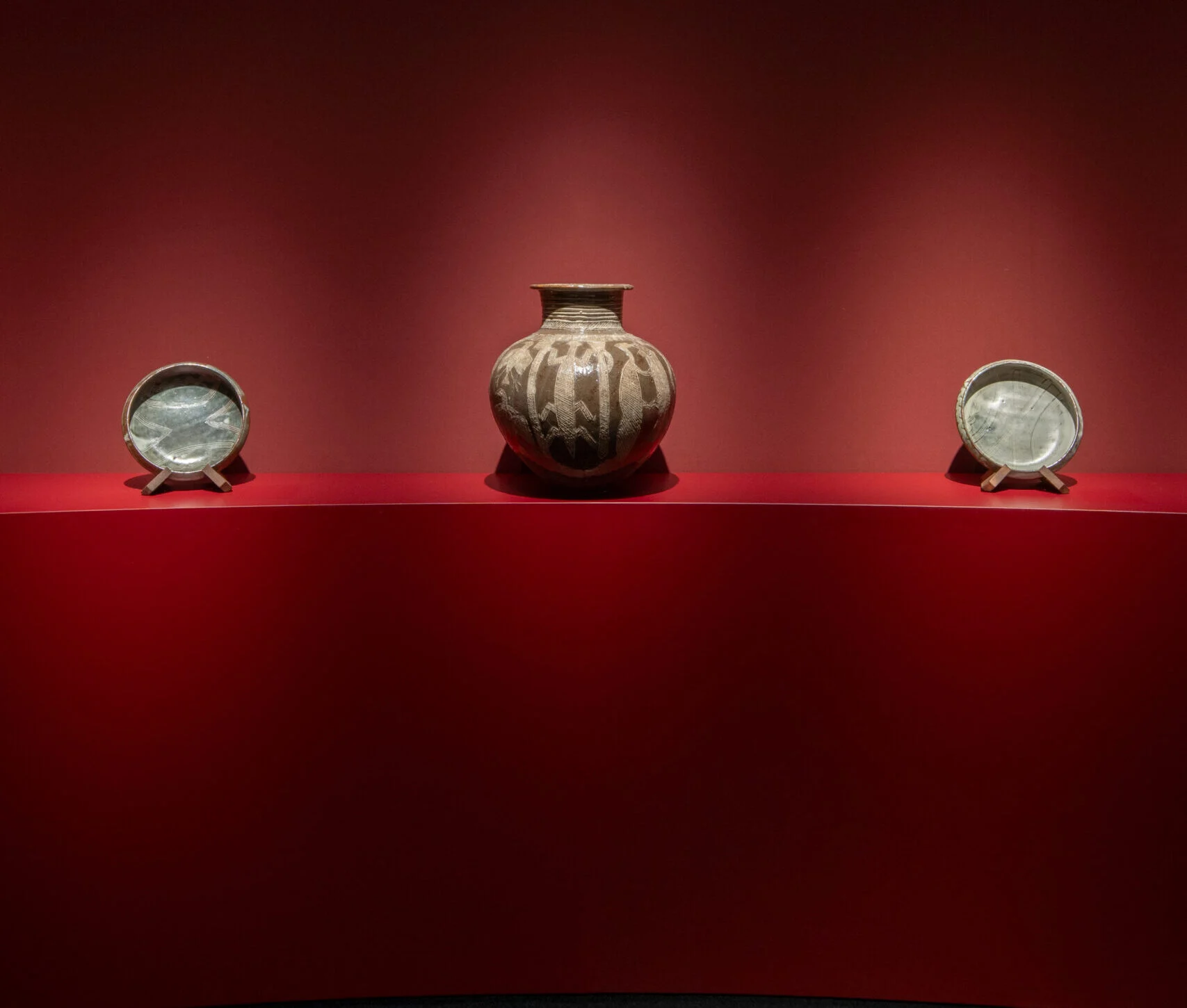
Four works by Ladi Kwali sold from TAFETA’s stand in the opening days of TEFAF Maastricht in March. One went to a private collector from Lagos. Another went to an institution. The fair’s sales report disclosed those destinations but not the prices. Ahead of the fair, Apollo had listed a 1968 Kwali water pot on the stand at £64,000: an asking price, not a confirmed sale.
The collector from Lagos belongs to a network Ayo Adeyinka relies on. African collectors buy from his gallery and give him work to sell. In his account, that trade pays for the booths where museums encounter the artists he shows. A presentation at a European fair may depend on relationships he has spent years maintaining in Nigeria.
To explain what ownership can mean, he reaches for a Ben Enwonwu sculpture. A collector bought it at Christie’s in 2007 for £780, Adeyinka said. TAFETA offered the same piece in 2019 at £250,000; a couple of years ago, he said, it sold privately for about £400,000. That last figure comes from Adeyinka, not a published auction result, and the asking price between the two sales is not a transaction. For Adeyinka, the collector’s gain illustrates how an owner can benefit from work an artist made decades earlier.
Kwali’s auction record is easier to follow. On 10 November 2021, her Aeroplane Water Pot sold at Phillips for £132,300, including buyer’s premium, against an estimate of £6,000 to £9,000 before fees. It was an auction record for the artist at the time. Made in 1962 and just over thirty centimetres high, the pot carries incised animal and aeroplane designs beneath its glaze. Kwali built vessels by hand, drawing on the pottery traditions in which she had learned her craft and developing a visual language of birds, fish and reptiles. The result records what one buyer would pay for that work. It does not tell us how much of the sale, if any, reached her heirs.
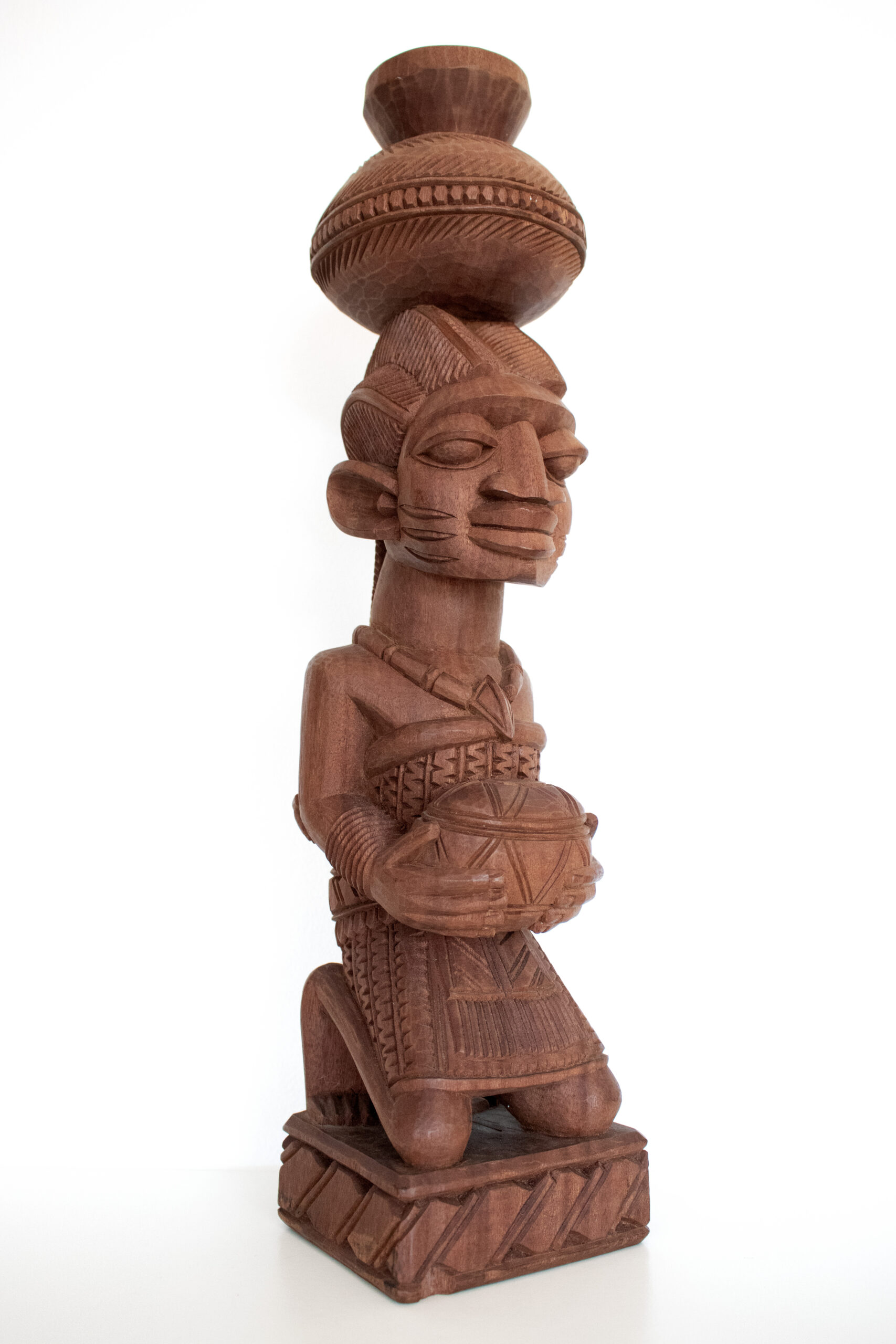
Adeyinka founded TAFETA in London, opening the physical gallery in 2013 after a consultancy that began in 2005. He counts this as the gallery’s sixth year at TEFAF and its first at Frieze Masters, which runs 14 to 18 October 2026 in Regent’s Park. In Spotlight, the section curated this year by Devika Singh and Sofia Gotti, TAFETA will present a solo exhibition of work by Lamidi Olonade Fakeye: hand-carved wooden figures in the Yoruba tradition Fakeye inherited and renewed, from the 1970s and 1980s, arranged as if in a library. To assemble such a show, Adeyinka has to find the people who have kept the work and persuade them to part with it.
The biggest collectors of twentieth-century African art are African. And the biggest sellers of twentieth-century African art are Africans themselves.
AYO ADEYINKA
There is supporting evidence for the buying side. In ArtTactic’s 2024 account, Hannah O’Leary of Sotheby’s put collectors on the continent at about two-thirds of buyers in the house’s African art auctions. That figure covers one auction house and does not establish who sells most.
Someone has to write the cheques
Asked how a twentieth-century African artist reaches TEFAF or Frieze Masters, Adeyinka starts with paperwork. The gallery names the artist and the form of the booth, and a committee reads the file. “You apply, you get admitted,” he said. “But you nearly have to know what you’re doing before you put in an application.”
Finding enough work for a show can take years. Many of the artists are no longer alive, and the objects are scattered through private collections. Some remain with people who bought them directly from the maker, long before a fair committee had reason to ask about them. “You have to have a very good relationship with collectors, because that’s the easiest way to source,” he said. A dealer spends years finding work with a future exhibition already in mind, and applies to a fair before every piece is in hand. “You have to be brave enough to apply for the fairs even before you find all the works you need to show.”
TAFETA’s Icon exhibitions concentrate on one artist at a time in the Charlotte Street gallery. The gallery takes the same approach at fairs, showing Kwali in Focus at Maastricht and Fakeye in Spotlight at Frieze Masters.
At TEFAF, specialists examine the objects and their documentation before the fair opens; work that fails vetting is removed. Adeyinka describes leaving his booth while that scrutiny takes place. TAFETA also checks works against the Art Loss Register and carries indemnity insurance, he said, because a dealer should allow for the possibility of being wrong. When a living artist’s work comes back onto the market, he contacts the artist.
Adeyinka described Lauren Tate Baeza, curator of African art at Atlanta’s High Museum of Art, asking to see Kwali works before a fair and placing a hold before TAFETA arrived. Asked about those institutional relationships, he returned to the cost of attending the fairs. “Look, someone has to write the cheques, right?”
Nigerian collectors help cover those costs. “Not only do they buy the work, they also give you the work to sell.” That trade, he says, helps finance Maastricht and London. He describes calling Uncle Tai or Uncle Femi in Lagos, knowing there are four works by one artist in the house, and asking whether one should travel. Museum acquisitions can give the work a public life, but the process is slow and the outcome uncertain. He once answered a twenty-point questionnaire from an American institution and still lost the acquisition. Even a successful purchase may leave an object in storage for years. The collectors who keep trading allow the gallery to keep working while those institutional decisions take their time.
Who can still afford it
Adeyinka connects the fluctuations in price to Nigeria’s political history. In his account, the intellectual and artistic exchange of the independence years narrowed under military rule and sanctions, then widened again with civilian government. He connects those interruptions to prices, while resisting a simple story of steady growth. “You can’t draw a straight line through pricing,” he said. “It’s just reflective of general discourse, demand, and availability of works to acquire.”
The exhibition history makes clear how long the work has been in view. Whitechapel Gallery’s Seven Stories about Modern Art in Africa ran from 27 September to 26 November 1995, three decades before Tate Modern opened Nigerian Modernism. That Tate survey, more than fifty artists on view from October 2025 to May 2026, also depended on relationships in Lagos: its curator, Osei Bonsu, has described how a residency at Yinka Shonibare’s Guest Artists Space Foundation helped him reach collectors and institutions, and the Yemisi Shyllon Museum of Art and Nigeria’s National Gallery of Art were among the lenders.
Adeyinka believes prices have yet to reflect that exhibition history.
Any rich Nigerian can buy a Ben Enwonwu. Not any rich French person can buy a Gauguin.
AYO ADEYINKA
The comparison has limits. Works by the same artist can sell for very different sums, and a buyer needs a suitable piece to come onto the market. Adeyinka, as a dealer, has a commercial interest in demand rising. He believes wealthy African buyers could sustain much higher prices, though their ability to spend does not establish that they will.
An Enwonwu within reach of a wealthy Nigerian is not within reach of most Nigerians. Nor does a Nigerian buyer necessarily mean a Nigerian public will see the work. A collector can lend generously or keep a painting at home; a museum can acquire it and leave it in storage. Public access depends on what the owner chooses to do with the work.
The Yemisi Shyllon Museum of Art at Pan-Atlantic University in Lagos opened in October 2019 after Prince Yemisi Shyllon committed 1,000 works from his collection and funds for construction and long-term upkeep. His gift provided for the collection’s care and display as well as the building. Adeyinka points to MACAAL in Marrakech and Norval Foundation in South Africa as institutions able to compete for this material.
He expects status-conscious buying to push prices higher. He points to Indian modernism, including the Progressive Artists’ Group and M. F. Husain, as an example of wealthy collectors placing greater value on their own modern masters. He expects African collectors to follow a similar path. “Invariably, it just happens to every society.” His advice to collectors is to buy while they can. “Just take advantage now we can.” When the objects become the right status symbols, “none of us will afford this.”
“The price points are still ridiculously low relative to the wealth of the nation,” he said, “even if the nation is not as rich as it should be.” His advice is directed at buyers with money to spend. For an artist’s family, the financial benefit may depend on whether they still own work or hold rights in it.
After the invoice
A higher price does not settle who benefits. A living artist may be able to charge more for new work after a strong resale. Once an artist has died, the seller generally receives the resale proceeds, less costs. In the UK, qualifying resales can also generate royalties for an artist’s heirs. Copyright is separate from ownership of the object and can pass by inheritance or assignment. A family can therefore retain rights in an artist’s work without owning the painting that attracts the bids.
Adeyinka’s concern is with what families can do in practice. Keeping work, lending it, cataloguing it and maintaining an estate can leave descendants with something to manage and, sometimes, sell. He points to the family of Uche Okeke and to that of Demas Nwoko. Other families, he says, have few records and no catalogue. The distinction matters because preserving an artist’s history and owning the objects are different responsibilities, and they may fall to different households. A collector’s child may inherit the painting. The artist’s child may be the person asked to explain it.
Adeyinka wants museums to do more with the African work they already own: publish the records, explain the acquisitions and make the objects easier to find. An acquisition file can tell a researcher when a work arrived and why it was bought, but only if that researcher can reach it. “We’re talking about discussing the things you already have in your collections,” he said. “A bit more shouting about what you’ve acquired will do everybody else a favour.”
He makes the same demand of African writers and galleries. There are entire volumes on Picasso’s Blue Period, he points out; there is no reason to tire of writing about one’s own artists. The Tate survey prompted a target for TAFETA: a solo exhibition for every artist in the catalogue. That would mean more than fifty solo shows. He welcomes other galleries joining the effort.
That ambition gets closer to his reason for leaving finance. He could see a market and opportunities within it, but he says the move made little financial sense. He wanted the work of his own society to remain in circulation, available to people who might come to it long after the first buyer and the artist were gone.
Lending a work takes a collector’s consent. Exhibiting it takes money for conservation and a place in a museum’s programme. Families who keep an artist’s records need time and support, and researchers need access to what they preserve. The sale leaves all of that to be worked out.
Back at Maastricht, one Kwali went to a collector from Lagos and another to an institution. The sales announcement tells us something about who bought them, but not where either will be seen next. Adeyinka’s argument is that more African buyers still have the means to make that decision for themselves. A loan or a public exhibition could allow people who could never bid for either pot to see it for themselves.