

Young African Photographers Are Looking Back
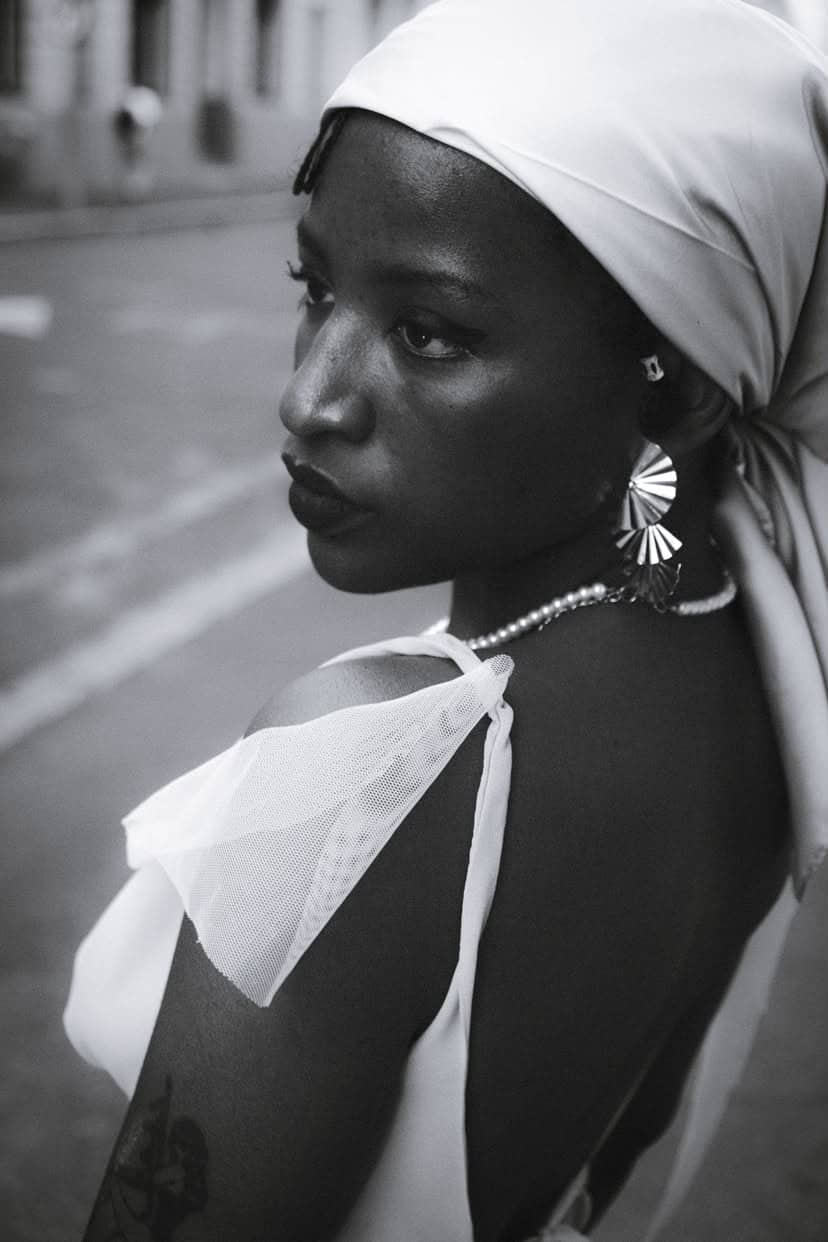
In 2024, a Nigerian hit found a second life on social media. “Who Get Dat Thing (Remix),” by Dekumzy featuring Slow Dog and Stormrex, began circulating after a group of young Nigerian women recreated the choreography to Stormrex’s verse, dressed in the exaggerated glamour of the late 1990s and early 2000s: fitted tops, low-rise bottoms, heels, big hair and oversized accessories. The trend, dubbed the #DesperateChicks challenge, became a playful revival of an era many of its participants had experienced only as children.
Scenes like these have become more common, and the pull is less the music than the visual world around it. These eras are being revived by a generation barely old enough to have lived them the first time. For many, they were childhood images: they saw the clothes, heard the music and watched the films, but were too young to fully immerse themselves in the culture around them.
That same impulse runs through African creative culture more broadly. Brands like Mowalola and Meji Meji are drawing from these eras; music directors like Daniella Mbonu are building worlds out of old visual references; and the styling duo of Rachel Ojuromi and Debby Fasingha are fuelling that glamour. Young photographers, meanwhile, are returning to analogue film and older digital cameras, drawn to the grain, softness and imperfections that newer technologies have spent years trying to eliminate.
Ogechukwu Chuks, a South African-Nigerian photographer who has increasingly embraced a dreamy visual language, was drawn to the aesthetic after watching a VHS recording of his first birthday, filmed by his parents. “If that recording wasn’t there, I don’t think I would have remembered it as vividly as I do now,” he says.

He approaches photography through the portraiture he grew up around, and much of the texture in his images comes from the camera itself. Chuks shoots with a mirrorless camera that is nearly a decade old, producing a quality of image distinct from that of newer models. He sometimes adds a touch of grain in post-production, but his attraction to the aesthetic goes beyond its visual appeal. For him, older-looking photographs can evoke something more intimate: a sense of familiarity, memory and a past that feels within reach.
Alexandra Obochi, a photographer and creative director, also approaches image-making with nostalgia. She is interested in the feeling, but is not convinced it necessarily defines her work. “I’m interested in that nostalgic kind of aesthetic when it comes to my photos,” she says. But, she adds, there is a difference between being interested in an aesthetic and knowing whether it actually translates into the work. For Obochi, part of that influence comes from older Nigerian imagery. “I think sometimes I’m also influenced by that old surreal aesthetic, especially the Nigerian vintage aesthetics,” she says.
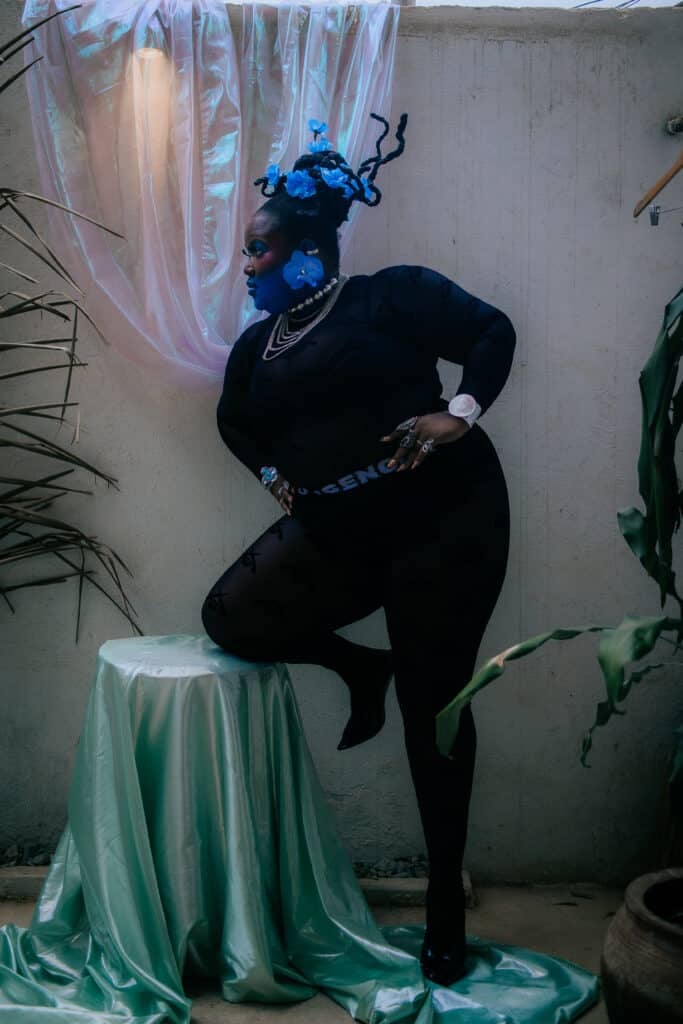
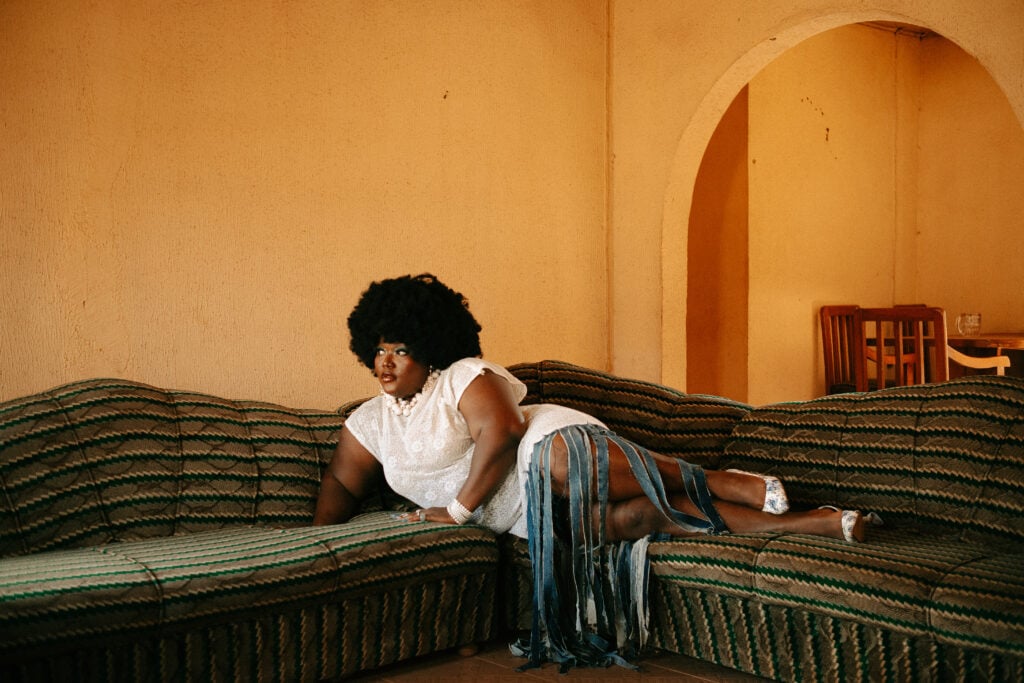
She also points to something easy to overlook when talking about nostalgia: an image does not carry the same meaning for everyone. “The image looks different to different people,” she says. “It can translate differently to different people.”
Chuks knows he isn’t the only photographer drawn to surrealist image-making, but he sees the impulse as part of a wider movement among young African creatives to look inward, drawing from what already surrounds them rather than instinctively looking outward. For him, it is a way of reclaiming “our African narratives, our African stories” within a media landscape that remains heavily weighted towards the West.
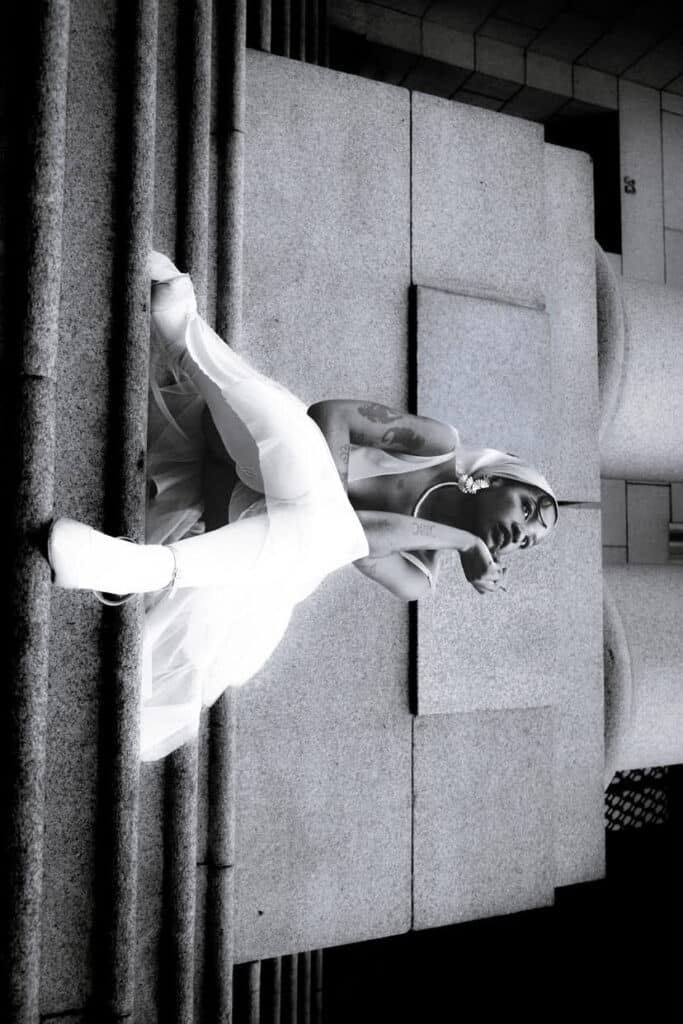
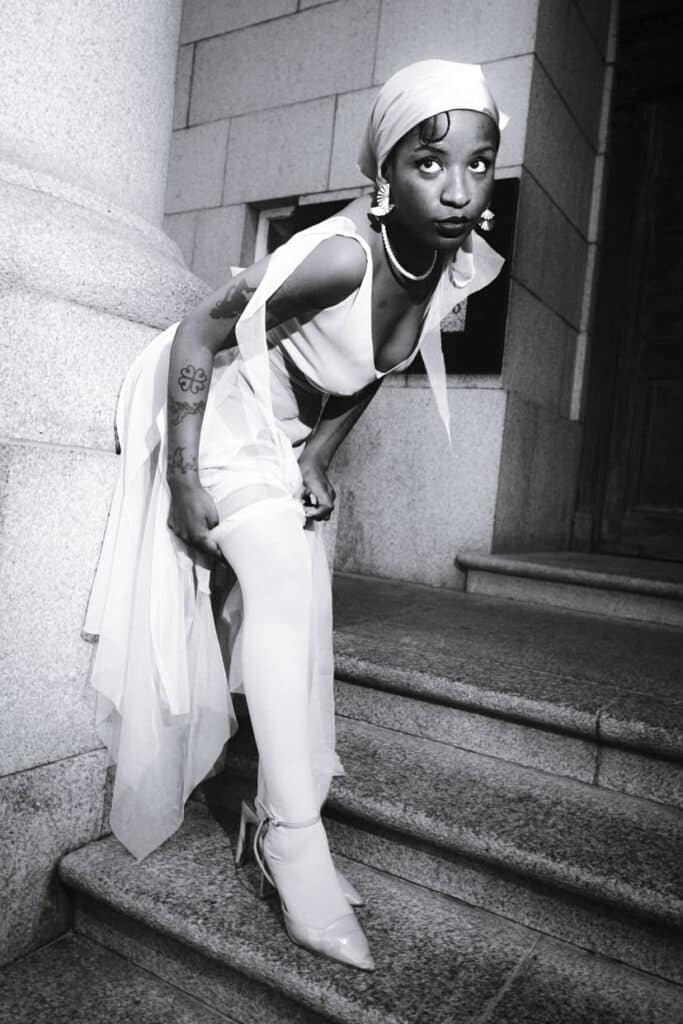
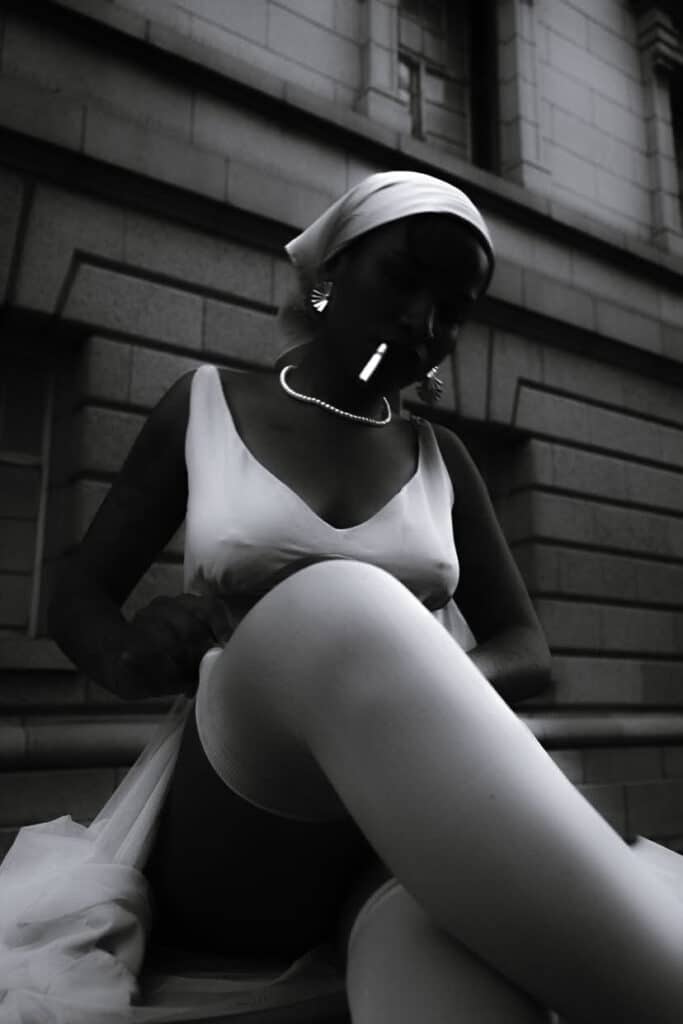
There is another reason these references land so powerfully. Many young Africans encountered them long before they were old enough to understand what they were looking at. Chuks remembers the aesthetics and fashion of Nollywood as part of the wallpaper of his childhood: always present, but largely unremarkable. He “wasn’t really old enough to appreciate what it was at that time.” Now, those same images can be studied, reinterpreted and remade.
Distance has a way of doing that. Clothes that once seemed ordinary become period markers. Old music videos become visual references. Nollywood scenes that were once simply television become records of a particular moment, and evidence of how African life was being imagined, styled and represented.
While photographers like Chuks and Obochi draw inspiration from the past, a growing number of contemporary creatives are working to ensure that older archives are not forgotten. In Côte d’Ivoire, Marie-Hélène Banimbadio Tusiama has spent years bringing pieces of the country’s popular culture back into view through Archives Ivoire, an Instagram account she created in 2020. The page collects photographs and excerpts from films, television programmes, music videos and other fragments of Ivorian popular culture from the 1990s through the 2000s, with particular attention to the women and aesthetics that shaped the period. It has since drawn tens of thousands of followers.
For older audiences, the images can offer a route back to childhood. For younger ones, they can function almost like discoveries: a visual history of an era they were too young to know firsthand. Tusiama has also taken the archive beyond Instagram, organising a cinema club across Abidjan and neighbouring Grand-Bassam to revisit films from the period.
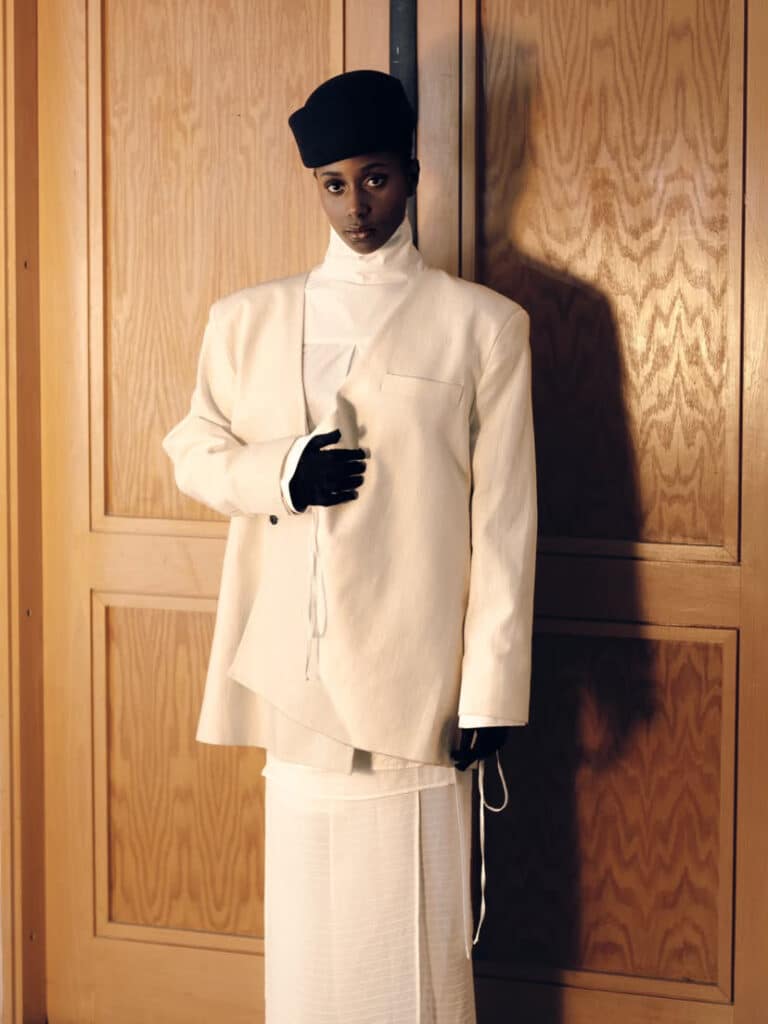
That is also what makes the preservation of older African photography so important. In Nigeria, Lagos Studio Archives, an ongoing preservation project by artists Karl Ohiri and Riikka Kassinen, holds thousands of film negatives documenting studio and vernacular photography in the city from the 1970s through the post-millennium period.
The project began after Ohiri discovered that photographic archives were being destroyed, discarded or left to deteriorate as studios moved towards digital photography. He began acquiring endangered negatives from photographers and retired studios, preserving images that might otherwise have disappeared.
Those negatives contain more than photographs. They hold the clothes people wore, the backgrounds they stood against and the ways they wanted to be seen. They record ordinary Lagosians not as historical subjects being formally documented, but as people presenting themselves for the camera. The archive’s work is therefore not only about saving photographs; it is about preserving a record of everyday life that might otherwise have vanished from the historical record.
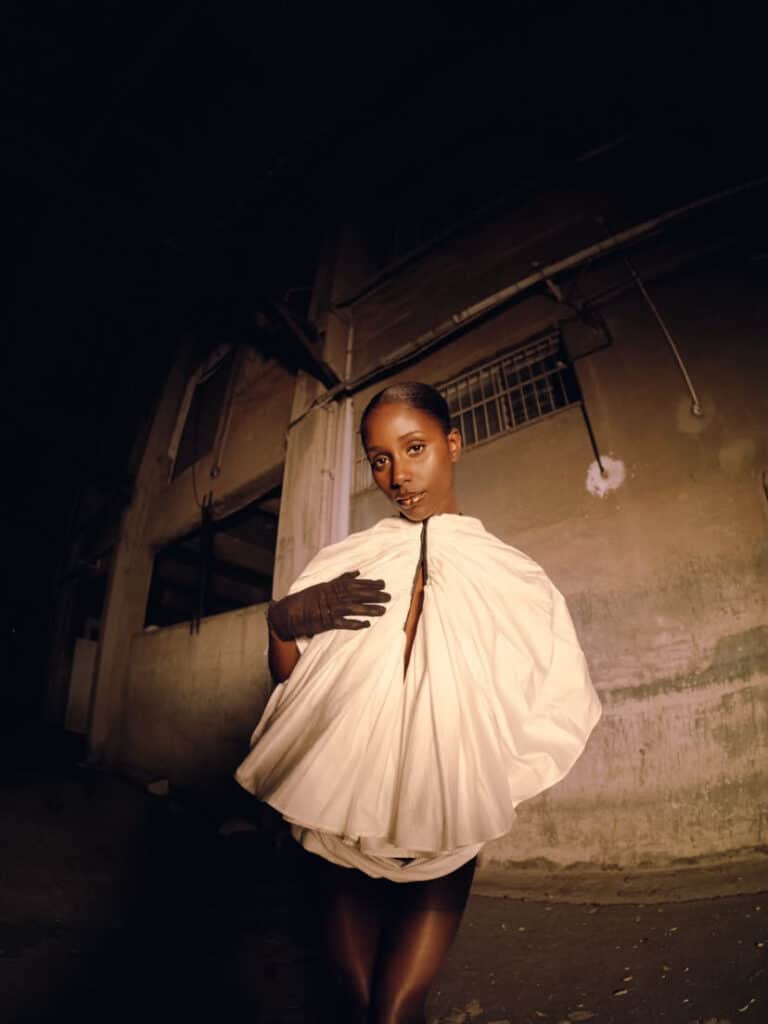
A VHS tape does not remember a birthday. A person does. But the tape is sometimes the only reason the memory survives, and that is the trick young African creatives have learned to perform at scale: with grain, with gele, with a verse from a song nobody in the video was old enough to have heard the first time.
None of it was precious when it was present tense. Old Nollywood was mocked while it was being made. The negatives Ohiri pulled out of Lagos were headed for the bin, not an archive. Nobody dressed for the nineties thinking a stranger would study the outfit thirty years later.
The past did not get more beautiful. It got claimed. And a generation too young to have lived it the first time is now the one deciding what it meant.