

The Commercial Life of African Culture
William Ruto was talking about the cost of capital when he reached for cocoa and cotton. Addressing the General Assembly on 23 September, Kenya’s president said Africa’s resources should be the beginning of African industry, not the end of the continent’s contribution to the value chain. Cocoa producers were moving “from bean to brand”, he said; cotton producers were building garment industries of their own.
Hours later, the prime minister of the Democratic Republic of Congo, Judith Suminwa Tuluka, made the same argument through minerals. Her country, she said, would no longer accept a model in which producers are left with the extraction while the research, the processing and most of the profit collect elsewhere. It did not intend to remain “the basement of the world’s economy”.
The next day, Ghana’s president, John Mahama, pressed the same complaint from the podium, condemning the continued export of African raw materials while the value addition and the jobs are created elsewhere. He had opened the address invoking the continent’s “inherited memories, values, rich cultures and distinct identities” as a wellspring of dignity, which set the raw-materials problem and the worth of African culture inside one speech.
None of them was making a case about the creative economy. But the thing they were describing, value generated in Africa and captured elsewhere, is one the creative industries have lived with for a long time. Making something the world wants has rarely meant owning the business that grows up around it, and for many African creators the institutions that finance, distribute and monetise the work have tended to sit elsewhere.
In culture the raw material is harder to name than copper. It might be a silhouette, a rhythm, a photograph, a way of weaving, a hairstyle. None of it sits underground waiting to be dug up, and the mining comparison runs out quickly, because culture is made by exchange and keeps shifting as people borrow and answer one another. The unfairness, where there is any, lies not in the borrowing but in the terms it runs on.
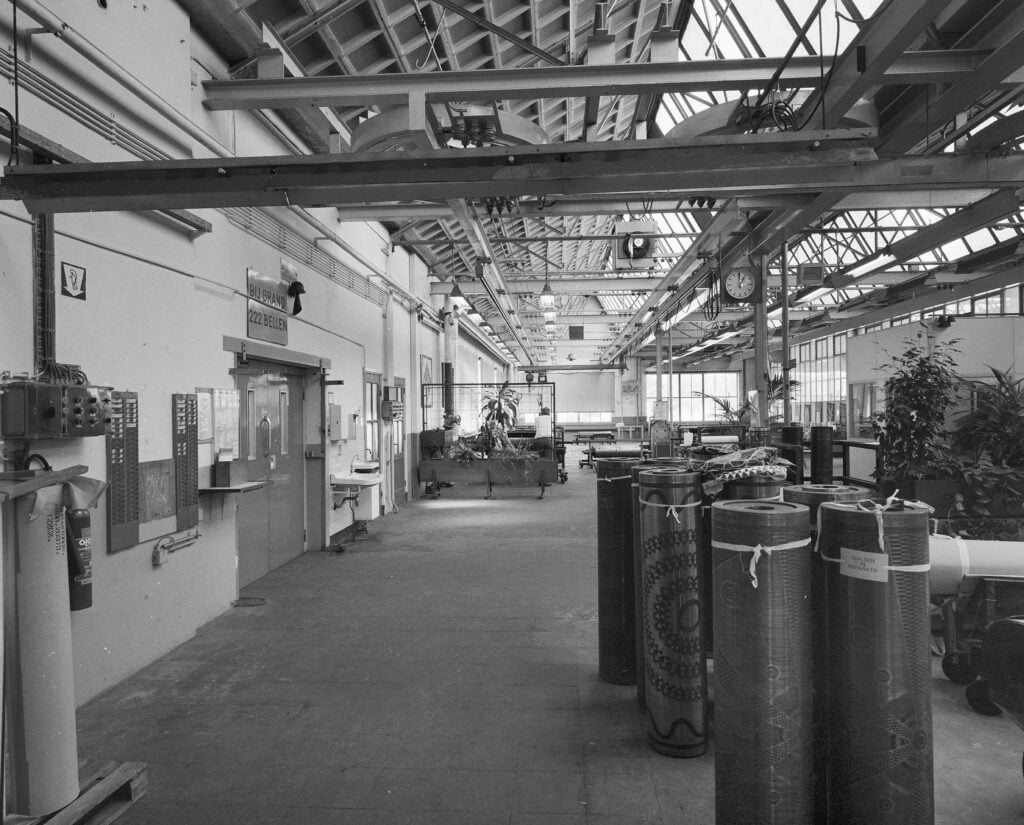
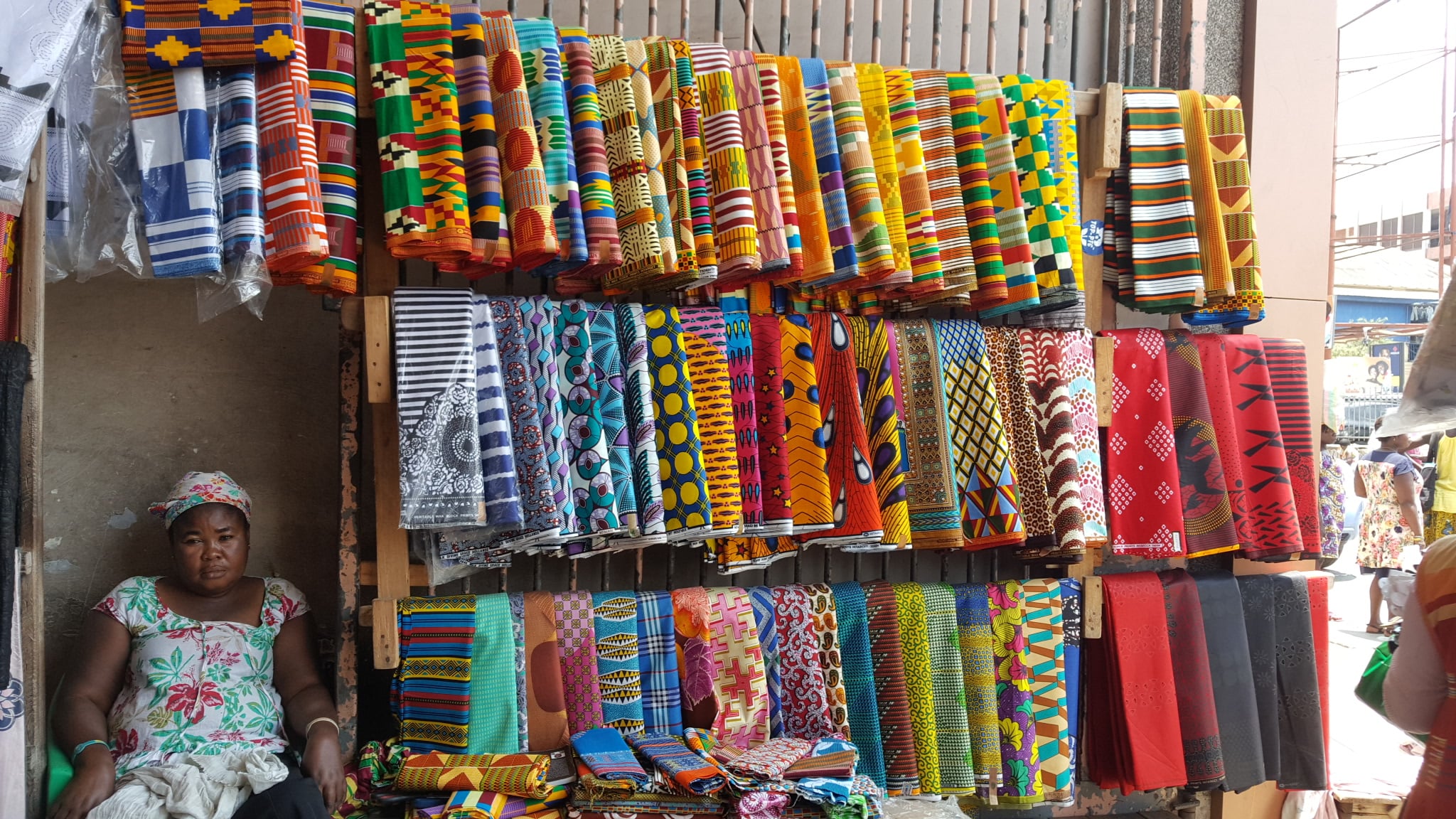
Wax print makes the point first. The cloth that now reads everywhere as unmistakably African was industrialised in Europe, worked up from Javanese batik by Dutch and British firms in the nineteenth century. Vlisco, founded in Helmond in 1846, is still the premium name in the trade and still designs and prints its own cloth in the Netherlands. Its pattern language was built over generations with West African traders and the market women who named the designs and drove the demand, so this was never simply an invention from abroad. But ownership has drifted a long way from the people who made the cloth matter. Even its African-made labels, GTP and Woodin in Ghana and Uniwax in Côte d’Ivoire, have sat under the same Dutch private-equity ownership, while cheaper imitations, a good deal of it from China, have taken large stretches of the market. The clearest move the other way is recent and unfinished: in September a Ghanaian firm announced it was buying the maker of GTP and Woodin back onto the continent, a deal not yet closed. The aesthetic is West African; the trademarks and much of the money, for now, are not.
Photography tells it more slowly. Seydou Keïta photographed Bamako from a small studio through the 1950s, a few dollars a portrait, and was barely known abroad until the 1990s, when his work surfaced in New York and Paris and the prices came with it; by 1997 big exhibition prints were selling in a SoHo gallery for as much as $16,000. The money arrived late, from far away, and in a quarrel. The collector Jean Pigozzi’s curator, André Magnin, had come back from Bamako in 1992 with 921 of Keïta’s negatives, printed and sold them across Europe and America, and Keïta came to believe prints were being made and signed without him. In 2004, after his death, an association in his name and the agent he had chosen late in life took Pigozzi and Magnin to court in Paris, fighting less over where the negatives sat than over who could act as his exclusive agent and sell the work. By the end of the decade the courts had found for Pigozzi and Magnin, and the collection has managed the negatives since, alongside Keïta’s heirs. The fight, in the end, was over who got to turn the work into money.
With music the numbers get much larger, and the shape of it holds. Afrobeats fills arenas and streams in the billions, and its biggest names have signed to Western majors: Wizkid, Davido and Tems to Sony’s RCA, Burna Boy to Warner’s Atlantic. Early in 2024 Universal announced a majority investment in Mavin Records, the Lagos label Don Jazzy had built into the most successful independent on the continent. The contracts are mostly private, so it is seldom clear how much of the masters or publishing actually changes hands and how much is only distribution. The collection figures give the scale: African societies gathered about €90m in royalties in 2024, according to CISAC, the fastest growth of any region that year and still the smallest total, out of nearly €14bn worldwide.

Set against that, the news from this year’s General Assembly is modest but real. Four days before the main debate, UNDP Africa ran a small, closed workshop at its New York headquarters on financing the creative industries, through its timbuktoo initiative, tucked among a week of sessions on investment, AI and credit. It was a side event rather than Assembly business, and UNDP named nobody in the room and announced no money. It is not proof that capital has arrived, but it is a sign that creative work is beginning to be treated as something you finance, rather than a line filed under tourism or youth employment.
Ahead of the week, UNDP Africa’s deputy regional director, Aissata De, had set the agenda under a single question: who captures value when African resources, data, talent and ideas reach global markets. It is the right question for culture, because money is never only money; it comes with rights attached. A creative business has the same plain needs as any other, cash for materials, wages, production, lawyers, getting the work in front of a buyer, and a fashion label or a film carries most of that cost long before anyone pays for the result. Investment covers it. It also settles who owns the trademark, the master, the film rights or the archive once the cash stops being urgent. The question worth putting to any deal is not how generous it looks but what it leaves behind: a house that can make and sell the next thing, or one that has handed away the asset its whole future was meant to rest on.
The archive is where this turns concrete. It is easy to file under heritage, but for a company it is also the working record of who made what, when and for whom, and it is what lets a work be licensed, reissued or exhibited by negotiation instead of guesswork. The fight over Keïta’s negatives was, underneath, a fight over an archive and who had the right to hold it. A record cannot settle every claim, and should not try: many cultural forms have no single author, and not every shared inheritance belongs in private hands. But the lack of one clear owner is not the lack of a history, and a reference travelling without its record slips a little further from the people who made it each time it moves.
Distribution carries the same imbalance into the present tense. The maker is the face of the work; the distributor keeps the customer and learns from every sale, and that knowledge quietly shapes the next commission and the next cheque. A shop knows what sold and to whom, a streaming service holds the listening data, a gallery owns the collector. The same logic runs under the data and digital plumbing of African creative work, and it holds one storey up, in the contracts, archives, manufacturers, rights bodies and retail relationships that quietly decide who gets paid. They are duller than the runway or the screen, and they are where the lasting value tends to sit.
None of this is a case for walling culture off. The work has always travelled, and most of what is good about it came out of contact. The harder thing is to arrive at the exchange holding more than the work itself: a company that can negotiate, a record that can prove where something came from, a way to reach the buyer, and enough cash in hand that you are not signing away the long-term rights to fix a short-term problem. The Assembly passed nothing on the creative economy, and one small workshop decides nothing. What the week did was put an old truth where more people could see it. Giving the world its culture has never been the same as owning what the world makes from it, and the thing to watch now is not how many rooms get convened but which companies are still standing when the money has moved, and what they are left holding.
Follow the people, ideas and businesses shaping African culture. Subscribe to Guzangs.