


The Back of the Field
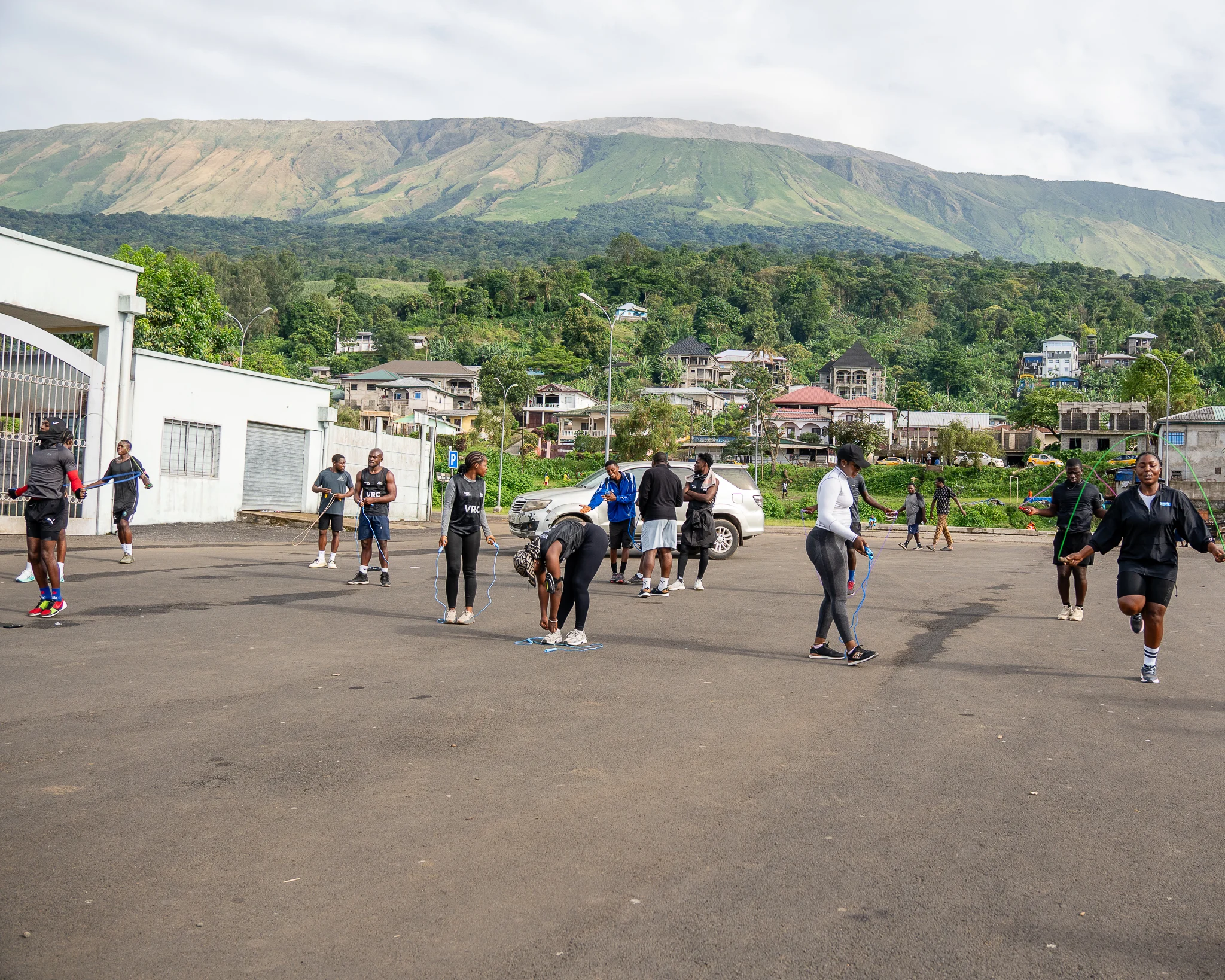
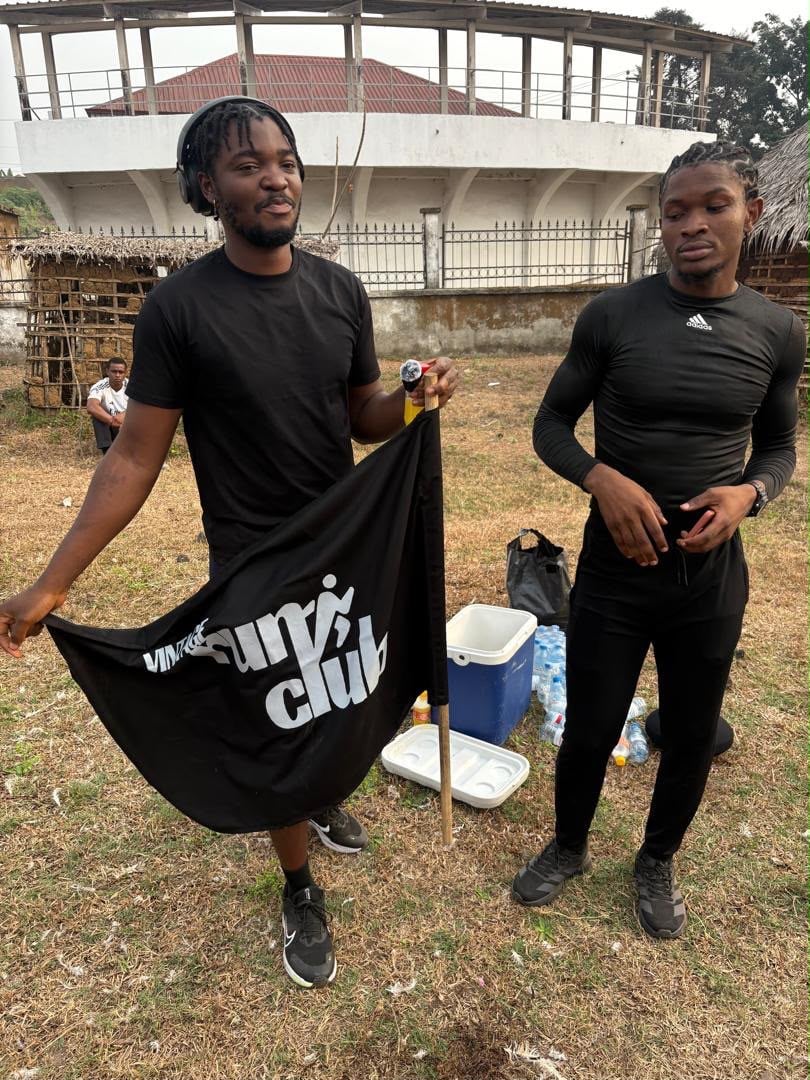
Above: Vintage Run Club in Buea, Mount Cameroon behind. Photograph courtesy of Vintage Run Club
A Guzangs Special Report · The Economics of African Running · Part One
Bamboh Bill Rollins is the president of Vintage Run Club in Buea, Cameroon. On Saturday mornings, he runs at the back.
He walks through the setup without much ceremony. The route starts at the grandstand at Clerks Quarters, passes through Bokwango and ends at the Governor’s Office, five kilometres of broad road, empty at five in the morning. The footballers and the strong runners push ahead. A second founder holds the middle group, coaching newcomers to run slow enough that they can still talk. Bill takes the rear with the walkers and the first-timers, a backpack of water, sweets and electrolytes for whoever runs out of whatever they need.
He sells sporting goods, so he is also the man who explains to beginners what road running asks of a foot. Some show up in Crocs. Others in shoes built for lifting weights.
Nobody pays him for any of this.
The club is free. Every founder I spoke to for this article used that word about their own club, in four countries, and not one of them meant the same thing by it.
Free describes who is not being charged. It does not describe who is paying.
I was born in Douala and I have lived most of my life in America. I have been running since college in 2013. I told myself it was fitness. I did get fitter. What I actually joined was one of those groups that quietly believes it is the alpha species, and the belonging was the point long before the running was.
So I expected more of the same here. I did not expect Buea to have a run club at all.
That is my own failure of imagination, and it is also the point. Cameroon has never entered the global imagination as a distance-running country. No Iten mythology, no machinery of agents and altitude camps. Football takes most of the sporting attention. When I picture Cameroonian bodies moving, I picture a pitch.
So when three men who sell clothes and work in nightlife decided that what Buea needed was for running to look like something, and it worked, that was not a smaller version of Lagos or Nairobi. It was the thing itself, arriving without any of the money.
Then, at wildly different speeds, the money arrives. Or it does not. What it never arrives with is a price. Six global brands were asked what they pay African running communities. Five said nothing. The sixth described how it is organised, and not what it spends.
Chapter 01BueaWhat it takes to make people run
In Buea, the founders of Vintage Run Club will tell you, it is far easier to get young people out for a night than for a morning.
So they worked backwards from that. “It’s not easy getting people together to do sports in Cameroon,” one of them said. “It’s easier to take people to go drink a beer or go into nightlife.” The question they set themselves was what could actually make a young Cameroonian leave the house.
None of the three had come from athletics. In the first weeks of 2026, Gwan Joseph Junior, who goes by JR, had simply started walking because he wanted to lose weight. Bill and Tati Telvin, known as Jago, joined him. By the third morning the three of them had talked it over and Bill proposed making it a club.
JR was twenty-nine, Bill twenty-six and Jago twenty-five. What they had between them was sporting retail, fashion, nightlife and social media, which turned out to be exactly the right expertise. Football and basketball jerseys already circulated in Buea as everyday clothing. People already knew how to dress for somewhere and be seen there. Nobody had put running inside that.
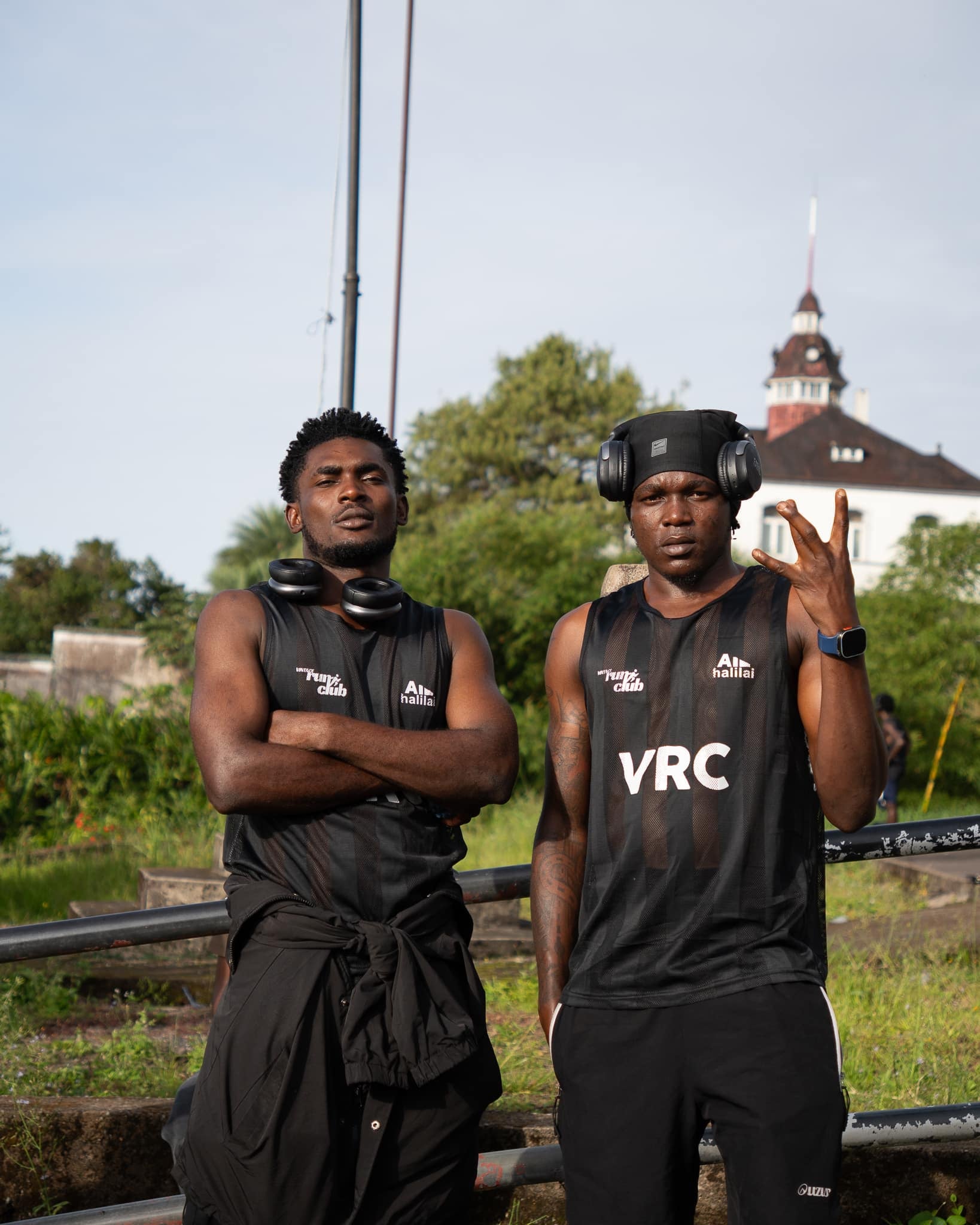
The answer was black. Head to toe, styled with vintage and streetwear references rather than technical kit. They posted on TikTok and Instagram, and what travelled was the clothes, the faces, the atmosphere. Never the distance or the pace. People could weigh the social risk before they showed up.
The club ran officially for the first time on the second Saturday of February 2026. An early Monday session drew five people. A Saturday soon after brought about a dozen newcomers. Six months later the WhatsApp group held roughly 360 people, and a normal Saturday brought as many as 150 of them onto the road.
There is a detail in how the city reads them that is hard to shake. A large group moving through Buea in coordinated black draws attention, the founders say, partly because residents are more used to seeing military formations run through the streets than civilians.
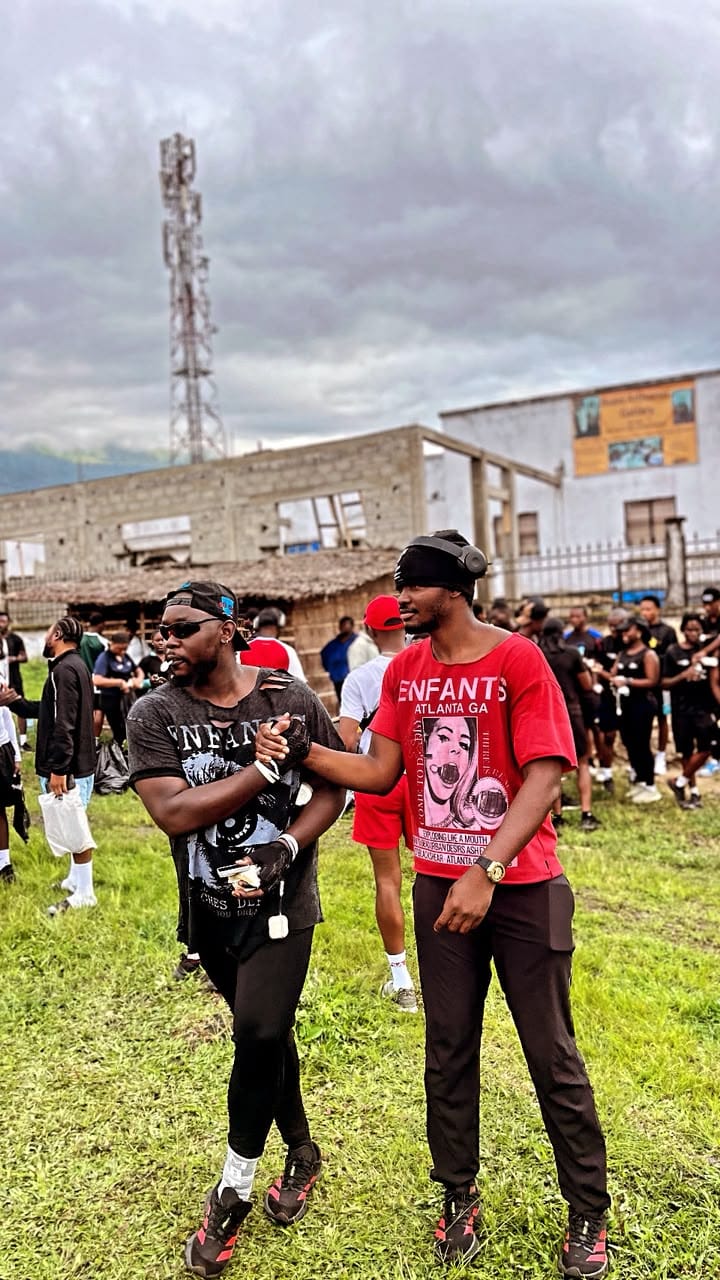
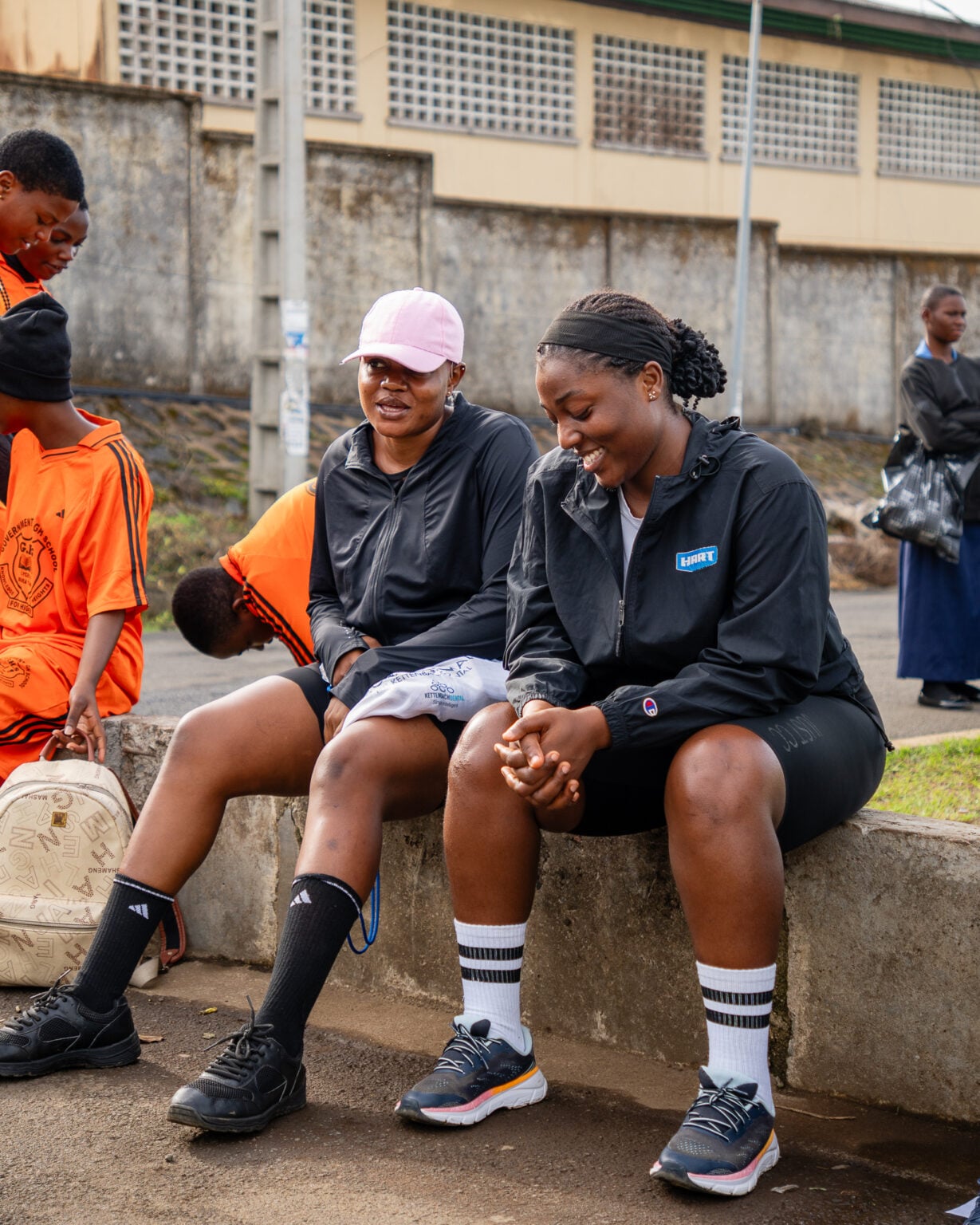
The image mattered most for women. At the start only one or two came. Some assumed it would be a race. Others feared the fast runners would vanish and leave them alone on the road. What changed it was footage of women finishing. Six months in, the club is fifty-five per cent women.
Vintage is free, and the founders have held that line on purpose. Everyone puts in 1,000 CFA francs towards the end-of-month gathering, except anyone who joined that day. Beyond that, nothing. The organisers point to members managing unemployment, stress, depression and displacement. For those members, they say, the club is not a discretionary purchase.
In Buea, free means the founders pay.
They paid for the first branded tops, the club banner and the early water themselves, and estimate they have put around 167,000 CFA into the club’s first months, something near three hundred dollars. The tops were not ordered. They saw a man walking past with a stack of vests, stopped him, bought fifty already printed with another name, and printed the club’s initials over the top. Bill plans the routes, runs the pace groups, makes the content and stays responsible for whoever is least likely to finish.
Nobody at that start line is charged. Somebody is still paying.
Afterwards the club drinks chai. Two or three large flasks shared among thirty or forty people. The vendors know them now and charge about 2,000 CFA instead of 3,000. There is no clubhouse. There is a tea vendor.
Vintage has no international brand partnership. JR says the club has never approached adidas, Nike, On or Puma, and would welcome working with any of them.
Chapter 02LagosAttendance is legal tender
Eight people, five kilometres, a car park in Ikoyi. Then coffee, and a photograph.
The photograph is what did it.
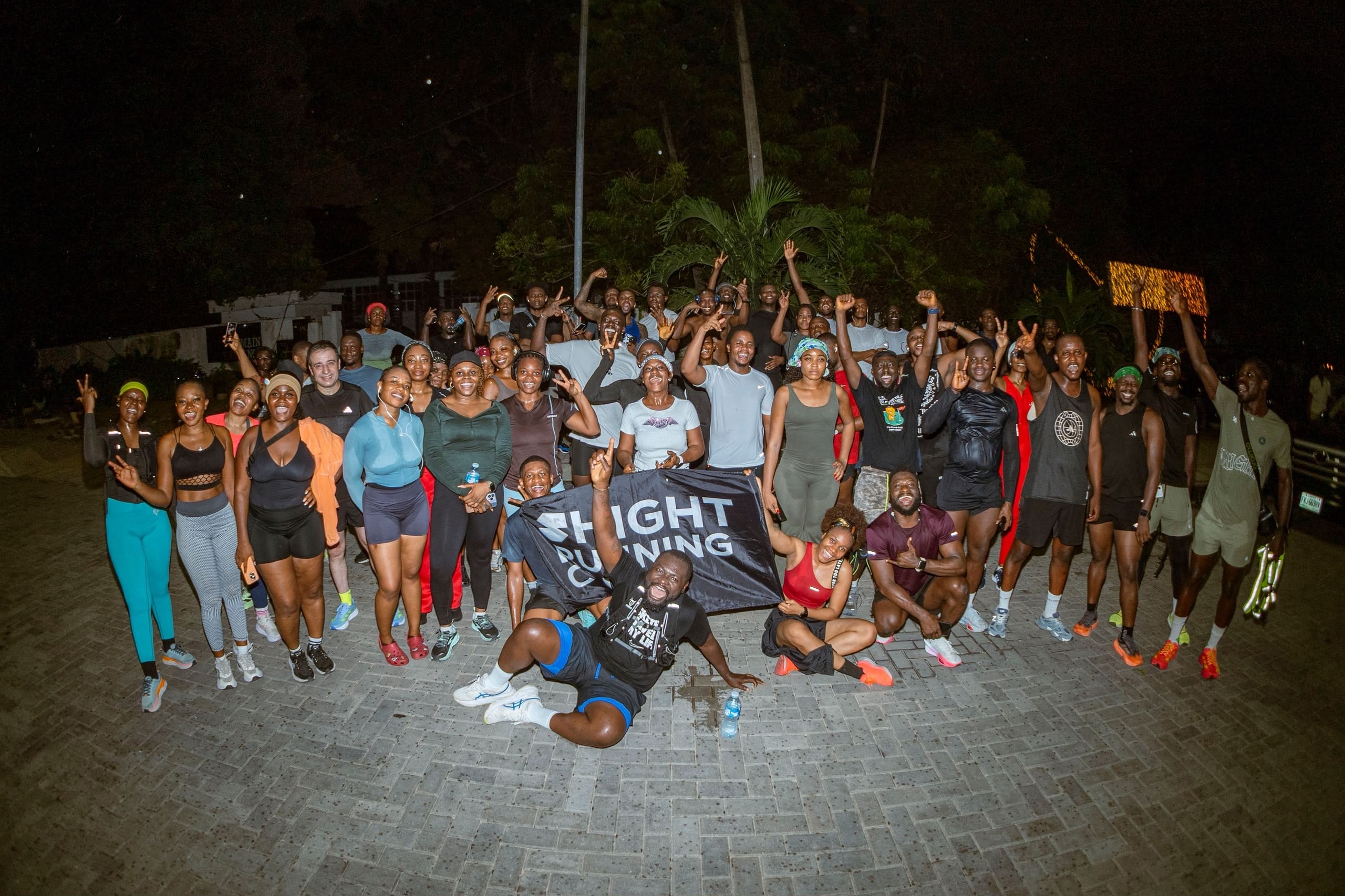
People who saw it asked when the next one was, which surprised the founders, who had not been confident the friends they talked into running once would do it again. They made another flyer. More came than the first time. Someone filmed a session and posted it.
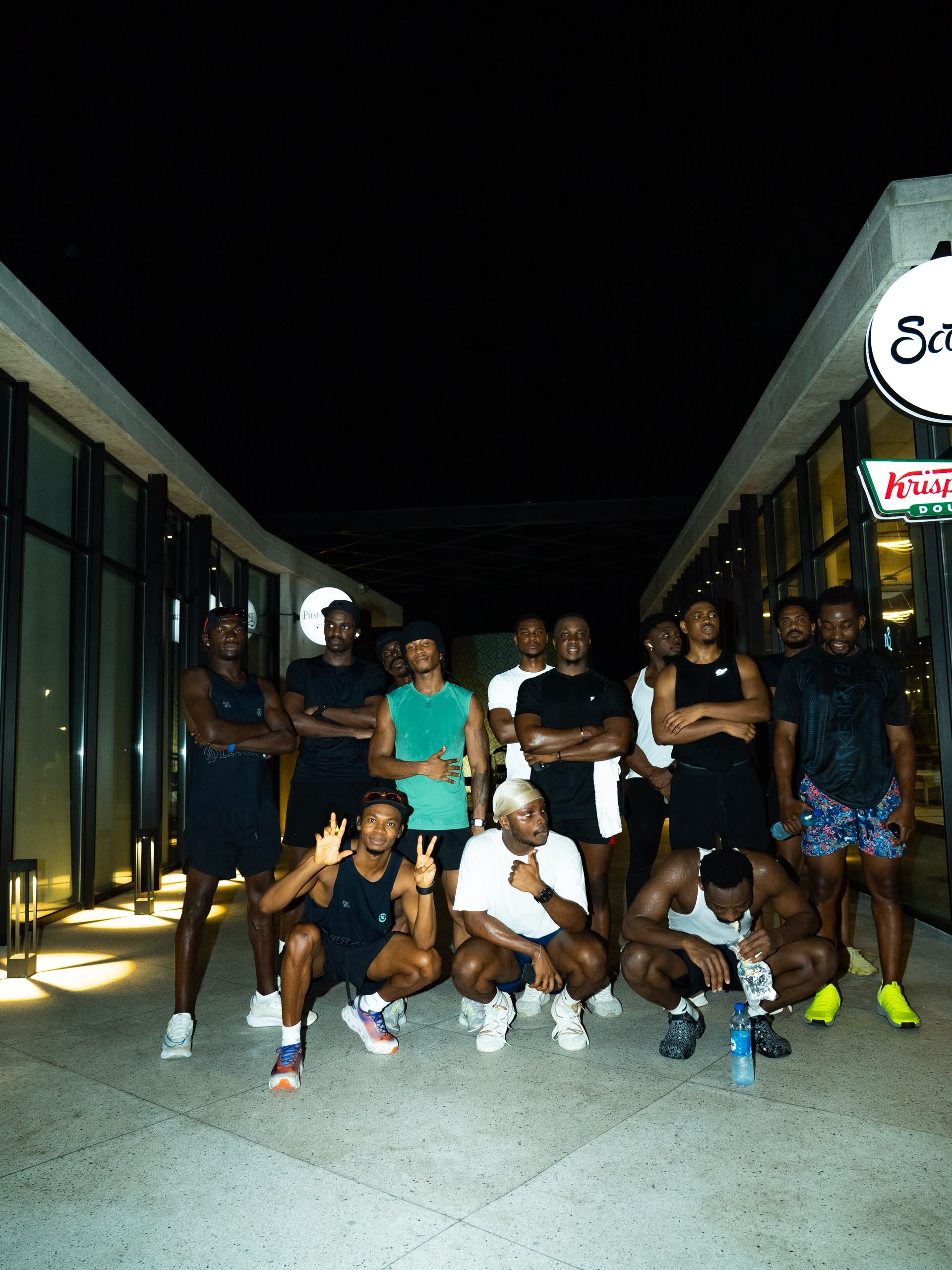
That was 21 June 2025. Riches Efe Arhiakpore, who runs the fashion and athletic retail business SHIGHTvault, had started the club with his friend Ola Makinde, known as Banji and now the club captain.
A year on, the WhatsApp community had passed 300, with more than a hundred active in a given month. Sunday’s 6.3-kilometre run pulls fifty to sixty through the streets of Ikoyi.
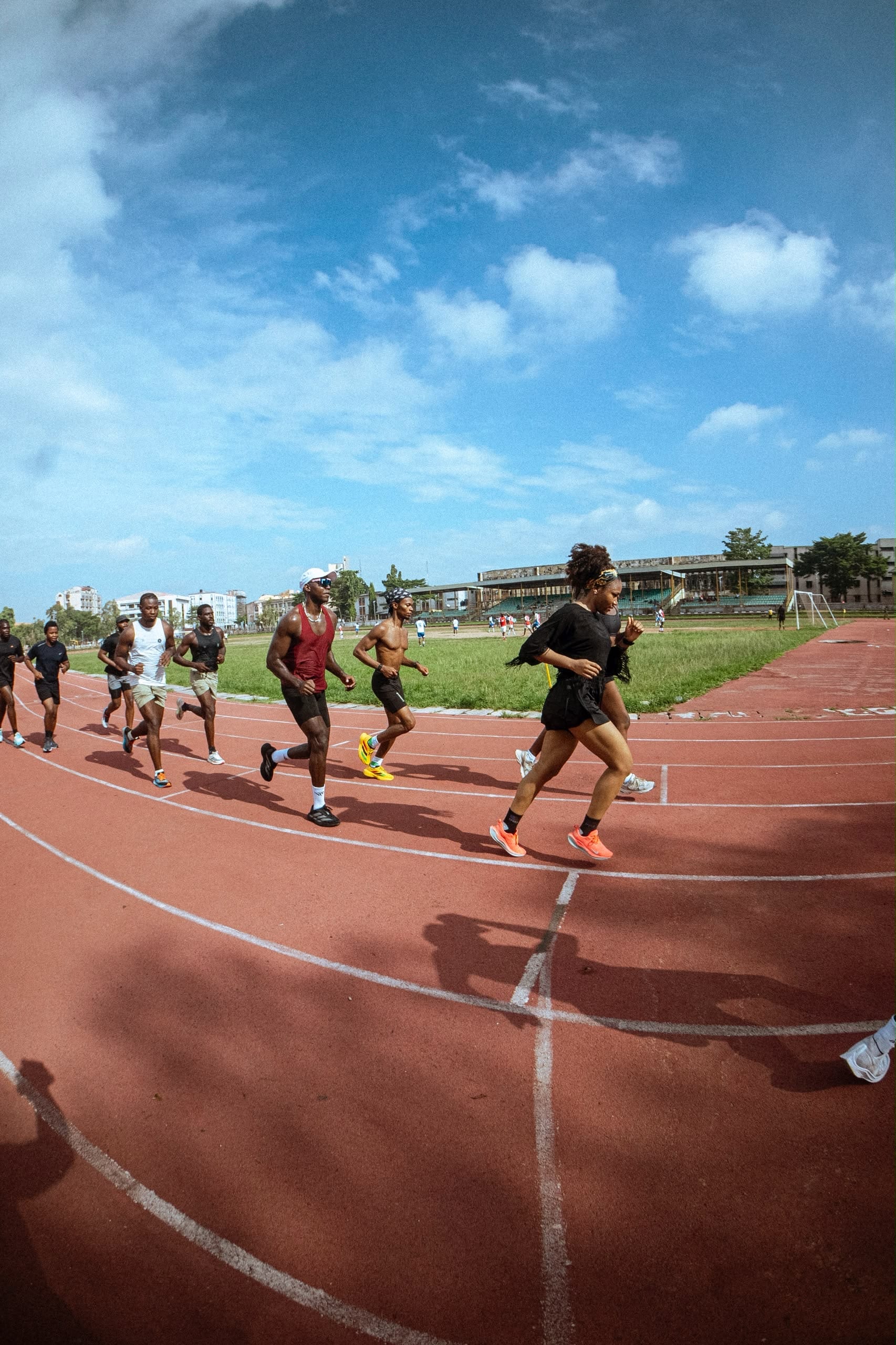
The Sunday run is free to anyone who turns up.
Around it, SHIGHT has built something with a price on it. In Lagos, free means some members pay so that everyone can come.
Premium membership costs a one-time ₦50,000 to join, then ₦10,000 a month. It buys an official jersey, running socks, a personalised membership ID, access to the Premium group and invitations to exclusive events. There are more than fifty active Premium members.
The Basic tier is where it gets interesting. It carries a ₦10,000 online registration payment, which Arhiakpore says filters out bots and people who sign up with no intention of showing up. But the payment is waived for anyone who completes two consecutive community runs.
You can pay ₦10,000, or you can turn up twice.
Attendance is legal tender.
Still, the tiers are tiers. Basic members are welcome at every free run and receive none of the merchandise or the Premium-only experiences. What ₦50,000 buys is not access to the road, which is public. It buys a jersey, a card with your name on it, and a room not everyone is in.
Arhiakpore says the fee is there to build something that lasts, funding hydration, merchandise, events and a community people are proud to belong to.
We’re not simply charging people to run. We’re investing in a community that supports one another and creates lasting value.
SHIGHT puts its routine monthly operating cost at ₦80,000 to ₦100,000. Fifty-plus Premium members paying ₦10,000 a month would represent at least ₦500,000 in recurring dues. Those two figures are not directly comparable. The operating estimate covers ordinary running costs, while membership revenue also carries merchandise, events, paid creative work and expenses the club did not itemise. Arhiakpore says SHIGHT is not profitable and did not provide a breakdown.
What it has done is turn some of its community activity into paid work. Akpagu Mark Ikechukwu and Kizito Kemakolam have been hired for design across the club’s collaborations. Almost everything in this economy runs on unpaid founding labour; a Lagos club barely a year old has a payroll of a kind.
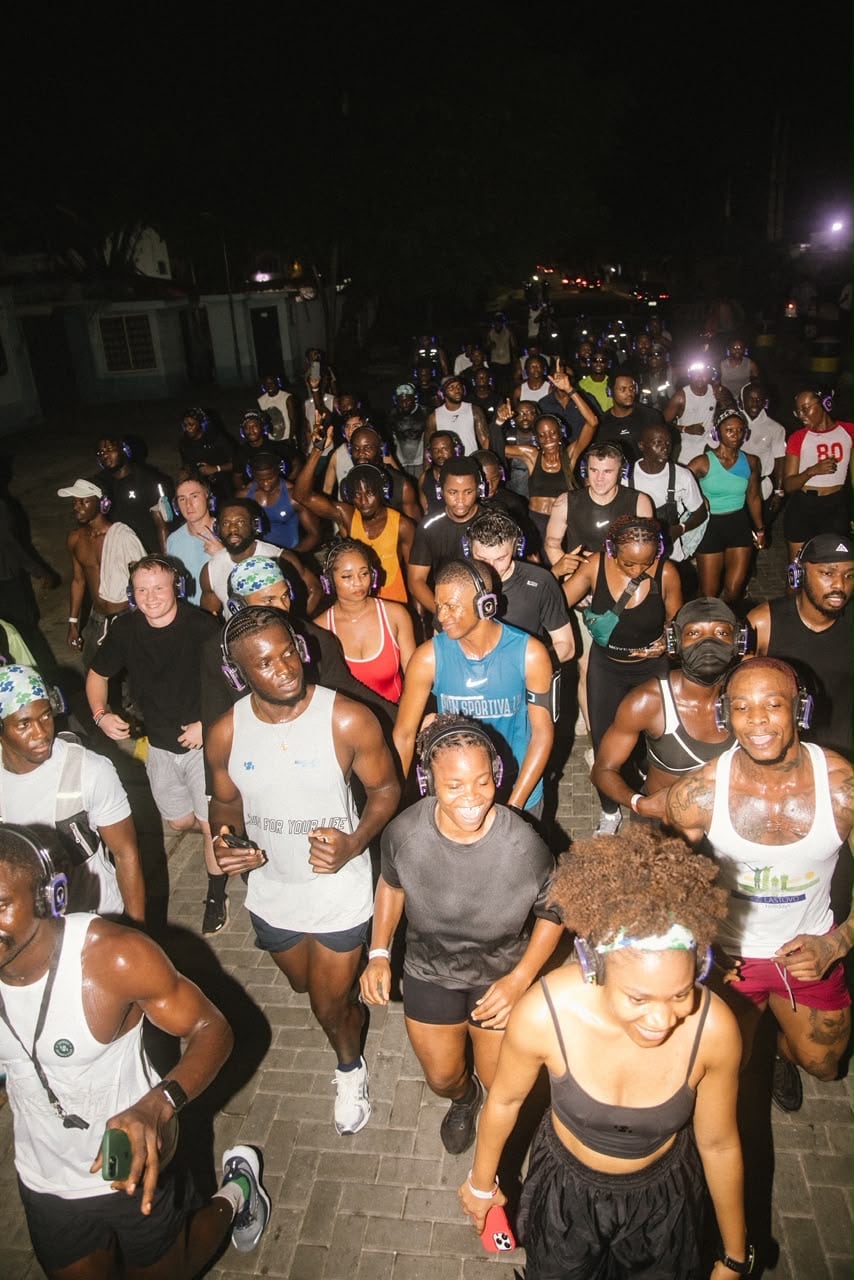
The visual economy has an author too. Victor Ibrahim, SHIGHT’s head of media, photographed the club’s early growth and its largest activations. Those images did not simply document a community after it formed. They made it legible to the next runner and valuable to the next partner.
The club’s home is Ohlala Café at 2 Thompson Avenue, Ikoyi, and why it moved there says more than the café’s obvious appeal. SHIGHT outgrew Pitstop Village. The group had been assembling in the car park, and once there were enough of them, parked cars made it impossible to stretch or gather. Ohlala had room.
In Buea a tea vendor provides the affordable social room. In Lagos a private café provides the ground to stand on. In Cairo the landlord is the state, and it is not always renting.
The price of entry
Class does not disappear on the road. It reappears the moment you stop, and it starts with the shoes.
Arhiakpore puts a decent new pair at around ₦150,000, roughly a hundred dollars. Nigeria’s legal minimum wage is ₦70,000 a month and Lagos State pays its own workers ₦85,000. One pair is a little over two months of the federal minimum, and not far under two months of the Lagos State figure, before transport or anything anyone eats afterwards.
His members found their way around it. Secondhand HOKAs from independent sellers on social media, roughly ₦30,000. In Buea it is unofficial copies. In Nairobi, where Emily Chepkor of We Run Nairobi puts a new entry-level trainer at KSh 15,000 to 20,000, something over a hundred dollars, a large secondhand trade starts around KSh 1,000.
Those are not equivalent trades. A used HOKA re-enters a market it was already in. A copy was never in that market at all. What they share is the exclusion they answer.
Different mechanisms in every city, and in each one the price of entry falls to a fraction of what the shop charges.
The market has already priced in what the brands have not: affordability.
Chapter 03NairobiThe club is free, attendance is not
Emily Chepkor will not say she founded We Run Nairobi. She started it. Founded sounds grander than what it was.
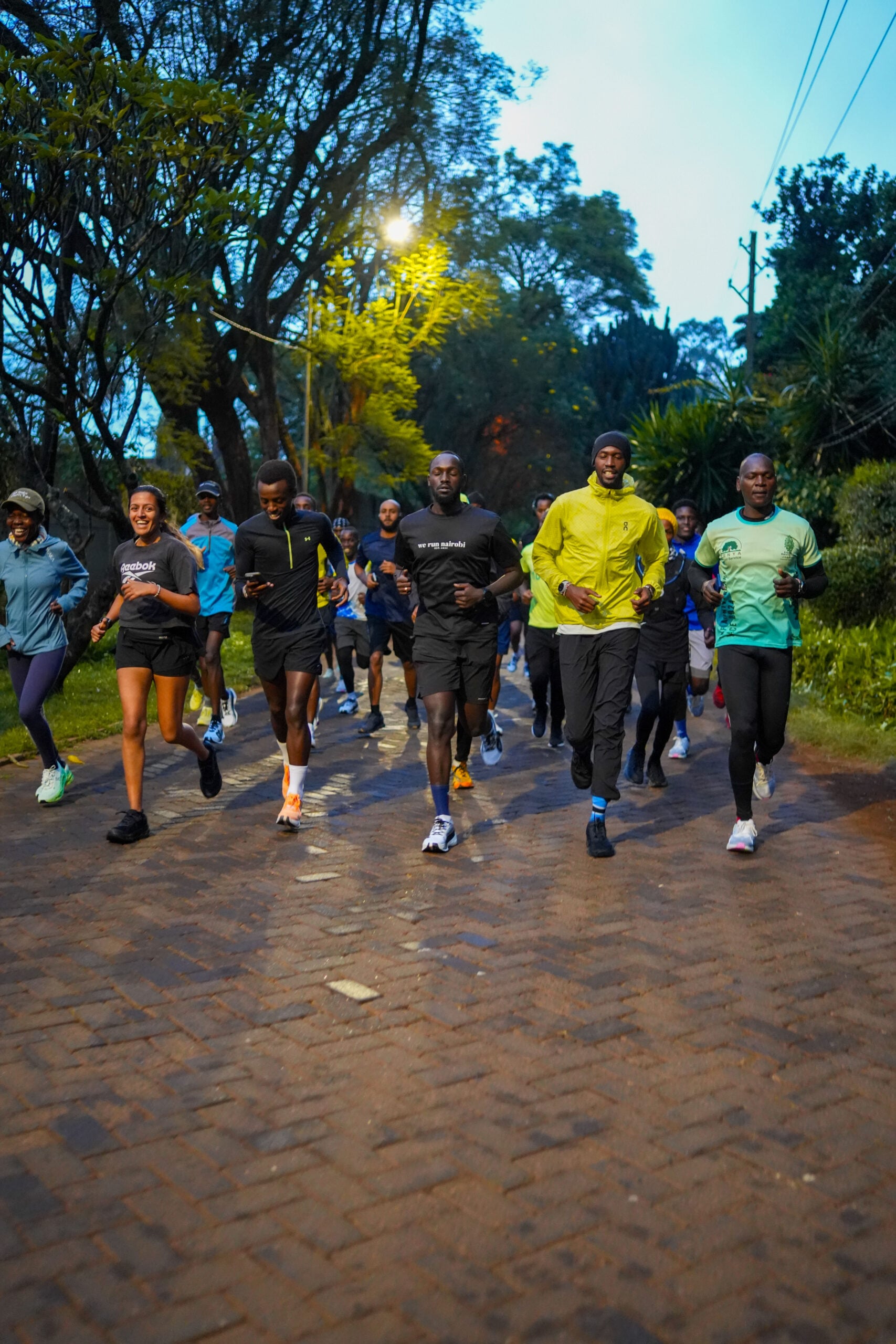
She is Kalenjin, from the community the world thinks of when it thinks of Kenyan running. She is blunt about how narrow that reputation is. Kenya is a running nation, she says, on the strength of one group of people. She was not raised in Iten and she came up in no elite system. She is a lawyer who ran ten marathons as an amateur.
In October 2022 she had recently run Boston, the tenth of them, and was trying to work out how to stop. She posted on a small Instagram account that she would stand outside a café every Saturday at eight. Three women came. She had planned ten kilometres; her boyfriend at the time talked her down to six. About five hundred metres in, the others wanted to walk.
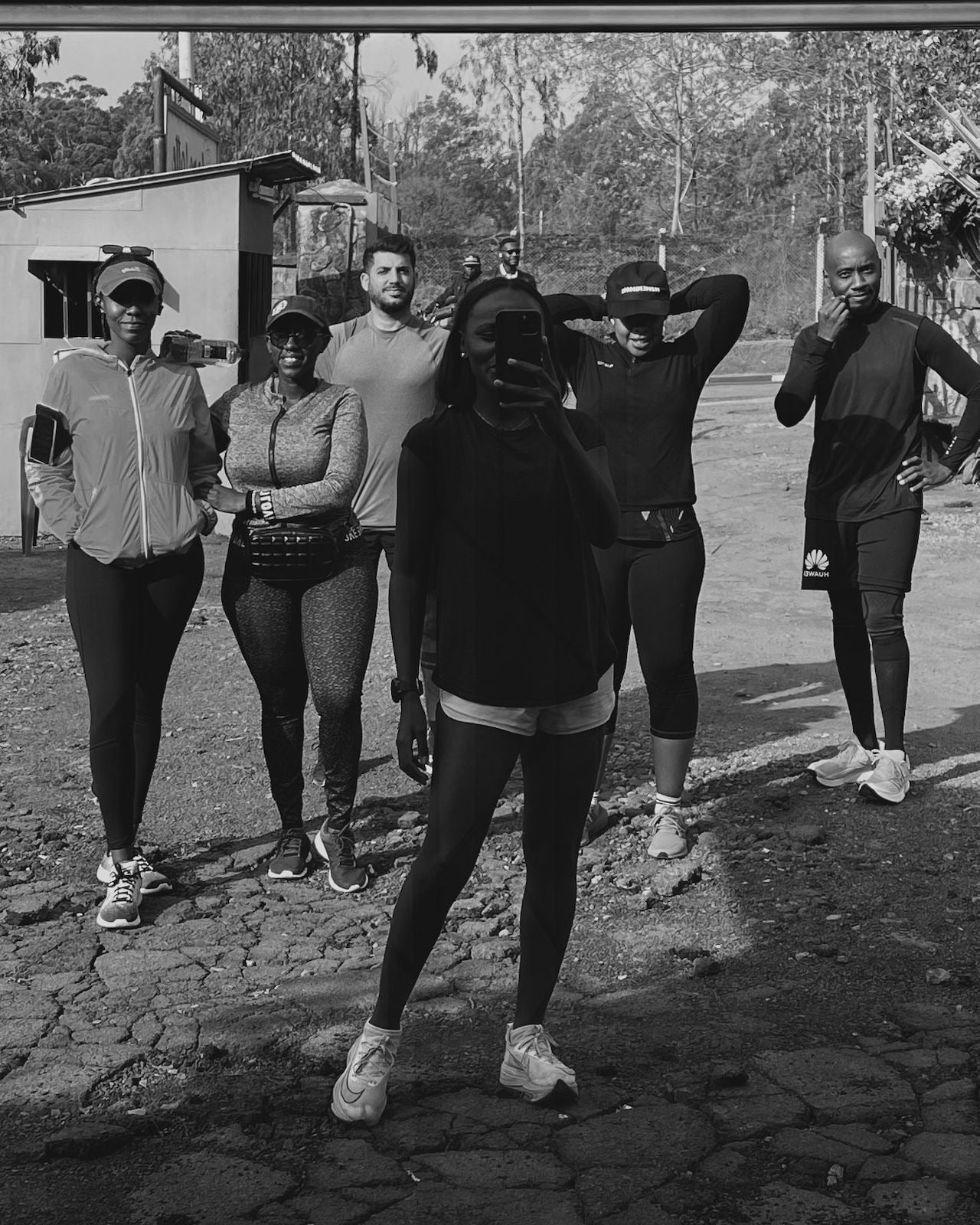
When faster men started turning up, Chepkor was the only one who knew the route, so she ran ahead to show them the turn, doubled back for the slower ones, and repeated it for the length of the loop.
She has a term for what she put in. Soft capital. Ten years of running, knowledge of the route, and one thing she names before anything else.
“I could run fast enough, I could run slow enough,” she said. As she went back and forth she was hoping that every person spread out along that loop had somebody beside them for at least part of it.
It is a more precise idea than passion, and it describes something a sponsorship deck has no line for.
For the first six months the club stayed at six to ten people, and it stayed small for a year after that. Then, in April 2024, a volunteer named Beatrice Manyala posted a TikTok that reached around two hundred thousand views. Attendance went from twenty or forty into the hundreds. The first surge was heavily women, roughly seventy to thirty. Then men noticed where the women were. The split is close to even now, and Manyala is on the core team. They stopped taking group photographs somewhere along the way, because there were too many people to fit in one.
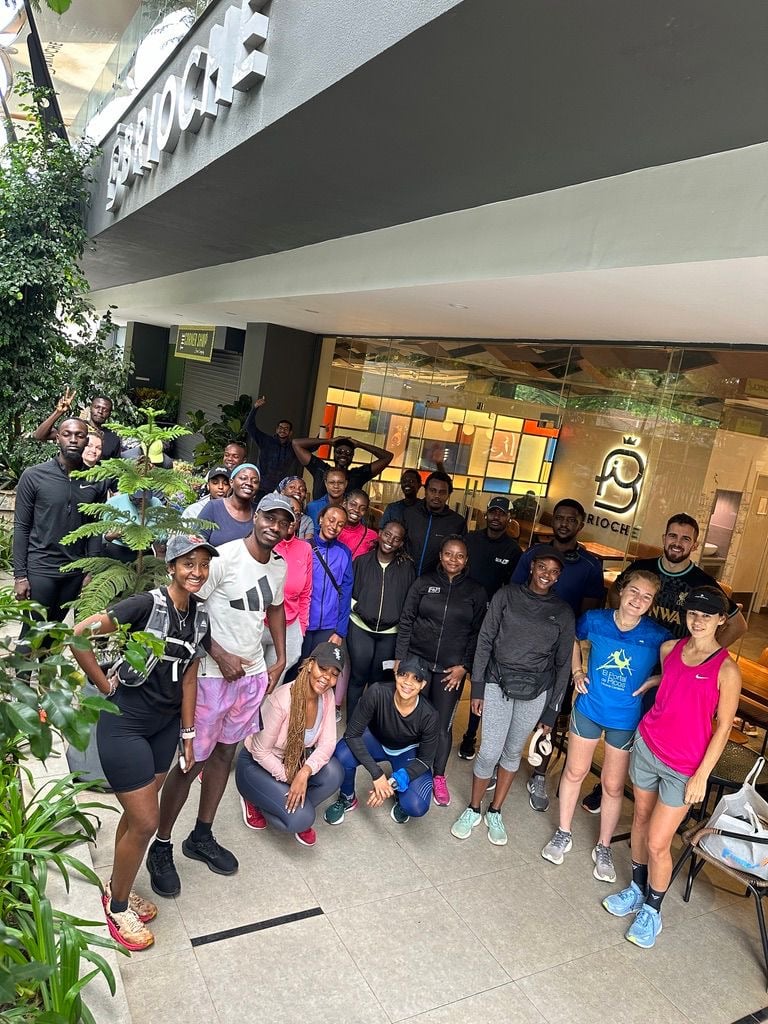
We Run Nairobi is free, and Chepkor can tell you exactly why.
Safe, continuous running space is not evenly distributed across Nairobi. The club runs in higher-income and gated areas because the roads there are better and the through-traffic is lighter, so the people with the least money travel the furthest, into the wealthiest neighbourhoods, in order to run at all. Chepkor has spoken to participants who leave home at four in the morning and change public transport two or three times to reach the start. Some have to choose which Saturdays they can afford.
Adding a membership fee on top of that, she says, would be unconscionable.
In Nairobi, free means a sponsor pays, and before the sponsor arrived it meant Chepkor did.
The club advertises itself as free. She knows attendance is not.
Not everyone is at that end of it. Brian Mutuku is eighteen. He leaves home around half past five, takes a motorbike, and puts his whole Saturday, transport and breakfast and anything else, at four to five hundred shillings. On the weeks he has thirty kilometres to cover he runs from his house to the start instead.
His shoes are thrifted. He runs in a pair of Nike Zoom Fly 5 he bought secondhand for 6,500 shillings, less than half what Chepkor says a new entry-level trainer costs and a fraction of a new plated racing shoe.
He has one pair he did not buy. A set of On Cloudsurfer Max, given to him by someone on On’s Kenya team. He remembers what she said more than he remembers the shoes. Why are you not part of the On family.
In under two years he has run three marathons. The last was under three hours. He is now training to race at ten and twenty-one kilometres, which he says he did not see coming.
He joined because he wanted to run without stopping to catch his breath, and for his mental health. What he got was the thing he was not looking for. He was an introvert when he started. He is not one on Saturdays.
The tracking sits inside the same arithmetic. Most people in Nairobi record their runs on a phone, because a phone is what they already own. A Garmin does the same job without the phone in your hand, and costs enough that owning one is an event. Chepkor says people save for months for their first, then treat it like a Cartier.
The table after the finish
The runs begin and end at cafés, and Chepkor treats the hour afterwards as the actual point. The run is a solitary effort even when everyone starts together. Breakfast is what reassembles the field.
But not everyone could afford to order. The organisers said repeatedly that buying something was not required, and people left anyway rather than sit at a table with nothing in front of them. So when partnerships arrived, Chepkor wrote breakfast into them.
The partners had to chip into breakfast, so that everyone gets to hang around with some dignity.
A coffee, a snack, something to hold, so that nobody is sitting there looking like they are only sitting there.
A person who cannot afford breakfast does not have to be turned away. They can simply leave while everyone else stays.
The class boundary is not the starting line. It is the table after the finish.
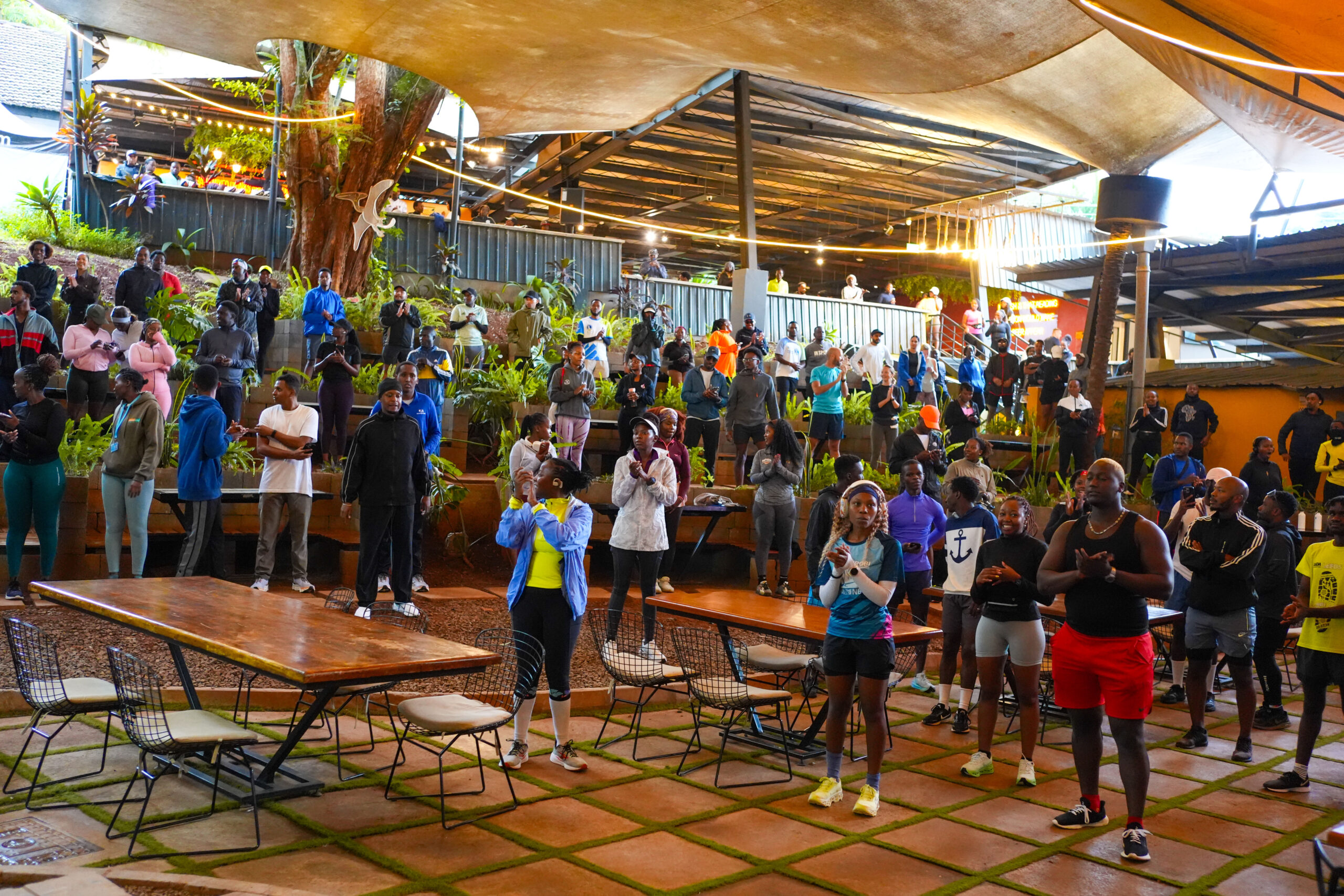
In Nairobi, then, a sponsorship buys something other than a logo. It is buying the ability of someone who cannot afford breakfast to remain in the room without it showing.
The partners came to her. Chepkor has never pitched a company. Chepkor says On approached her and made her an ambassador, and she draws the distinction herself: On also pays We Run Nairobi, structured like the club’s other agreements and separate from her personal deal. NIVEA followed. Those two let the club cover its costs comfortably. Guzangs put questions to On about how it structures and values its African community partnerships, including this one. It did not respond.
She will not give figures, and her reason is worth more than the numbers would have been.
I obviously won’t go into the actual figures, just so I can protect our negotiation strength.
Publishing the club’s monthly operating cost would let a future partner open at that number. When We Run Nairobi first priced itself, it had almost no information about what comparable communities anywhere were charging.
In a market with few visible benchmarks, silence can itself become leverage.
The core team is four. Chepkor, Beatrice Manyala, Faith Huini and Luca Buecken. No formal titles, everyone co-leads the runs. Chepkor is the only one working on it full time, and she wants to hand it over.
Partly she wants to return to legal practice. But she frames the succession as a test. A passion project can run indefinitely on a founder’s attachment and unpaid emotional capital. A durable institution should be able to operate under someone who did not create it.
Asked what the club has cost her in nearly four years, her first answer is a relationship. She says it lightly, tells you to treat it as a joke, and later says it was not entirely one. She does not say it with regret.
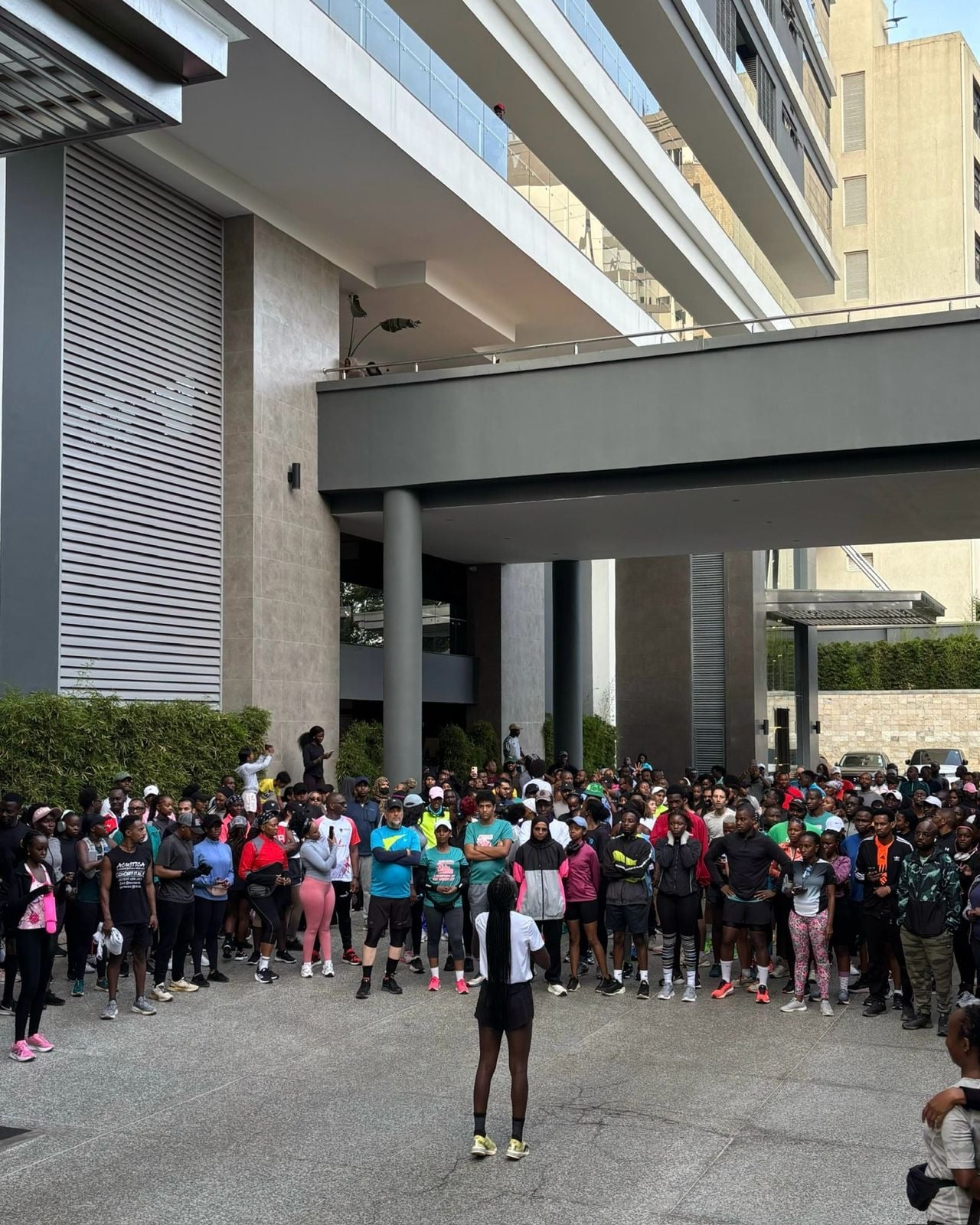
The founder who made the institution visible can end up being its largest concentration of risk.
Chapter 04CairoSeventy-two strangers
Seventy-two people came, and almost none of them knew each other.
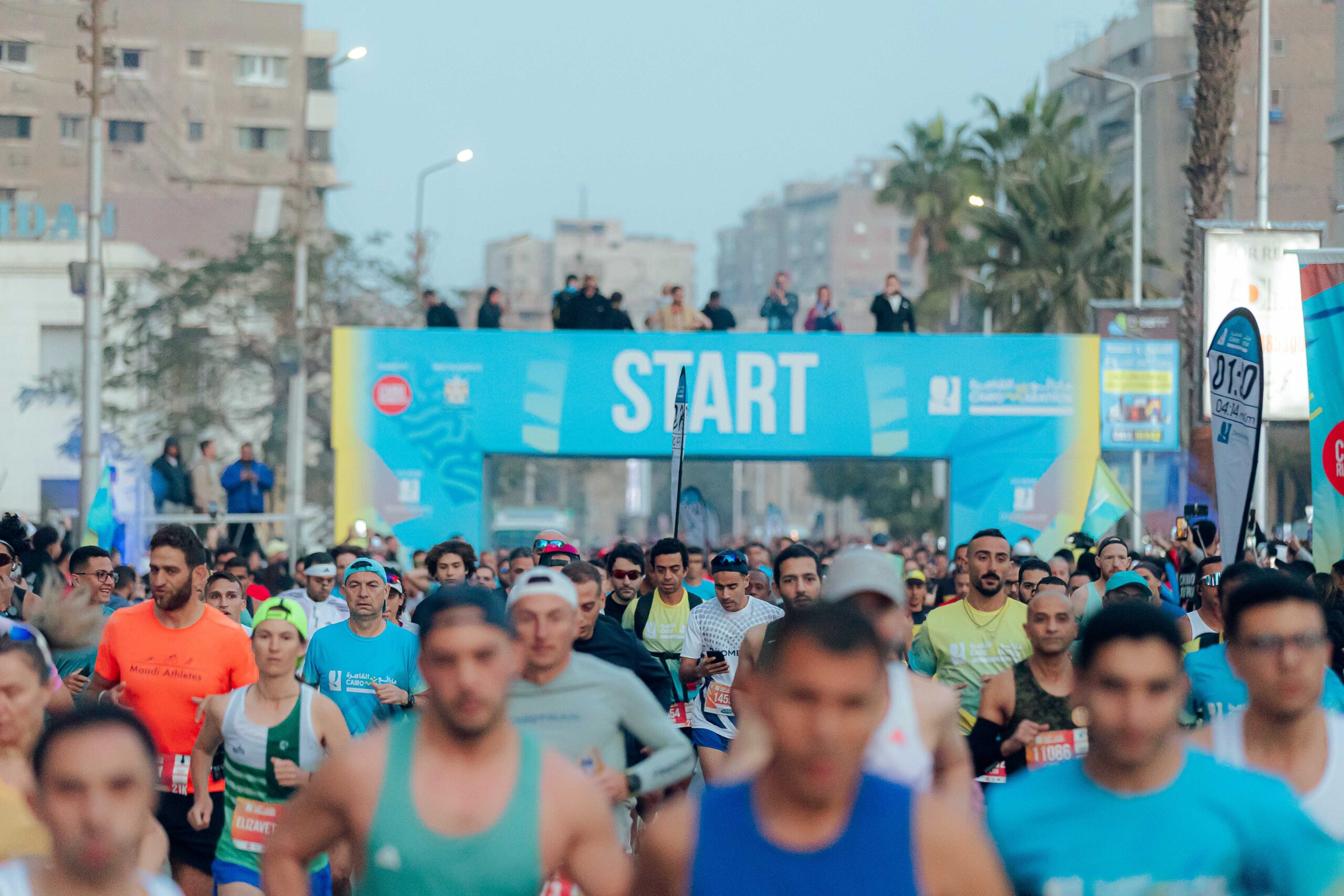
It was seven in the morning on a Friday in December 2012, four kilometres through Zamalek, not quite two years after the revolution. There was no timing, no kilometre markers, no infrastructure of any kind. A Facebook page, a graphic, some bottled water, and Ibrahim Safwat standing at the side of the road with his sister Aya and a few friends, waiting to see whether anyone would turn up.
Safwat was a mechanical engineer at Bosch. He had started running to lose weight and found the treadmill unbearable after an hour. On a trip to France he watched people running in the streets and came home wondering why Cairo did not do that.
Cairo had answers. The traffic. The pollution. Streets built for cars. And the fact that running in public was unusual for men and considerably harder for women. He picked the one window when the city would still be asleep and the air would be better.
Cairo Runners was not political. But ordinary men and women moving through the streets together, that year, was unavoidably a civic act.
By the first half marathon in May 2013 there were over a thousand. Families started coming. Older runners. Parents pushing strollers. People had attached themselves to each other rather than to the distance, and the thing refused to end.
For about two years it ran on volunteers, Safwat using his lunch hour at Bosch to chase sponsors and learning event production while the events were already happening. By 2014 the half marathon was drawing 2,500 to 3,000, and Bosch was offering stability, travel and a salary Cairo Runners could not approach. Going full time meant taking roughly a quarter of what Bosch was paying him, which was all the organisation could afford.
He left anyway. By 2019 there were thirteen staff and a race through the centre of Cairo and along the Nile, which Safwat puts at around 10,000 people. It remains the largest thing they have done.
Then the pandemic took the entire event economy. No races, no sponsorship, and the company contracted to two people. Safwat, and Aya, who had been part of it since Zamalek and was still there when there was nothing left to run.
It rebuilt from 2022 and is back to roughly twelve.
In Cairo, free means the corporate work carries it.
The sports days and branded runs for banks and pharmaceutical companies pay for the mornings when nobody is charged anything at all.
Something else changed in the same period, and it runs the other way to everything the organisation was building. The free community runs became less frequent after COVID, settling into a rhythm of roughly one every two or three weeks. Cairo Runners got larger and more professional while the plain act it was founded on, people meeting to run for nothing, became harder to stage.
Institutionalisation does not automatically produce more community. Sometimes it produces less of the thing that started it. Some of that decline may belong to the permissions map described later in this article rather than to institutionalisation itself. Cairo Runners did not separate the two.
The business now runs on three streams: sponsorship, entry fees and corporate events. That last one is the stable leg, because it has a single client and a single payer. Public races are the fragile ones. Safwat puts the current cost of producing a major half marathon at around four million Egyptian pounds, and the revenue needed to survive one at five to six million. The margin has to carry the staff and the office through the rest of the year.
In October 2019 a half marathon at Somabay on the Red Sea was called off the day before it was due to start, over security concerns. Around 500 runners had already travelled and booked hotels. Sponsors had committed, tickets had sold. Cairo Runners refunded the runners and the sponsors both, and absorbed a loss Safwat puts at around 500,000 Egyptian pounds, worth roughly thirty thousand dollars at the time and about a third of that today.
He does not think the risk could have been managed. His conclusion was that the organisation had to absorb what it could not control, because that was the price of credibility.
This is the point at which the word community stops being sufficient. Community is warm. An institution has liabilities.
Safwat said a recent major-race entry fee was around 1,000 Egyptian pounds, roughly twenty dollars, and he is unsentimental about why it stays there.
If you have Mercedes, you join the run. And if you don’t have money to get a car and you get with public transportation, you join us.
Most of the running groups he sees in Egypt now are exclusive, running inside compounds for a particular set of people. Cairo Runners, he says, is for all Egyptians, not for a specific class or sector.
Hazem Rabea, who paces the club’s races as a volunteer, says registration buys the race number, or a package with a shirt, a bag and a medal. The fee is symbolic. What actually costs is the travel. Reaching a race on the North Coast, staying overnight, driving out and back in a day. Plenty of people train free all year and pay for one event.
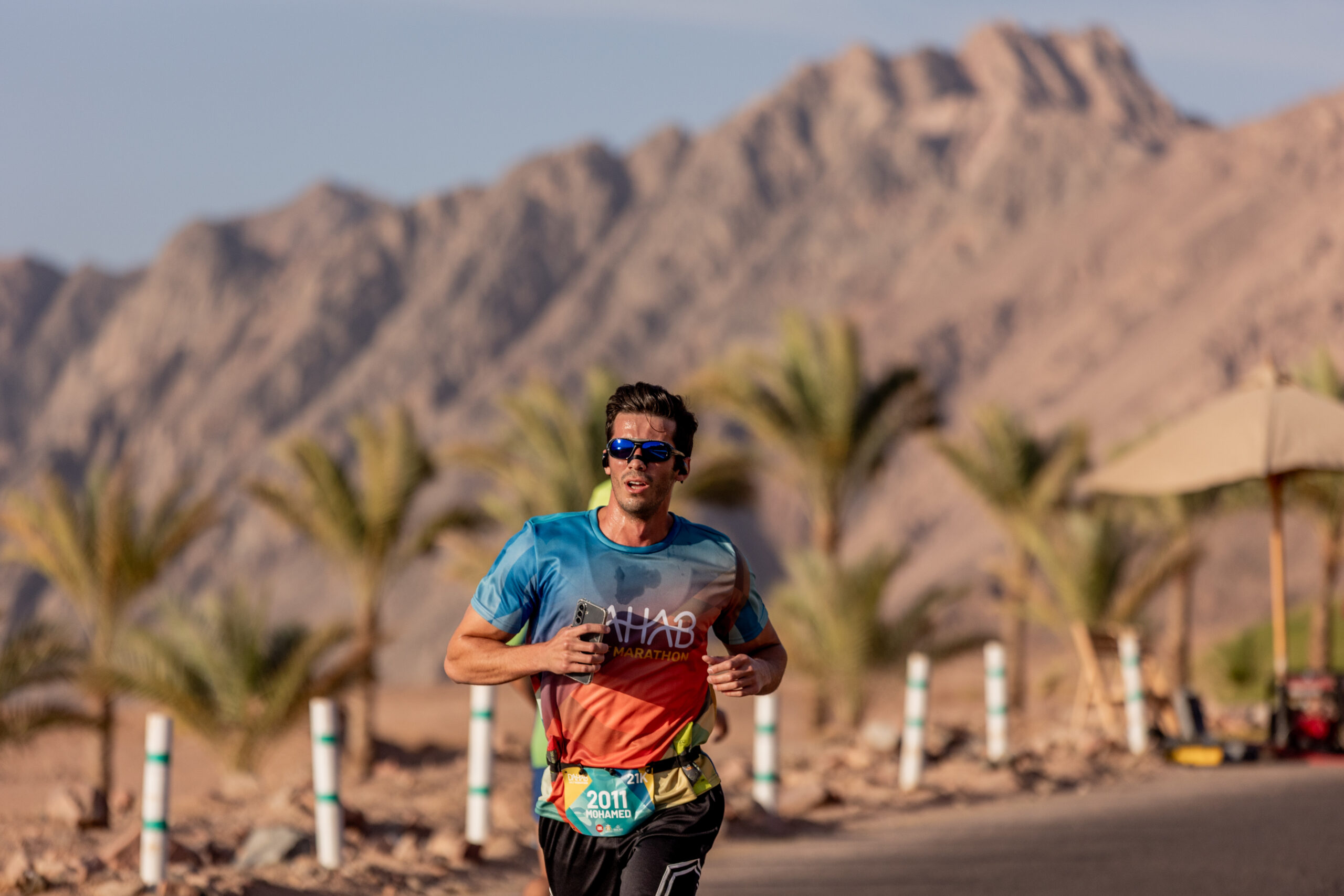
Which is the Nairobi problem in another currency. The advertised price of belonging is not the price of arriving.
Hesham Mahmoud Ahmed, who has been running since 1983, barely thinks of any of it as an expense. A hundred-dollar pair of shoes over a year or two does not register, he says, any more than the bill defines a dinner with friends.
“They call it lifestyle,” he said. “But this is life, not style.”
None of which makes running cheap. It shows how completely a price can vanish from the awareness of somebody able to absorb it, while staying decisive for the runner Safwat is trying not to lose.
Asked what he wants people to take from it, Safwat does not reach for the founding or the numbers. He reaches for the thing that seemed impossible.
Anyone can’t imagine that you can see in Cairo more than ten thousand people running in the streets, men and women together, girls and boys. You don’t believe that it would happen. But it happened.
Set Cairo next to Lagos and the subscription argument looks different. Arhiakpore is charging in year one for something Cairo Runners has spent thirteen years discovering the cost of.
Community becomes expensive long before it becomes profitable.
Chapter 05Where a city lets you runRoute, robbery, permission
Every club learns where its city will tolerate it.
Vintage returns again and again to the same broad road between Clerks Quarters and the Governor’s Office. Part of the reason is ordinary. The corridors near Molyko, Mile 17 and the University of Buea are narrower and busier.
The rest of the reason is not ordinary at all.
Buea is the capital of Cameroon’s Southwest Region, where protests in 2016 escalated into an armed conflict the following year. That conflict has not ended. The founders say so directly. In some parts of the city people cannot walk or jog early in the morning because of the crisis, so the club runs, in their words, where it is safe and has military surveillance.
The club cannot pick the most interesting route. It picks the one least likely to get someone hurt.
Nairobi’s map has a second cost, beyond the commute. Strava is the democratic option in Nairobi because it runs on a phone, and a phone has to be visible while it records. Runners have been robbed by thieves working from motorbikes, most incidents reported to Chepkor afterwards and usually witnessed by other runners nearby. The club now announces a caution at the start of every run: do not carry your phone in your hand, use a waist belt.
Recording the run is what makes you worth robbing.
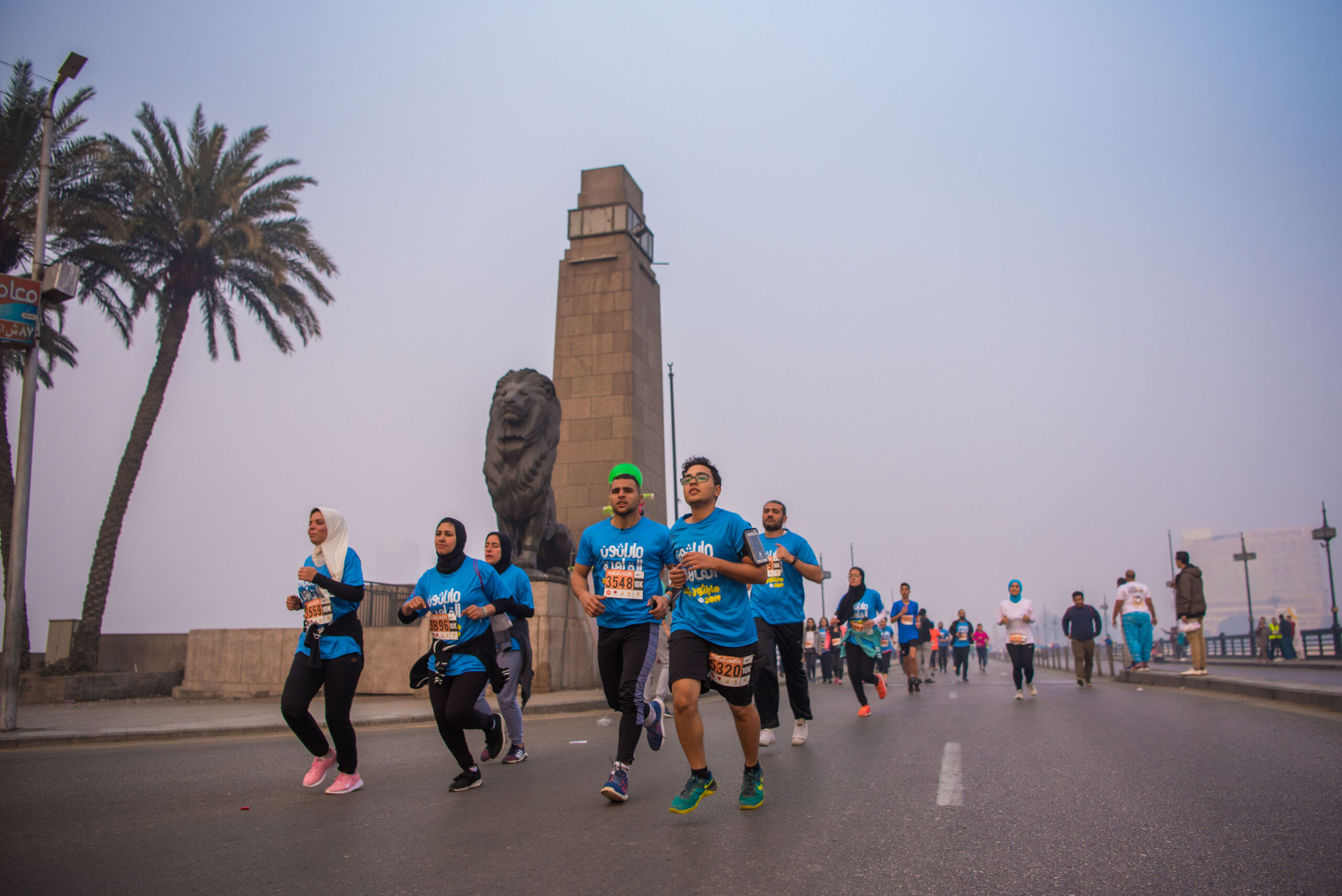
In Cairo the constraint is permission, and permission has a map. Approvals come relatively easily in newer districts like New Cairo and Sheikh Zayed. They are far harder downtown and in parts of Heliopolis, which is to say harder in exactly the places that look like Cairo.
The 2019 downtown race drew about 10,000. Safwat estimates current suburban events draw closer to 6,000. Seven years on, he argues the constraint is permission rather than demand.
Run clubs do not reclaim cities so much as survey them. They show you where the pavement gives out, where cars win, where permission is required, where women will and will not run, and where a hundred people can afford to stay afterwards. One thing the map did not predict. In Buea the club is fifty-five per cent women six months in. In Nairobi the split is close to even, after a surge that ran seventy to thirty in women’s favour. In Lagos it is about sixty to forty, male to female. Founders in Buea and Cairo both described running in public as harder for women than for men. The women came anyway, and in Buea they are now the majority.
Chapter 06Ten months, and thirteen yearsWho the money finds, and who it does not
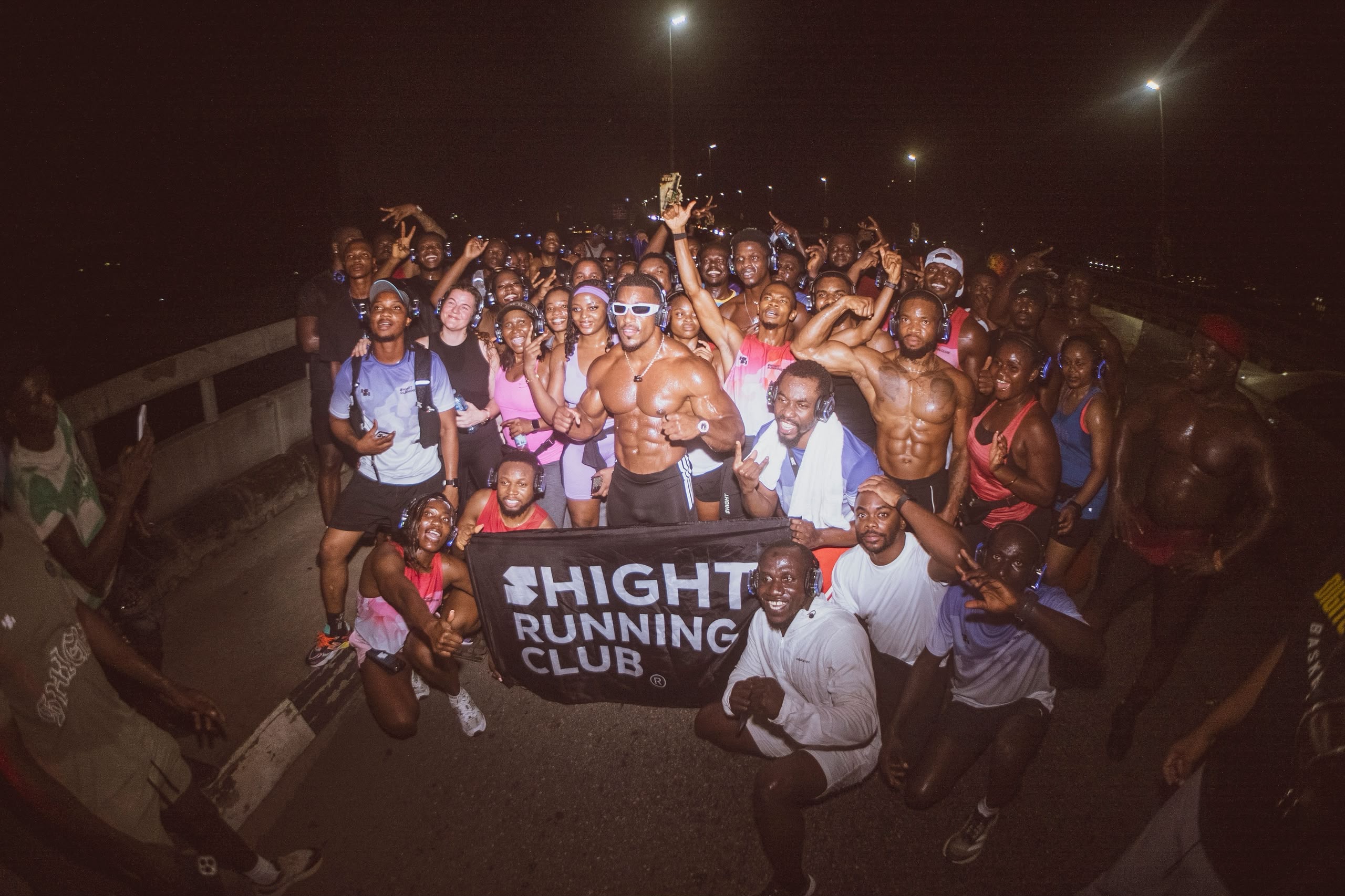
Eight people ran in June 2025. Oraimo, a consumer electronics brand, came in around the Access Bank Lagos City Marathon the following February. In April 2026 the club staged a Silent Disco Run it bills as Nigeria’s first, and SHIGHT says adidas arrived after that. Roughly ten months from a car park in Ikoyi.
On 5 July 2026 the American streamer Ashton Hall ran with the club. SHIGHT says adidas paid for the activation and kitted Hall. Guzangs asked adidas what it had contributed, and in what form. It did not reply.
Cairo Runners was founded in December 2012, has staged an event of around 10,000 people and employs about twelve full-time. Safwat says he was in talks with adidas around 2022 about a collaboration with adidas Runners, its own global club programme. Nothing came of it, and he never learned why.
In Nairobi the sequence ran the other way entirely, with every major partner approaching the club. Vintage, in Buea, has had no approach at all.
Scale cannot explain that. SHIGHT is smaller than Cairo Runners by every measure either has disclosed.
The ledger · What six brands would say about what they pay
Responded, in part
Nike
Asked how it structures community running partnerships across the continent. Said its operating model in Africa has evolved and varies by market, and that it could not confirm the history we put to it. Volunteered that Egypt was previously supported through its South Africa team before transitioning to a distributor-managed model. Listed the African markets where it currently supports running: South Africa, Kenya, Uganda, Ethiopia, Morocco. Named no spending. Questions put 6 August 2026.
No response
adidas
Asked how it chooses which African markets to invest in, how many communities it pays in money rather than product, and what it contributed to the Ashton Hall activation in Lagos. Answered none of it, including whether it paid for anything in Lagos. Questions put 4 August 2026.
No response
On
Asked how it structures and values its African community partnerships, including We Run Nairobi, which the club says On pays. Did not respond. Questions put 4 August 2026.
No response
Red Bull
Did not respond by publication. Questions put 6 August 2026.
No response
Strava
Did not respond by publication. Questions put 6 August 2026.
No response
Garmin
Did not respond by publication. Questions put 6 August 2026.
Of the six brands asked, Nike alone described how any of this works. Asked how it structures community running partnerships across the continent, it said its operating model in Africa has evolved and varies by market, and that it could not confirm the history we put to it. Then it volunteered this.
Egypt was previously supported through our South Africa team, before transitioning to a distributor-managed model.
The arrangement itself is on the public record; GMG has held the rights to manage and retail Nike in Egypt since 2022. What the answer made visible is where Egypt sits, and does not sit, in the running map. The organisation that put 10,000 people on the streets of Cairo was, for a period, run from another country, and is now run through a third party.
Nike also listed the African markets where it currently supports running. South Africa, Kenya, Uganda, Ethiopia and Morocco. Egypt was not among them. Neither was Nigeria. Neither was Cameroon. In May 2026 Nike opened its first East Africa flagship store in Nairobi. Retail is arriving in one African market while community investment across the rest of the continent stays unmapped and unpriced.
Those four lines made visible a corporate geography the clubs themselves could only see from the outside. Safwat spent months in meetings without ever being told where Egypt sat in it. He still does not know.
At both ends of the comparison sits adidas: credited with paying for a morning in Lagos, and in Cairo, talks that went nowhere. We asked how it chooses which African markets to invest in, and how many communities it pays in money rather than product.
adidas answered none of it, including whether it paid for anything in Lagos.
The clubs cannot see the map. The companies that drew it will not describe it, and in some of these markets there may be no one local with the authority to.
Chapter 07The company that answeredEnda, and the limits of the principle
There is one company for which none of this should apply.
Enda was founded in Kenya on the argument this article keeps circling: that the country producing the world’s distance runners ought to keep more of what they generate. The company has since been acquired by NVH Studios, which complicates that premise without cancelling it. Guzangs put questions about African investment to six global brands and, separately, to Enda. Of the six, one answered: Nike, briefly. Enda answered at length.
Asked twice to name the African run clubs it has worked with, its chief growth officer Elis Clementino named none, and pushed back on the question. Many of the communities Enda supports, she says, are not formal clubs at all. That objection is fair, and it cuts at this article too. Counting club partnerships is a way of measuring engagement that happens to suit how multinationals operate.
She is equally candid about what Enda has mostly not done. Asked whether the company pays community organisers directly, she said Enda is expanding its approach to include direct financial compensation where that serves the organiser best. So far, then, it largely has not. As a growing company, she says, Enda does not have the financial resources of the multinationals, so it is deliberate about where it spends.
On the principle she was unequivocal.
We believe community organizers create real value, and that value should be returned to them, not extracted.
That leaves the question the rest of this article has been circling. Not whether value comes back to the people who built the community, but in what form, on whose terms, and for how long.
Asked what single change would move things most, Clementino did not name policy or infrastructure. She named access to growth capital.
Everyone is looking for the same door.
Chapter 08The union nobody calls a unionWhat a run club actually produces in a week
There is a word for what these clubs have started doing, and it is not the word anyone in them uses.
They aggregate people.
An individual runner is easy for a company, a café or a city authority to ignore. Several hundred who reliably turn up in the same place every Saturday are something else, and everyone involved knows it.
Consider what one of these clubs actually produces in a week. Several hundred people delivered to a restaurant on a slow Saturday morning, which is footfall. Photographs and video that make the thing legible to the next runner, which is media production. Products worn visibly by people who chose them, which is marketing. Members who return without being reminded, which is retention. Route knowledge, safety coordination, marshalling, first aid. Introductions that turn into business. A reason to leave the house.
A brand often buys those functions separately, from agencies, and assigns a budget to each. Run clubs bundle all of them and are largely paid for none of them.
Nobody is stealing anything. This is a pricing failure, and it runs in both directions. Sometimes organisers underprice themselves because they have nothing to price against. Sometimes there is no local budget to spend. Sometimes a distributor cannot approve anything. Sometimes product and covered costs genuinely serve a young club better than a cheque. And sometimes a company simply has not worked out what it is buying.
And on the other side sits the thing that makes bargaining necessary.
Look at what nobody in this article would tell me. No brand would say what it pays a running community. adidas did not answer at all. Nike described its structure and not its spending. Enda stated a principle and declined to quantify it. On the other side, Arhiakpore would not put a value on a partnership. Chepkor would not publish her operating cost, and told me exactly why: any figure she gives becomes the ceiling a future partner starts from.
That is not five separate refusals. It is a market with no price discovery on one side and complete information on the other.
A company can draw on pricing history across partnerships and markets. A founder may know only what she was offered once. When Chepkor’s team first tried to price We Run Nairobi they had almost no idea what a comparable community anywhere was charging, so they worked out what they needed each month and built a number from their own costs. She was guessing in public, against somebody holding the sheet.
The communities brands are approaching are the ones with the least information about what they are worth. At the moment, that gap is not a flaw in the market. It is the market.
None of this makes them unions. They have no legal standing, no dues in most cases, no protections and no recognised right to negotiate anything. They have started doing some of what unions do, without any of what unions have.
What changes when runners gather is their negotiating position.
The founder gets called passionate. What they actually supplied was capital. Their own money, their own labour, their reputation and their risk, extended on credit to a community that did not yet exist. The community looks organic because the labour that made it has been hidden.
Which is what the word free has been doing all along. It describes the runner at the start line, who is charged nothing. It says nothing about the person who bought the water, negotiated the breakfast, absorbed the cancellation or gave up a salary before the organisation could replace it.
When I started this I assumed the conclusion would be that brands should spend more. By the end that seemed inadequate. Money buys the water and pays the marshal, and it also hands somebody outside the community a switch. The question is how money can enter these clubs without hollowing out the thing that made them worth funding before anyone decided they were.
CodaThe back of the fieldWhoever is behind you remains your responsibility
Cairo Runners wants twenty thousand people back in the centre of Cairo. SHIGHT wants chapters across Nigeria. Vintage wants to formalise without pricing out the people it was built for. We Run Nairobi wants to survive its own founder.
In Buea, Bill carries the water at the rear. In Nairobi, Emily Chepkor built her club by running ahead to mark the turn and doubling back for whoever had fallen behind. In Cairo, volunteer pacers hold a speed so that strangers can reach a time they could not hold alone. Different cities, different organisations, the same decision. Whoever is behind you remains your responsibility.
I went looking at the front of the field, because that is where running culture teaches you to look. The fastest. The best dressed. The biggest crowd. The most valuable sponsor.
The front tells you almost nothing about whether a community works.
The back tells you whether the beginner is still expected. Whether the person who cannot afford breakfast can stay. Whether someone in secondhand shoes belongs beside someone in carbon plates. Whether the organiser who built the value still holds any power once the money arrives. Whether the institution survives the founder.
Whether anybody turns around.
The front of the field produces the photograph. The back reveals the institution.
The road is public. Nobody is charged to run on it.
That was true in all four cities and it was never the whole story in any of them. Free described the start line. It never described the backpack.
Reporting note: This piece is based on recorded interviews and written responses from the founders of Vintage Run Club (Buea), SHIGHT Running Club (Lagos), We Run Nairobi and Cairo Runners, conducted remotely in August 2026, together with voice notes from Cairo Runners members Hesham Mahmoud Ahmed and Hazem Rabea, portions translated from Arabic, and from Brian Mutuku, a member of We Run Nairobi. All figures are as reported. Chepkor declined to disclose sponsorship values or the club’s monthly operating costs. Enda Sportswear responded on the record across two rounds through its chief growth officer and did not disclose the number of running communities it supports or its spending on them. Guzangs put questions to On and adidas on 4 August 2026, and to Nike, Red Bull, Strava and Garmin on 6 August. Nike responded through its media relations team. adidas, On, Red Bull, Strava and Garmin did not respond by publication. Photographs of SHIGHT Running Club by Victor Ibrahim. Photographs of We Run Nairobi courtesy of We Run Nairobi; additional Nairobi photography by Huini Studios. Vintage Run Club and Cairo Runners supplied their photographs without naming individual photographers. Guzangs has no commercial relationship with any company named in this article, with one exception. Guzangs has previously worked with PUMA, which is named once here and was not among the companies put questions for this article. That arrangement had no bearing on this reporting. Guzangs is building the run club dataset described below as a reporting resource; any commercial use of it will be disclosed at the point of publication, and clubs that write to us can ask that their figures be used in aggregate only.
This is the first in a continuing series on the economics of African running. Guzangs is building a dataset on run club economics across the continent, and is reporting further on the secondhand and replica markets that supply these clubs, and on who owns the brands that serve them.
Run club organisers who would like their club counted can write to us at [email protected].