


At BAKUS ORAYA, Cotton in Its Final State
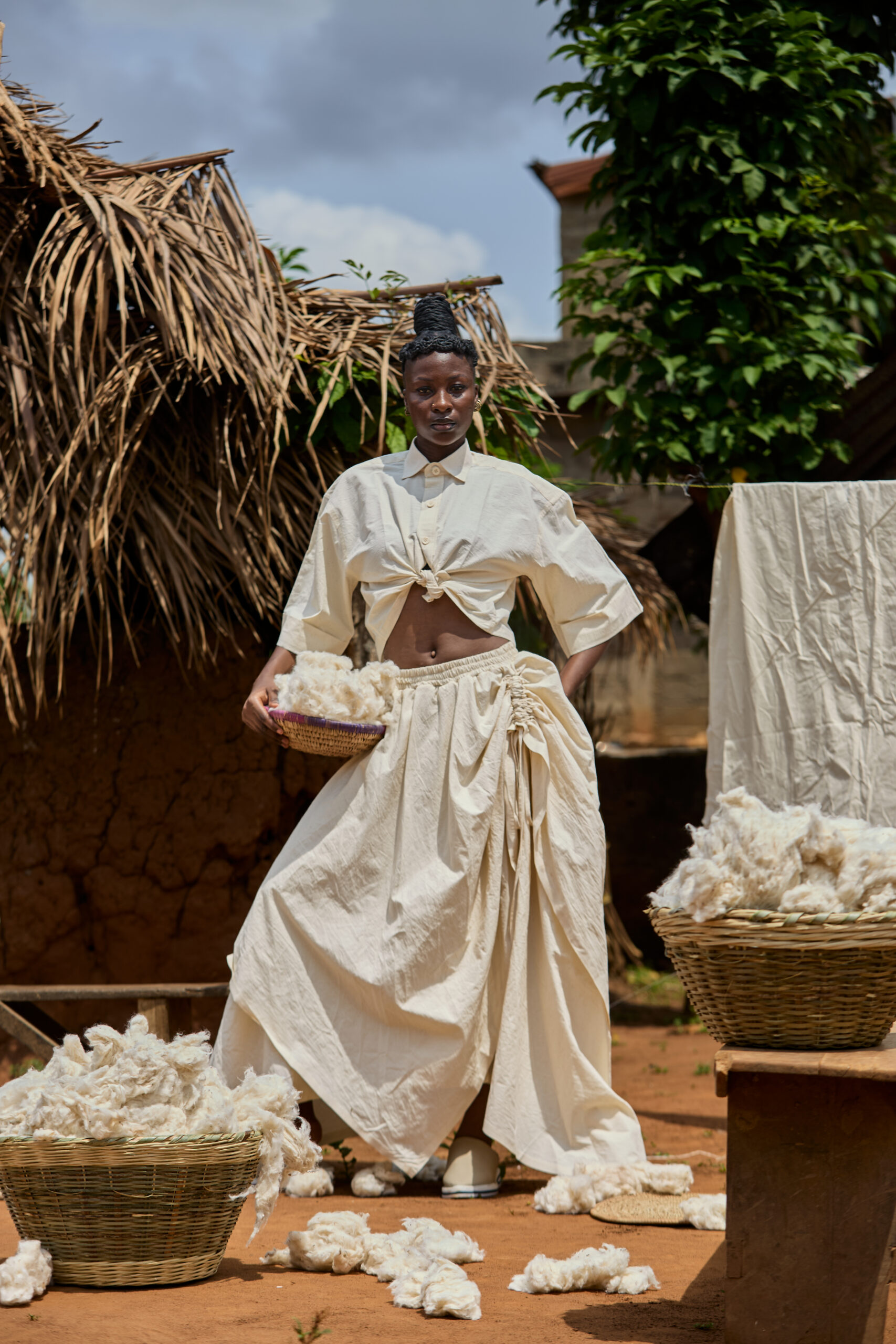
BAKUS ORAYA is the kind of house that builds its identity by what it leaves out. Since founding the label, Abdoul Manane Bakary has approached fabric as origin rather than ornament, and Coton Brut, the collection he has been refining across multiple shows, has been the long case for that position. The final chapter, presented exclusively here, is its quietest and most exacting statement.
Bakary was born in Porto-Novo and is based in Cotonou, and the work moves between the two. Porto-Novo holds the inherited rhythms of craft. Cotonou supplies the production energy of a working capital. The clothes carry both registers without insisting on either.
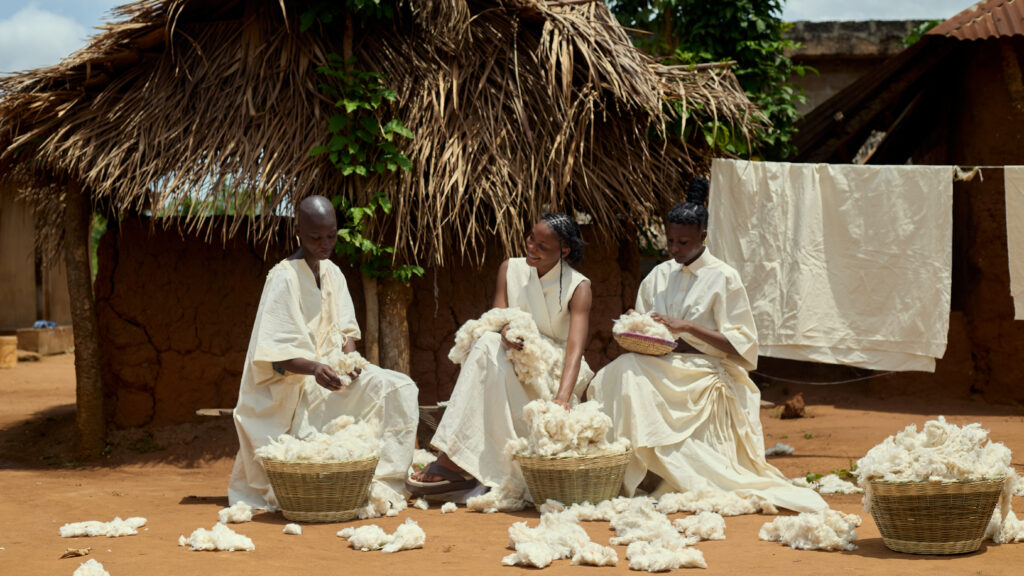
Coton Brut begins with the fibre rather than the silhouette. Across the collection, cotton has been followed through a gradual return to its most unmediated state, with surface treatment held back so the cloth can do the speaking. By the final chapter, that reduction has gone as far as it can. What is left is raw cotton, largely unprocessed, allowed to register only what it already holds: the cloth’s weight and the texture of its weave.
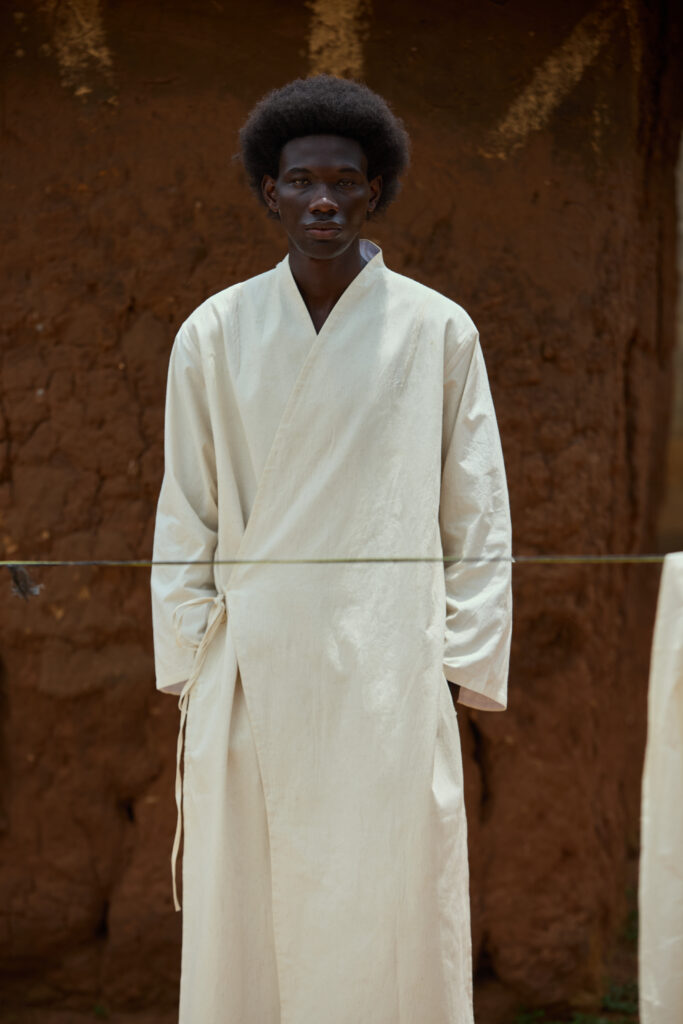
The silhouettes follow the same logic. Wrap tops with a deep crossover front fall over wide-leg trousers in unbleached cloth. A cropped shirt is knotted at the waist and paired with a full skirt that moves with the wind. Nothing in the construction tries to disguise the cotton or push it toward another register.
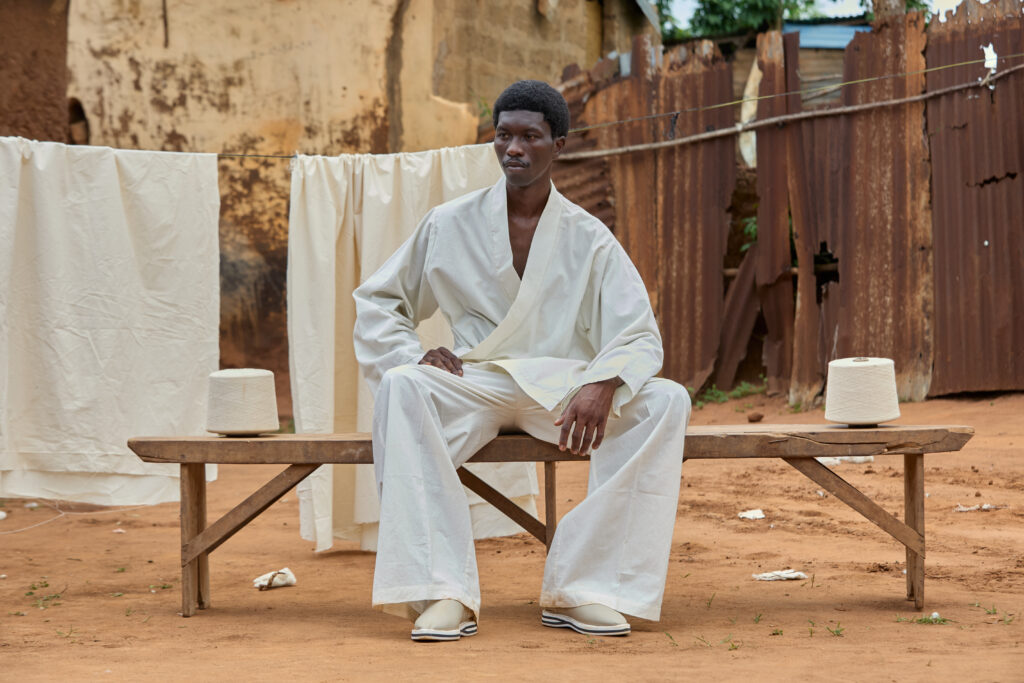
The editorial, shot by Christ M’po, takes place in a Porto-Novo courtyard that operates as a working atelier rather than a styled set. The cotton scattered across the dirt is not a styling prop. The fabric drying on the line is the material from which the looks are made. Models stand among baskets of unspun fibre, and the camera stays close enough to gesture that the images carry evidence of how the garments were produced. A group portrait toward the end of the series gathers the cast in front of a corrugated-roof structure that could be any production yard in the region, and the staging is deliberate. The clothes are not separated from the place where they were made.
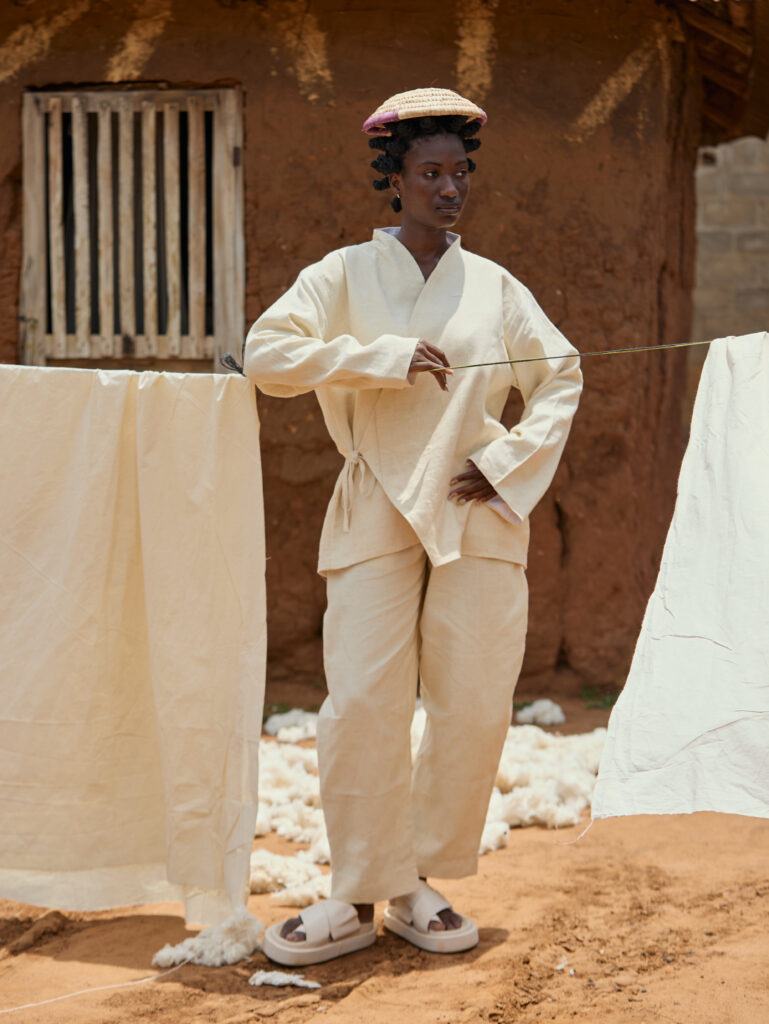
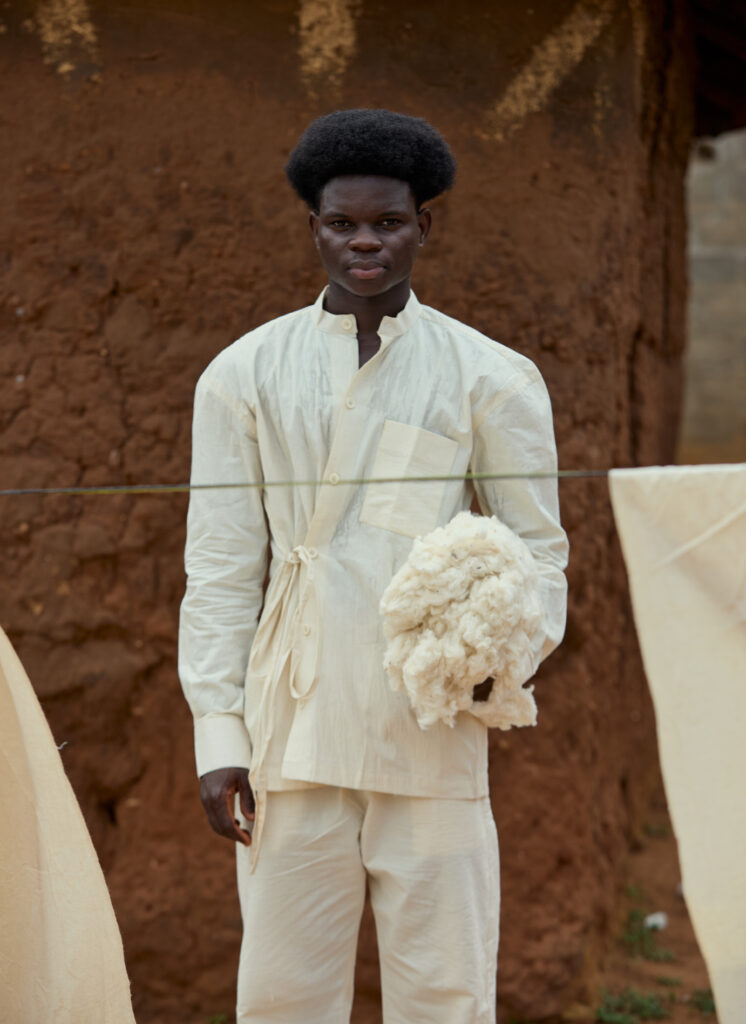
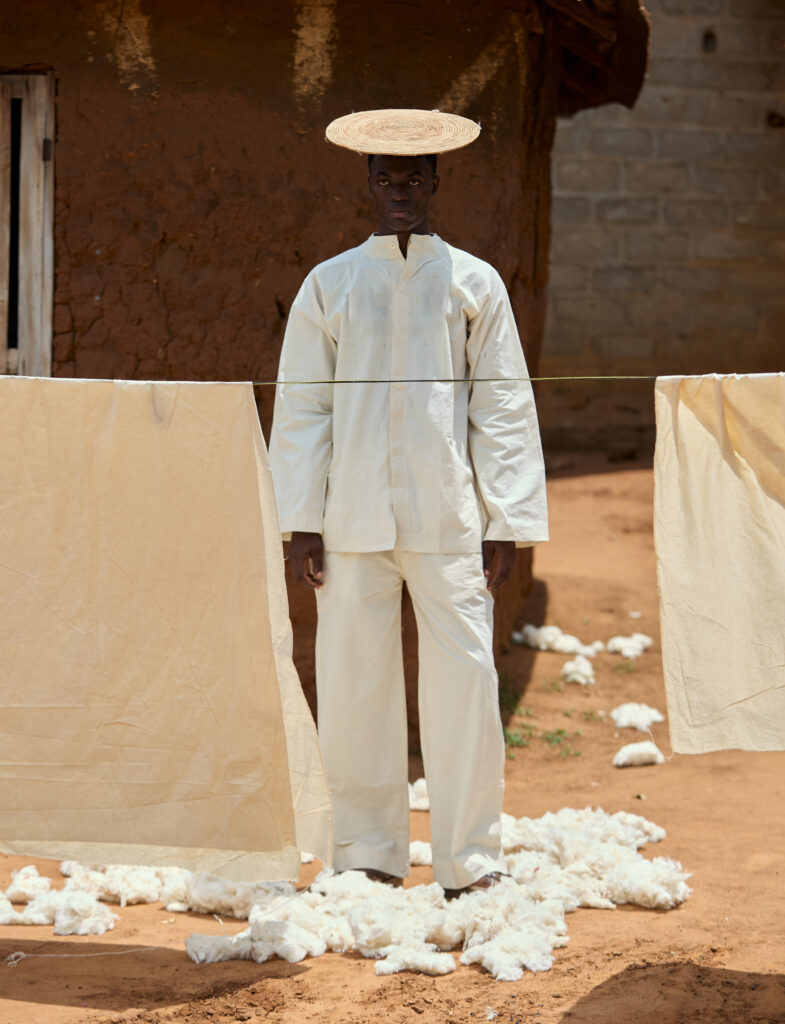
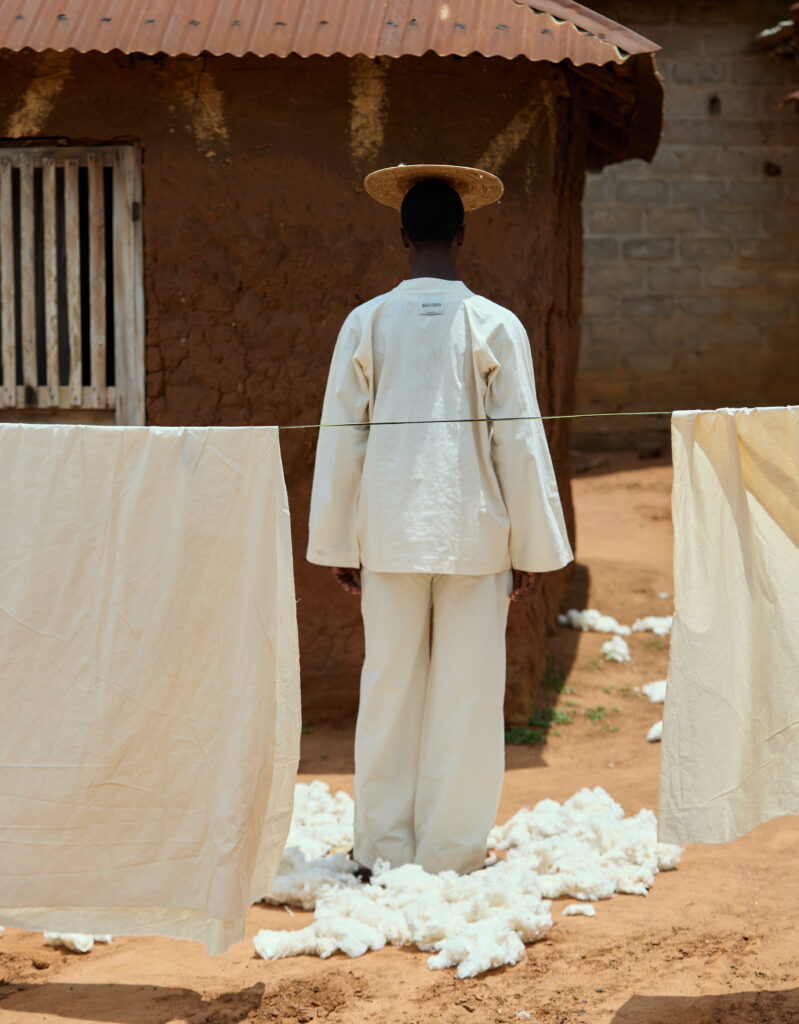
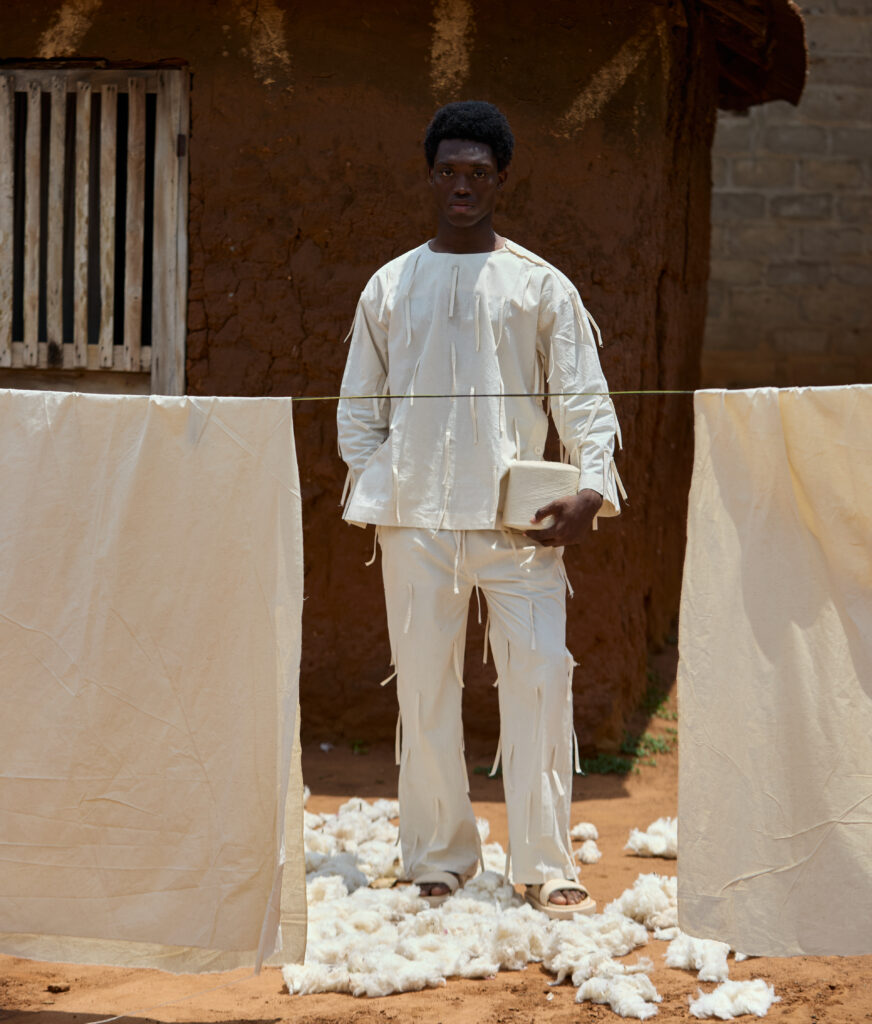
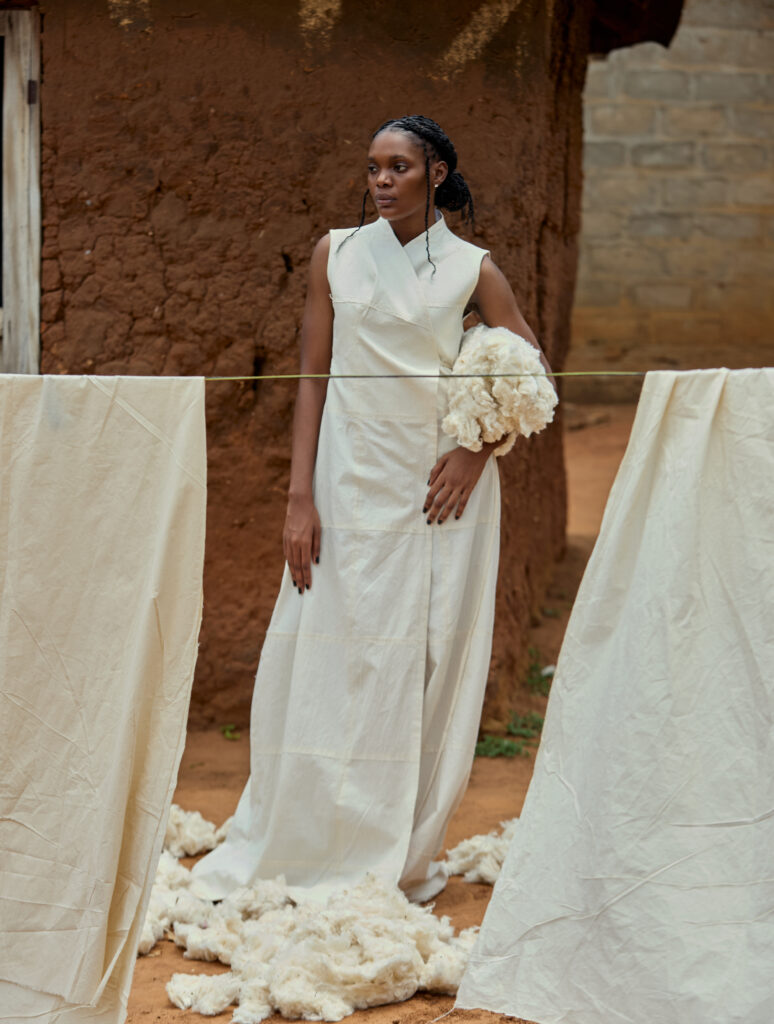
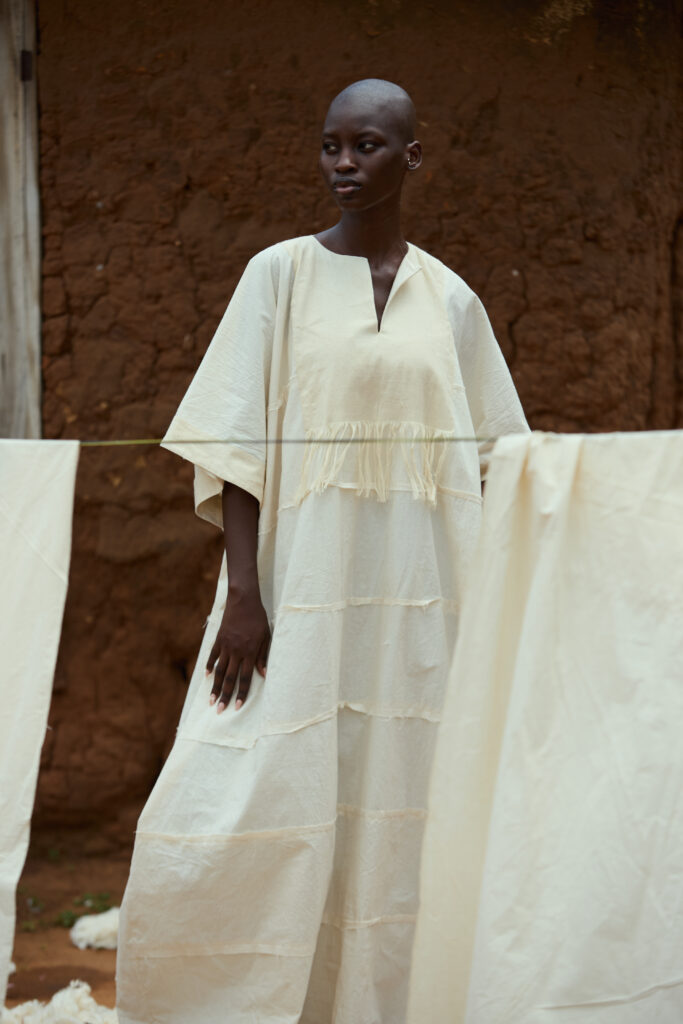
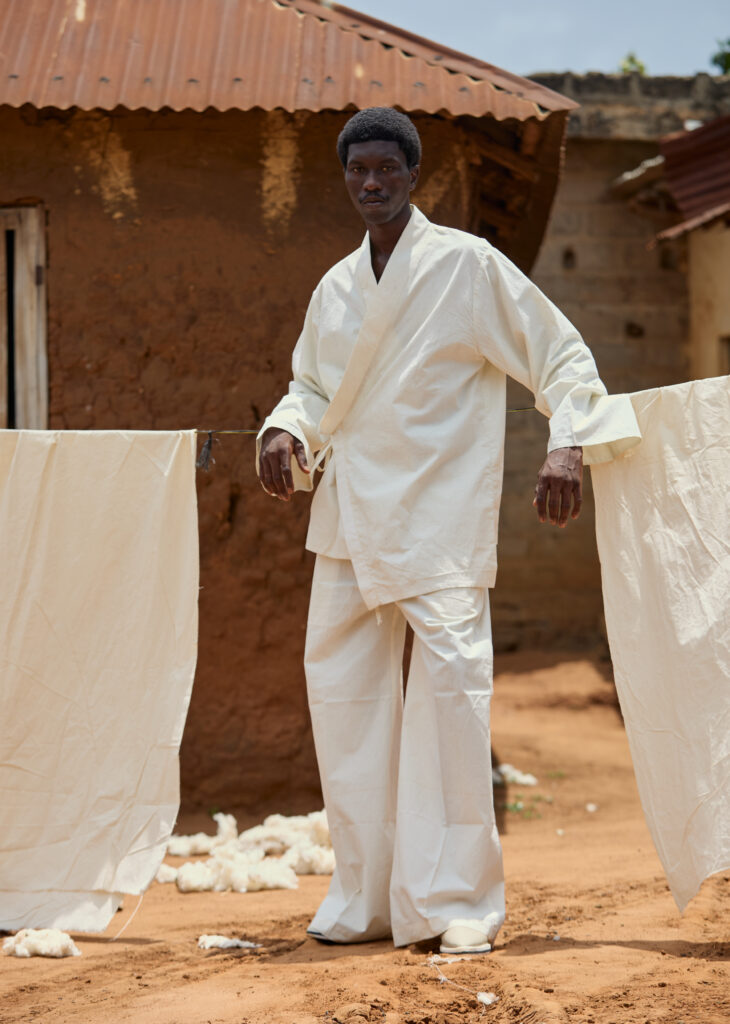
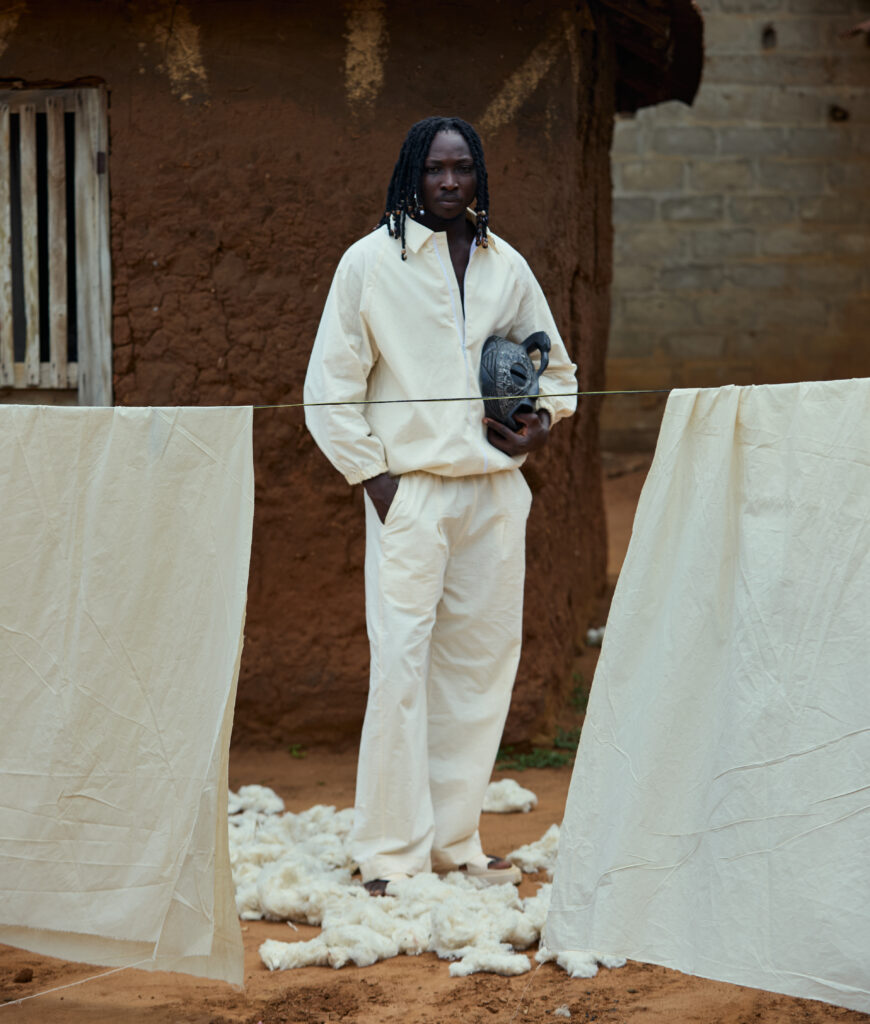
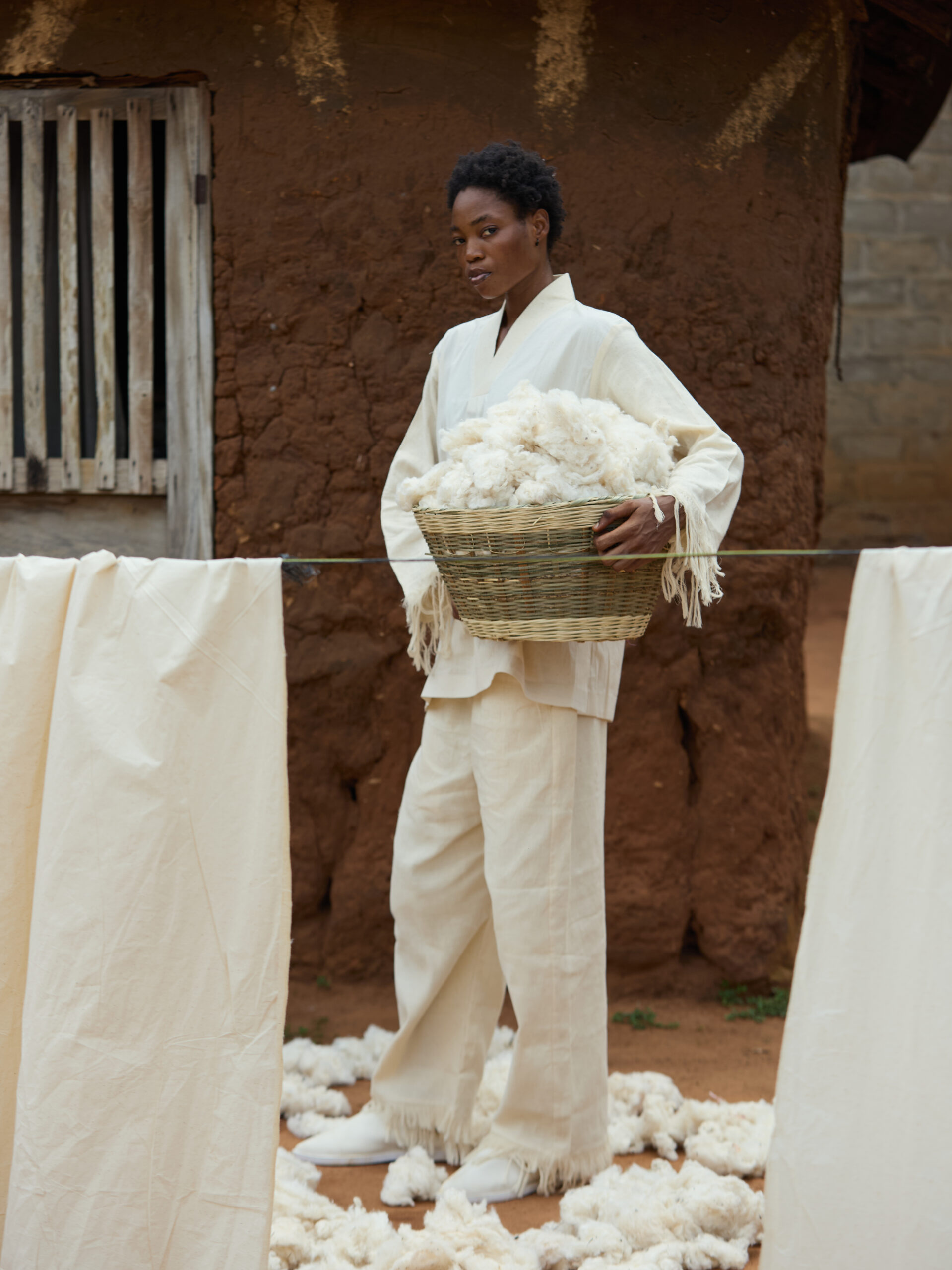
The voiceover keeps the same discipline. It does not explain, and it does not perform. It repeats short statements about fibre and gesture until they begin to function as a working rhythm rather than a script.
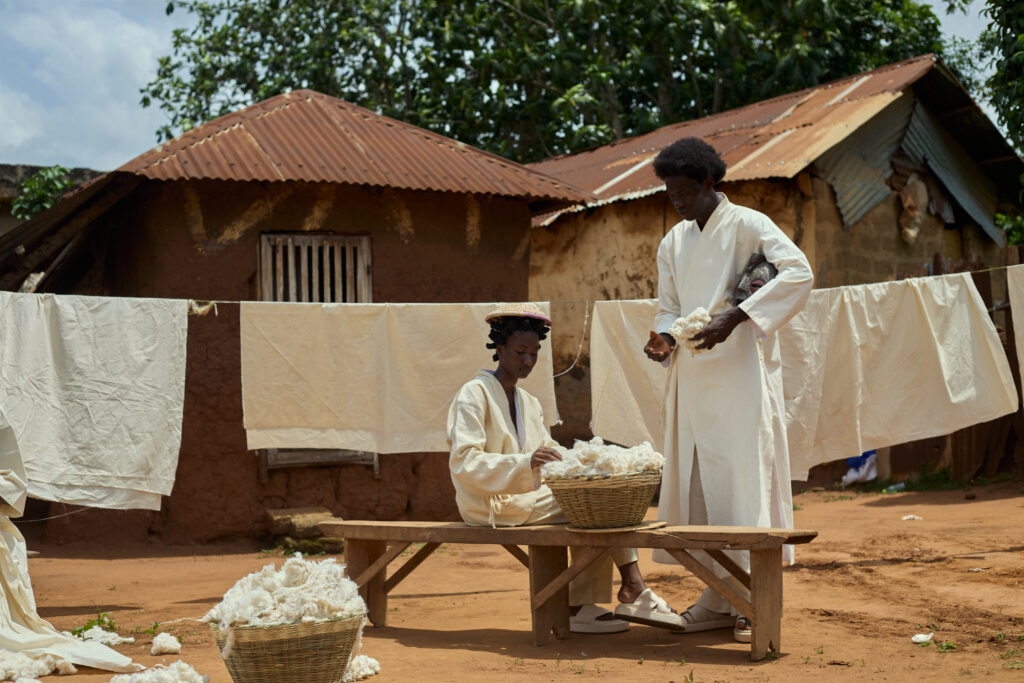
Bakary's training sits behind all of this without being announced. He passed through the Institut Français de la Mode, Sèmè City, and the International Trade Centre's Global Textile Academy, and that training is visible in the precision of the cuts. What separates Coton Brut from more conventional minimalism is that the reduction is not a styling choice. It is a position on what cotton is and where it comes from.
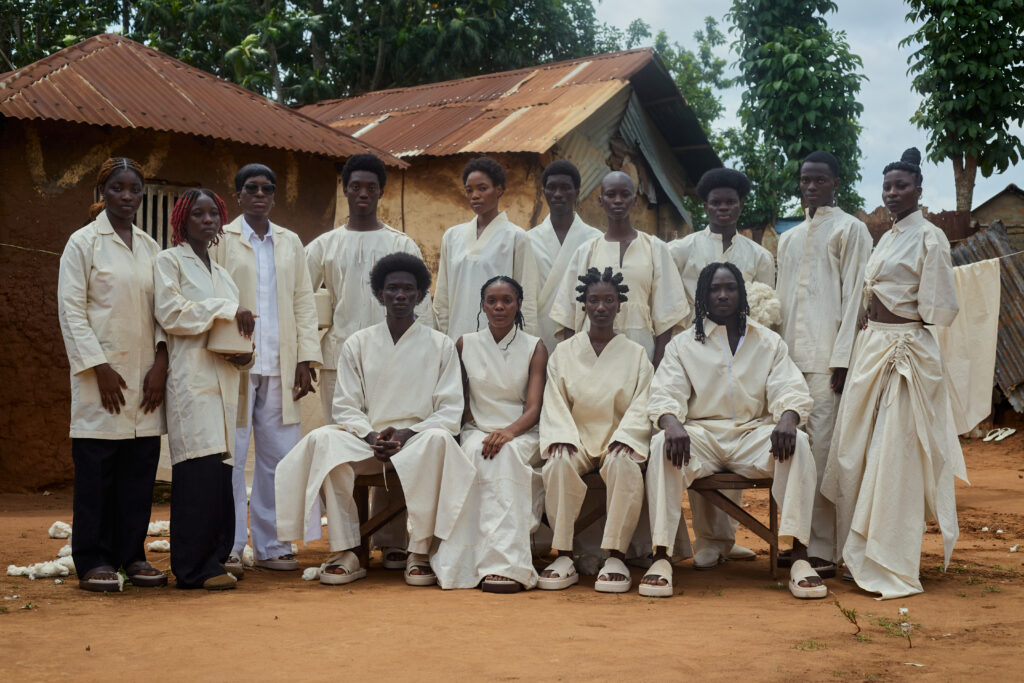
The collection has moved through Dakar Fashion Week, Mali Mode Show, FIMO 228, AVO Fashion Show and FINAB, and each outing has sharpened the house's argument. With this final chapter, that argument arrives at something close to its definitive form. Luxury at BAKUSORAYA is not measured by distance from the field. It is measured by how close the finished garment is willing to stand to it.
Credits
Photography and Film: Christ M'po (@through_mpo)
Art Direction Assistants: Mahougnon Dan (@mahougnon_dan), Christ M'po
Creative Direction and Art Direction: Manane Bakary (@manane_bakary)
Styling: Manane Bakary (@manane_bakary), Bakus Oraya (@bakus_oraya)
Models: Donald Ganfon (@donald_blvckmodel), Dorinda Vodounou (@dorinda_vdn), Pio Thon (@thonpiari), Madeleine Adonnonde (@madeleine.adonnonde), Christ M'po (@christ_mpo), Jean-Michel Amoussou (@monsieur_amoussou), Monwanou Nikita (@nikita_mwn), Régis Dansou (@regis_dansou33), Jaudhy Zomahoun (@jaudhy_model), Cédin Dagbeto (@mr_dacee), Kobre Fatim (@ftm_2ee), De Sucre Granda (@reforma__01), Koliyardo Moukounou Gabrielle (@melougadi)