


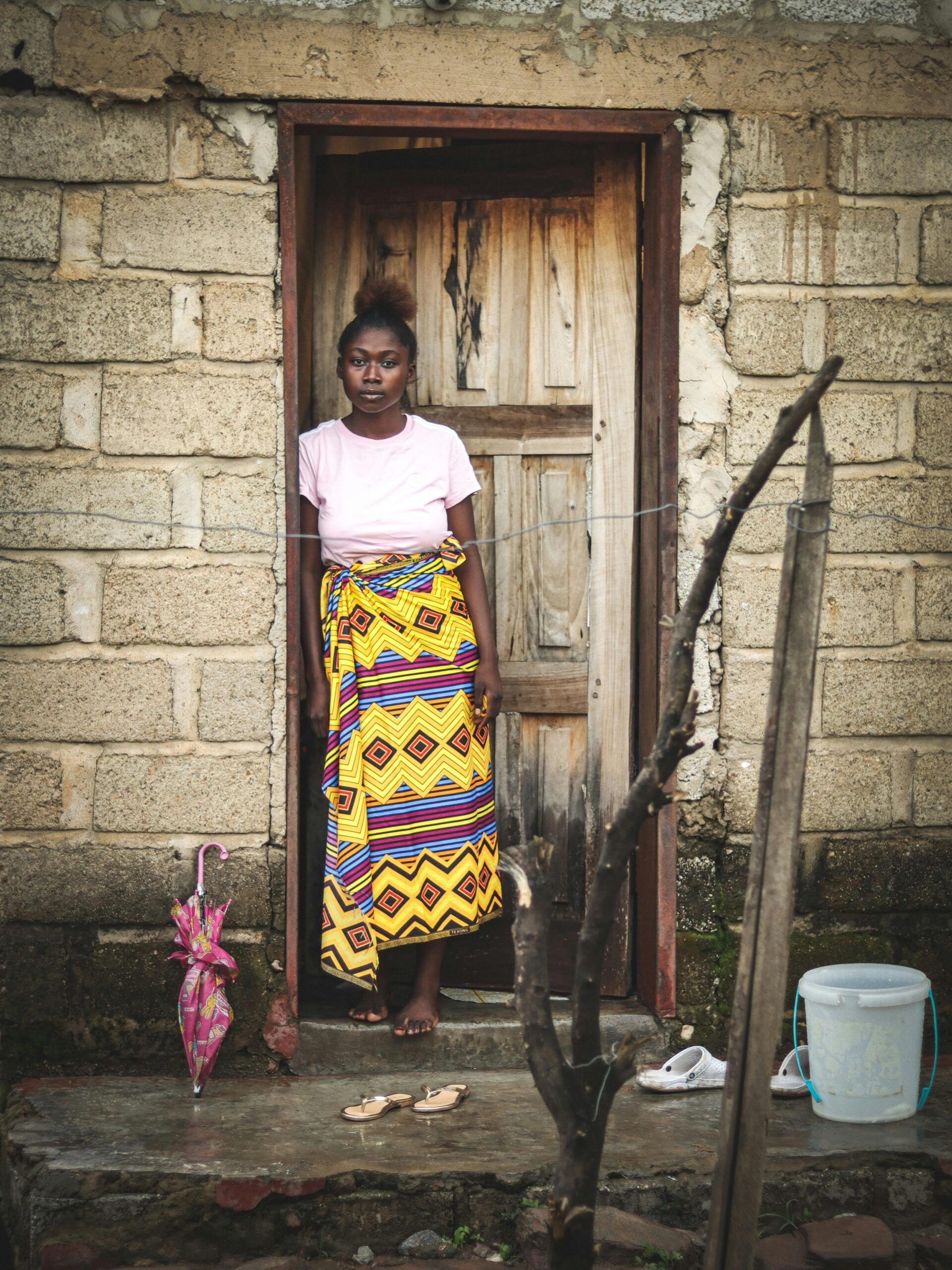
Some of my earliest memories are of watching my mother, Mama Suo, tie her wrapper. After closing from work, she would wrap it across her chest and move around the house in it. As a child, I saw my mother in a wrapper most of the time. She slept in it, did chores in it, wore it to visit the neighbors across from our house, and even to church. I knew nothing about nightwear because my mother simply didn’t sleep in one.
My aunties were the same way when they visited. On Sundays, they would arrive after church in their two wrappers and blouses. When it was time to eat the Sunday rice and stew, one wrapper would come off and the second one would be adjusted loosely so they could sit and eat comfortably. Mid-conversation, one of them would retire her wrapper without breaking her sentence. If they were sleeping over, they slept in their wrappers too, often in the room I shared with my sister.
Watching them, the wrapper slowly became something I wore constantly. No one formally taught me how to tie it. I simply observed what my mother did when she tied it on me and how the women around tied it on themselves. I would take one of the wrappers at home and try to tie it the way my mother did. Sometimes it slipped loose. Other times I had switched to tying it across my chest the way my sister did. But eventually, I learnt how to tie it around my waist.
What I also learnt was that the language of tying wrapper predates colonial borders and outlives fashion cycles. It is one of the continent’s most enduring systems, and one of the few that cannot be decolonized. This is because it was never constructed by colonial logic in the first place.
A Brief Origin of the Wrapper
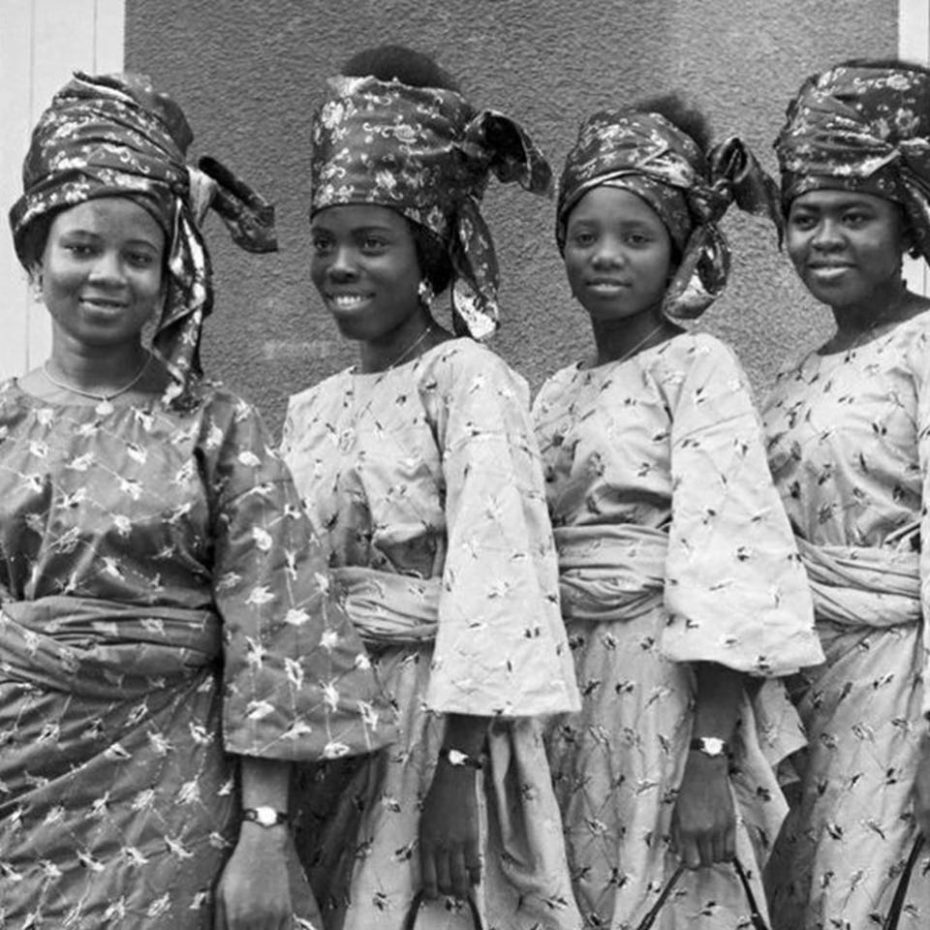
The origin of the wrapper predates colonial trade. Though it cannot be traced to a single moment of introduction, the garment has become inseparable from West African life. It developed gradually from early textile and dressing traditions. Before the arrival of European traders, many African societies produced rectangular pieces of cloth through techniques such as strip weaving, bark cloth making, and raffia weaving. These textiles, documented in parts of West and Central Africa from around the first millennium CE, were typically worn by wrapping them around the waist or body rather than cutting and tailoring them into fitted garments. The form of the wrapper emerged naturally from the way cloth itself was produced.
From the fifteenth century onward, expanding trade networks along the West African coast introduced new types of textiles through Portuguese, Dutch, and later British merchants. Printed cottons and, eventually, wax prints (what we now call Ankara) entered markets and were adopted into existing dressing practices. But these fabrics did not create the wrapper. They simply replaced or complemented locally produced textiles. The wrapper’s architecture absorbed colonial materials without altering its own logic.
The Wrapper and Decolonization
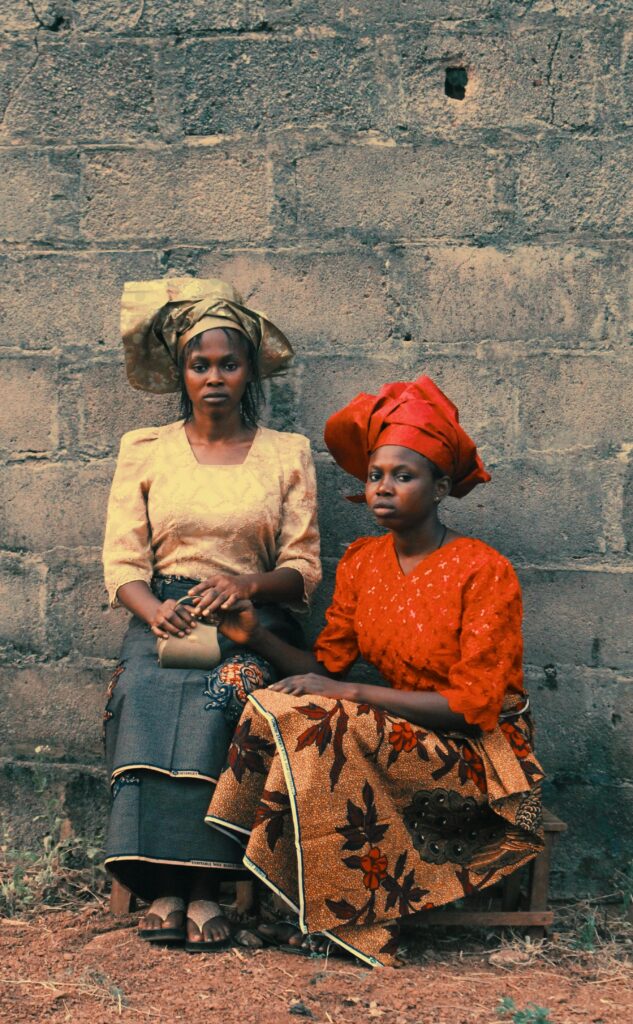
To decolonize something is to remove the foreign imposition from it. But the wrapper carries no colonial imposition to remove. It was not built on Western tailoring. It does not depend on foreign validation. One practical reason it resisted colonization entirely is its simplicity: the freedom it offers the body, especially across a continent shaped by humid weather, made it resistant to replacement. No pattern, no zipper, no sizing chart. Just cloth and a knot.
It is passed on not through instruction but through proximity. You learn it by watching aunties adjusting pleats before church, grandmothers re-tying knots before stepping into public view. It is embodied knowledge, and it continues to hold.
A Language Across Borders
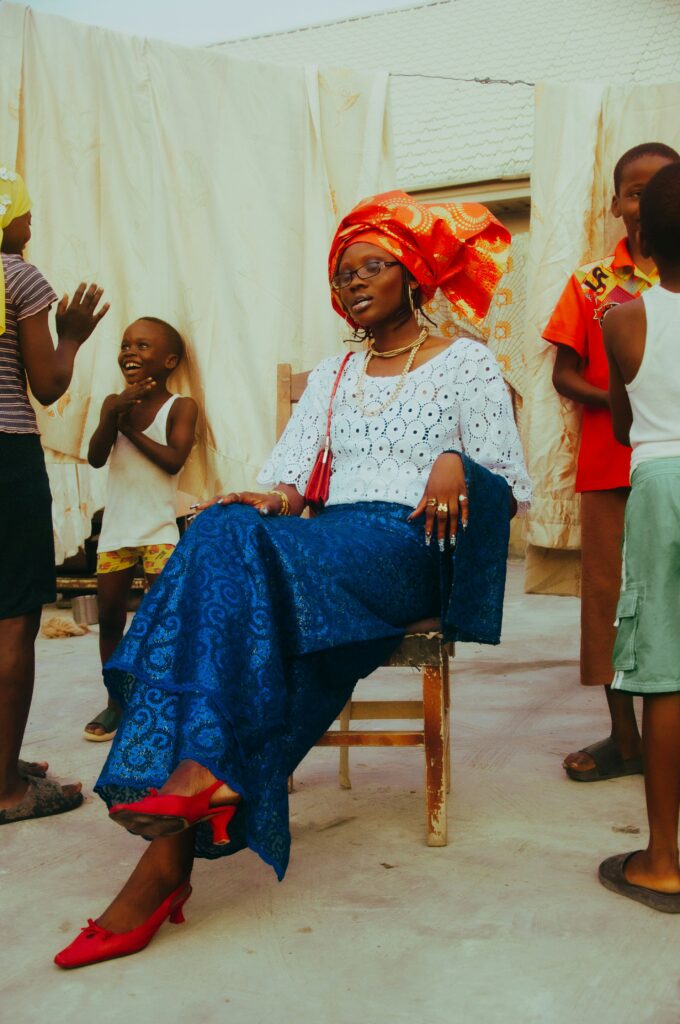
Though it is named differently across regions, the wrapper shares a common architectural principle: a piece of fabric transformed by tying.
In the Niger Delta region of Nigeria, particularly among Urhobo, Itsekiri, and Ijaw women, there is the tying of two wrappers, most often with George. The George wrapper comes in a plain and a heavier lace version. When I was younger, I would spread my legs while it was being tied to ensure that movement was still possible given its weight. The wrapper is usually brought forward, overlapped, and then tied at the back for the first layer. The second wrapper is positioned higher than the first and folded at the waist to create a specific form.
In Ghana, it appears prominently in the kaba and slit ensemble, where the cloth is wrapped firmly around the waist to create a structured base beneath a blouse. In Cameroon, it is tied around the waist and layered with blouses or headwraps, the ends tucked or knotted. In Côte d’Ivoire, there is the pagne, secured at the waist with a tuck or knot and sometimes layered for special events. In Mali, heavy bazin cloths are folded at the top and tucked or knotted at the side or back, the length adjusted for daily tasks or ceremonial use.
Among the Yoruba people of Southwestern Nigeria, the wrapper is known as the iro. The iro is placed behind the waist and brought forward in a controlled wrap. The ends are overlapped tightly at the front and tied, usually at the left side. It is worn with a buba blouse and gele.
In many Igbo communities in Southeastern Nigeria, there is the “two wrapper.” The first wrapper is tied firmly at the waist. The second is tied slightly higher or directly over it. This layering adds volume and texture. One of the most well-known wrappers used in these communities is the Akwete.
Despite the various names and different methods of tying across the continent, the principle holds: the body and the wearer mold the wrapper into a preferred form. A wrapper adjusts to every season of life. Puberty, pregnancy, weight gain, aging. It remains. Even Victorian modesty standards and missionary policing of the body could not displace it.