


Diarra Bousso Builds Fashion From Mathematics, Technology, and Craft

Diarra Bousso’s first breakthrough arrived disguised as a mistake. It came not in an atelier or a studio but late one night in a classroom at Stanford University.
Stacks of algebra assignments covered the desk in front of her. She was grading papers, tracing her students’ attempts to graph linear equations, absolute values, and quadratic functions. The work was familiar: misplaced vertices, misunderstood symmetry, lines drifting from where they were meant to be. Then something caught her eye. The graphs were wrong on their own, but together they became beautiful. The mistakes overlapped into unexpected shapes, curves crossed in surprising ways, and a visual language surfaced inside what looked like error. Most people would have closed the papers and gone to bed. Bousso stayed up, graphing equations herself, coloring the intersecting regions, following the geometry hidden inside the relationships. By sunrise she was thinking less about teaching than about design.
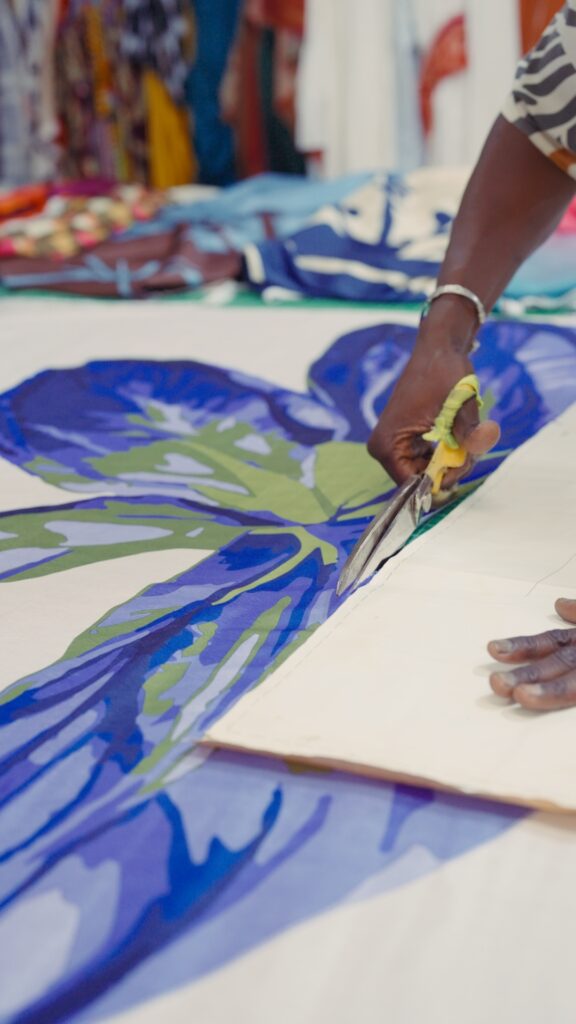
Years later, that night remains at the center of Diarrablu, the Senegalese fashion and lifestyle brand she founded, though calling it a fashion brand feels increasingly incomplete. What Bousso is building reaches past clothing toward a larger question: how creativity itself is imagined, produced, and shared.
“People often think I use mathematics to make fashion,” she says. “In reality, I use fashion to explore much bigger questions about creativity, technology, culture, and human connection.”
“I use fashion to explore much bigger questions about creativity, technology, culture, and human connection.”
The garments, prints, and silhouettes are the visible expression of that larger philosophy, one in which mathematics, technology, intuition, and craftsmanship stay in conversation.
Long before equations became textiles, Bousso was a child in Senegal surrounded by artisans. Creation was never abstract; it lived in the hands of the people around her, in patience, repetition, technique, and inherited knowledge. That lineage shaped how she understood making, culture, and storytelling long before she began questioning what fashion could become. After studying mathematics education at Stanford and moving through several professional worlds, those separate interests began to converge. Most people are taught to see logic and creativity as opposite forces. Bousso became interested in what happens when they share the same space.
That curiosity became Diarrablu. “I realized a print didn’t have to start with a sketch,” she explains. “It could start with an equation, a dataset, a pattern of mistakes.” Once she saw a print as the output of a system rather than a single drawing, the way she could design, iterate, and produce changed, and the system itself became part of the creative philosophy.
“I see myself as a dreamer first, a creative mathematician who uses systems to bring ideas into the world,” she says. “The system is not just a tool I use to create; it is part of the design philosophy itself.”
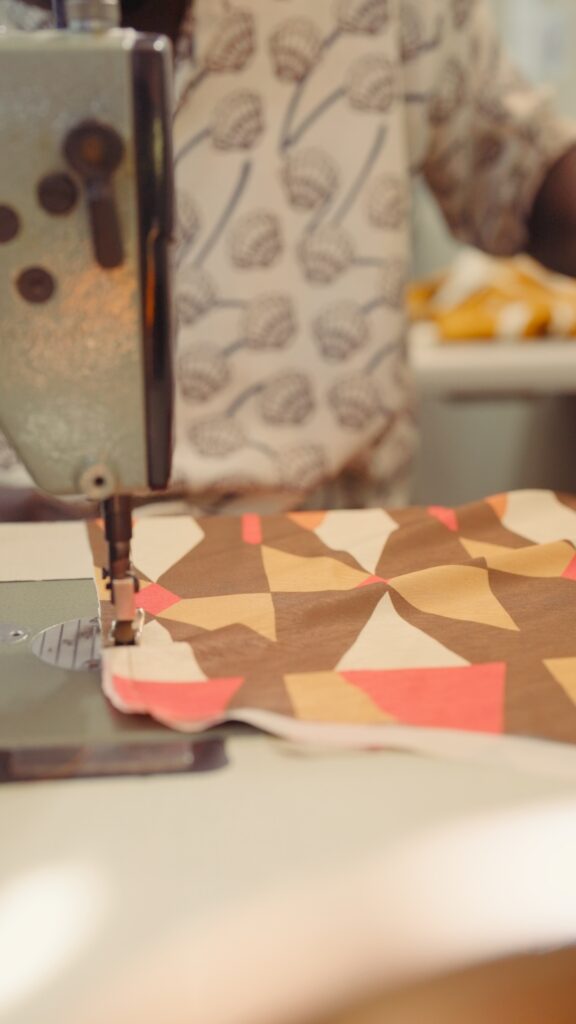
In practice, equations generate shapes, colors, and transformations through digital tools, internal applications, and hand-painted techniques, and thousands of iterations can emerge before an idea becomes a final garment. The process leaves room for exploration, but technology is only one part of it. “Intuition sits at both the beginning and the end of the process,” Bousso explains, guiding what feels worth exploring while structure and mathematics translate those ideas into form. The system creates possibilities; human judgment gives them meaning.
Those possibilities are shared digitally so the community can engage with and vote on designs before production begins, and the brand moves forward on demand rather than speculation. Production follows intention rather than excess, a model built to rethink waste and challenge traditional fashion cycles. “Made-to-order and small-batch production are the mechanism, not a marketing layer on top,” she says. For Bousso, sustainability is not a trend added to the brand’s identity but something built into how the company operates. “In my culture, sustainability is a way of life rather than a trend,” she says.
For all the technology behind the process, Bousso does not see innovation as a replacement for tradition. “The tension appears when technology is viewed as a replacement for human creativity rather than an extension of it,” she says. The aim is collaboration rather than perfection through technology. Digital tools can generate frameworks and possibilities, but artisans bring interpretation, emotion, and meaning. “Human hands carry memory,” Bousso says. “They carry culture, intuition, heritage, emotion, and generations of knowledge that cannot be fully translated into code.”
“Human hands carry memory. They carry culture, intuition, heritage, emotion, and generations of knowledge that cannot be fully translated into code.”
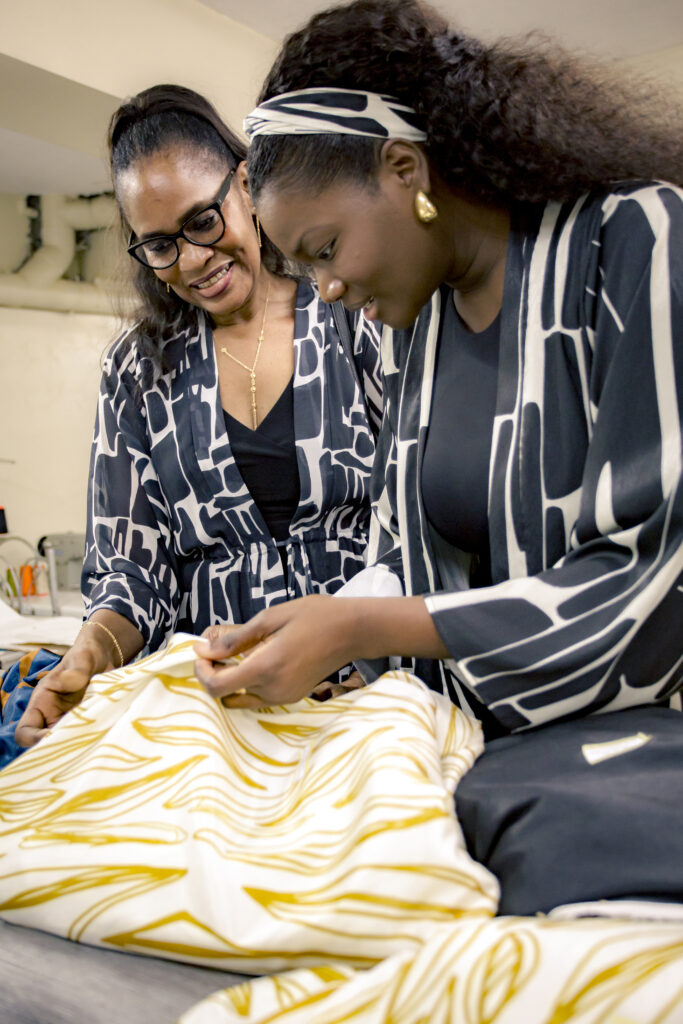
That belief runs through the Diarrablu ecosystem. The brand’s production is rooted in an artisan community in Dakar that has grown from fewer than five people before the pandemic to more than 30 today, a team that reflects a wider West African range of experiences, languages, and traditions. The tools may be contemporary, but the foundation remains deeply human. Algorithms can generate possibilities; the final decision belongs to people.
This is what pushes Bousso’s work past fashion. She is not only asking how clothing should be designed but what happens when creativity becomes a living system that connects data, culture, craftsmanship, and community. The future she imagines is one where on-demand, data-informed, small-batch production challenges inventory-heavy models across the industry, where brands grow by scaling their systems instead of abandoning their values.
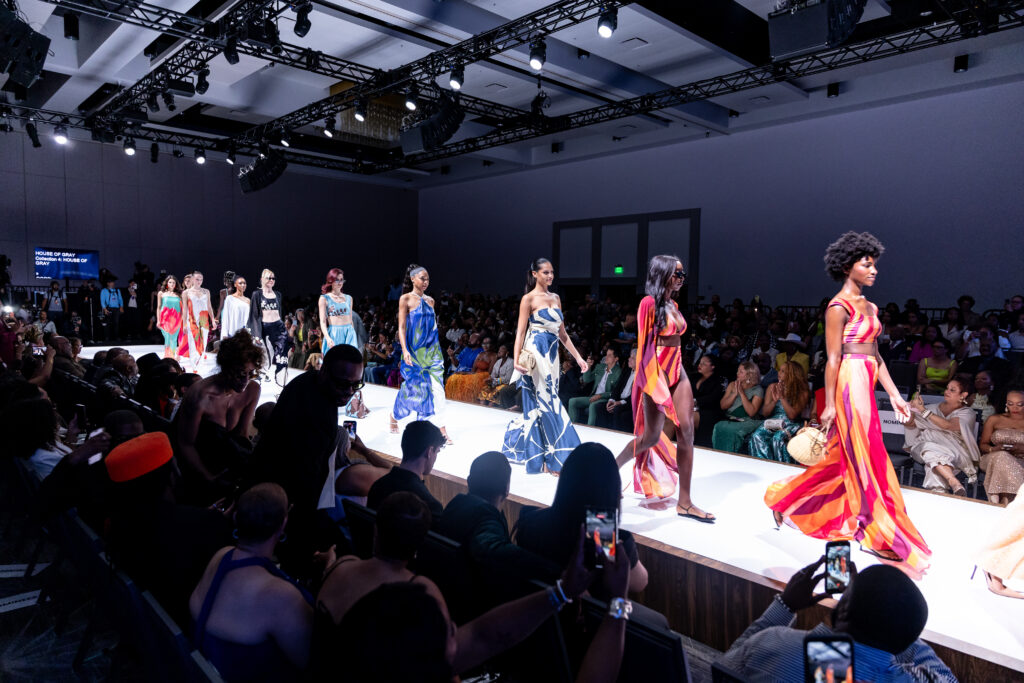
“What I’m building now is more than a fashion brand,” she says. “I’m building a new creative ecosystem where mathematics, art, technology, and craftsmanship exist in conversation with one another.”
Perhaps the conversation began long before the equations, before Stanford, before Diarrablu, with a simpler idea: that creativity was never meant to belong to a single discipline, that a mistake can reveal a pattern, that mathematics can become a visual language, and that technology can widen what people already know how to imagine. The garments are the part you can see. The system, the community, and the philosophy behind them are what Bousso has set out to build.
Subscribe to Guzangs for the ideas reshaping how creativity gets made across Africa and its diaspora.