


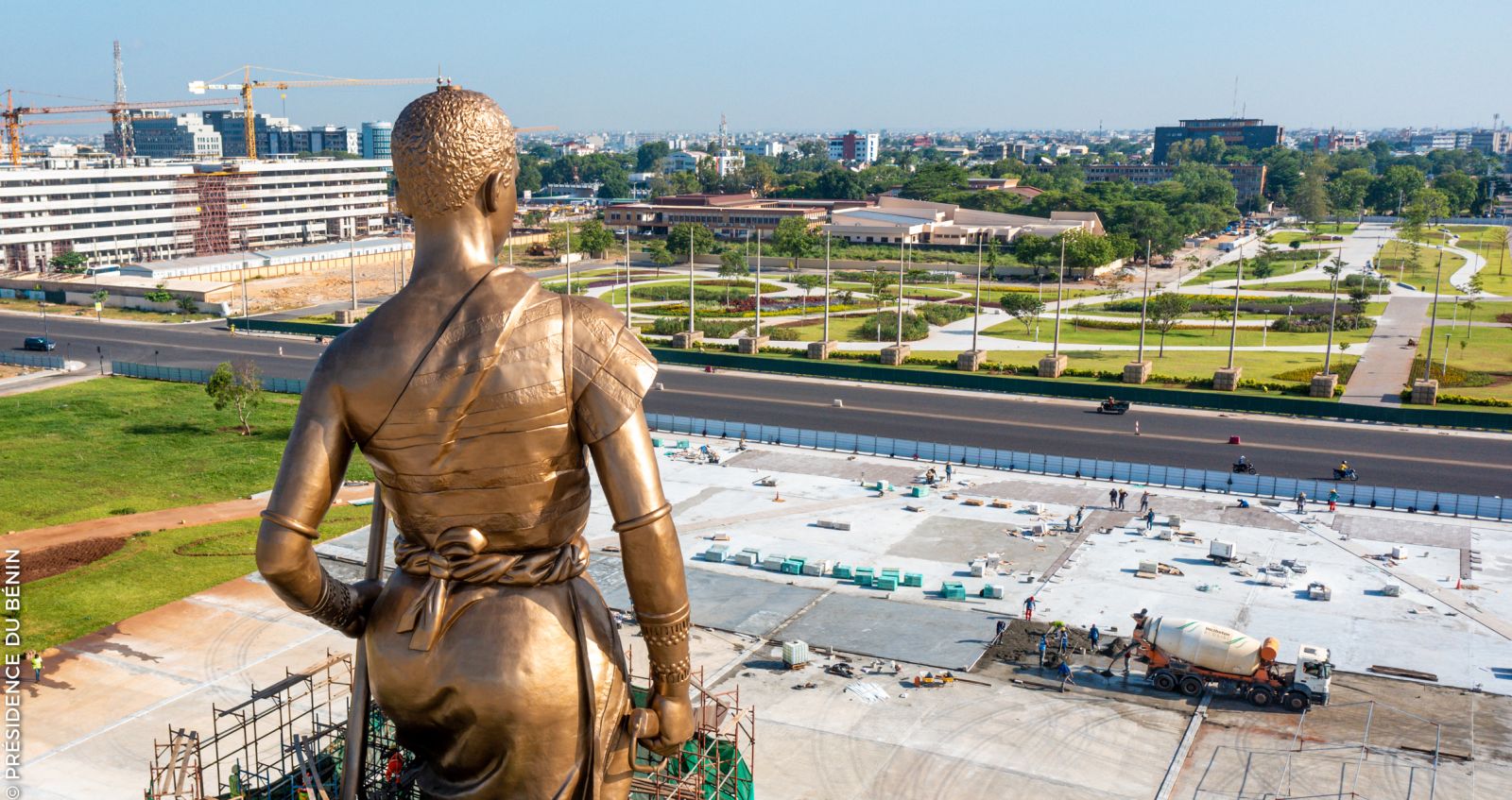
Every West African knows Cotonou, whether or not they have ever stopped to think about why. The auntie who goes for fabric knows it. The trader who crosses the border from Nigeria knows it. The goods that show up in Lagos markets without anyone explaining where they came from, those came through here too. People know this city the way you know a machine that has always worked. You use it. You do not necessarily ask how.
What the machine is actually doing is less photogenic than what most coverage of African cities tends to look for, but it is more consequential. Cotonou runs one of the most sophisticated trade systems on the continent and has been running it, in some form, for centuries.
To understand why the system works the way it does, you have to start with Vodun. Not as cultural background or a tourism angle, but as the philosophical tradition that most directly shapes how southern Benin relates to exchange. In Vodun cosmology, balance depends on circulation. Energy has to move. Obligations between people, between the spiritual and the material, have to be maintained through acts of exchange. That is how order is sustained.
The connections between Vodun and the commercial economy are not abstract. They are specific. Dan, the rainbow serpent, is the vodun associated with wealth and the control of economic flows. The largest market in Cotonou, Dantokpa, takes its name from a Dan shrine that once stood on the site. Legba, who guards crossroads, receives offerings of coins and palm oil because of his relationship to commerce and communication. Cowrie shells functioned as Dahomey’s principal currency for centuries. Giant cowries still decorate the BCEAO building, the Central Bank, in Cotonou today. This is not decorative history. The spiritual infrastructure and the commercial infrastructure developed together.
Cotonou sits on a coastline that belonged to the Kingdom of Dahomey, which treated controlled exchange and taxation as instruments of state power. The mechanisms of trade have changed considerably since then, but the basic orientation toward commerce as a central organizing principle has remained remarkably consistent.
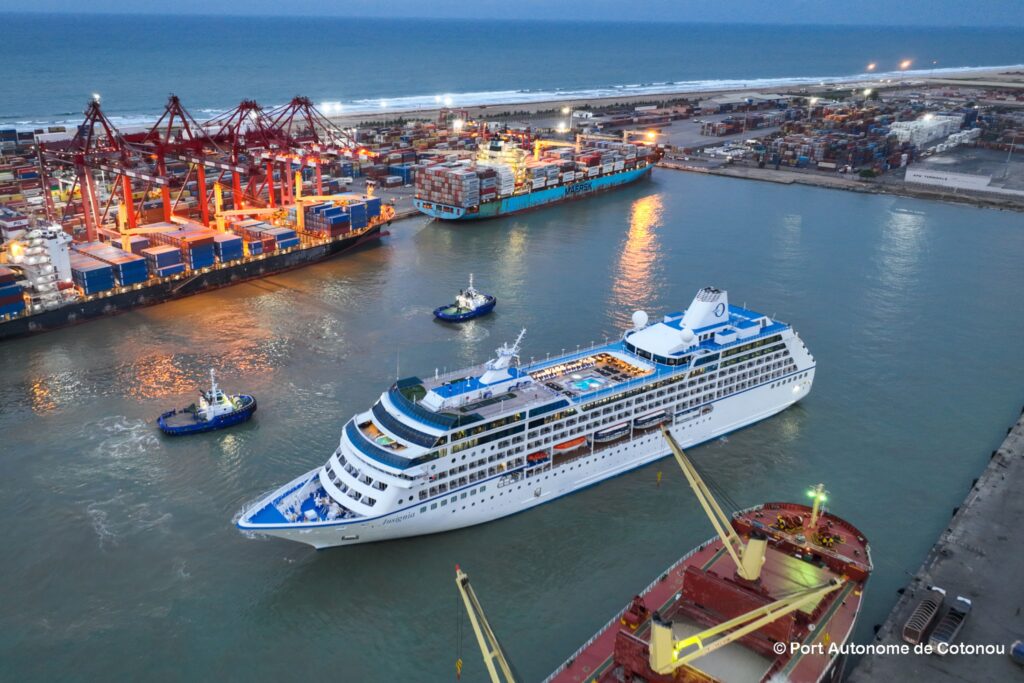
The Port of Cotonou is Benin’s primary maritime gateway. Over 80 percent of goods that enter through it are destined for markets outside Benin, primarily Niger, Burkina Faso, Mali and Nigeria. The most important of these relationships is with Nigeria, which has a population exceeding 200 million and is the largest consumer market in West Africa. Differences in trade policy, tariffs and import restrictions between the two countries have created durable incentives for goods to route through Cotonou and cross the border informally. This has been the case for decades, and it means that a substantial portion of what people consume in southwestern Nigeria passes through Beninese trade infrastructure at some point in the chain.
Services account for roughly half of Benin’s GDP, and the bulk of that is driven by trade, transport and logistics centred in Cotonou. The city’s economic advantage is not manufacturing or production. It is the ability to move goods across borders efficiently, at speed, and at lower cost than the alternatives.
Cotonou is, essentially, a logistics technology that happens to be a city.
But the port is only the formal layer. What actually moves goods through the system is a network of brokers, transporters, currency traders, market women and clearing agents whose working relationships often predate any government customs modernization program. A shipment can clear the port and within hours be repriced, repackaged and redistributed through Dantokpa, which until recently covered about 20 hectares in the centre of the city and hosted between 20,000 registered traders and 35,000 daily participants when you include informal vendors and porters. Dantokpa was less a market in the conventional sense than a distribution engine, one with its own internal credit systems, pricing logic and governance structures, all of it operating on land named for a shrine to the vodun of wealth.
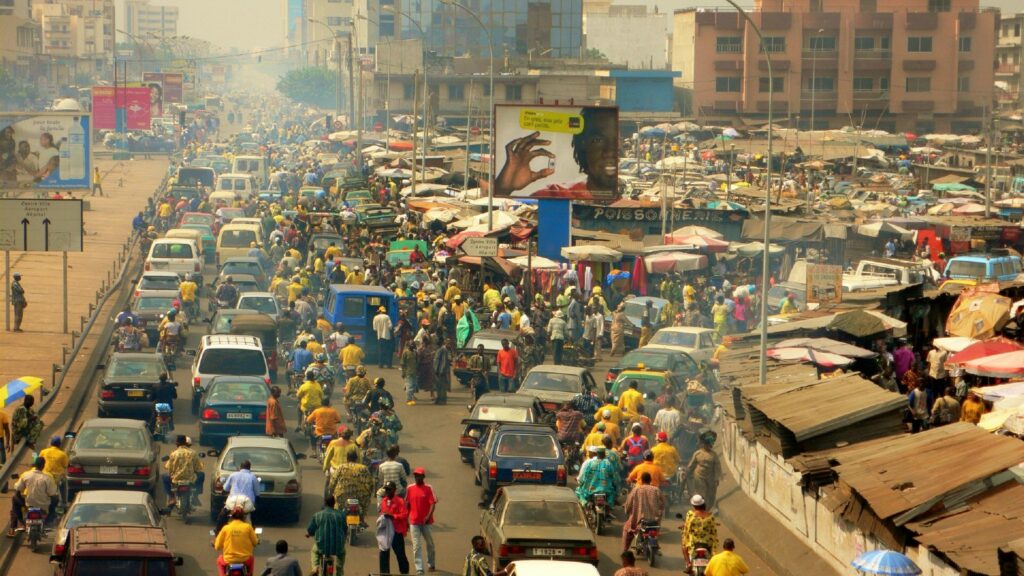
The word “informal” gets used a lot to describe this, and it is mostly the wrong word. What operates in Cotonou is a decentralized trade system that keeps transaction costs low, adjusts quickly when borders close or policies shift, and moves volume at a speed that formal supply chains in the region generally cannot match. The CFA franc, which is shared across eight West African nations and pegged to the euro, supports this by letting traders maintain consistent pricing across borders. A merchant working between Cotonou, Niamey and Lomé does not have to recalculate every time they cross a line on a map.
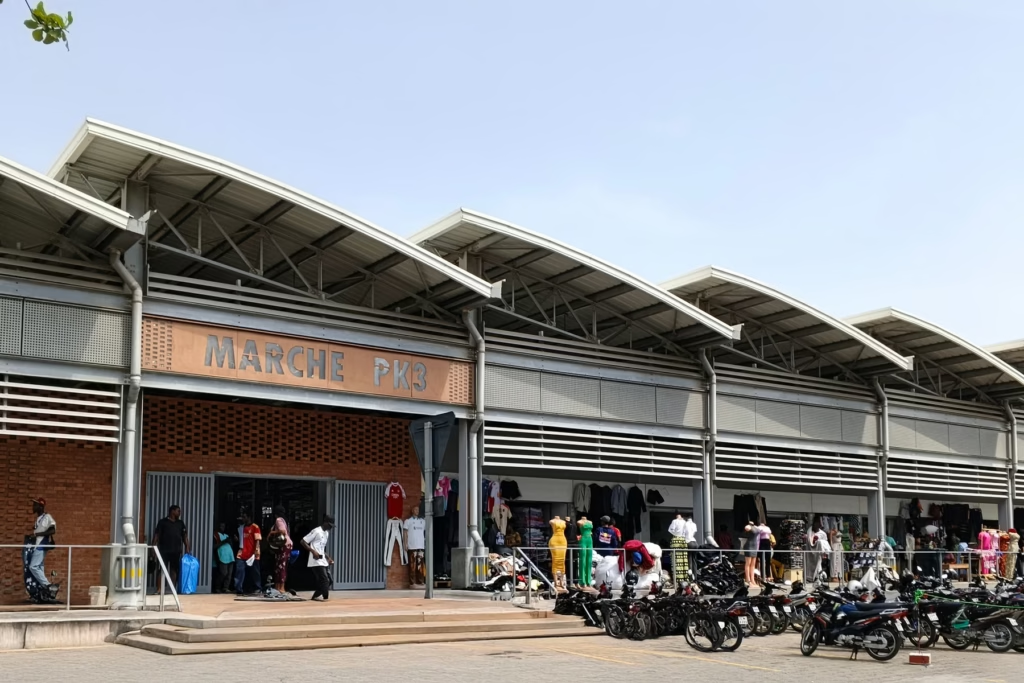
For decades, this economic model has been built on moving other people’s goods. Benin earns from the transit, but the value itself ends up in Lagos, Niamey, Ouagadougou. The government under Patrice Talon has decided that is not enough, and the investment reflects that decision. Since 2016, the state has committed approximately two billion euros to tourism and cultural infrastructure combined, according to Tourism, Culture and Arts Minister Jean-Michel Abimbola. The money has gone toward port upgrades, customs digitization, logistics corridors connecting Cotonou to inland markets, industrial zones to increase domestic cotton processing, and the construction of 35 new purpose-built markets across the country, with 21 of those in greater Cotonou.
The Dantokpa situation alone is significant. The largest open-air market in West Africa is being closed down zone by zone and its traders relocated into these new modern commercial spaces. As of early 2026, the process is still underway. Outside the region, very few people seem to be paying attention to what is actually a major reorganization of commercial life.
But what makes Benin’s approach genuinely unusual is the cultural dimension. The government has decided to treat heritage and culture as economic infrastructure, not as something separate from development strategy. It is building a publicly funded cultural ecosystem at a scale that few African governments have attempted. The programme includes the Musée d’Art Contemporain de Cotonou, a full cultural and creative quarter in the city centre, the Musée International du Vodun in Porto-Novo, a museum of memory and slavery in Ouidah, and the Africa Design School, which has actually been operational since 2019 and already has over 200 students. Most of the flagship museum projects are expected to open between 2027 and 2028.
The restitution story gives some sense of the ambition. In November 2021, France returned 26 royal treasures that had been looted from the palaces of Dahomey in 1892. Benin exhibited them at the Presidential Palace in Cotonou, and over 200,000 people came. A companion exhibition of contemporary Beninese art, called “Révélation!”, went on to tour from Rabat to Martinique to the Conciergerie in Paris. It is worth sitting with that for a moment. A country that successfully pressured a former colonial power to return stolen objects then sent its own contemporary art to be shown inside French national heritage sites.
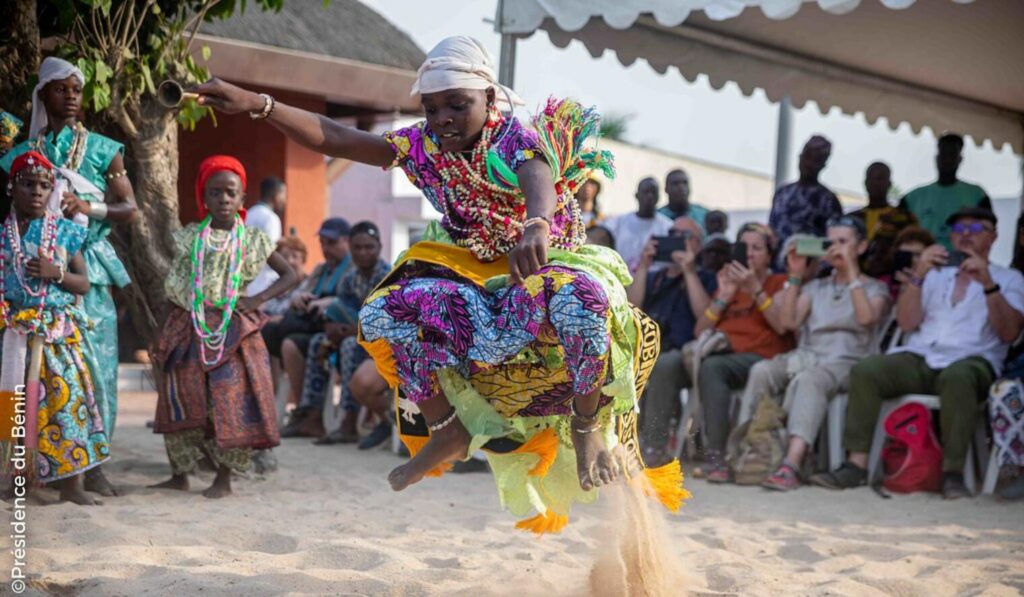
And the numbers keep moving. Vodun Days, the annual celebration of Vodun traditions held in Ouidah, drew about 97,000 visitors in 2024. In 2025 that went to 435,000. In January 2026 it reached over 740,000, with roughly a third coming from outside Benin. That kind of growth does not happen without institutional support behind it, and it does not go unnoticed by the hospitality and tourism sectors positioning around it.
Cotonou is not really a city that needs to be discovered. It needs to be read correctly. A civilization that understood the relationship between commerce, spirituality and state power well before the colonial period is now investing in infrastructure that matches what it has always known about itself. The vodun of wealth still names the marketplace, and the marketplace is being rebuilt with that knowledge intact.
Cotonou knows exactly what it is doing.