


The Africa Azzedine Alaïa Carried
Azzedine Alaïa left Tunis as a young man and built his life in Paris, but the leaving was never really finished. “Azzedine Alaïa and Africa,” Olivier Saillard’s exhibition at the couturier’s foundation in the Marais, takes that unfinished departure as its subject. There are around fifty pieces, most of them from the collections Alaïa made between the late 1980s and the early 2000s, and together they follow what one man carried out of North Africa and spent the rest of his life turning into clothes.
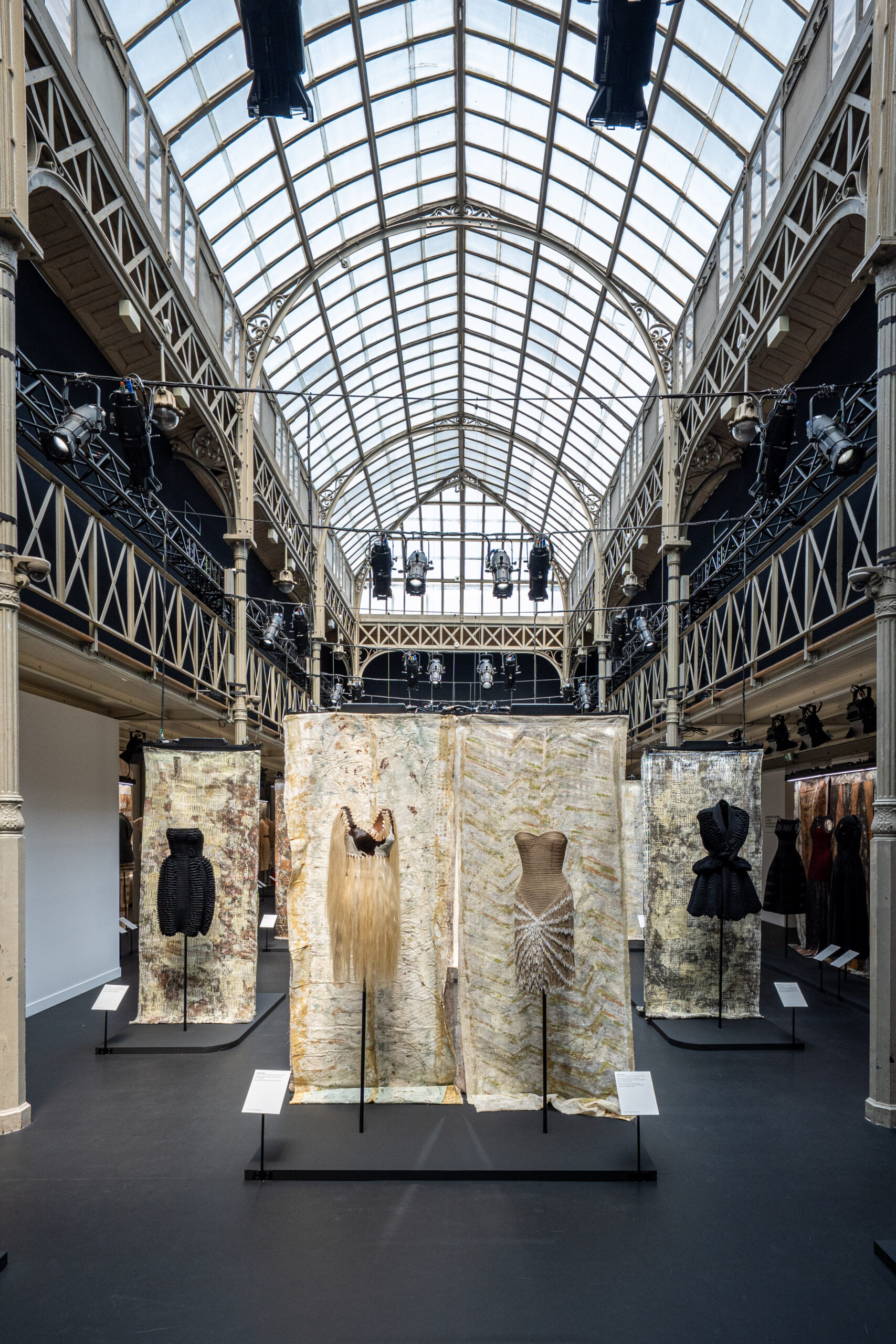
Saillard ran the Palais Galliera before he took charge of this archive, and he knows how to make a small show say a great deal. He has kept the clothes out of glass. They stand instead against tall painted and printed cloths that hang the length of the hall. A few are marked with the chevrons of mudcloth. One reproduces a map of the coast around Marseille, the port that generations crossed to from the Maghreb. Others carry a printed picture of the foundation’s own ironwork, so the building appears faintly behind an image of itself. You rarely see a dress straight on here. You see it through a veil, at a slight remove, which is close to the way anyone holds on to a place they left decades ago.
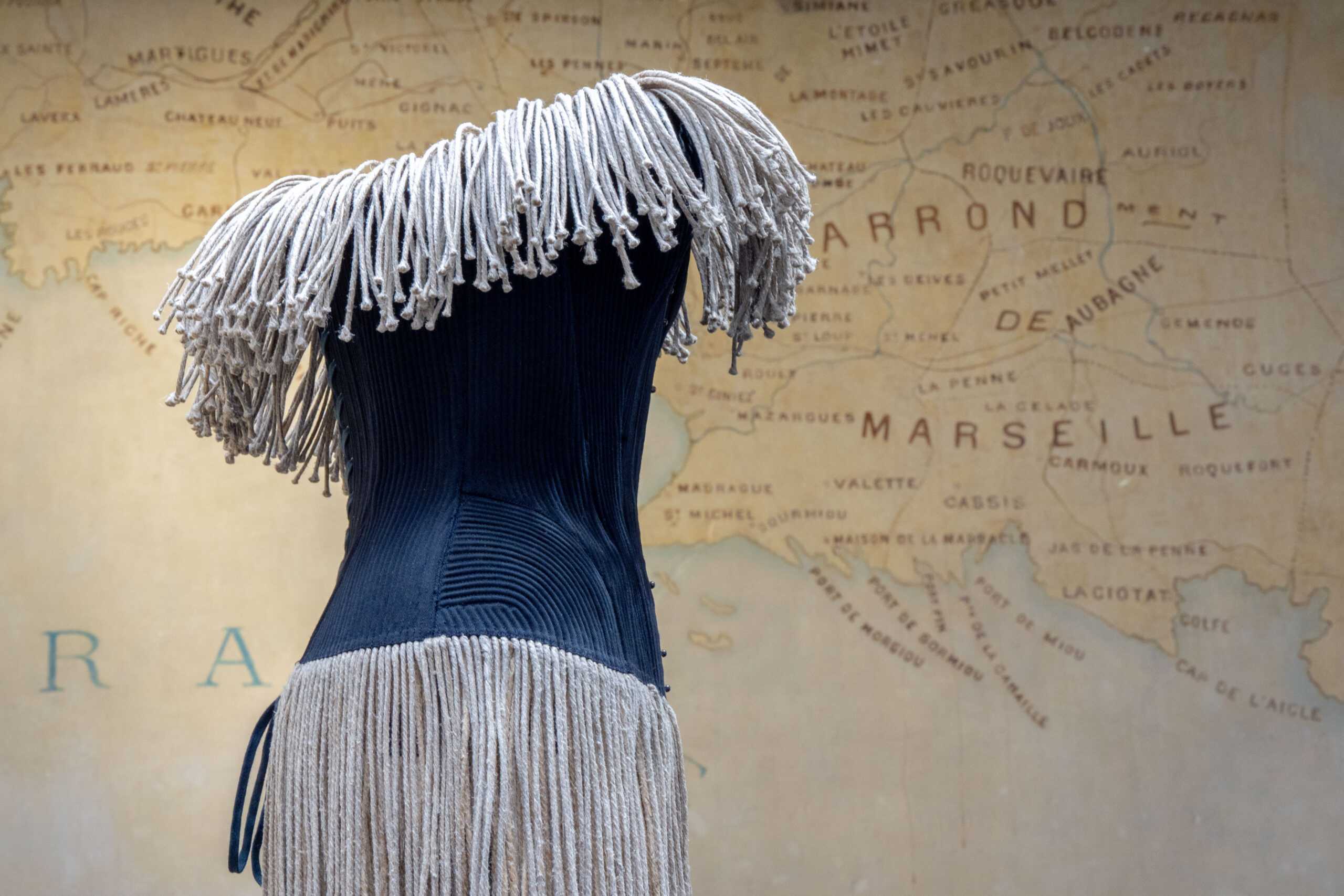
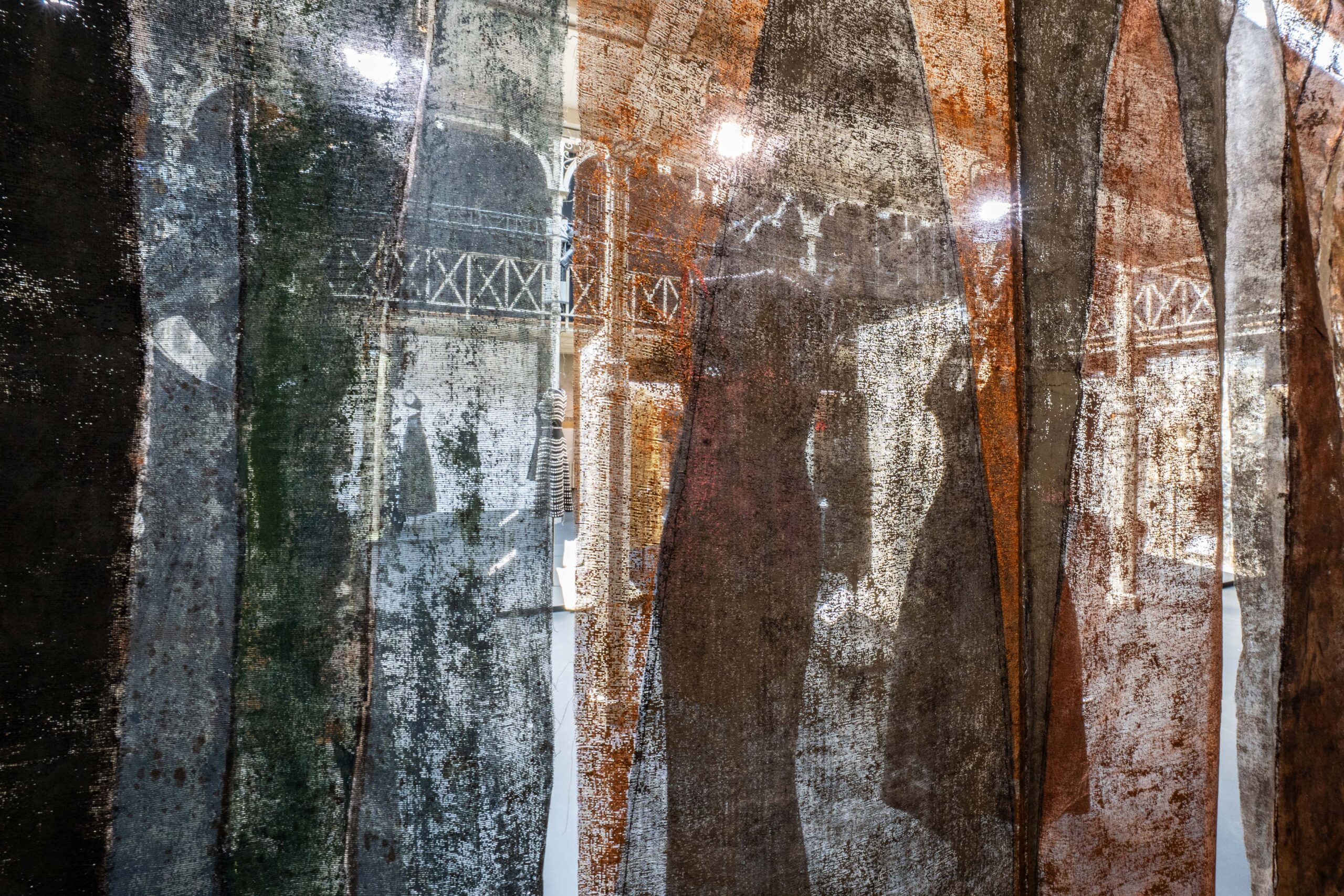
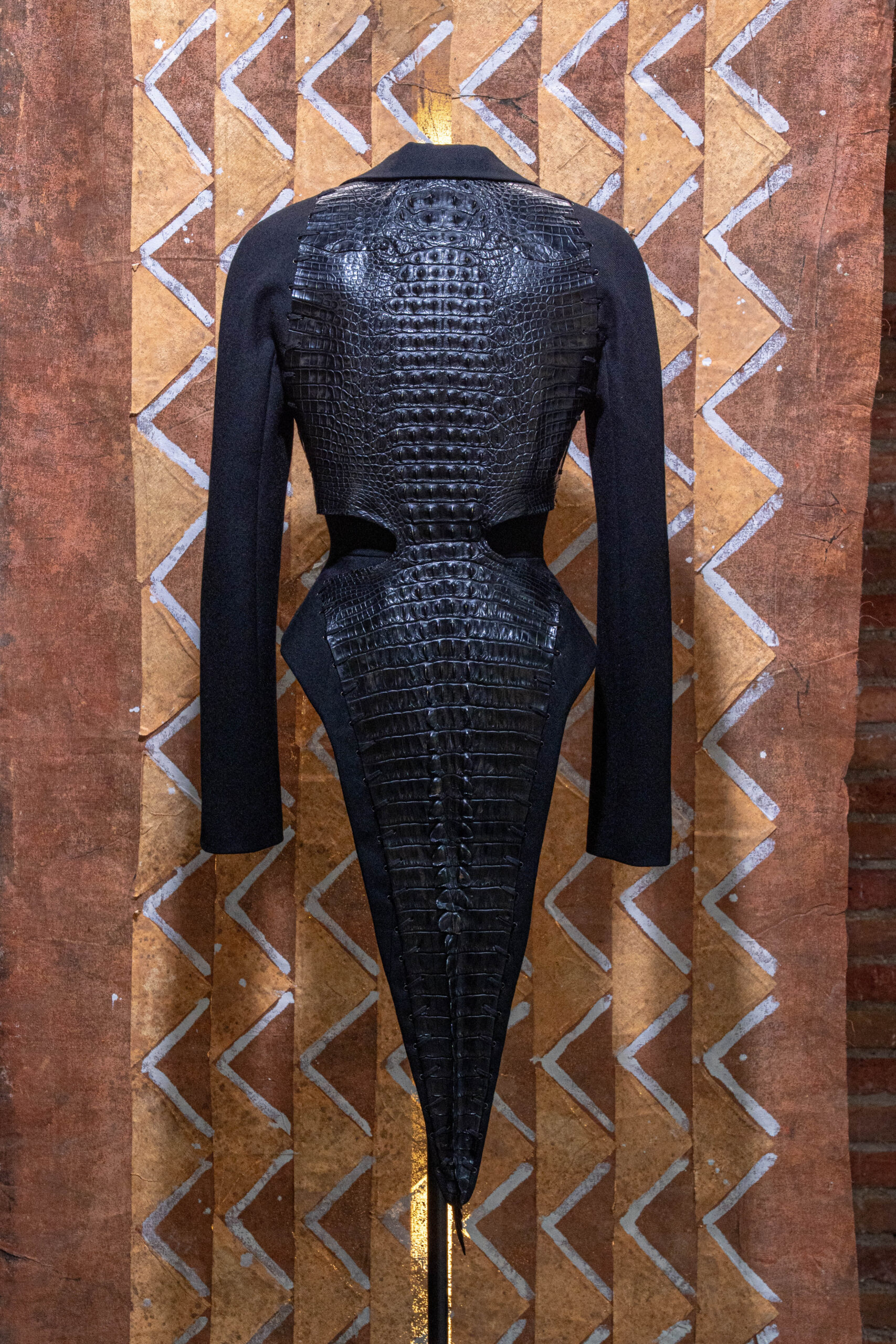
Installation view, “Azzedine Alaïa and Africa,” Fondation Azzedine Alaïa. © Stéphane Aït Ouarab
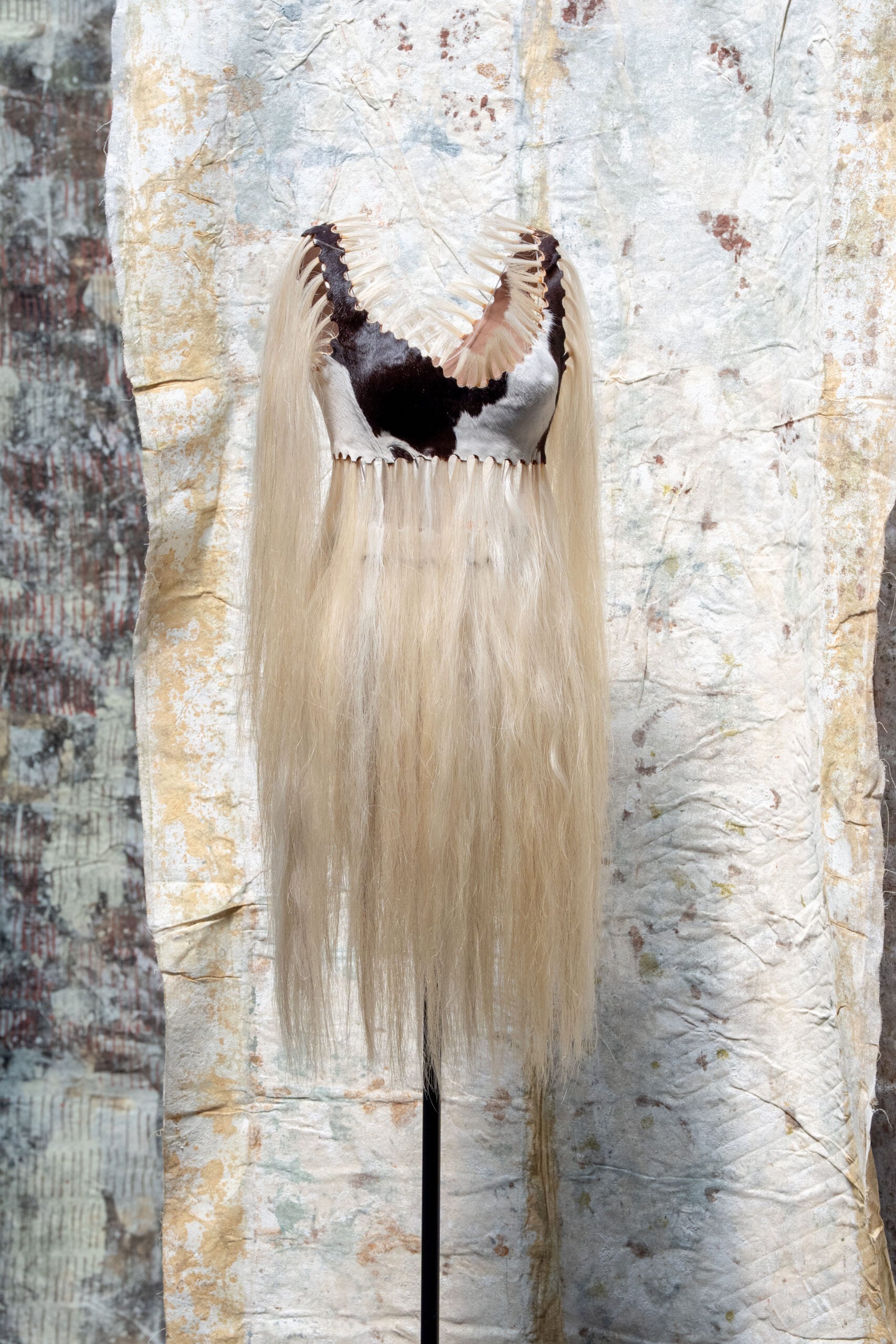
Alaïa worked things out with his hands, and the proof is in what he was willing to cut into a dress. One bra and skirt are made from galuchat, the pebbled skin of stingray, and studded with shells. A piece from 1996 sets printed foal hide against long streams of horsehair, the cream falling loose beneath a black and white pelt. Another dress is macramé linen, finished at the hem with a fringe of small carved teeth. A short crocheted one shakes out rows of pale shell that move like wheat in wind. The bandage dresses, which the show connects to Egypt and the old craft of wrapping, wind around the body in narrow strips, a figure caught half undone. Black keeps coming back, from a chiffon column that drips beaded fringe to a jacket laid with a single crocodile spine down its back, tapering into a tail.
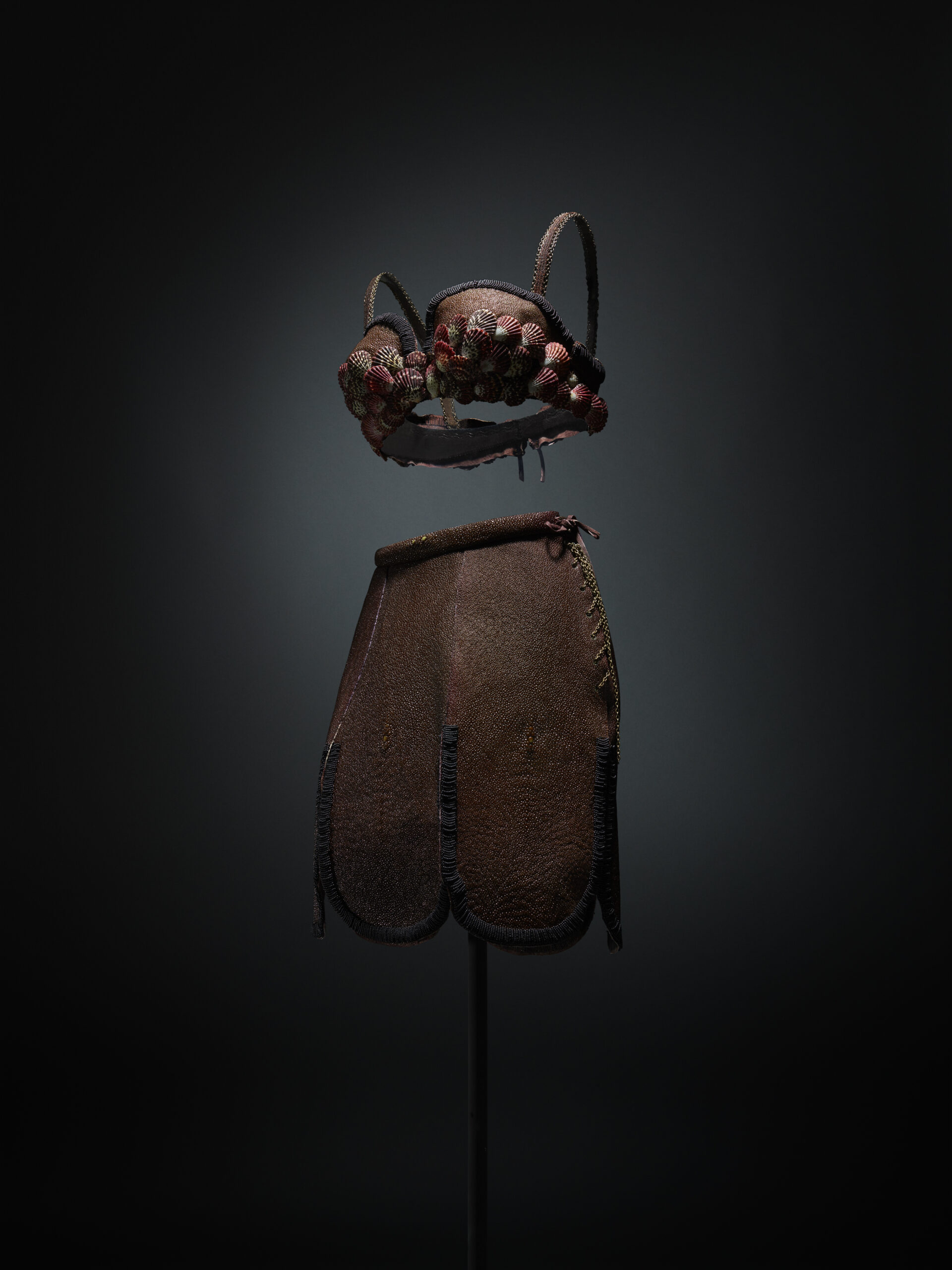
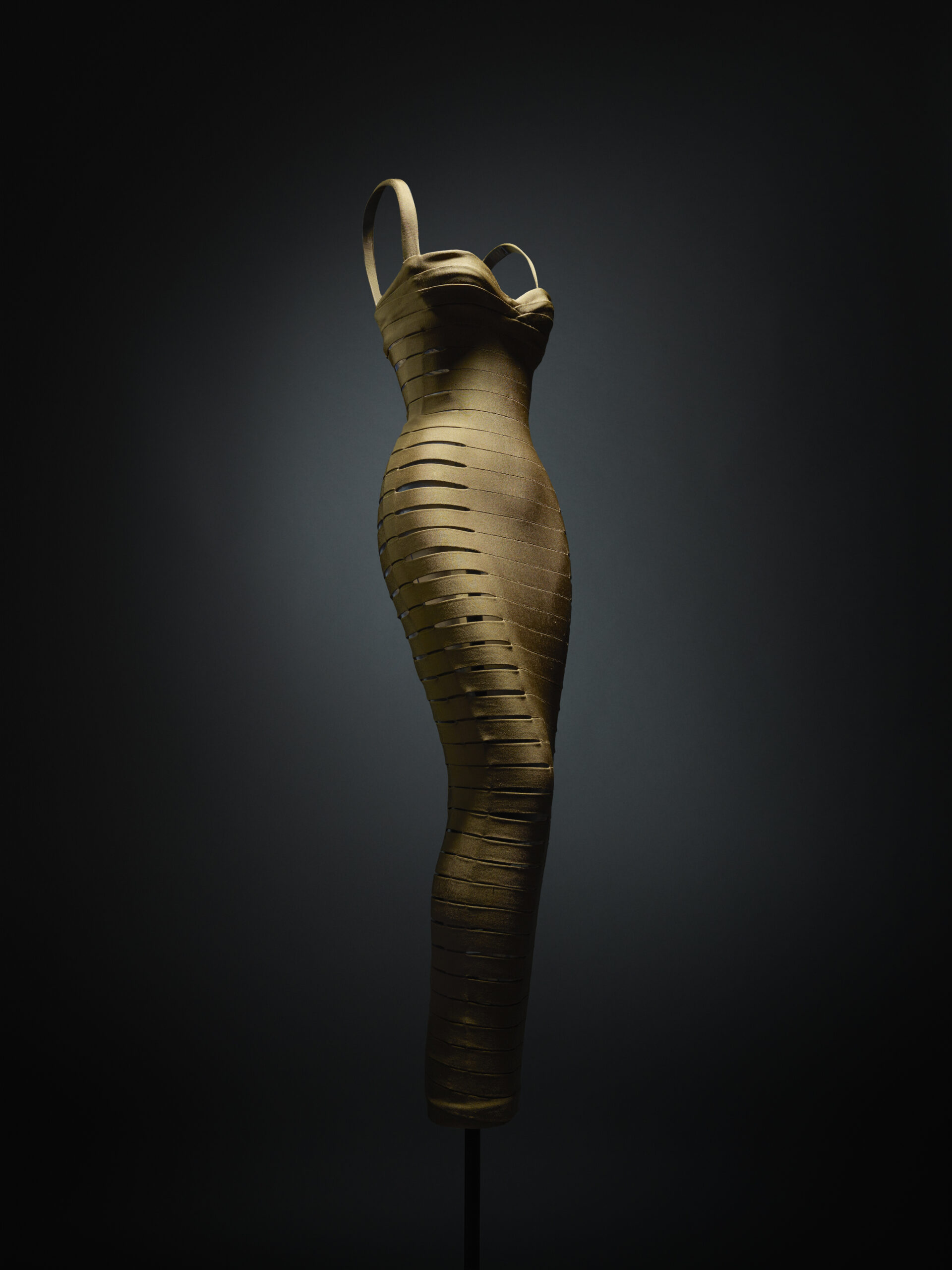
Azzedine Alaïa, haute couture, Spring/Summer 1990. Bra and skirt, galuchat and shells. Azzedine Alaïa, ready-to-wear, Spring/Summer 1990. Bandage dress. © Andrea & Valentina
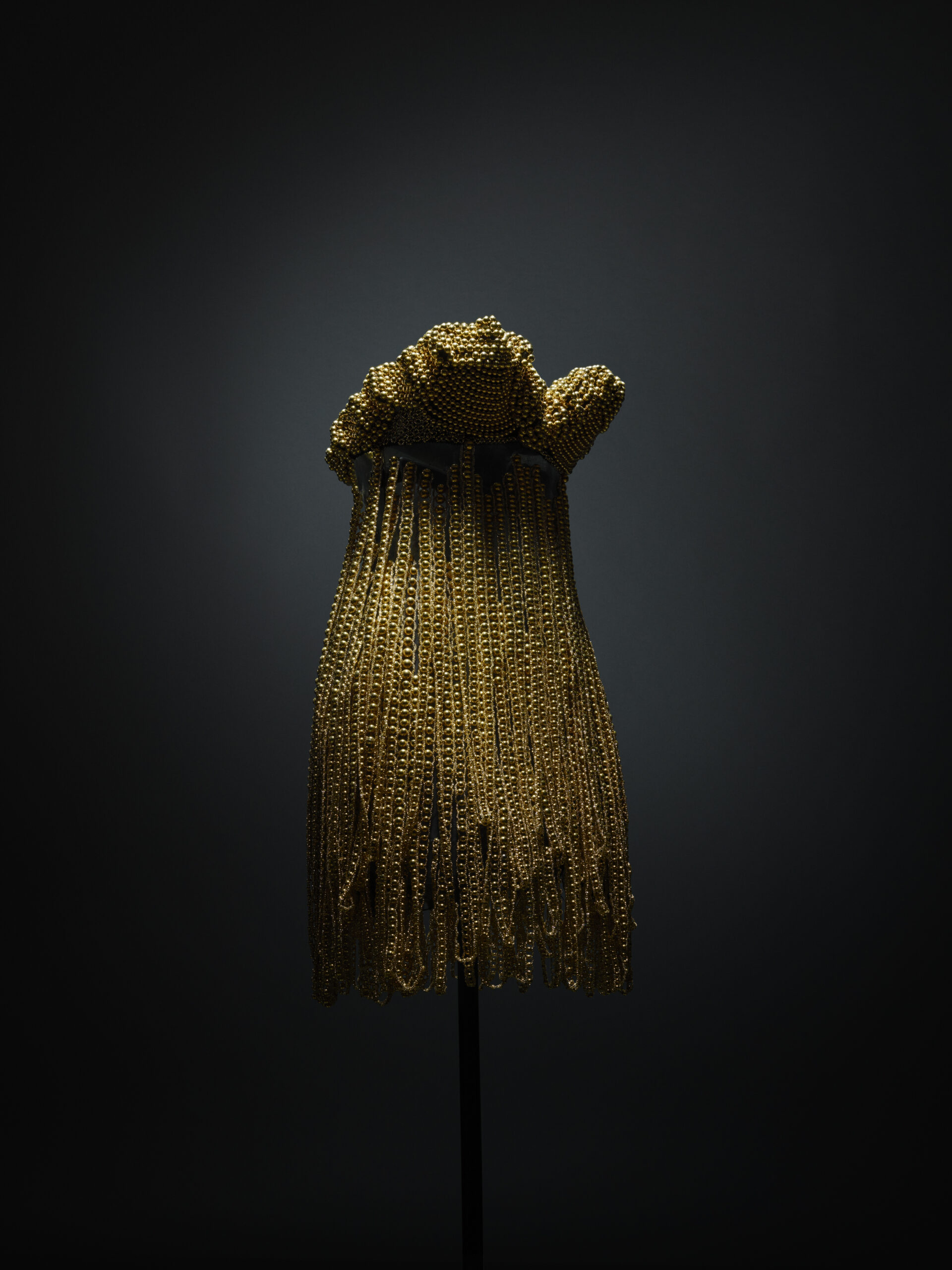
These were never just pretty materials, either. Shell and cowrie, raffia, horsehair, hide and skin carry long histories, as money and as things held sacred, and they crossed the continent long before any of it reached a Paris atelier. Alaïa understood cloth better than almost anyone, and the weight of these things seems to have registered with him even when he reached for them in pursuit of beauty alone. It is part of why the horsehair and the raffia stop you where a sequin never would.
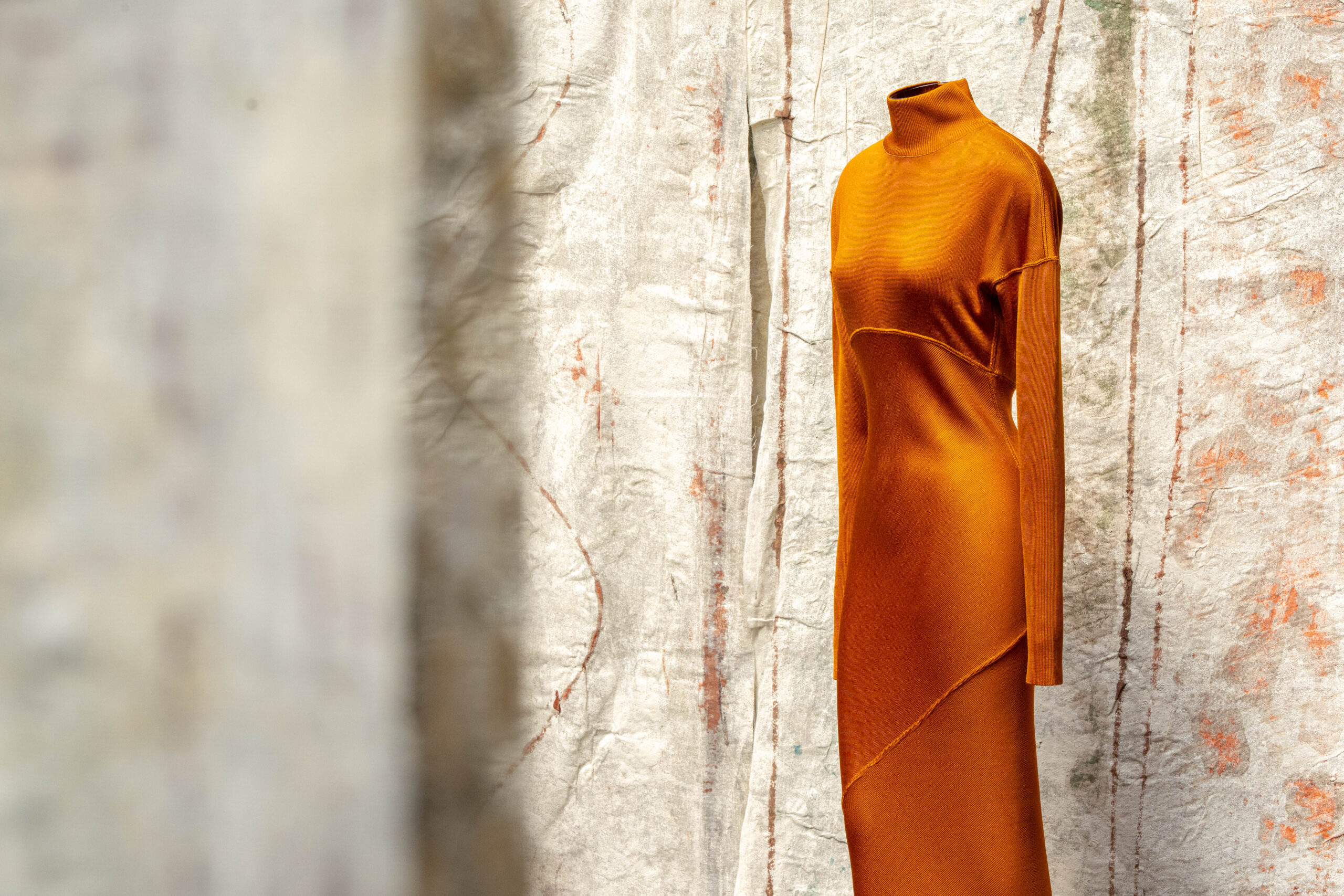
His Africa starts in Tunis, in whitewashed walls and the broken light of a mashrabiya, and opens out from there into something wider and more dreamed, a whole continent gathered into a single word. The show does not try to tidy that away. What holds the work together is a sensibility rather than a place: spare, close to the body, unwilling to treat ornament as anything less than structure. The saffron column from 1986, its one seam turning down the length of the skirt, is after the same thing as the shell dress and the bandage dress. Each is looking for the shortest line between a material and a woman in motion.
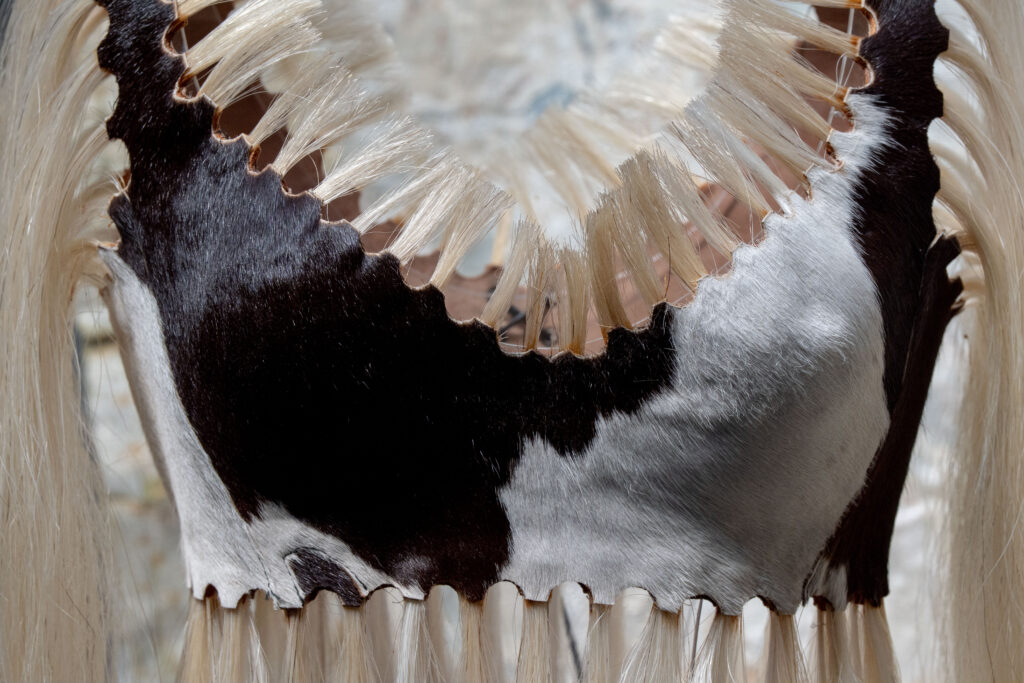
Upstairs, near the room where he worked, hang Peter Beard’s photographs from the 1996 trip through Maasai country in Kenya, the journey that gave him the foal hide and horsehair on the floor below. They have the feel of a diary, warm and a little starstruck, a man coming back to Paris with his eye cleaned out. Put together, the rooms read less as a survey than as a book of memory, kept by someone who never stopped looking back at where he came from, and never stopped making something new out of it.
“Azzedine Alaïa and Africa” is at the Fondation Azzedine Alaïa, 18 rue de la Verrerie, Paris, through 4 January 2027. Open daily, 11am to 7pm. Full price 10 euros, reduced 3 euros. Métro: Hôtel de Ville.
For more of the culture we follow, the makers, the materials and the rooms worth crossing a city for, subscribe to Guzangs.