

Africa Grows the Cotton. A Dakar Gathering Asks Who Profits.
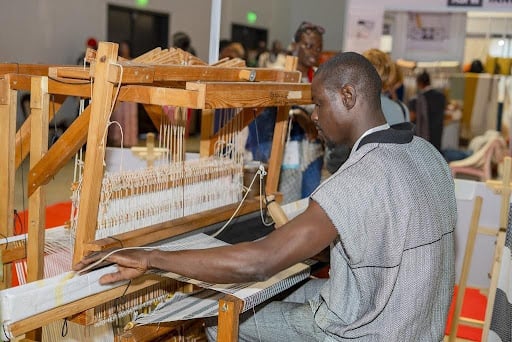
The most important fashion event in Dakar this year had less to do with fashion than with industry. For three days in March, the Centre des Expositions de Diamniadio drew manufacturers, policymakers, textile producers, leather experts, investors, designers, entrepreneurs and development partners from across Africa and beyond, gathered for the inaugural Africa Sourcing & Fashion Week (ASFW) Dakar not to showcase products but to confront a larger question about what it would take for African fashion to stand as a fully realised industry.
The photographs that circulated afterward showed the familiar scenes of a trade fair, the handshakes and crowded halls and panel discussions, the smiles exchanged between strangers who might soon become collaborators, and yet the argument running underneath those images had less to do with the marketplace than with industrialisation itself.
For decades, Africa’s place in the global fashion economy has been confined largely to the beginning of the supply chain. West Africa remains one of the world’s most important cotton-producing regions and exports billions of dollars of raw material each year, and yet much of that cotton leaves the continent only to return as finished textiles and garments carrying value that was created elsewhere. The imbalance is hard to overstate, since Africa grows the cotton while the spinning, weaving, manufacturing and branding happen abroad, along with the capture of most of what the crop is finally worth.
The central ambition of ASFW Dakar was to challenge that structure. Its theme, “Sustainable Value Chain from Cotton to Fashion,” reflected a continental wish to move beyond extraction toward value creation, and whether the continent possesses creativity or cultural influence is no longer a serious question, since that point has been settled many times over. The open question is whether Africa can build the industrial ecosystems that turn creativity into sustained economic power.
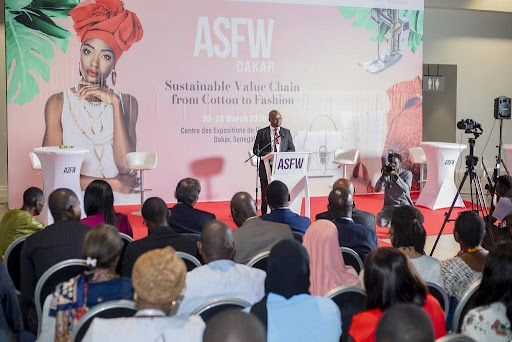
Over the three days the discussion kept returning to sourcing, textile manufacturing, leather production, financing, sustainability and regional trade, subjects that rarely dominate fashion headlines and yet are the mechanisms that decide who controls production and who keeps the value it generates. At Diamniadio fashion was treated less as a lifestyle sector than as an economic engine, a source of employment and export earnings and a driver of manufacturing capacity, and that framing was not incidental to the gathering. Across the continent, governments and industry leaders increasingly read fashion as a strategic industry rather than a merely creative one, and the diplomats, officials and regional institutions present at the opening ceremony made that change visible.
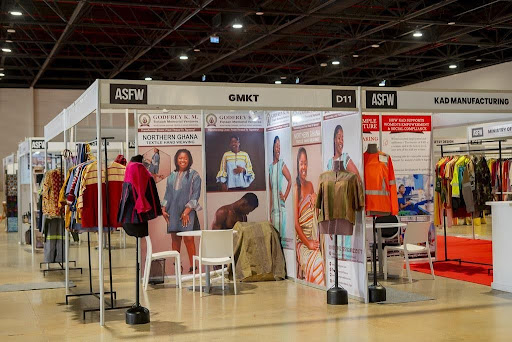
The partnerships on display pointed the same way. Programmes backed by German development cooperation, among them Invest for Jobs and INNO-TISS, framed the work in terms of skills, employment and sustainable textile production, on the premise that the continent’s fashion future will rest as much on infrastructure and financing as on design talent. Dakar sits at a useful point in this shifting landscape, long recognised as one of Africa’s cultural capitals and now positioning itself as a gateway between West Africa, Europe and the wider market, so that hosting ASFW signalled an ambition for Senegal to be known for sourcing, manufacturing and trade as well as for creativity. The city is trying, in effect, to join the cultural influence it already has to the industrial capacity it does not yet possess.
The idea that surfaced most often at the event, though it was rarely named outright, was fashion sovereignty, which comes down in the end to a question about who owns the value chain and who keeps the wealth that African resources and labour generate. For the countries involved, sovereignty of this kind has little to do with isolation and a great deal to do with participating on fairer terms, with building systems that retain value at home and keep economic returns circulating in the communities that produce them.
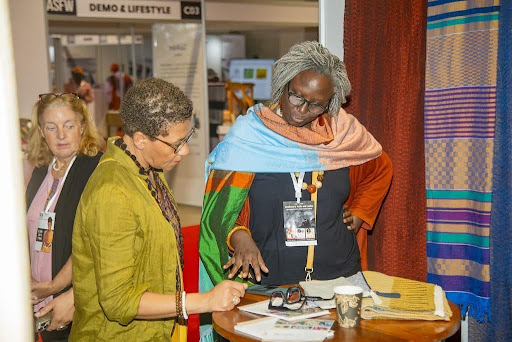
The message that exhibitors and organisers returned to throughout the three days was that real growth happens through connection. Nicholas Mudungwe, executive director of the Africa Leather and Leather Products Institute, put it plainly when he argued that visibility is not enough and that progress depends on proximity between actors who too often work in isolation from one another, since manufacturers, suppliers, designers and investors tend to grow only where the relationships among them have been built on purpose. That, in the end, was what the event set out to create, something closer to a working platform than a showcase, a place where African fashion could be discussed in the language of production and ownership rather than in the language of aesthetics alone.
The runway is not going anywhere, and designers will go on shaping culture and turning identity into form, but the continent’s fashion economy will increasingly be decided in factories and textile mills as much as on the runway, and in manufacturing capacity as much as in creative expression.
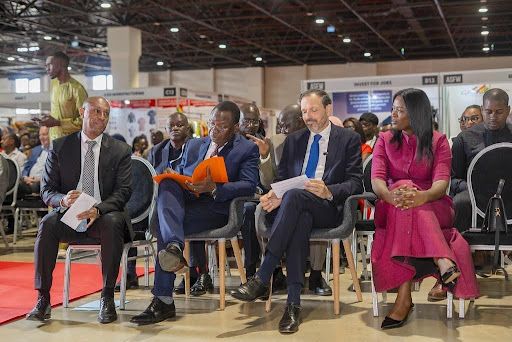
The achievement of ASFW Dakar was to take that reality seriously, and it belonged to a wider shift in which fashion is read across the continent as a strategic industry, a generator of employment and structural development rather than only of culture. For most of the past decade the conversation about African fashion concerned visibility and global recognition, and those gains were real, since African designers and artisans have already shown they can shape global aesthetics. The challenge has since changed, because being seen is no longer the difficulty and building the infrastructure that turns cultural influence into economic power is, which means keeping more value inside African economies, deepening regional supply chains and entering the global fashion system as a centre of production and ownership rather than as a source of inspiration alone.
What the event finally suggested is that the next chapter of African fashion will be written by whether the continent can industrialise its creative sectors and hold value across the supply chain, and by how far it can carry the idea of sovereignty that surfaced in Diamniadio. Visibility alone will not secure that future, which will be settled instead by ownership, by who holds the factories and the supply chains and keeps the value that African resources and creativity generate, and on whose terms the continent finally meets the rest of the world.
Subscribe to Guzangs to follow the industry African fashion is still building.