


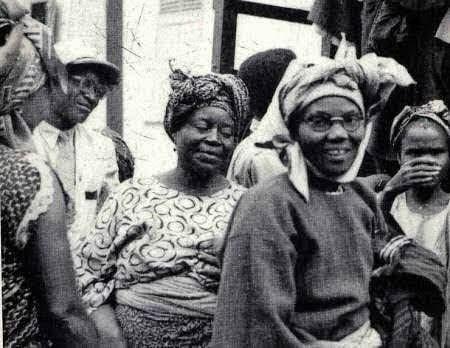
To understand what accelerating action on gender equality actually looks like, what it costs, what it builds, and what it leaves unfinished, you have to follow the thread back through the independence movements that reshaped the African continent in the 20th century. Not to the men who negotiated at conference tables in London and Paris, but to the women who made those negotiations possible.
Every year on 8 March, International Women’s Day asks the world to move faster. This year’s theme is Accelerate Action: a demand. Every year on 31 July, the African continent marks Pan-African Women’s Day, a date not born from ceremony, but from struggle. The two observances are separated by months on the calendar. They share a single origin story, and that story begins with women whose names the standard histories have largely left out.
Pan-African Women’s Organisation: The Facts
PAWO was founded on 31 July 1962 in Dar es Salaam, Tanganyika – a full year before the Organisation of African Unity came into existence. Fourteen countries and a dozen resistance organisations attended. Originally established to fight colonialism and racial discrimination, PAWO today holds consultative status with the ILO, UNESCO and the UN Economic and Social Council, and unites women from all 55 African Union member states.
The 31 July date was formally institutionalised at the PAWO Congress in 1970. In 1974, at a congress in Dakar, the organisation took the name it carries today.
ACCELERATE ACTION
In 1962, these women did not wait for permission to act. They built the institution first – a year before the OAU itself existed. That is not symbolic progress. That is organisational power preceding the structures it was meant to petition.
Ghana
The Queen Who Fired the First Shot
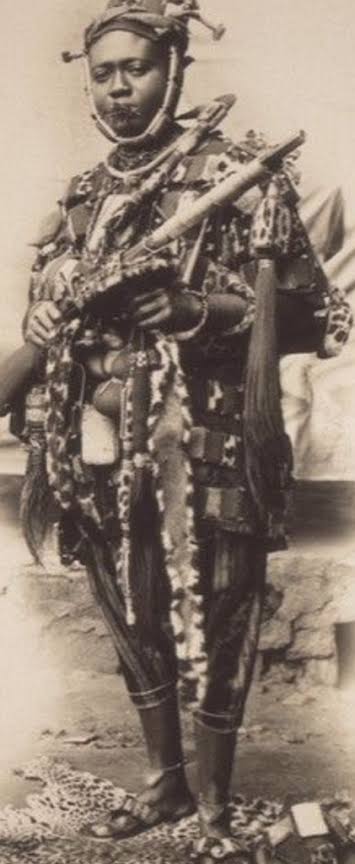
The lineage of Ghanaian women’s resistance stretches back well before the formal independence movement. In 1900, Queen Mother Nana Yaa Asantewaa led the Ashanti War of the Golden Stool against the British Empire with an army of 5,000 warriors. When the colonial governor Frederick Hodgson demanded the Golden Stool – the supreme spiritual symbol of the Ashanti people – and the male chiefs hesitated, Asantewaa rose in council and issued a challenge that has echoed for more than a century.
“If the men will not fight, the women will.”
The rebellion she led resulted in approximately 1,000 British and allied African soldiers killed, and 2,000 Ashanti dead – losses exceeding all previous Ashanti-British wars combined. She was captured and exiled to the Seychelles, where she died in 1921. Her dream of independence was realised 36 years later, in 1957, when Ghana became the first sub-Saharan African nation to achieve it.
By the 1950s, that independence movement was being powered in large part by market women and grassroots organisers whose names rarely appear in the standard histories. Hannah Kudjoe – known as Convention Hannah – was the National Propaganda Secretary of Kwame Nkrumah’s Convention People’s Party. When the Big Six were imprisoned, Kudjoe led fundraising campaigns for their release, selling her own possessions to support the cause. She was central to the Positive Action protests that pushed the British towards the exit. History has largely left her out.
The Ghanaian national flag, too, carries a woman’s fingerprints. Theodosia Okoh – affectionately known as Mama Maa – designed the iconic tricolour of red, gold and green, adopted at independence in 1957. The colours encode a national story: mineral wealth, vegetation, sacrifice. The designer’s name is seldom part of that story.
ACCELERATE ACTION
Hannah Kudjoe sold her possessions to fund a liberation movement. Theodosia Okoh designed a nation’s identity. The fact that their names require reintroduction in 2026 is itself the argument for International Women’s Day.
Nigeria
The Lioness Who Shook an Empire
Nigeria’s women began organised resistance to colonial rule decades before formal independence. The 1929 Aba Women’s Riots saw Igbo market women in eastern Nigeria rise against colonial taxation and the imposition of Warrant Chiefs. It was a mass uprising that shook the British administration and foreshadowed the independence movement by two decades.
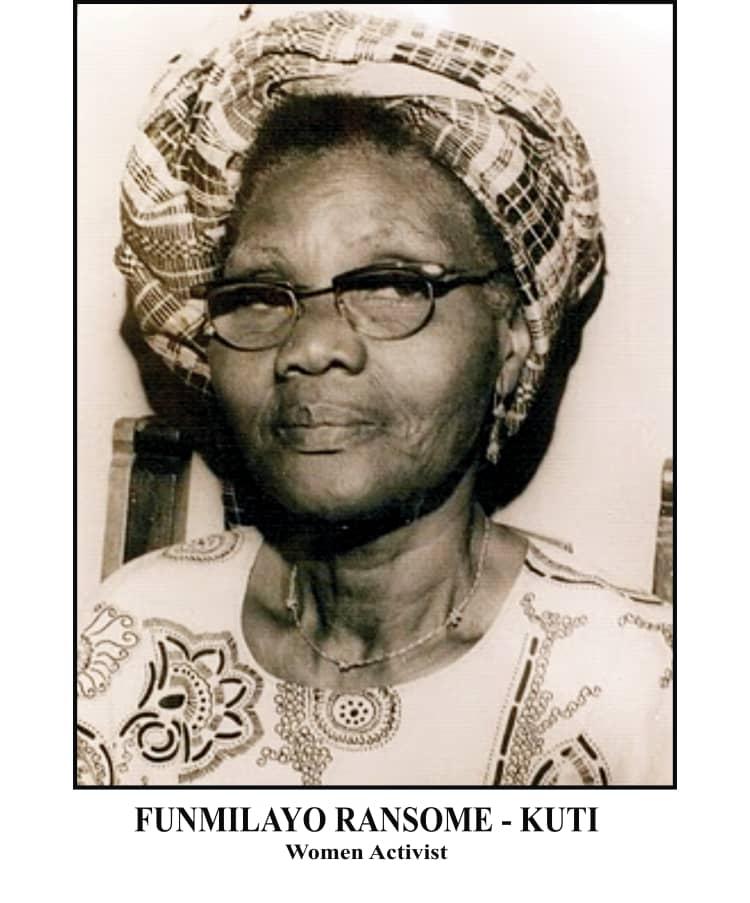
The defining figure of Nigerian women’s resistance, however, was Funmilayo Ransome-Kuti. In the 1940s, she established the Abeokuta Women’s Union, demanding better representation in local governance and an end to punitive taxes on market women. The media called her the Lioness of Lisabi. She led marches and protests of up to 10,000 women, and in 1949 her campaigns forced the ruling Alake to temporarily abdicate.
Ransome-Kuti was the only woman to hold an executive position in the National Council of Nigeria and the Cameroons, and the only woman to join Nigeria’s delegation to London in 1947 to lodge a formal protest with the Secretary of State for the Colonies. She received the Lenin Peace Prize and was appointed to the Order of the Niger.
Her end was brutal. On 18 February 1977, the 76-year-old was thrown from a second-floor window during a military raid on her son Fela Kuti’s Lagos compound. She died of her injuries in April that year. Her biographers, Cheryl Johnson-Odim and Nina Emma Mba, concluded in For Women and the Nation that no other Nigerian woman of her era had such national standing or such international reach.
ACCELERATE ACTION
Ransome-Kuti did not wait to be invited into rooms of power. She walked into colonial London and made demands. Her blueprint for accelerating action on gender equality has existed for eighty years. The question is not whether it works. It is why it still needs repeating.
Algeria
The Courier Who Became the Revolution’s Face
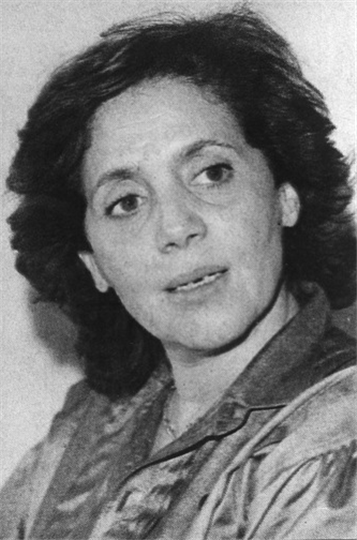
Algeria’s war of independence against France (1954–62) was one of the most brutal anti-colonial conflicts of the 20th century. Women were not confined to support roles. They were operatives: couriers, bomb-makers, intelligence gatherers, nurses under fire. The FLN’s use of women in urban guerrilla warfare was strategic and deliberate. Women could cross French military checkpoints that men could not.
Djamila Bouhired was among the most prominent. A law student turned FLN courier, she was captured by French paratroopers in 1957, tortured, and sentenced to death by a military tribunal. The sentence sparked an international campaign – the Egyptian filmmaker Youssef Chahine made a film about her while she was still in prison. The pressure worked. Her sentence was commuted, and she was released at independence in 1962. She became the most internationally recognised face of the Algerian liberation struggle, a symbol that transcended Algeria itself and galvanised anti-colonial movements across Africa and the Arab world.
But Bouhired was not an exception. Thousands of Algerian women served the FLN in roles ranging from combat to medical care to intelligence. Hassiba Ben Bouali, a 19-year-old operative, died in the Battle of Algiers in 1957 when French forces dynamited the building where she and two other FLN fighters were hiding. Djamila Boupacha, another courier, was arrested, tortured, and sexually assaulted by French soldiers – her case, taken up by Simone de Beauvoir and Gisèle Halimi, became a cause célèbre in France and exposed the systematic use of torture by the colonial military. These were not isolated stories. They were the war.
East Africa
Women at the Front
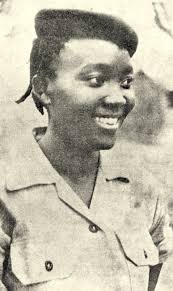
In Kenya, the Mau Mau uprising (1952–60) depended on a vast network of women who moved food, intelligence and medicine to guerrilla fighters in the Aberdare highlands and the forests of Mount Kenya. The British responded with collective punishment: mass detention, forced labour, sexual violence. Tens of thousands of Kenyan women were held in camps. The historian Caroline Elkins has documented the scale of British atrocities in detail. The movement endured despite them.
Field Marshal Muthoni Kirima rose to military command within the Mau Mau, one of the few women to hold such rank in any African liberation army. She continued fighting after the uprising’s official end, and lived to see Kenyan independence in 1963. She was recognised by the Kenyan government as a freedom fighter and held the rank of Field Marshal until her death in 2023 at the age of 91.
In Mozambique, FRELIMO’s liberation war against Portuguese colonial rule produced Josina Machel, who organised women’s combat detachments in Cabo Delgado and Niassa provinces while simultaneously developing political theory on the intersection of colonialism and patriarchy. She argued that national liberation without women’s liberation was incomplete – a position that was radical within FRELIMO itself, where male commanders resisted the expansion of women’s roles. She married Samora Machel, who would become Mozambique’s first president, in 1969. She died of illness in 1971, at 25. Her writings shaped feminist political thought across the continent for decades. Mozambique marks 7 April – the anniversary of her death – as National Women’s Day.
ACCELERATE ACTION
Bouhired was tortured and sentenced to death at 22. Ben Bouali was killed at 19. Machel was dead at 25, having already written the theory that would shape a continent’s feminist politics for generations. The cost of accelerating action is not abstract. These women paid it in full.
South Africa
Twenty Thousand Women
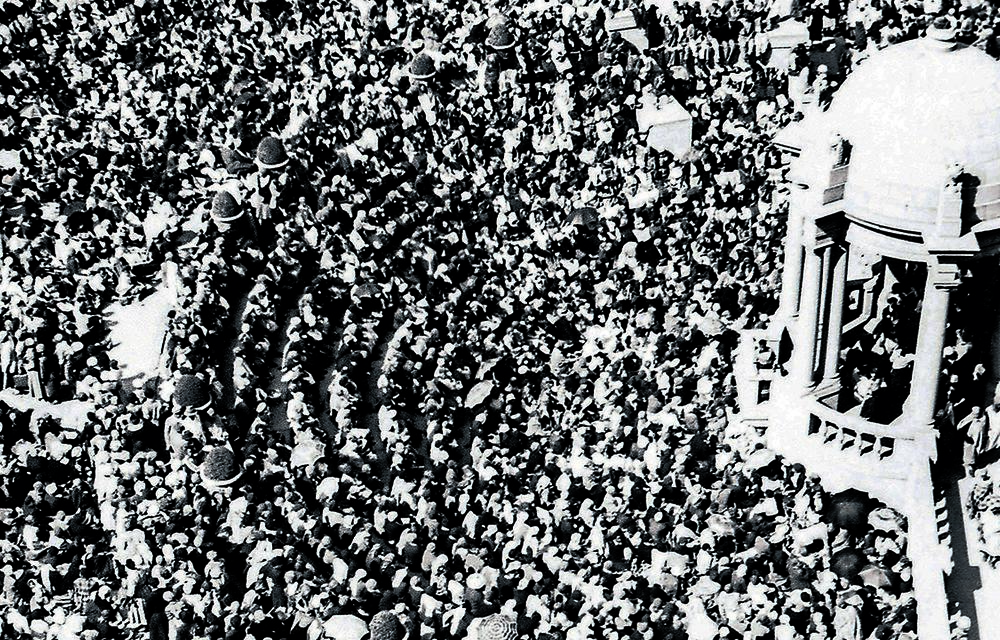
Photo: Eli Weinberg / Source: Mayibuye Archives via Mail & Guardian / Public Domain
On 9 August 1956, 20,000 women of all races marched to Pretoria’s Union Buildings to present a petition against apartheid pass laws. They sang a freedom song that produced one of Africa’s most enduring political phrases:
Wathint’ abafazi, wathint’ imbokodo
YOU STRIKE A WOMAN, YOU STRIKE A ROCK.
The march was led by Lillian Ngoyi, Helen Joseph, Rahima Moosa and Sophia Williams-De Bruyn. South Africa now marks 9 August as National Women’s Day, a public holiday observed annually – a permanent entry in the national calendar carved out by women who were told, in effect, that they had no standing to be there at all.
ACCELERATE ACTION
Twenty thousand women showed up in person, under apartheid, in 1956. They did not issue a statement or start a campaign. They walked to the seat of power and stood there until the state had to look at them. That is the scale this year’s theme is asking for.
The Distance Between Earned and Received
Sub-Saharan Africa recorded the largest global increase in women parliamentarians in 2023. Women from the continent make up the highest percentage of women entrepreneurs worldwide. But the women who convened in Dar es Salaam in 1962 were fighting against violence, economic exclusion and cultural subordination – and those battles remain unfinished for millions of African women today.
International Women’s Day exists precisely because progress is not the same as completion. Pan-African Women’s Day exists because African women built the structures of their own liberation before the world offered to help. The two dates share a single demand: that the names, acts and vision of women who changed the world be remembered accurately, honoured fully, and built upon urgently.
The revolution these women started has not finished. This Women’s Month, we are still inside it.