


Most people picture Africa and think: heat. Endless sun, dust, maybe a safari jeep kicking up red dirt. Snow? That’s for the Alps, the Rockies, anywhere but here.
Except Africa has ski resorts scattered across Morocco, Algeria, and Lesotho.
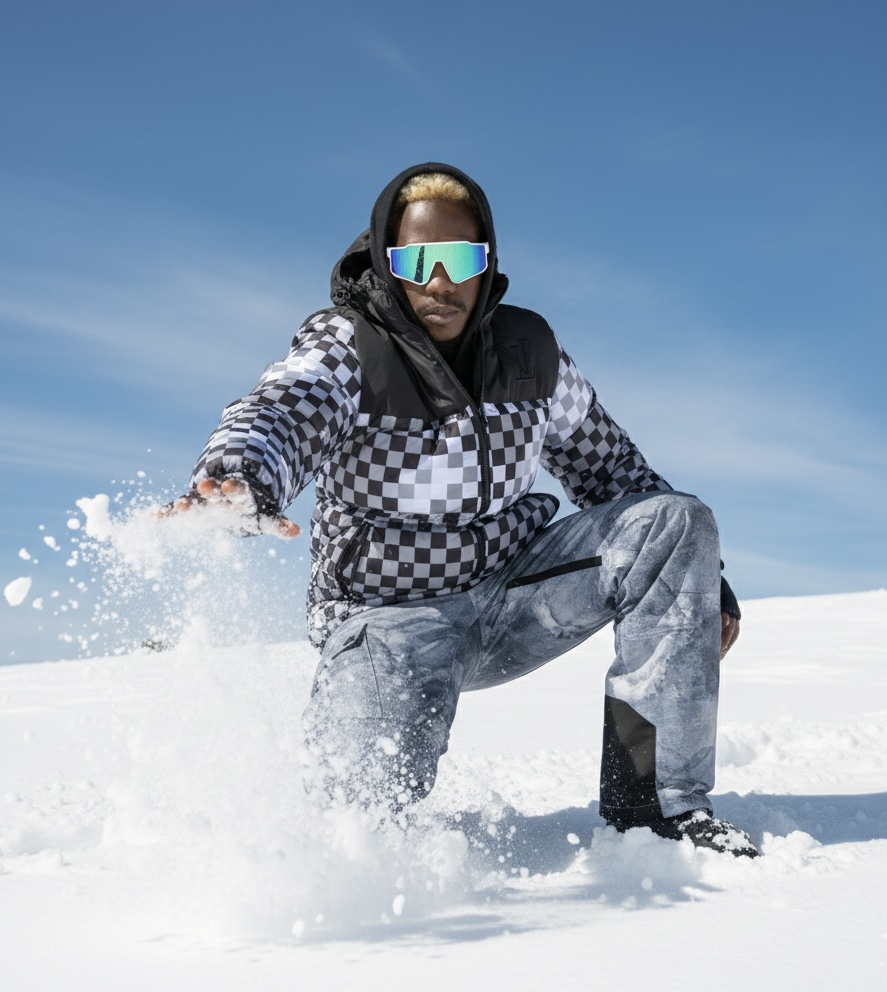
Roméo Moukagny found out firsthand in January. The Gabonese designer had just wrapped up presenting his work at ORUN’s Heirs of Greatness exhibition in Casablanca when he decided to drive south instead of heading home. Hours later, he was at Oukaïmeden, Africa’s highest ski resort, sitting at 3,200 meters in Morocco’s High Atlas Mountains.
“Skiing intrigued me for years,” Moukagny said. “Discovering it in Morocco made it personal.”
The photo he captured says it all: proper snow, actual skiers, bright Moroccan sun overhead. Not a novelty. Just winter, happening exactly where geography says it should.
The drive from Marrakech climbs fast through switchbacks until the air thins out and the landscape shifts completely. Oukaïmeden doesn’t do the luxury chalet thing. Amazigh families run the show—renting gear, guiding routes, pouring mint tea when you come off the slopes. The resort opens when snow falls, closes when it melts. Simple as that.
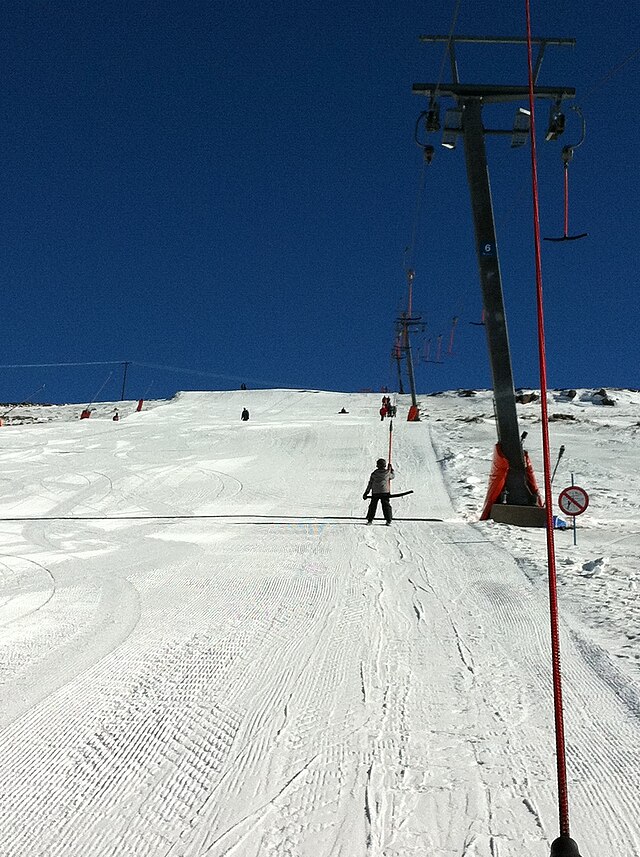
Lesotho went bigger. The entire kingdom sits above 1,000 meters, so when they built Afriski Mountain Resort in the Maloti Mountains, they built it properly. Chairlifts running to 3,222 meters, groomed runs, ski schools teaching everyone from first-timers to serious athletes. It’s the most developed ski operation on the continent.
Up in Algeria, Chréa keeps things low-key. The small resort in the Atlas Tellien range south of Algiers mostly draws locals when snow comes through. It used to be better known, but now it just operates quietly each winter. No fuss, no international marketing. People show up, ski, go home.
Those are the fun mountains. Then there are the serious ones.
Kilimanjaro still has its famous snows, though over 80 percent of the ice has melted since 1912. The Rwenzori Mountains between Uganda and Congo are losing glaciers even faster—the Stanley Plateau glacier shrank 29.5 percent just between 2020 and 2024. That matters beyond the scenery. The Rwenzori feeds into the Nile. Millions depend on that meltwater downstream. For the Bakonzo people living in the foothills, those glaciers aren’t just nature—they’re where their gods live. Watching them disappear isn’t abstract.
Here’s the thing: talking about African snow isn’t about surprising anyone. It’s just filling in the gaps in a story that’s been told incompletely for too long. Africa is huge. It’s elevated in places. The climate does what geography dictates, which includes snow at altitude.
That changes what the visual record looks like. A Moroccan mountain blanketed in white shifts what a winter shoot on the continent could be. A Lesotho ski slope adds layers to what “Southern African” means. An Algerian hillside in January complicates the usual North African imagery of beaches and dunes.
Africa’s snow doesn’t fight with the heat. It just exists alongside it—same continent, different elevation, same complex geography that refuses to fit into anyone’s simplified version.