


More than a decade in the making, a Netflix docuseries produced by Winnie Madikizela-Mandela’s granddaughters returns her story to the family that knew her first.
The Trials of Winnie Mandela does not attempt to rescue her legacy through worship, nor dismantle it through spectacle. Across seven episodes, the documentary sits inside the discomfort of memory itself, returning to the life of one of Africa’s most polarizing political figures through archival footage, testimony, private journals, and intimate conversations with those who knew her beyond the mythology.
To the world, she was Winnie Mandela: militant, mythologized, feared, and adored. To her granddaughters, she was Big Mommy first, and the rest came after.
The project has been more than a decade in the making, and its origin runs along two threads. One begins inside the family, with a journal kept by Winnie Madikizela-Mandela during her years in solitary confinement, handed to her elder granddaughter, Swati. The other begins in a longer commitment to recording the testimony of Africa’s liberation generation in their own voices, before time foreclosed the chance. The two threads converge in the series that is now streaming on Netflix, but they began separately.
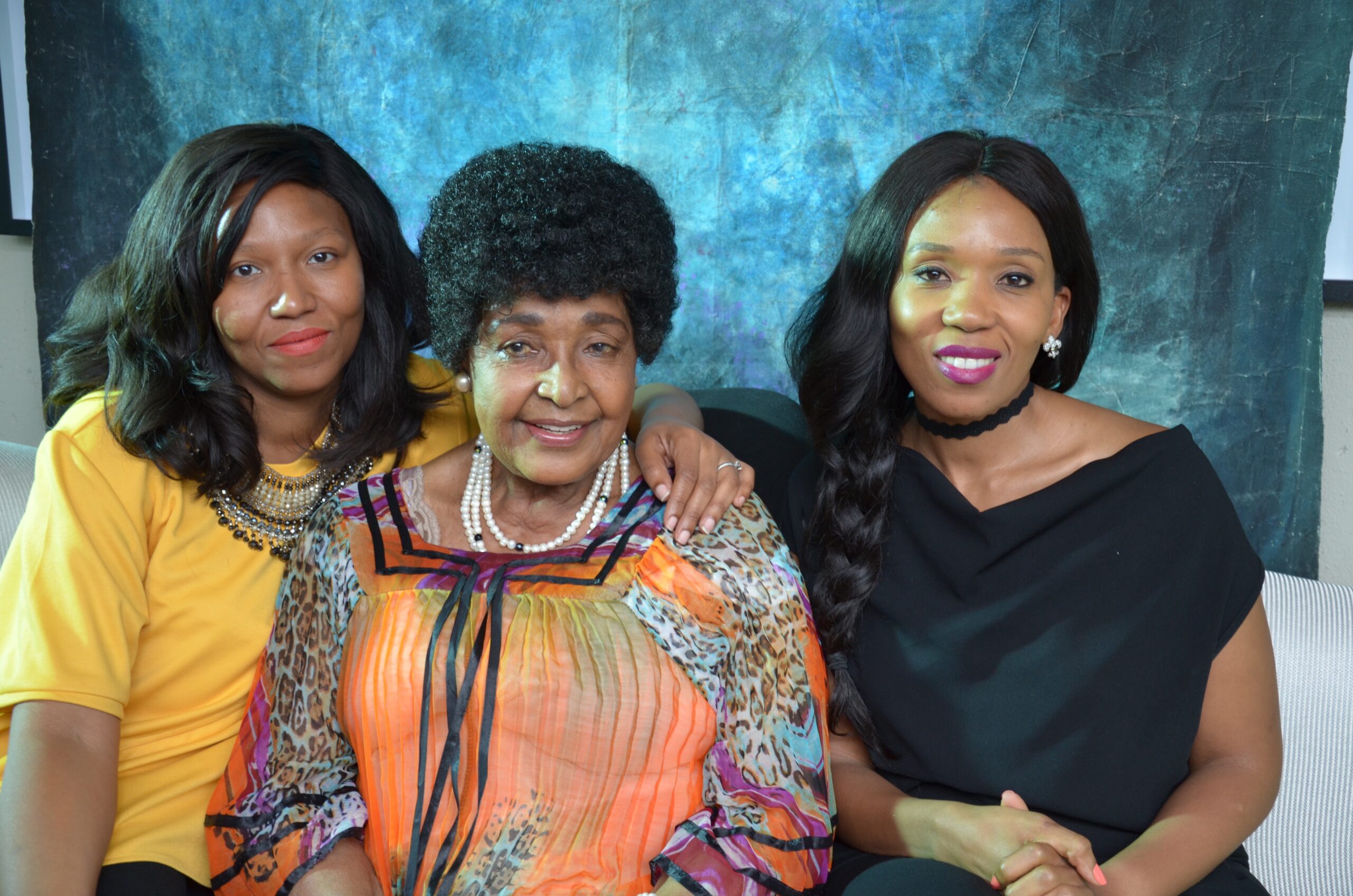
On a recent video call, the granddaughters appeared together, paired in the easy rhythm of women who have spent years doing this work side by side. Princess Swati Mandela-Dlamini and Princess Zaziwe Dlamini-Manaway spoke as one voice on the project’s family origins. Ivor Ichikowitz, the project’s executive producer, who has led the African Oral History Archive over its lifespan and who has said he knew Winnie personally for many years before any cameras began rolling, spoke separately, on his own.
“I’ve always known her first as family, as Big Mommy,” Swati says. “Very protective, funny, and present. But when I started working through the journal, I began to see another layer of her.”
The journal became the quiet engine of the family’s involvement. What began as a preservation effort, a transcription exercise that stretched across ninety-one days, slowly opened into something more difficult and more public. The journal led to a book. The book led to questions. The questions led to a documentary that neither granddaughter had set out to make.
“It gave me a deeper understanding of what she went through in solitary confinement,” Swati says. “From there, it naturally evolved into wanting to tell her story from our own perspective as a family.”
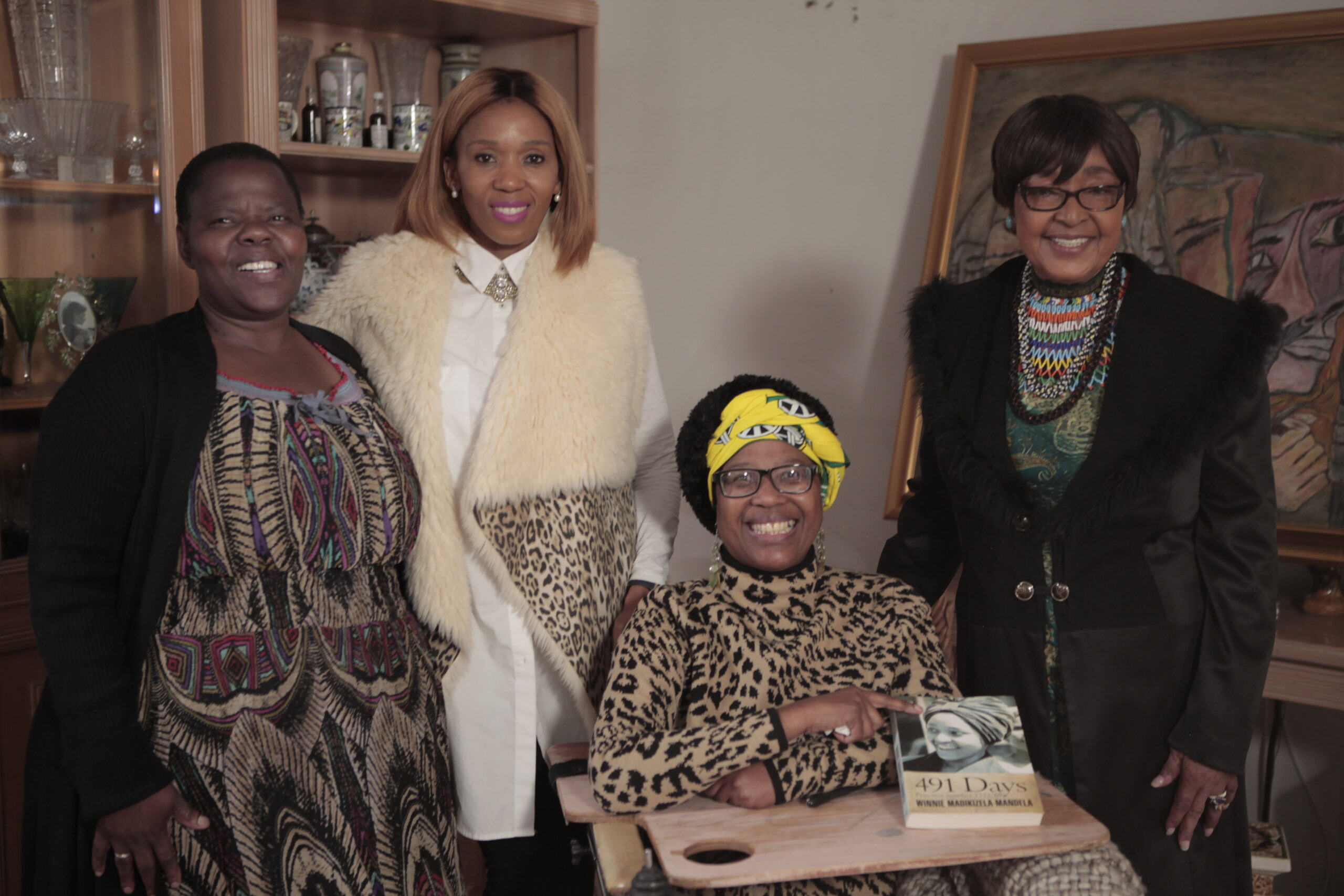
The institutional thread is older. The African Oral History Archive began, as Ichikowitz describes it, in the post-apartheid period, on a premise about how the continent’s liberation history would be remembered. “We realized that Africa’s major liberation struggles were not only about war and political conflict, but about people, their lived experiences, memories, and truths,” he says. “If we did not capture those stories in an authentic African tradition, particularly through oral history, they would be lost or distorted over time.” Many of the figures the archive was built to record were already older when the project began, and the urgency was a structural one. The archive now holds thousands of hours of testimony tied to South Africa’s liberation history, including conversations with Kenneth Kaunda, Helen Suzman, recorded shortly before her death, and Pik Botha.
Within that work, Winnie Madikizela-Mandela was a central commitment. “Her story reflects the complexity of the liberation struggle itself,” Ichikowitz says. “I had known her personally and understood how essential her perspective was to understanding the moral and political realities of that era. It took years to build trust and help her feel ready to share her story, knowing how painful revisiting it would be. But she also understood the importance of legacy.”
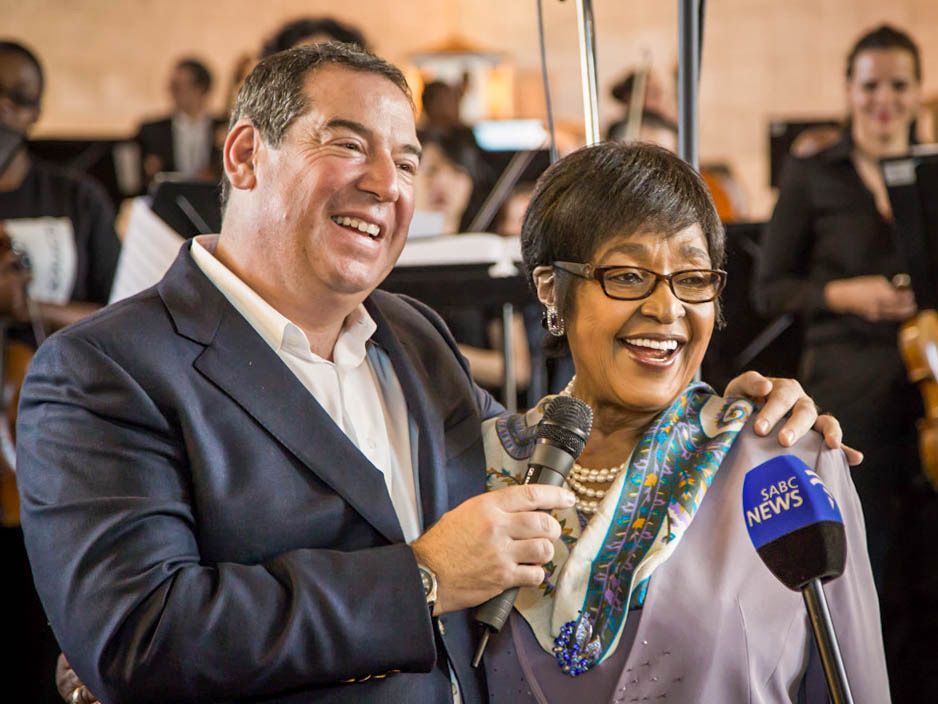
To direct, Ichikowitz wanted Mandy Jacobson involved, in part because she would not approach the subject as a fan. Jacobson, a two-time Emmy Award-winning documentary filmmaker, developed the project across more than a decade and did not live to see it finished. The brief she and Ichikowitz agreed at the outset became the project’s editorial spine. “We agreed from the outset that this would not be a celebratory or idealized portrait,” he says. “It would be honest, showing her complexity in full.” Jacobson, on his account, refused the heroic mode. “She kept pushing deeper into the story, even when it became emotionally or politically difficult.” The production also made a conscious decision to include perspectives from across the political spectrum, among them former apartheid officials, on the principle that understanding history requires understanding everyone involved.
The granddaughters’ producer roles emerged in this convergence. Swati’s family work on the journal had deepened over the same period that Jacobson’s documentary was developing. Zaziwe came in later, as she puts it, when the process became more complex and emotionally heavy. By production’s end, both held producer credits.
“There isn’t really a clean line between being a granddaughter and being a producer,” Swati says. “You are both at the same time. I could sit with her at home and have long, intimate conversations, but as a producer I also had to think about the story and how it would be told.”
“There isn’t really a clean line between being a granddaughter and being a producer. You are both at the same time.”
— Swati Mandela-Dlamini
Zaziwe, who speaks more softly than her sister, weighing each word against years of inherited public attention, lands on the sentence that becomes the emotional spine of the series. “Complexity can exist at the same time,” she says. “A person is not one thing.”
That sentence is never stated as a thesis, but it organizes the work.
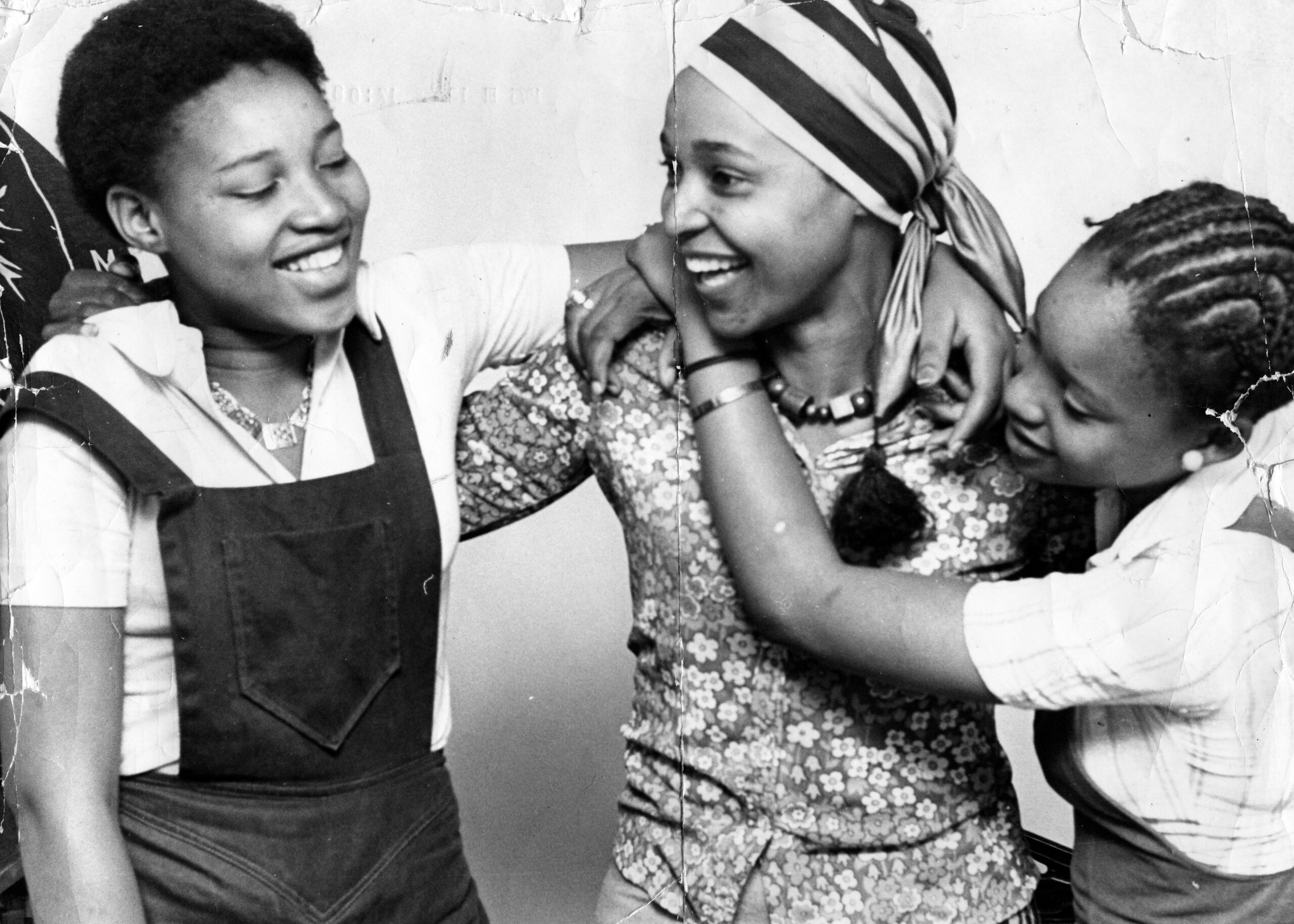
While Nelson Mandela was elevated into the global language of reconciliation, Winnie occupied another terrain entirely, one shaped by years of surveillance, banishment to Brandfort, and constant police harassment. She became the face of resistance and the surface onto which South Africa projected grief, contradiction, and unfinished reckoning. The documentary does not try to resolve that tension, and it is the better for refusing.
One of its hardest achievements is its refusal to flatten Winnie Madikizela-Mandela into either martyr or monster. It confronts some of the most contested chapters of her legacy, most notably the activities of the Mandela United Football Club and the deaths of the teenage activist Stompie Moeketsi Seipei and Siboniso Tshabalala. It does not arrive at a tidy verdict. The decision to engage those chapters at all, and to engage them on camera, came from Winnie herself.
“She understood narrative instinctively,” Swati says. “She knew her story was complex and controversial and had many layers. She actively guided us, telling us who to speak to and encouraging us to go into the difficult parts of her history. She didn’t shy away from anything. She gave us permission to go into those uncomfortable spaces, and that gave us the confidence to do it properly.”
That permission allowed the granddaughters to put questions to her that had followed her for decades but had never, on Swati’s account, been asked across that table. Among them were members of the Mandela United Football Club and the families of Stompie Moeketsi Seipei and Siboniso Tshabalala, conversations the granddaughters approached carefully.
“We knew this would be the most difficult part of the production, for the families and for us,” Swati says. “We approached it with care, transparency, and respect. We were not trying to shape their testimonies into a single narrative. We also had to hold space for real trauma and loss, both personal and national. The fact that the families agreed to speak with us was incredibly significant, and we are grateful for that.”
The Archive Was Never Neutral
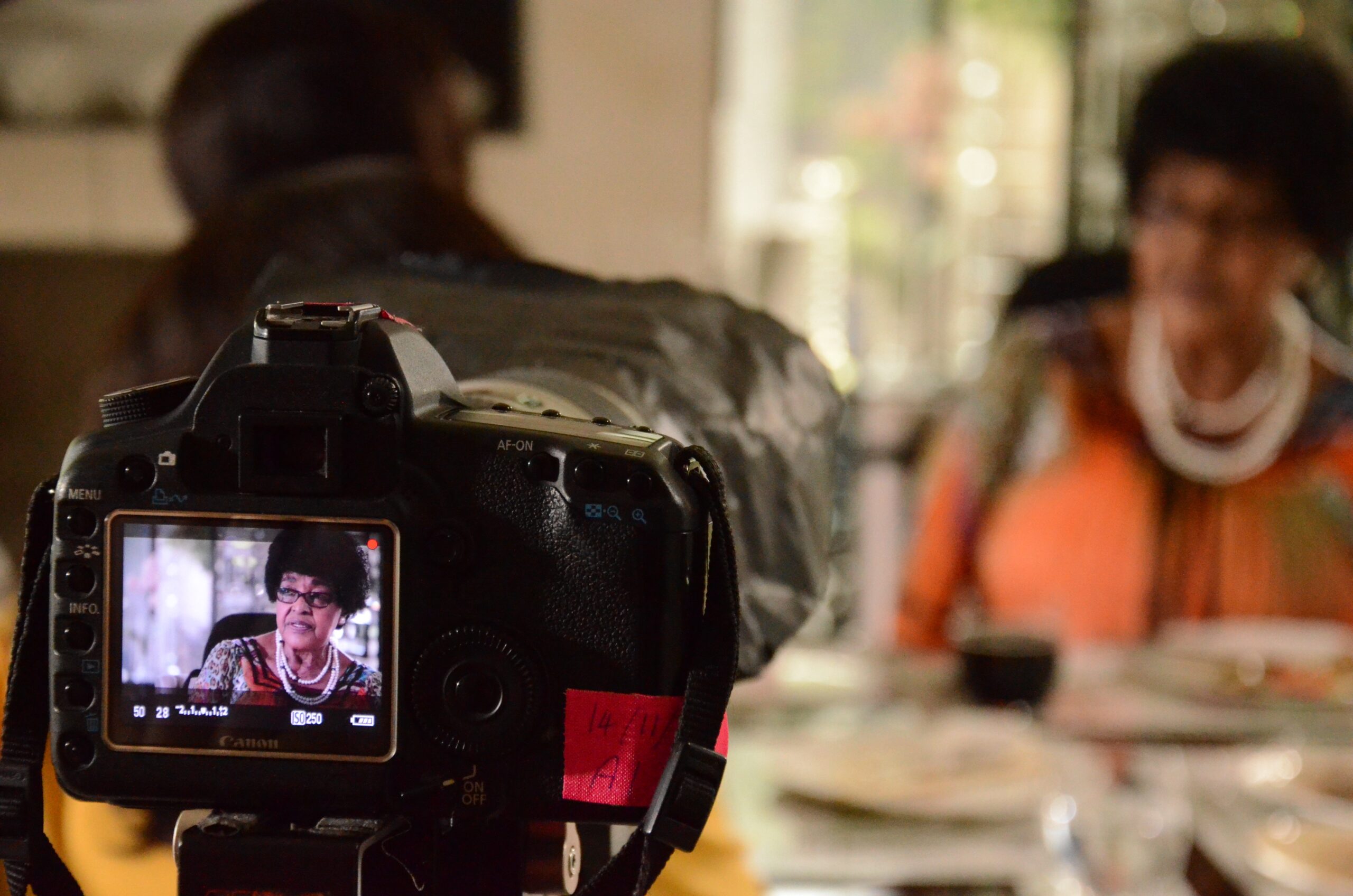
Alongside the granddaughters’ authorship runs a second strand in the documentary’s approach, this one about images. Winnie Madikizela-Mandela lived under near-constant surveillance for years. Cameras followed her. State systems documented her. The visual record of her life is enormous, and much of it was made by people who did not wish her well.
“The archive is complicated because it was never neutral,” Swati says. “It was created with intent, often to criminalize her and the resistance she represented.”
The production’s response was not to discard that footage but to read it against itself, placing surveillance frames alongside testimony and family material in ways that allow viewers to see what the apartheid state wanted to show, and then to see what it was looking at.
“We wanted to reclaim it, to show what that period actually looked like from another perspective,” Swati says. “It allows people to understand what it meant to live under constant surveillance.”
For Zaziwe, the screening room work carried its own private weight. “Some of it was very hard to watch,” she says. “It brought back difficult memories.” She adds, more quietly: “But ultimately, it has been transformed into something that tells a fuller truth and allows younger audiences to engage with that history.”
The reclamation goes further than image. “It changes everything,” Swati says of African women authoring the story. “It allows us to tell our own stories in our own voice. There is a responsibility in telling stories like this, especially about African women. When African women tell these stories, there is a sensitivity and understanding that shifts the perspective. We are in a moment where more of these stories are finally being told by us, for us.”
The archive is complicated because it was never neutral. It was created with intent, often to criminalize her and the resistance she represented.
— Swati Mandela-Dlamini
The Women Left Holding the Story
Two losses sit at the center of the production, and neither is folded away. Winnie Madikizela-Mandela died in April 2018, in the middle of production. Mandy Jacobson, who developed the series over more than a decade before her own death during production, did not live to see the work finished. What remains is a documentary held up by women who carried it forward after both of its anchoring figures were gone.
Jacobson is described by the granddaughters in terms that resist tidy professional summary. “We learned so much from her about production, ethics, and how to work,” Swati says. “She was a perfectionist in every sense. Losing her was incredibly painful. We lost not only a collaborator, but also a grandmother figure and other family members around the same period. We had to pause and regroup. It wasn’t easy at all, but we carried it forward because we knew what she would have wanted.”
For Ichikowitz, who worked with Jacobson across the full arc of the project, the loss was both creative and personal. “Her passing was a profound personal and creative loss,” he says. “At that point, the project was close to completion, but her absence changed everything. It made me realize that the work still had to reach the highest possible standard, not just as a South African story, but as a global documentary work. Her contribution is deeply embedded in the final film. It could not have been completed at that level without her.”
Winnie’s own death, with much of the major filming already complete, changed the project less structurally than emotionally. “A lot of the filming had already been done before she passed,” Zaziwe says. “Many of the interviews were complete, and a large part of the archive had already been collected. We were essentially in the final stages of assembling the documentary when she died. It was very painful, but structurally the project was already quite far along. Still, it changed everything emotionally.”
By the time the credits roll, the series has resisted the easier paths most previous accounts of her life have taken. It offers no absolution and stages no takedown. It does not resolve.
“It’s a story of endurance, resilience, and survival,” Swati says. “I want people to understand where she came from, a very small place, and how she became a global figure. I hope people feel pride in being African and see strength reflected back to them through her journey.”
Complexity can exist at the same time. A person is not one thing.
— Zaziwe Dlamini-Manaway
Zaziwe returns once more to the sentence that has carried her through the work. “Complexity can exist at the same time,” she says. “A person is not one thing. She cannot be reduced to a single label. If people leave with that understanding of complexity, then the story has done its work.”
That is where the series lands, not in judgment but in tension held long enough to become understanding. What it offers instead of resolution is the possibility of encountering a life at full scale, a life that history could not, in the end, easily contain.
The Trials of Winnie Mandela. Directed by the late Mandy Jacobson, two-time Emmy Award-winning documentary filmmaker. Executive produced by Ivor Ichikowitz, Mandy Jacobson, and John Nyoka. Produced by Princess Swati Mandela-Dlamini, Princess Zaziwe Dlamini-Manaway, and Barbara King. An Indelible Media and African Oral History Archive production. Seven episodes. Now streaming on Netflix.