


There’s a moment early in My Father’s Shadow where Lagos doesn’t announce itself. It just… is. A street. The quality of afternoon light on a wall you’ve definitely seen before. Children doing the specific nothing that children do in cities that haven’t been built for spectacle. I was in Cannes when I first saw it last year, and I had to leave before the credits rolled, not because the film overwhelmed me, though it did, but because something about watching your own childhood refracted back at you on a screen in the south of France does something to your chest that you’re not always prepared for.
That’s the thing about what Akinola Davies Jr has made. It doesn’t try to translate us. It just shows us, in full, in colour, in grain, to ourselves.
The BAFTA for Outstanding Debut by a British Writer, Director or Producer sits in his studio, not his house. He sometimes forgets it’s there until he walks into the room. This detail tells you something important about where Akinola’s head is: not on the mantelpiece, not on what the award changes, but on the next thing, and the thing after that, and the longer project of what Nigerian cinema, what African cinema, is capable of becoming when it stops asking for permission.
My Father’s Shadow has traced an arc that feels, if you’ve been watching, almost inevitable in retrospect. Cannes. The Gothams. The BAFTA. A theatrical run in the UK, grassroots screenings from Dublin to Milan to Germany. A film about grief and boyhood and a Nigerian father who died when his sons were still small, landing, somehow, everywhere.
I’ve worked with Akinola before. We shot together in Ghana, on a commercial project, and I understood early on how he moves: deliberately, precisely, with a loyalty to his crew that doesn’t feel like management, it feels like kinship. So when the opportunity came to sit down with him for Guzangs, I wasn’t coming in as a stranger with a list of questions. I was coming in as someone who wanted to understand, properly, honestly, how this film got made. And what it means that it did.
We spoke on a weekday morning. He was unhurried. He laughed easily. And he said things I’ve been thinking about ever since.
Where the Script Began
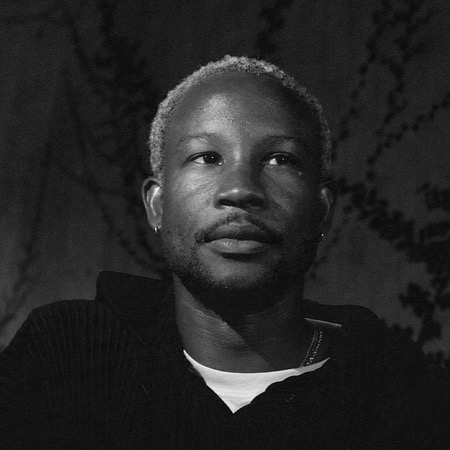
The story of My Father’s Shadow starts, as most important things do, long before the thing itself. 2012. A short film draft. Akinola and his brother Wale, circling a subject that was always going to be theirs to make and nobody else’s: their father, who died when Akinola was 20 months old.
The development process that followed took nearly a decade. Not because they were slow. Because they were serious.
“Before we even start writing, we come up with homework,” Akinola tells me. “A group of films we should watch that have similar themes. We take loads of pictures. When we’re together, we watch the films every night. We talk about what we like, what we don’t like. And then we write.”
The room where they wrote was stripped back: no WiFi, phones on do not disturb, a character bible to return to when the narrative lost its shape. Wale wrote the words. Akinola held the image. The division wasn’t hierarchical. It was architectural. Two people, two crafts, one shared subject.
“He deals with the words. I deal with the image and the picture. We don’t really try to make choices in each other’s departments. We’re very respectful of each other’s craft.”
They wrote in Ghana. They wrote in London. They wrote in Jamaica. The place mattered. They chose locations where they felt safe, unobserved, free to be uncertain without anyone watching. It took two and a half years of actual writing, spread across what felt like a lifetime of preparation.
The notes came in from financiers and development executives. Many took it seriously and tried. Some they rejected without ceremony, specifically, the cultural notes. Notes from people who didn’t understand why children in a Nigerian household don’t simply confront their father about his absences.
“You’ve obviously not come from an African household,” Akinola says, with a calmness that makes it funnier and sharper at once, “because you get a dirty slap.”
The notes they listened to were about human emotional truth: what it feels like to lose someone, to miss someone you never properly knew, to grow up in the gap a person leaves behind. Culture, they knew. Emotion was the conversation worth having.
Brothers, Memory, and the Weight of What You Didn’t See
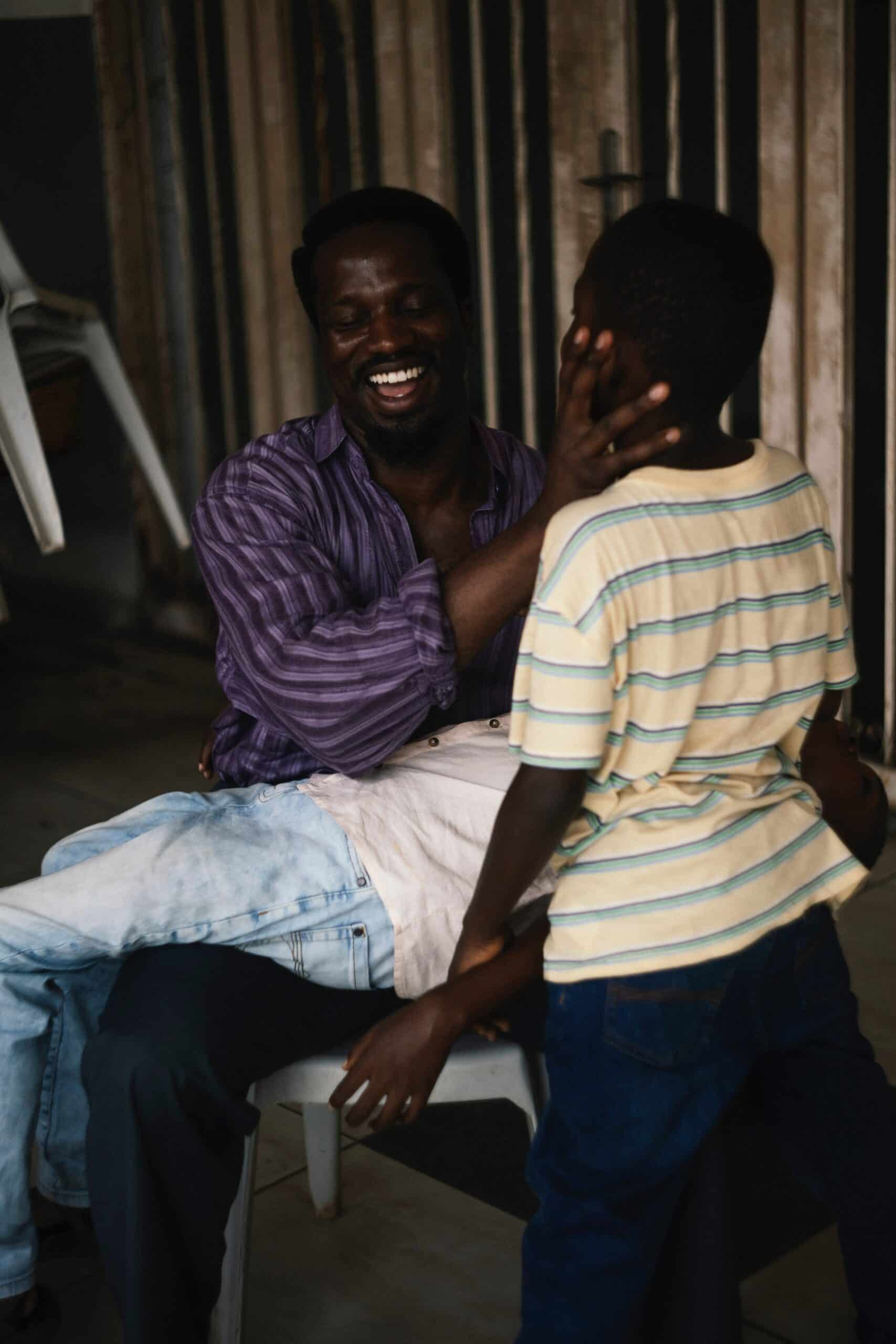
Here is the thing that sits at the centre of this film and refuses to move: Akinola was 20 months old when his father died. Wale was older. They have different relationships to the same absence.
I asked him how you negotiate that in a writing room. Whose version of events takes precedence? He paused before answering, not because the question unsettled him, but because the answer is more precise than it might appear.
“There’s a division of power, a division of labour. He’s the lead writer. I contribute, but my brother is the lead writer and I’m the director. But as brothers, we’ve known each other all our lives. We don’t really hide things from each other.”
What they share, he says, is something their mother installed in both of them: a way of seeing the world, a set of things they want to try and achieve, a mutual understanding that the work they make is not just for themselves.
“We’re trying to create work that’s very exposing, but not for the sake of it being exposed. We feel emotionally prepared enough to try and create a template for people like us moving forward. If we use ourselves as the platform for that, maybe other people feel more comfortable being vulnerable.”
There’s a quiet radicalism in this. Two brothers making a film about their dead father, not as therapy, not as confession, but as an offering. Here is what it looks like to grow up without someone, here is the specific texture of that absence in a middle-class Nigerian household in the 1990s, here is a template for the grief you haven’t been given language for yet.
The Political Choice of 16mm
Subscribe to MUBI and get your first 30 days free.
Shooting on 16mm film in Lagos was not, Akinola is clear, a romantic gesture toward analogue warmth or festival credibility. It was a political decision. He stated it early, held to it when people assumed he’d eventually switch, and shot on film with his own money first, before he ever asked to use anyone else’s.
“When you shoot on film with your own money, you realize the level of difficulty you’re setting yourself. When you shoot on other people’s money, you don’t have that same sense of trepidation. For me, it was very important to be respectful of what I’m doing, to have given the time and thought to how I’m going to shoot on film.”
Film forces commitment. You can’t shoot excess. Every take is a decision, not a safety net. And in that discipline, Akinola found something he wanted to extend to his entire crew: the signal that you’ve thought about this, that you’re prepared, that their time and craft are being honoured.
But then he says the thing that makes the argument land on a different register entirely.
“The representation of Black people needs to be photographed in a way that shows how beautiful we are, how dynamic we are, how important where we’re from, our culture, our cities, hair, features, clothing. Film adds a certain level of texture that digital doesn’t quite do.”
And then: “If we don’t prioritize our own beauty, no one else is going to do that.”
He says it like a fact, not a manifesto. Like something that was always obvious and simply needed stating. When he is shooting Black subject matter on a narrative project, he says, they shoot on film. That’s the way it is. Not a debate. Not a negotiation. A decision he made and owns completely.
“Fortune favours the brave. If we’re only making one film, let’s put our heart and soul into everything.”
The Lagos Nobody Was Showing You
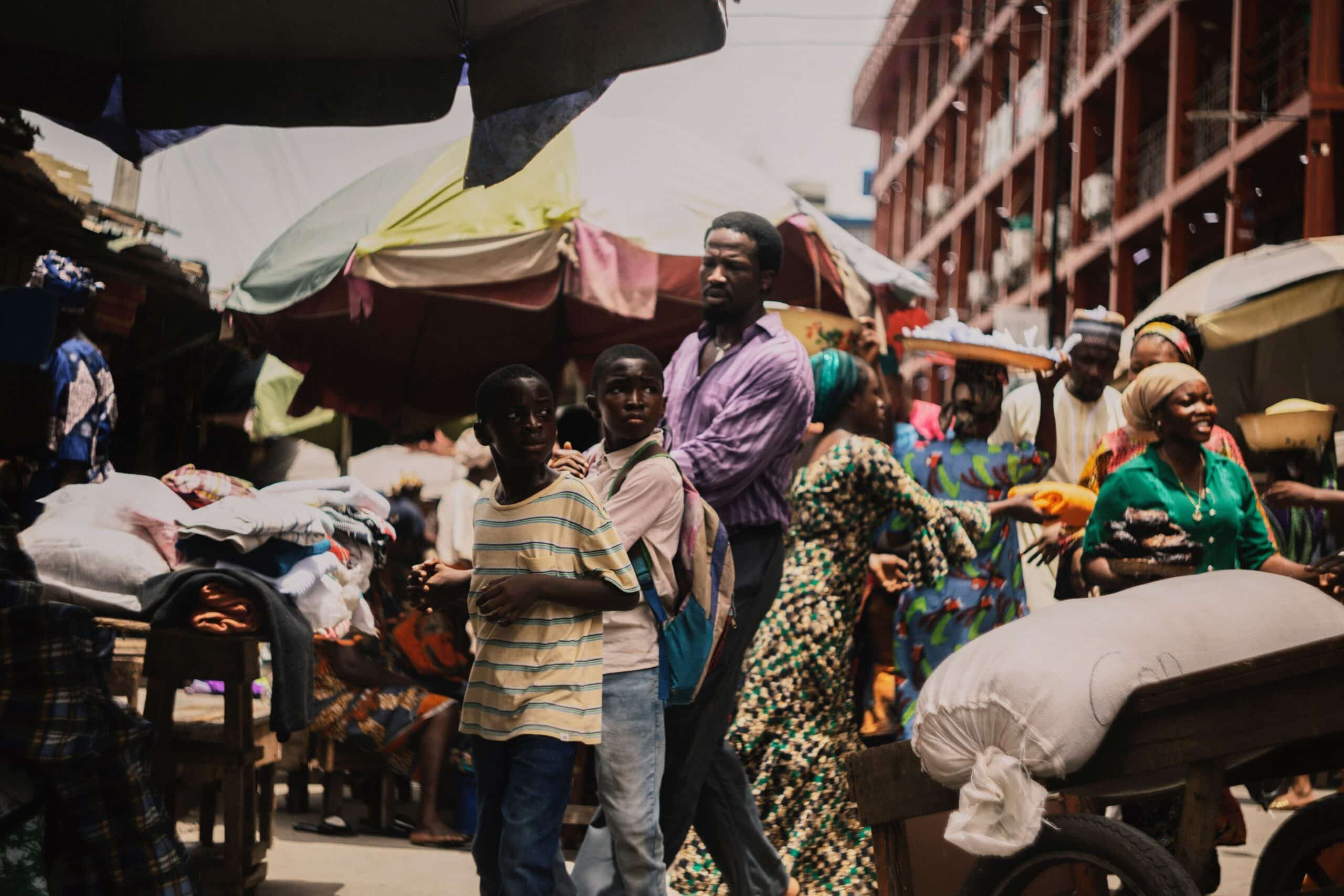
I was in Ghana when I first encountered how Akinola frames a city. There is a precision to it that isn’t clinical. It’s intimate. He doesn’t observe Lagos from outside. He remembers it from inside.
“People are like, oh, Lagos is a party town, it’s non-stop. That’s not the Lagos I grew up in. I grew up on the mainland. It was quiet, it was slow, it was boring at times.”
His Lagos was an estate. PlayStation at a friend’s house. Football in the street, or watching your brother play. Riding the local bus home when your mum was out of the country. Saving up to buy TomTom from the Malam. Fan Ice. Choco Milo. The yellow buses with the black stripes that mostly don’t exist anymore. The Okada that’s been regulated out of whole districts. A city being slowly reordered into something more legible to outsiders, and in doing so losing the specific texture that makes it home.
“How do you ground a lot of these experiences that you had? Because of globalization, they’re becoming less and less prominent.”
The visual brief for the film was to capture what remains before it disappears. Not the Lagos of poverty porn, not the Lagos of the Afrobeats video, but the Lagos of people in the middle. Not exceptional. Not suffering. Just living. The majority. The people who almost never see themselves on screen.
“Part of my practice has always been about the mundane. The people in the middle. Because that probably makes up a larger percentage of the population.”
The production worked because of almost a decade of groundwork. A service company, local relationships, area boys and local leaders and government contacts built over years of shoots. Not access bought from the top down, but access earned from inside out. A British filmmaker with the best intentions couldn’t have made this film. The work belongs to where it comes from.
What It Actually Takes to Get a Film Made
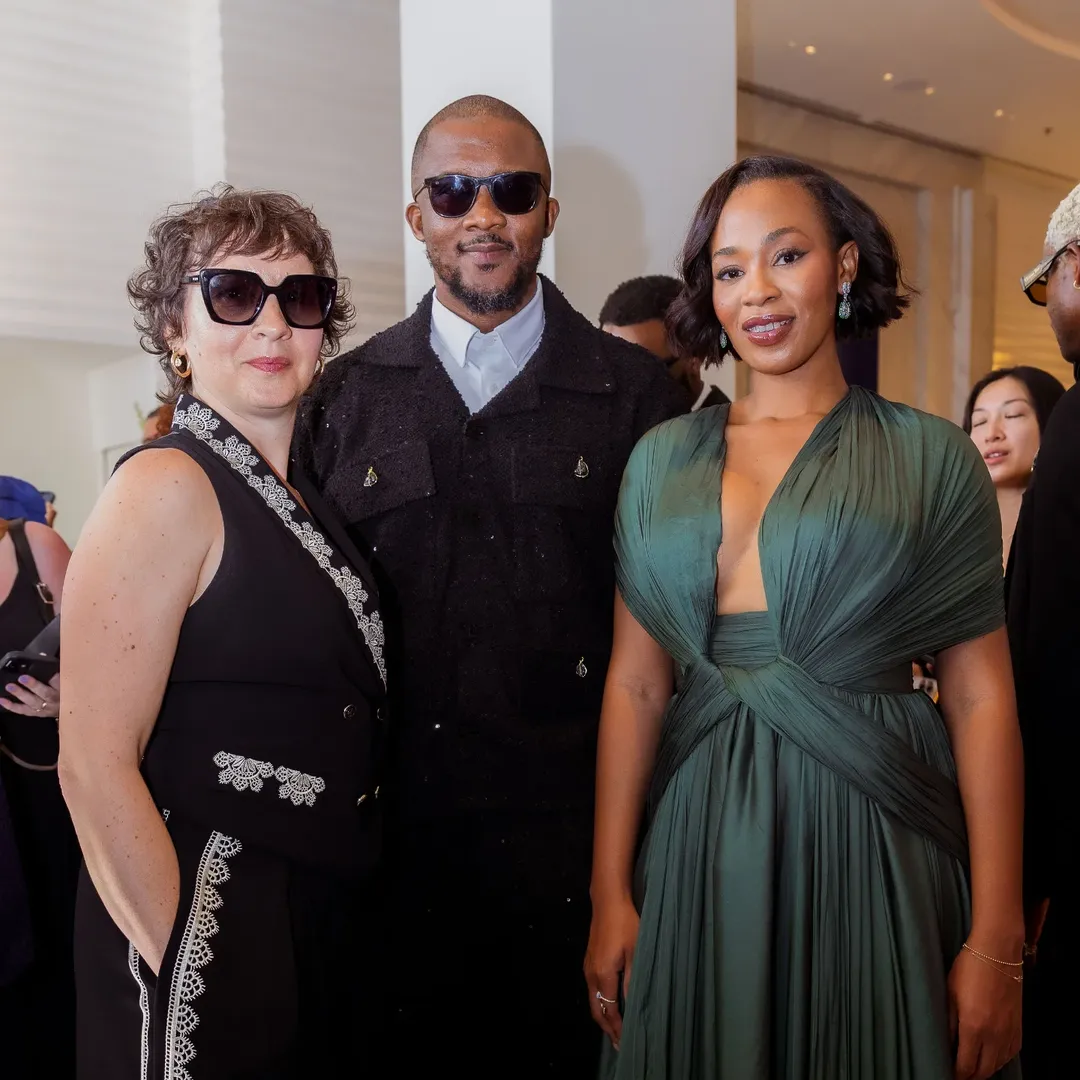
BBC Film and BFI co-financed My Father’s Shadow. MUBI completed the funding. This is a Nigerian story that required a UK institutional pipeline to exist. Akinola doesn’t look away from what that means.
“Just because somebody has money doesn’t mean they’re the right person to work with. I always try to look at the credits, because the work I like, I’m interested in the people who make the work I like. There’ll hopefully be some natural synergies.”
He talks about finding allies, real ones, not just people who can write a cheque. He quotes OutKast: not everybody with dreads is for the cause. Sometimes your own people give you the most friction. The industry is full of well-meaning people who ask questions based on their own cultural frame and can’t quite understand why the answer doesn’t fit.
The story he tells about a 2018 documentary shoot in Nigeria is one of the most instructive things he says. A film about Fela Kuti. A brand job, routed through a UK media company. A producer he trusted, someone he’d worked well with before, someone he believed was one of them, came to Lagos and something shifted. She started paying local crew on 30-day invoice cycles. She treated Nigeria as a place where things could be done cheaply, where the labour could wait, where the dignity of the people doing the work was negotiable.
His brother quietly bankrolled the production to keep it alive. Akinola only found out after the shoot was over. When his brother messaged him and said: if I don’t get paid within a week, that’s the end of my company. Akinola sent one message up the chain. His brother got paid within the day. He never worked with that producer again. He never asked for an explanation. He didn’t need one.
“If you come to Nigeria and think you can do things on the cheap and you don’t want to respect people, you automatically take a position where you don’t think the craft of what people in Nigeria are doing is worth treating with a certain level of humanity and dignity. I can’t be a part of that.”
The thing that makes this story land isn’t the betrayal. It’s what he learned from it. You have to be careful of who you bring home. Not every ally is an ally. Not every person who says they love the culture loves the people in it.
He chose his producer for My Father’s Shadow, Rachel, the way he chooses all his key collaborators: he tested the relationship at a smaller scale first, then trusted what the test revealed. His editor, Mexican, his first English-language film, was chosen because Akinola needed someone who understood magic.
“Culturally, Mexicans believe in magic. I don’t want to have to explain to somebody what magic is.”
The Score as Devotion
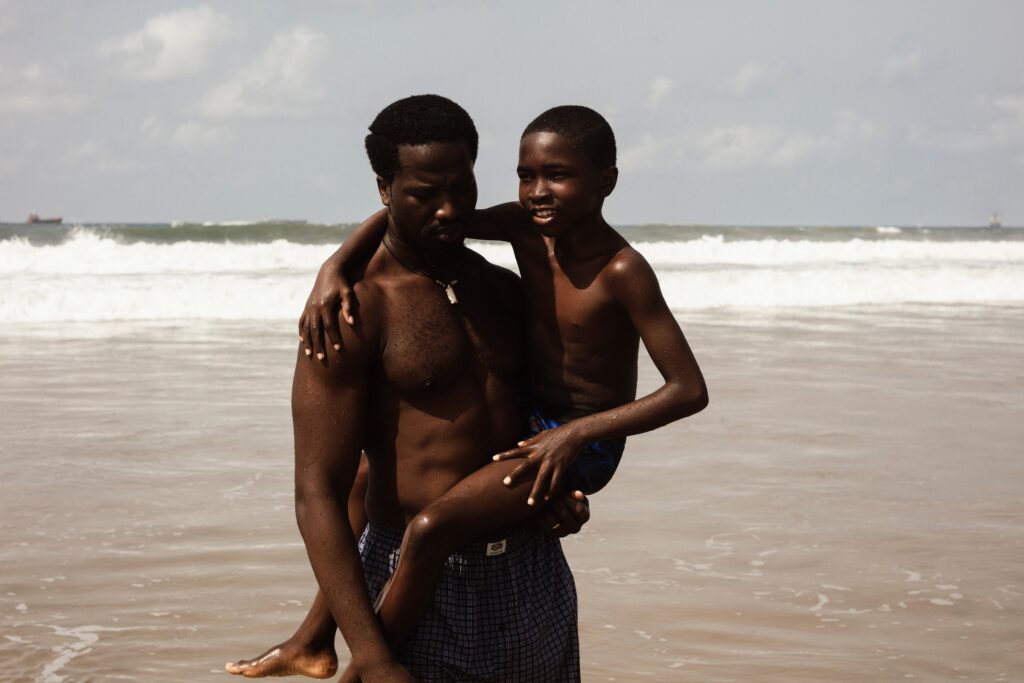
There’s a pattern in how Akinola builds his collaborations. He worked with Duval Timothy on a film about his mother. Now here is Duval again, scoring a film about his father. That’s not coincidence. That’s trust, accumulated and returned.
Duval is part Sierra Leonean, deeply invested in his community, recently a father himself. He came to the film not as a musician with ideas, but as someone who watched it and asked: what does this scene need? That distinction, serving the emotion rather than asserting your own voice over it, is exactly what Akinola means when he talks about collaboration.
“He didn’t come like, oh, I’m a musician and I’m gonna make the music. He watched the film and was like, I’m gonna make the music that works for the emotion of a given scene. That’s a very important distinction.”
CJ Mirra came through Rachel. Akinola describes him as a “lovely, geeky weirdo,” the kind of person he can have long, genuinely philosophical conversations with, someone who gets lit up by the idea of pushing a medium as far as it’ll go. Together, Duval and CJ built something that was designed first for a cinema auditorium: spatial, textured, low in the frequencies that make a room feel inhabited.
“If you plug the film into an amp and a sound system, it’s gonna be pretty special,” he says. “We think ideas are what enable you to be ambitious, not resources.”
It’s an Easter egg for anyone watching with good speakers. The full weight of what they made only becomes clear when the sound has somewhere to go.
What the Awards Change, and What They Don’t
The BAFTA is in the studio. The Gotham Award. The Cannes laurel on the poster. Akinola admits he sometimes forgets about the BAFTA until he walks into the room and sees it.
What has changed: more meetings. More pitches reaching the right rooms. More people return his calls because they’re curious where this thing goes next.
What hasn’t changed: the structural bias against African cinema, the quiet assumption that African stories don’t travel, don’t track, aren’t prestigious, doesn’t vanish because one film broke through. It has to be broken through again, with the next film, and the one after.
“There’s definitely an unconscious bias with African cinema whereby it’s not considered prestigious. So you never really know.”
What he knows for certain is that the method worked. The film didn’t reach people through awards. It reached people because before it opened, Akinola went to Dublin, to Birmingham, to Manchester, to Milan, to Germany. He showed the film in Black communities, in African diaspora spaces, to rooms of people who had never had a filmmaker come to them before.
“As Africans and Black people, nobody really tries to engage with our audiences. The reason why our film has punctured consciousness is because we spent a lot of time going into the community and showing the film.”
They are now planning the same approach in Brazil, where MUBI doesn’t yet have the film. Local screenings, direct engagement, the film going to the community before the community is expected to come to the film.
He talks about the messages he gets every day. Black and African filmmakers and just filmmakers, writing to him wanting to know how it was done. He can’t make every film. But he can share the emails, make introductions, be a resource, explain the path. Not because it’s a duty, but because that’s what the work is for.
“The stories I want to tell, I know they’re for the salvation of my people. I just want people to see, to try and understand how we are the way we are and what circumstances have affected that. As a point of urgency.”
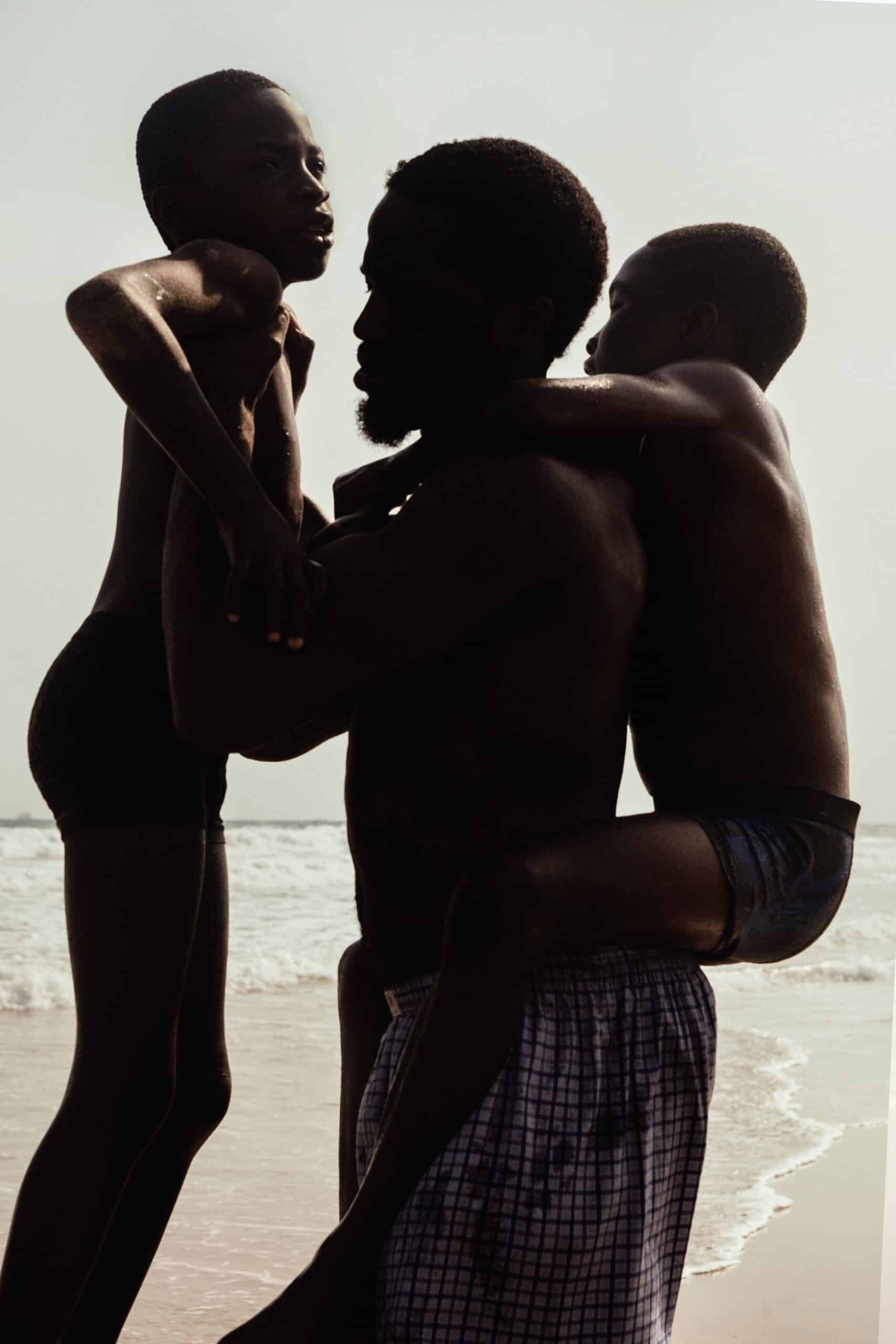
He is not going to make a Marvel film. He has not been offered one, and if he were, the time it would take would pull him away from his community. That matters more right now than any other metric.
“What I love about filmmakers on MUBI is that they spend their whole lives making films. For me, that’s been the dream since I was in my 20s. I just want to spend the rest of my life making films. I want to raise a family and have that family be around the films I’m making. I want my kids running around on set.”
He says this without sentimentality. It sounds like a plan.
My Father’s Shadow is streaming now on MUBI. Subscribe and get 30 days free. A theatrical release in Nigeria, and potentially Ghana, is being planned for summer. Akinola and his team will announce when confirmed.
This feature was created in partnership with MUBI.