

The Brutal History of African Architecture
A cylindrical tower and a stepped concrete pyramid impose themselves on the skylines of Nairobi and Abidjan. Built in the years after independence, both were enlisted to project progress and permanence, giving physical shape to the ambitions of newly sovereign nations. Half a century on, one still hosts the political life of a capital. The other stands empty.
Brutalism emerged in the United Kingdom in the mid-twentieth century, a style defined by raw, exposed concrete, monumental massing, and stark geometry. Developed in response to the reconstruction that followed the Second World War, it offered a practical way to build quickly while projecting institutional authority. For that reason, newly independent nations across Africa adopted and adapted it to assert sovereignty, signal modernity, and cement new national identities.
The style reached its global peak in the 1960s, coinciding with the wave of independence sweeping the continent. In 1960 alone, seventeen African countries gained independence in what became known as the Year of Africa. Governments took up Brutalism to build universities, civic centres, banks, museums, and conference halls, turning concrete into a symbol of self-rule. These commissions reshaped skylines across Ghana, Senegal, Côte d’Ivoire, Kenya, and Zambia, producing some of the movement’s most distinctive work anywhere.
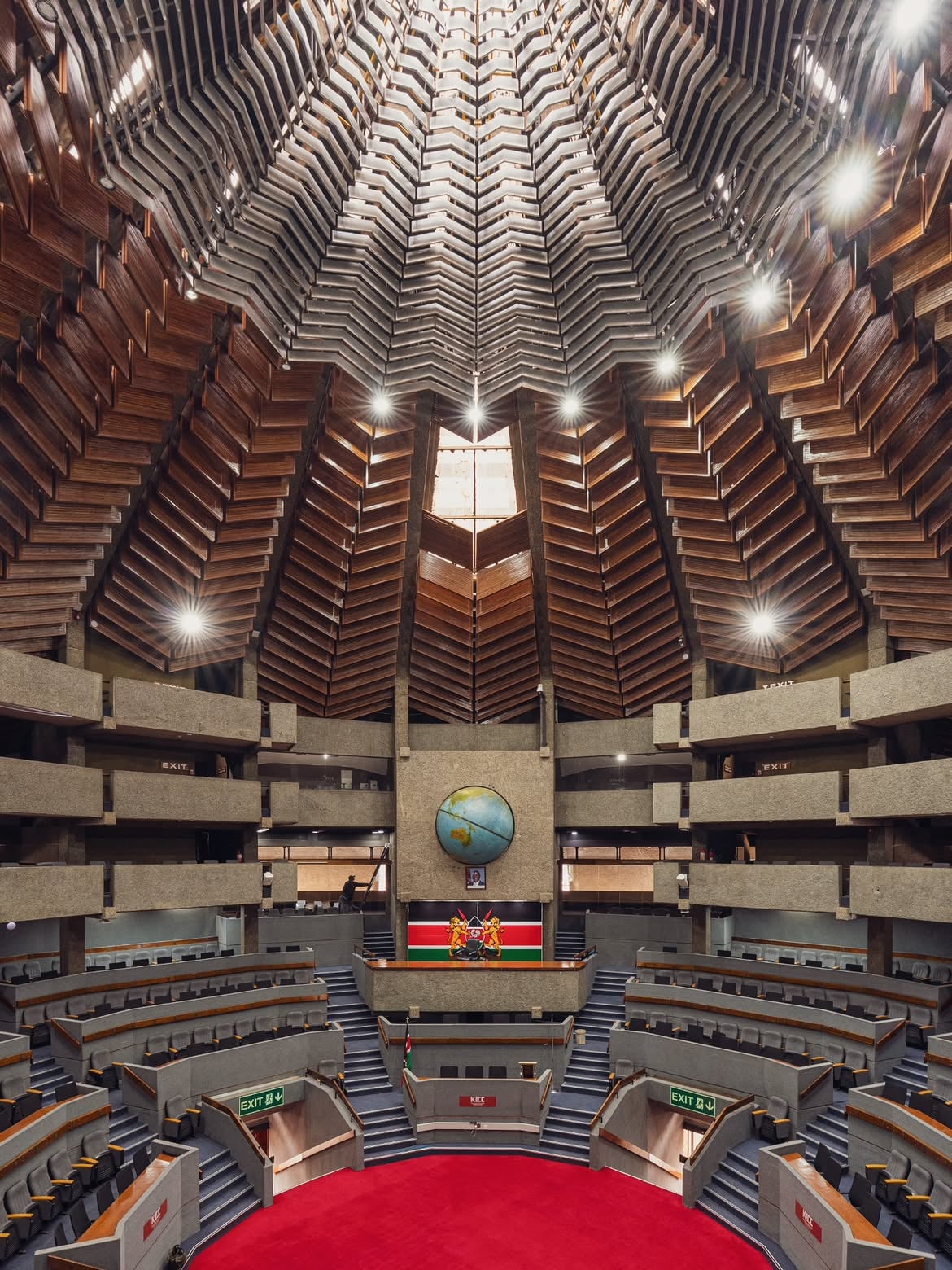
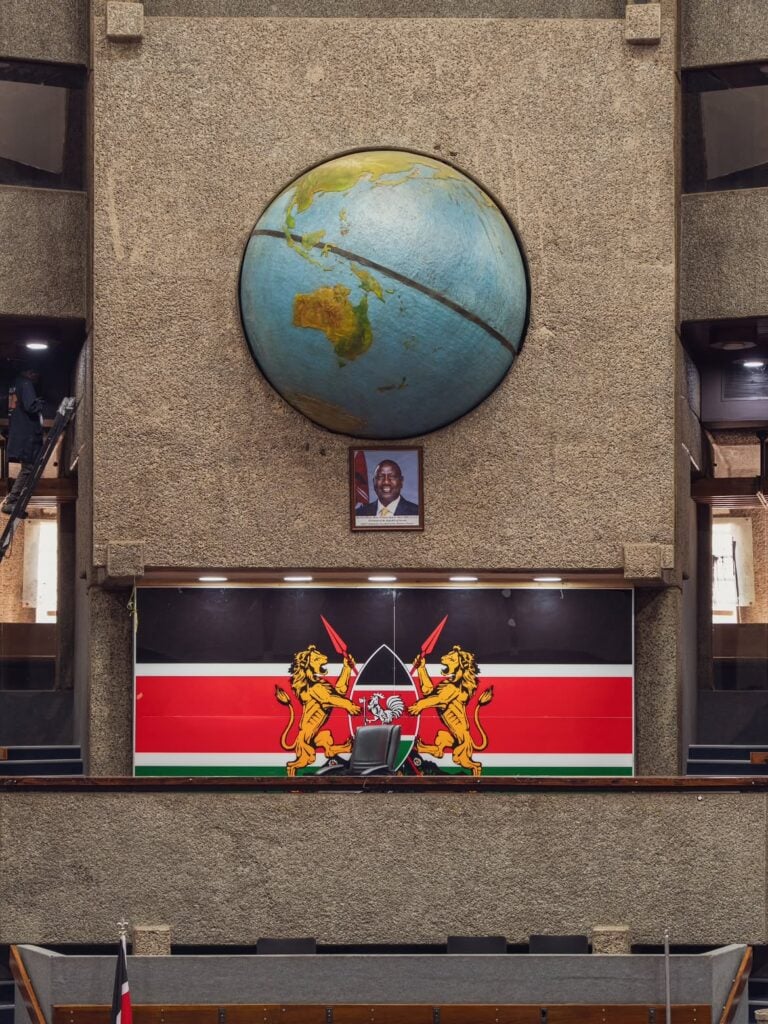
Consider the Kenyatta International Convention Centre (KICC) in Nairobi. Commissioned in 1967, four years after independence, and co-designed by the Norwegian architect Karl Henrik Nøstvik and the Kenyan architect David Mutiso, it remains one of the country’s most notable works of Brutalist architecture. The late Mutiso, Kenya’s first indigenous architect, recalled that the project began as a modest party headquarters and grew, at Jomo Kenyatta’s urging, into the tower that came to symbolise the nation’s ambition. The building embodied Kenya’s desire to establish itself as a political and economic force in the region. Its cylindrical tower rises above the skyline, its concrete mass projecting confidence and turning architecture into a statement of statehood. More than a landmark, it gave physical form to a new sovereignty and helped establish Nairobi as a centre for international diplomacy and exchange.
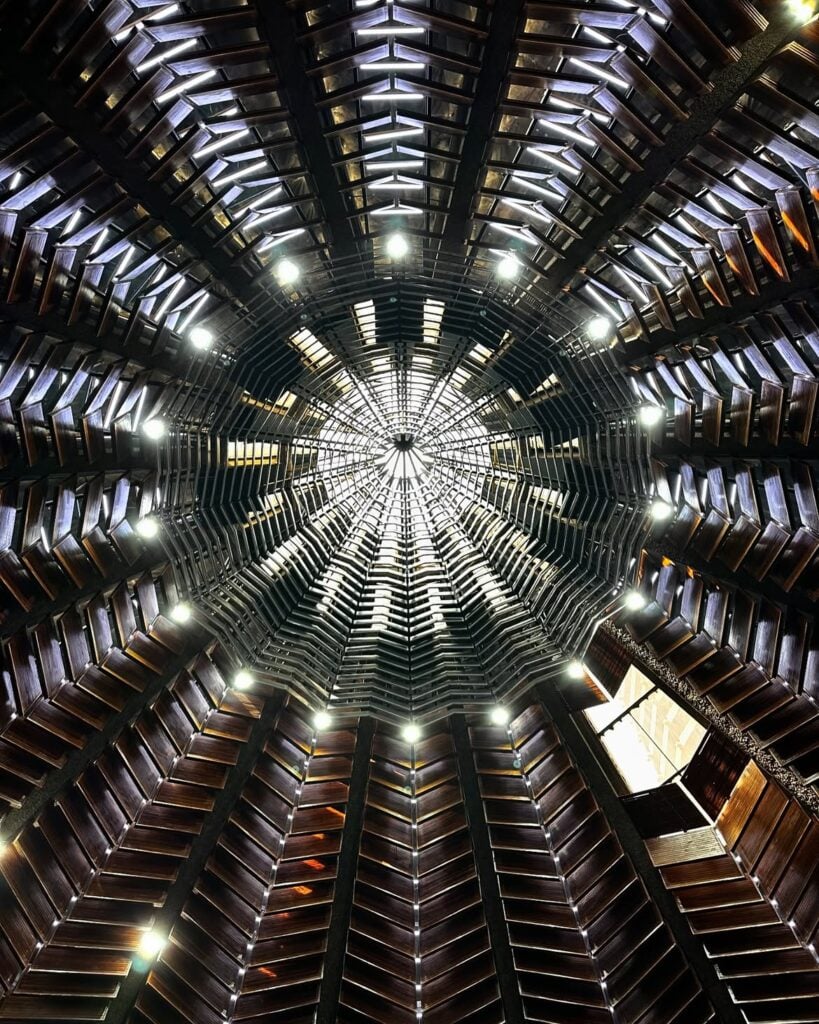
Inside, a sequence of retro-futuristic halls leads toward the plenary hall, where the seating encircles a central stage. By turning participants to face one another, the design encourages a sense of collective assembly, an echo of the national unity at the heart of the post-independence project.
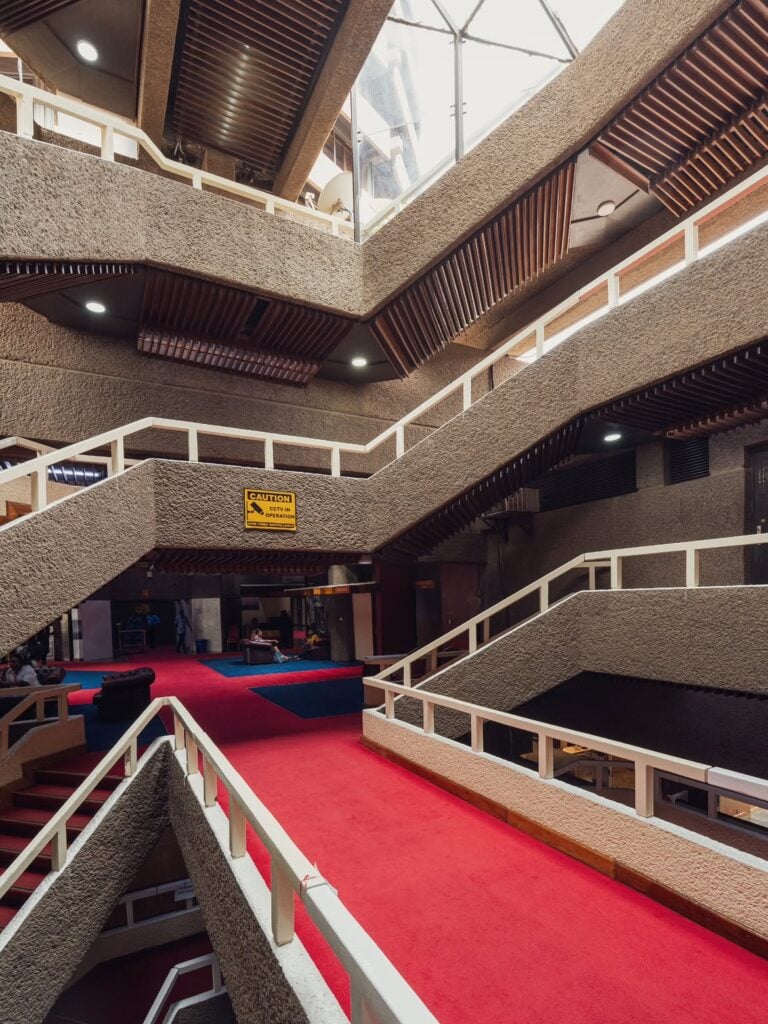
Since its inauguration in 1973, the KICC has served as a stage for Kenya’s national image, hosting political summits, international conferences, and cultural events. Its continued use reflects a design built to hold both political function and national representation. Tied to the wider ideals of Pan-African unity, it remains a place where Kenya’s political identity is performed and negotiated. Its endurance points not only to the ambitions of its founding moment, but to the role architecture can play in shaping national memory.
The continent’s neglected monuments show what happens when those ambitions age. Few illustrate the tension better than La Pyramide in Abidjan.
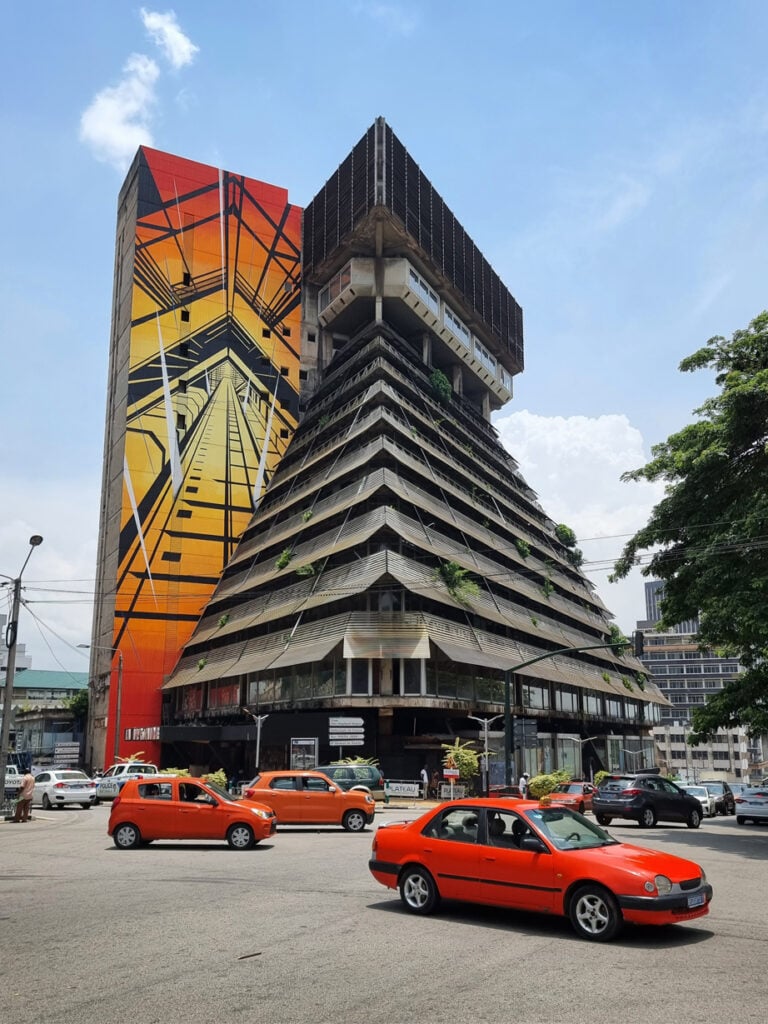
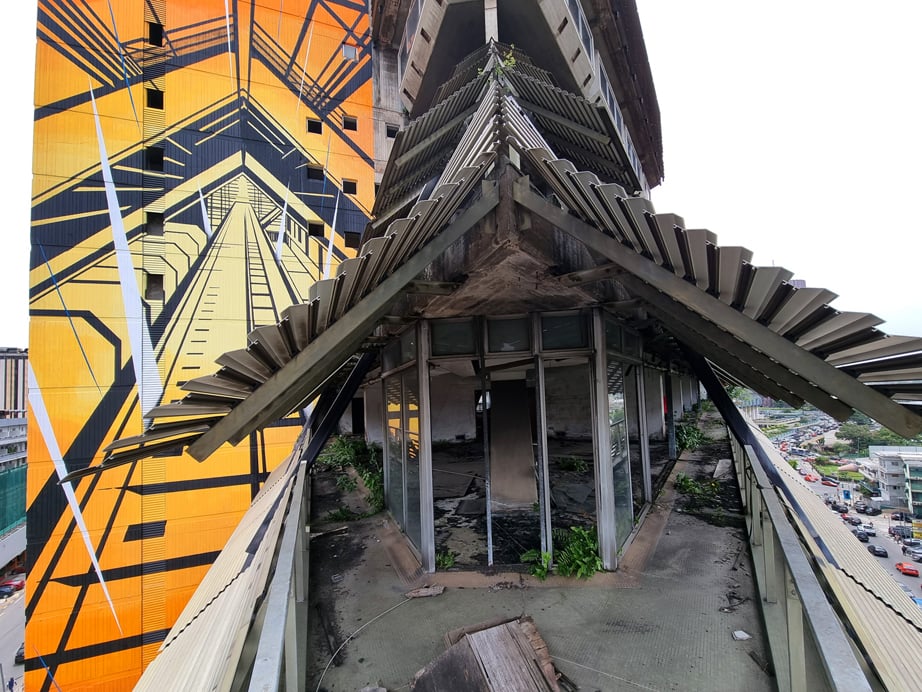
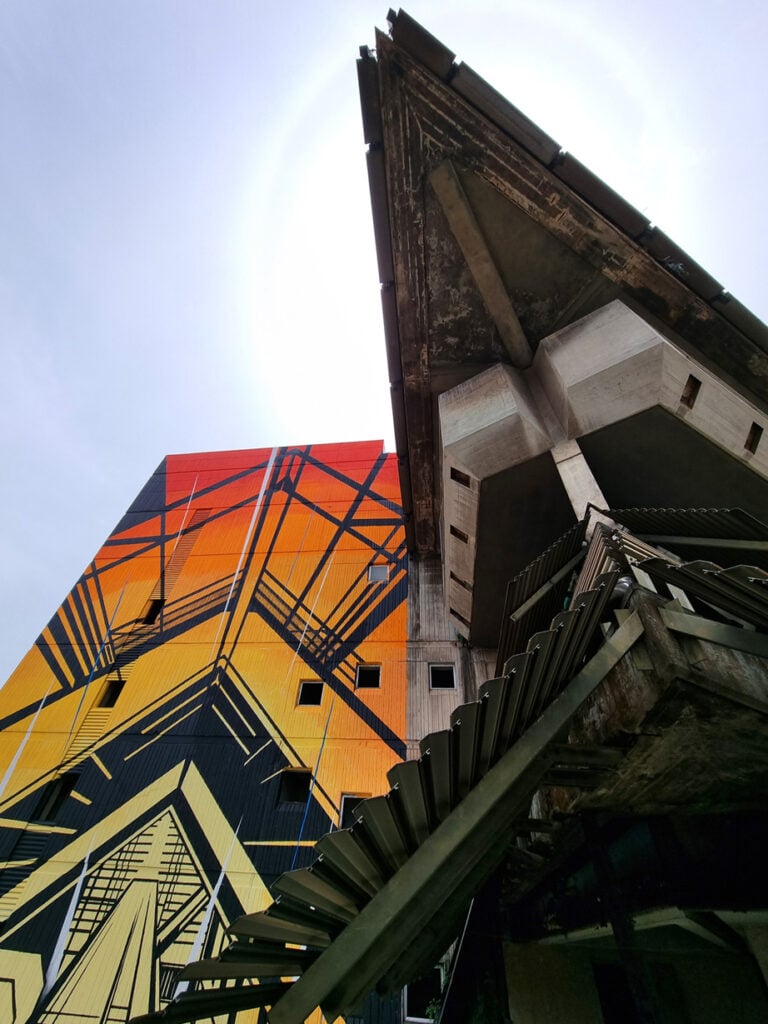
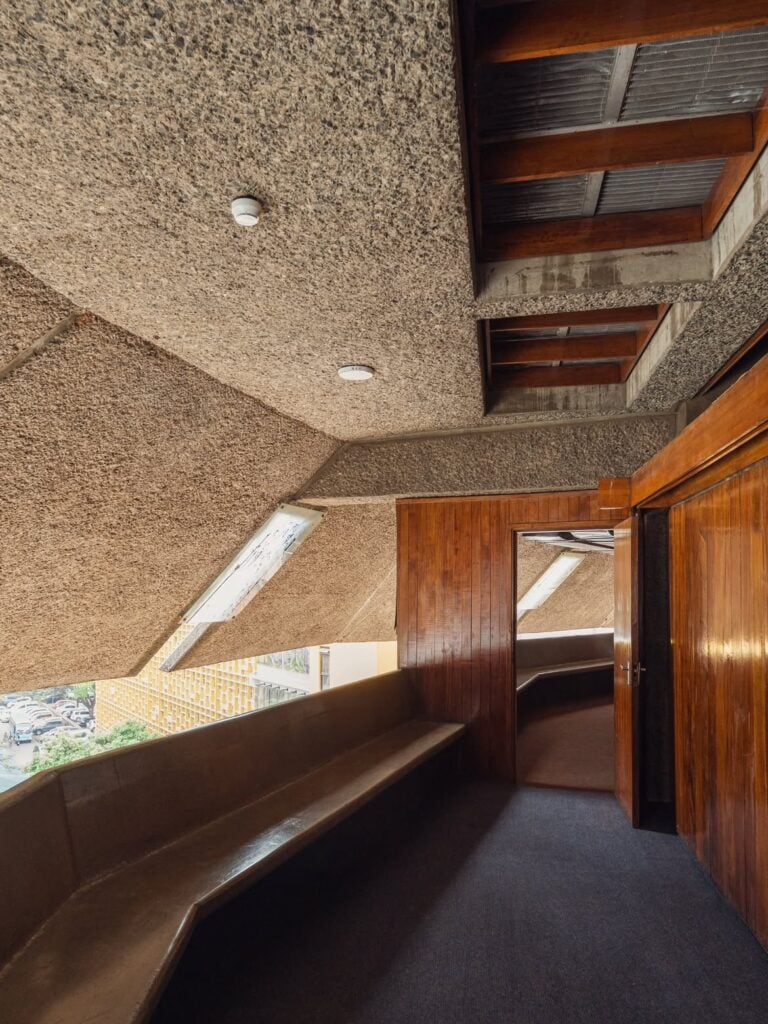
Completed in 1973 to a design by the Italian architect Rinaldo Olivieri, La Pyramide was built as a monument to the pursuit of modernity. Rising in tiers from a large cubic base, the stepped pyramid appears to hover over the Plateau, the city’s business district, carrying the optimism of the Ivorian Miracle, the economic boom that followed independence. Its triangular form, long associated with strength and stability, projected a vision of progress built on solid foundations. Among the first high-rises in the Plateau, it was intended to house residences for the city’s elite alongside offices and shops. The promise proved harder to keep. Political instability and an inefficient ratio of rentable space to circulation drove its decline, and it has stood largely empty since the 1990s. An earlier renovation announced in 2011 did not proceed, held up by a long dispute over the building’s ownership. La Pyramide returned to state ownership in 2021, and the government has since proposed rehabilitating it as administrative offices, though partners and financing are still being sought and work has yet to begin.
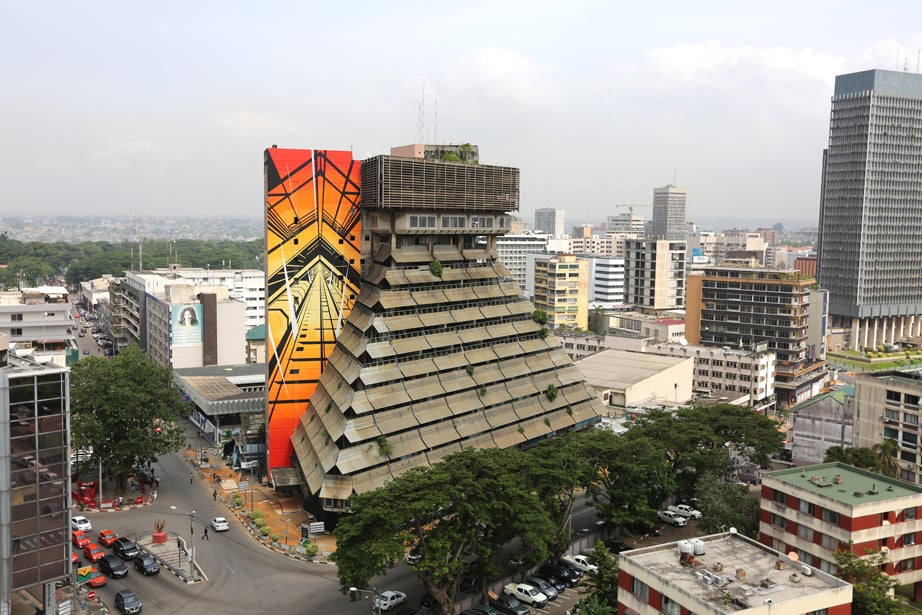
Stripped of its original promise, La Pyramide shows what remains once the novelty wears off. More than a case of unrealised potential, it holds the tensions that came with independence itself: a relic rather than a ruin, and a record of the complicated decades that followed. As the architect and writer Shawn Adams observes, “the contrasting trajectories of KICC and La Pyramide reveal that architecture alone cannot sustain the ambitions it was built to represent.” Both rose from the same post-independence optimism, when governments funded landmark projects to signal progress. The KICC’s continued relevance, Adams suggests, rests on a degree of institutional continuity that has kept it at the centre of civic life. La Pyramide shows what happens when that continuity erodes.
Read together, the two buildings offer a more layered picture of post-independence Africa. One still functions as a living venue for political and cultural exchange; the other holds the strain of ambition meeting economic uncertainty. Their contrasting legacies show that preservation is more than a matter of maintenance. It decides which histories are remembered, and which visions of nationhood are carried forward.
African cities had long been shaped by European powers that used architecture to extend their imperial reach. Independence offered an opportunity to rethink the built environment through an African lens. As the modernist vocabulary spread, architects across the continent adapted it to local climates and materials, producing climate-responsive buildings that brought international principles into conversation with regional traditions. The KICC combines the monumental language of modernism with elements of traditional Kenyan building; the conical roof of its plenary hall echoes the thatched forms of rural dwellings. That work challenged the idea that modern African architecture had to be imported. It could be authored and adapted by the people it served.
That shift is clearest in the inaugural Pan-African Architecture Biennale, curated by the Somali-Italian architect Omar Degan, which opens at the KICC on 7 September. Held in one of the continent’s most enduring post-independence landmarks, the event turns the building into a symbol of Africa reclaiming authorship over its built environment. Adams argues that “preservation is fundamentally political because it reflects what societies choose to value and carry forward. Buildings embody histories, ideologies, and moments in time. When we decide to preserve certain structures and allow others to disappear, we are effectively deciding which stories remain visible.”
That distinction matters here. The KICC’s Kenyan co-authorship tied it to the social, political, and economic life of the new nation and let it evolve alongside it. La Pyramide, designed from abroad, grew increasingly detached from the society it was built for.
This is where the politics of memory becomes inseparable from preservation. Adams warns that African Brutalism is increasingly encountered through the way it is consumed. Circulated as photographs and social-media posts, the buildings risk being flattened into striking images, cut off from the political and historical conditions that produced them, and the ambition behind their construction is lost along with the meaning they once carried. The Biennale offers a way to push back. By gathering architects, scholars, and practitioners under the same concrete roof that once held the dreams of a newly independent Kenya, it reframes the preservation of African modernism as a live argument about which futures are worth building.
As Brutalism gains new visibility through social media and films like The Brutalist (2024), its meaning risks being reduced to atmosphere. To dwell only on how these buildings look is to lose the conditions that produced them. The question is not whether Brutalism deserves preservation because it is beautiful, but whether the stories held inside it are worth keeping. So long as the image travels further than the purpose behind it, African Brutalism will be admired and misread at once. Its legacy lies not in the permanence of its material, but in its power to shape who is remembered, and how.