

North African Design and Its Geographies
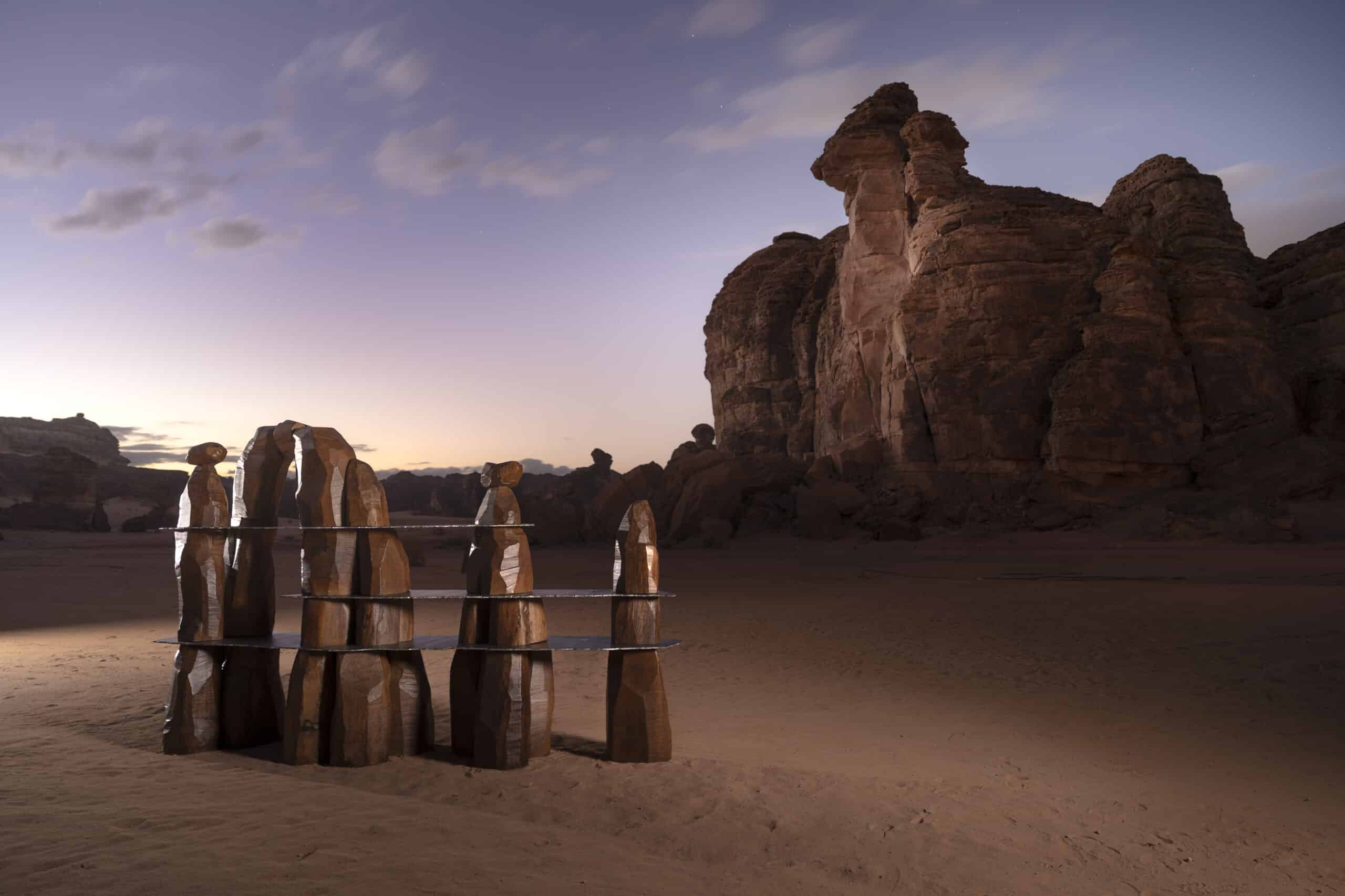
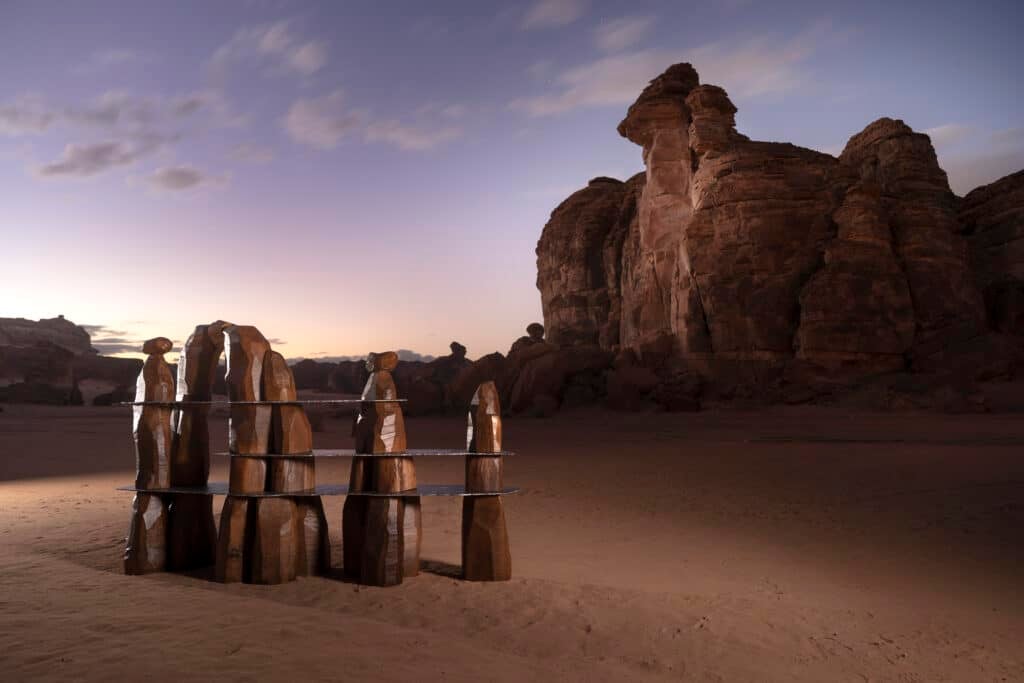
Above: ALTIN, Our AlUla Trilogy, Wadi. Photograph © Lorenzo Arrigoni
The Institut du monde arabe has named twenty-six finalists for the fourth edition of its Design Award, across four juried categories, showing at the IMA from 10 to 20 September with the ceremony held the evening before. A Public Prize, new this year, runs across the whole finalist pool and closes to online voting the week of 21 September.
Roughly a third of the field is North African-rooted, and the award tags each finalist by the country attached to the submitted project, which does not always correspond to where a designer is from or where the practice sits. Following the practices rather than the labels produces the nine below, three of whom arrive on the list through projects in AlUla, Dubai and Mosul, which is less an inconsistency in the selection than a description of how these practices actually operate.
 Impact Award finalist
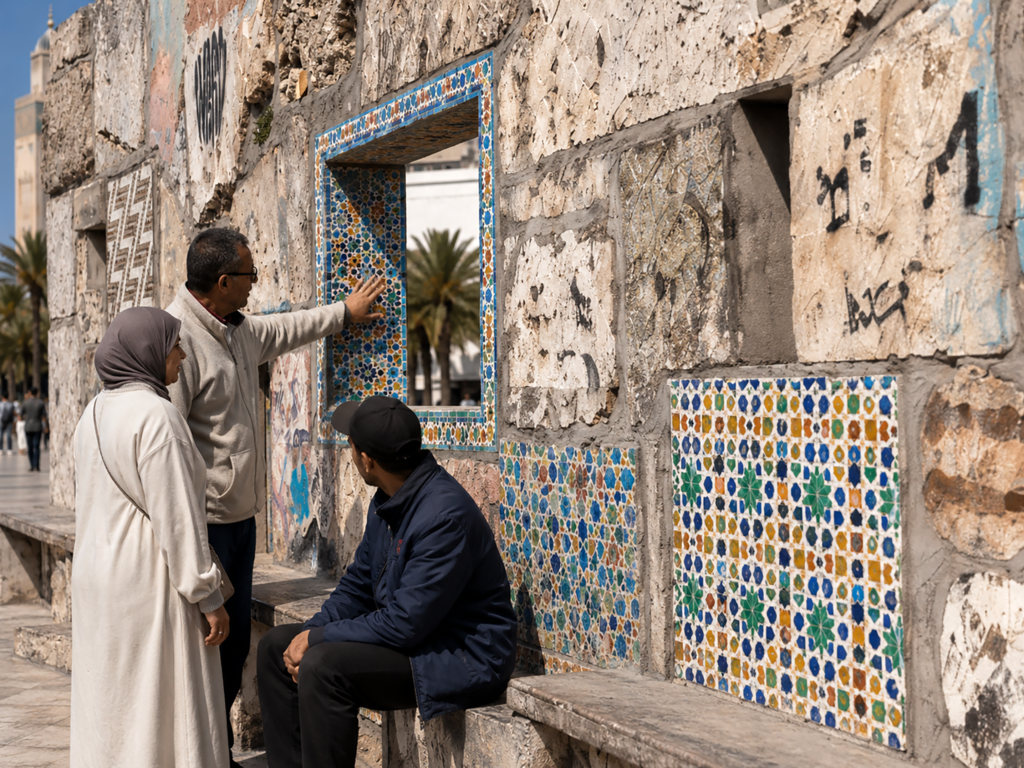
99+ X Architects, What Remains: Atlas of a Disappearing Casablanca (Morocco)
Alaa Halifi and El Yazid Boudraa run a Casablanca practice working across architecture, urban research, public space and adaptive reuse, and their finalist project begins from the fact that large parts of the city are currently being demolished, leaving displaced residents and a great deal of rubble. What Remains sets up a reuse protocol around that rubble, collecting it, transforming it and redistributing it, and in doing so builds what the practice describes as a micro-economy of recovery and craft out of material that the demolition process treats as waste. The interest here is that the project is not commemorating the neighbourhoods being erased so much as putting their remains back into circulation as a supply of both material and local work.
 Grand Prix finalist
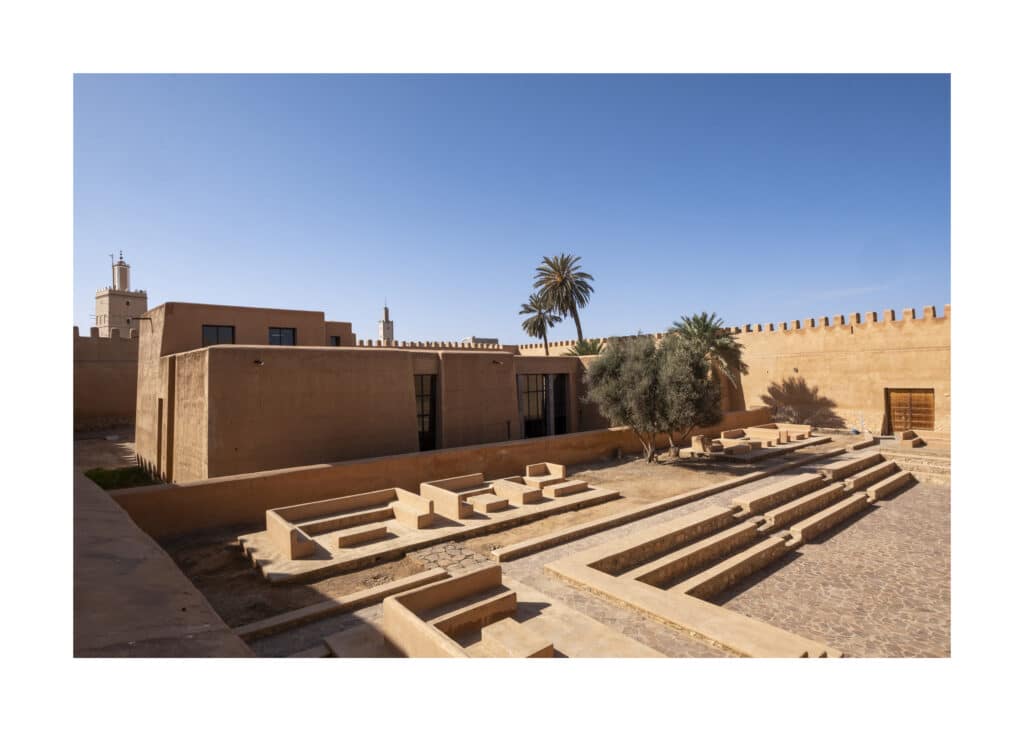
Studio Salima Naji, Tiznit Heritage Interpretation Centre (Morocco, 2013 to 2024)
Developed between 2013 and 2024 inside Tiznit’s 1810 ramparts, the centre is built entirely in rammed earth, which is the practical expression of an argument Naji has been making since she founded her agency in 2004 in favour of raw and bio-sourced materials. She has been based in southern Morocco since 2008, one of very few women architects working in the rural south, and her advocacy has gone into changing not only what gets built but the planning code that governs it. The building holds a collection of vernacular architecture presented as shrines and fragments, constructed on site and at scale by master craftsmen, so that the museum’s subject and its fabric are the same thing.
 Contemporary Craftsmanship finalist
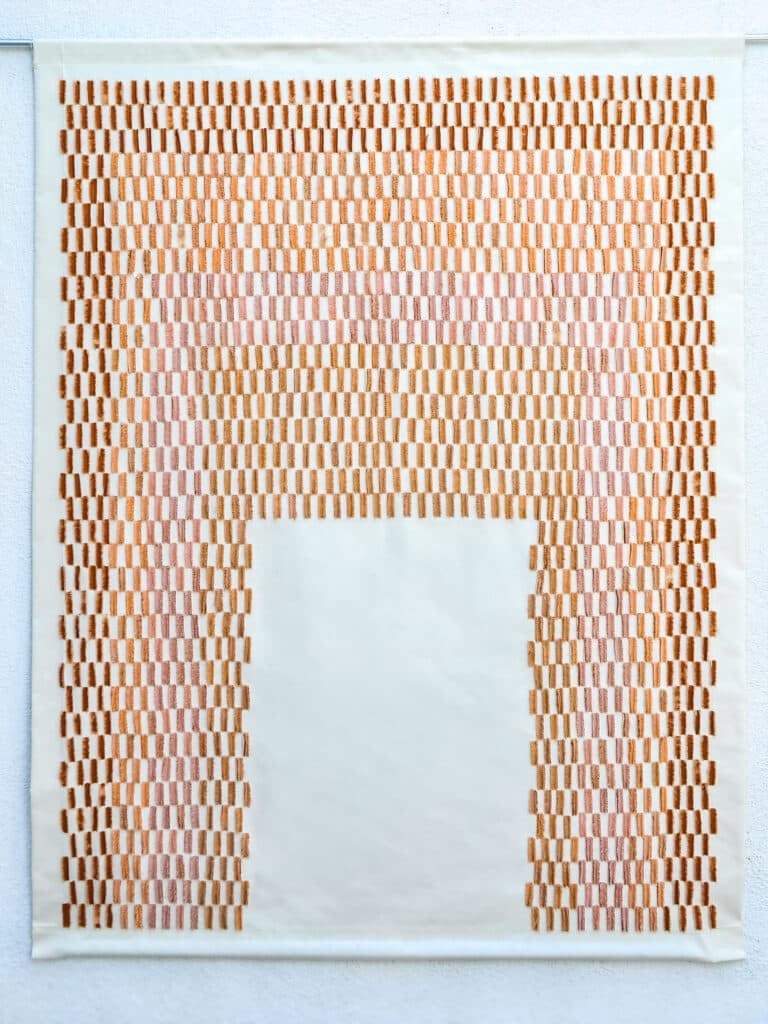
Imane Mellah, Bab (Morocco, 2026)
A Moroccan medina gate translated into textile. Just over a thousand muslin fringes, hand-cut from offcuts using the faux chenille technique, are stitched one at a time into a checkerboard drawn from Amazigh weaving, and the silhouette that emerges is a gate with its door left open as negative space. The word bab names a door and also a chapter, a category of knowledge, which is the sort of double meaning that usually gets stated in a wall text and here has been built into the object.
 Impact Award finalist
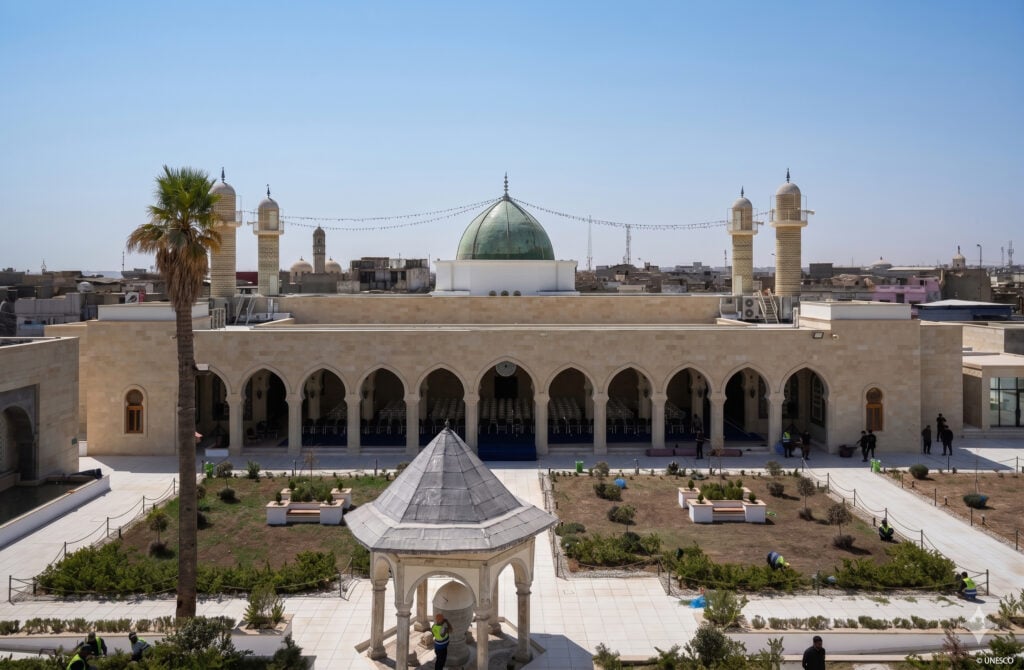
ADD Architects, Reconstruction and Rehabilitation of the Al-Nouri Complex (Iraq, 2021 to 2024)
Sherif Farag teaches architecture at Alexandria University and runs ADD Architects from the same city, and the practice won the UNESCO international design competition to rebuild the Al-Nouri Complex in Mosul, a project implemented by UNESCO on Emirati funding and since given post-completion honours by the AIA and the AAA. The IMA calls it one of the most significant post-conflict architectural heritage commissions, and the work combines conservation, archaeological interpretation and community-oriented design on a site of destruction. It is worth registering how many places that sentence passes through, an Egyptian practice working in Iraq on money from the Gulf and up for a prize in Paris.
 Emerging Talent finalist
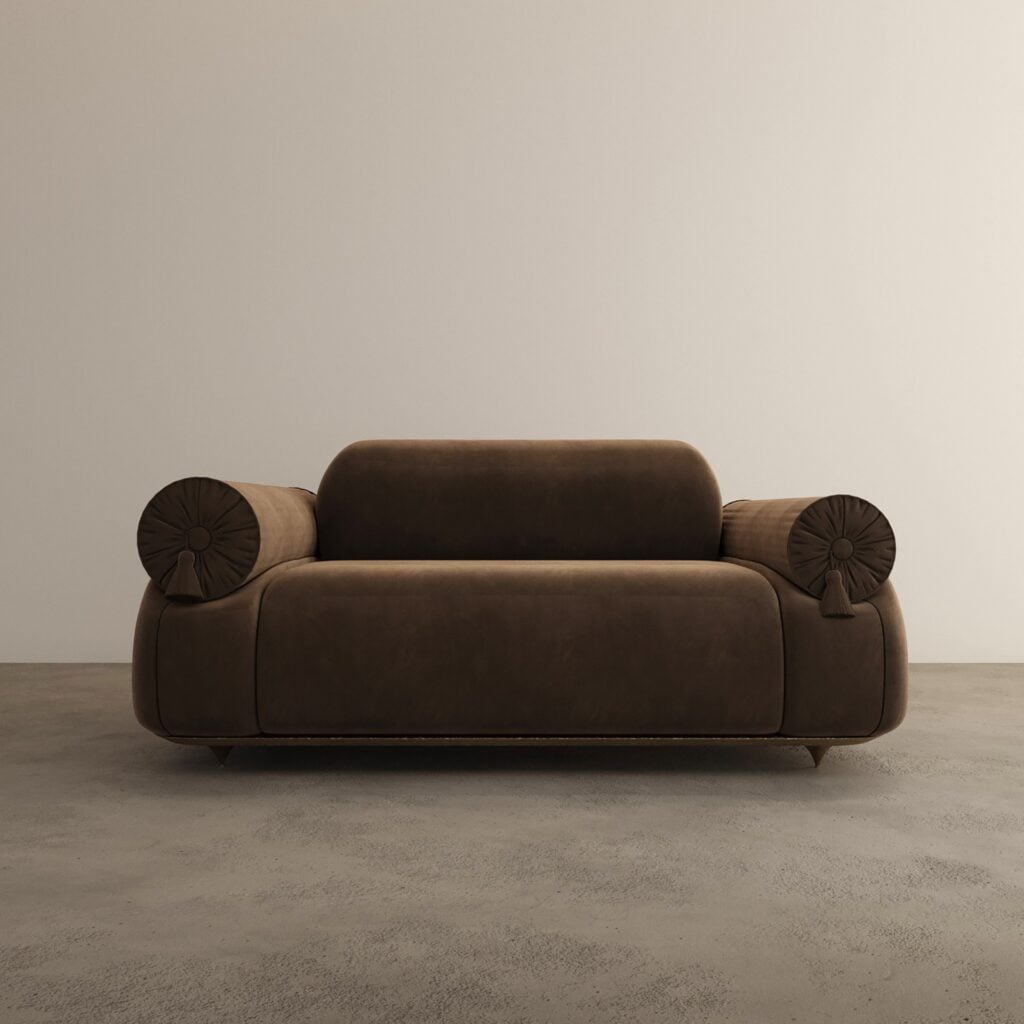
Othmane Bengebara, Irtah! (Morocco, 2026)
An ottoman made with Ateliers Jouffre Maroc, combining craft production, textile work and AI in the design process, and drawn from Futur Arab Tales, Bengebara’s research project on the narratives and savoir-faire of the region. The piece takes its argument from traditions of low seating and makes a case for slowness against contemporary acceleration, which is a familiar enough position until you notice that the object making it was designed with AI. Bengebara founded OBS in Morocco in 2020 and has taught at Mohammed VI Polytechnic since 2025.
 Emerging Talent finalist
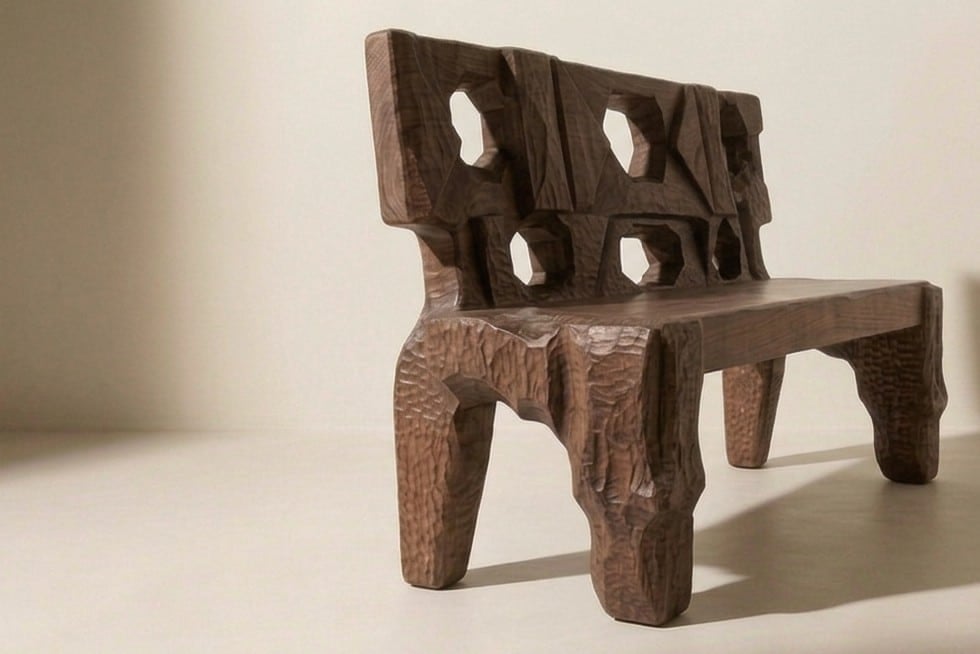
Djaffar Zizi, Afniq (Algeria, 2026)
The ancestral chest, a symbol of memory and protection, cut into a bench from a single raw log, with the trunk’s grain, relief and rough edges left in rather than sanded out. Zizi trained at the Beaux-Arts in Algiers and in Saint-Étienne, and draws on the landscapes and traditions of the Atlas.
 Contemporary Craftsmanship finalist
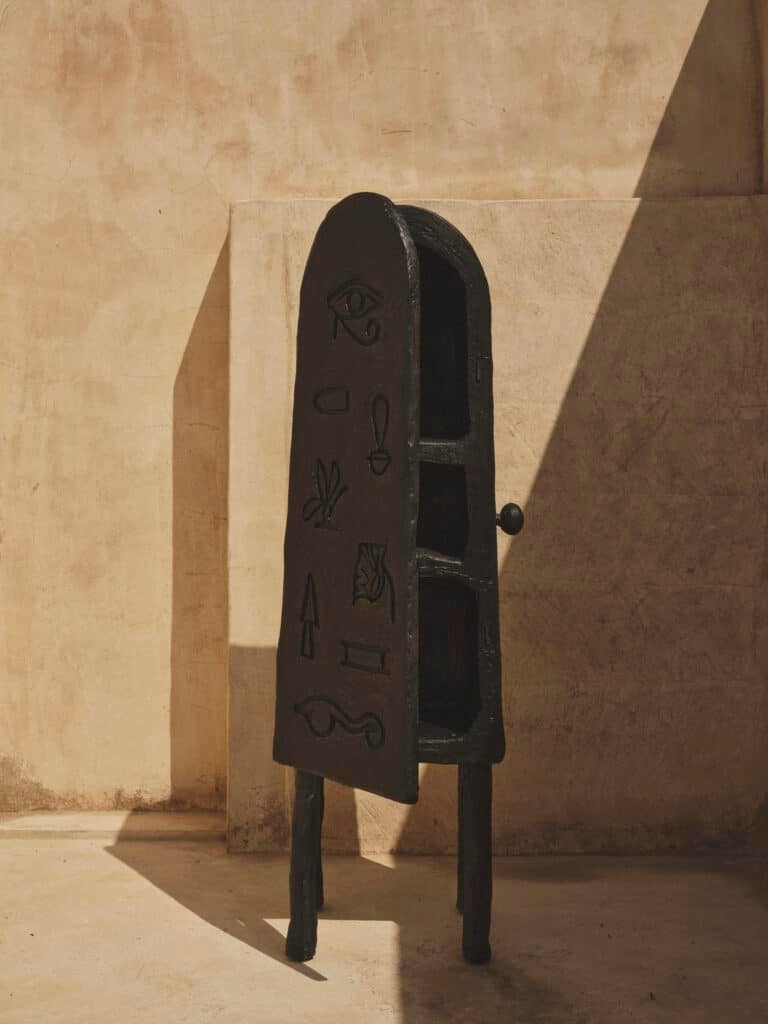
Studio Aya Moug, Byblos (2023)
Moug trained in fine arts and interior design in Cairo and Florence before taking a master’s in industrial design at Central Saint Martins, and Byblos is her first biomaterial, made from papyrus and developed as an alternative to stone and marble. Her project materials also point to papyrus’s role in pollution filtration and wastewater treatment, which puts the material closer to infrastructure than to surface.
 Contemporary Craftsmanship finalist
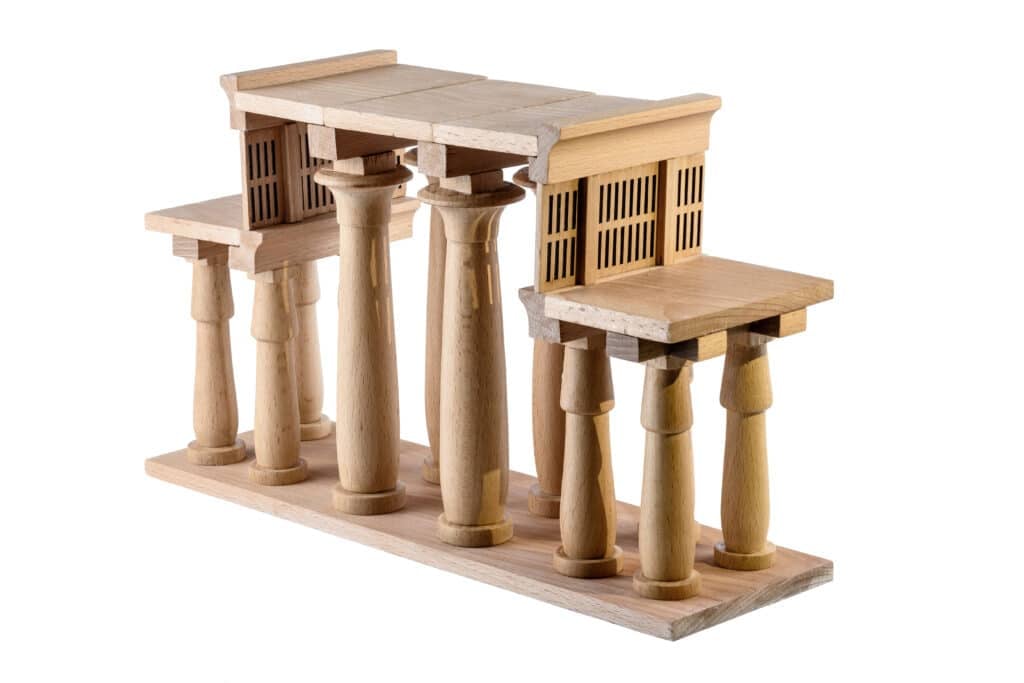
NJM, Karnak (Egypt, 2026)
Ahmed and Mariam Marei have reduced the clerestory of the Hypostyle Hall at Karnak to a twenty-eight-piece wooden block set that stacks on gravity alone, without glue, exactly as the original does. It is the most modest object on the list and the one most clearly designed to transmit something, using play to teach a structural principle to children and adults alike.
 Contemporary Craftsmanship finalist
ALTIN, Our AlUla Trilogy (2025)
Yasmine and Mehdi trained in interior architecture at ENSAD and in civil engineering, and built their practice inside a family business founded in 2005, through years of close work with artisans across Tunisia. The trilogy came out of an AlUla residency and consists of three pieces in palm wood, fibrillum and plant fibre, presented as a conversation between two palm cultures, the Tunisian one the practice comes from and the Saudi one it was working in.
The institutional geography around this list is nearly as interesting as the list itself. Arab Bank Switzerland, AFALULA and Design Space AlUla appear as the award’s supporters, with Arab Bank Switzerland presenting the Impact Award directly and the two AlUla bodies mounting a parallel exhibition in the same building across the same ten days. Les Manufactures nationales will award one laureate a residency. The jury of twelve, chaired by the Egyptian architect Shahira Fahmy, draws on Qatar Museums, Downtown Design, NOMAD, AD Middle East, ELLE Décoration and Canvas, and the clearest Maghreb representation among them is the Tunisian architect Memia Taktak.
Details
Exhibition: 10 to 20 September 2026, Institut du monde arabe, Paris. Free admission. Ceremony 9 September, by invitation.
Public programme at the IMA on 12 September: Reconstruction at 16h with Aziza Chaouni and Elias Khoury, and Héritage et transmission at 17h with Zineb Kertane and Shahira Fahmy. A panel on arabité in contemporary design follows on 13 September at Maison&Objet.