


Cotonou does not announce its turning points loudly. They settle in, through presence, through rhythm, through the quiet certainty that something is shifting before it is named.
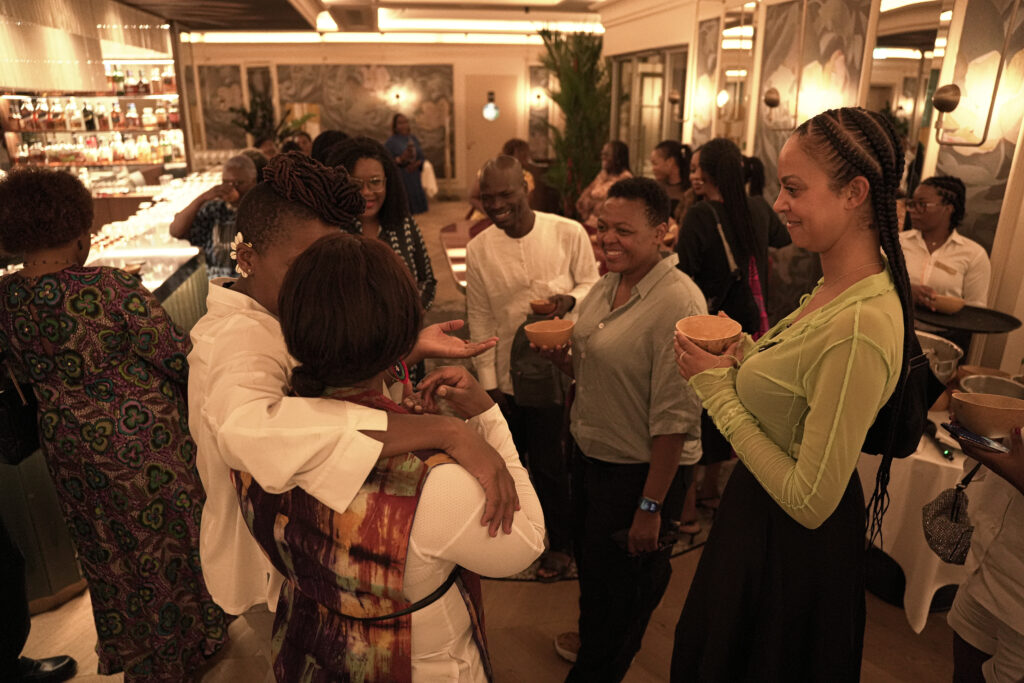
On the evening of April 1st, inside the Sofitel Cotonou Marina Hotel & Spa, that shift took form around a table during Le Rendez-vous de L’Ami, the hotel’s signature culinary series designed to showcase African chefs and culture. The spirit of Kondokpo, “gathering” in Fon, is what unfolded that evening, as chefs, guests, and the city itself converged around food, culture, and dialogue. Not as an event, but as something closer to a convergence.
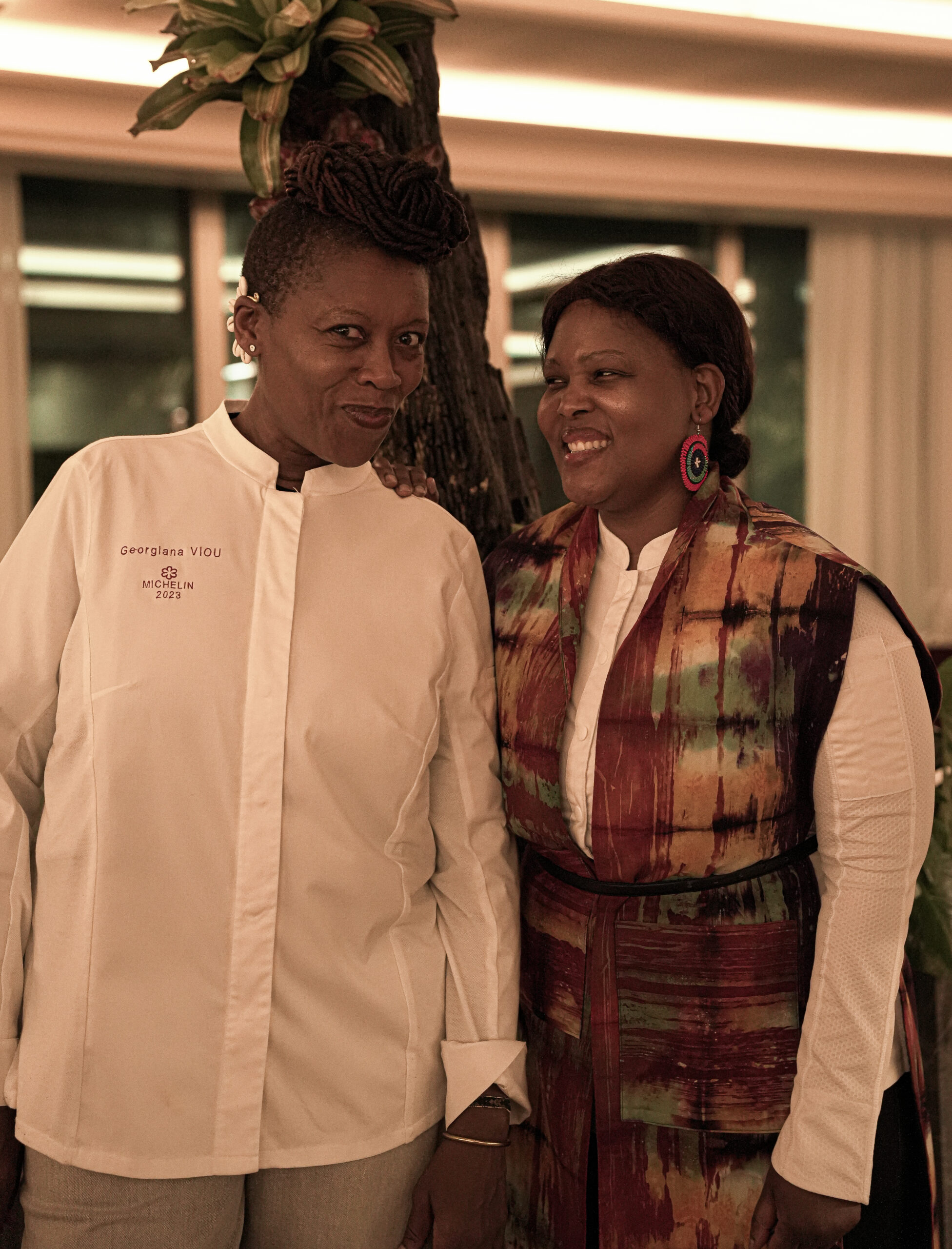
At the center of it: Chef Georgiana Viou and Chef Nokx Majozi, two chefs shaped by different geographies, moving toward a shared language.
For Chef Georgiana Viou, returning to Cotonou is not an act of nostalgia. It is an act of clarity. After leaving Benin at 22, she built her career in France through discipline rather than convention, culminating in a Michelin star in 2023, a historic first for an African female chef. But her trajectory has never been about distance. It has always been about connection. “Cooking in Benin is both a return to my roots and a rediscovery,” she said over the course of the evening.
At L’Ami, her cuisine moves with intention, grounded in the flavors of her childhood, yet shaped by a global sensibility that refuses simplification. “I don’t label my cooking. My cuisine is free. The only rule is that it must taste good.” Beneath that freedom sits something more structured: responsibility. “It’s essential that the next generation learns the cuisine of here.” For Chef Viou, cooking is not only expression. It is transmission.
For Chef Nokx Majozi, identity is not fixed to a place. It is something carried, across cities, across kitchens, across time. Born in Durban and now based in London, her work moves fluidly between culinary worlds, blending British forms with South African memory in ways that feel instinctive rather than constructed. “Wherever you go, you always carry something with you, something you can share through food,” she told Guzangs. “I’ve lived longer abroad, but I never want to lose where I come from.”
Her collaboration with Chef Viou feels less like an introduction and more like a continuation. “If I had to collaborate with a chef in Africa, it would always be her,” Majozi reflected during the evening’s tasting.
The menu did not begin with a concept. It began with instinct. “We built the menu through memory, what we grew up eating and what we still eat today,” Viou explained during the tasting.
What emerged was not fusion, and not contrast. It was dialogue. Flavors that unfold rather than announce themselves. Textures that resist expectation. Dishes that carry familiarity, then quietly shift its meaning.
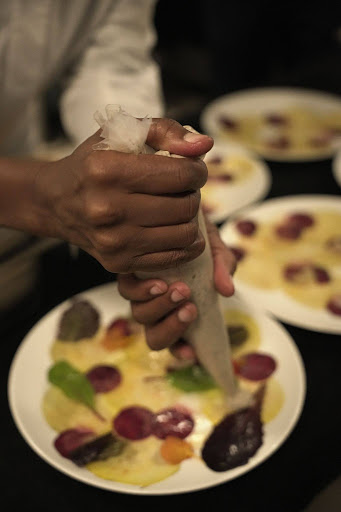
The second plate arrived like a gentle revelation: carpaccio de betteraves rouge et jaune et autres légumes racines, with a parsley emulsion and niébé hummus. Thinly sliced roots shimmered on the plate, earthy sweetness softened by the bright lift of the emulsion, the niébé hummus grounding each bite with a whisper of home. It felt like a memory you could taste, yet one you’d never forgotten.
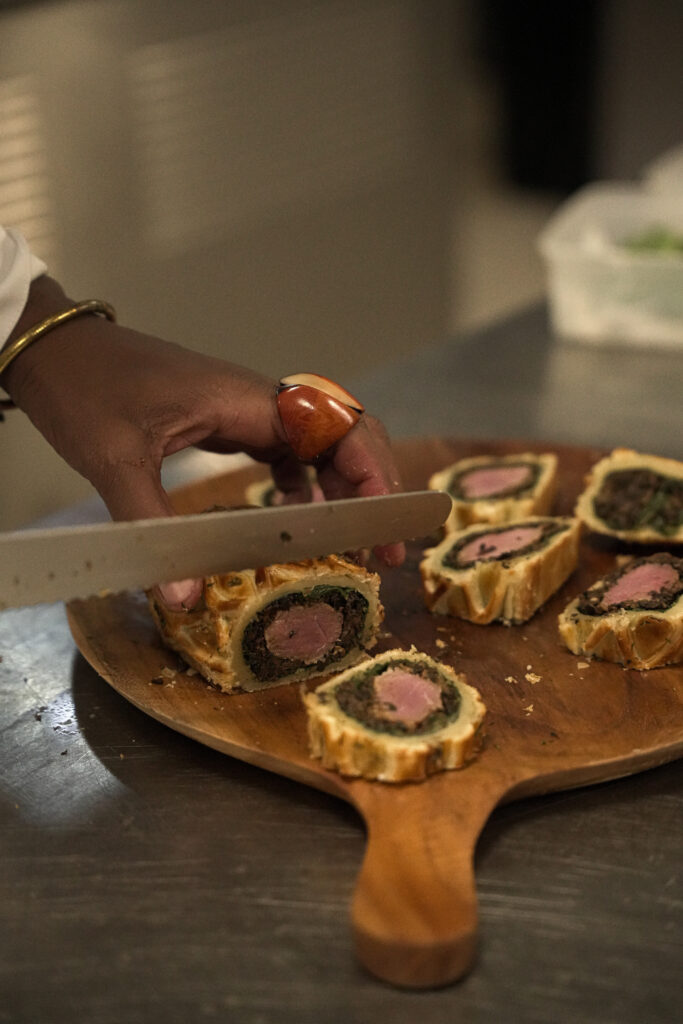
Later, the richness deepened with Wellington d’agneau, served with jus des carcasses and Uda pepper. The lamb, wrapped and roasted to tender perfection, carried warmth in every bite. The jus hinted at smoke and soil, a reminder that every ingredient had a story. The pepper lingered just long enough to make you pause, to consider the layers beneath what seemed simple.
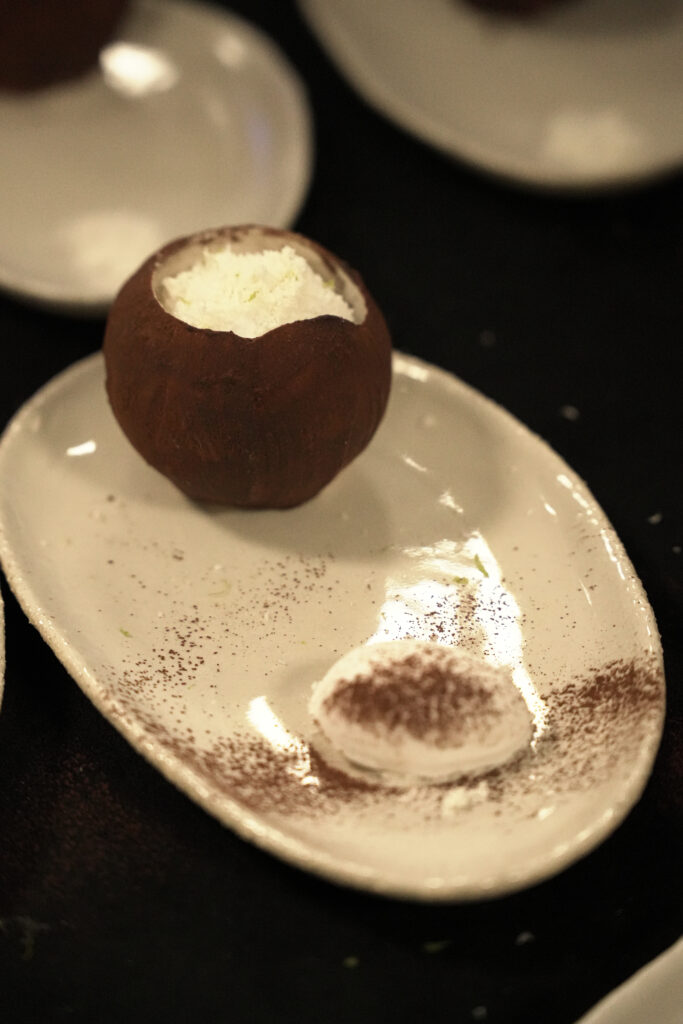
And finally, Le Trou Béninois: sorbet citron-gingembre with Sodabi arrangé. The citrus sharpness cut through the meal, the ginger offering a gentle fire, while the Sodabi added a note of celebration, a bridge between the familiar and the surprising.
“What struck me in Benin is the respect for ingredients,” Majozi reflected. “Even something simple can become something extraordinary. In Africa, food is how we connect. It’s a language that never ends.”
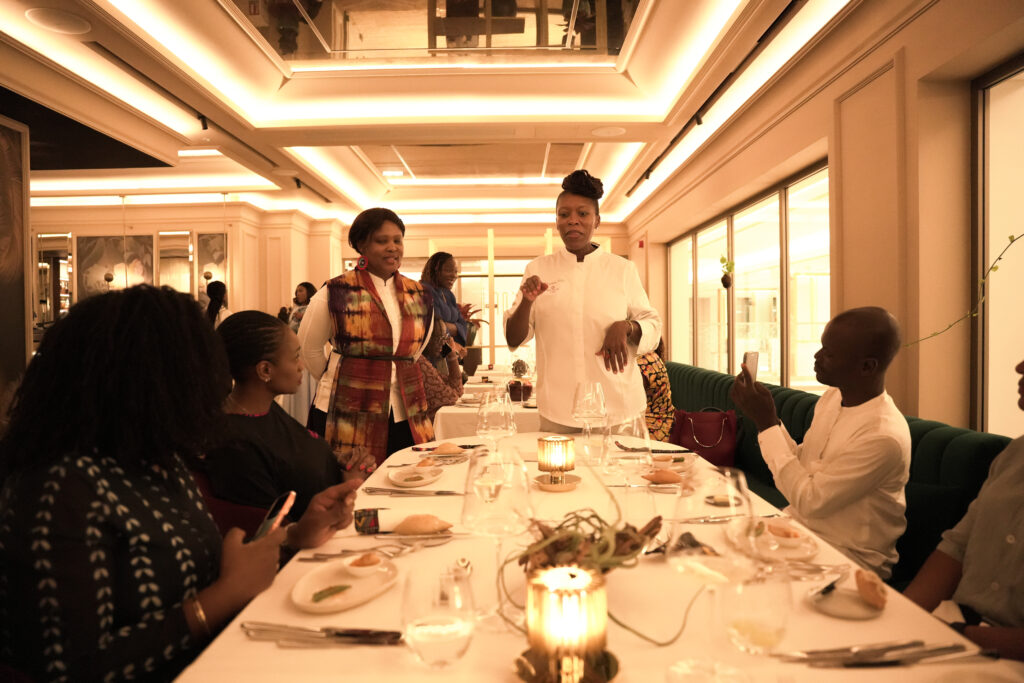
Both chefs extend their work beyond the table, into forms that endure. Chef Viou’s Le Goût de Cotonou: Ma cuisine du Bénin documents a living culinary heritage, rooted in family traditions and everyday practice. Chef Majozi’s forthcoming The South African Cookbook: Authentic flavour-packed recipes from Cape Town to Durban expands that archive, tracing a cuisine that moves across regions, generations, and influences. “You can learn everything in the world,” Majozi said, “but your own culture should always come first.”
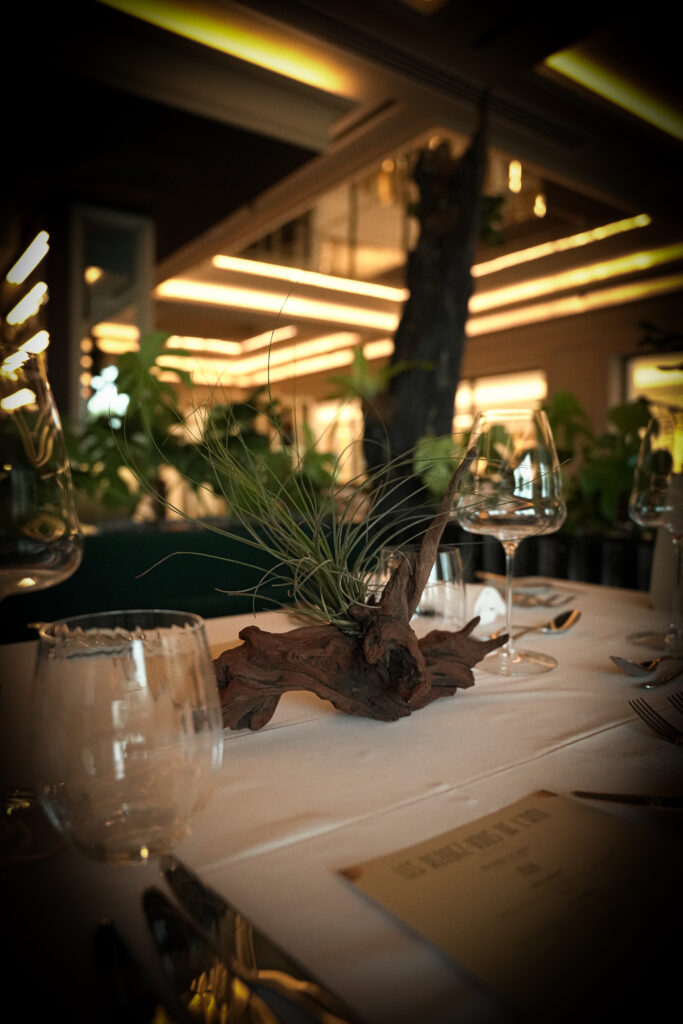
The Sofitel Cotonou Marina Hotel & Spa provides the structure, a space designed for encounter. For Juliette Peron, General Manager, the intention is clear: “We wanted to be more than a hotel, a place of life, of culture, and of connection.” The framework exists so that something else can happen within it. Chefs, their teams, and guests all moving in rhythm, contributing to the experience. Every dish, every detail, and every interaction is designed to support the chefs’ work and allow culture, conversation, and culinary skill to take center stage. “Hospitality is about creating the space for people to connect and to experience something meaningful. That is what we aim for with Les Rendez-vous de l’Ami.”
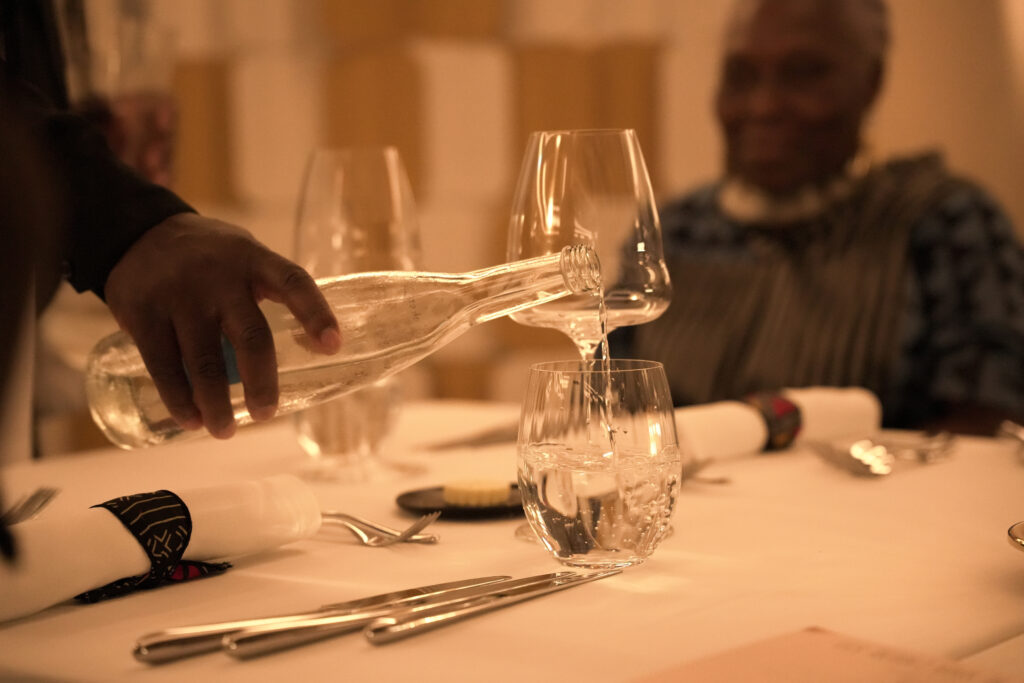
It would be easy to describe evenings like this as part of the “rise” of African cuisine. But that language no longer holds. What unfolded in Cotonou is not emergence. It is articulation. A cuisine that no longer needs introduction, only the willingness to experience it.
Chef Georgiana Viou gives it form: precise, grounded, deliberate. Chef Nokx Majozi gives it motion: fluid, expansive, unconstrained. Together, they are not announcing anything new. They are continuing something that has always been there, now expressed with clarity, confidence, and control.
Not that African cuisine is rising. But that it is no longer waiting to be recognized.