

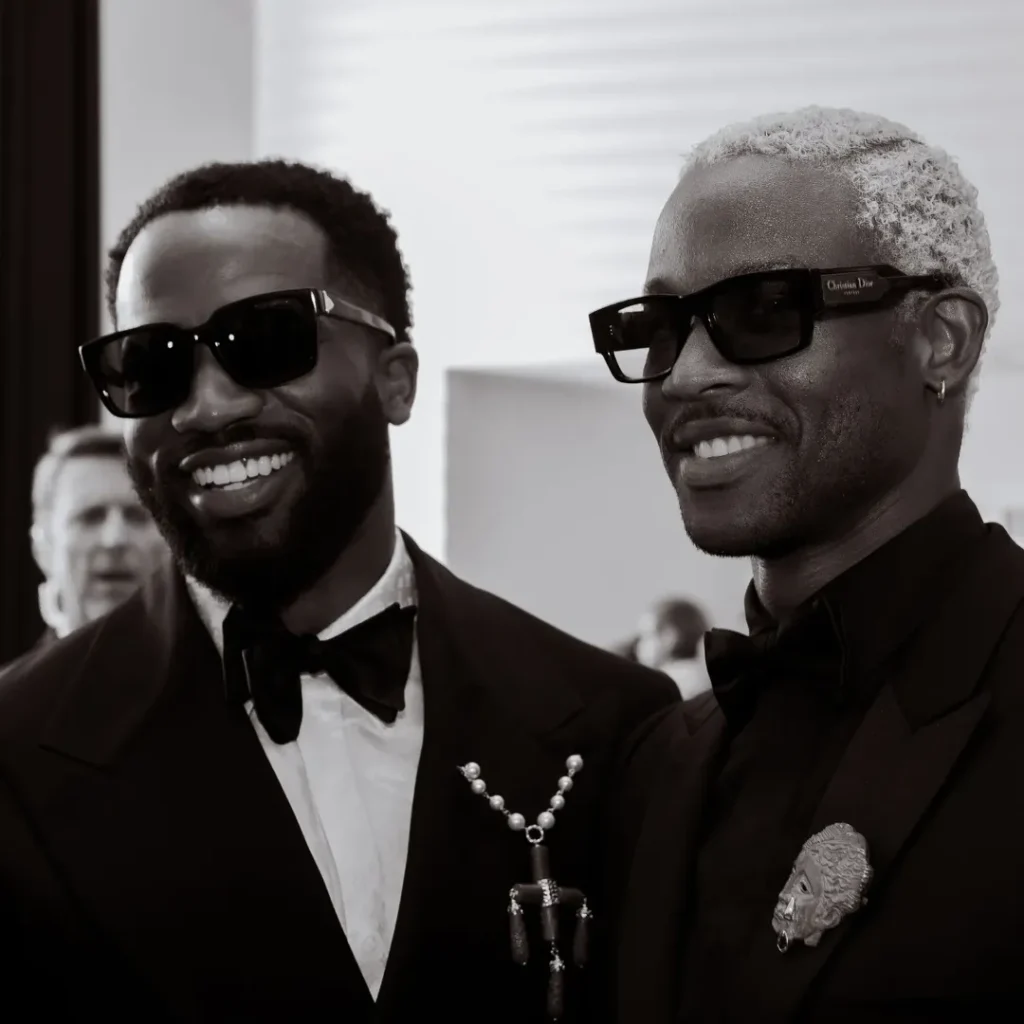
There are moments when history happens quietly. Not with fireworks, but with the hush of anticipation and the swell of a violin score in a darkened theater. When My Father’s Shadow premiered in the Un Certain Regard section at the 78th Cannes Film Festival, it felt like one of those moments.
Months earlier, Guzangs ran a spotlight on the film when it was first announced, marking it as the first Nigerian fiction film selected for Cannes’ official lineup. At the time, it felt monumental. But nothing could have prepared us for what it felt like to sit in that theater and witness what would become a turning point in Nigerian cinematic history.
Akinola Davies Jr.’s debut feature unfolds over the course of one day in 1993 Lagos: a father reunited with his two sons, set against the backdrop of the annulled Nigerian presidential election. What emerges is not just a coming-of-age story, but a meditation on fatherhood, memory, national trauma, and identity.
The film doesn’t tug at your emotions. It invites them, sitting with you like an old friend whispering stories of home.
The child actors, Godwin Chiemerie Egbo and Chibuike Marvellous Egbo, deliver performances that are disarmingly natural. You forget you’re watching fiction. Their eyes carry the kind of weight only lived experience can bring. Their chemistry is effortless.
Editor’s Note
This feature is a continuation of our coverage of Akinola Davies Jr.’s work. Read our original spotlight on the historic Cannes selection of My Father’s Shadow here.
The Craft Behind the Film
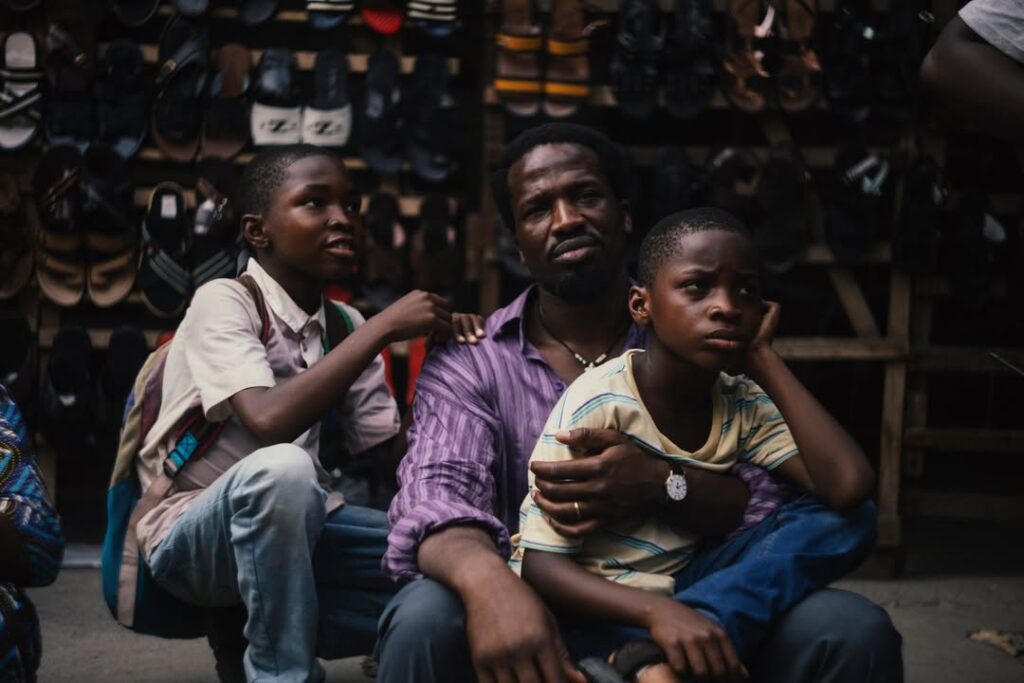
The production design deserves particular attention. There’s an intimacy to the Lagos that Akinola gives us. Messy, tender, complicated. Not a postcard-perfect Lagos, but a lived-in, breathing city. You feel the heat rising off the pavements. You see the dust gathering on windowsills.
The unsung heroes of this achievement are the set designers and art department, most of whom are operating behind the scenes. Their work took audiences back to 1993 with astonishing precision. Speaking with the team from Anti Design, their reflections underscored how deeply personal the project was for everyone involved.
“Your first feature always marks you, but this one left something deep,” said Jennifer. “It taught us how to stretch beyond what we thought we could do, how to trust our voice, and how to hold a vision steady even when everything around you shifts. Cannes was a beautiful ending to a long, meaningful chapter.”
“This wasn’t just a job. It felt like a collective act of belief. In each other, in the story, in the vision,” added Pablo Anti. “We built from scratch, leaned on our team, and held each other up through it all. That it made it to Cannes is a testament to what happens when people care deeply. We’re so proud to have been part of it.”
And then there’s the sound. The score by Duval Timothy and CJ Mirra swells and dissolves in precisely the right moments. It doesn’t compete with the story. It completes it. The music becomes a character, echoing the heartbeat of the narrative and lingering long after the credits roll.
My Father’s Shadow is a collaborative feat, from Element Pictures and BBC Film to Nigeria’s own Fatherland Productions. But it is also deeply local. Over 80% of the crew was African, the majority Nigerian. Co-producer Funmbi Ogunbanwo told the press: “We really believe in growing the industry and the talent. If you don’t let them do it, how will they learn?”
While set designers don’t often take center stage in media coverage, their role in this film cannot be overstated. The brushstrokes and fabric choices that shaped this world deserve to be named, known, and celebrated.
What Comes Next

credit: @Brownzmedias
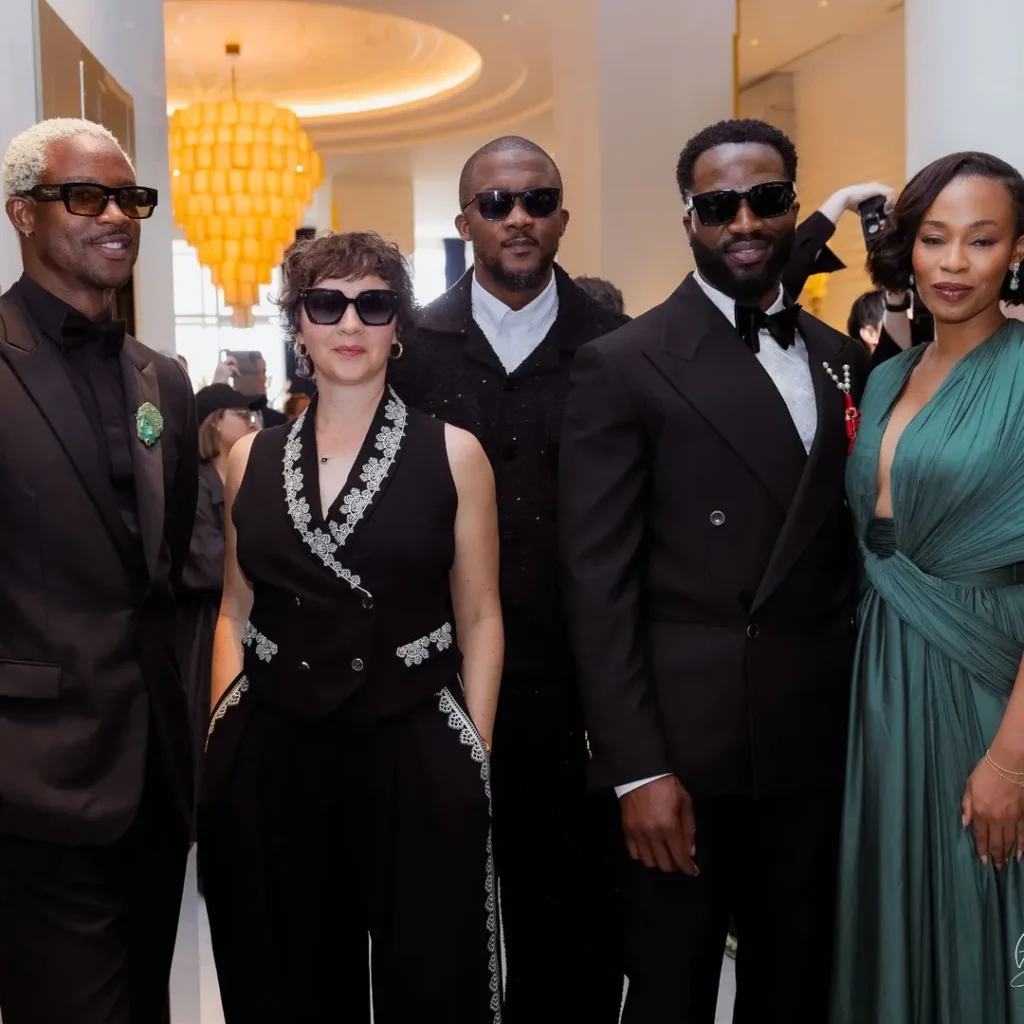
Being present for the screening was surreal. My Father’s Shadow wasn’t just a film on a program. It was the moment. Sitting among the global press and hearing whispered reactions in French, in Italian, in hushed English (“breathtaking,” “intimate,” “important”) confirmed what we had sensed from the beginning. This was a Nigerian story, and the world was listening.
When the film received a Special Mention for the Caméra d’Or, it felt like vindication. Not just for Davies, but for every Nigerian creative who has been told their stories are too specific, their style too local, their voices not universal enough. Akinola Davies Jr. didn’t just make a film. He cracked open the canon.
For many African films, accolades are often followed by silence. Not this time. MUBI has already acquired the film for release in North America, the UK, Ireland, and Turkey. This isn’t just about distribution. It’s about sustained visibility.
With Nigeria’s creative industry gaining momentum across fashion, music, and now cinema, My Father’s Shadow doesn’t just reflect where we are. It forecasts where we’re going.
This was a love letter to Nigeria. One penned not just by a director, but by a crew of artisans, a pair of young actors, and a nation ready to be seen