


Huguette Tchiapi’s Debut Begins in Yaoundé
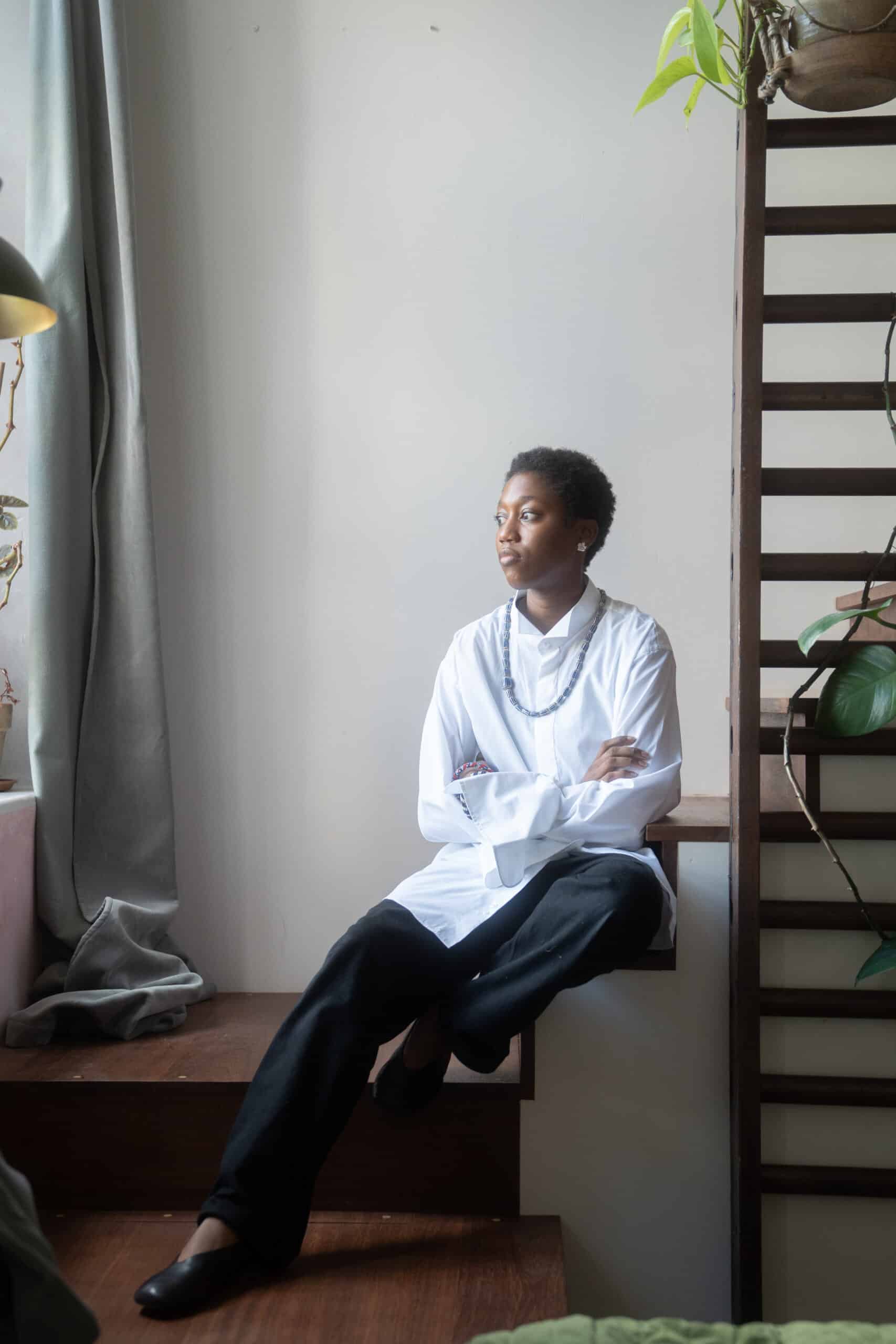
Huguette Tchiapi is continuing an existing convergence, building a fashion brand that brings together the intricacies of her Cameroonian roots and the influence of her British identity. Like most emerging designers, she is deliberate about where her ideas come from. She speaks about influence less as something simply absorbed and more as something that can be traced back to people, places, and specific ways of making. In her thinking, culture, craft, and the hands behind production are not separate references but part of the same structure of how she understands design.
Tchiapi developed her debut collection, Numéro 01, on a research trip to Cameroon, through direct engagement with Ndop cloth and the communities that continue its production. The collection was shaped by time spent moving between Yaoundé, weaving schools, and museum archives. In Yaoundé, she met the curator Christian Nana at the Blackitude Museum, where the work was informed by close engagement with archival material. From there, the process continued in Douala, where she worked with artisans to develop Ndop fabric on traditional looms.
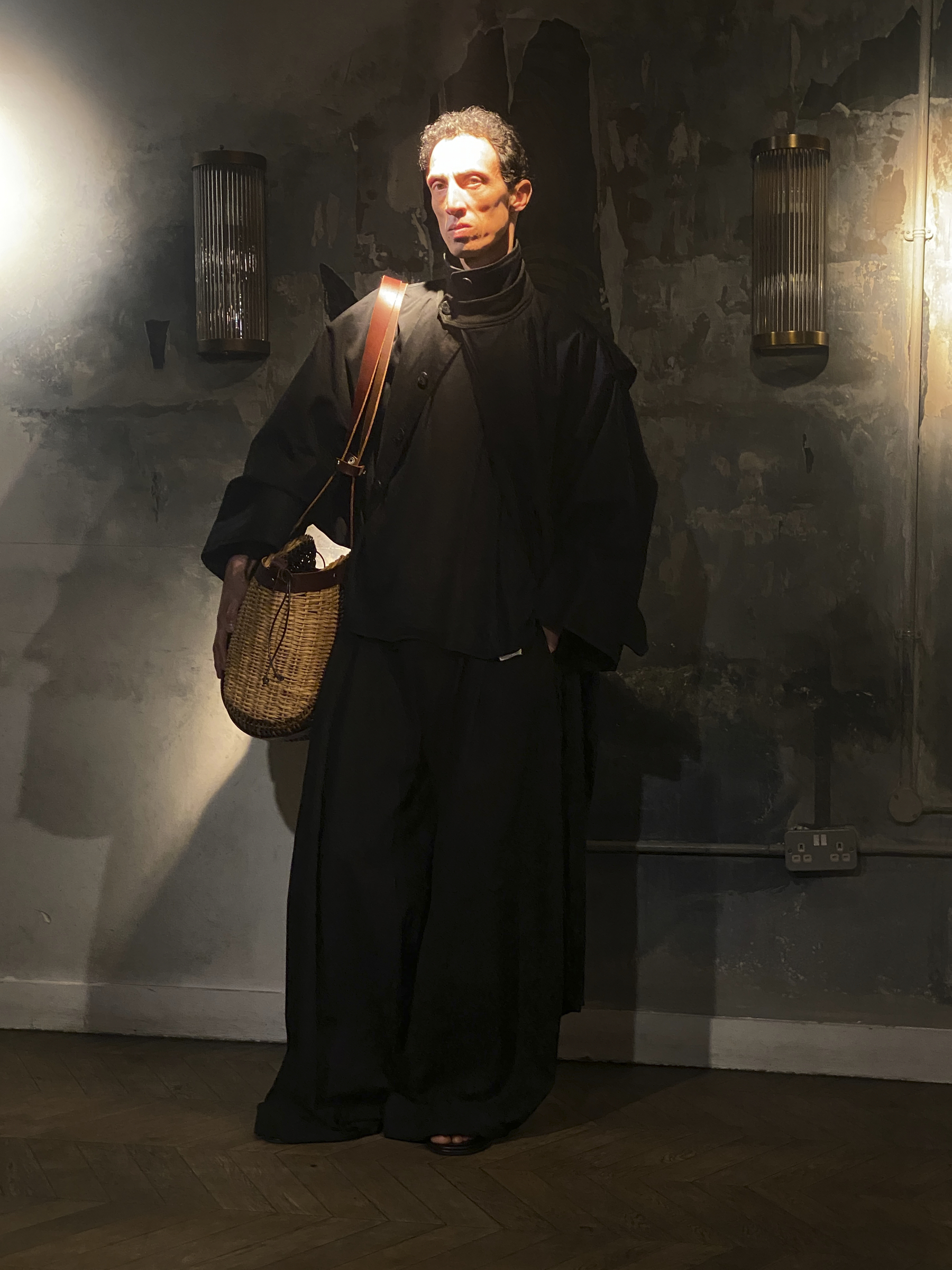
She also met Paul, a bamboo furniture maker, who produced the bamboo bags featured in the collection. For Tchiapi, the highlight lies in witnessing each process unfold and in the relationships built from it, shaped by collaboration across places and people rather than extraction. As she has come to find, “there’s so much craft in Central Africa that isn’t recognised.”
Raised in Enfield, North London, Tchiapi’s early creativity began at home. “I was always interested in art. I used to draw on the walls and cut up the curtains,” she says. At one point she wanted to be an architect, then a book illustrator. She was constantly making things growing up.
Clothing entered her world through what was already around her. Growing up in a Cameroonian household, traditional dress was something she regularly saw and wore with her parents for weddings, funerals, and other important events. They still do.
Once she discovered her own aesthetic, she started to look back at her culture to explore different designs and concepts, especially crafts she felt were slowly fading. But fashion, at that stage, still felt distant. “In my head I always saw fashion as something quite unreachable. It wasn’t until I started discovering designers who I felt were having conversations within my orbit that I began to consider it,” she says.
Seeing designers like Hussein Chalayan began to shift that distance. Fashion no longer felt separate from culture or thought, but like a space that could hold both. Menswear became the direction she leaned into, and not for lack of choice. “I felt like there was more to explore in menswear. Womenswear has such a long history. Menswear feels like it’s still evolving, and there are more opportunities to experiment.”
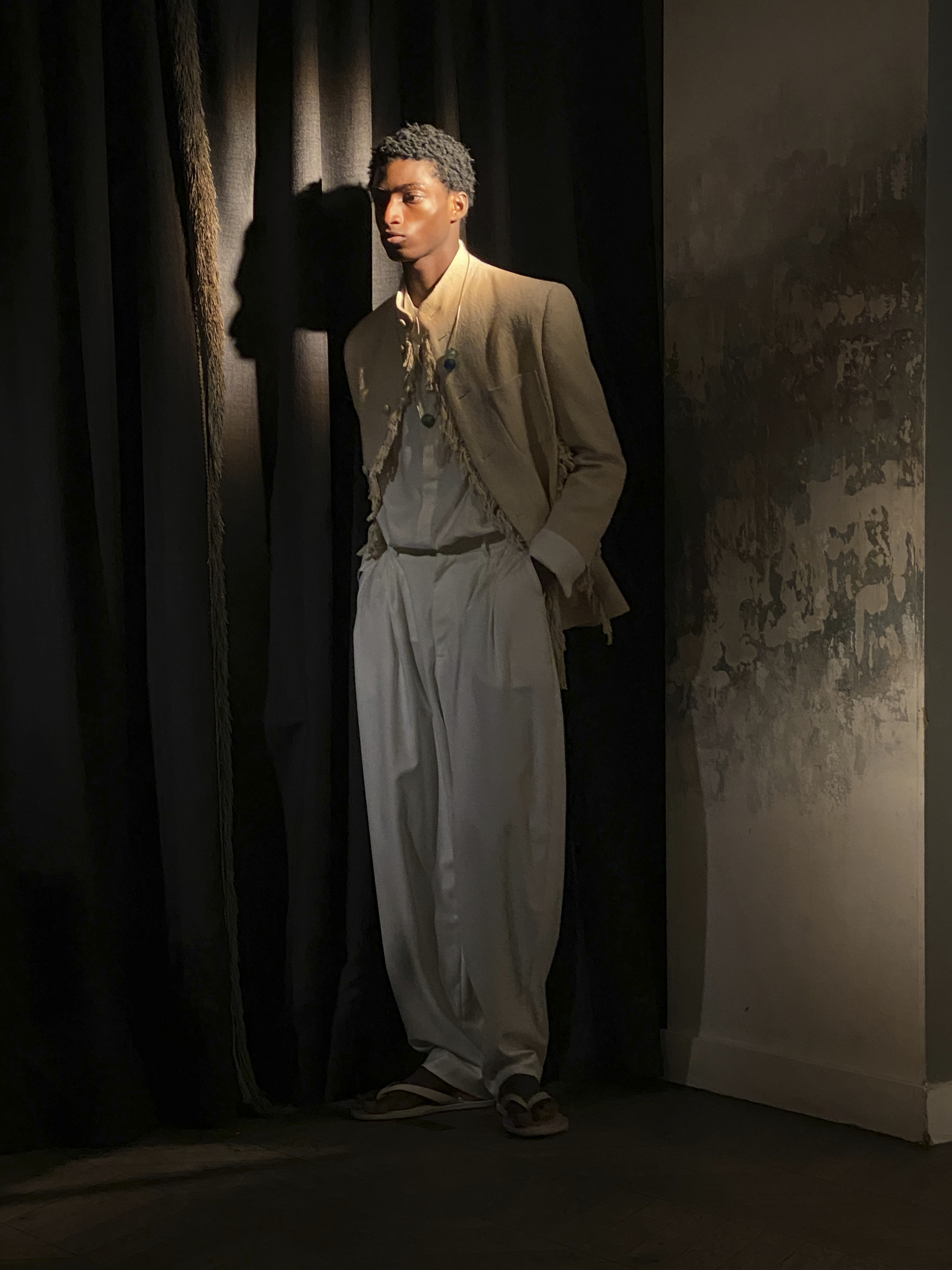
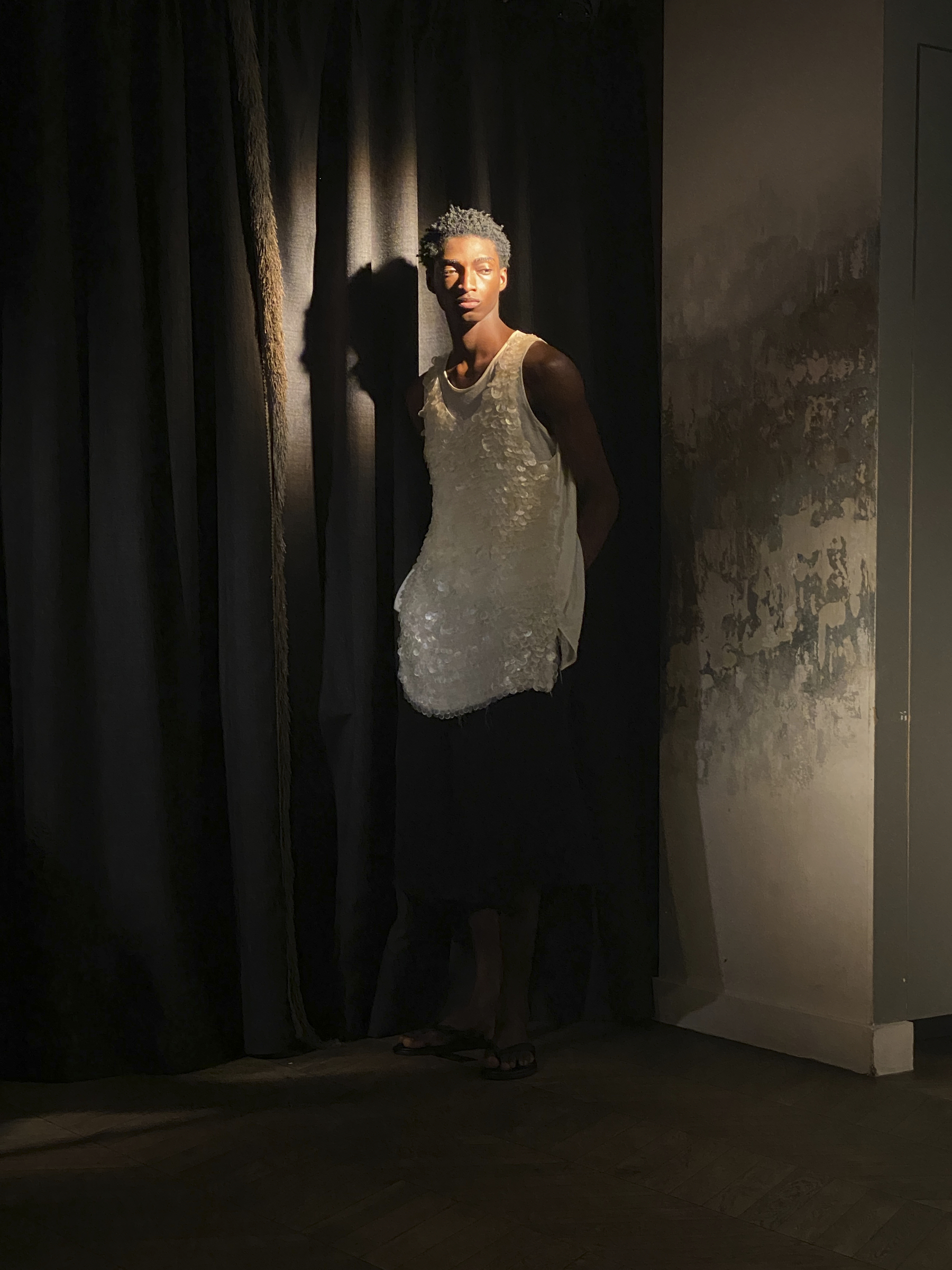
During her time at Central Saint Martins, where she studied as a British Fashion Council scholar, feedback encouraged her to focus more specifically on menswear after initially working across both menswear and womenswear. “I’m really happy I listened,” she says. Growing up with her brothers also meant menswear was something she was constantly around.
After graduating in 2024, she interned at Simone Rocha before later working at Wales Bonner. “Anywhere you work is going to influence your practice,” she says. “Even if you don’t realise it at the time.” She currently works as an academic lecturer at Central Saint Martins.
In April, Tchiapi presented Numéro 01 at Scarlett Green, a bustling restaurant in the heart of Soho, London. The runway unfolded in a small space. Models did not rush; each look was introduced slowly, given time to settle in the room. Tchiapi spoke through each outfit as it appeared, guiding the audience through the collection rather than performing it.
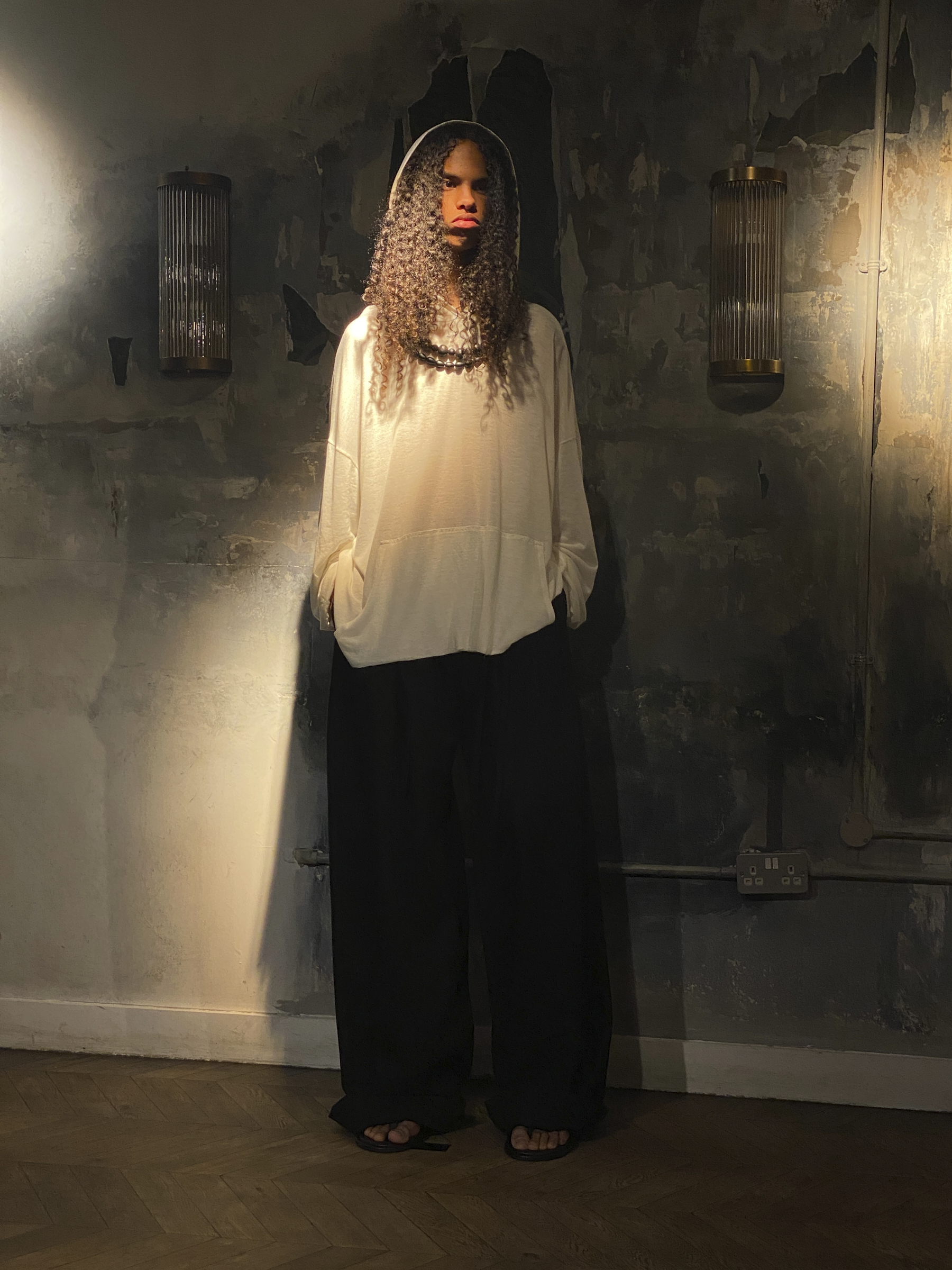
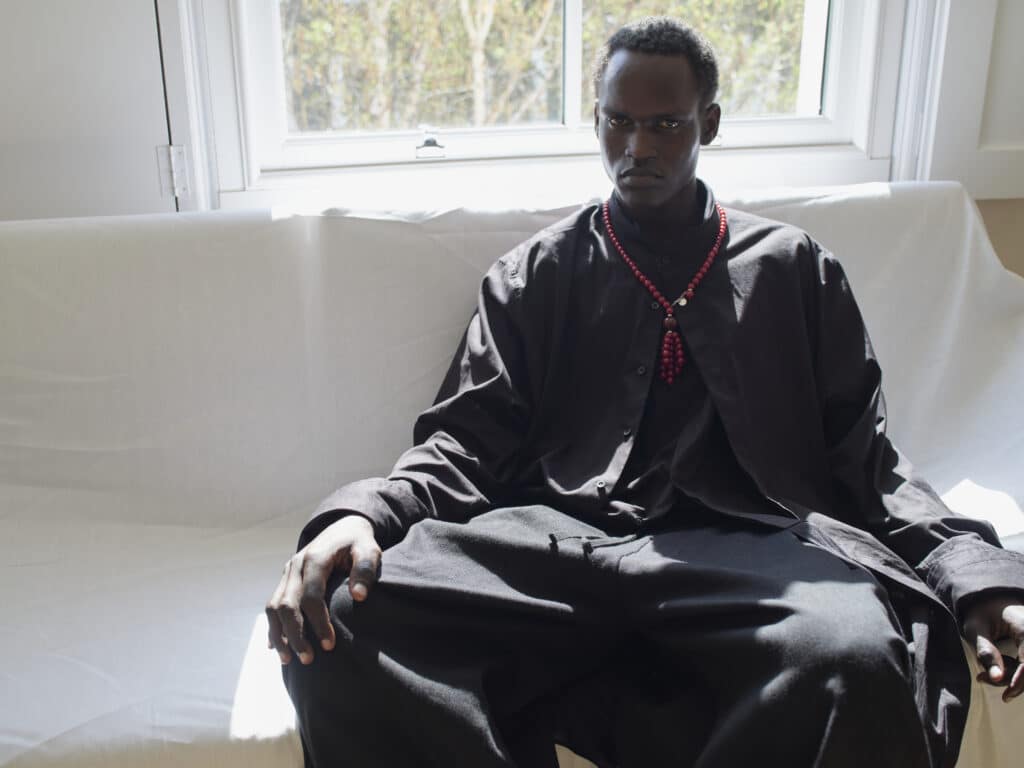
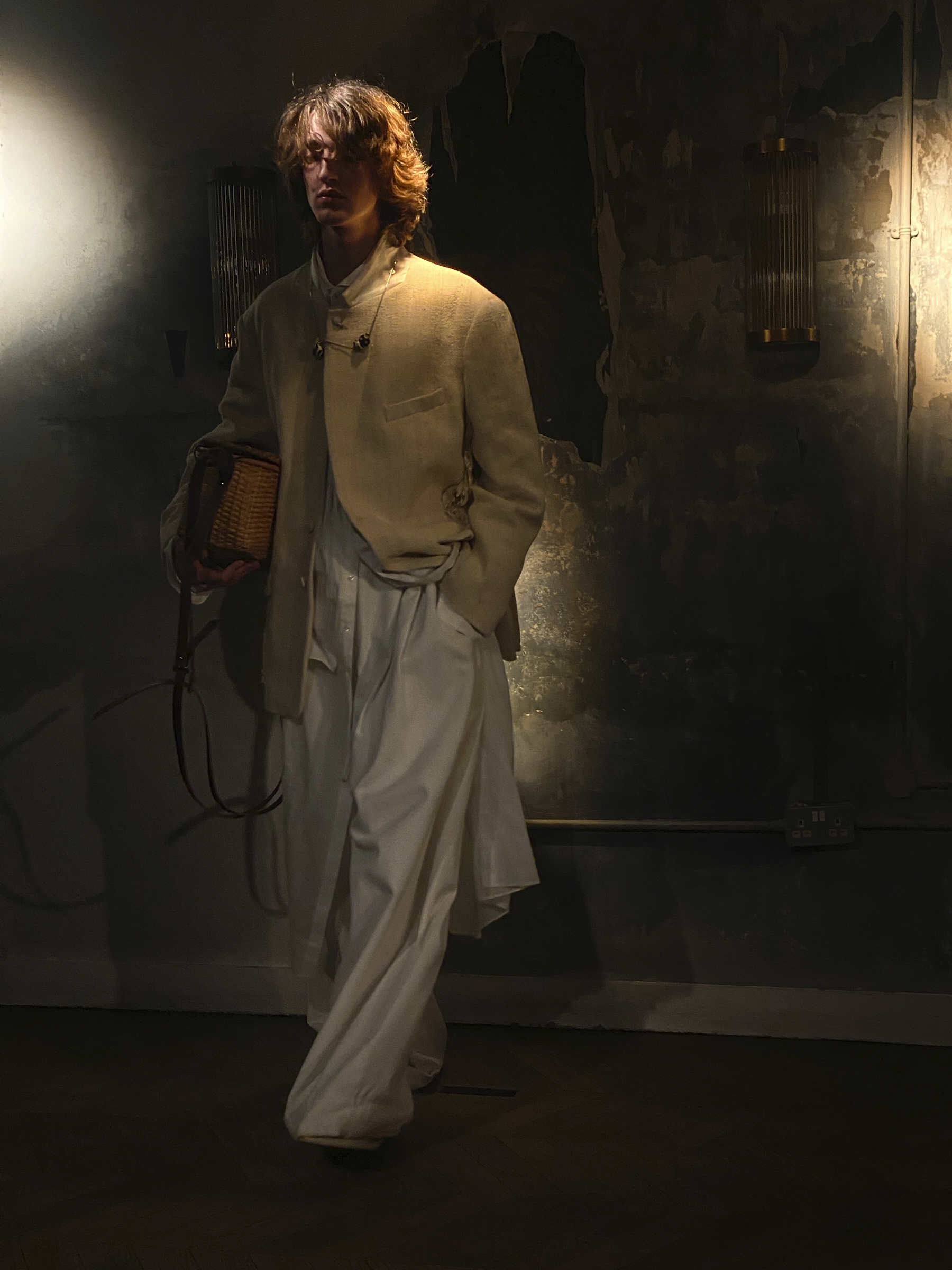
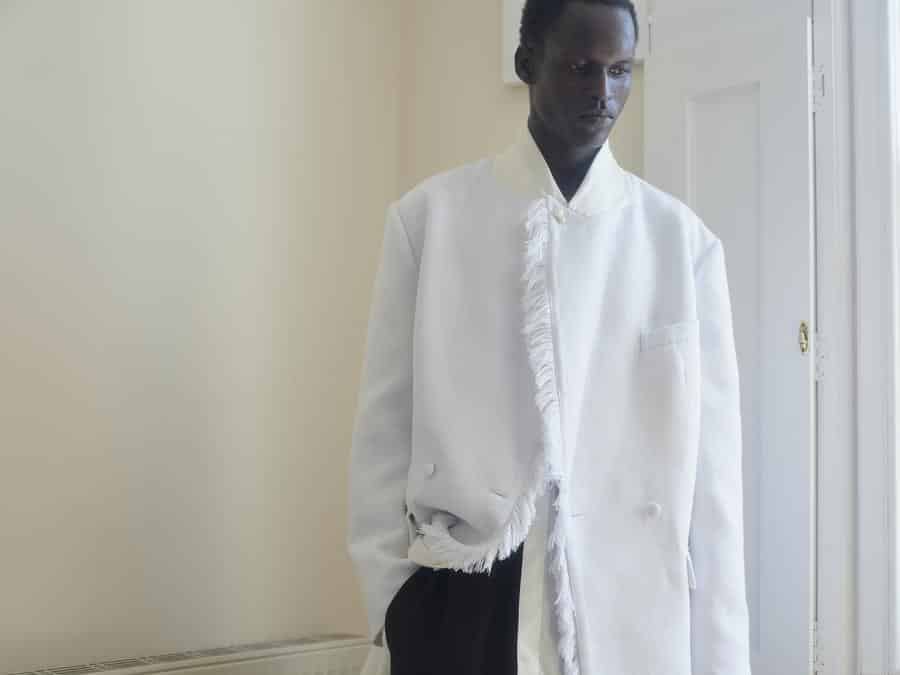
The designs in Numéro 01 are built around distinct proportions. The silhouettes sit oversized and relaxed, moving away from anything restrictive. Tchiapi wanted each garment to fall softly on the body, shaped more by ease than structure. Longline cotton shirts, cropped wool and Ndop blazers, and wide trousers define the base of the collection. The palette of indigo blues, whites, blacks, and muted tones feels grounded rather than imposed, carried through cotton, Ndop, wool blends, and bamboo.
There are also fringe detailings, layered cotton construction, and beadwork appearing across looks as part of how the pieces are built rather than added decoration, including recycled glass beads from Ghana and stone elements such as jade and topaz sourced in the UK.
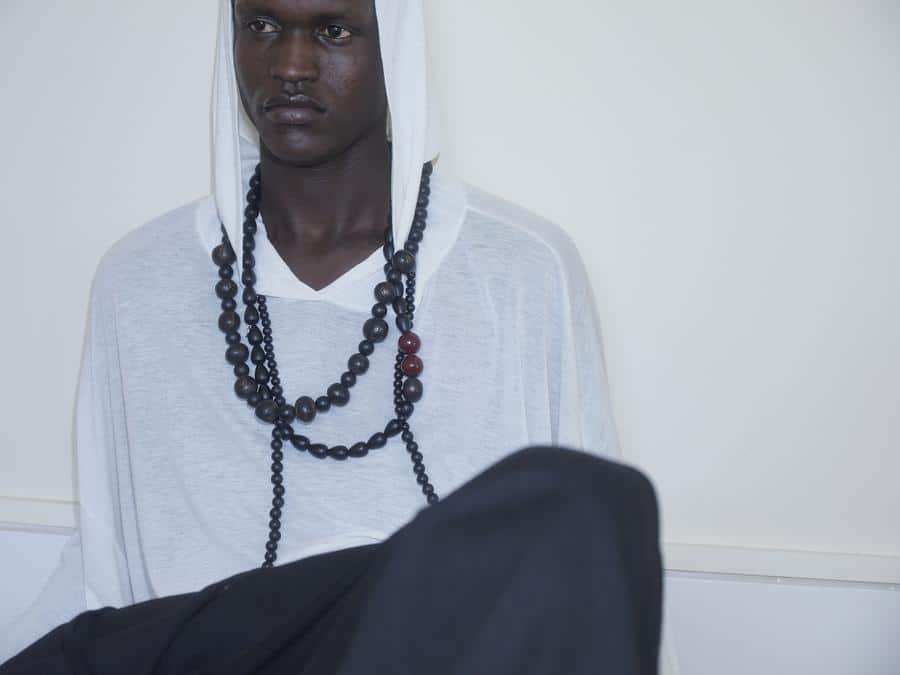
“I was thinking about how in Cameroon people dress in a more relaxed, oversized way, while in London it’s much more structured. It was why I made the collection in the first place, to make people grasp those two feelings.”
Numéro 01 sits as a beginning rather than a conclusion. For Tchiapi, it is less about finality and more about opening something up, a way of asking people to look closer, do their own research, and continue learning beyond the garment itself. “It’s just the beginning,” she says. “Next time I’ll refine what I want to focus on. Slow, considered, specific.”
Numéro 01 does not resolve itself. It simply continues.
Subscribe to Guzangs.