


What the Met’s 2026 Theme Means in an African Context, and the Designers Shaping the Narrative
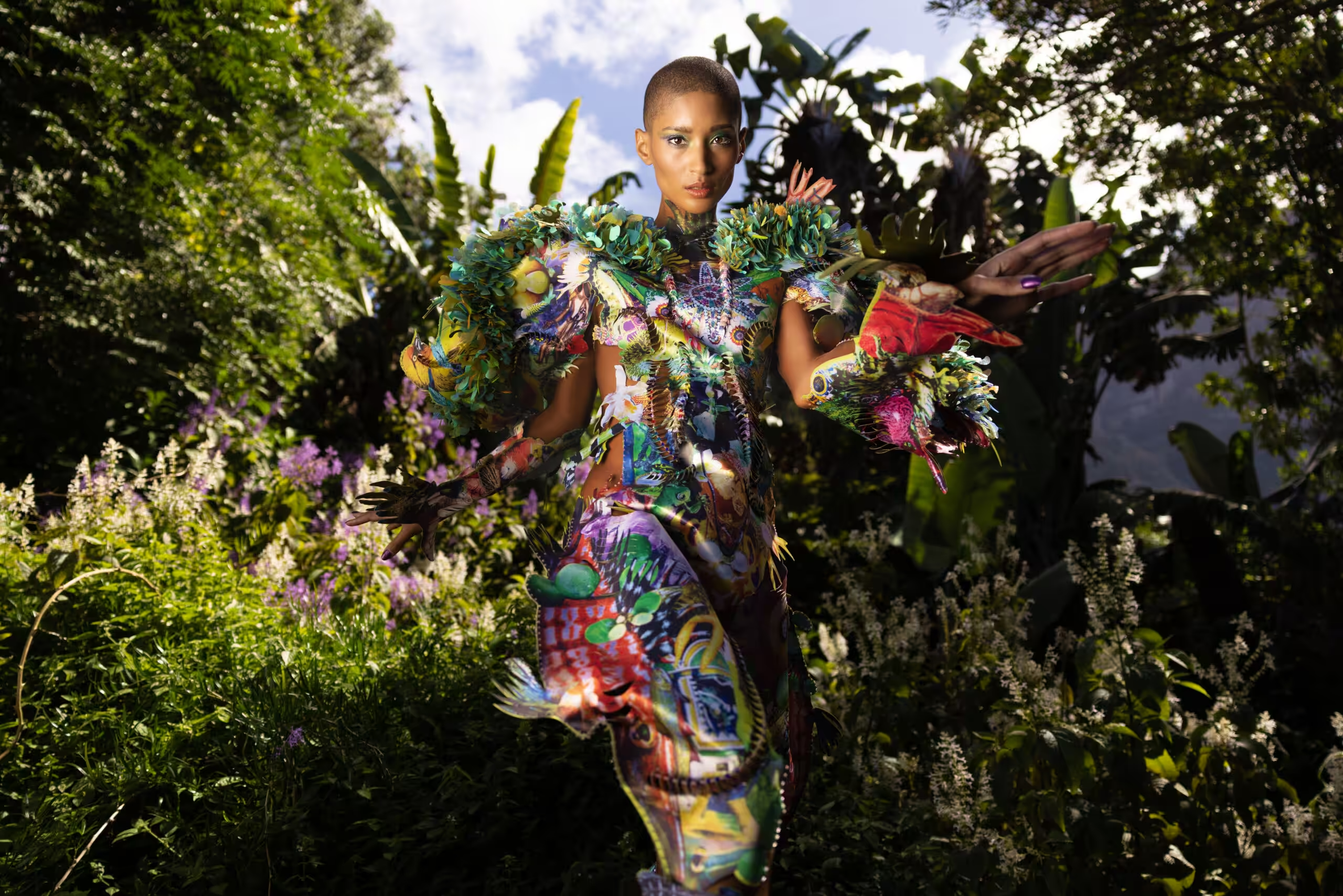
When the Costume Institute at the Metropolitan Museum of Art announced in November 2025 that the dress code for its 2026 Met Gala would be “Fashion Is Art,” it felt, at first, like a familiar conversation that has lingered within the fashion industry for decades. It is a debate that has long divided its most influential figures, including Karl Lagerfeld, who maintained that fashion was not art and designers were not artists.
Yet the persistence of that distinction has never quite held. For centuries, both creative forces have moved in tandem, borrowing from and reshaping one another. Artists have turned to dress to interrogate the body, identity, and consumer culture, while fashion has consistently drawn from painting, sculpture, and performance to construct its own visual language. On some occasions, designers call themselves artists, which situates garments not simply as products but as conceptual works that frame the body as subject.
“For fashion to be fully recognized as art requires a broader institutional consensus. It is not enough for designers alone to claim the title. Painters, sculptors, collectors, curators, and the wider art establishment must also participate in that recognition.”
— Valerie Steele, director and chief curator of the Museum at the Fashion Institute of Technology
But through an African lens, the question shifts. The separation between fashion and art has rarely been as rigid as Western discourse suggests. Across many African contexts, the human form has always functioned as a site of artistic expression, with clothing operating as both material and meaning. What the Met proposes as a conceptual alignment between fashion and art begins to look less like a provocation and more like a recognition of a tradition that has long shaped how garments are conceived and worn on the continent. From the beadwork of the Maasai to the indigo of the Yoruba, from the kente of the Akan to the appliquéd cloths of the Fon, dress in Africa has always carried the weight of reference art. It situates fashion within a continuum of making.
The Designers Shaping African Fashion Through the Met Theme
If the Met Gala dress code “Fashion Is Art” seeks to position fashion within the realm of art, its translation into African fashion is already visible in the work of designers whose practices are often described as couture, or dismissed as costume. Yet it is precisely within that space, where garments exceed function and move toward expression, that a different understanding of fashion emerges.
Chelsea Jean Lamm and the Discipline of Wearable Art
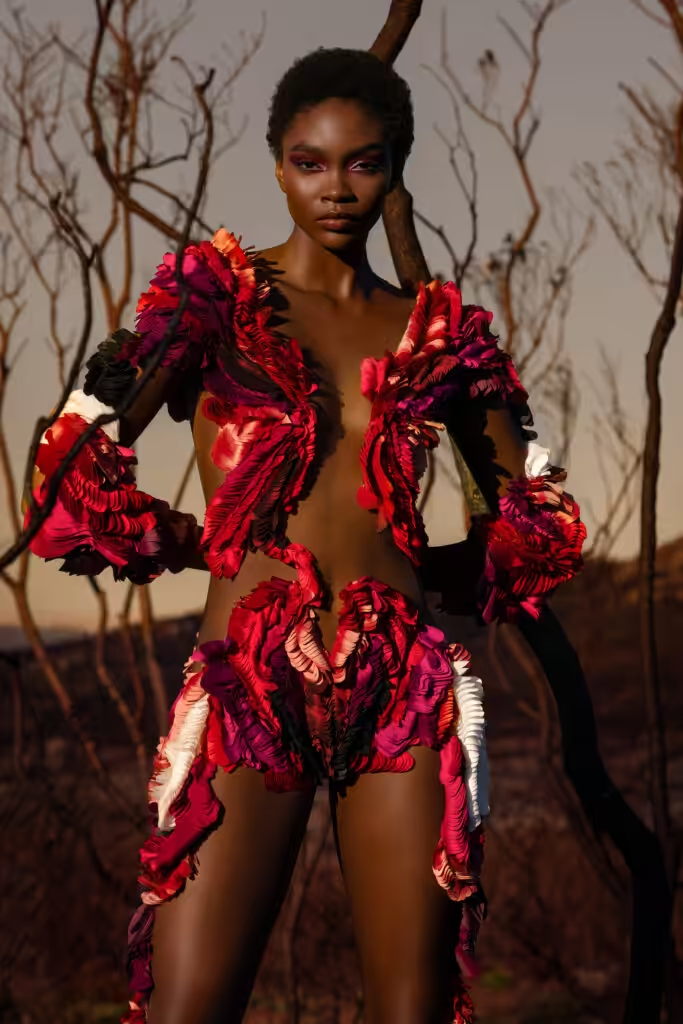
Chelsea Jean Lamm is among the designers shaping this lens. Heavily inspired by the work of Kenyan visual artist Wangechi Mutu, particularly her explorations of powerful femininity, Lamm’s practice extends that dialogue into fashion. Born to a South African mother and a German father, she founded her eponymous brand in 2022 as a way to prolong the relationship between material and memory, with a focus on what she describes as wearable art.
Her work speaks of the body. Rather than treating the garment and wearer as separate, she approaches them as a single entity. This is reflected in her exploration of proportion, volume, and altered silhouettes that expand the body into new forms. Structure and movement are not oppositional in her practice but exist in conversation, resolved through months of experimentation until each piece achieves a balance between architectural precision and fluid motion.
“Some pieces can require up to 6,000 hours of intensive craftsmanship, depending on the complexity of the silhouette. That level of construction is what gives our garment its integrity, stability, and durability. At the same time, we remain deeply committed to preserving the spirit of the original design, ensuring that the final piece moves intuitively with the body rather than against it.”
— Chelsea Jean Lamm
For Lamm, couture is not simply technique but intention. It is a commitment to creating work so considered it transcends garment-making and enters the realm of art, while remaining accountable to the hands that produce it and the environment it inhabits.
Sevon Dejana and the Architecture of Form
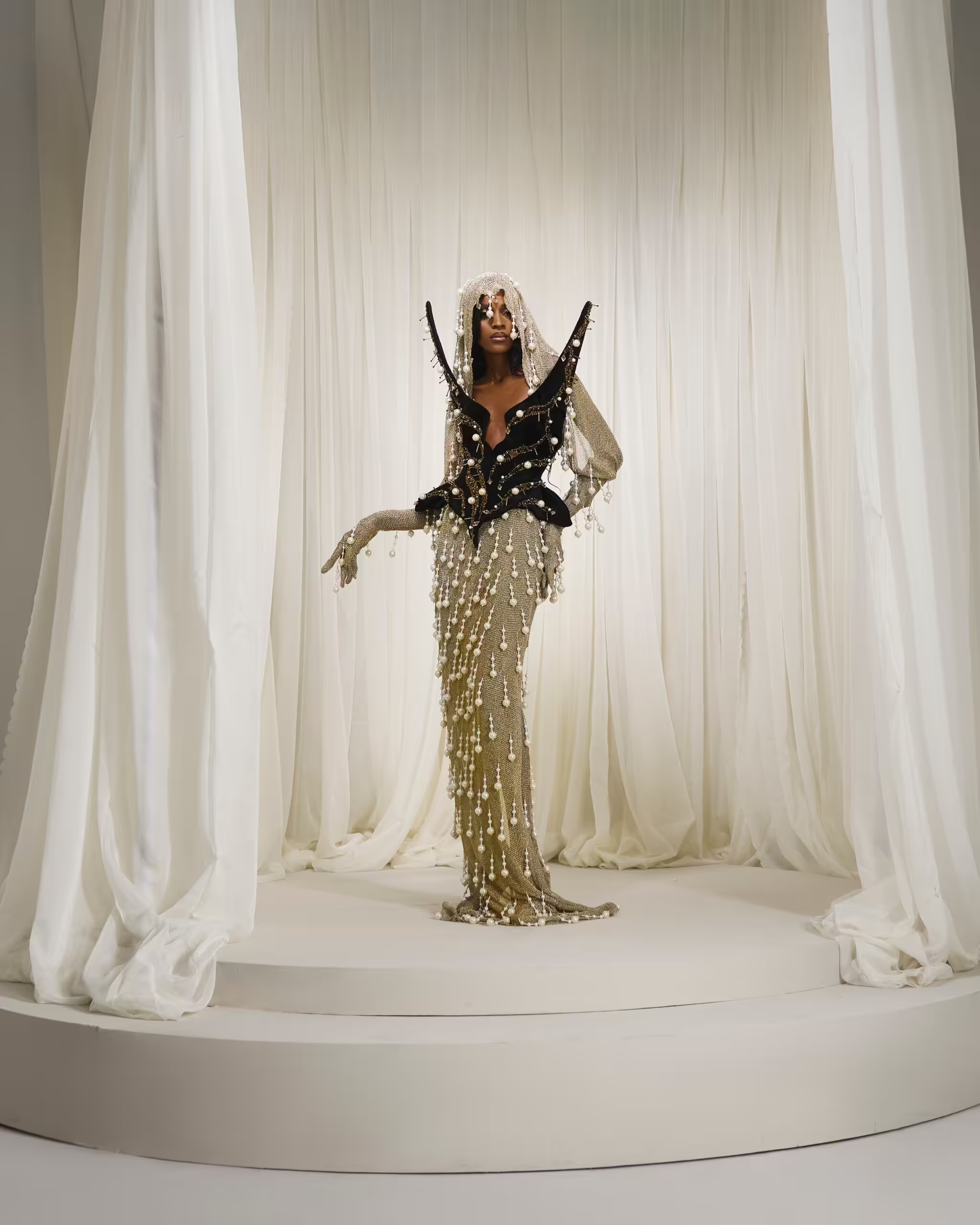
A closer look into the oeuvre of Sevon Dejana reveals a practice deeply informed by art, drawing from the ethereal armor of beauty associated with Joan of Arc, as well as from the interplay between the natural and the supernatural. Founded by Aladejana Segun Victor Edikan, the brand reimagines the body as architecture, where bold shoulders, eccentric constructions, and sculptural silhouettes transform the wearer into a living structure.
This is precisely what makes Dejana’s work a compelling entry point into this year’s “Fashion Is Art” proposition at the Met Gala. His practice does not simply align with the theme; it complicates it. His garments already operate from that premise, extending it further through layered references. In collections such as SS25 Transcendence, florals become more than decorative motifs; they are reworked into structural elements that speak to growth and transformation, and to their interplay with fragility.
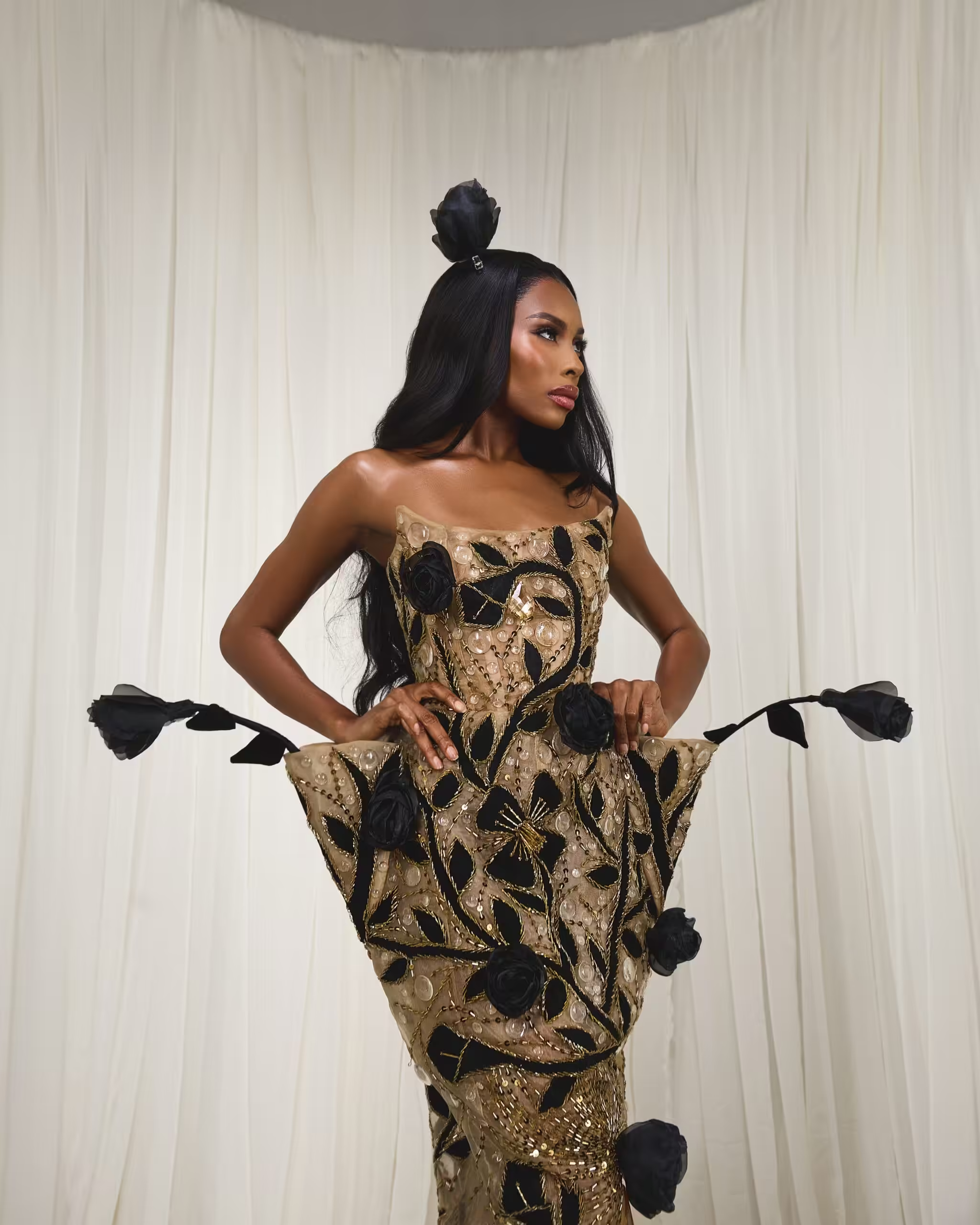
Such an approach places his work closer to sculpture than to conventional fashion. Volume, proportion, and spatial presence take precedence over function, while the garments themselves resist immediacy and easy consumption. They are not designed to be quickly understood but to be interpreted, existing as rare objects that command contemplation.
“When you think of fashion and art, Africa definitely comes into play. Africa as a whole has a rich culture and identity, and that in itself is art.”
— Sevon Dejana
It is easy to imagine what the Met Gala red carpet will look like this year, with designers such as Thom Browne, Schiaparelli, Iris van Herpen, and Maison Margiela offering their distinct interpretations of “Fashion Is Art.” Yet it is equally possible to imagine that the works of designers like Chelsea Jean Lamm and Sevon Dejana can stand alongside them, not as alternatives but as continuations of a conversation that has long existed beyond the Western gaze, within a broader movement of African fashion redefining itself on its own terms.
“For me, “Fashion Is Art” is not a statement we arrived at; rather, it is the condition from which we work.”
— Chelsea Jean Lamm