


Holy Dress Codes: What Comes to Mind When You See the Garment?
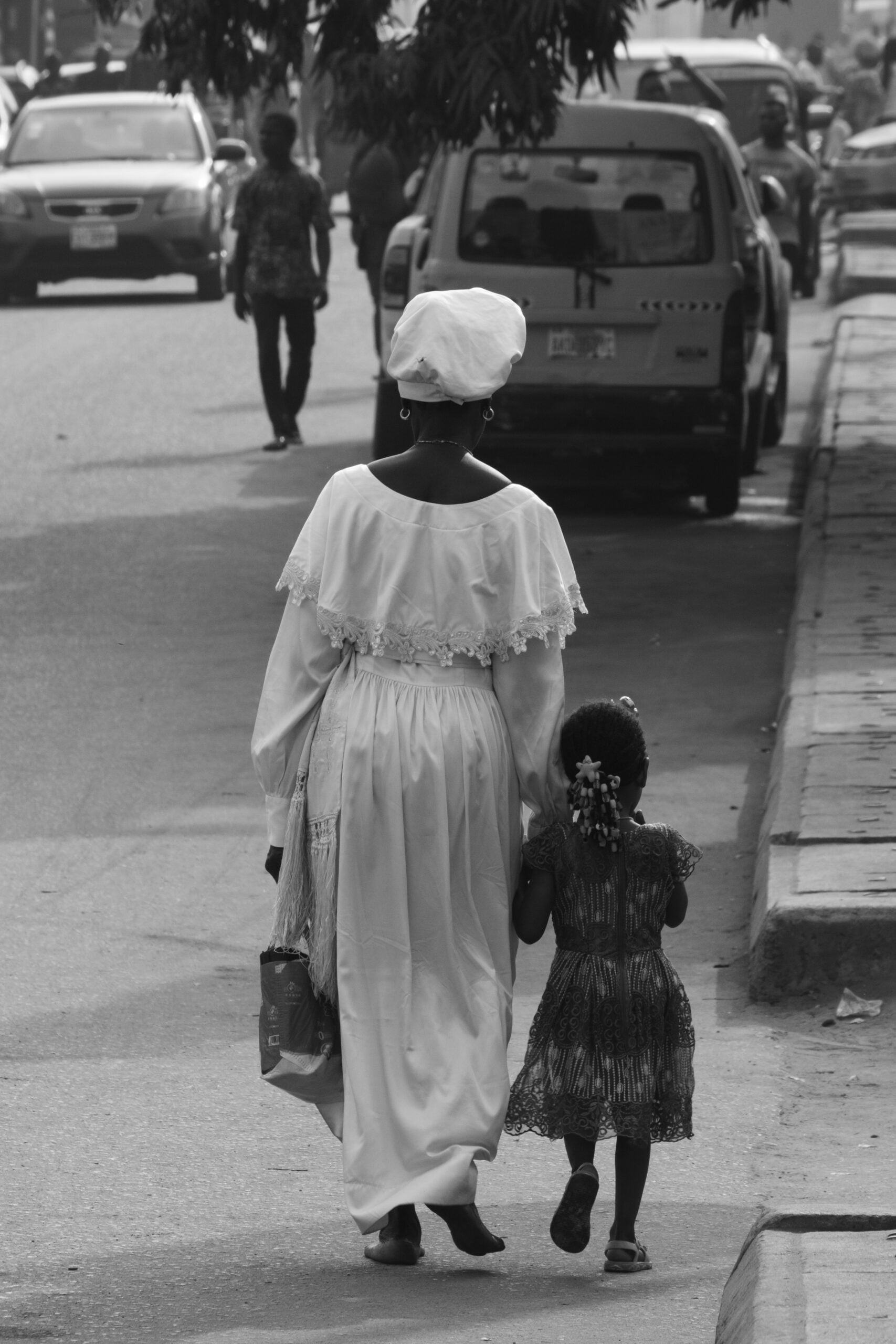
There is usually something immediately legible about religious dress codes. When I see a woman in a hijab, a man in a yarmulke, or a Black American Southern Baptist church hat, I have some sense of who they are — their values, their community, their relationship to God, defined largely on their own terms. In these cases, the garment speaks first, and usually speaks in a language I have at least a partial translation for.
However, when it came to the aso-funfun, the white cloth worn by Aladura church members, a Christian movement born among the Yoruba people of southwestern Nigeria, I didn’t have my usual frame of reference to pull from. Despite being one of the most visually striking garments in Nigerian culture, it has been almost entirely defined by people outside the community that wears it.
Like many others, when I first came across “white garment people” walking in unison on the streets of Lagos, I was immediately captivated. It was an almost casual ceremonial procession of white, cutting through the noise and colour of Lagos, moving like something out of place yet entirely self-possessed. Their white garments made them immediately identifiable as members of the Aladura church, though what that identification signalled to outsiders was rarely neutral.
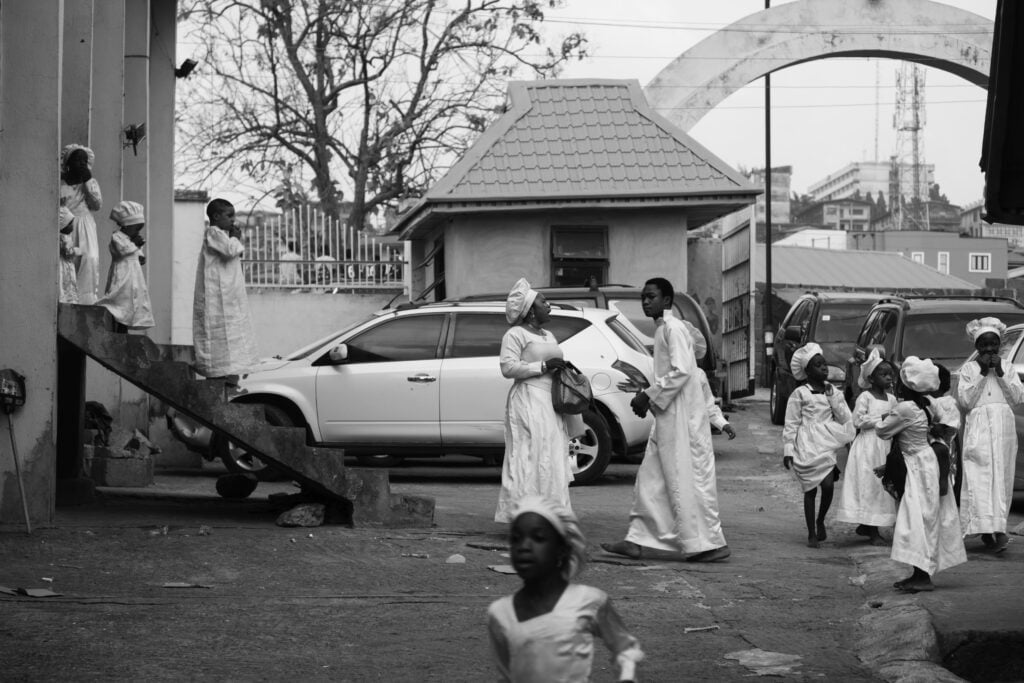
Over the years, the more questions I asked, the more confused I became. My questions were usually left unanswered, and when they weren’t, I was palliated with a healthy cocktail of fearmongering, overt cautioning and religious bigotry. Somehow this very visible community, with an estimated 12 million followers and 14,000 parishes in Nigeria alone, as well as congregations expanding across Europe and the United States, had been reduced to a single, flattened image. Who were they? What did they believe? And most importantly, why were they wearing white?
The closest I came to the community was through a friend who described her mother simply as “Cele,” a member of the Celestial Church, a specific branch of the Aladura movement. Although I had never seen her in her full white regalia, I knew her by what she didn’t wear: no makeup, no painted nails, none of the high-glamour aesthetics of the Lagosian society women in her circle.
I hadn’t considered how deeply fashion, faith and identity converge beyond uniformity and signifiers until I saw Stephen Tayo‘s exhibition, What Comes to Mind When You See the Garment? The flowing white robes I had observed with curiosity carried more cultural history than I had realised. They are a visual theology, marking their wearers as “the praying people” and connecting them to something celestial and older than the church itself. I had been looking at the garment for years without seeing any of that. Tayo’s photographs made me look again.
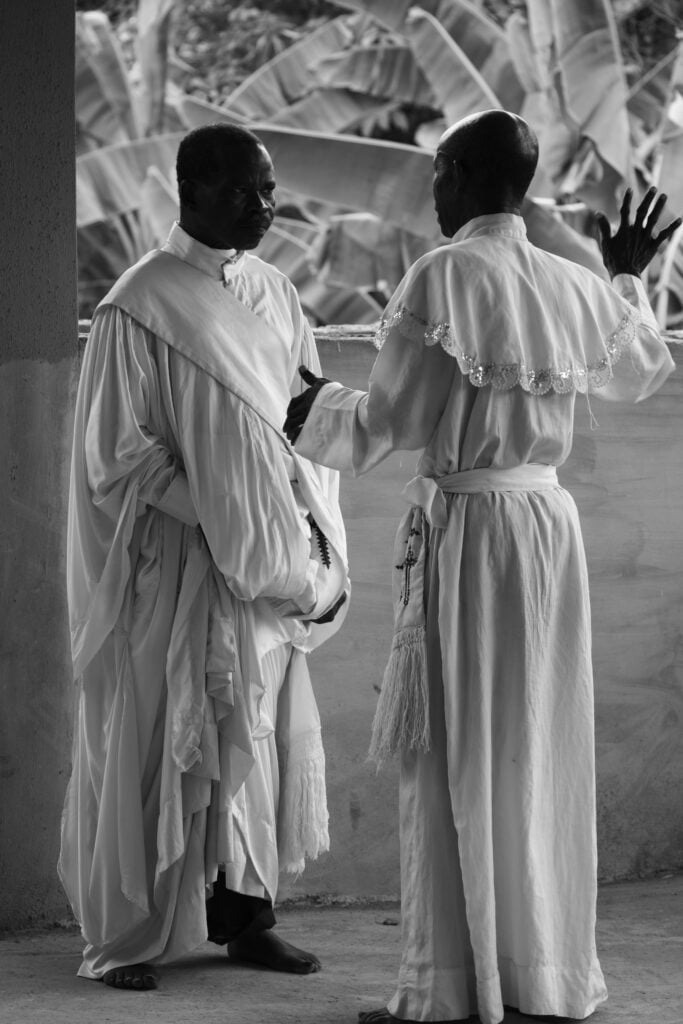
Despite its representation in popular culture today, the Aladura movement did not emerge from the fringes of society. It began in 1918 among the younger elite of Nigeria’s well-established Anglican community. These were educated Yoruba Christians who demanded a deeper, less sterile approach to prayer than what European missionaries were offering. Aladura literally means “owners of prayer,” reflective of their refusal to replace their cultural expression — spontaneous joy, drumming, dancing and clapping — with a more sanitised, Western approach to worship. This act of preservation is not unique to the Aladura church. The Pentecostal churches of the American South held onto West African expressive worship traditions, finding ways to keep the spirit of indigenous devotion alive within the structure of the faith they encountered in enslavement.
The Aladura prayer style found favour with Nigerian Christians in the southwest who did not want to further colonise their spiritual lives, particularly during one of the country’s gravest health crises. When the 1918 influenza pandemic swept through West Africa, killing thousands, Western worship and medicine offered little comfort. A group of Anglican laymen in Ijebu-Ode formed a prayer group built on divine healing, prophetic vision and direct communion with God. This group marked the beginning of the Aladura movement. The movement’s emphasis on healing and protection through prayer, incorporating the Pentecostal features that Western influence had suppressed, arrived at a moment in history when people needed it most. It spread rapidly, carried by faith and desperation in equal measure. That same hunger for direct spiritual experience would later become the movement’s most exploited feature, popularised by Nollywood.
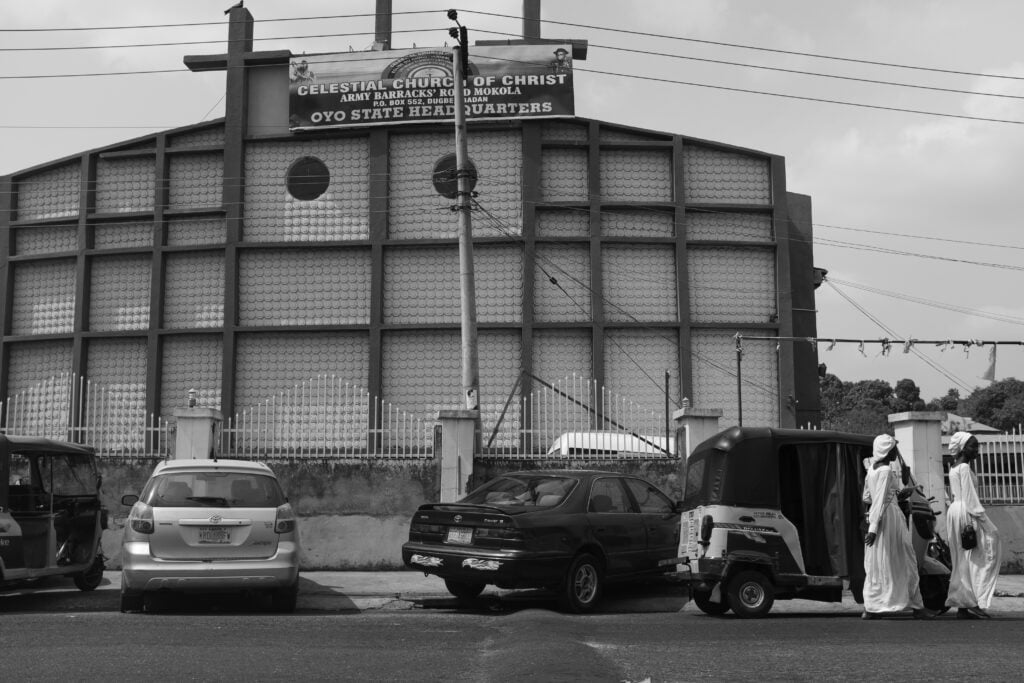
The Aladura churches’ refusal to further gentrify their approach to faith has not come without cost. Perhaps what unsettles people most is not their spirituality itself but their unwillingness to subordinate their cultural beliefs about healing and divine intervention to a purely Western framework. That is, of course, until that healing is needed in their own lives. Nollywood reflects this too. In the media, the Aladura church is occult and dangerous until a challenge arises that requires something deeper, something more indigenous and personal than the more socially acceptable Western church can offer. What is most striking about the misrepresentation is that it originates from the very thing that makes it compelling.
For decades, white-garment churches have been portrayed through stories of supernatural manipulation, fake prophecy, spiritual warfare and occult practice. Their emphasis on prophecy and spiritual intervention, the exact features that drew millions to the movement, gave Nollywood its most convenient raw material.
In Nollywood’s imagination, Aladura churches occupy the same shadowed territory as juju and witchcraft, practices long associated with indigenous religion. Through decades of sensationalised storytelling, the two have been rendered interchangeable. The damage has been significant enough that Aladura church leaders have publicly appealed to Nigerian film producers and screenwriters to stop depicting their churches as occult and wicked.

What Nollywood reflects is part of a much larger question about what role indigenous cultural beliefs and practices are permitted to occupy in modern religion, and for whom. When Christianity arrived in Korea, it absorbed shamanism rather than erasing it. Missionaries adopted Hananim, an existing Korean term for the highest deity, as their word for the Christian God, and today Korea’s shamanic rituals are protected as Important Intangible Cultural Property, celebrated as cultural depth. In Yorubaland, the opposite happened. When missionary Samuel Ajayi Crowther translated the Bible into Yoruba in the 1860s, he needed a word for the devil, and chose Esu, the orisha of the crossroads and enforcer of cosmic law. Through that choice, a culturally sacred intermediary became the embodiment of evil. Yet the holy names were treated differently: Jesus was simply Yorubanised as “Jesu Kristi,” and God kept an existing Yoruba name, Olorun.
Whether by intention or consequence, the pattern is consistent. Across Western cultural references, indigenous spiritual traditions are sorted into two categories: mythology or threat. Greek and Roman gods are treated as sacred mythology, studied in universities, adapted into blockbuster films, while their African counterparts are demonised. The Aladura movement wove Christian practice through Yoruba spiritual idioms and refused to let its faith be further subjugated. But this refusal, originally an act of cultural self-determination, became the very source of the suspicion and misrepresentation the movement faces today. “Beyond the propaganda,” Stephen tells me, “we have to be thankful that there’s something that feels like it belongs to us. Wherever you encounter the aso-funfun in Peckham or in New York, you know immediately that this person is Nigerian.”
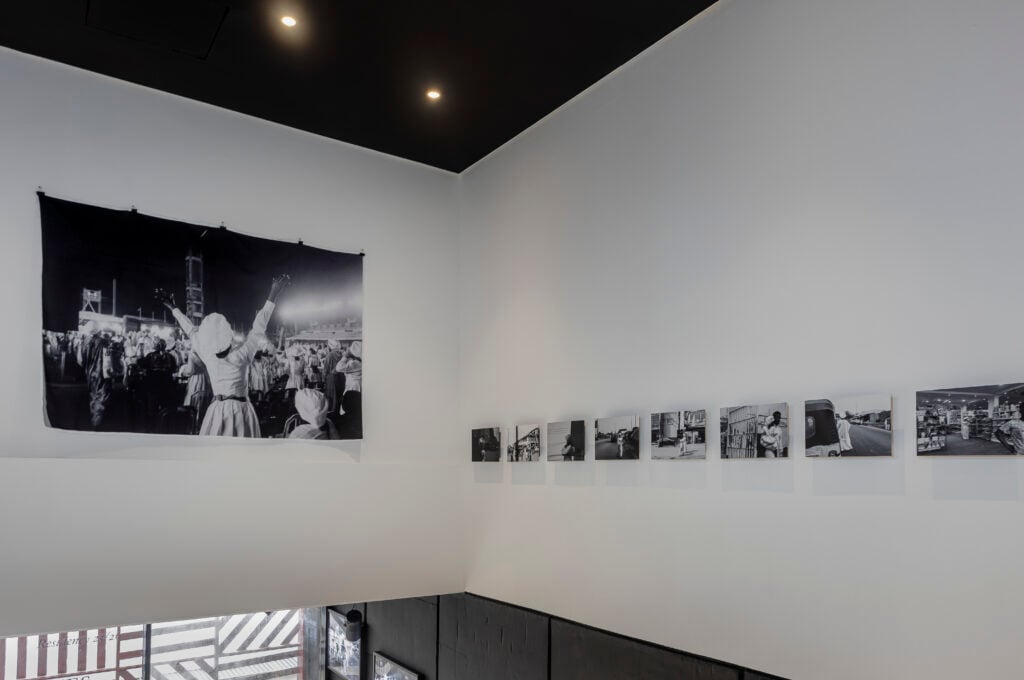
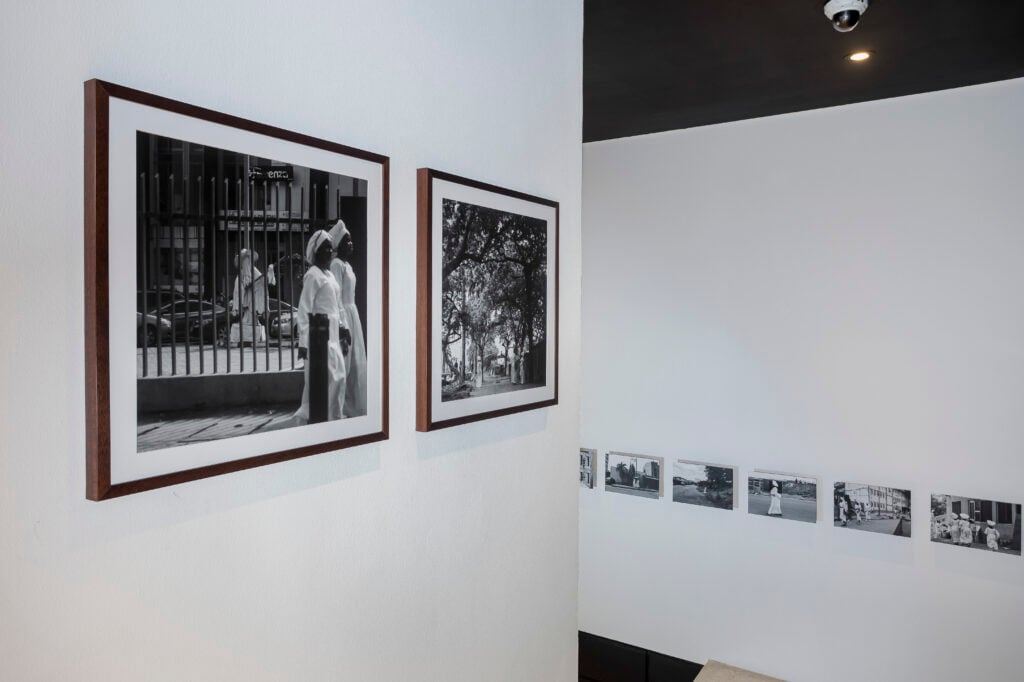
Installation views of What Comes to Mind When You See the Garment? at Alara Lagos.
Stephen Tayo’s exhibition pushes back through intimate encounters. By photographing members of the Aladura community in their daily lives, he asks a direct question: where do these inherited judgments come from? And what happens when we are made to sit with the people we thought we already understood?
Stephen Tayo is a Lagos-based photographer and filmmaker whose work has appeared in The New York Times, Vogue and British Vogue, and earned him nominations for the Dazed 100, Vogue 100 and the British Fashion Awards. His practice spans fashion, culture and social commentary on wealth, class, race, gender and identity. His entry point into the Aladura community grows out of a philosophical outlook that took root early. Unlike many of his peers, he grew up without the pressure to follow a conventional path. That freedom allowed him to pursue his curiosity formally, studying philosophy at the University of Lagos, which would eventually become the foundation of his lens. Growing up, he also had neighbours who were members of the Aladura community. Living alongside them, playing football, running errands, going about their days, humanised them before anyone had the chance to tell him they should be feared. “There’s a probability that when we see stuff, we receive it, and then we build this sort of bank of images in our head,” he tells me. The exhibition is an argument against that bank. It asks what happens when you put the bank down and actually look.
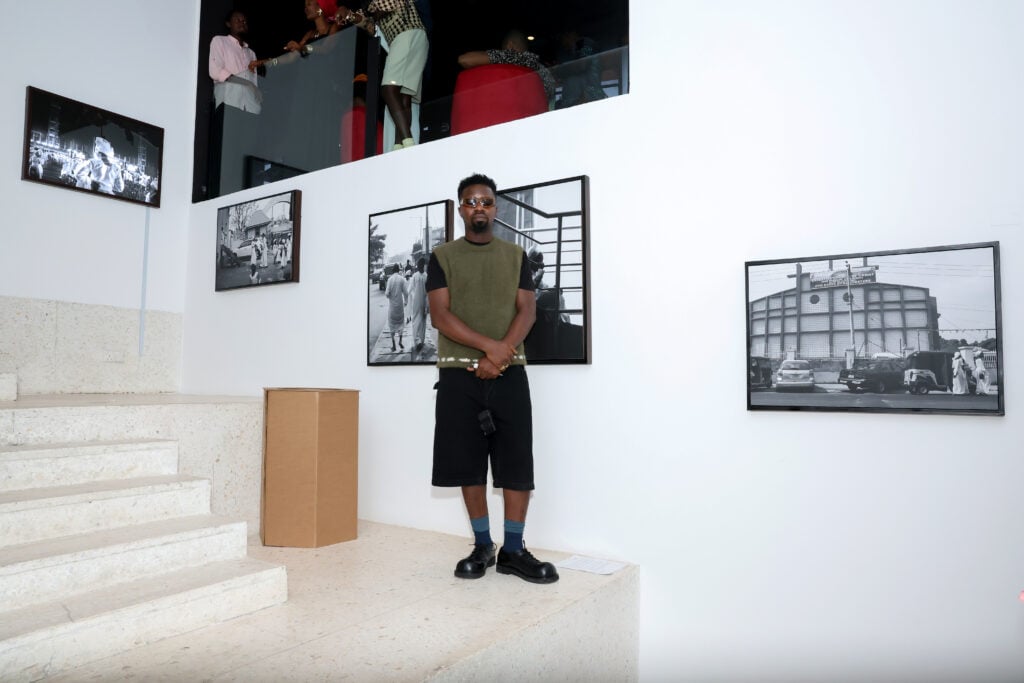
The white garment, once a declaration of spiritual purity, became a visual shorthand for danger. Stephen’s photography returns the garment to what it actually is: a marker of faith with a very specific historical legacy. “I believe that the power of photography makes it possible for diverse conversation,” he says. “It can help us challenge established thoughts and show us where there’s room to rethink and relearn.”
As a Christian himself, Tayo is not immune to the sectarian allegiances that Christianity in Nigeria produces. He recognises the pull toward one’s own denomination and the othering that follows. “It is impossible to ignore the intentional segregation that exists in Christianity,” he says. The stigmatisation of the Aladura church, he suggests, is partly a product of that competition. When Christianity functions as a brand, each denomination is invested in proving its own legitimacy, and a community as visually distinct as the Aladura becomes an easy target for that competition. “Most churches are activated like a product and each one wants you to believe that their product is superior,” he says, referring to the way Christian denominations compete for legitimacy and followers. “If the end goal is the same God, why should the product be advertised in the first place?”
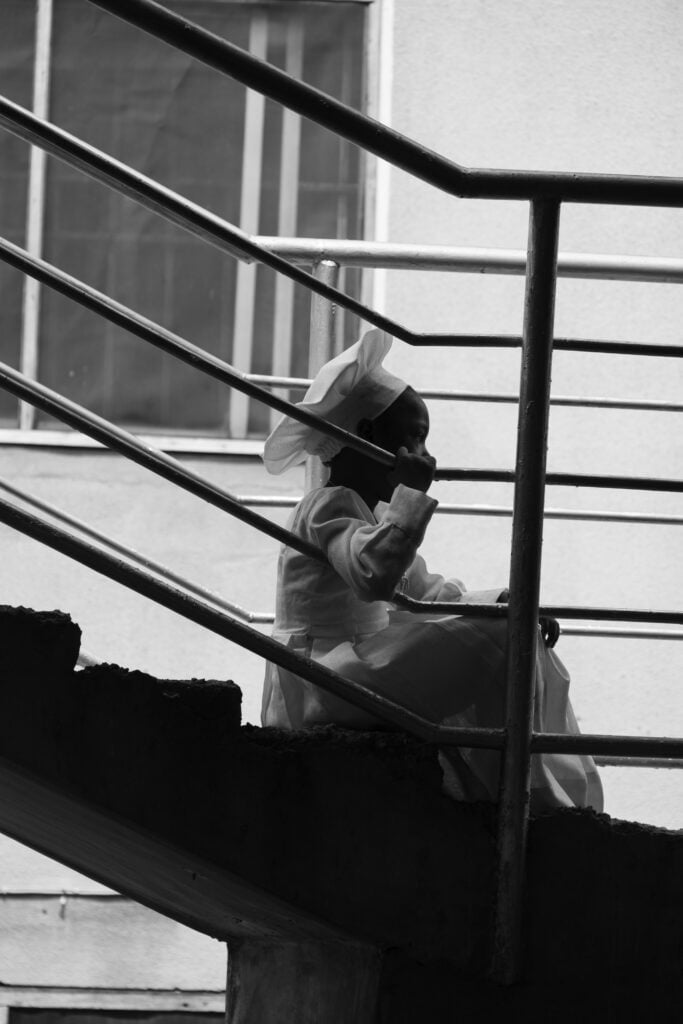
Through his documentary photography, Stephen captures the community exactly as they exist. “None of the images are staged,” he says. “It’s an encounter, an observation.” The city moves around them, Lagos as witness and secondary character.
The exhibition asks the audience to observe long enough to question their inherited beliefs. “We generally have a view that whatever is from abroad or the West is better,” he says. “It will take a lot of reevaluation for us to get to where I believe we should be.” For Stephen, the photographs themselves are that invitation to reevaluate. “When you remove the white garments from the images, it immediately becomes unbalanced visually and that’s very symbolic to me,” he tells me.
The response surprised even him. “I think that’s been the most fulfilling part,” he tells me. “Having people really discuss some of the things that they’ve nursed in their head, and maybe draw a new conclusion.”
And for him, this project has felt like a learning curve. “Unlike other projects I’ve done within communities, this feels like there’s an exchange of knowledge,” he says. “I’ve created this encounter that is natural and deeply immersive. And that created its own language.” He pauses. “It’s a visual gospel. Gospel is all about transporting and visibility.”