

Heal by Hair: How Communities, Culture, and Trust Are Redefining Mental Health Across Africa
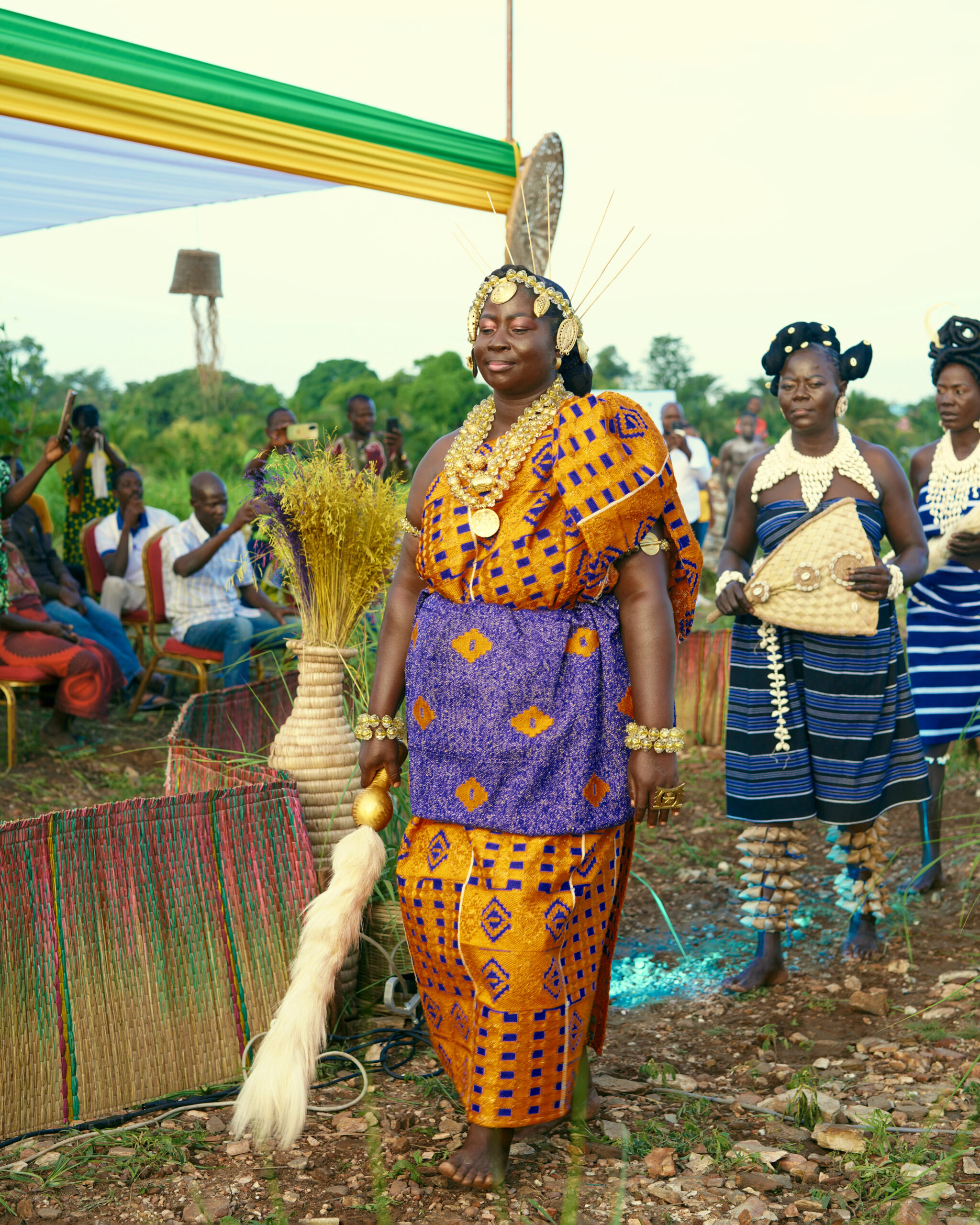
In Siou, a village in Togo’s Kara region, a week before the Évala celebrations, the Heal by Hair Festival revealed a powerful truth: mental health is not only a medical conversation. It is a cultural, social, and collective responsibility.
“We speak a great deal about healthcare infrastructure. We speak far less about infrastructures of trust. Yet without trust, there can be no prevention, no early identification of vulnerability, and no meaningful access to care.”
For Marie-Alix de Putter, Founder and President of the Bluemind Foundation, this distinction lies at the heart of Heal by Hair, an initiative transforming the way communities engage with mental health across Africa.
For too long, mental health conversations have been confined to clinical environments, often surrounded by stigma, silence, and limited access to professional support. Yet across African societies, care has always existed in other forms: through community bonds, storytelling, traditions, and trusted relationships.
Heal by Hair was born from the recognition that some of the most important conversations about well-being already happen in familiar spaces.
One of those spaces is the hair salon.
Across Africa, salons are more than places of beauty. They are spaces of connection, exchange, and trust, where women share their experiences, seek advice, and navigate life’s challenges together.
Research conducted by the Bluemind Foundation confirms this reality. In a 2021 study of 714 women and 148 hairdressers across seven francophone African countries and among the diaspora in France, 67 percent of women said they confide in their hairdresser, and 86 percent believed other women do the same. That existing relationship became the foundation of Heal by Hair.
“We did not create that trust,” explains de Putter. “We chose to recognize it, protect it and give it the means to become a lever for mental health prevention.”
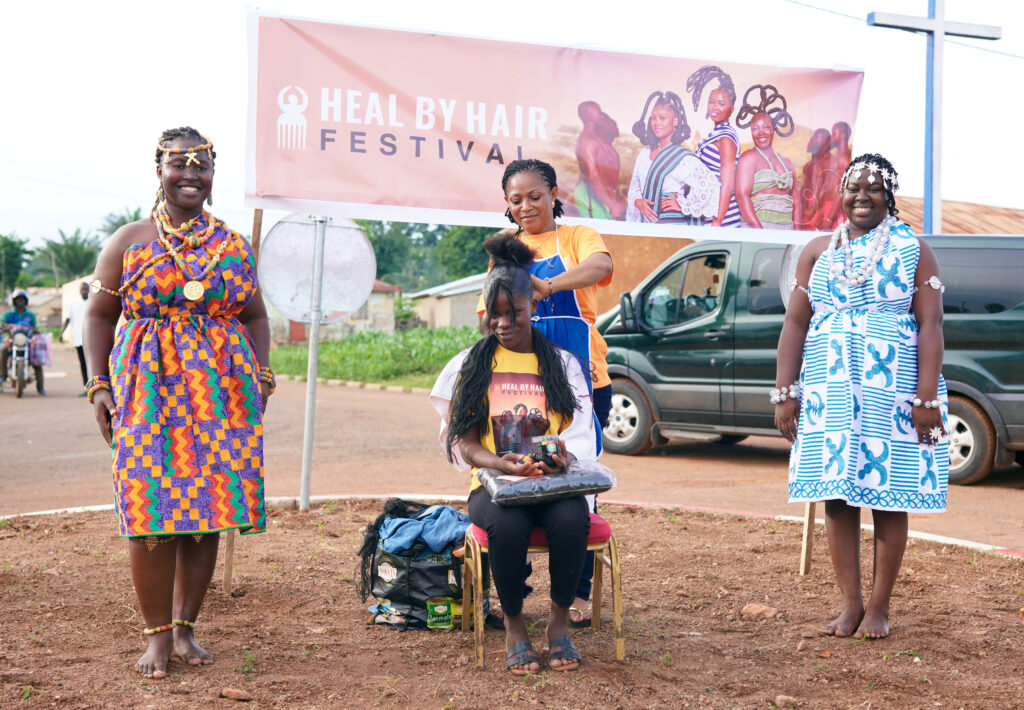
The program trains hairdressers as mental health ambassadors, equipping them with skills in active listening, recognizing signs of vulnerability, maintaining confidentiality, and guiding individuals toward appropriate professional support.
They do not replace psychologists or healthcare professionals. Instead, they become a vital link between communities and formal systems of care.
“Rather than waiting for women to come towards care, let us bring care closer to the places they already frequent,” says de Putter.
Since its launch in 2022, Heal by Hair has trained close to 1,000 hairdressers in Côte d’Ivoire, Cameroon, and Togo, building a growing network of ambassadors who combine professional skill with community leadership. Through awareness activities and outreach, the program has reached more than 600,000 women and families.

But Heal by Hair is not only a program. It is part of a broader movement to redefine how mental health is understood across the continent.
This vision came to life through the Heal by Hair Festival, staged on July 3 and 4 in the season of the Évala, the initiation rites of the Kabye people and one of Togo’s most significant cultural gatherings. The festival accompanied the program’s sixth edition, which trained 300 new ambassadors in Kara, Sokodé, and Dapaong between June 14 and July 18 in partnership with the University of Kara.
Anchoring the edition in the Kara region was a deliberate statement. It was the first time the program had left the capital. It affirmed that innovation does not only emerge from capital cities. It grows within communities, through traditions, collective knowledge, and shared responsibility.
The festival placed mental health at the intersection of culture and creativity, bringing together fashion, cinema, music, literature, and traditional practices.
Because well-being is not separate from culture. It is shaped by the stories we tell, the identities we celebrate, and the connections we preserve.

Through film screenings, artistic performances, and community conversations, the festival explored mental health in multiple registers. Cinema opened discussions around grief, resilience, and personal struggles. Literature highlighted the importance of nurturing children’s imagination and emotional well-being from an early age.
Fashion became another language of dignity and recognition. The celebration of the women of Siou honored farmers, mothers, young women, and community leaders, placing their beauty, heritage, and stories at the center of the conversation.
At the Bluemind Foundation, the belief is clear: protecting mental health also means protecting dignity, belonging, and the value people hold within their communities.
The festival also created a bridge between African cultures, welcoming Cameroon as guest of honor and bringing together Togolese Évala wrestlers and Cameroonian Ngondo wrestlers. The encounter reflected a wider ambition: to encourage African solutions to travel, connect, and grow through exchange.
“The real challenge today is no longer encouraging people to speak,” says de Putter. “It is building a society capable of responding.”
That response requires more than healthcare facilities. It requires families, educators, artists, media, policymakers, community leaders, and institutions to recognize their role in creating environments where people can seek support without fear or judgment.
“Africa needs more spaces where it can think, document, and share its own responses to mental health challenges,” she says. “For too long, we have mainly imported models. Today, innovations are emerging on the continent.”
Heal by Hair represents this shift: from Africa as a recipient of solutions to Africa as a creator of knowledge, approaches, and systems capable of inspiring the world.

The ambition is not simply to expand geographically, but to preserve what makes the initiative powerful: trust, scientific credibility, and community ownership.
Ultimately, the story of Heal by Hair is not only about hairdressers or mental health. It is about how societies choose to care for themselves.
It is about recognizing that healing can begin in ordinary places. In conversations. In communities. In traditions. In moments where people feel heard and valued.
Heal by Hair asks a simple but profound question: What if the first step toward better mental health is not found inside a hospital, but in the places where people already feel seen, heard, and understood?
It is a reminder that healing begins with conversation, grows through community, and flourishes where dignity is protected.
As de Putter puts it: “We are all worthy of well-being.”