


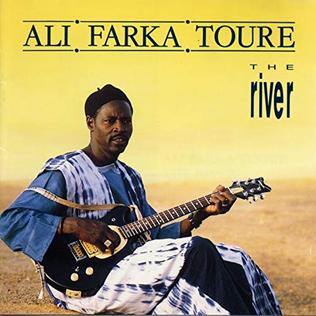
When Ali Farka Touré first heard John Lee Hooker’s records in the 1960s, the music struck him as remarkably familiar. The hypnotic one-chord grooves, the droning guitar, the foot-stomping rhythm. It all sounded, he said, like home. He was surprised only that Hooker sang in English instead of Songhai or Bambara.
Touré, a guitarist from Niafunké in northern Mali, would go on to be nicknamed “the African John Lee Hooker.” The comparison wasn’t metaphorical. Both men built their sound on the same foundation: repetitive riffs, open tunings, cyclical rhythms, and the guitar used as both voice and percussion. What became known as Desert Blues in the Sahara had roots in the same West African musical traditions that crossed the Atlantic during the slave trade and evolved into Delta Blues in Mississippi.
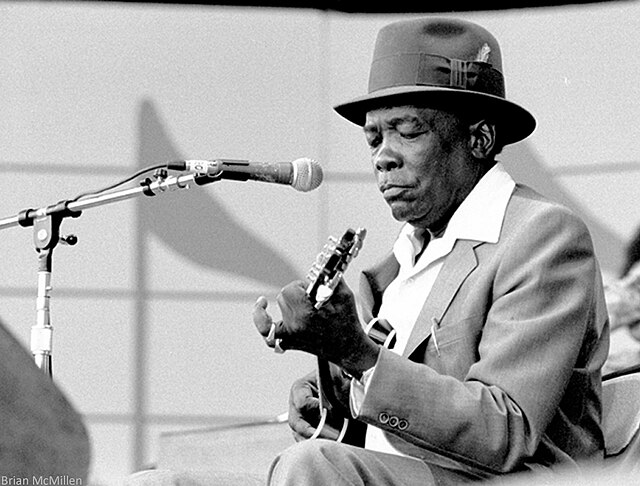
The connection isn’t speculative. Pentatonic scales, call-and-response patterns, and the use of music as testimony are documented links between Malian traditional music and American blues. Musicologists have traced these elements back centuries, and musicians on both sides have acknowledged the kinship. Touré’s 1994 collaboration with Ry Cooder, Talking Timbuktu, made the case explicitly, pairing Cooder’s slide guitar with Touré’s Malian folk melodies. The album won a Grammy.
Touré died in 2006, but the sound he helped introduce to international audiences continues. Tinariwen, a Tuareg band from northern Mali, electrified the tradition in the 1980s, adding distortion and rock sensibility while keeping the trance-like repetition intact. Bombino, from Niger, pushes further into psychedelic territory. Mdou Moctar, also from Niger, has been called “the Jimi Hendrix of the Sahara” for his blistering, effects-heavy performances that still honor traditional Tuareg guitar techniques.
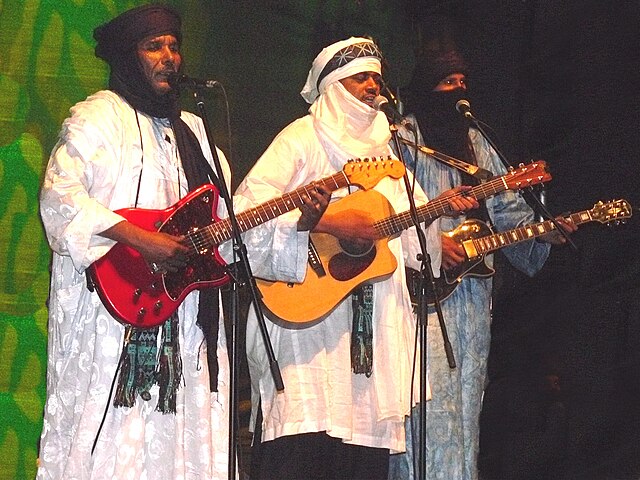
The music sounds both ancient and immediate. Songs can stretch past seven minutes, built on a single chord, with melodies that circle back on themselves. Vocals often sit low in the mix, treated as another instrument rather than the focal point. Percussion like calabash, djembe, and hand claps drives the rhythm forward while the guitar holds the center.
Desert Blues carries political weight that Delta Blues also once did. Many of the Tuareg musicians came of age during rebellions against their governments, and themes of exile, displacement, and survival run through the lyrics. Tinariwen formed in a refugee camp. Bombino fled Niger multiple times due to violence. The music documents struggle without spectacle, a tradition the Blues established generations ago.
For listeners familiar with Hooker’s “Boogie Chillen'” or Muddy Waters’ “Mannish Boy,” Desert Blues offers a way back to the source. Same groove, different sand.
Follow Guzangs on Apple Music and listen to our Desert Blues playlist.