

What Dakar Built
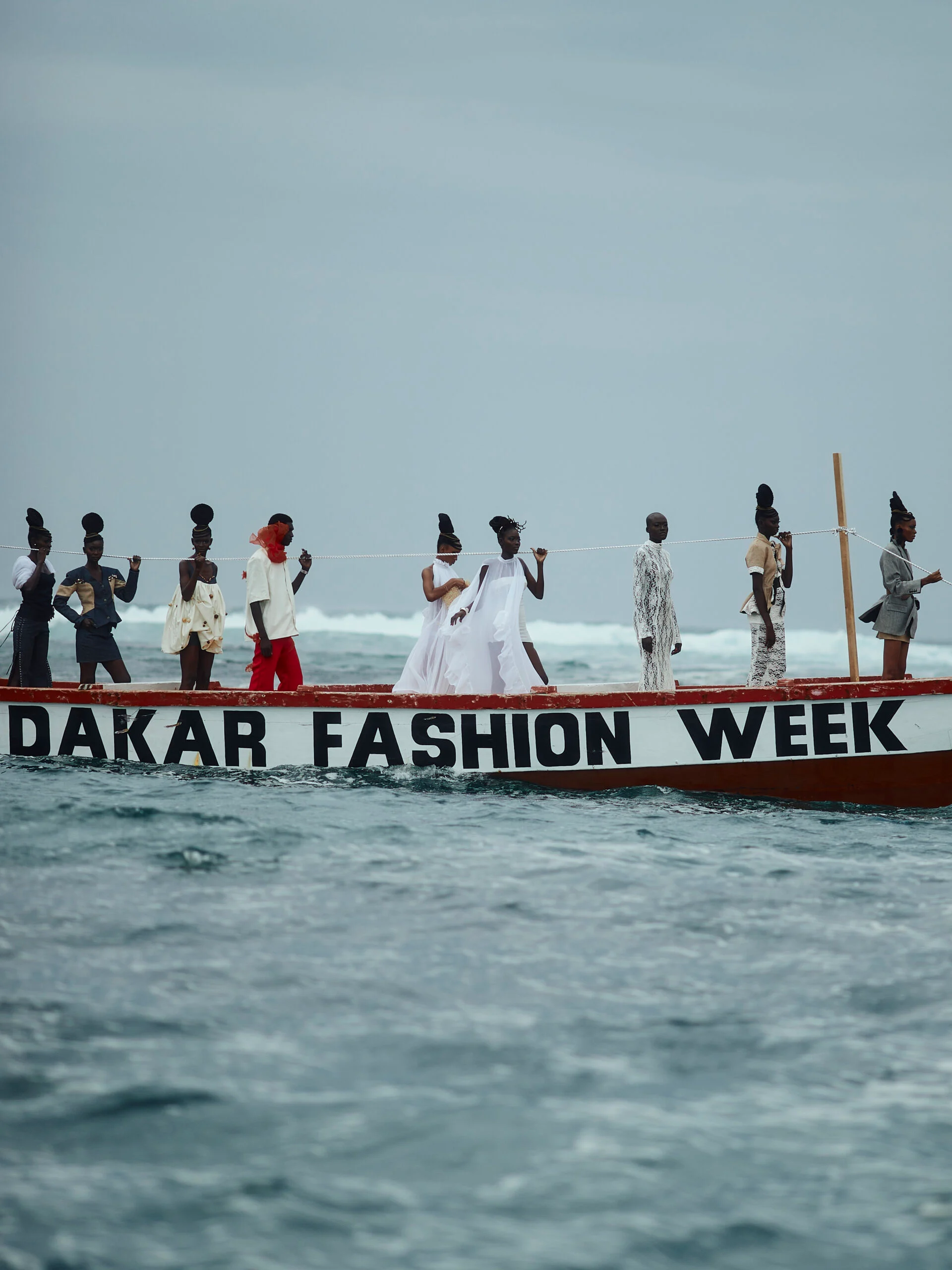
Adama Paris has spent a quarter of a century taking Dakar Fashion Week out of rooms.
The Medina show runs on a street closed for the night. It is free, there is no list, and residents watch from doorways and from the ledges of their own roofs while models pass close enough to touch. There have been shows on Gorée Island. During the pandemic, when the venues shut, she moved the runway out among the baobabs in the savannah, and it was better than the room it replaced. In December she put it on the water off Ngor Island, models walking on traditional pirogues while the audience watched from boats.
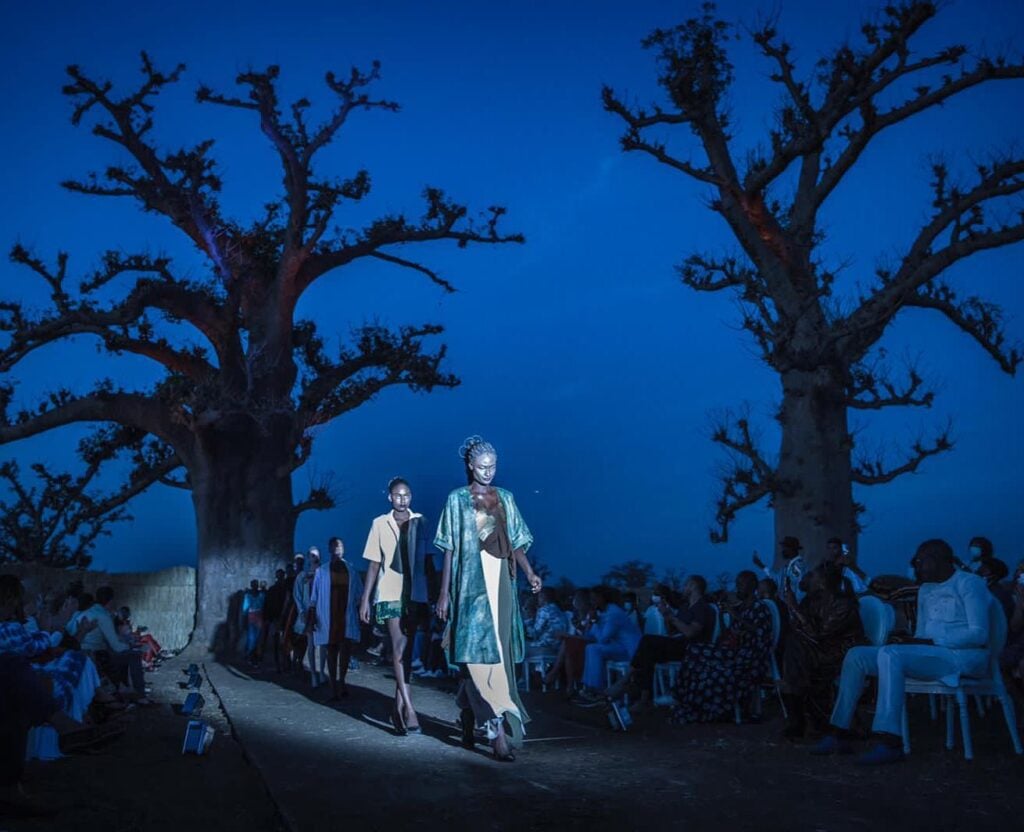
She had been saving that one.
“I had never had the occasion to unite these two passions,” she told guzangs at the time. “I wanted to do it for the 25th edition next year, but I couldn’t wait any longer.”
Adama Amanda Ndiaye was born in Kinshasa to Senegalese diplomat parents and grew up between Paris, London and New York. She read economics at Nantes and went into banking. When the banking ended she started a label, and then she started a platform, and from the earliest editions she built it to carry other designers alongside her own work. Almamy Lo, her long-time collaborator, has described those first years plainly. There was not much capital, and there was a decision to be made about what to do with the room she had. She gave a good part of it away. She is still doing it.
“I wanted to create an ecosystem where talents are discovered and grow,” she said. “I share my platform. I share the spotlight, with emerging designers and multidisciplinary talents.”
The sentence is easy to skim past and it describes the actual machinery. Designers show alongside artisans. Stylists, photographers, models, textile producers and craftspeople all move through the same week, which means the week functions as a supply chain and not only as a stage, and it is the reason a young designer in Dakar can meet a fabric producer without either of them buying a flight.
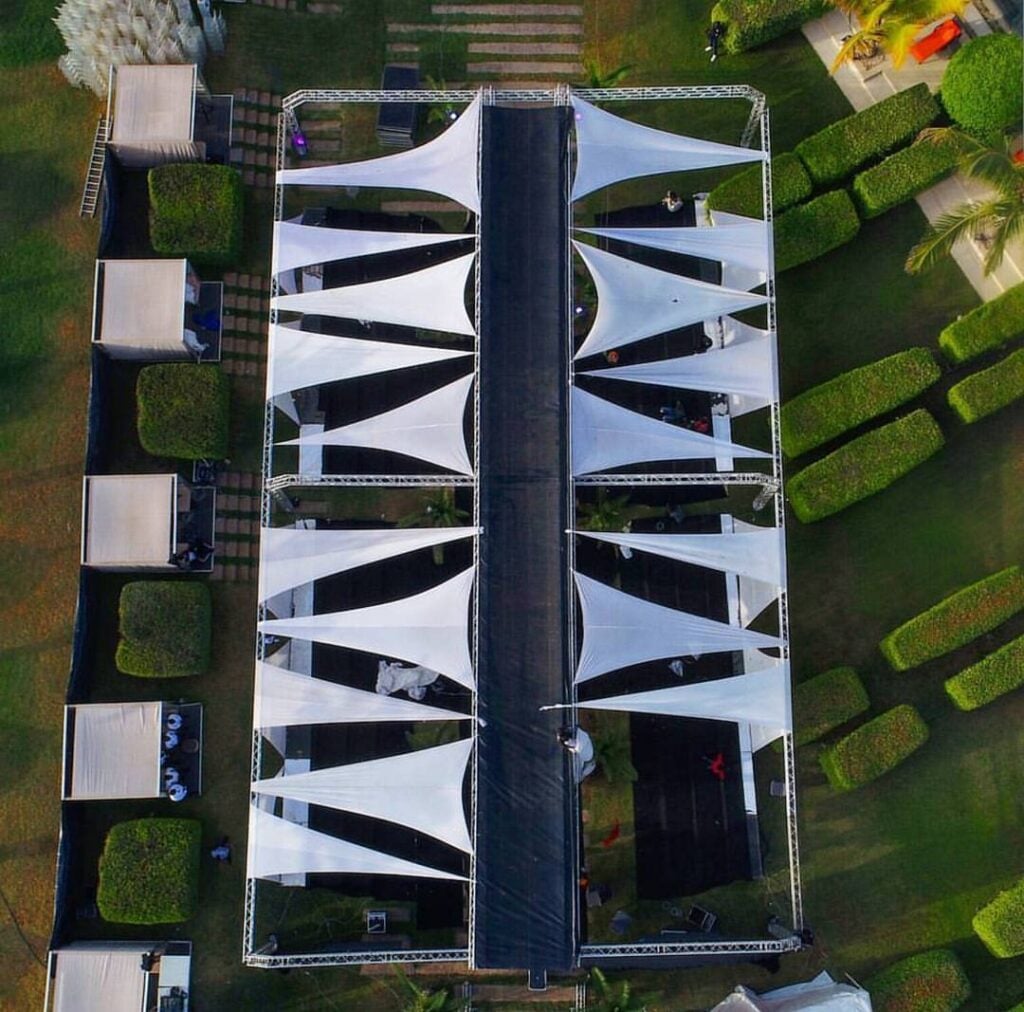
The street show carries the same argument in public. Most fashion weeks are built so that not everyone can get in, and that is the product. In the Medina the audience is whoever lives there, and the clothes are shown to people who will never be sold them.
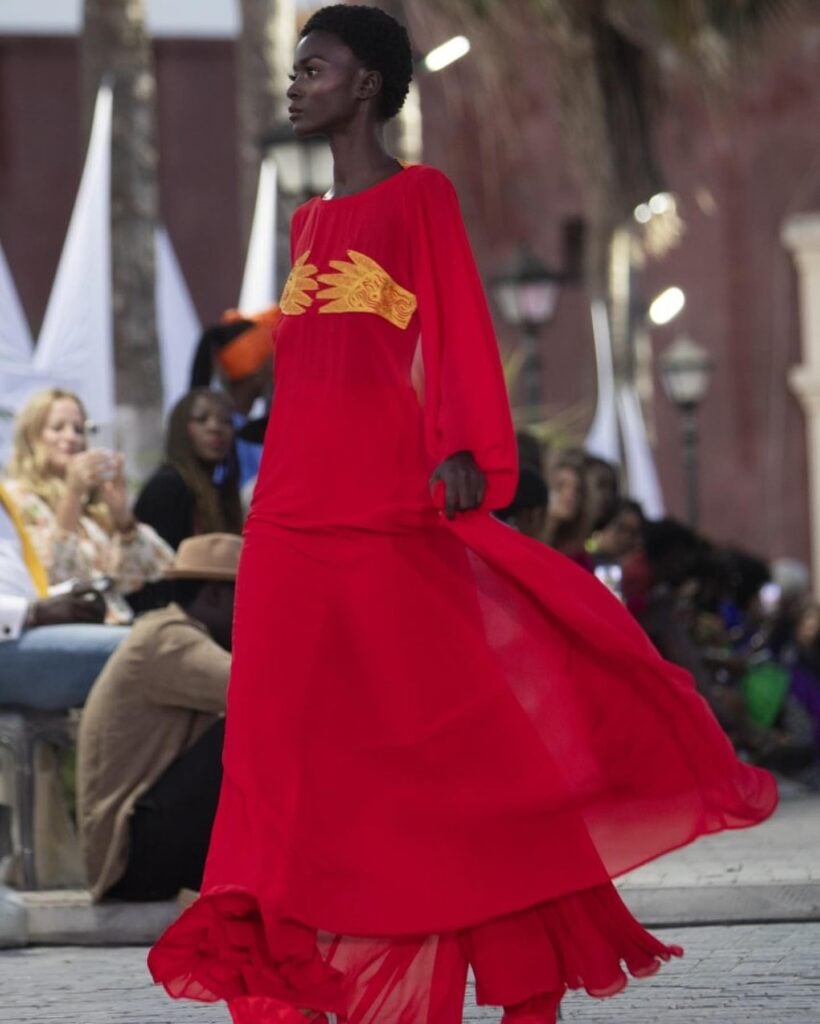
She was building on a city that already had a tradition. Oumou Sy founded SIMOD in 1997, and Dakar’s tailoring runs back a good deal further than that. What Dakar Fashion Week added, year after year without a gap, was continuity, and a habit of staging African fashion on its own ground rather than waiting to be invited onto somebody else’s.
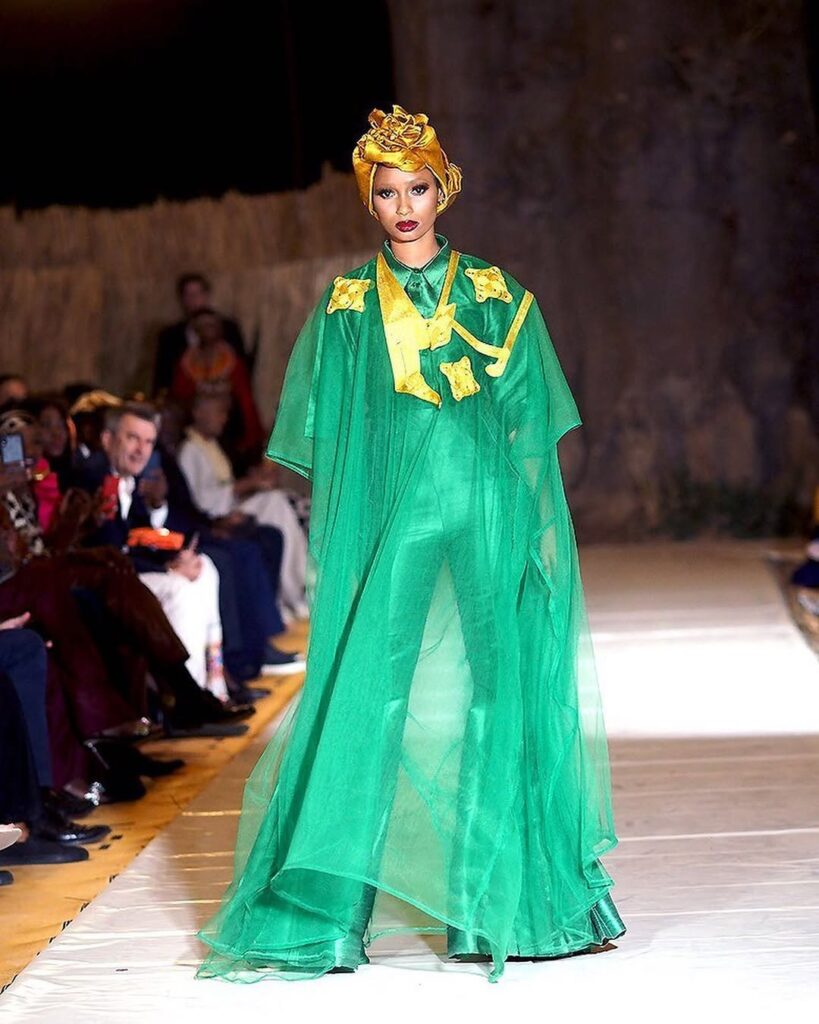
The ocean was built small on purpose.
“It required enormous logistics and coordination,” she said. “I knew it could only be done on a small scale.”
It nearly did not happen at all. The forecast had promised sun and delivered rain, and Almamy Lo called hours beforehand to say they should call it off. She sent for two hundred umbrellas instead. The weather that was supposed to ruin it is the reason the pictures look the way they do, grey and cold and serious, with the surf breaking behind the boat.
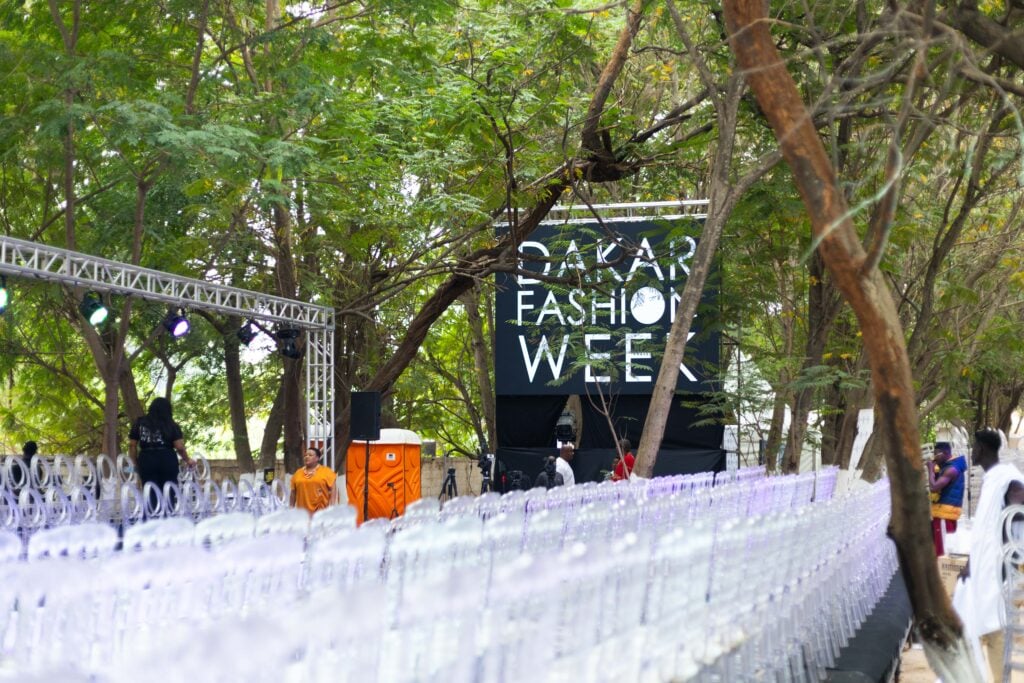
The 25th edition runs in Dakar this December. She has been planning it for over a year, and by her own account could not entirely wait.