


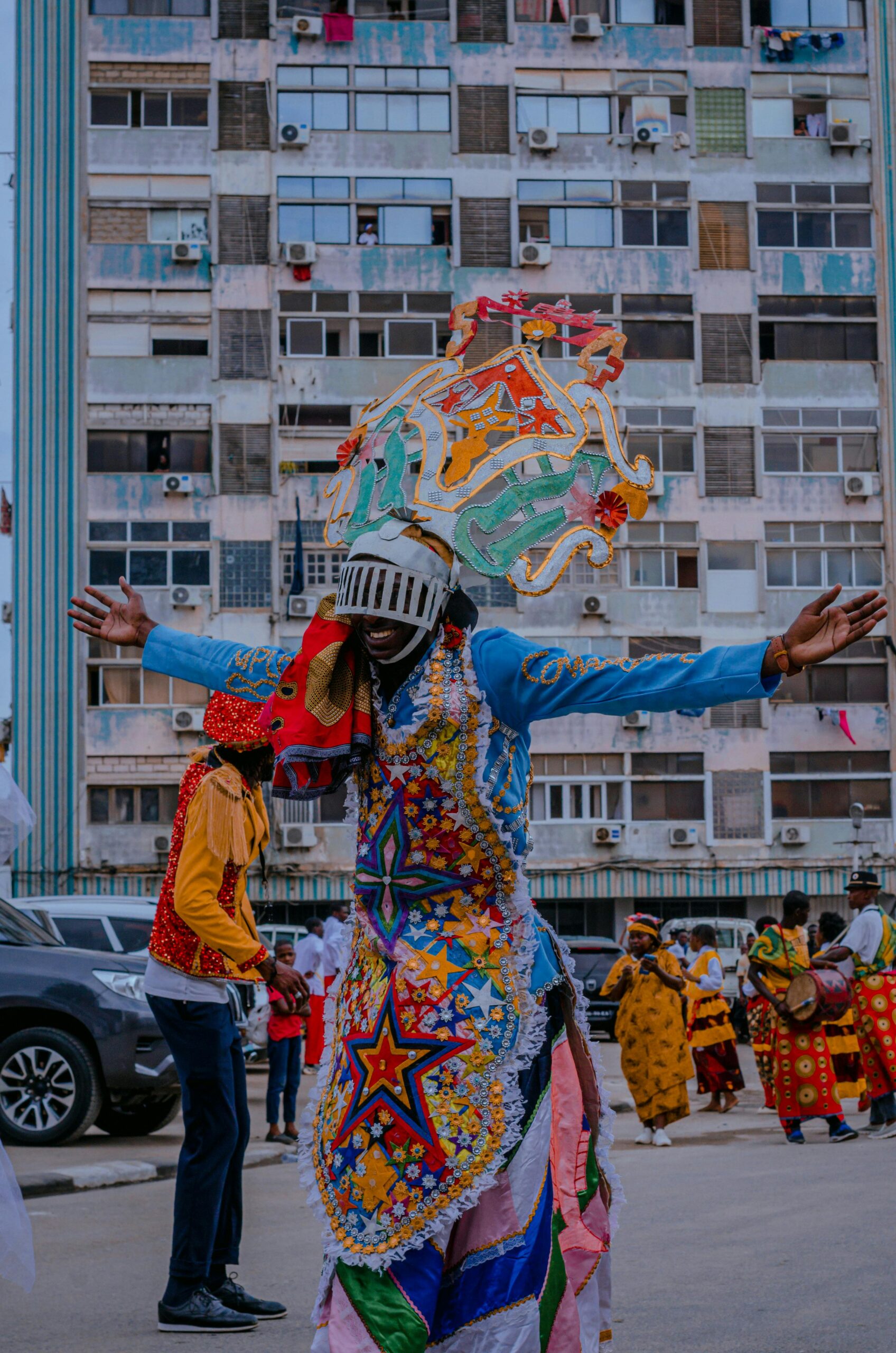
Every year, Carnival fills Rio de Janeiro with samba — millions of bodies moving to a rhythm the world has learned to associate with Brazil. But samba’s story does not begin in Rio. Its deeper roots reach across the Atlantic to Angola, where semba, a traditional music and dance form, shaped the rhythms, gestures, and communal structures that would later echo through Brazilian life.
At the center of this history is semba. Though scholars have not reached full consensus on the etymology, the prevailing view holds that the word samba derives from the Kimbundu term semba, associated with the umbigada, a navel-to-navel gesture used in dance to invite participation. More than choreography, it is a social cue — a way of drawing others into the circle. In Angola, semba has long been part of communal life, rooted in celebration, ceremony, storytelling, percussion, call and response, and improvised movement.
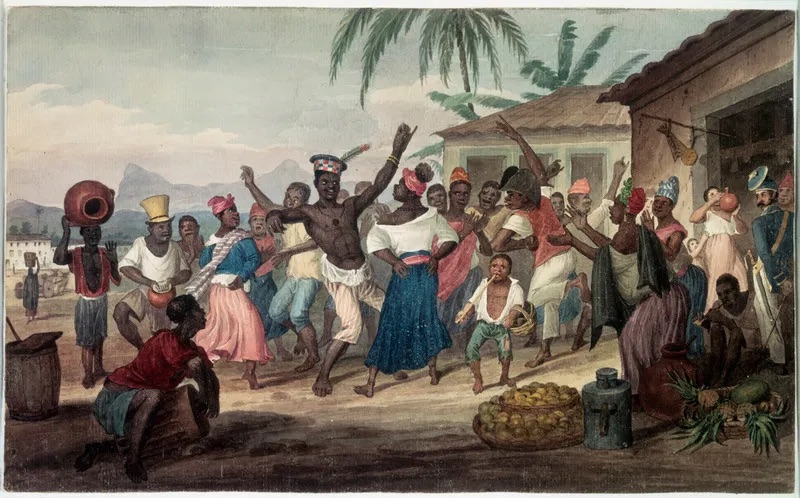
Between the sixteenth and nineteenth centuries, enslaved populations from the Kongo-Angola region were taken to Brazil in enormous numbers — an estimated 5.5 million people forcibly brought to its shores, more than any other country in the Western Hemisphere. They carried with them rhythms, movements, and musical systems that colonial rule did not erase. In Brazil, many of these African traditions were grouped under the label batuque, a reductive term that flattened distinct practices into a single category. Even so, essential elements endured: circular dance formations, percussion-centered rhythm, call and response singing, and interactive movement. From that persistence, the foundations of samba began to take shape.
In the Recôncavo region of Bahia, these African traditions merged with Indigenous and Portuguese influences. It was here that samba de roda emerged — a circle dance built on improvisation, percussion, and call and response singing, recognised by UNESCO in 2005 as a Masterpiece of the Oral and Intangible Heritage of Humanity. The circle remained central. So did the umbigada as both gesture and invitation. In Bahia, samba became a diasporic form — rooted in African memory, remade in Brazilian life.
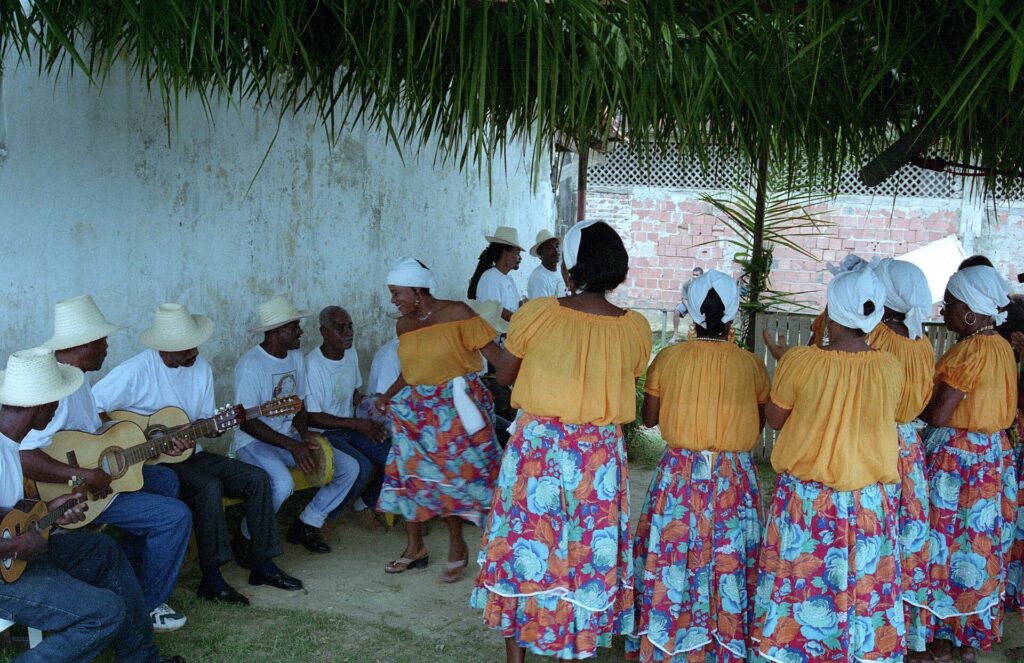
Following abolition in 1888, Afro-Brazilian migrants brought samba from Bahia to Rio de Janeiro, where it evolved again. By the early twentieth century, samba schools were established, Carnival became a stage for performance and identity, and radio and recording industries expanded the music’s reach.
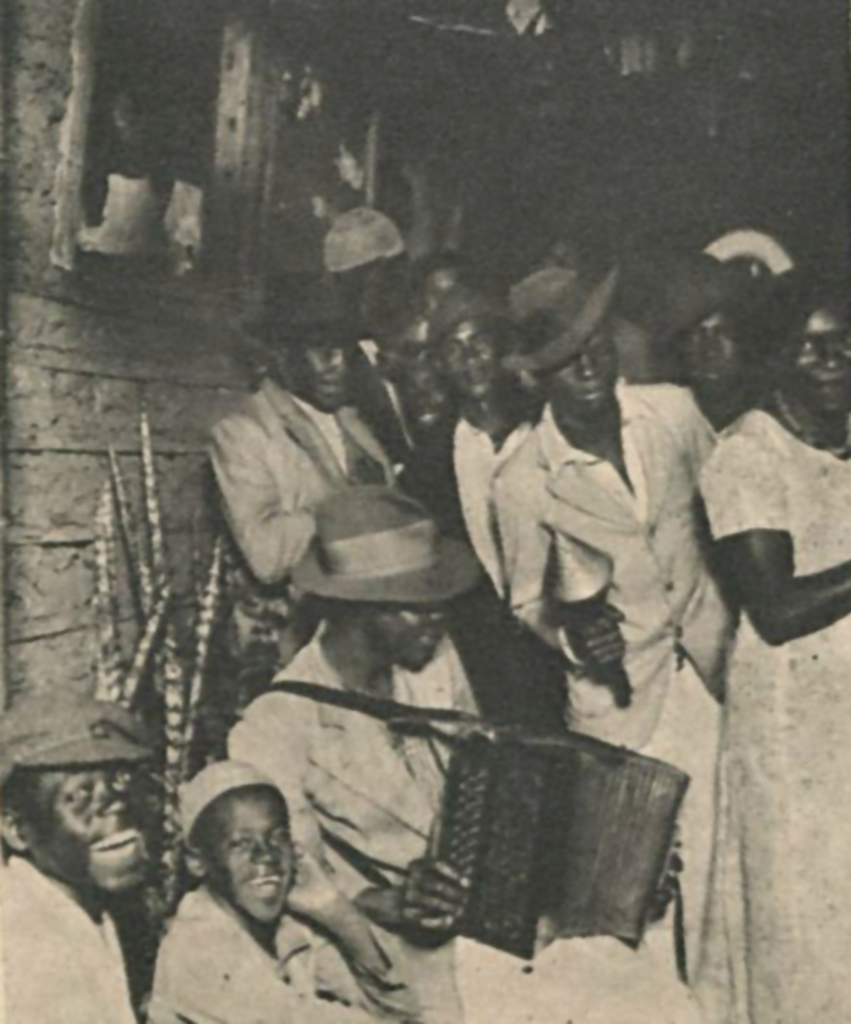
Under Getúlio Vargas, particularly during the Estado Novo of the late 1930s and 1940s, samba was elevated into a national symbol — transformed from a communal practice once criminalised by police into a state-sanctioned cultural export. In that process, its African lineage, especially its Angolan roots, was often pushed to the background.
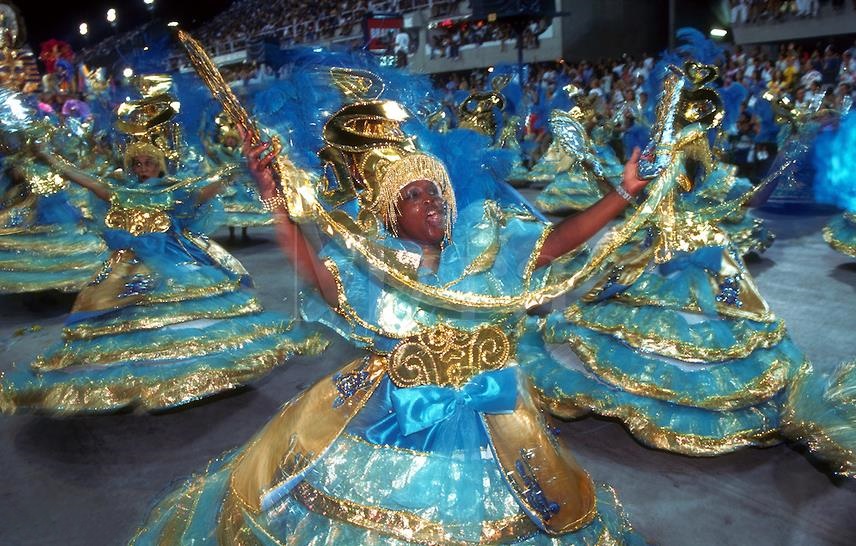
Samba is not simply a Brazilian invention detached from Africa, nor is it a direct replica of Angolan semba. It is the result of diasporic transformation — shaped by forced migration, adaptation, and cultural exchange. The name changed. The setting changed. The form evolved. But the circle, the invitation, the percussion, and the communal logic endured.
Today, samba circulates globally while semba remains far less visible outside Angola. That disparity is not a reflection of musical value but of access and recognition. Diasporic forms often gain prominence once they are codified and exported, while the traditions that shaped them stay in the margins. To understand samba fully is to see it not only as Brazil’s national rhythm, but as part of a longer Afro-Atlantic history — one that connects Luanda to Rio through movement, memory, and survival.