

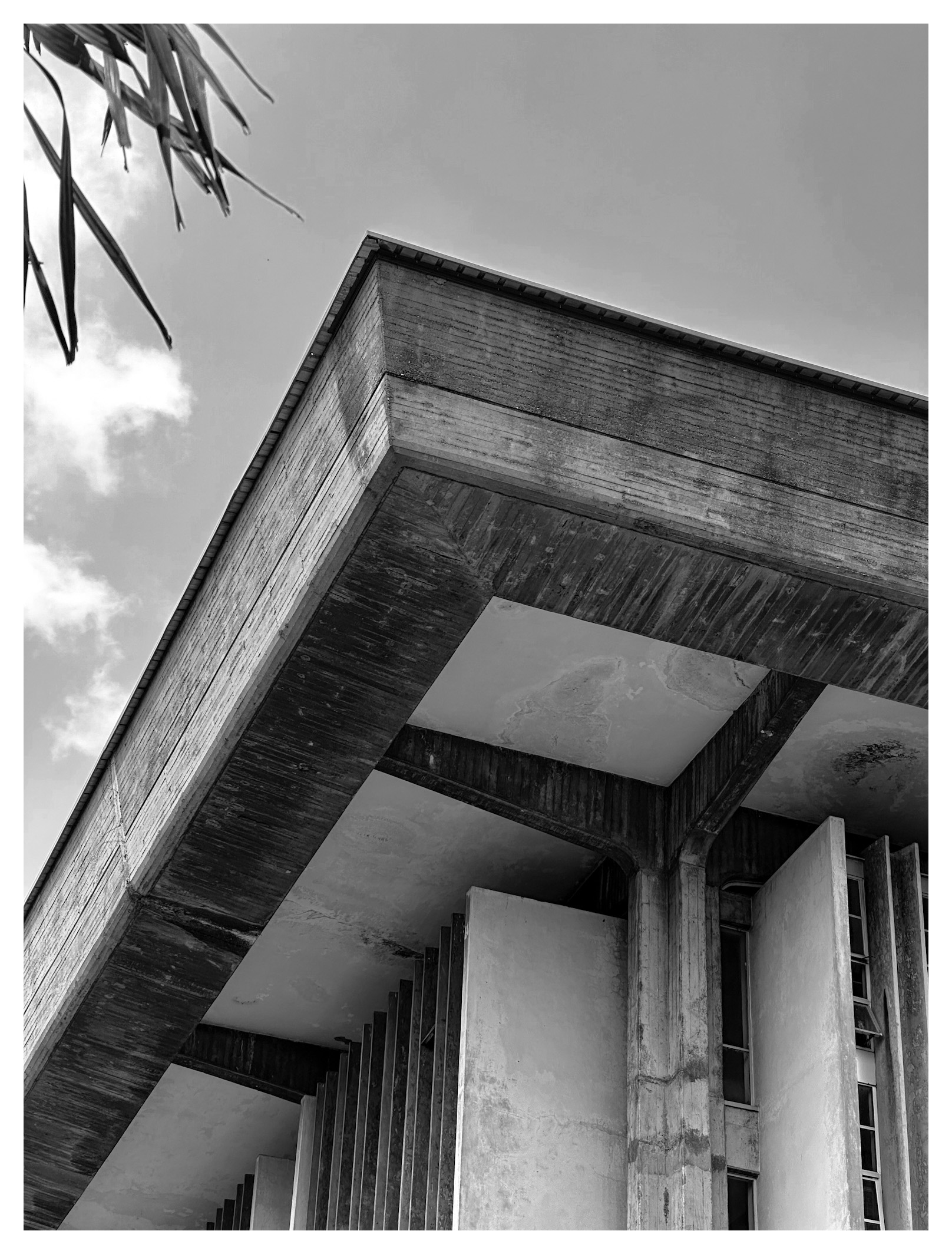
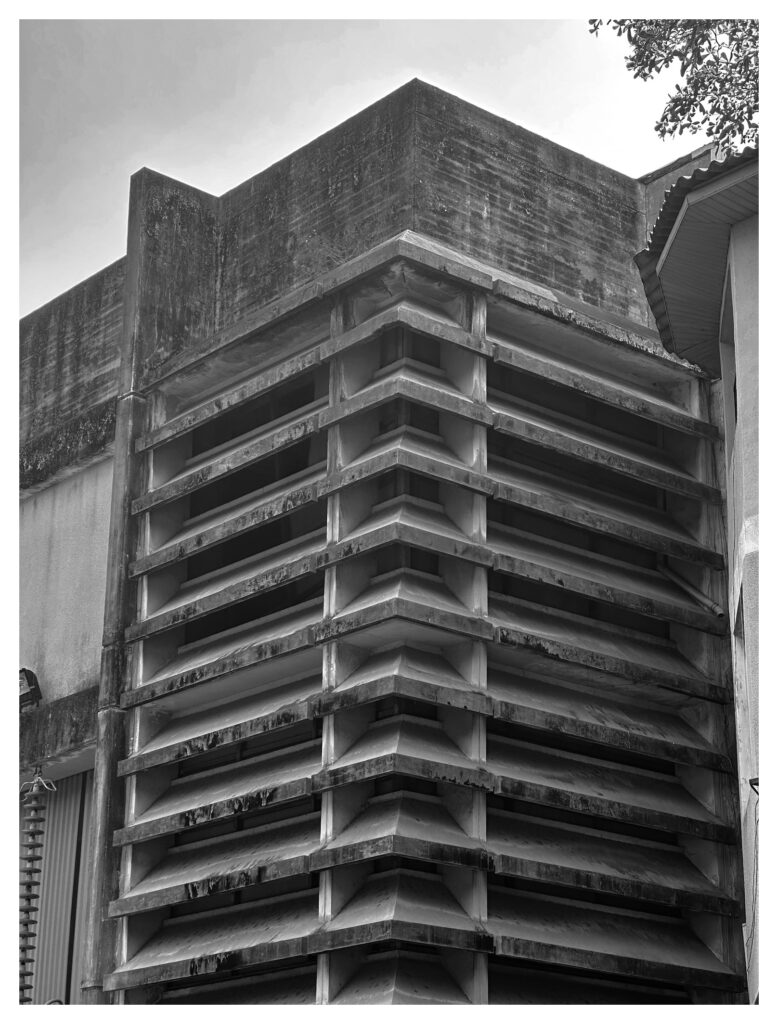
The University of Lagos was not built to be beautiful. It was built to be permanent, a concrete declaration that independence would have institutions to match its ambitions. Constructed between the 1960s and 1980s, the campus is one of West Africa’s most concentrated collections of post-colonial modernist architecture: louvered facades engineered for tropical ventilation, monolithic cantilevers, and repeating grids that impose order on the equatorial light.
Photographer Uche Ibemere sees something else entirely. Where others see aging infrastructure, Ibemere finds sculptural depth, fashion film locations, and source material for the next generation of Nigerian design. Working exclusively on iPhone, his series A Memory of Walls strips away campus life to isolate what remains when the newness wears off: pattern, shadow, weight, and time.
We spoke with Ibemere about what drew him to these structures and why he believes they still have something to teach.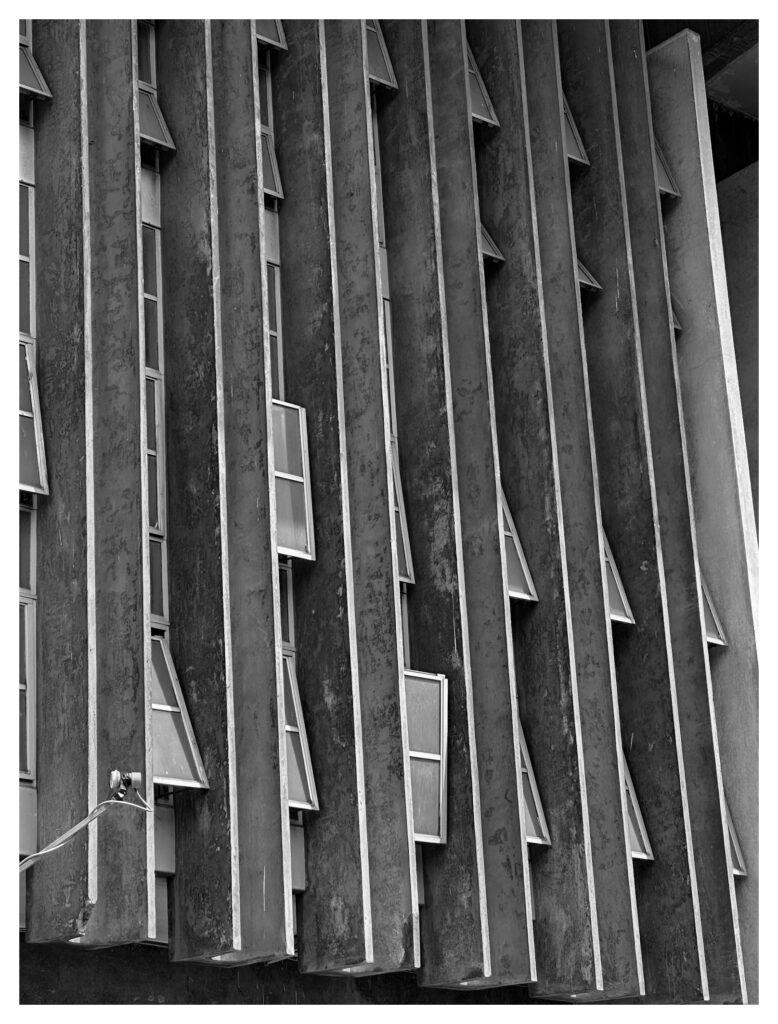
This series focuses entirely on the University of Lagos. What period of architecture are we looking at, and what makes it significant?
This collection is a study of the university’s architectural DNA, specifically the post-colonial and late modernist structures built from the 1960s through the 1980s. That timeframe continues to influence the way I see form and shadow today. These buildings arrived at a moment when Nigeria was actively constructing its institutional identity, and the architecture carries that weight. It wasn’t decorative. It was deliberate.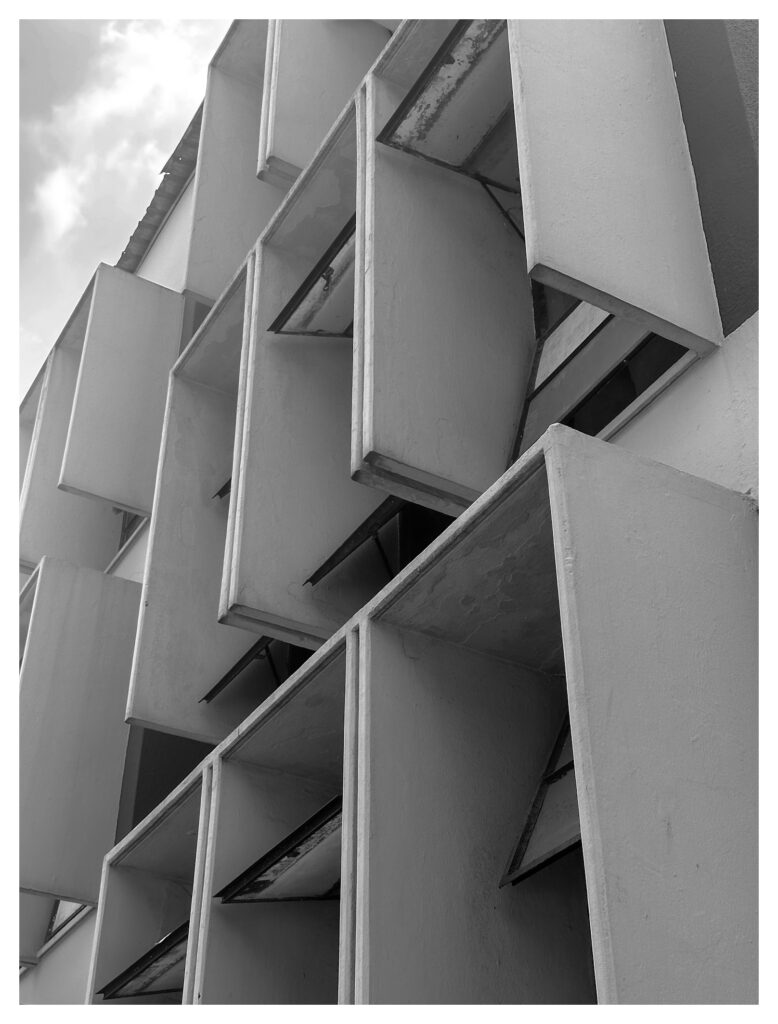
You’ve described yourself as self-taught. What drew you specifically to this site and this kind of building?
This collection is really an obsession of mine coming to life. I’ve spent the last year diving deep into architectural documentaries, trying to understand why certain eras just hold you. I realized I’m most at home in the heavy, post-war brutalist style, the kind of buildings that don’t ask for permission to exist.
Seeing these structures on campus, stripped of their original polish by decades of Nigerian weather, they actually become more beautiful to me. They aren’t just ruins. They’re inspiration for the next generation of designers. My north star has always been Ricardo Bofill, whose work has this soulful, geometric depth that I looked for every time I set my focus for these shots.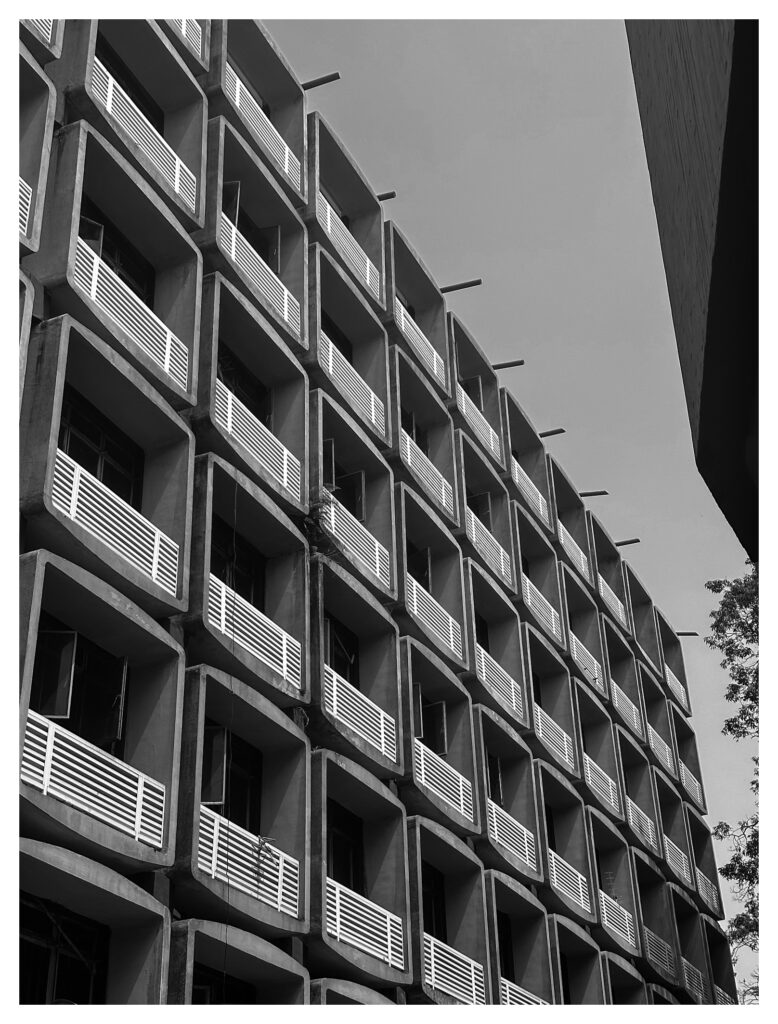
You shot the entire series on iPhone. Was that a constraint or a choice?
A choice. The iPhone forces a kind of immediacy because you can’t hide behind equipment. You have to be more intentional about where you stand, how you angle, what you’re actually seeing. With architecture like this, the geometry does most of the work. The tool just needs to get out of the way.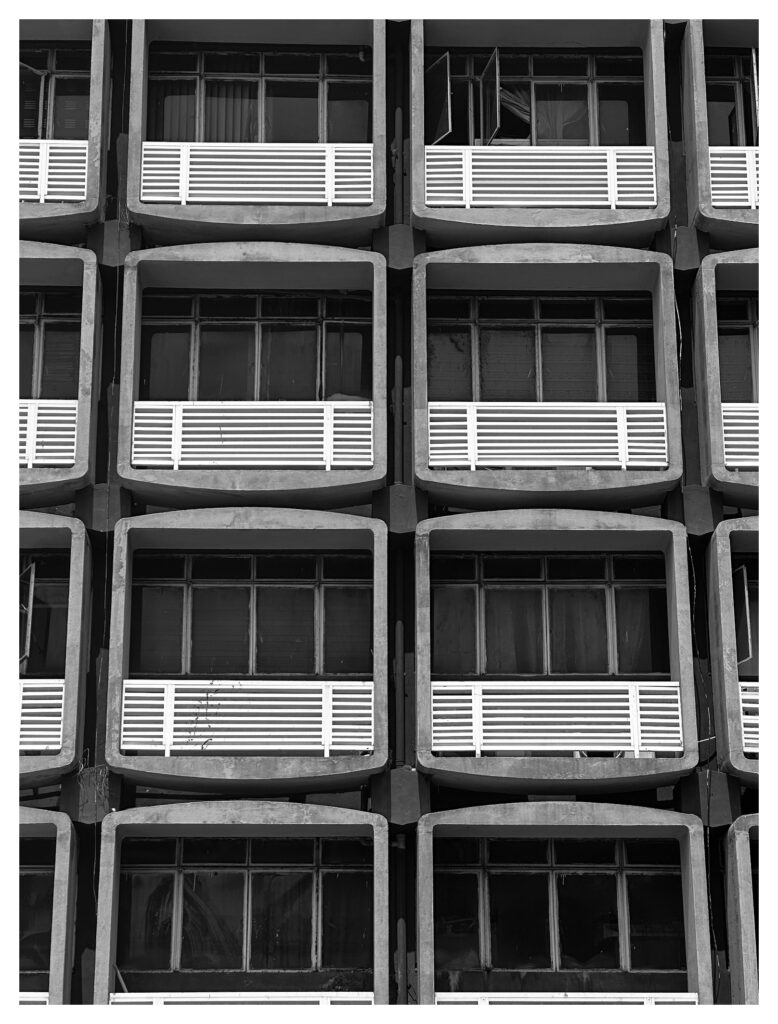
 How do you see this architecture influencing Nigerian visual culture today, across design, fashion, interiors, and creative practice?
I’ve always felt that creative disciplines are deeply interconnected. A fashion film, for instance, is only as evocative as the space it inhabits, and the architecture provides the bones for the narrative. While I was documenting these structures, I wasn’t just seeing buildings. I was scouting scenes. I kept imagining how a silhouette would break against those specific textures, or how a garment would flow through those walls.
I’ve watched my fair share of documentaries on artists’ and architects’ homes, and while there is a beautiful resonance between those spaces and this collection, there is still a massive, untapped frontier here. I hope these images serve as a nudge for the next generation of Nigerian architects to look back at these monuments before they design the future.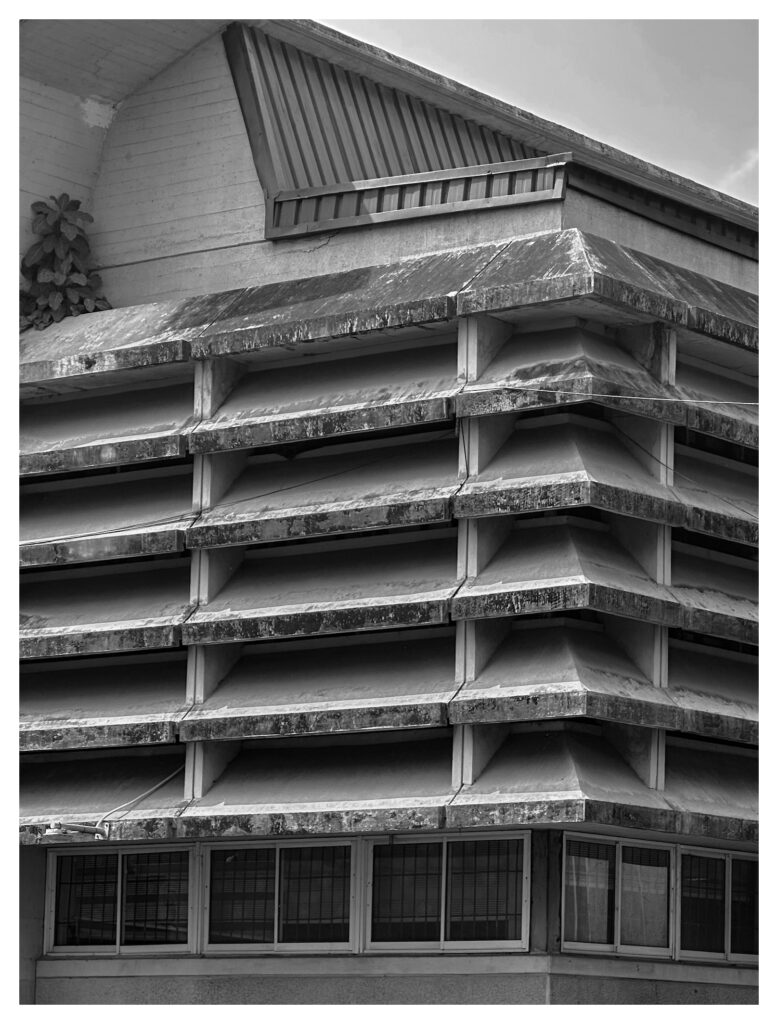
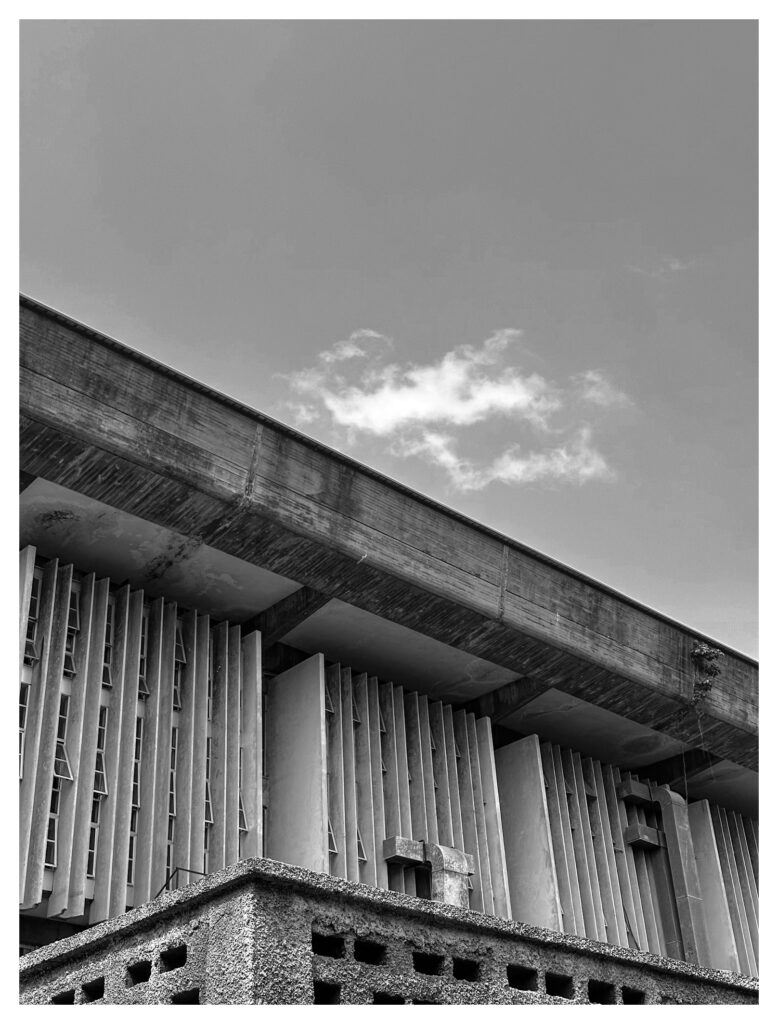 The title, A Memory of Walls, suggests elegy. But the images feel more alive than that. What’s the tension you’re working with?
There’s a specific kind of splendour in a wall that has seen several years of seasons. It loses its brightness but gains a soul. By stripping away the distractions of modern campus life, these photos show that even as a design begins to fade, its character only grows stronger. It’s a celebration of what remains when the newness wears off. The elegy isn’t for something dead. It’s for something the world stopped paying attention to.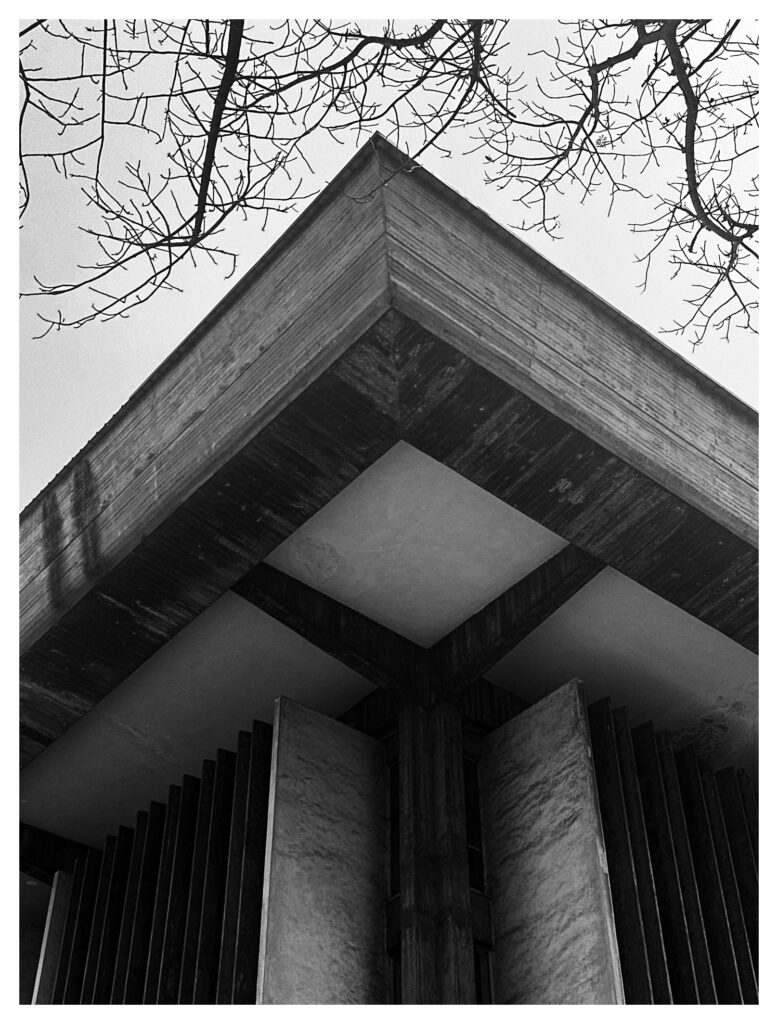
Uche Ibemere is a fine art photographer and visual artist based in Lagos, Nigeria. Follow his work @byakinyele.
Images: Uche Ibemere, “A Memory of Walls,” 2026. University of Lagos.