


Textiles are more than material. They hold stories, histories and languages shaped through time. I think of them as a kind of poetry, something warm and intimate yet expansive enough to carry memories across generations. They hold emotion in quiet ways, absorbing traces of touch, labor and time, allowing us to read the past not only through images or words but through material itself.
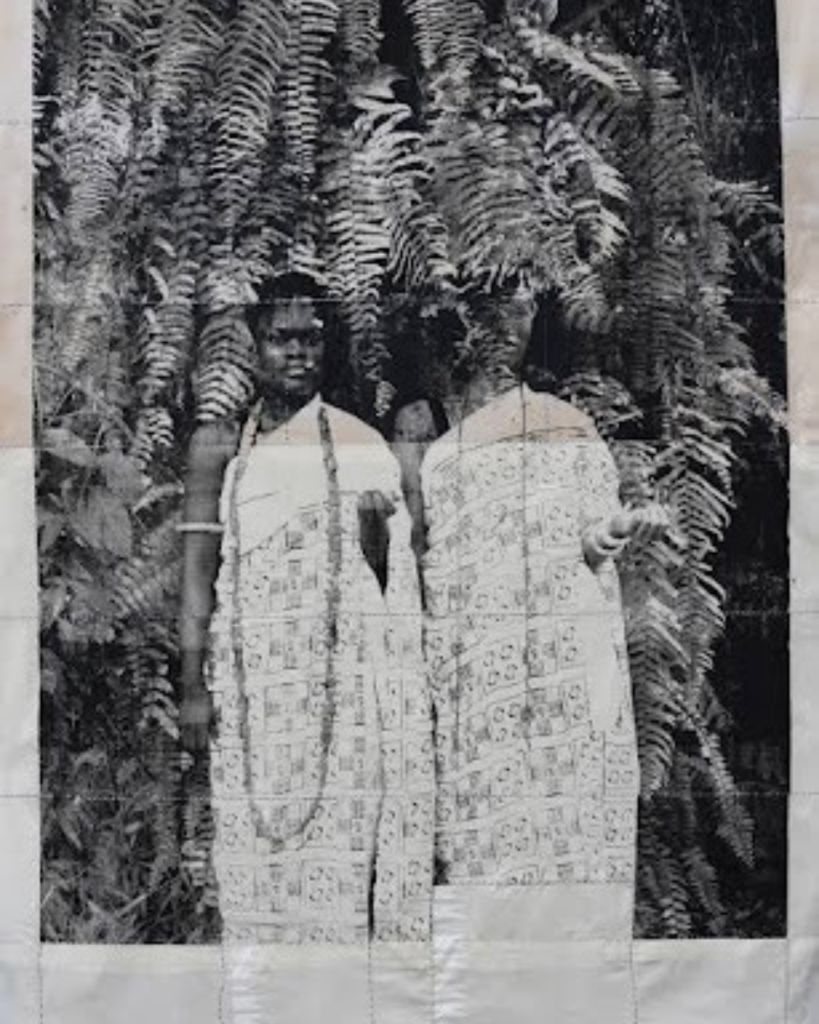
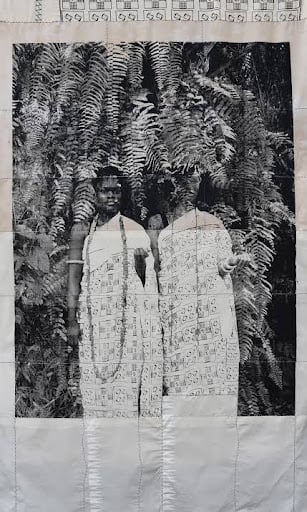
My understanding of this deepened in 2023, the first time I encountered The Myths of Eternal Life by Zohra Opoku, which fused photography and textile to explore afterlife and migration. Her work felt like a return to something both known and entirely distant, a gentle negotiation between histories shaped in different cities, between Ghana and Germany. The project became my own way of seeing textile artists as people with immense talent, with a love of story so compassionate yet precise and intuitive.
Across the continent, an established force of artists continues to build on these material legacies. Each has a unique story, but collectively they transform textile into a language that addresses what confronts the world: race, gender, labor, migration, war. In their hands, textile remains alive.
Aboubakar Fofana
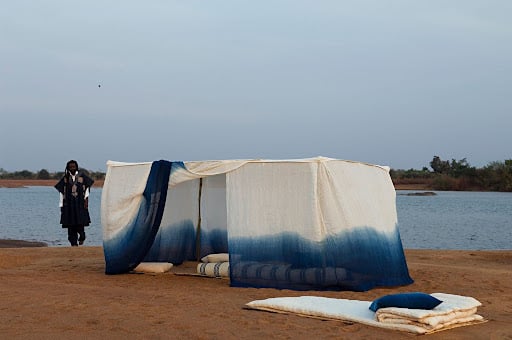
Malian artist Aboubakar Fofana is widely regarded for his revival of traditional indigo dyeing, a practice that fosters spiritual and ecological balance. Working with hand-spun cotton and natural dyes, his process is slow, meditative and deeply tied to Malian cosmology. His works respond to the erosion of indigenous knowledge systems under industrialization and frame textile as a sacred technology that connects land, labor and belief.
Fadekemi Ogunsanya
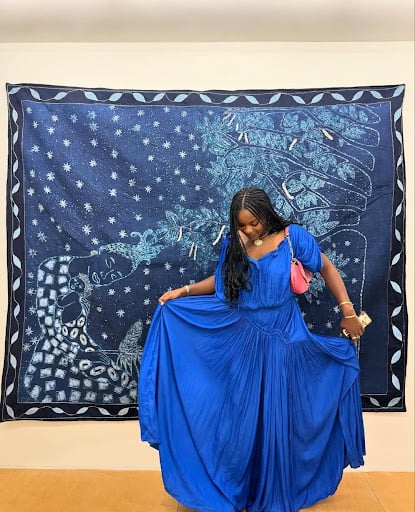
For Fadekemi Ogunsanya, approaching textile through an experimental and tactile language is intrinsic to her practice. Working in Adire Eleko — the Yoruba cassava-starch resist-dye tradition — alongside beadwork and hand-embroidery, she blurs the line between craft and contemporary art. Her work engages with materiality through layered indigo surfaces, mapping emotional and psychological states. Her series A Miracle is a Reasonable Thing to Ask For, first shown at Nina Johnson Gallery in Miami in 2025, revisits the Yoruba story of Oluronbi, positioning textile as a vessel for inherited narrative.
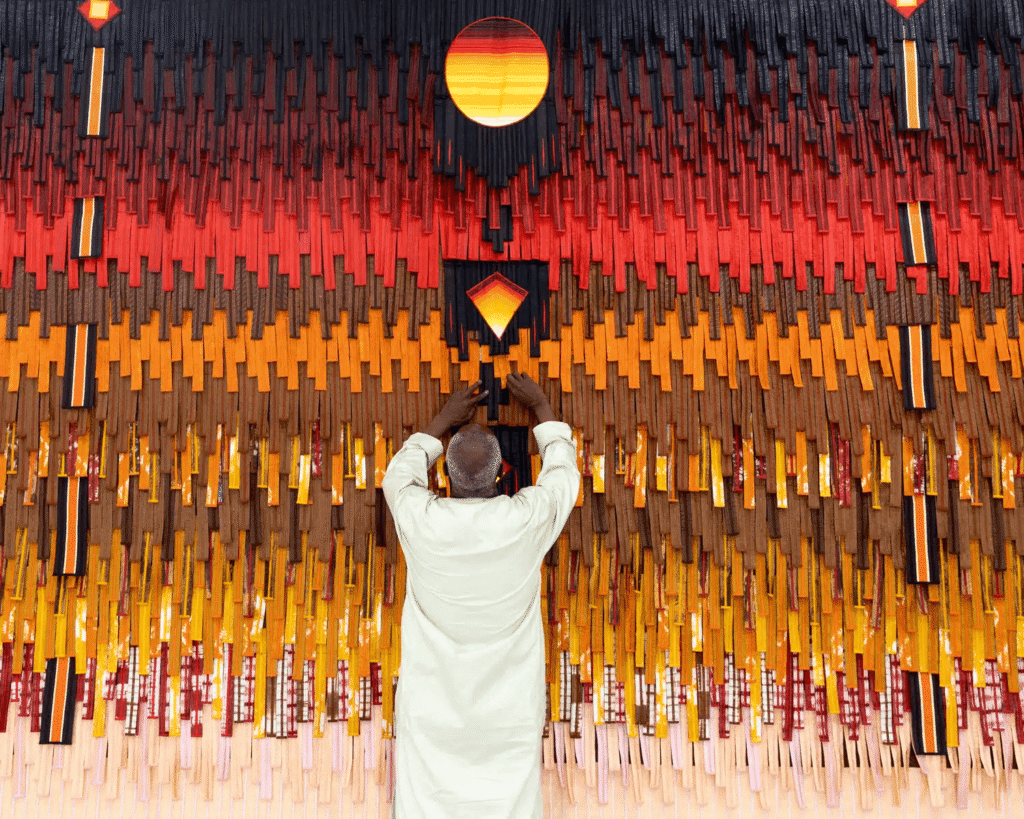
Abdoulaye Konaté
Abdoulaye Konaté is one of Africa’s most influential textile artists, known for monumental fabric installations that merge abstraction with political commentary. Using strips of dyed cloth assembled into vast compositions, his work addresses issues ranging from conflict and disease to environmental crisis. Rooted in West African textile traditions yet unmistakably contemporary, his practice transforms weaving into a language of urgency that advocates for complex African realities.
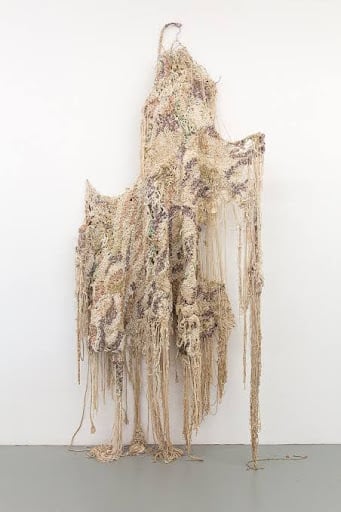
Igshaan Adams
South African artist Igshaan Adams creates densely textured works that combine weaving, beading and found materials to explore identity, spirituality and belonging. Rooted in his upbringing in Cape Town, his practice draws on Islamic traditions, local craft histories and personal memory. His woven surfaces function as traces of marginality, often intersecting with race, religion and queerness in post-apartheid South Africa.
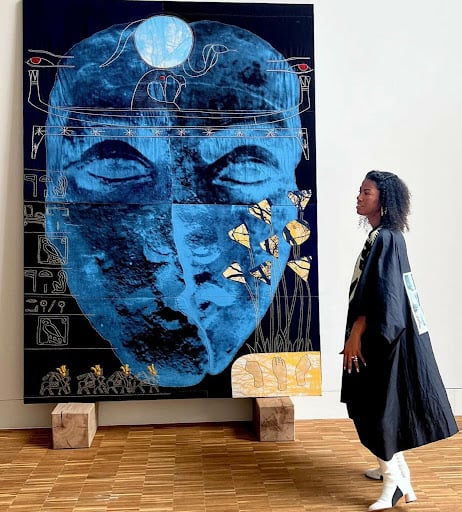
Zohra Opoku
Ghanaian-German artist Zohra Opoku has spent nearly two decades building a practice rooted in both memory and migration. Working between Accra and Europe, she uses fabrics that are dyed, stitched and layered to explore identity as something in flux. Her work draws on Ghanaian cloth traditions while resisting fixed notions of heritage, defining archives shaped by movement, colonial histories and personal narrative.
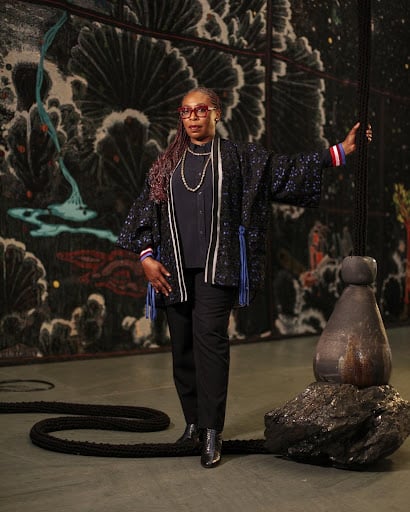
Otobong Nkanga
Otobong Nkanga’s multidisciplinary practice often incorporates textile as part of a broader investigation into land, extraction and global economies. Working with woven materials, she traces the movement of resources across continents: minerals, labor, histories. Her textile works are not isolated objects but part of complex systems.
Tuli Mekondjo
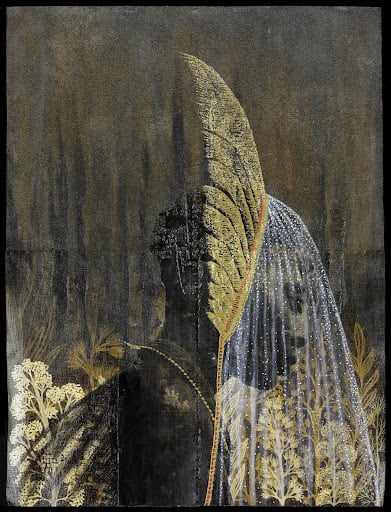
Namibian artist Tuli Mekondjo incorporates embroidery and textile into mixed-media works that confront colonial violence and historical erasure. Using archival imagery layered with stitched interventions, she surfaces narratives that have been suppressed or distorted. Her practice connects personal memory with broader histories of displacement and resistance in Namibia.
Lebohang Kganye
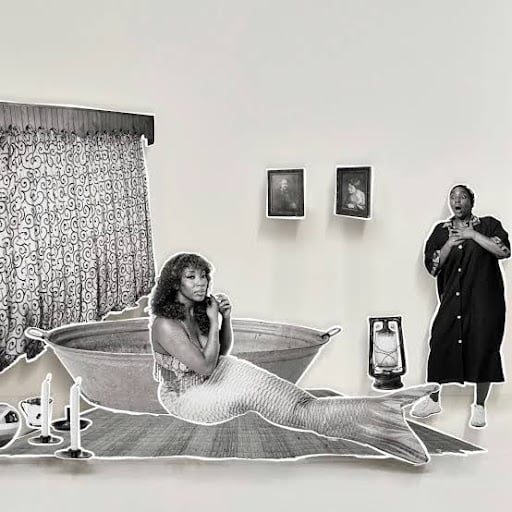
Lebohang Kganye is known for her photographic and installation work, often incorporating fabric and staged environments to reconstruct familial and collective histories. Her 2025 installation Le Sale ka Kgotso, commissioned by Fotografiska Berlin, is an immersive scenographic reconstruction of a post-apartheid RDP house, summoning figures from southern African folklore including Mamlambo, the water spirit. She references domestic spaces and the intimate labor of remembering while engaging with South Africa’s archival gaps, using material culture to bridge past and present.
Modupeola Fadugba
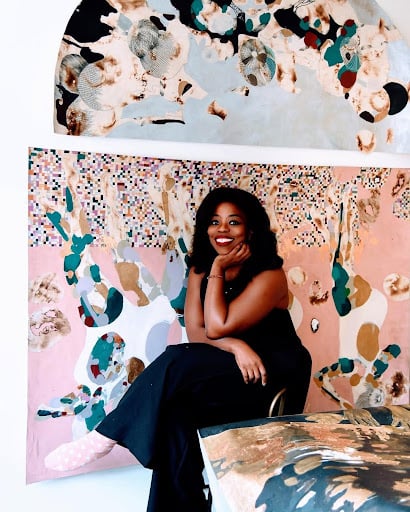
While primarily known for painting, Modupeola Fadugba’s work engages with pattern, repetition and surface in ways that echo textile traditions. Her recent 2025 exhibitions introduced beadwork on burnt raw canvas, made in collaboration with a textile artist working in the Ojude Oba tradition of Yorubaland. Her compositions often reflect systems — social, educational, economic — through layered and rhythmic arrangements. Within an African context, her work can be read alongside textile practices that encode meaning through repetition and variation.