


Gustavo Nazareno Has Nothing to Explain
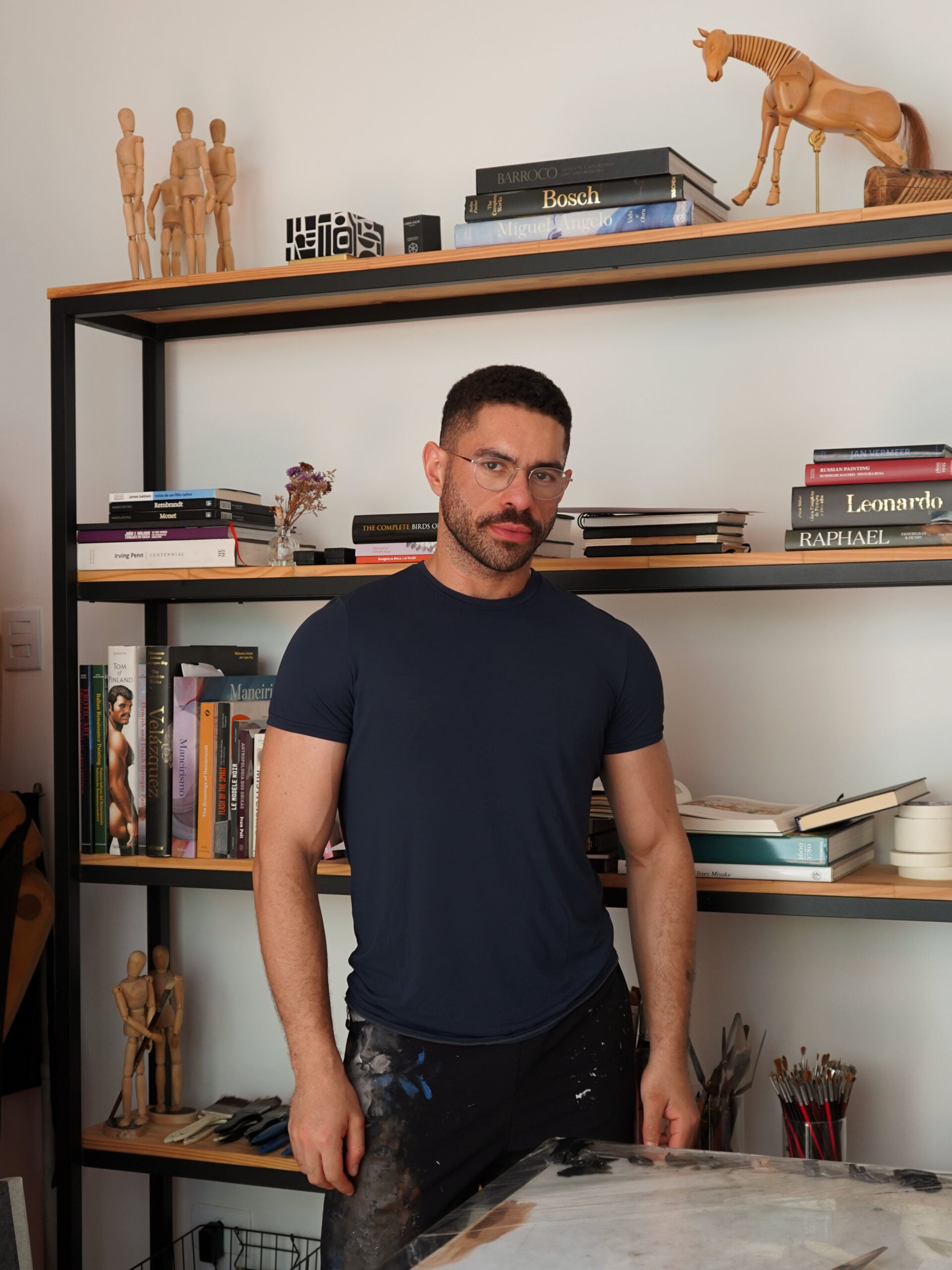
If Gustavo Nazareno’s work could introduce itself, it would not offer an explanation.
“I think it wouldn’t say anything. It would stare you in the eye and pose.”
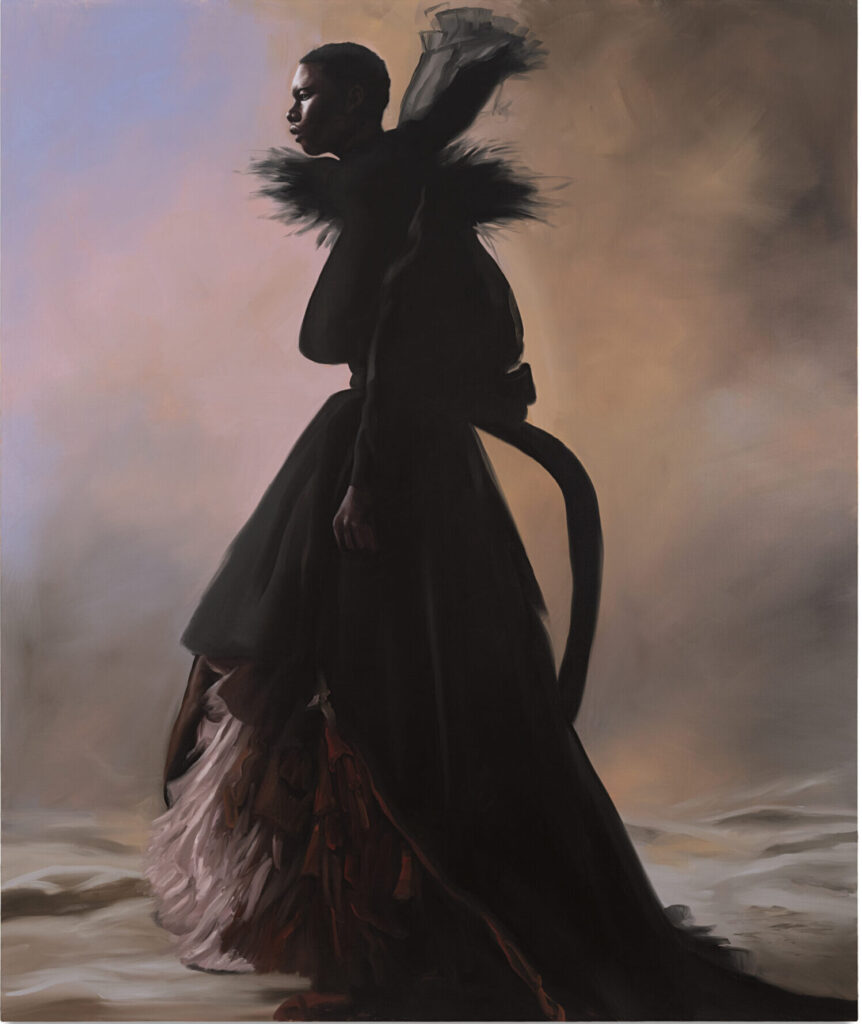
The answer feels fitting for an artist whose figures rarely reveal themselves all at once. Suspended between shadow and light, they emerge from worlds shaped by Candomblé, Afro-diasporic memory, and spiritual devotion. They do not ask to be decoded. They ask to be encountered.
Nazareno stands today among the most compelling voices in contemporary Afro-Brazilian art. Working across painting, charcoal, and drawing, he has built a practice rooted in spiritual tradition, ancestral memory, and the enduring presence of Black Brazilian life. His luminous figures have earned international recognition for transforming history, mythology, and devotion into images that feel at once intimate and otherworldly.
In 2026, Nazareno presents How to Grow a Flower from a Supernova at Opera Gallery Paris, a new body of work that continues his exploration of spirituality, identity, and transformation. Like much of his practice, the exhibition is less concerned with arrival than with becoming. New forms emerge, recede, and return. Nothing remains fixed for long.
For Nazareno, art does not sit beside spirituality. It grows out of it.
“I didn’t have much to offer besides my time and my work. That hasn’t changed.”
Time, for him, is not something to manage. It is something to give.
“Time is my most precious possession and privilege, and I don’t take it for granted.”
What began as an offering gradually became inseparable from the way he moves through the world.
“It naturally became inseparable. I don’t even need to offer it anymore, it’s everything for them.”
The beginning of a work is not controlled in the way one might expect. It starts in openness, in a kind of attention that waits rather than insists.
“I’m always with my heart open to receive.”
And sometimes there is a quiet recognition, as if the work had already decided it needed to exist.
“In some romantic part of me, I always know when a painting simply needs to exist.”
The studio is where that process unfolds.
“It’s the most sacred space in my life.”
Even in solitude, the space never feels empty.
“I don’t feel alone here, even though most of the time I’m very much alone.”
“I know something is going to hit me at any moment.”
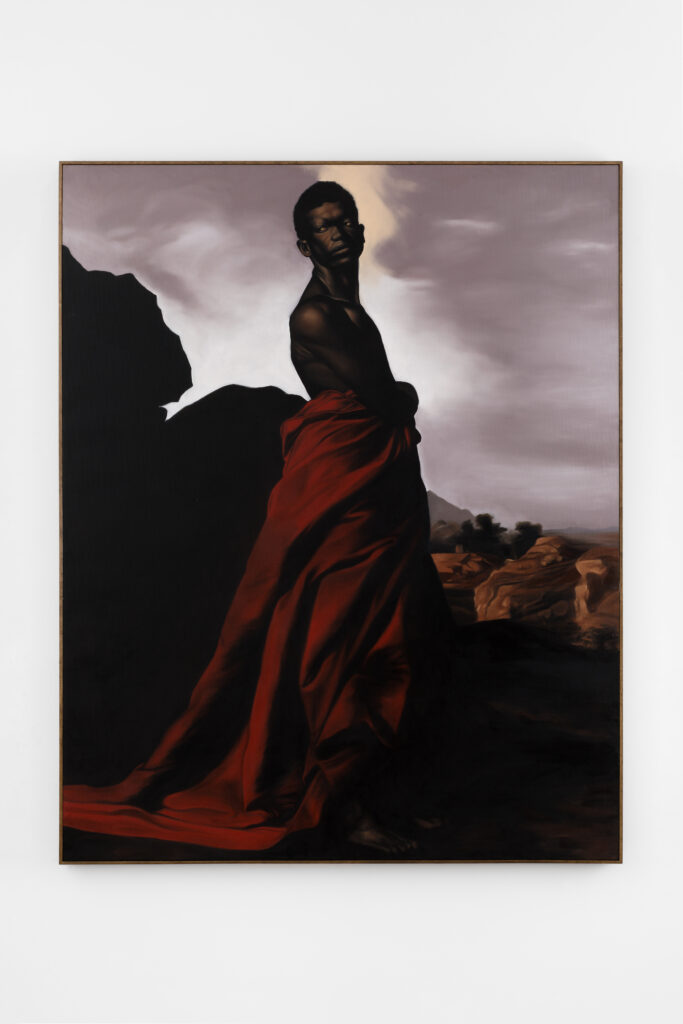
At the center of this practice is Exu, a presence in Afro-Brazilian spiritual traditions understood as a messenger, a force of passage, and a connector between worlds. In Nazareno’s work, Exu is not symbolic decoration. It is movement itself.
I’m a child of Exu.— Gustavo Nazareno
His work travels in ways he does not always anticipate.
“My work has reached places I would never go. Never.”
“This is Exu for me: this capillarization of everything.”
Everything linked. Everything in motion.
Yet the story of Nazareno’s career did not begin in the art world. It began with an offering.
“Offering, always! I’m always offering to my beautiful teacher.”
That gesture becomes especially clear when he returns to Bará, the body of work that marked a turning point in his life.
“Bará started as an offering when I basically had nothing.”
There was a time in São Paulo when stability was not part of the equation.
“I was in São Paulo with no money, almost no home.”
Only what could be carried remained.
“I only had charcoal and some paper, and I gave everything I could give to a drawing so I could offer it to Eshu.”
From that place, a path opened. Not suddenly, but decisively.
“Bará put me on the map and brought me into the art world.”
The success of the series changed his trajectory, but not the foundation beneath it. The questions that shaped those early drawings continue to shape the work today.
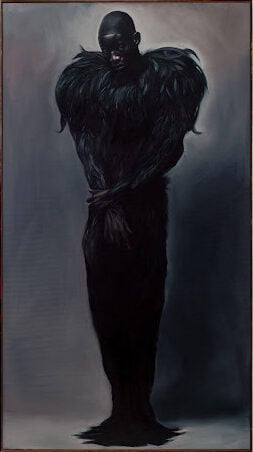
Beneath the paintings lies another thread: belonging, memory, and inheritance.
“I’m part of that history.”
In his context, ancestry is not always something that can be traced neatly through family records or surnames. More often, it survives in fragments.
“Connecting with Candomblé was the only heritage I could find.”
“We don’t even have a surname telling our story.”
Yet memory persists through other forms.
“We have culture, clothing, a way of moving, words.”
From this tension between absence and continuity, Nazareno creates another kind of inheritance. Not reconstruction, but invention grounded in memory.
“I see myself creating new roots to imagine my deities and stories through beauty.”
Looking back is not an act of return. It is a way of creating new possibilities.
“Looking back, and reconnecting now, is a way for me to understand where I came from, but also to redirect this into something new.”
Even his materials seem to embody that dialogue.
“Charcoal is the older brother of my painting: wiser, much more experienced.”
“Painting is this free, young spirit, full of mistakes and colors.”
“They complement one another beautifully.”
When asked what ultimately connects everything, his answer is immediate.
“Exu!”
“Exu is connecting me to the world, to this interview, to my exhibitions. I’m here because of him.”
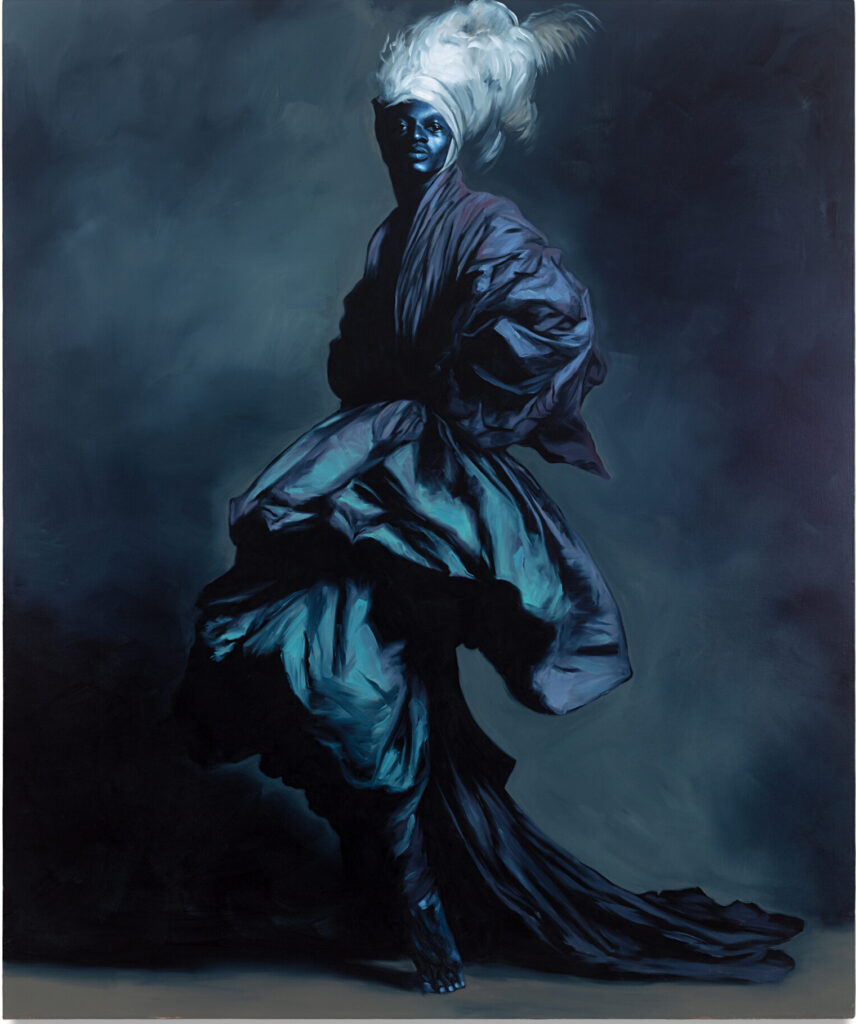
In many ways, that answer offers the clearest entry into Nazareno’s practice. His work is less concerned with explanation than with connection. Between past and present. Between the visible and the unseen. Between memory and invention.
“The dualities in which my work exists, like him, shadow and light, contrast, drama, are always there, embracing one another.”
In How to Grow a Flower from a Supernova, those dualities continue to unfold. Forms appear, then recede. The work remains in flux, never fully settled, never fully gone.
For a moment, everything exists in suspension, between shadow and light.
Some work asks to be encountered. Subscribe to Guzangs.