

What Beadwork Is Worth
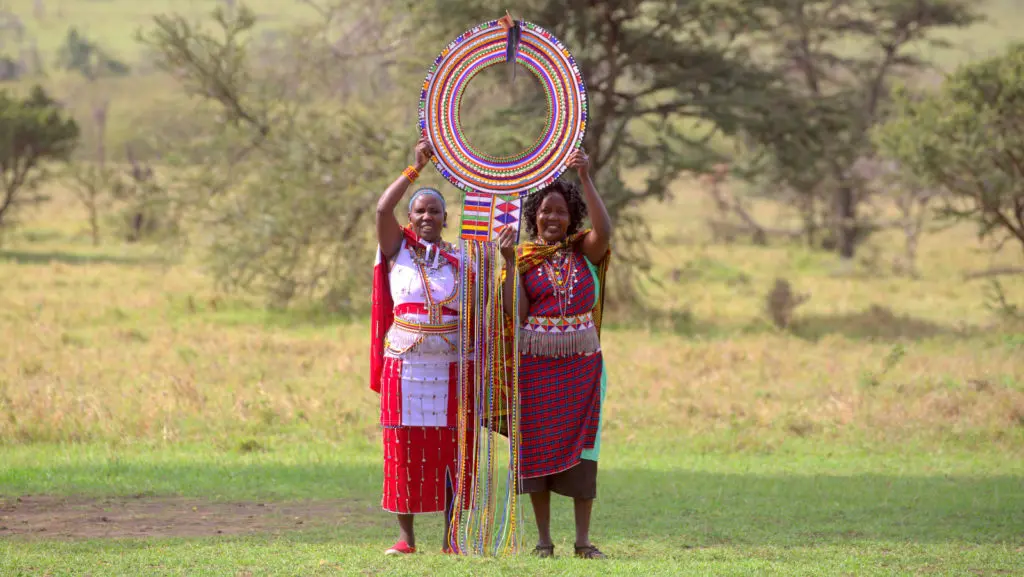
It took Noormesuku Kereto more than two months to finish the necklace. It was an Enkarewa, the wide beaded collar a Maasai woman wears at her wedding, and this one was made for a safari camp in the Mara rather than for a bride, which changes who will look at it but not how it is built. Work began in May 2019. The finished piece reached Naboisho Camp that autumn, and when the camp published it, it published her name alongside it, and her photograph, and an account of the making.
Kereto beads for Maa Beadwork, which the Maa Trust launched in 2013 at the request of Maasai women who were seeing none of the conservancy rent payments, since those largely went to men. It is now the Trust’s largest programme for women. Most of what it produces is smaller than an Enkarewa and priced accordingly: traditional earrings at $7.80, an elastic bead strand at $12, a two-inch leather bracelet at $35, a wide choker at $26 and currently out of stock.
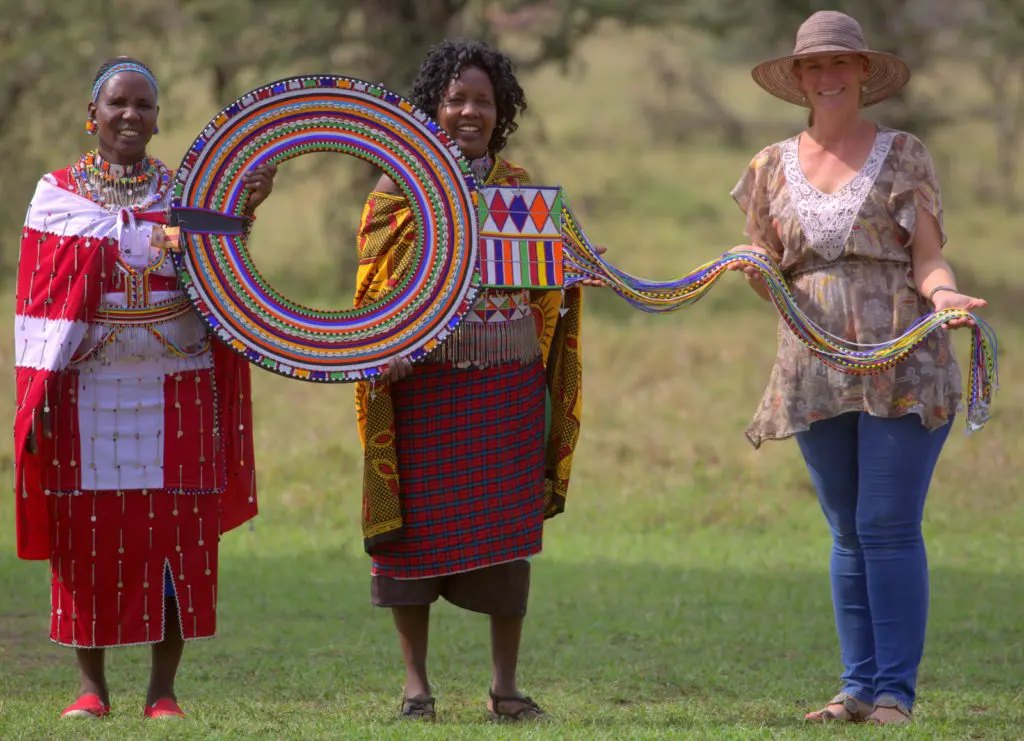
To buy any of it you must spend at least five hundred dollars, and the site says why on every page. Shipping is the enterprise’s biggest problem. There is no cheap or simple way to move beadwork out of the Mara: a package leaves the Trust’s headquarters by motorbike, transfers to a local depot, is loaded onto a truck, travels many miles to the nearest post office, flies from there to a major post office in the buyer’s country, and then moves by postal vehicle, often through several more offices, before it reaches a door.
That is a lot of motorbike for a thirty-five dollar bracelet.
In 2024 Maa Beadwork covered its operating costs for the first time, with net income rising eighteen per cent to KES 17,762,537. That figure is the enterprise’s result, not the women’s earnings, and the distinction gets lost easily. Forty-three per cent of that year’s sales came through the shop at the Trust’s own headquarters. Nearly half the business depended on customers who had already flown in.
The production side of it runs on a straightforward arrangement. The Trust buys the raw materials and a staff member carries them out to the villages with the product cards, meeting groups of twenty to forty women at a time. In a 2020 account the Trust set out the terms: a pre-agreed price for each item, worked out from the time it should take and benchmarked against a daily rate of five hundred shillings, about five dollars, with the women paid when the work comes back and is accepted, whether or not the item has sold.
Basecamp Maasai Brand, around Talek, runs on a similar basis, supplying beads and materials, paying by the piece, and putting a tag with the maker’s name on each object. Its published figures for the artisan’s share differ depending on which of its sites you read: Basecamp Explorer says fifty-five per cent of the agreed production cost after materials, while the brand’s retail pages say seventy-five per cent of the retail price less materials. A WIEGO study from 2016 followed one of its beaders, Nalakiti Sayaiael, who was earning around twenty thousand shillings every two months and had put it into school fees, a water tank, livestock and her house. What she said she valued was knowing what a piece would pay her before she finished it.
What none of it touches is anything after the sale.
Paris
On 29 January, at Le Bristol on the rue du Faubourg Saint-Honoré, Mouna Ayoub sold the Dior half of a wardrobe she had spent three decades assembling. Ninety-five lots containing a hundred and twenty-six garments went up, and everything sold, for a total of €6,187,610 with fees, a world record for a haute couture auction.
Among the lots was a beaded, bias-cut gown from John Galliano’s first haute couture collection for the house, shown in January 1997. It made €510,000.
Ayoub had been asked about those early pieces a few days before the sale. She remembered being afraid of losing the beads, because there was so much beadwork in the collection. Then she told Interview that it had been like travelling to Africa, that she had learned more about the Maasai from the collection than from reading a book about them, and that she had not realised they had such beautiful beads.
Kerry Taylor, the London specialist who ran the sale with Maurice Auction, said afterwards that what buyers were purchasing was the creator.
By the time the gown reached Le Bristol it carried two names, a season, a runway, an atelier, photographs, contemporary criticism, the identity of its first client and three decades of documented survival. Somebody had been paid to maintain that record for thirty years.
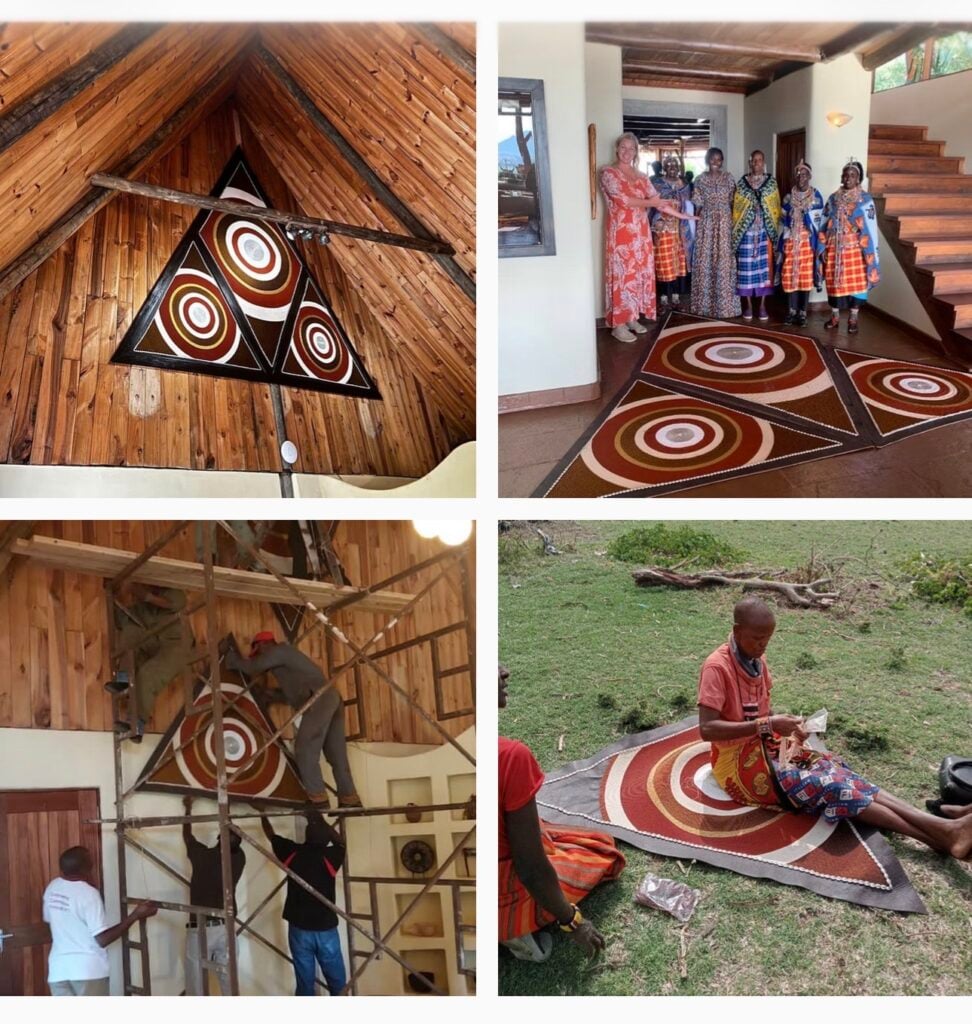
Kereto was named. So were the four women who spent four months on a wall hanging for another Mara camp, an object of 497,000 beads measuring 3.65 by 3.7 metres, credited by the enterprise as Normeshuki Kereto, Nolkishiru Moriaso, Noltetiain Sakut and Narikunkera Lepore.
The names are recorded at the point of production, and there is no obvious record of what happens next: what the wall hanging is worth in ten years, whether a maker’s earlier work has appreciated, or what a second Enkarewa by the same hand should cost.
The Dior gown gathered information every year it survived. The collection, the look number, the first client, the exhibition history, the published photographs, the prior sale prices, the conservation notes. Archives, auction houses and museums maintained that record because their own businesses depended on it, and given thirty years it became provenance.
A beaded object leaves the Mara with a maker, a technique, a community and a purpose attached, and sheds most of it moving through the craft and tourist market, until what survives on the label is a category. Maasai beadwork. Handmade in Kenya.
Nobody in that chain is careless. The record stops at the sale because that is where everyone’s job stops.
Galliano’s early Dior collections drew on more than one East African tradition. The ASU FIDM Museum, which holds a choker from around 1997, records that the chokers referenced African peoples and specifically the Dinka, who wear beaded choker-like necklaces as part of traditional dress.
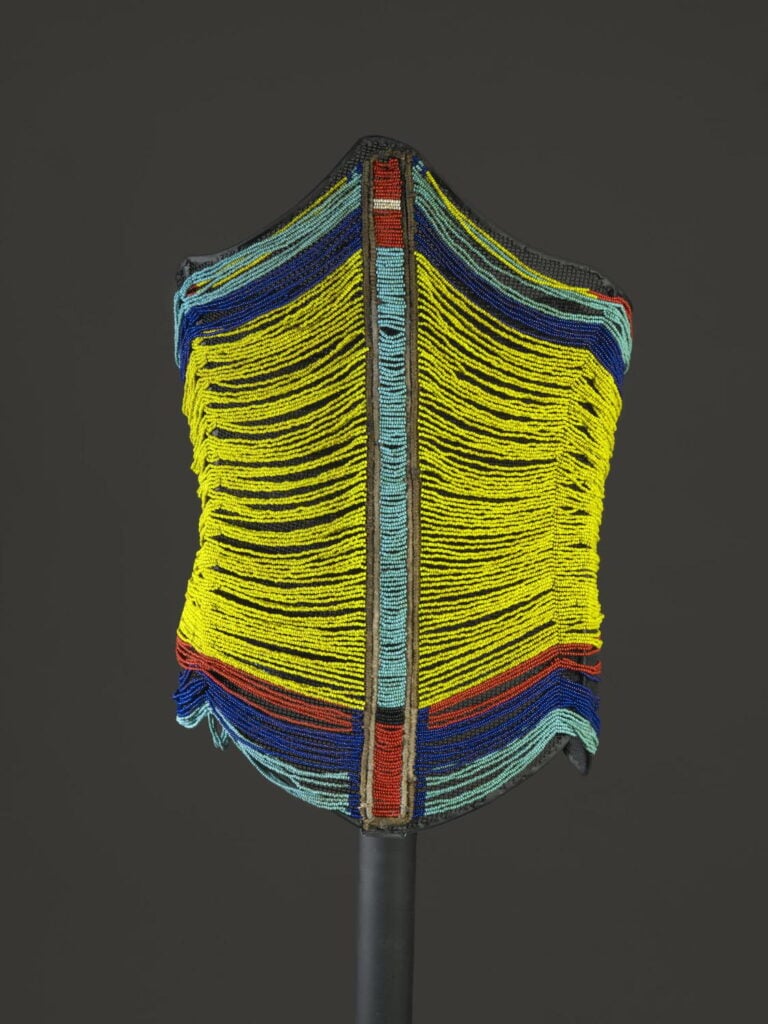
The Brooklyn Museum holds a Dinka man’s corset, the malual, made of glass beads, fibre and wire. Its record notes that the yellow beads suggest it may have been made for a man over thirty, and that the imported glass and wire made such garments markers of status and prestige. The record for its counterpart, a woman’s vest called an alual, adds that the beadwork could indicate her advancement through age grades, her availability for marriage, and the bride price expected for her. A third, at the Minneapolis Institute of Art, is listed as beads, cotton, iron and cowrie shell, made by a Dinka artist around 1970, and the museum publishes the data behind the record so that software can read it as well as people.
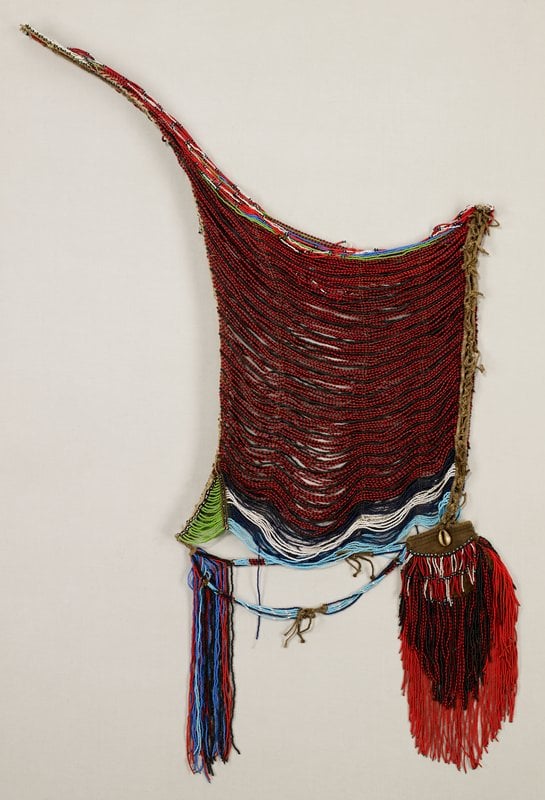
Dinka corsets are largely no longer made. Carol Beckwith and Angela Fisher, who photographed Dinka dress over decades, returned to the south after the borders reopened in 2005, and in four weeks of travelling several thousand miles they saw four girls wearing traditional bodices. The beadwork, they wrote, had been lost, discarded or sold during the war.
Here the record belongs entirely to museums and photographers.
The glass itself was an import from the beginning. European beads had been moving into African markets for centuries by the time either of these traditions took the form the museums now hold, with Venice among the great centres of production and the trade large enough to reshape the industry that supplied it: the historian Saul Guerrero, working through the Liverpool records, found the Venetian glass bead sector growing from at least seven per cent to more than seventy per cent of the value of all Venetian glass exports between the late sixteenth century and the late eighteenth. By the end of that period beads were most of what Venice sold in glass. The beads travelled as barter goods and, in the East African interior, as currency outright, held and counted and exchanged the way coin is, so that a strand could be spent as easily as worn. What the beads meant changed on arrival. The glass came from Europe. The grammar that told you a wearer was over thirty did not, and that grammar is what a museum is recording when it notes what a colour meant. Most Maasai beadwork made today still uses imported glass beads, and nobody in the sector particularly remarks on it.
The Maasai Intellectual Property Initiative has spent more than a decade building a framework through which commercial users of the Maasai name could pay licensing fees. Its published position is that licensing arrangements usually run at three to five per cent of sales revenue, and that new licensing is typically ten per cent for a new product and five for an existing user. Its first agreement, reached in 2018 with the British retailer Koy Clothing, was reported as a five per cent royalty; Koy’s own language calls it a donation.
What produces lasting value is considerably more expensive than a licence: distribution and wholesale representation, authentication, photographs and maker records that survive the transaction, collectors who return, and eventually a secondary market capable of remembering what an earlier piece sold for.
Some of that is being built. Monkeybiz, in Cape Town, has every beaded piece signed by the woman who made it.
Maasai beadwork has been noticed, thoroughly enough that a reference to it turned up in a Paris saleroom in January. An Enkarewa begins with a named maker and two months of work. Getting it to an international customer is difficult enough that the enterprise cannot afford to accept an order below five hundred dollars. Once it sells, almost nothing exists to preserve who made it, where it went, what it later fetched, or whether the same woman’s earlier work is worth more now than it was.
Those records exist elsewhere because someone built the institutions to keep them.
You just read the kind of piece we publish every week. Get it in your inbox.