


Inside Prince Gyasi’s Technicolour World
Prince Gyasi has a charming story from his childhood in Ghana. As a little boy, he would walk around the marketplace holding his mother’s hand, a camera tucked alongside him. Every so often, he would stop to take Polaroids of the market women and charge them for the portraits. It was hard to refuse a child with a camera, and the women often found the whole thing rather amusing. He enjoys telling this story, and understandably so. In many ways, it is where it all began.
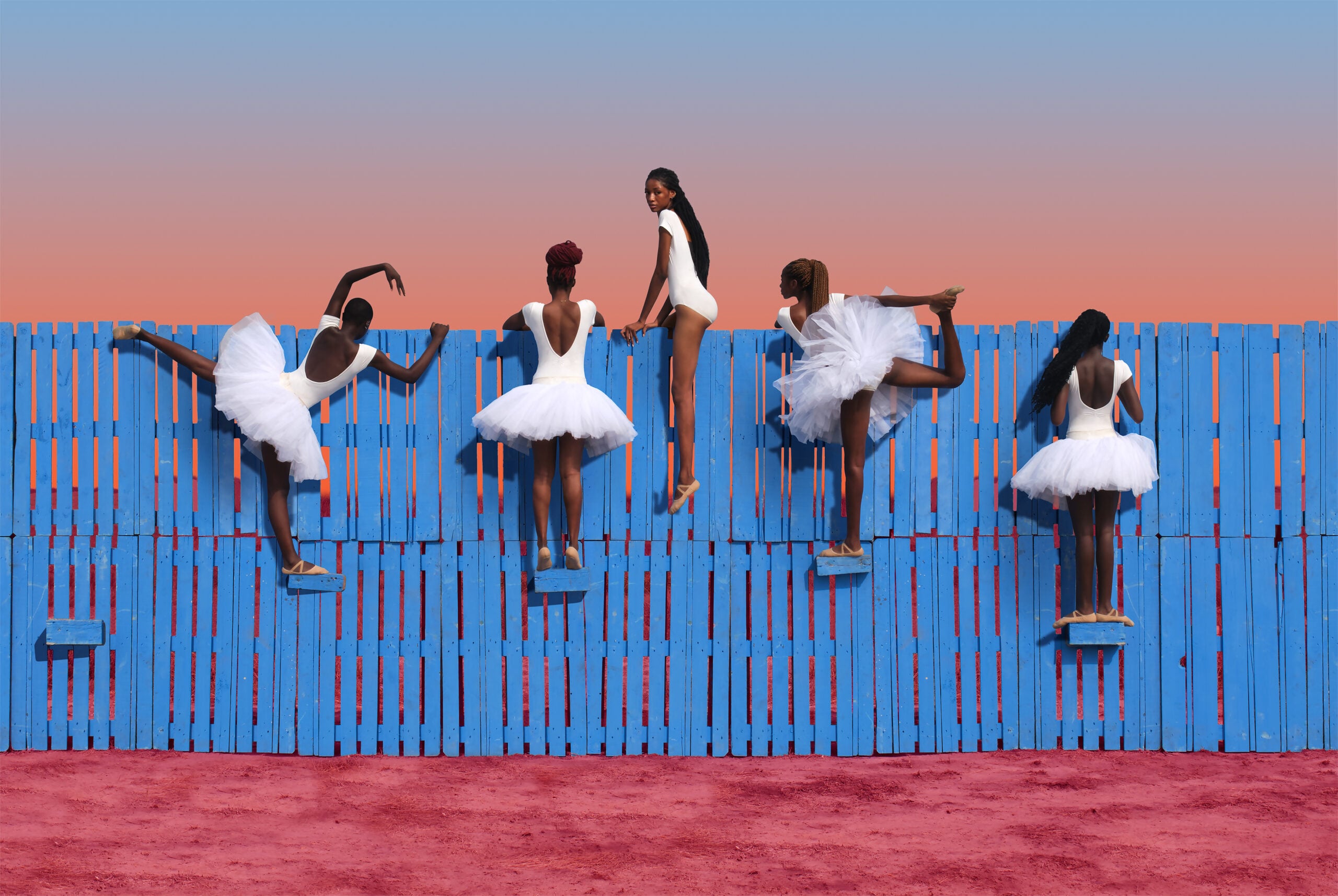
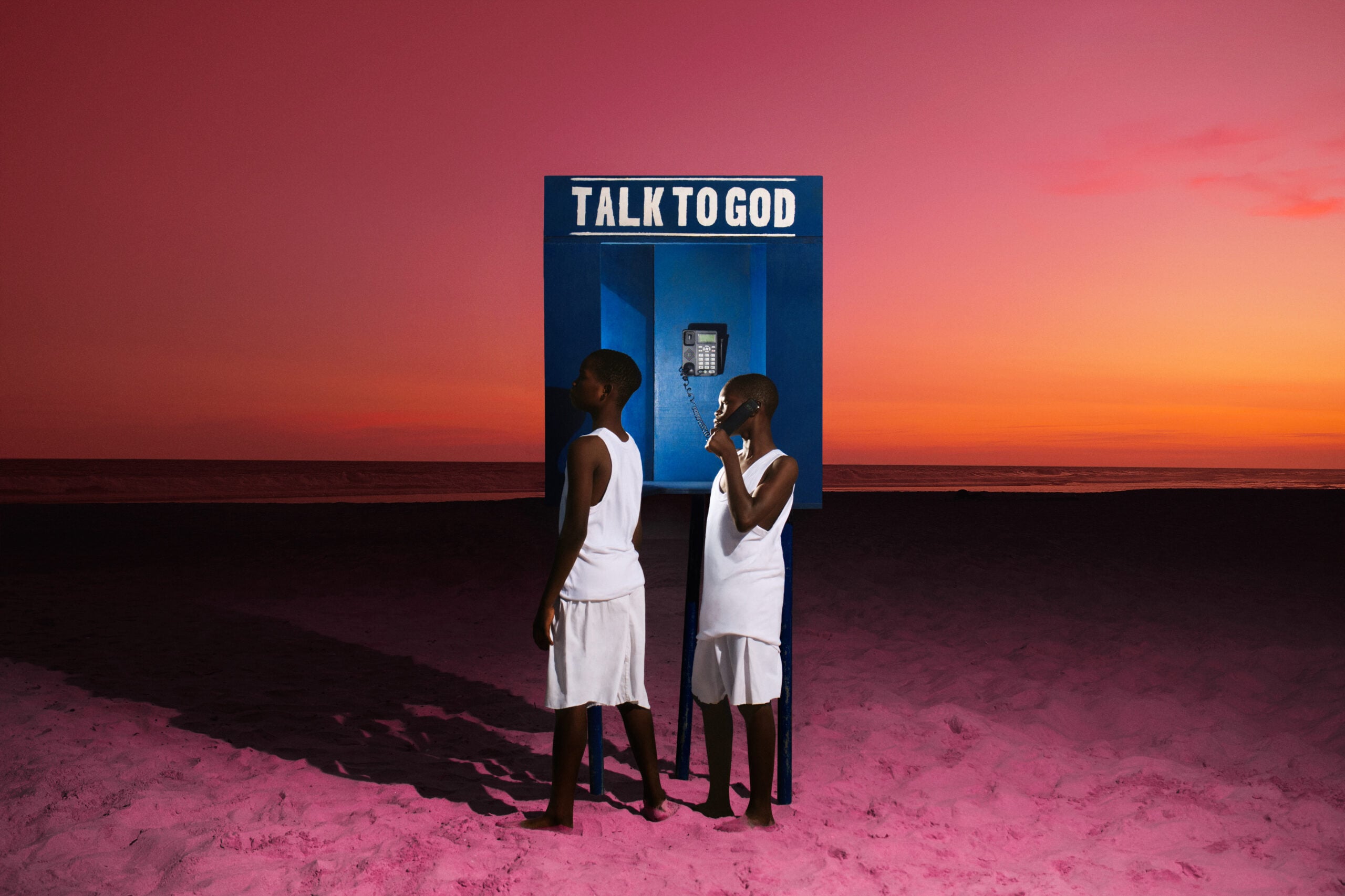
There is something almost dreamlike about his photographs. They are striking, vibrantly charged and ethereal, often drawing you into scenes where colour seems to carry as much weight as the subjects themselves. Yet the artist behind these elaborate visual worlds is rather reserved. Since Boxed Kids, his 2017 photographic series of children playing in the sea in Jamestown, Accra, Gyasi has been painstakingly building a world of his own. Over the years, that world has expanded beyond its earliest subjects, becoming a reflection of his experiences, his cultural references and his evolving understanding of photography as an artistic language.
His vibrant artistry did not emerge in isolation. It was partly driven by his desire to challenge the perception of photography in Ghana, where the medium was not always afforded the same artistic recognition as other disciplines. But he had other reasons. “I also wanted to attract people who love shapes, sculpture, texture and colour,” he says. “As a synaesthete, I experience colour as a central part of how I experience things. I have grapheme-colour synaesthesia, so letters, numbers, names, and even the days of the week have their own colours and personalities for me. Friday, for example, has always felt red. I’ve experienced it for as long as I can remember, and it naturally finds its way into my work.”
His relationship with art was in many ways inherited. Both his parents were renowned gospel musicians in Ghana, and his grand-uncle was a traditional pop artist and actor. Still, an artistic upbringing did not automatically translate into parental approval of an artistic career. Having experienced the financial uncertainties and unstable structures of the music industry themselves, his parents were understandably cautious about their son pursuing a similar path. His father, however, never entirely kept him away from that world. “He used to take me to their performances and radio shows, and that’s where I learned to play percussion and DJ at the age of ten,” he recalls.
He remembers himself as a rather nerdy six-year-old, often found tinkering with his father’s computer, curious about how things worked and what made them tick. He also found pleasure in recreating logos he spotted on television and drawing trainers in Microsoft Paint, little exercises that perhaps hinted at an early fascination with images and visual expression.
He found his love for art in a stack of things around him: his grand-uncle’s album covers, product labels in shops and the intentions behind them. “I used to watch Kanye West a lot and wondered how he came up with those album covers. I was also drawn to film and books,” he says. There was always something to glance at, something to behold, and Accra taught him how to see the beauty in everyday life, from the colours in the street to the warmth of its people, which he reinterprets in his portraits. It also gave him his desire to tell stories that feel honest and human. “Through my art, I want people to see Africa beyond stereotypes and connect with the beauty, identity, and possibilities that exist here. Ghana is not just where I come from; it is the lens through which I see the world,” he adds.
All of this laid the groundwork for his eventual pursuit of art. He explored the discipline in its different forms, from sculpture and painting to graphic design, and over time began drawing from these experiences, carefully constructing a visual world of his own.
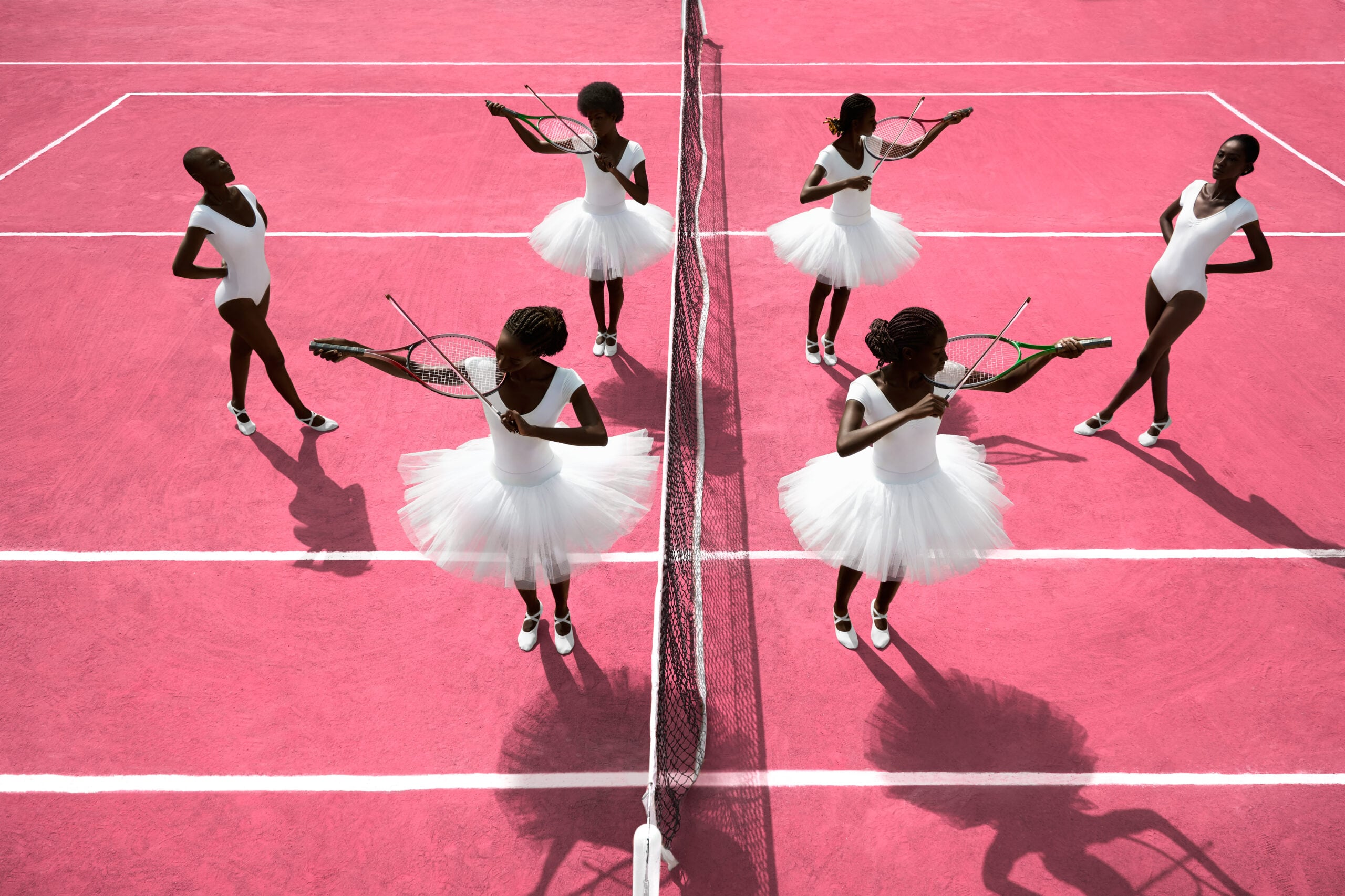
We could mistake his vibrant works for escapism, but he is offering a reinterpretation of life, optimistically changing stereotypes. His works are usually filled with people we encounter every day: boys playing football in open fields, women with large bowls of goods on their heads, young boys fishing. But it is all about perspective, and it comes naturally. Gyasi’s approach has also significantly evolved. He now incorporates triangular composition techniques, thanks to some Renaissance influences. “I’m always experimenting while staying true to my vision of creating a surreal world that feels 95% real,” he says. “For me, it’s about evolving, exploring new techniques, and pushing my creativity while keeping my work recognisable and true to my artistic vision.”
As a visual artist, he has been able to work beyond the arts, and when asked about the defining moments of his career, he meets the question with some dread, because he believes there are many more to come. Still, he acknowledges his time with Pirelli and with Balmain as major milestones. “Being the first Black artist to shoot the Pirelli Calendar meant a lot to me, not just for my career but because I was helping create opportunities for my colleagues, brothers, and sisters to access spaces like this, too,” he says. The commission was the Italian brand’s 50th edition, the 2024 calendar titled ‘Timeless’, for which he photographed figures including Naomi Campbell, Angela Bassett, Idris Elba and Tiwa Savage. Among the most significant portraits was that of Otumfuo Osei Tutu II, the Asantehene.
His collaborative work with Balmain that same year took him a notch higher. Having photographed the house’s autumn 2022 campaign, he returned with bigger plans, translating his photographic practice into clothing, with his images printed onto Balmain’s Autumn/Winter 2024 menswear collection, shown in Paris in January 2024. He took great pleasure in working closely with the creative director Olivier Rousteing, from the initial sketches to the final runway presentation, and it is a moment he cherishes. And there are more personal milestones, like being named one of TIME’s Next Generation Leaders in 2023. “It reminded me of the hunger, purpose, and drive I need to keep going on this journey. I’m grateful for everything so far, but I know there’s still so much more ahead,” he says.
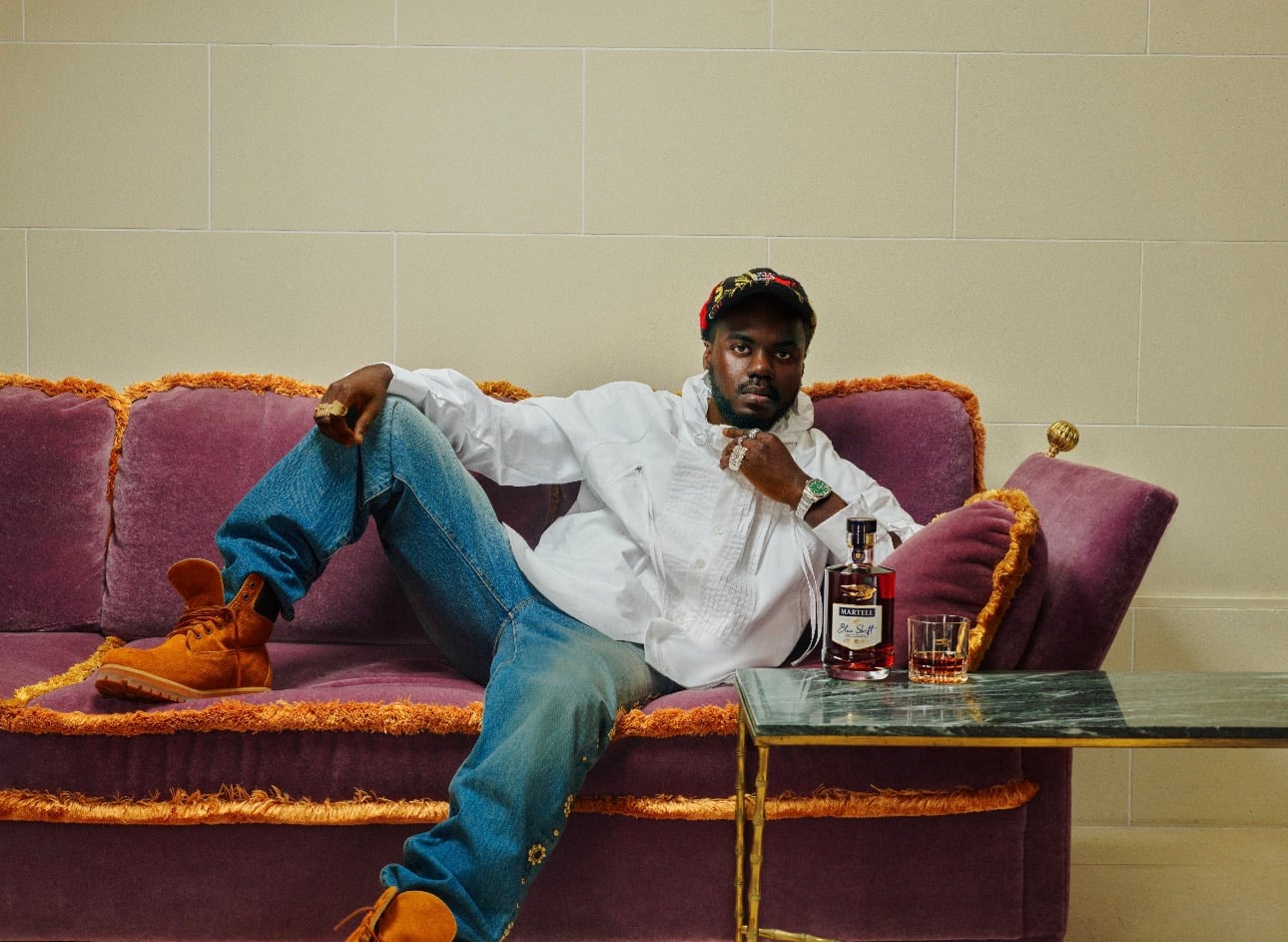
Now he is stepping into a new role, as creative partner to Martell. Founded in 1715, it is the oldest of the great Cognac houses, and part of the job will be finding common ground between his visual language and the maison’s own long visual history, something that means a lot to him. The partnership, announced in October, opened with a film conceived by Gyasi and directed by TJ Sawyerr. Filmed at the Château de Chanteloup, Martell’s estate in Cognac, against a charming interplay of classical music, Afrobeats and a graceful welcome, it felt like a conversation between two cultures. “First and foremost, Château de Chanteloup is a beautiful, peaceful place to experience and for me, it’s really about unity and understanding each other’s language, even when we come from different backgrounds. We may express ourselves differently, but there is always something that brings us together,” he says.
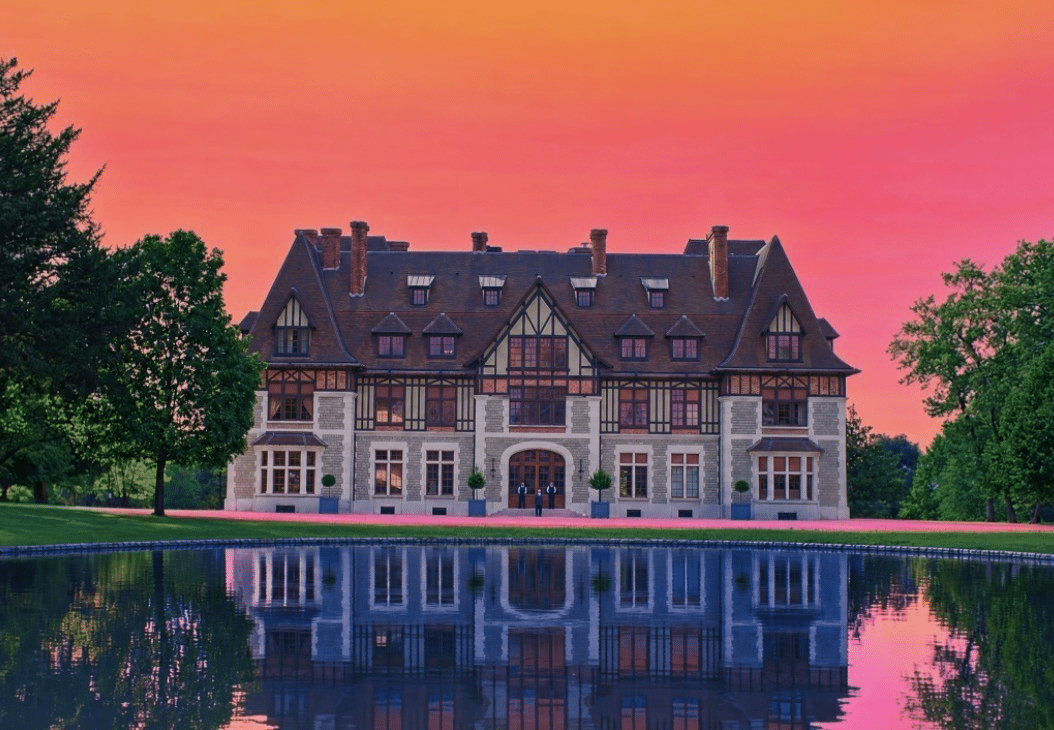
His Ghanaian identity is part of how he sees the world, and it is already in the Martell work. “You can already see that in the announcement film through the colour, the references and the way I approached the story,” he says. “At the same time, working with Martell means understanding the Maison’s history and visual codes, then finding a way for my perspective to sit within that world without losing what makes my work mine.” That balance matters to him, and it has already moved beyond the film: in late October, Martell launched an Afrobeats limited-edition collection with the Nigerian singer Davido, led by a VS bottle built around Gyasi’s portrait of him, alongside an XO edition for African markets.
Looking ahead, he says there are more projects he is optimistic about. They might revolve around music and fashion, but the thread running through them all is to keep telling the story he wants to tell. “For me, it’s always about growing, learning, and pushing myself creatively. I believe God has a bigger plan for me, so I’m open to where this journey takes me and to the things we can build along the way,” he says.
Continue reading