

What the BBC’s Documentary Left Out About the Nigerian Civil War
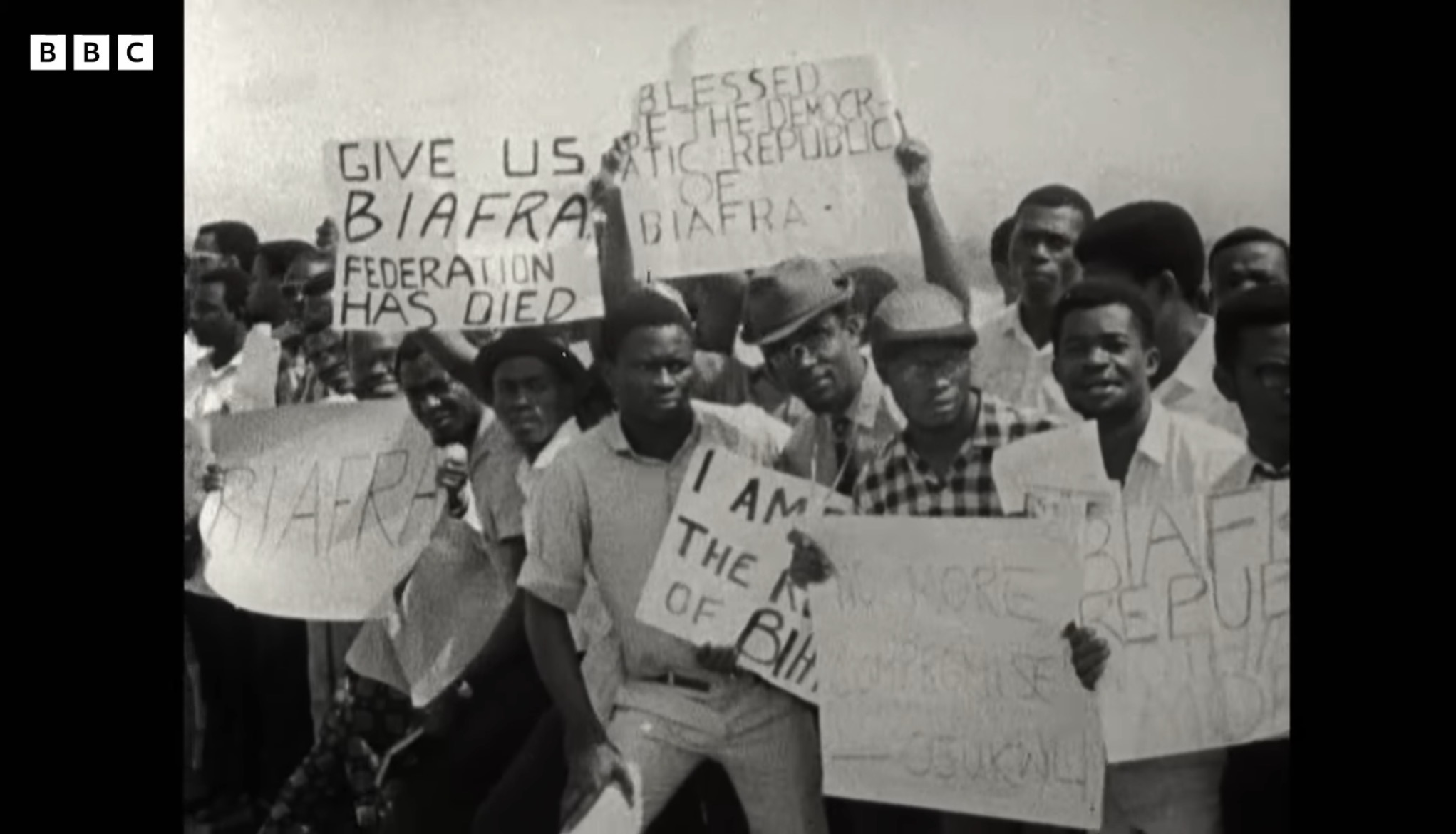
On 1 June 2026, the BBC released a documentary on the Nigerian civil war titled Surviving Biafra: Voices from the Nigerian Civil War, an exploration of the 30-month war fought from July 1967 to January 1970, following the declaration of independence by the secessionist state of Biafra in the eastern part of Nigeria. This secession followed the anti-Igbo pogroms that had spread mainly through the northern region of the country, which saw the killing of 30,000 Igbos and the displacement of a million more who were forced to leave their homes in the north and west and return east for safety.
The documentary, directed by the Grammy-winning director Meji Alabi, opens with the voice of Godwin Alabi-Isama, a Nigerian veteran who fought alongside the country’s army, and the director’s grandfather. There is a case to be made about not having the grandson of a Nigerian veteran direct a documentary on a humanitarian crisis that saw the deaths and displacement of millions of people, and about having that veteran become the larger voice and focal point of the film. It provides a skewed perspective of history that seeks to affirm the actions of the Nigerian military government at the time, and it refuses to take its subject seriously enough to offer a varied point of view.
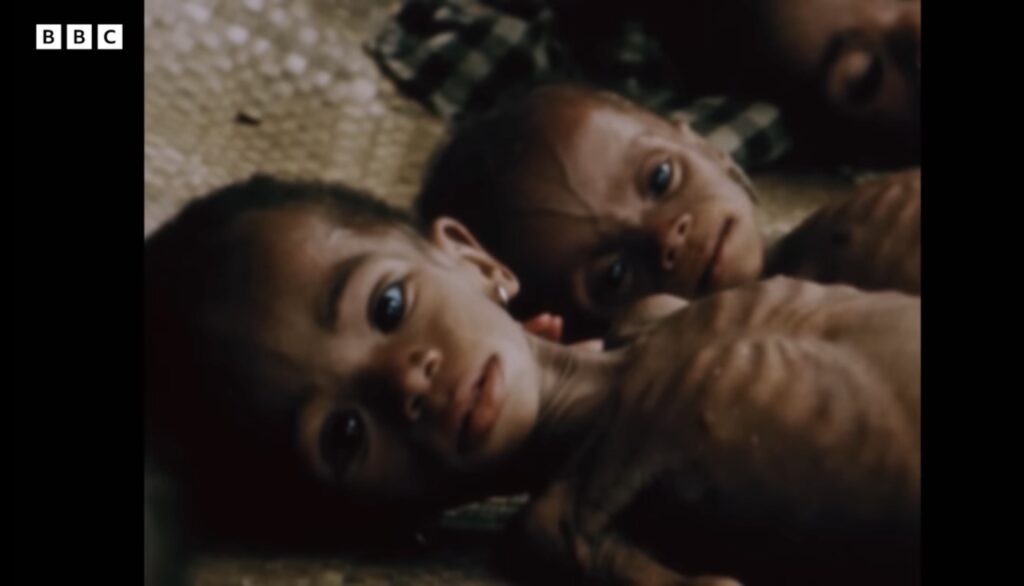
While the exact counts are not substantially verified, it is estimated that one million Biafrans died during the war, most of them children who were starved to death in the famine caused by the air, land and water blockade that stopped food and relief materials moving into Biafra. In the documentary, this is positioned as a sad but necessary evil that had to happen in order to crush the secessionists, since the supplies being received by the Biafran side included ammunition as well as food, with the emphasis on the former.
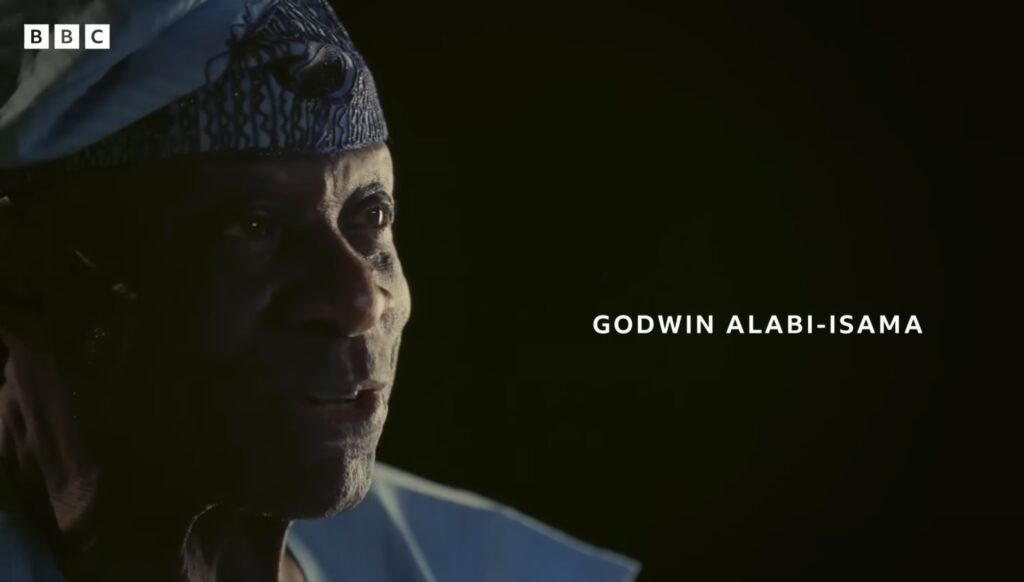
Admittedly, the documentary provides insight from people who fought alongside the Biafran army, but one of the things it gets wrong is its lack of interviews with enough of the civilians who bore the brunt of the war. Only one civilian appears throughout its 74-minute run, while three people who fought alongside Nigeria and two who fought alongside Biafra make an appearance, providing a version of history that does not fully encapsulate the plight of civilians and the devastation they faced as people without the resources to fight for themselves. Footage from the BBC’s archives about the famine fills the screen at different points, acting as filler between the stories of survivors.
Alabi-Isama also speaks of the starvation tactics as the Nigerian government’s way of breaking the Biafrans mentally and then physically, treating it as a consequence of the war and a counterattack that was needed to protect Nigeria. While the documentary goes on to showcase the heartbreak and devastation of the war, it refuses to contend with two things: the British government’s role in it, and the BBC’s complicity in it as a propaganda machine for the Harold Wilson government.
In the first 16 minutes of the documentary, the BBC tries to establish the war, acknowledging the anti-Igbo pogroms. However, it fails to explore them in depth, giving no proper account of their effects, and no account of how Yakubu Gowon, Nigeria’s then head of state, had reneged on the Aburi accord of January 1967, which would have given the country’s regions autonomy and prevented the war. Instead, the documentary shifts easily into a framing that puts the first attack on the Biafran army and places most of the blame on them, presenting the war as a necessity, despite records showing that Nigerian forces fired the first shot on 6 July 1967.
This passivity in describing the former military regime as having no other option and being defenceless is littered throughout the documentary, despite the full weight of support it had from the British government and, at a point, from the Soviet Union. This support from Britain is a mere footnote and is mostly glossed over, without any attribution of how their aid for the federation at the time provided it with more manpower, which led to the humanitarian crisis.
Although the British government under the then prime minister Harold Wilson had adopted a neutral position after the secession while fulfilling the Nigerian government’s orders for arms, its support became clear as it could no longer be hidden. In her 2014 research, “The UK and ‘genocide’ in Biafra,” Karen E. Smith, professor of international relations at the London School of Economics and Political Science, writes that British supplies made up 79.19 per cent of Nigerian arms imports in 1968, and an astonishing 97.36 per cent in 1969, arguing that the Nigerian military government’s effort would have been short-lived had the Wilson government cut off supplies.
Following the 1948 United Nations Convention on the Prevention and Punishment of the Crime of Genocide, which defined genocide as acts including the killing of members of a national, ethnic, racial or religious group committed with intent to destroy that group in whole or in part, there were also debates on whether a genocide was being committed at this time. During this period the British government faced mounting pressure, and it pushed for an international observer team to be admitted to Nigeria. The team returned the position that no genocide was being committed, and the British government used that distinction to continue its support of the Nigerian government without consequence. This is something the BBC does not explicitly acknowledge.
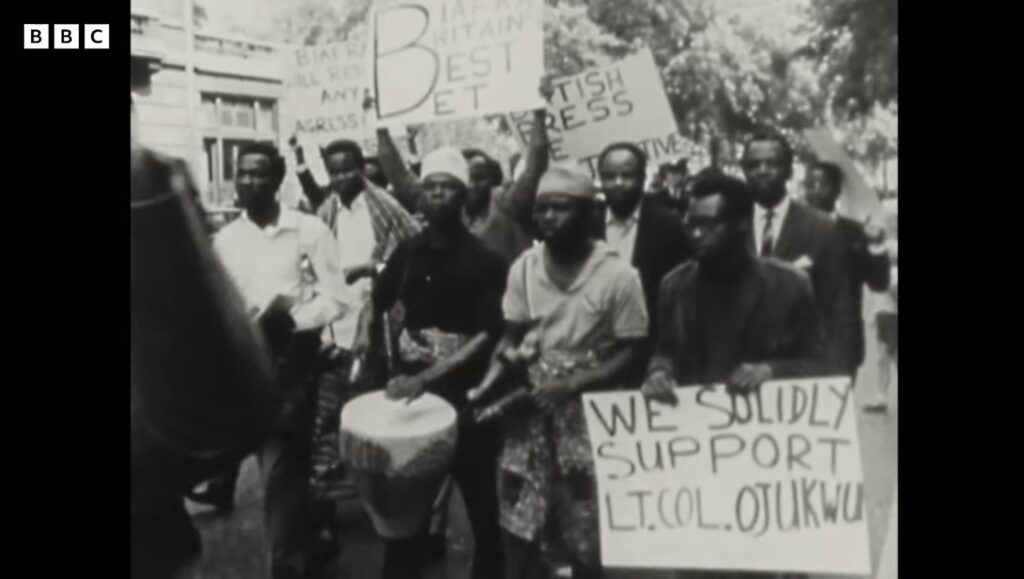
In a 2020 op-ed in the Guardian by the late novelist and former BBC correspondent Frederick Forsyth about the civil war, he spoke about being asked to report on the all-conquering Nigerian army and to provide a view that positioned the army as doing what was required of it. What he had encountered on the ground did not match that brief, and when he filed accordingly he was accused of pro-rebel bias by the BBC and recalled to London.
Martin Bell, a BBC journalist who covered the war and was also interviewed for the documentary, shares in it how their coverage focused more on the Nigerian side, and admits they were under the influence of the British government, and in their pockets too, while the film fails to sufficiently engage with the BBC’s role in it, and how it was leveraged as a propaganda tool that sought to exalt the Nigerian army’s war crimes. In a 1969 interview with the Nigerian brigadier Babafemi Olatunde Ogundipe, the broadcaster aired comments in which Ogundipe said it could not be proven that the dead bodies found after the air raids, which were supported by the British government, were those of civilians.
If what the BBC hoped to achieve with this documentary was an unbiased view, then it failed at doing that, especially with its omission of the Asaba massacre, where the Nigerian army separated women and children from men and boys and opened fire on them, killing hundreds in what S. Elizabeth Bird and Fraser M. Ottanelli, whose book on the killings remains the fullest account, describe as the worst single civilian atrocity of the Nigerian civil war, and which the government, with support from Britain, tried to cover up.
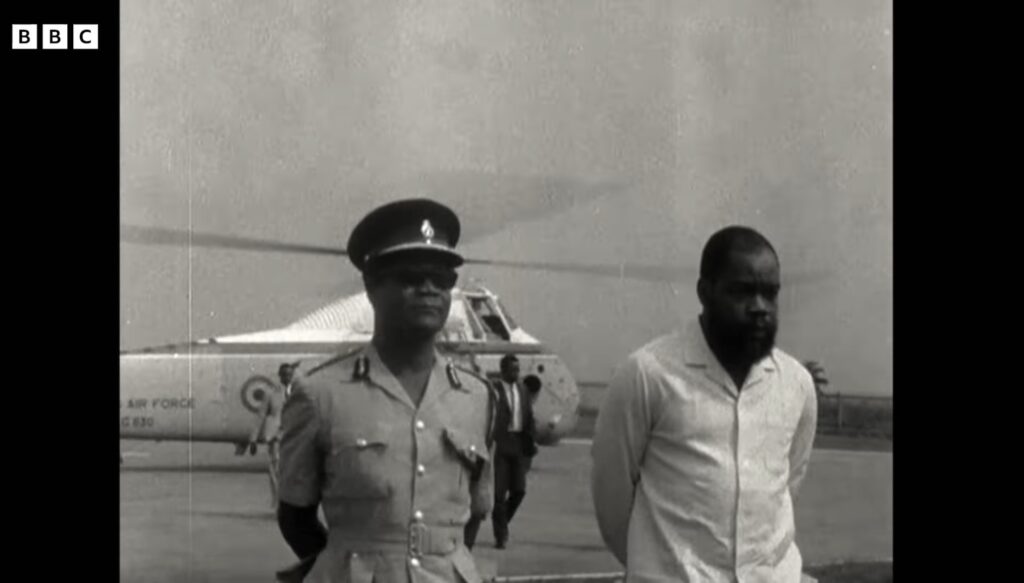
The documentary ends up whitewashing the happenings of the Nigerian civil war, and yet again gives more air time to one side as it did in the 1960s, while refusing to fully acknowledge the scale and impact of the war crimes committed.
You just read the kind of piece we publish every week. Get it in your inbox.